3D Weapons: No Boss, No State, No Serial Number
Blueprints for manufacturing all kinds of pistols and rifles almost entirely on 3D printers circulate in online communities and forums.
Defense Distributed (DD) is a company with a track record of at least seven years in the creation of "ghost guns." These are user-made weapons with no serial number. In 2013, DD's president, Cody Wilson, published the blueprints for the Liberator, the first pistol printed almost entirely (99%) on a 3D printer. A rudimentary weapon, with more in common with a blunderbuss than a pistol or a revolver, and yet it was the starting point for the movement to take off.
DD thus became, for a time, a key player in the scene and built a fledgling business based on drawing digital blueprints of each weapon and sharing them on the internet. This movement earned the label wiki weapons in reference to its similarity with the famous free encyclopedia.
Despite the progress made, several crucial gun parts still needed to be made from aluminum, since the polymers used by printers were insufficient to withstand the force generated by a shot. To overcome this obstacle, DD released its own hardware: a CNC (a kind of small computerized lathe) that allows users to create the key parts from the comfort of their home.
With all of this, Cody Wilson, a radical individualist (anarcho-capitalist, crypto-anarchist?), drew the attention of the United States government. This plunged DD into a series of litigations against the State Department, first, and then against the state of Washington.
In 2018, Wilson was also found guilty of offering 500 dollars to have sex with a 16-year-old girl he met on the website Sugar Daddy Meet. While the DD founder maintained that the entire case was set up by the federal government, the U.S. justice system found him guilty and sentenced him to seven years of community service and a fine of 1.2 million dollars.
The Bullet That Dodged States
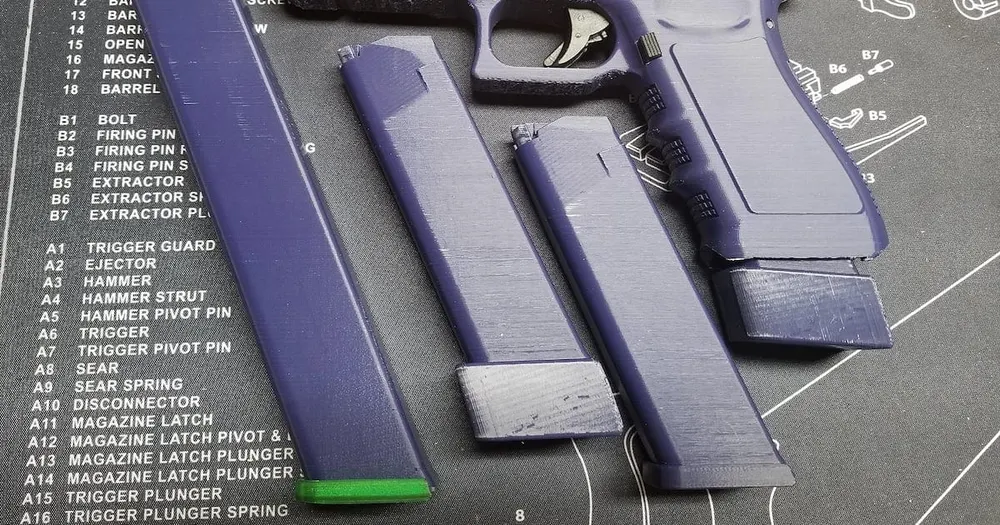
But the 3D weapons printing community kept growing and took a separate path from Wilson and his company. Ctrl+Pew is one of the most active Twitter accounts in this field, and under the motto Deterrence Dispensed, it showcases the community's advances, including the full printing of a Glock pistol.
While most of the pistol can be printed, according to available information, around 400 dollars in non-printable parts are needed to have a complete and functional weapon. As those behind the account point out, the main advantage is not the price but the fact of having a weapon that bypassed all bureaucratic channels of the state.
It is no coincidence that many users in the printed weapons community are also cryptocurrency enthusiasts. Both technologies share philosophical roots such as decentralization. To some extent, Bitcoin can be considered an open challenge to the state's monopoly on money creation. Weapons printing is also a direct affront to the state, since users can have a fully functional weapon without the government knowing.
The main argument of the printing community is that any kind of prohibition simultaneously creates a black market and that criminals, sooner or later, find a way to access a weapon. While the response from various states has been disarmament policy, crypto-anarchists prefer to respond by escalating the situation: this movement has no bosses, no owners, no regulation. At most, we can find more active members in a community whose vitality is determined by the strength of the connection between its nodes.
The trend toward radical individuality is on the rise, and for these communities everything -- except private property -- is called into question. Meanwhile, technology creates new political realities. Or does politics create new uses for technology?
This article was originally published in Pagina/12 on June 27, 2020.
Las notas de 421 no tienen paywall
Y a cada colaborador se le paga por su trabajo. Las dos cosas dependen de los suscriptores.