A Visual Language for Skateboarding

4 de feb. de 2025 — Juan Ruocco 🧙♂️
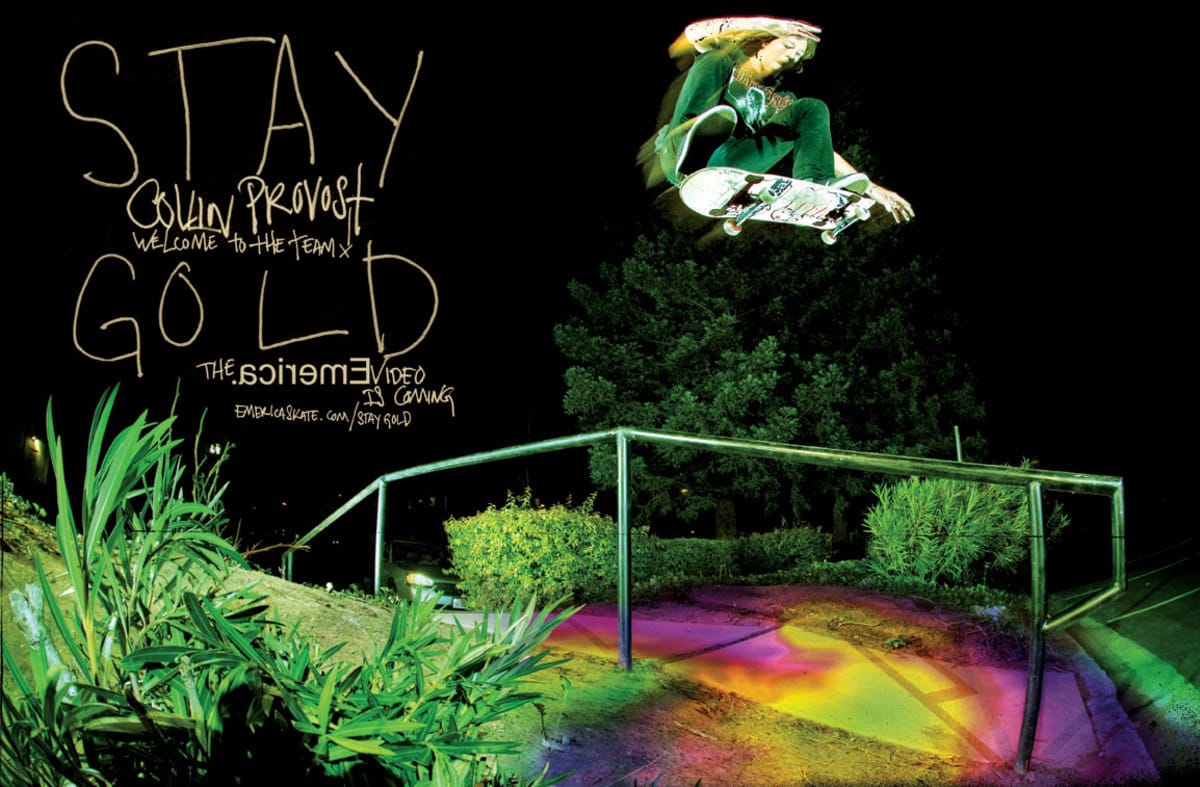
Although skateboarding has existed since the '60s, it was in the late '70s and early '80s that it began to acquire a more contemporary and definitive style. This evolution culminated in the '90s, when it stabilized, giving final shape to what we all know or think of when someone says "skate." From the shape of the board to the definitive aesthetic of the prototypical "skater," including the collective imagination consolidated through the saga of video games Tony Hawk's Pro Skater, the X-Games, and Red Bull events.
In the early '70s, a group of Californian kids -- among them legends Tony Alva, Stacy Peralta, and Jay Adams -- took advantage of a drought coinciding with the arrival of new urethane wheels, a petroleum derivative that replaced ceramic ones. They snuck into the empty swimming pools of the Los Angeles suburbs and turned skateboarding into a subculture of planetary reach. You can see all of this in the documentary Dogtown & Z-boys or in the film inspired by that documentary, Lords of Dogtown, featuring stellar performances by Heath Ledger and Johnny Knoxville.
In the '80s, some from that generation became owners of skate brands. That's how Stacy Peralta gave rise to one of the pillars of skateboarding of the era: Powell-Peralta. As part of their marketing strategy, Powell-Peralta assembled a team, the Bones Brigade, where they gathered names that would later become legends: Tony Hawk, Rodney Mullen, Lance Mountain, Steve Caballero, among the most well-known.
To promote the team and indulge a bit of a passion, Peralta (also a filmmaker) recorded a series of videos introducing his team of skaters: The Bones Brigade Video Show. He then released a series of videos with iconic names, such as Future Primitive, The Search For the Animal Chin, and Public Domain. This established skate videos as a blend of promotion and a way to capture an essentially ephemeral art form. It's worth noting that the format emerged alongside the rise of VHS and the possibility of recording video at very low cost.
From this point, which we can consider the beginning of the tradition, a constant evolution of skateboarding and its videos would follow, giving birth to its own visual canon that would reach its point of maturity with the arrival of a dazzling name from cinema, Spike Jonze.
The Legacy of Spike Jonze
The videos from the Peralta era were a rare cross between recordings of pure athletic performance and an attempt to give some narrative cohesion to the material. On one hand, the skaters displaying their skills on ramps, bowls, and skateparks, as well as on all kinds of urban furniture -- supermarket parking lots, schoolyards, streets, building entrances, railings, plazas, museums. There is something very particular about skateboarding: it turns the entire city into a giant amusement park. On the other hand, somewhat disconnected scenes where some of the protagonists or extras tried to follow some kind of "story" tying the video together.
The arrival of Spike Jonze, with his classic Video Days, would codify the visual language of skateboarding for years to come. In a presentation that boasts iconic -- let's see how many times I can use this word -- and legendary status, we can see the video's protagonists, Mark Gonzalez (considered the most influential skater of all time), Jason Lee, and a very young Guy Mariano, cruising with no particular destination in an old Cadillac (?) that would also serve as the video's cover.
Spike Jonze presents the skaters' routines without any narrative connection. He uses a rather raw editing style, drawn from documentary aesthetics, where the connection between images -- or rather their cohesion -- is purely poetic. These are 25 minutes that would go down in the history of the format, along with the introduction of the signature lens of skate videos, the "fisheye," whose distinctive protruding curved shape gives the videos a very characteristic look.
From this discovery, every skate video becomes a kind of visual essay on the state of the art. On the state of skateboarding, its surroundings, and its fragmentary connection to its own history. The liberation from narrative turned the skate video into a fragmentary flow of images unified through repetition. They follow a poetic or quasi-pictorial logic in their aesthetic pursuit. It's the difference you can find even within cinema itself between films like My Own Private Idaho and Raiders of the Lost Ark.
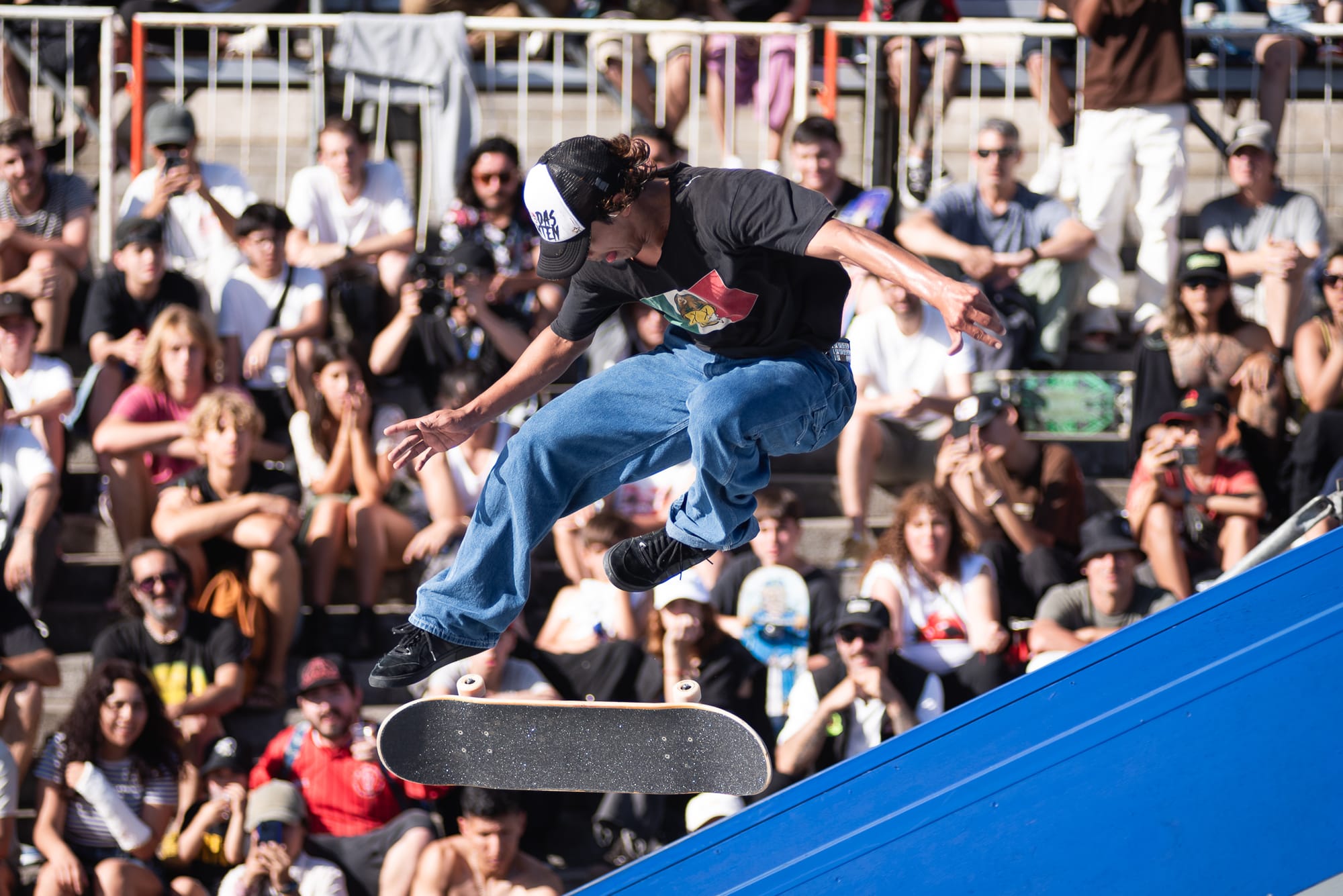
The Holy Trinity of the Skate Video
Skate videos are something like fragmentary visual experiments, held together by three elements:
a) a skateboard
b) a skateboarder
c) music
That is the only unity between the visual fragments, which trace a path through a series of mostly urban settings called "spots." These are places prized by skaters, since they can perform tricks of varying technical complexity there.
Skate videos consist of linked fragments called "parts," which constitute the work done by a professional skater over a certain number of years while sponsored by a brand. Filming is one of the contractual obligations of the pros. It is also a way of preserving on visual media an archive, a record, of their athletic, sporting, and artistic abilities.
Since it involves editing work, it is also a way of seeing how a skater evolved over a period. That's why a single "part" can include footage filmed in the United States, Spain, or Japan, over months or even years.
Videos tend to appear with some regularity on whatever medium is current (VHS, DVD, Blu-ray, streaming) and are generally produced by a brand featuring its entire team of riders. This way, there is a substantial body of audiovisual material that the skateboarding industry keeps creating, and in doing so, engaging in a feedback loop with the audience.
This art form has evolved alongside skateboarding itself and has left quite clear marks on the development of its own aesthetic, as well as on the appreciation of the sport in general. It's impossible to make an exhaustive selection that does justice to the format. In fact, when each skater talks about which videos are their favorites, the range of opinions is immense.
But I couldn't end this article without leaving a list of recommended skate videos for those interested in the evolution of this format, from the origins on wooden ramps to jumps down thirty-stair sets.