Andres Calamaro in the '80s: A Vietnam of Spit and Blood

27 de ago. de 2025 — Luis Paz
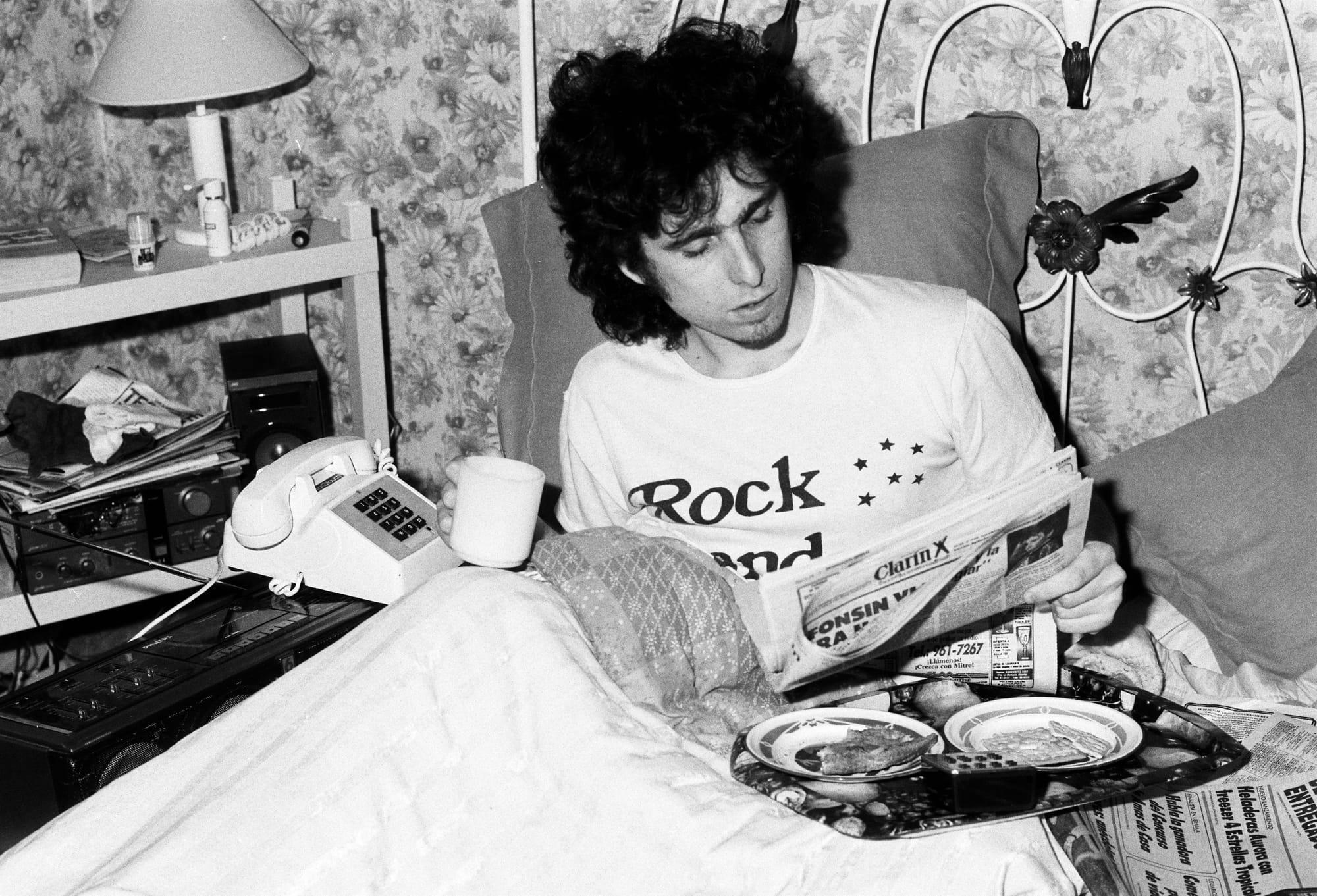
The guy kicks things off with a clever move: Fabio Zerpa tiene razón, hay marcianos entre la gente. First track, first album, 1984. While he was a key figure in Los Abuelos de la Nada and a crucial musician in Charly Garcia's band, Andres Calamaro was making his solo debut and beginning a dynasty of albums that keeps on stretching to this day. Today he's one of the few rock barons who are truly still active, but in between he was a drugged-up kid with a broken heart. And what a masterful way to be one.
Andres Calamaro --Andresito, El Salmon, Andrelo-- is one of the most remarkable Argentine authors in any sonic or narrative discipline. A number 1, a wizard of smooth talk and assonant rhyme. Anyone who's truly listened to him will agree he's a Grey Wizard. But I don't intend here to write about why he's one of the greatest there is --he is-- but merely to return to the origin myth of the multitrack superhero.
Once, from the set of Hola Susana, he wished that "50 years from now" people would still be talking about his albums. More than 25 years have passed since that interview for the release of Honestidad brutal and we're still listening to him and going to see him play (three Movistar Arena shows in November + Hipodromo de La Plata in December). But the self-fulfilling prophecy begins earlier, with those four essential albums he released in just five years, from '84 to '89. A "Vietnam of spit and blood," well before Deep Camboya.
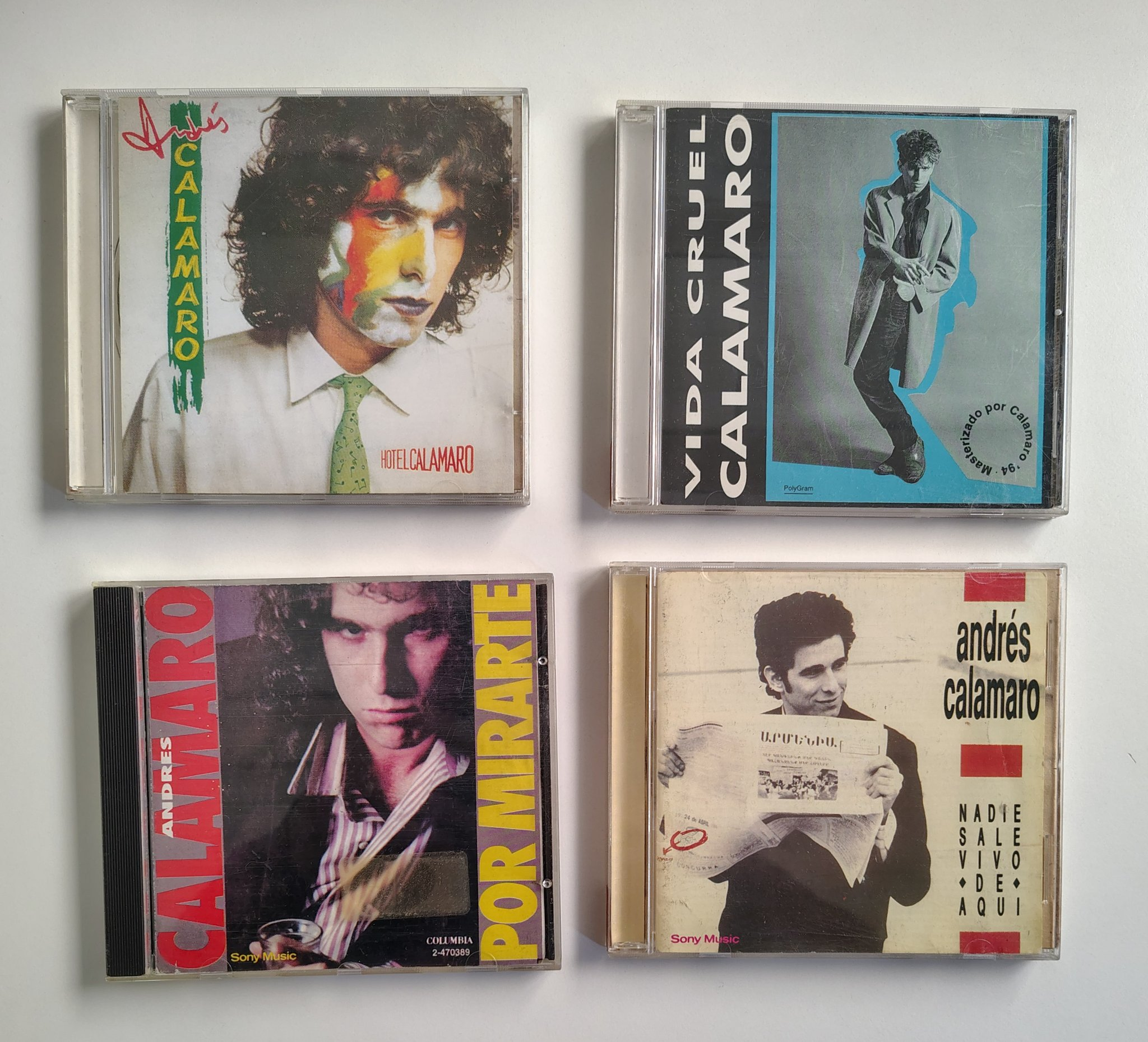
Hotel Calamaro, Vida cruel, Por mirarte and Nadie sale vivo de aqui. A four-of-a-kind of Andreses.
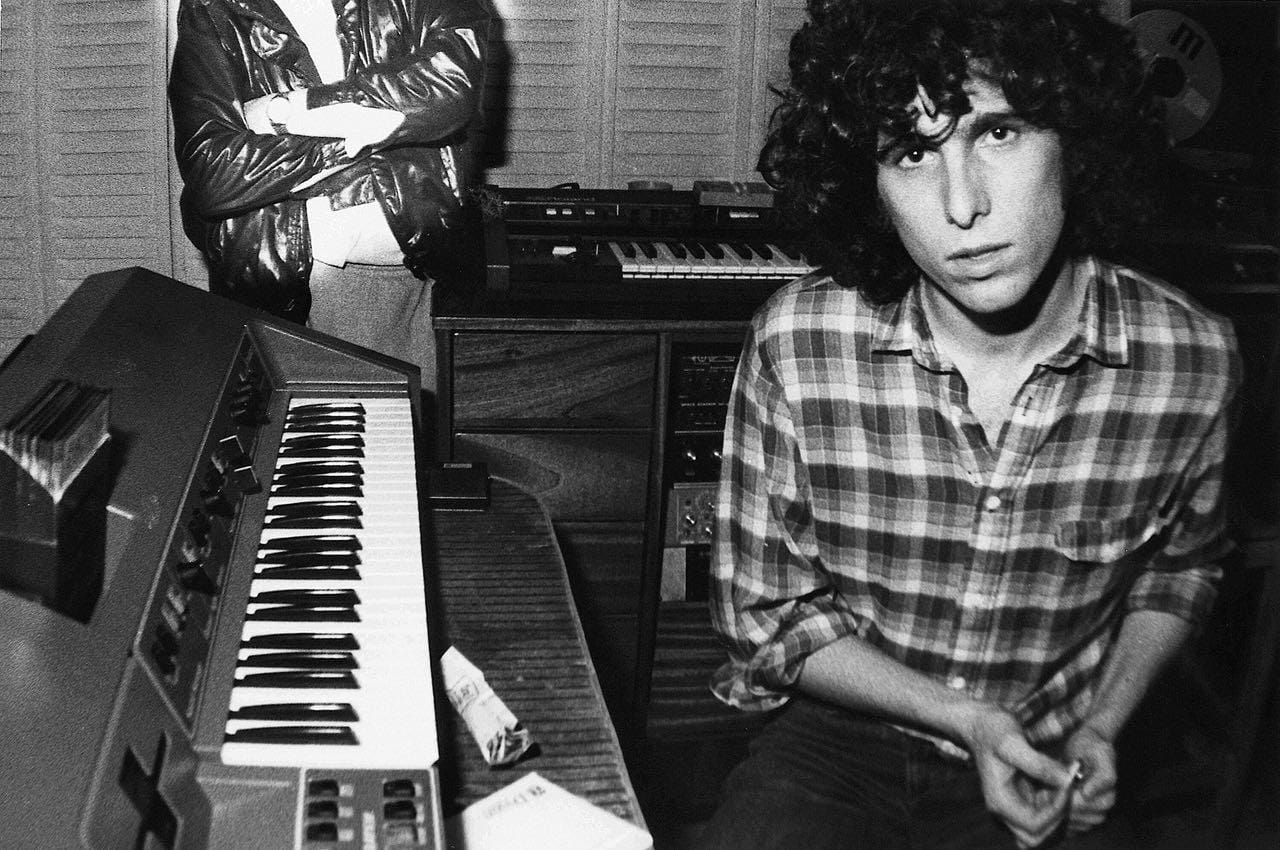
Andres, Gringui and Mario
Andres Calamaro was born on August 22, 1961 in Buenos Aires. By the start of the '70s, he already knew how to play the bandoneon. Then he picked up the drums, and before coming of age he had already moved on to keyboards and recorded his first album: B.O.V Dombe, as the keyboardist for Raices. In fact, he turned 17 during those sessions at Fonema studios, on Av. Belgrano and Peru, where he hit it off with sound engineer Mario Breuer. By that point, 1978, Andres was finishing high school and getting together to make music with Gringui Herrera, his friend from Escuela del Sol, who had his own band and played guitar and bass.
The story of Calamaro in the '80s has Gringui and Breuer as co-stars, a tier above other musicians and secondary friends from that decade, like Ariel Rot who would arrive at the end, Cuino Scornik who was always around though in smaller doses -- of songs --, or Charly Garcia and Miguel Abuelo, who just as they mentored him also vampirized his premature talent.
Gringui Herrera is Andres's first great sidekick and his guitarist throughout the '80s. They co-wrote 11 tracks on Calamaro's albums and others for Los Abuelos de la Nada albums, like "Asi es el calor" (Calamaro) or "Levantando temperatura" (Herrera). They go way back to school: they graduated in 1978 and for the prom they put together La Chorizo Colorado Blues Band. That was the milestone for the Elmer's Band or Elmer Band -- depending on who you ask --, a punkier group that started when Gringui returned from Spain in 1980, and which also featured Eduardo Cano, the future bassist of Los Twist.
Mario Breuer not only recorded those early demos by Calamaro-Herrera in 1978/1979, but accompanied Andres throughout the '80s, mixing or producing his albums, engineering his recordings or handling artistic direction -- tasks almost always shared with him. In 1982/1983, they also recorded the music for the play Tango salsa, by Robertino Granados, at Panda studios, the final trigger for Andres to decide to make his solo album. He had accumulated "some machines" at home, enough gear to record himself, and they had great chemistry with Mario: "Hunger met appetite".
The details of this context are well-documented and easily accessible. Same as his time with Los Abuelos, with Charly's band or with Los Rodriguez. Still, I recommend diving into the rabbit hole of Calamaro in the '80s, beyond his solo records, when he was in a group with Zeta Bosio and Gustavo Cerati that was the blueprint for Soda Stereo, formed bands with Daniel Melingo and Pipo Cipolatti, produced Los Enanitos Verdes, Don Cornelio and Los Fabulosos Cadillacs, went onstage to play with Sumo at Luna Park, and recorded with Spinetta, Charly, Luca, Abuelo, Gieco, Paez and Los Twist.
But the point of this piece -- here we go -- is that, amid all that chaos + the compositions for Los Abuelos de la Nada's third album (Himno de mi corazon) + the recording sessions for Charly Garcia's second album (Clics modernos), and while being a key piece in the machinery of both bands live and in the studio, Calamaro found the time to record and produce his first solo album.
Hotel Calamaro, 1984
"Hotel Calamaro should have been the Elmer's Band recording, our chronic duo with Gringui, the crystallization on disc of those recordings at El Jardin (Breuer's studio on Av. Santa Fe and Talcahuano). But two years had passed, three, and we wanted to record in different ways," AC recalled. Four tracks were co-written with Gringui: "Fabio Zerpa tiene razon" (which includes a monologue by the ufologist), "La vi comprandose un sosten", "Amor irani" and "Miro por la ventana".
All produced by Charly, except the bra one. Garcia also recorded "Amor irani" with Calamaro and produced "Detenida", a feature by Andres and Pipo. Perhaps to capitalize on the session and oil the gears of his own band, he brought in his musicians and put the GIT trio (Guyot, Iturri and Toth) as the keyboardist's backing band. Though Andres would eventually stop accompanying Garcia, clearing the way for Fito Paez to step in.
In any case, Hotel Calamaro is a typical debut album, a patchwork of songs from different eras, levels of maturity and people, because by then Andres knew a lot of people in rock and the album quickly turned into a "Let's bring friends to the studio" affair, like so many albums from those years bloated with intoxicated goodwill.
It's an album of eighties pop songs, youthful, by a talented but inexperienced songwriter. Tracks with programmed drums, synthesizers and instant choruses, far from the Latin rock fusion of Los Abuelos de la Nada. Andres was already sharp from a young age, but he would start building real muscle in songwriting a couple of years later. The first track that stands out here, for its wit and roundness, is "Fabio Zerpa tiene razon", which they wrote with Gringui as teenagers and recorded with Breuer at El Jardin. This Hotel Calamaro version, led by Charly, came later. "We wielded irony because the situation for rehearsing and smoking joints was delicate in those years," AC said.
"It's Argentine popular music, even if it doesn't seem like a fitting definition for the kind of music I make. I think that once and for all this album is Argentine popular music. There are a lot of keyboards in the songs and a lot of work went into the synthesizers and the drum machine. Nevertheless, it's not more 'techno' because of that. I had no limitations on swing or expression as a musician despite using synthesizers and rhythm machines." (Andres Calamaro in Pelo #217)
The guest list also includes the folk vocal trio Oveja Negra, Negro Colombres, and Vasco Bazterrica (guitar and backing vocals on "Radio actividad radial"). Though the track that truly rises above the rest is "No me pidas que no sea un inconsciente", intimate not only in its tone but also in its origin, as it was composed with Scornik on Christmas 1982. "We wrote it with Cuino at my parents' house, lyrics and music at the same time. It has a pretty good vocal arrangement. It was our beginning as Bonnie & Clyde as a songwriting duo," AC said about this track that he even performed with Los Abuelos de la Nada. Jorge Larrosa hadn't arrived yet -- he would complete the anxious triad later known as Los Poetas de la Zurda, which would unleash songs like "Estadio Azteca" or "La ranchada de los paraguayos."
On the technical side, the album is mixed in mono, something anachronistic for 1984, when stereo had already been the standard for two decades. "Besides, the recording has a speed defect: the whole album is slightly sped up and it affects the sound of the voice. It wasn't a good idea," Calamaro admitted. The album didn't convince him much nor attract much attention, and while it had press support, it didn't spark much enthusiasm. It was left exposed and at a disadvantage compared to his extraordinary contributions to Los Abuelos, like "Mil horas" or "Costumbres argentinas," his last offering before leaving Miguel's group.
Vida cruel, 1985
Calamaro describes the making of his second album as "a formidable recording." "I think we were recording out of an intense desire to showcase new things and to get wasted in the studio and rehearsals, our free zone, the safe house for rockers, and nothing else ever mattered. Our personal guardian angel never left us empty-handed or without cab fare." For a guy who was already singing "Vi la raya, vi que va a haber jaleo" like it was nothing back in 1985, how ridiculous it must have seemed when 10 years later they put him on trial for mentioning smoking a joint at a concert. "Vi la raya", to help put the '85 Calamaro in perspective, was co-written and recorded with Charly Garcia in Palermo and later re-recorded with a full band and the participation of Luis Alberto Spinetta.
"We experimented a lot at home, with multitrack recorders, recordings and samplers, alone and in the company of others. Experimental stuff, almost always with Daniel Melingo, Pipo Cipollatti, Daniel Melero and Gustavo Santaolalla. But the songs on Vida cruel were demoed with Fernando Samalea and Richard Coleman. We almost recorded it with Santaolalla, but in the end we went into the studio with Richard, Fernando, Cano, Gringui and Fabian Von Quintiero. The concept was to fuse Richard's own harmonic desires with the original chords of the songs, basically. Then Stuka, Petinatto, Spinetta and the rest who appear on that recording were added."
That retuning with Coleman and Samalea resulted in a darker, more new wave, less youthful, less poppy album. The colorful paintings from the Hotel Calamaro cover give way to the long, dark overcoat on the Vida cruel cover. There's not just that information in Coleman (who comes from Friccion and co-wrote "Fotos de idolos") and Samalea (from Friccion and Clap), but also in the use of sequencers, the sound of the electronic drums, the synthesizers, the use of saxophone (played, depending on the track, by Gonzo Palacios, Petinatto or Melingo). Some tracks might even remind you of The Smiths, The Cure and bits of Elvis Costello.
"Acto simple", which always gave me the vibe of having inspired Fito for "Brillante sobre el mic" even with Stuka from Los Violadores on guitars, is the first Calamaro and Rot collaboration, a partnership that would end up in the success of Los Rodriguez, passing first through Nadie sale vivo de aqui, the album that closes the '80s Calamaro era. Also "Principios", much more laid-back, is a consensus standout. And personally I have a great fondness for "Sobran habitaciones", made all the more intense because they cut it from both the CD reissue and the vinyl reissue of Vida cruel.
"It's an album that paints a bit of the mood of the era, but also Andres's blue and black period, like the cover colors. He had some truly dark days. Still, it's my favorite album," Breuer recalled. In another interview in Cantarock with Claudio Kleiman, Calamaro defined Vida cruel like this: "The two sides are different. Side A is in a minor key, harsher and more nocturnal, from recording sessions and neuropsychiatric mythology. Side B is brighter and major, with more traditional slow rock tracks, rock songs and ballads."
Calamaro's second album got better critical reception than the first, but less buzz among listeners. Still, no drama at all: they had a blast. "The recording was very representative of what recordings were like thirty years ago. At night, always high, inviting all your talented friends to record. Trips to the bottom of the night to go find a joint!" Calamaro would recall, much later, in Rolling Stone. "We probably had black lips from washing it all down with wine."
Por mirarte, 1988
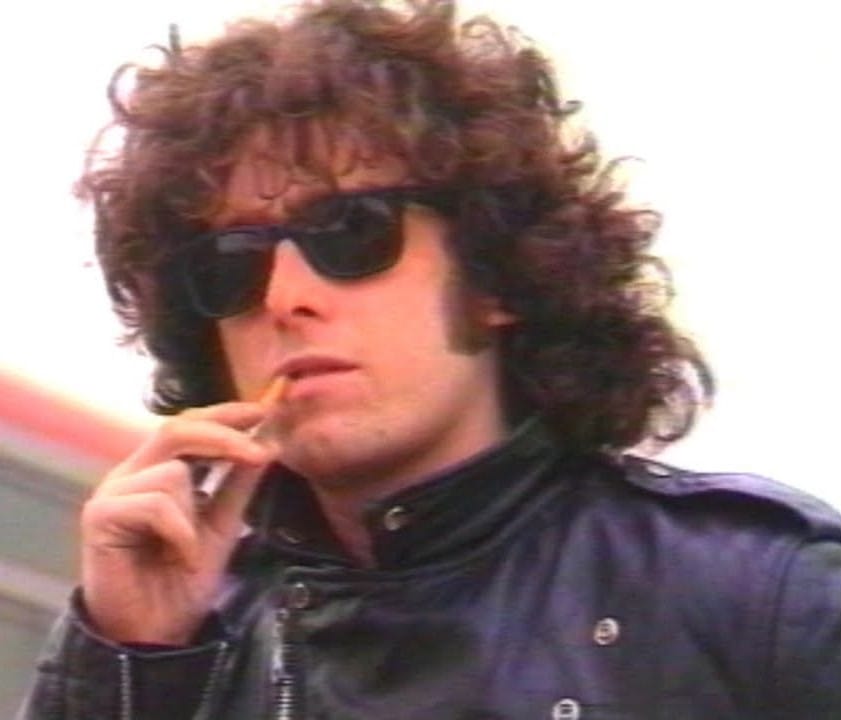
On Por mirarte, the guitar replaces the keyboard as the lead instrument and Andres's songwriting finds a new synthesis of precision, power and meaning. It was recorded in the summer of '87/'88 at Panda, naturally with Breuer at the controls and Gringui in the room with Andres. And it is unquestionably a rock album, its pulse driven by his new partnership with Ariel Rot and the abandonment of pop, goth and new romantic tendencies in favor of a return to guitar-driven rock -- which is always coming back, go figure --. Tracks like "Cartas sin marcar", "Loco por ti", "Lamiendo un hueso" and "Bailar sola" underscore that intensity, as does the cover of "Johnny B. Goode", while others like "Con los dientes apretados" unfold the nocturnal mischief of rock. This is where "Sobran habitaciones" would have fit perfectly.
Andres arrives at this third album with his focus recalibrated. Through 1985 and 1986 he had continued performing and recording with Los Abuelos de la Nada and Charly Garcia. His first two solo albums had been more of a "creative bonus," extras to build up a catalog, than a very concrete solo career plan. In the more than two years between Vida cruel and Por mirarte, not only had he absorbed new input and trends had shifted, making the dark new wave content of the second album feel dated, but inflation had also worsened, which after his fourth album, Nadie sale vivo de aqui, would ultimately trigger his departure to Madrid with Ariel Rot.
"Those were complicated times," Calamaro recalled, "there was only room for Los Redondos and Soda. For the rest of us there were crumbs. The leftovers. We'd tour across Argentina and come back losing money. Ordering a Ballantine's or buying a gram was the equivalent of spending everything you could earn on those tours we did in a Leyland bus at 80 km per hour. Even writing songs that could potentially be hits, we lived a kind of cheerful destitution as professionals with an amateur spirit."
Por mirarte contains another easter egg of something that would become a Calamaro habit: revisiting his own catalog, sometimes even within the same album. Thus, "No te bancaste" appears in two versions, and would be re-recorded again in 2000, for the quintuple album El Salmon. "The sound of the era was cracking... we were searching for more naturally raw and reasonable sounds," he explained. And he ventured: "It should have been a demos album, a lysergic session with three guitars." In any case, the reception improved, the music videos helped spread the songs and the press was more receptive to a rock album.
Nadie sale vivo de aqui, 1989
1989. The fall of the Berlin Wall. The end of communism in Eastern Europe. Hyperinflation in Argentina. Nadie sale vivo de aqui. Was the title poetic, closing the cycle of The Doors references that began with that primordial Hotel Calamaro, or was it a commentary on reality? Like the three before it, this fourth discographic ace from Andres arrived at the delivery stage without being able to fully set up his game. Between the brutal hyperinflation, the Alfonsin political crisis, the power outages that cost them entire days of studio time, the good experiences his associates had in Spain (Gringui at the start of the decade with his band Carolina; Rot in the mid-decade, with Tequila) and the scant hype built up throughout the entire half-decade, it all ended with Andres closing the decade by leaving for Madrid, seemingly foreshadowed in this fourth album, which includes songs like "No tengo tiempo" and "Adios, amigos, adios".
"Hey there, I'm rock and I'm here to say: don't let yourself be fooled; if they throw you the bait, you cast first." That's how "Pero sin sangre" opens, track 2 on this album, which could well connect, from 1989, to Todos Tus Muertos, formed in 1985, and to Babasonicos, who wouldn't appear until 1992. "Hey there, I'm rock" -- what a charming fellow. Calamaro steps into his role more clearly than ever: where Hotel Calamaro introduced a fresh but green songwriter, where Vida cruel could betray a certain affectation, and where Por mirarte lost solidity across its volume of tracks, in Nadie sale vivo de aqui an Andres Calamaro appeared who was burning through the last cartridges of this saga, in a musical frenzy as the decade turned and with a faint sense of No Future born from the state of the country and the world, which translates into an album of uninhibited but meaningful songs.
"Pasemos a otro tema" may contain the first truly irresistible melody of Andres Calamaro. Up to that point, any of us might have been hooked by some song from the first three albums, but when "Pasemos a otro tema" arrives, the impact is immediate and total. I remember hearing it and tagging Calamaro on the CDs from the Coleccion de Oro by Revista Noticias (I was born between Vida cruel and Por mirarte), already in the Alta suciedad era. I remember recognizing he was the same guy I kept hearing on TV with "Flaca." And that line: "Ella es tan formal que nunca me va a perdonar." The album also brings "Ni hablar", which is sort of like a "Flaca" a few years ahead of its time.
"(Throughout the entire decade) I recorded my first albums and my first features, but Nadie sale vivo de aqui is the first album I write in its entirety and where we achieve the sound we kept using live and in recordings for a long time," summarized Andres, who on this album once again appears accompanied by his partners from Por mirarte: Gringui Herrera and Ariel Rot on guitars and backing vocals, Aleman Schanzenbach on bass and Ricardo Gonzalez on drums (the rhythm section of Autobus). Jordi Polanuer comes in on saxophone and Dries Holten exits on harmonica and synthesizers.
Part of what makes Calamaro's '80s such a perfect decade, even in its "lack of results," is how Nadie sale vivo de aqui also anticipates the following decade. The songs for drunks to sing in a group; the Dylan, Reed and Waits-style vocal mannerisms; the little rumbas and highway guitar songs; the beautiful songs about breakups ("Pasemos a otro tema" or the fantastic "Senal que te he perdido", which Man Ray also recorded); the multiple attempts at a single song, like "Vietnam", presented in two parts, with contributions from Cerati and Fito. Nuestro Vietnam, hecho de saliva y sangre, es verdad. Y tal vez no te voy a perdonar. Nuestro Vietnam.
Calamaro says Nadie sale vivo de aqui is an album people liked without it achieving anything: "It didn't receive major praise, it didn't sell, we couldn't get work. At one point Ariel (Rot) traveled to Madrid and I sent word telling him not to bother coming back," he recounted. What's more, he left himself, he went to Spain. And there, with Rot and guitarist Juan Infante (another Tequila alum), the '90s Calamaro formed Los Rodriguez and conquered rock en espanol. Then he made Alta suciedad, Honestidad brutal and El Salmon as a solo artist, and confirmed himself as a monumental songwriter. And in the following decade, the 2000s Calamaro had his full comeback, became El cantante, opened El palacio de las flores and released La lengua popular. Andres Calamaro moves through decades, by determinism, by superstition or by accident. But all of Andres's decades are born from the same source: the '80s Calamaro.