Ansible: How a Neighborhood Library Built a Nation of Readers
8 de nov. de 2025 — Clari Ruocco
Follow me, friend –we're about to indulge. Let's open with one of the funniest and most touching beginnings in nineteenth-century literature to capture the spirit of Biblioteca Popular Ansible, a bibliodiverse ecosystem in the heart of La Paternal, Buenos Aires.
"Once upon a time there was a piece of wood. It was not a luxurious wood, but a simple log, one of those that in winter is put in stoves and fireplaces to light the fire and heat the houses." That's how The Adventures of Pinocchio opens: a carpenter and a puppet fashioned from an insignificant log wind through 36 chapters of mishaps until –thanks in no small part to the providential Blue Fairy (Fata Turchina)– they become, authentically and humanly, father and son.
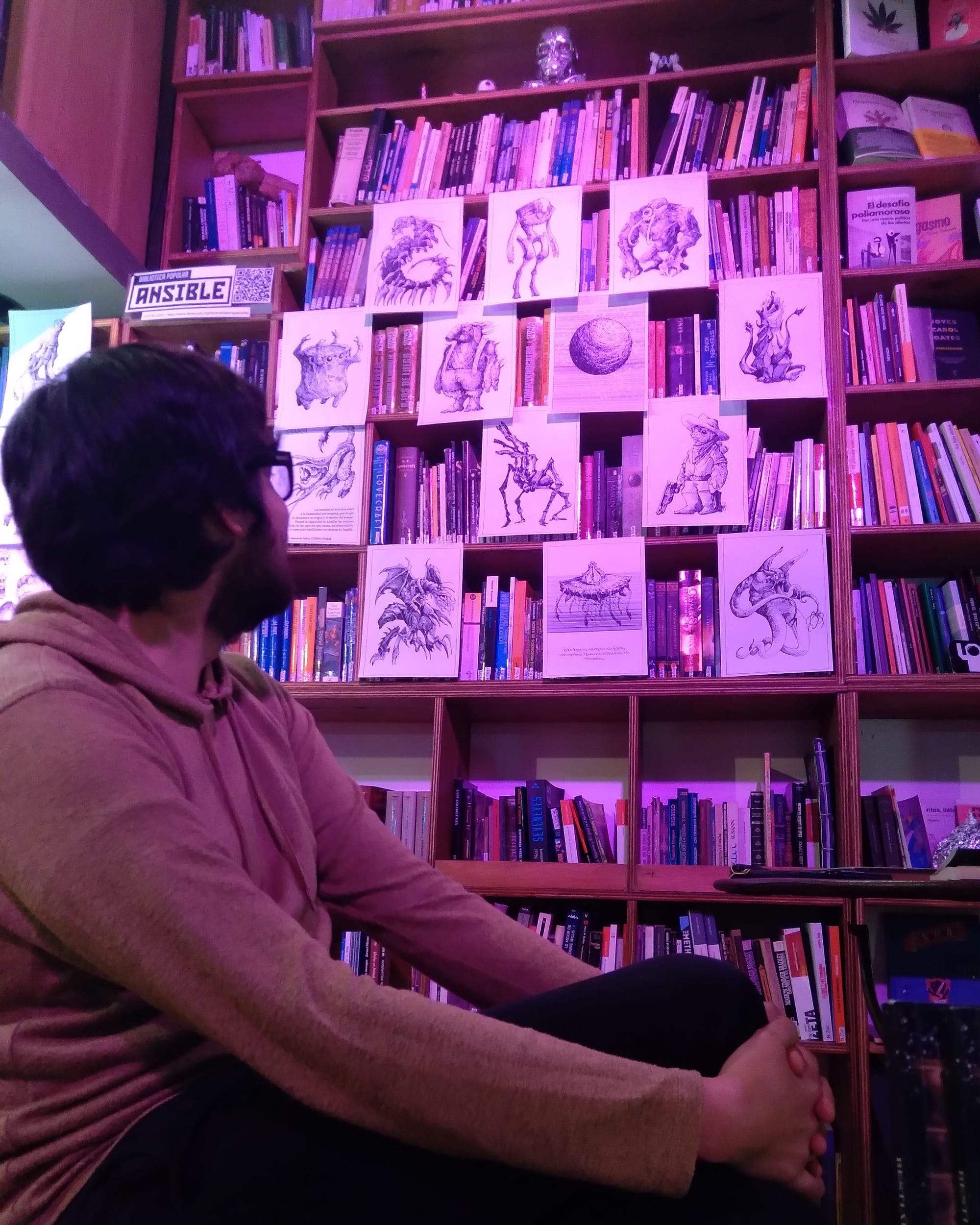
I can't help thinking that a "common" piece of wood like that could mark the beginning of this Library's story –an institution Michel Nieva once called a "cathedral" of science fiction (quite the compliment). Today it houses a vast collection rooted in speculative fiction –science fiction, horror, and fantasy– with a special emphasis on local publishing.
The Library also shelters, organizes, and energizes a network of readers around a program built for all audiences. From Encuentro Cercano, the national convention, to tailored activities for primary school classes working with these genres, all the way to a science-fiction short-story contest whose winner is adapted for the stage and performed at each convention.
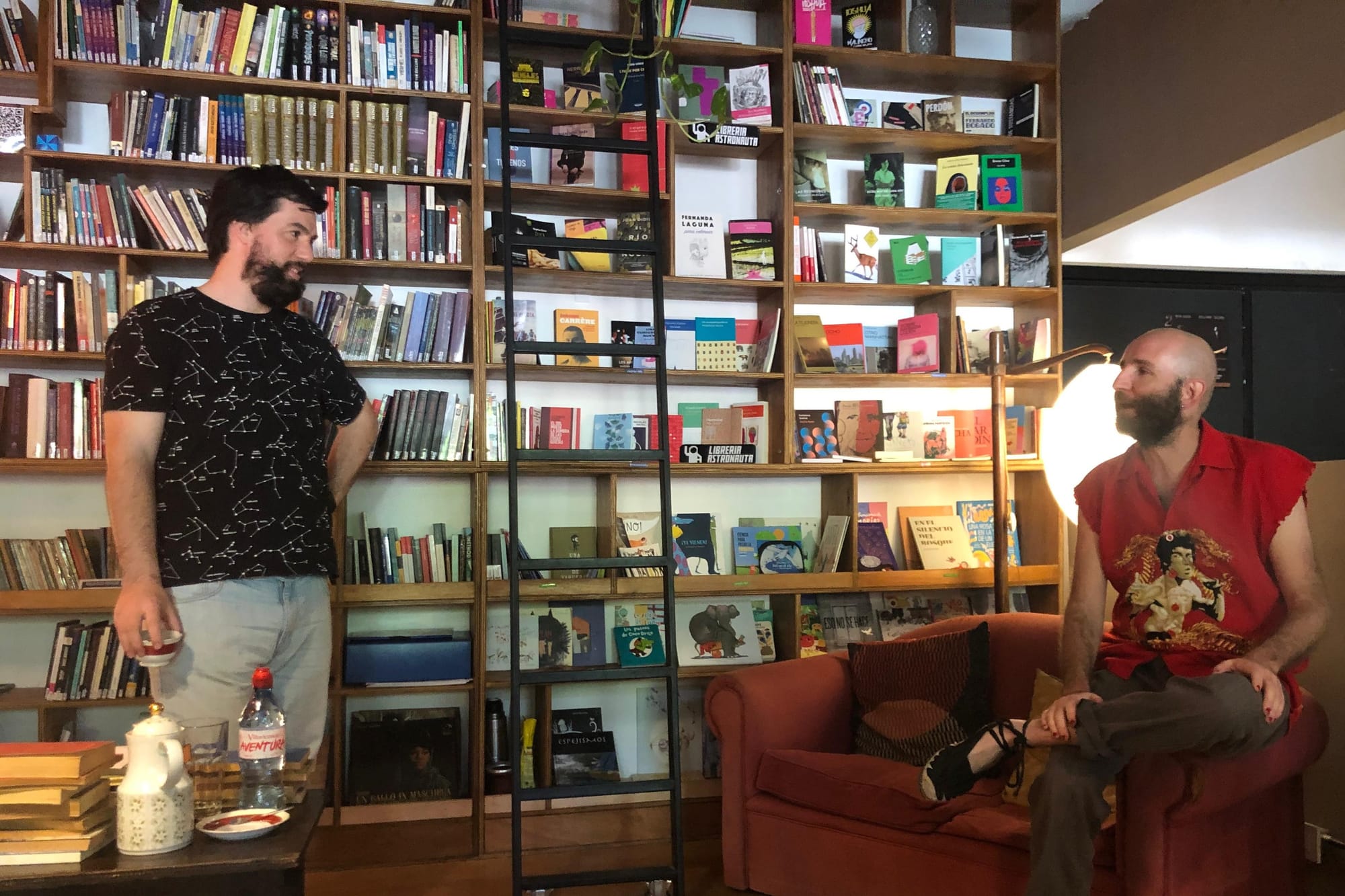
It started small –and with the worst timing– in 2020. That March, as the pandemic hit, a group of warm-blooded earthlings opened Café Cultural Artigas at 1800 Artigas Street: a café, a theater space, and a library with floor-to-ceiling shelves and a rolling ladder. That last detail inevitably draws sighs from bibliophiles –and tempts the bold to climb up and gaze into the middle distance.
Technically, the library wall was meant to acoustically separate the theater from the bar. But one member of the group –soon to become a cooperative– placed forty of his own science-fiction books on those shelves so they could circulate on loan. By December, Carles Ros Mas had joined as librarian. Trained in "social education" in Spain –working with people and groups at risk of exclusion to foster development, inclusion, and quality of life– he's as fitting a profile as any for this locus amoenus. Yes, he shelved books and built an online catalog; but he also cultivated what quickly became a fertile ecosystem, nurturing the communities that gathered around each genre. He christened the project after Ursula K. Le Guin's "ansible". And Ansible it became.
From there, this People's Library matured. Its holdings grew along two tracks: donations (many from authors and publishers) and community crowdfunds to purchase additional titles. In light of everything that followed, it's hard not to smile remembering the first drive to reach 1,000 books back in December 2021. Today the shelving runs across Café Artigas's walls, guarding more than 3,100 volumes.
Writer Martín Castagnet –whose essential Los cuerpos del verano ranks among Ansible's most-borrowed titles– recalls: "I first got in touch with the Library thanks to Carles's colossal work. He approached me when he was spreading the word and seeking donations. I had many books to donate, and as soon as I learned about Ansible I knew it was the first place I wanted to send the books that no longer fit at home: because I believe in libraries open to everyone, because I love speculative fiction with all my heart, and because Ursula Le Guin –the author who coined ansible– is my favorite writer. Since then, whenever I set aside books to donate, I first separate what's for Ansible (my finances tell me I should sell them, but I can't). I even did the unprecedented: parting with books I thought I'd keep, but don't consult often –and if I ever need them, I can always visit them there".
Ansible soon gained momentum, offering shelter –and coffee– to early adopters like writer and journalist Matías Carnevale. "He was the first person who told me, 'I want to present my book there'", Carles remembers. "He came with his work on Bradbury in April 2021." Editors, writers, and collectives such as Laura Ponce (editor of Próxima and Ayarmanot), the futures observatory Proyecto Synco, and the Nuevo Terror Argentino (NTA) collective were also key, laying their interests over Ansible and the Café through talks, book launches, anthologies, and other such endeavors.
Today the Library galvanizes a community of more than 660 members, with varying levels of participation. Carles sees three broad profiles on the roster: those who use the library primarily for borrowing; those who also attend activities; and those who, in addition, propose or help run events.
Mallory Craig-Kuhn –author of the space opera Divino Neón and co-host of Triángulo Satelital with writer Juan Moretti– ticks all three boxes. She found Ansible during the pandemic, "when we could already do things with masks indoors". She began by attending talks until Ansible became a comfortable place to read and work away from home. "Writing and developing workshops can be a very solitary, hermit-like task. I started making friends at Ansible and just having a great time there."
It wasn't long before she expanded the activities grid herself. Along with other distinguished members, she organized film screenings, taught world-building workshops, and became one of the organizers of the national convention Encuentro Cercano. Ansible even served as the set for the first episodes of the show she co-hosts with Moretti, featuring guests like Robi Chuit Roganovich and Flor Canosa.
At the same time, May –as everyone calls her– highlights the magic of a people's library as a practical, effective reading model: "It's an excellent way to read in print without having to buy or download illegally". She adds: "At La Libre bookstore I taught a reading workshop on Gibson's Neuromancer. At home I only had the book in English, so I went to Ansible to borrow the translation –both to pull images and materials for my group and to recommend that participants consult the copy at the Library. Same with Materiales para una pesadilla, Juan Mattio's novel we were working on: right before its Caja Negra reissue, it was unavailable to buy, so we pointed people to Ansible's copy".
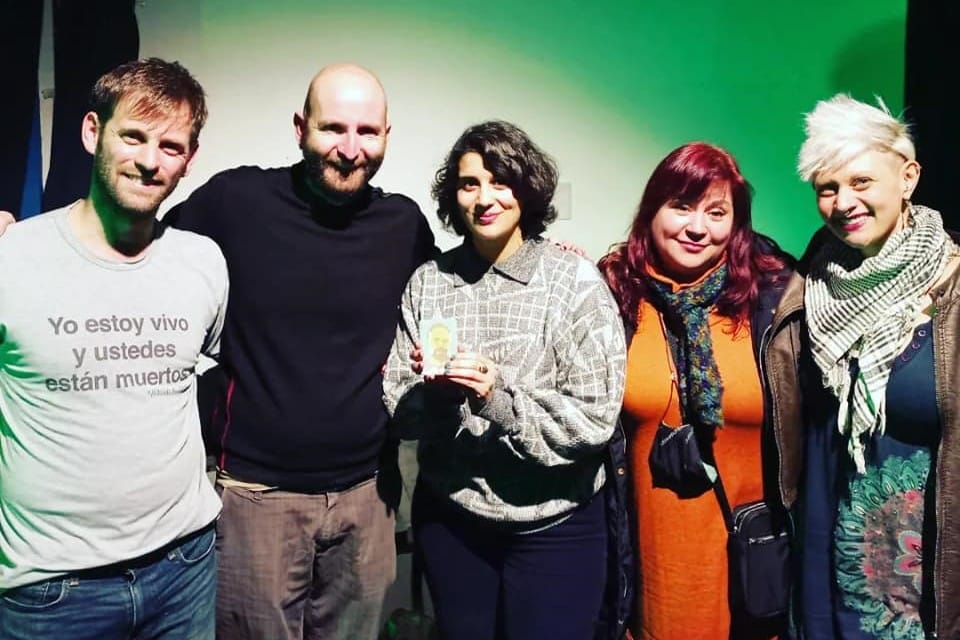
From the fantastic corner, we hear from Thelma Contino, member and coordinator of the Argentine smial of the Tolkien Society, recently named Hyarnantir. Ansible has become the meeting point for the smial's monthly gatherings, where one Saturday afternoon a month anyone can drop by to chat, debate, or present on some facet of the Great Bard of Oxford. In fact, there's a meeting today –Saturday, November 8, 2025. "I love that the Library helps us honor the motto Speak, friend, and enter", Thelma says. "Which is to say: everyone's invited." Literally carved in stone, "that's the core principle, so we can avoid the snobbery of 'only I may speak because I've read the book 354 times'".
She adds: "The atmosphere at Ansible is spectacular and itself shapes the meeting. You sit in a circle, in a living-room-like space, surrounded by books, sipping something tasty, and Carles –whom we all adore– pre-selects materials related to the day's topic. The conversation can carry on until we're talking about flying pigs. Sometimes we're mid-debate and he gets up, grabs the very book we're discussing from the shelf, and hunts the quote. And we're all nerdy enough to find the page in three seconds. The ambiance becomes part of how the meeting unfolds".
Thelma recently borrowed Patrick Rothfuss's The Name of the Wind, a choice that made waves among her friends: "I caught plenty of flak. 'Don't do it! It's a trilogy and only the first two volumes are out! Why would you do that?'" Occupational hazards.
From the horror side, Carles notes that Ansible's catalog also features work by Nuevo Terror Argentino (NTA), a collective that –far from being full of ghosts– thrives with self-managed vital signs. Bringing together writers, musicians, cultural organizers, and editors, NTA pushes new Argentine horror into circulation, inviting us to set aside the usual "big names" and dive into anthologies like the recent 24 relatos siniestros (now in its second edition), presented at Ansible and featuring authors such as Elizabeth Rivadeneira and José María Calvo.
More traditional publishers have taken notice, too. Last Halloween, Colihue launched a volume of H. P. Lovecraft stories –selected, translated, and annotated by Luis Pestarini (editor of Cuásar, respect your elders) with an introduction by Professor Pablo Debussy. "I confess that I once thought Ansible's distance from the city center would work against it", Castagnet adds. "I was very wrong. I'm now convinced of the crucial importance of neighborhood and community. The spaces city dwellers need as much as water are often created far from the tourist tumult. Ansible's good health proves it –as does the sheer number of events happening there." If you need a nudge to leave your burrow, a quick look at Ansible's IG will reveal a full spread of cycles, screenings, meetups, and more.
All right, time to land this. To guide new readings, I asked Carles for recommendations from the Ansible catalog. For science fiction, he suggests Octavia Butler's story collection Hija de sangre (Bloodchild). For fantasy, Fábulas invernales by Carlos Gardini (which, he notes, could also be read as science fiction). And for horror, Legión by Salvador Sanz, a comic/graphic novel. The debate over "front labeling" in literature will have to wait.
Finally, today –Saturday, November 8, 2025, at 4:30 p.m.– the Hyarnantir smial meets again, and as Thelma said, there's room for everyone. And if someone should demand a password at the door, remember, friend: the word for the world is amigo.
Yours very affectionately,
Ansible Member No. 122.