From Luxury to Everyday Ritual: The Story of Argentine Ice Cream
From Andean snow hauled on horseback to industrial refrigeration, Argentina’s ice cream history weaves together technology, migration, and exceptional ingredients.

29 de ene. de 2026 — Natalia Torres
Light-blue denim skirt with pockets, a T-shirt with a little boat printed on it, white leather Mary Janes. If I remember exactly what I wore that day—nearly 40 years ago—it’s because the memory is tied to a small cup holding two scoops of ice cream. Soppelsa was Córdoba’s most popular ice cream shop—much later I learned it was also a big name in Mendoza and San Juan—and going there felt like an event.
Unlike Buenos Aires, where I’ve lived for more than a decade, my hometown has almost no traditional neighborhood ice cream shops anymore, maybe because of the twists and turns of regional Italian immigration. Back then, getting ice cream meant pausing the backyard kiddie pool for a while, taking the green Fiat 128 out of the garage, and driving a solid 20 minutes toward Parque Sarmiento. And dressing well, of course.
From the Mountains to Industrial Refrigeration
In Italian, sotto means “below.” That’s why people born in the shadow of Monte Pelsa, in Veneto, were given the name Soppelsa—built with the prefix so-. One of those descendants, Pedro Soppelsa, arrived in Mendoza in 1924, bringing his trade as an ice cream maker. Soon his children, brothers, and nephews joined him, and together they built an empire of which only one location remains today, in the city of Mendoza.
The Italian chapter of Argentine ice cream is essential—but not the whole story. Ice cream is born, grows, and changes in step with its main raw material: cold. Before there were artificial ways to produce it, ice cream was closer to sorbet and was made with snow. Mendoza led the way again: the Andes were close enough to provide a steady supply of fresh snow carried down on horseback. In Buenos Aires, things were far more bourgeois. Early ice creams were scarce and outrageously expensive, because the ice had to be imported.
Like so many other democratizations in Argentina, ice cream’s came with a paradox. As cold stopped being a luxury—after refrigeration systems appeared—wealth shifted hands. Industrial refrigeration and meatpacking magnates became millionaires. Salted meat no longer made sense; surnames like Armour and Swift became something like royalty; and Italians stepped in to give ice cream its final twist: craft, and accessibility.
For food critic Fernando Vidal Buzzi, a pioneer of the genre in Argentina, immigrants here grew accustomed to abundance. The habit of pairing milanesas with pasta—or adding a couple of fried eggs to a mountain of potatoes—comes from that pilgrim’s arrival in the biblical land flowing with milk and honey. Why put the Bible and the water heater on the same plate? Because I can.
“Argentines like to sit in front of a full plate, and we believe this stems from a hungry matrix—genetic or cultural, depending on how you look at it—made up of layers of hunger: Indigenous peoples, Spaniards, gauchos, soldiers who fought for independence, and immigrants (for whom hunger, as we know, was a major reason to move to these fertile lands),” he once wrote.
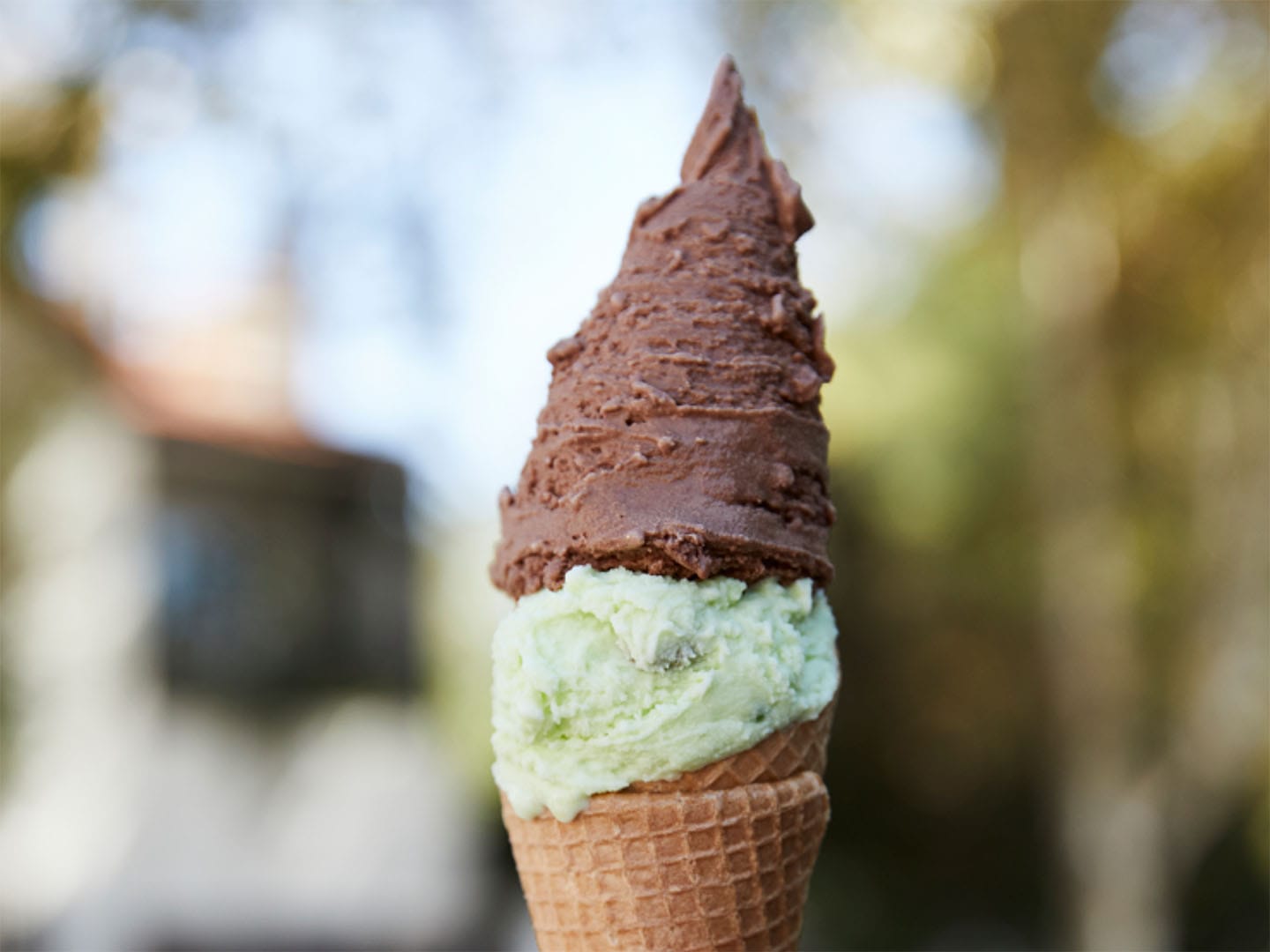
Ice cream is not immune to that logic. Italian know-how met raw materials that were not only abundant, but outstanding. Dairy cows raised on quality feed became milk and cream with great fats—and, in turn, ice creams with a particularly silky texture.
The Mirage of Endless Season
The collision between industrialization and that hungry matrix Vidal Buzzi described creates a peculiar supernova where homogenization and variety explode at once. Immigration takes on a new face: globalization. Ice cream goes on a stick, gets hawked by shouting vendors on the beach, ends up in corner kiosks. And sometimes the pale-blue scoop tastes exactly the same as the pink one.
“European inputs made the evolution very practical. But in both ice cream shops and pastry shops, everything turned into flavoring paste,” says Pablo Comisso, master gelato maker at Il Calabrese in Mar del Plata. He also recalls that in the early days of Argentine gelato, “each immigrant had their own recipe, and they were very, very jealous of it—so every shop had its own distinctive touch.”
That fight—shared by much of modern artisanal ice cream—plays out on two fronts. On one side: devotion to respectful processes. On the other: an open challenge to a mirage built on industrial shortcuts and food manipulation.
“Availability of raw materials in big cities is often misleading. Finding apples in spring or strawberries at the beginning of winter in Buenos Aires says less about nature than about producing or preserving a product—driven by consumer habits and a diet that isn’t very diverse,” reflects chef Guido Tassi in his book Helados en Argentina.
“This monotony, seemingly irrelevant, shouldn’t be treated as a personal dietary preference or a ‘style choice.’ These practices bring negative nutritional consequences, high costs derived from a forced production system, and pollution—or a ‘carbon footprint’—as a result of the long distances between producer and consumer.”
From his restaurant El Preferido, Guido is one of the main champions of seasonality in ice cream making—without forgetting, of course, to flatter classic palates with dulce de leche, zabaione, and chocolate. “The favorites are almost always the same,” Pablo agrees.
“Pistachio is really fashionable now—there’s an obsession with it. But I do extreme things sometimes. I’ve made asparagus ice cream, truffle ice cream with Gruyère, or truffle with coffee—and honestly, it’s really good. Right now I’m making one with Patagonia morels, a mushroom with a very woody, earthy flavor. I also make ice cream with nori or wakame seaweed, which are packed with nutrients. Once you discover that world and you can step into it, it’s amazing. I think that’s where cooking in general is headed. And when I do those extreme flavors, people come to try them—they dare. And the truth is, they sell really well.”
Sacred and Profane
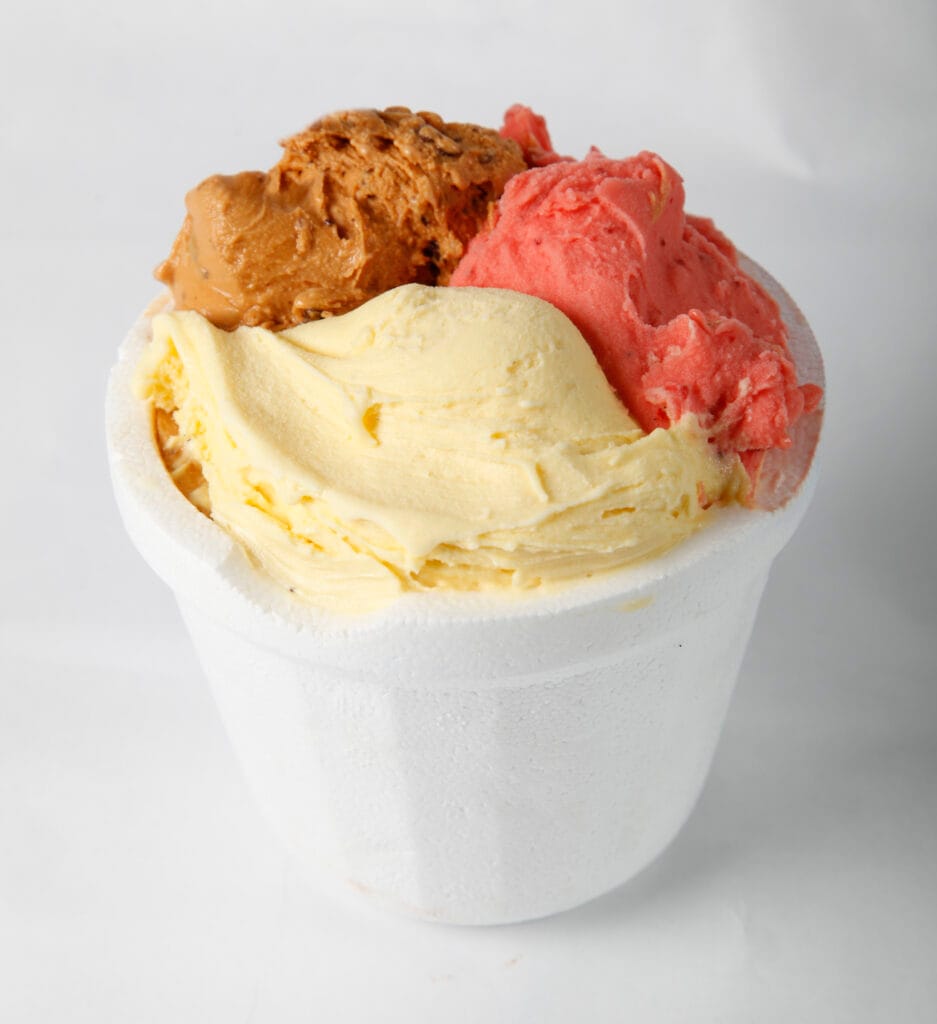
“While the best ice creams—the high-quality ones I write about in my articles—emphasize the quality of their ingredients (...), menta granizada follows a lonely, unique path: the false. Flavorings and colorings for an ice cream that has never in its life seen a mint leaf, so delicate and fragrant. And yet menta granizada—the old-school kind—remains one of my favorite flavors. Because that’s how we are, in ice cream and in life: we say one thing and do another.”
That confession belongs to food writer Rodolfo Reich in his beautiful book Menú del día, and it’s a perfect way to frame a crossroads that isn’t only about ice cream, but about food culture as a whole—and even cultural consumption in general.
In a great Friends scene, the group plays a trivia game about each other. That’s how we learn that Rachel always claims her favorite film is the refined Dangerous Liaisons, but the true number one on her list is the comedy Weekend at Bernie’s. I’ve always thought that doesn’t mean she’s never seen the first one. It just means that when we want to escape, the closest exit is usually the best. Not for nothing does Mafalda speak of “a vanilla-and-pistachio escapism.”
That tension between artisanal and industrial is also essential to Argentina’s ice cream cultural map, precisely because the border between the two worlds is far from clear. And, returning to cinema, sometimes the most effective directors are those who manage to bridge mass sensitivity and auteur ambition.
“Most artisanal ice cream shops we know don’t use fresh strawberries to make their strawberry ice cream, nor do they freeze the strawberries they buy. In almost every case, they work with pulp—more or less natural,” Rodolfo notes. This is a crucial piece in the balance between price and product, and therefore in ice cream’s popularity in Argentina.
“I think there are more old ice cream shops surviving modernity than in almost any other area of gastronomy—even pizzerias or bakeries,” he adds. “They’re part of the neighborhoods, adapted to the local palate, to local customs, to ways of eating—to the pleasure of meeting over ice cream.”
In his essay Ritual as a Form of Indoctrination, Spanish philosopher Pedro Gómez García writes that rituals make the hidden present, the invisible visible, and materialize the spiritual. They place tangible elements in the service of something imaginary, which nonetheless keeps secret ties to the structure of social reality. They are also a form of communication between people and the symbolic constructions that project the meaning they give to social existence—or to the world.
So if that meeting over ice cream returns, and if neighborhood ice cream shops endure, it’s also because we need them as conduits for rebuilding scenes and inhabiting them again. Not only those tied to personal nostalgia and communion with peers, but also the ones hidden in ice cream’s historical plot: the conquest and democratization of a luxury; the immigrant’s wonder in the face of abundance; the pleasure of holding multitudes inside a single shared ritual. The glory of pairing a sweet scoop of dulce de leche with a sharp lemon one, and another totally random scoop of quinotos in whisky. Why? Because I can.
Postscript: Four Ice Cream Shops Outside Buenos Aires City (CABA)
Il Calabrese (Mar del Plata)
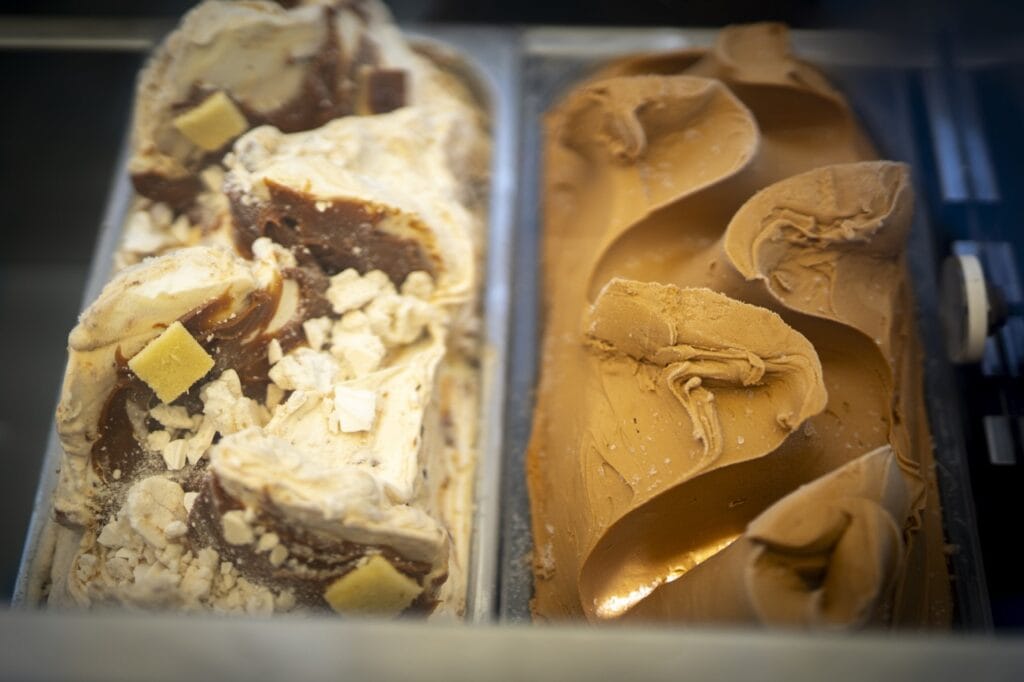
Il Calabrese was born with the new millennium, but it carries a vintage spirit through the craft of Pablo Comisso, a gelato maker with almost four decades of experience. Despite his adventurous streak—reflected in experimental flavors—here the vanilla is made with real vanilla bean, the dulce de leche is homemade, and the pistachios are ground right before production.
Famiglia Perin (Mendoza)
Right in the center of the capital of one of Argentina’s main pistachio-producing regions, Famiglia Perin does its homework—and then some. On the menu you’ll find not one but two different pistachio flavors: one made with local pistachios (sweeter, bolder) and another with Italian pistachios (more subtle, with a faint salty edge). Another winner: lemon, made with juice and zest.
Catania (Rosario)
Rosario is proud of its ice cream tradition and is probably, after Buenos Aires, the city where old-school offerings and new ideas are best balanced. Within that landscape, this ice cream shop—founded in 1952 by Bolognese immigrant José Capitano—resists gentrified décor with an admirable retro marquee, and is known for its signature zabaione, one of the first flavors José ever made.
Del Bent (Córdoba)
After Soppelsa closed—and after the ’90s icon Dolce Neve—Córdoba felt somewhat orphaned of symbolic ice cream shops. In 2014, Del Bent appeared to pick up the Italian legacy of careful craft, combining it with an experimental drive and a love for Córdoba’s landscape. The shop also releases special editions dedicated to native ingredients such as arrope de chañar, suico, and carob.