With the heart in your heels: A chronicle of the Argentina-Paraguay border
15 de ene. de 2026 — Juan Báez Nudelman
There were so many of us and I didn't know who I was
There were so many of us at the border
Coiffeur, "Frontera" (No Es, 2006)
There’s a place in Terry Pratchett’s Discworld that reminds me of my hometown: Ankh-Morpork. I remember reading The Colour of Magic for the first time at seven or eight and being fascinated by the way it describes two cities—twinned by the river, divided by class. Without realizing it, old Terry was sketching a fantastic, amplified version of Posadas and Encarnación.
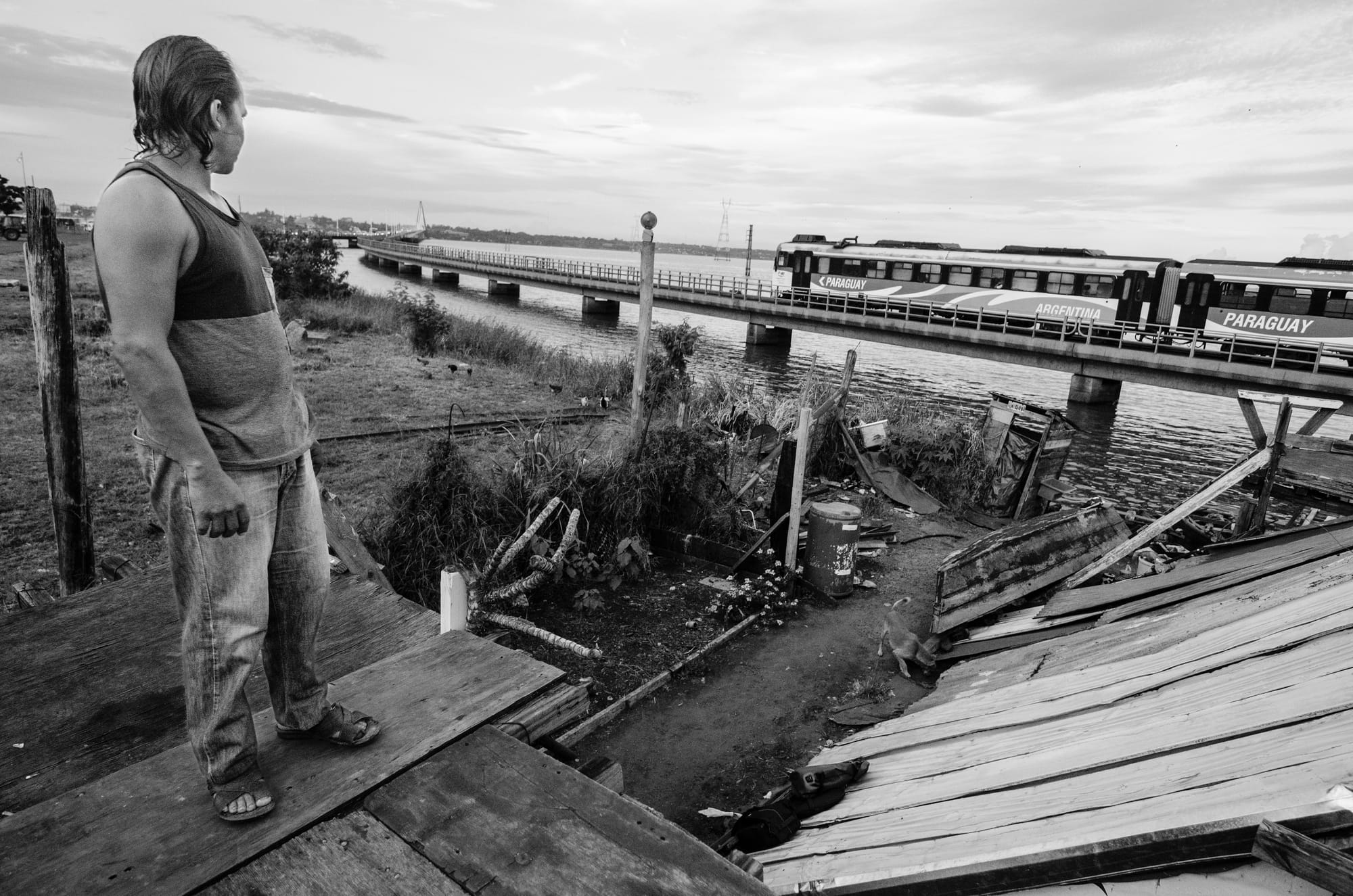
By the same logic as Piltover and Zaun in League of Legends, Posadas and Encarnación form a two-nucleus cell that functions as a single organism. Each side has a degree of autonomy, but as a kind of consortium they share the same fate. And there’s another coincidence: a bridge—both symbolic and literal—ties them together. In real life it’s the Roque González de Santa Cruz International Bridge, named after the Jesuit who founded the first settlements on both banks of the Paraná.
It’s true that the Triple Frontier carries the stamp of an imaginary built from tourism, investigations, fiction, and documentaries. My dad, for instance, had the VHS of The Mission (Roland Joffé), starring monsters like Jeremy Irons and Robert De Niro. I grew up knowing Iguazú was a magnet even for Hollywood, which rarely looks this far south. And yes—between the Paraná rainforest and the Falls—it’s a hell of a location. But things happen here too, the customs officer said.
So let me tell you a few things I’ve learned about this particular border: Ankh and Morpork. I mean, Posadas and Encarnación. The first parallel is aesthetic. Posadas is the pretty one—the buttoned-up, Buenos Aires–wannabe one—while Encarnación embraces its Latinness with gusto, plus a few hints of what you might call “Greater Arabia,” which I’ll get to. Like a Phoenician society, there’s a prevailing sense that to be is to have. Your family, your surname, your place in the community—everything is marked by your rung on the pyramid.
One example was Parque Japonés, a dance complex that existed in Posadas between 1930 and either 1953 or 1956 (depending on who you ask). It was called that because it was run by the Yamaguchi family. It had four dance floors arranged from the top to the bottom of the Paraná riverbank. Their names were Caté, Palmolive, Saldos y Retazos, and Puloil.
What set them apart? Social class, obviously. Caté was the “posh” one, the most obvious, but the others are great too. Palmolive—one of the first scented soaps of the time—was for the upper middle class. Saldos y Retazos was where shop clerks, traveling salesmen, and the broader working crowd went. And at the very bottom—the bottom of the pot—was Puloil (a powdered cleaner), where maids, laborers, and bricklayers went on their days off to strut their stuff on the dance floor.
As in any system, there was room for contraband—A. Salcedo would say so. Men drifted between floors trying to chat up girls. Women couldn’t leave their seats and could only dance if a guy nodded at them—if he invited them. The rich boy fell for the poor girl, or the employee fell for the boss, and so on. Where there’s a law, there’s a loophole.
To this day, the feeling persists that we’re always together—but never mixed. I remember sitting in a bar, beers in hand, in a circle that included the Minister of Agriculture and Production, who—drunk—was trying to explain why Spinetta mattered so much culturally. We look equal, but we’re not: nepo babies exist everywhere. We share space and territory, but not the same reality.
What I mean is that Posadas has always had a community of pretentious locals—people who’ll even soften their accent for outsiders to keep it from sounding too Paraguayan. The first families to plant themselves here were owners of yerba mate and sugar businesses based in the province’s central and northern zones, in the thick jungle highlands (extractivist model included, of course). Huge houses, imported tile and masonry from Europe and Africa, lipstick and rouge.
One of those buildings is “La Rosadita,” our Government House facing Plaza 9 de Julio, which once belonged to Rudecindo Roca, brother of Julio Argentino Roca. On this side, nothing was ever grown—Encarnación handled that (We do not sow, as the Greyjoys would say). Most of what we eat still comes from elsewhere. And even with money, life here can’t have been especially pleasant: mosquitoes, vermin, heat and humidity, and scoundrels who ended up as mensúes—debt-peons in the yerba mate economy. On this bank: high society. On the other: the rough postcards of the jungle work camps.
Both cities deny—or brag about—those historical positions. And once Argentina fixed its borders as a nation-state, everything intensified. Like in Hideo Kojima’s Death Stranding, one of the key figures on this map is the pasero: the person who ferries goods from one side of the river to the other. With the appearance of the San José Trench during the war against Paraguay, that practice began to be (mis)labeled “smuggling.” I say mis-labeled because a centralist view of power is what pushed a deep-rooted custom into the realm of illegality. I’m not the one saying it—the historian Silvia Gómez, from Posadas’s Municipal Historical Archive, told me. I once went to ask her for some information and used the c-word. She glared at me and said something I’ll never forget: “Don’t you dare call a pre-existing cultural practice smuggling!”
With the new border, women used wide skirts and loose dresses to stash tobacco, corn, clothes, cane liquor, marijuana, coke—whatever. The paseras are a favorite emblem for any academic eager to analyze the local phenomenon with anthropological fascination. Their practice also gave rise to one of the city’s most emblematic places: Mercado Modelo “La Placita.” In short, it’s a kind of La Salada that’s about to turn seventy, part of the city’s first neighborhood, Villa Blosset.
In the ’90s, it was where I bought bootleg Power Rangers toys: I had the whole team and the Megazords, and I’d pit them against my Dragon Ball figures. With the new millennium came chipped PlayStations and the three-games-for-three-pesos deal—Pokémon, Yu-Gi-Oh! cards. All fake, but all ours: Nikei, Adibas, Punna. In this city, buying the original often makes you look a little stupid. It happens with everything—the little JBL speaker, Xiaomi phones, Labubu, whatever’s trending.
A few weeks ago, walking into the office, I saw the cleaning guy wearing Travis Scott Jumpman Jacks in the original launch colorway. I checked StockX: current resale is around $330. He wears them to mop floors because, as Philip K. Dick suggests in The Man in the High Castle, things only have the importance we assign to them.
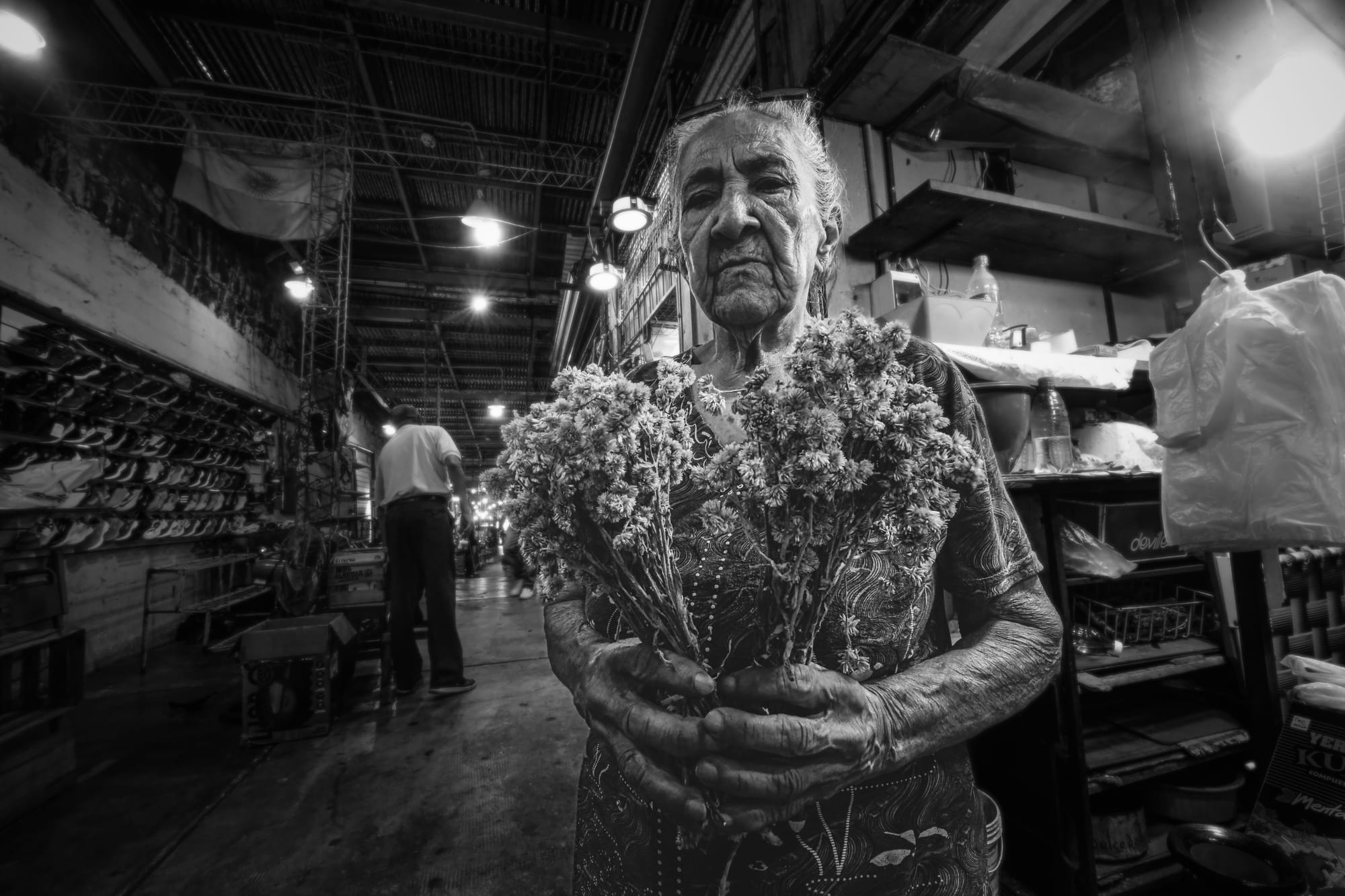
Marcos Otaño, who shot the photos for this piece, lived through other phases of this shiny Third-World Miami. He went to capture current scenes at La Placita—though today’s reality is far from the splendor you imagine. As a functional arm of local identity, it was where people from Posadas could get status symbols at near-cost prices or pegged to the guaraní. Everything arrives from Encarnación, and nobody questions how legal it is—or thinks inspections are a great idea. There’s also a corridor of stalls that feels older: herbs for mate, yerba canchada (used for tereré), syrups, spices, shelled corn for chipá guazú, or a proper sopa paraguaya.
Marcos talked to one of the long-timers there and hit her with the hard question. The audio cuts out halfway, but it helped me understand how things have shifted. Secundina Acosta is 88 (“going on 89”) and sells herbs and natural remedies. Macroeconomics—echoing the ’90s—creates an asymmetry with Paraguayan commerce. And that’s not all that’s changed, says the seer. Today a small handful of people control many of the stalls, and “since they come with money, they do whatever they want.” She also complained that to sell herbs now “you have to take courses.”
The exchange-rate situation pushes us to cross the river in search of better prices in our sister city—contributing, like all good Argentines, to capital flight. It reminded me of Ana Camblong’s essay Habitar la Frontera, where she writes: “No one consults us—or even warns us—about what the latest geopolitical fashion will be next season.” But back in Méndez’s day there were no monsters like Temu and Shein, which have completely captured this sanctuary’s target audience. A cruel irony: the global market devouring the Mercado Modelo.
I asked Marcos what he thought of this whole border issue. I realized we went out to gather material and skipped that first conversation between us. To my surprise, we noticed the same things. “It’s super interesting because the social side matters a lot—class, too—and it’s closely tied to what’s informal,” he told me in a WhatsApp voice note. We also agreed on the chiaroscuro of that informality.
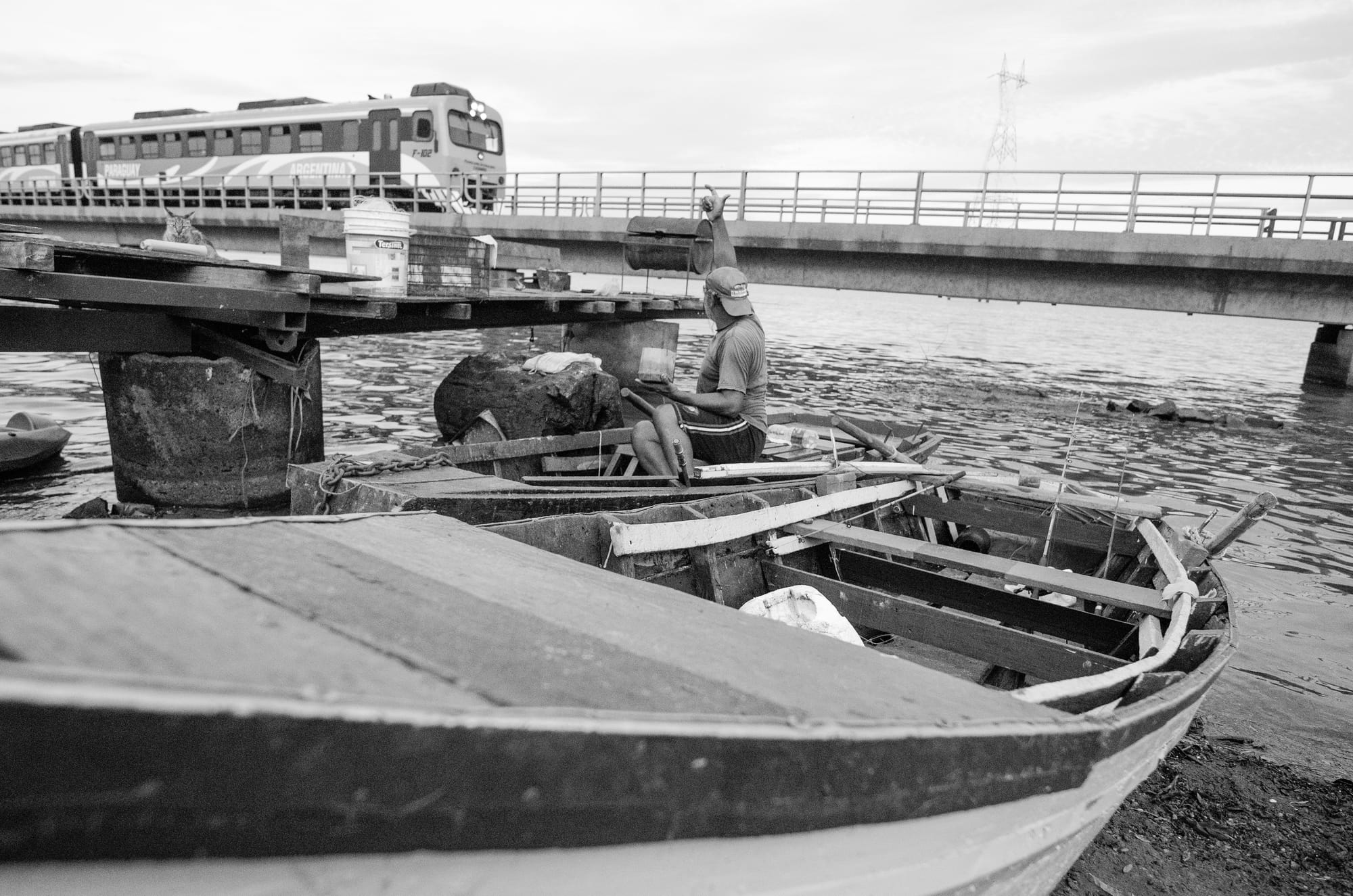
He also said that back then—from the Zaimán stream to Villa Cabello (a neighborhood on the western edge where the Mártires stream meets the Paraná)—“five hundred thousand families lived there, and now there are 17 houses.” I didn’t buy the figure and kept the quote marks because, to be fair, the city’s current population—according to the 2022 census—barely reaches 400,000, including what people call Greater Posadas (Garupá and Candelaria included).
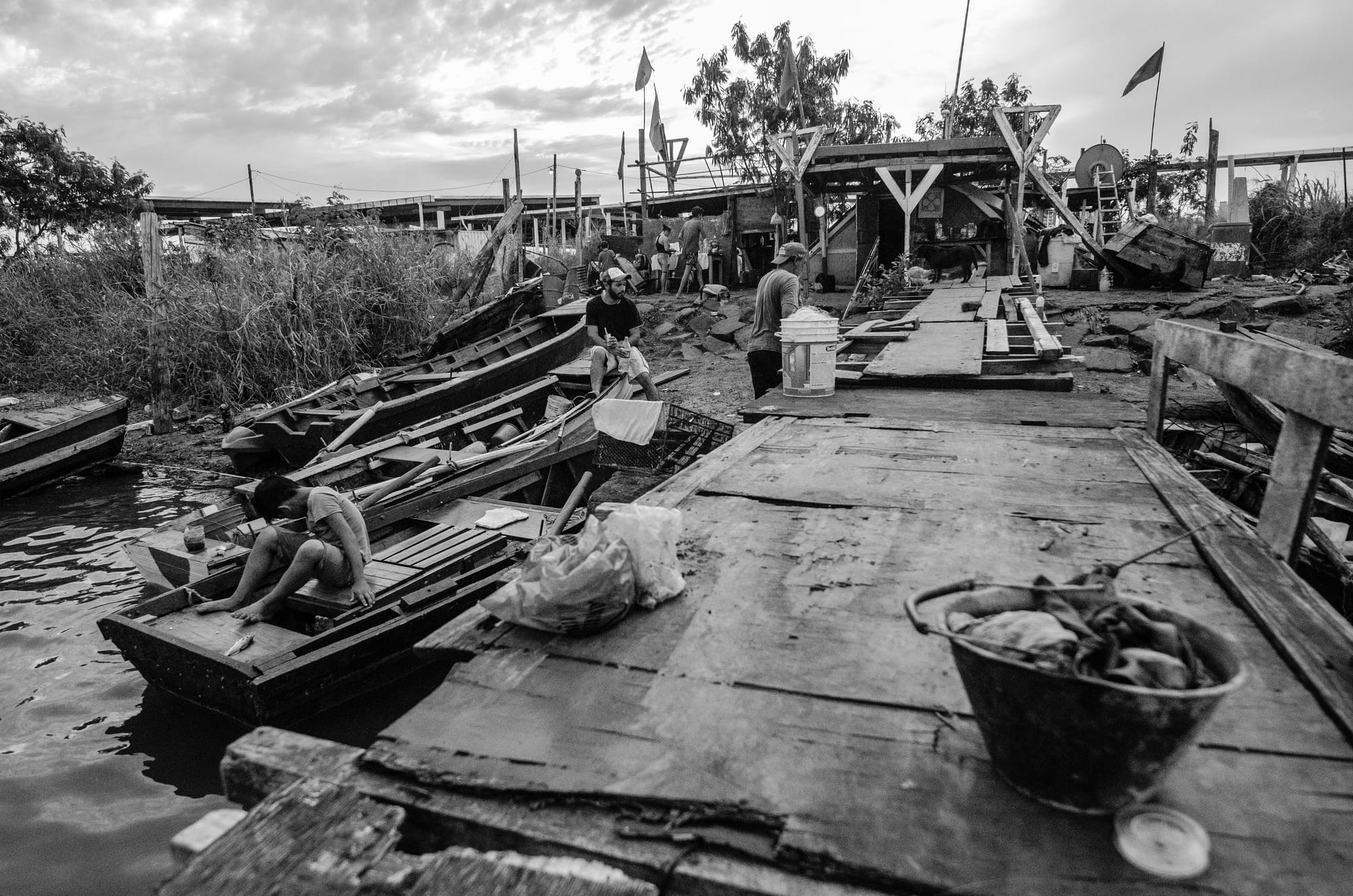
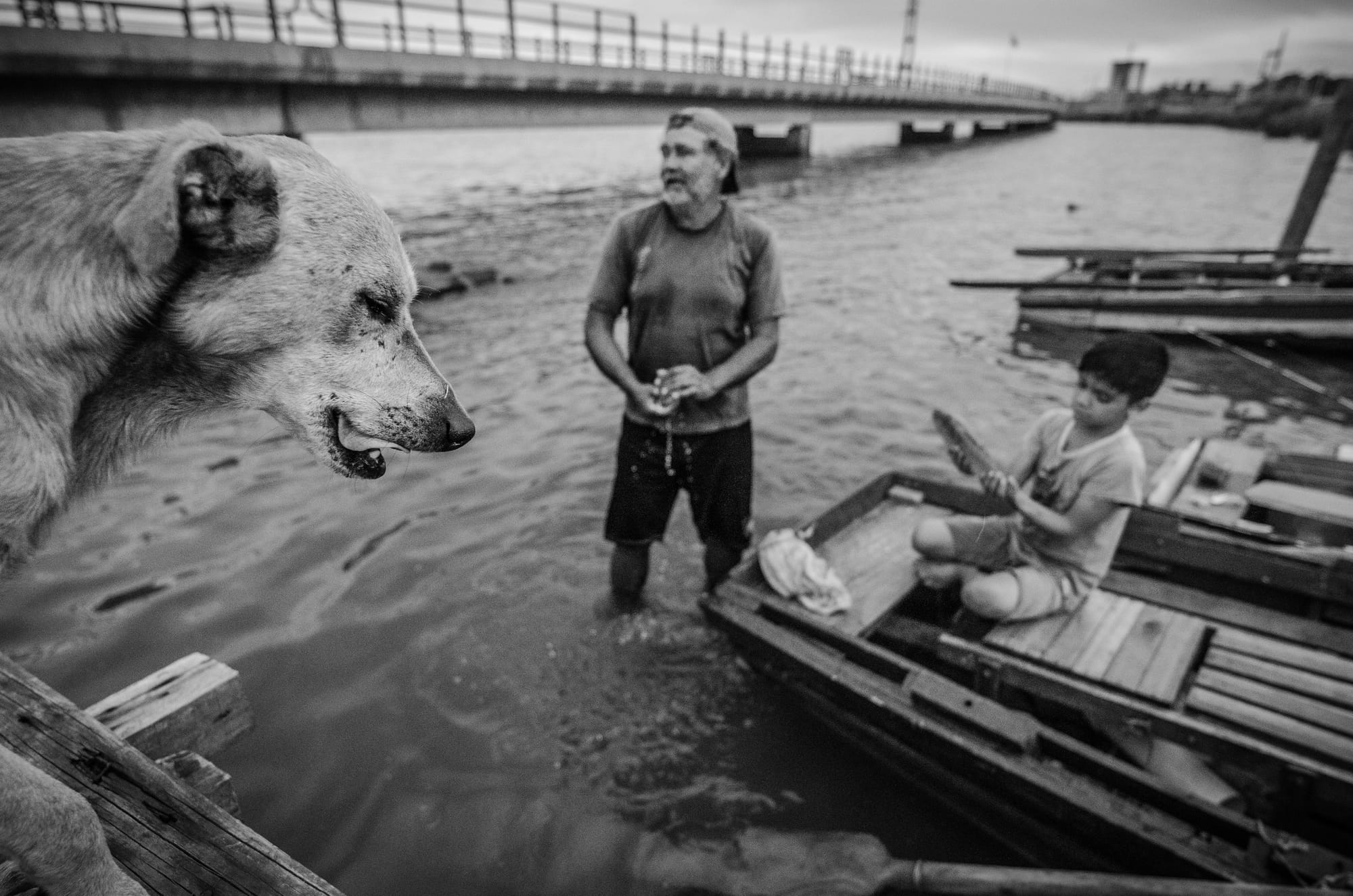
But I get what he meant: the Yacyretá hydroelectric works raised the river level and permanently redrew our map. Places are underwater now—places where I spent my adolescence: the port, the ferry behind the old train station, Laguna San José. We can’t return except through memory or photos. Marcos put it this way: “The market did its thing—and not the ‘Mercado Modelo,’ like that woman said. That market was created for poor people.” And all those people who lived off fishing, brickmakers and their kilns, washerwomen—lost trades, roots, identity: “It was cultural plunder, more than anything.”
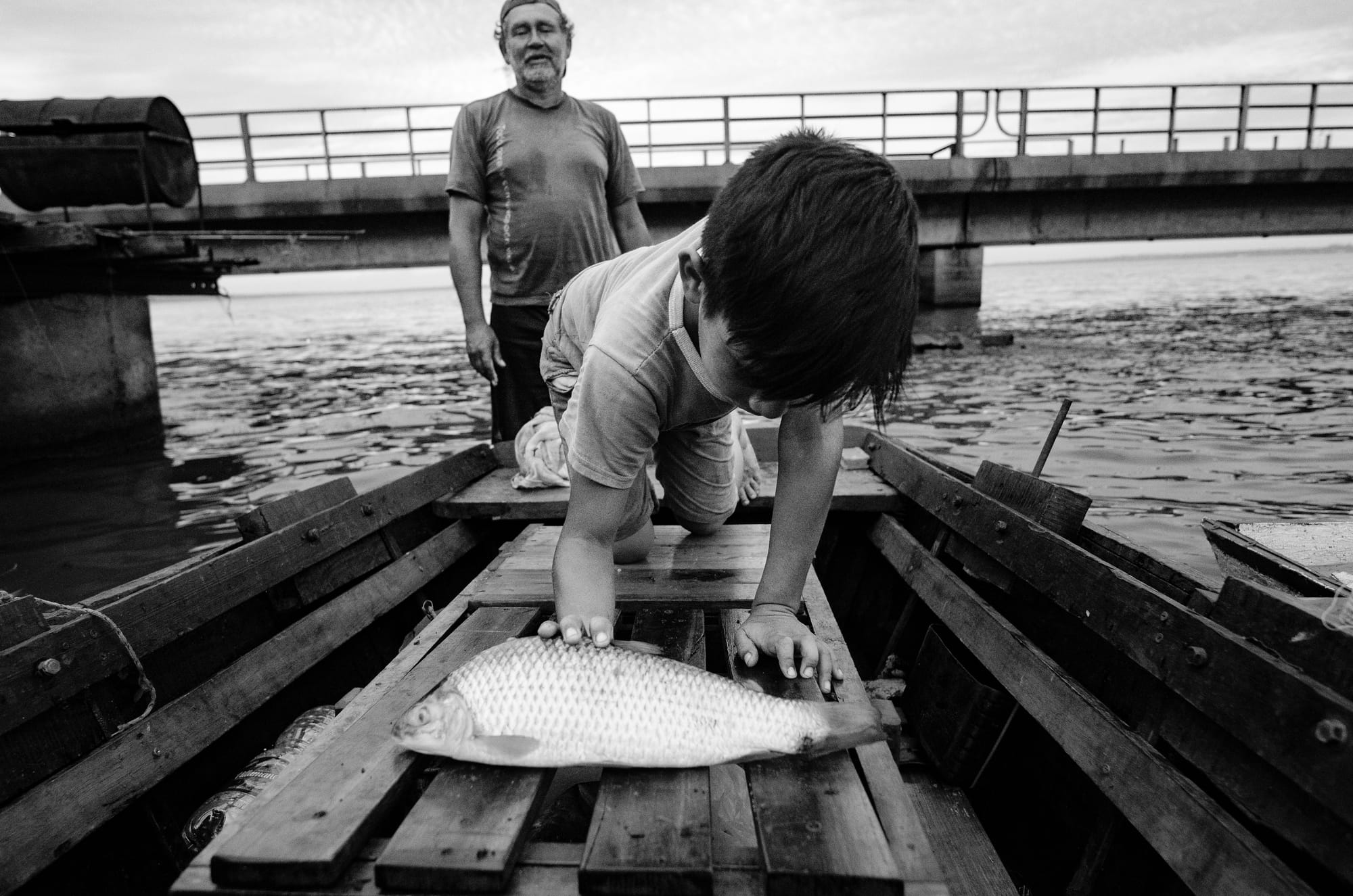
Which brought me back to Camblong: “It is assumed that the heart is not only located in the middle, but that it also performs its vital functions as the primary hierarchy.” Well: like Ankh-Morpork, here crime is legalized, and all that’s missing is the mayor of Posadas saying—like Lord Vetinari—“If crime is inevitable in a city, at least let it be organized and pay taxes.”
But the fun of the border is that we’re the sum of all those contradictions. Or, better said by Camblong: “We are inhabiting the paradox of the central confines, of the heart in the heels—perhaps the Achilles heel of the national state?—of internal distances and external proximities. To inhabit the border is to settle into the courses of paradox.”
I think it’s the best ending possible, but I’m sharing the full text so you can enjoy it too: