The Hidden Gem of Argentine Working-Class Science Fiction: The Fire Batrachians
What happens when the fear of a petrochemical explosion in La Plata collides with an alien invasion? The Fire Batrachians is the long-lost novel that weaves together the trauma of the bombings, the working-class mystique of Berisso, and space toads that eat oil. Pure Argentine science fiction.
25 de mar. de 2026 — Facundo Dell Aqua
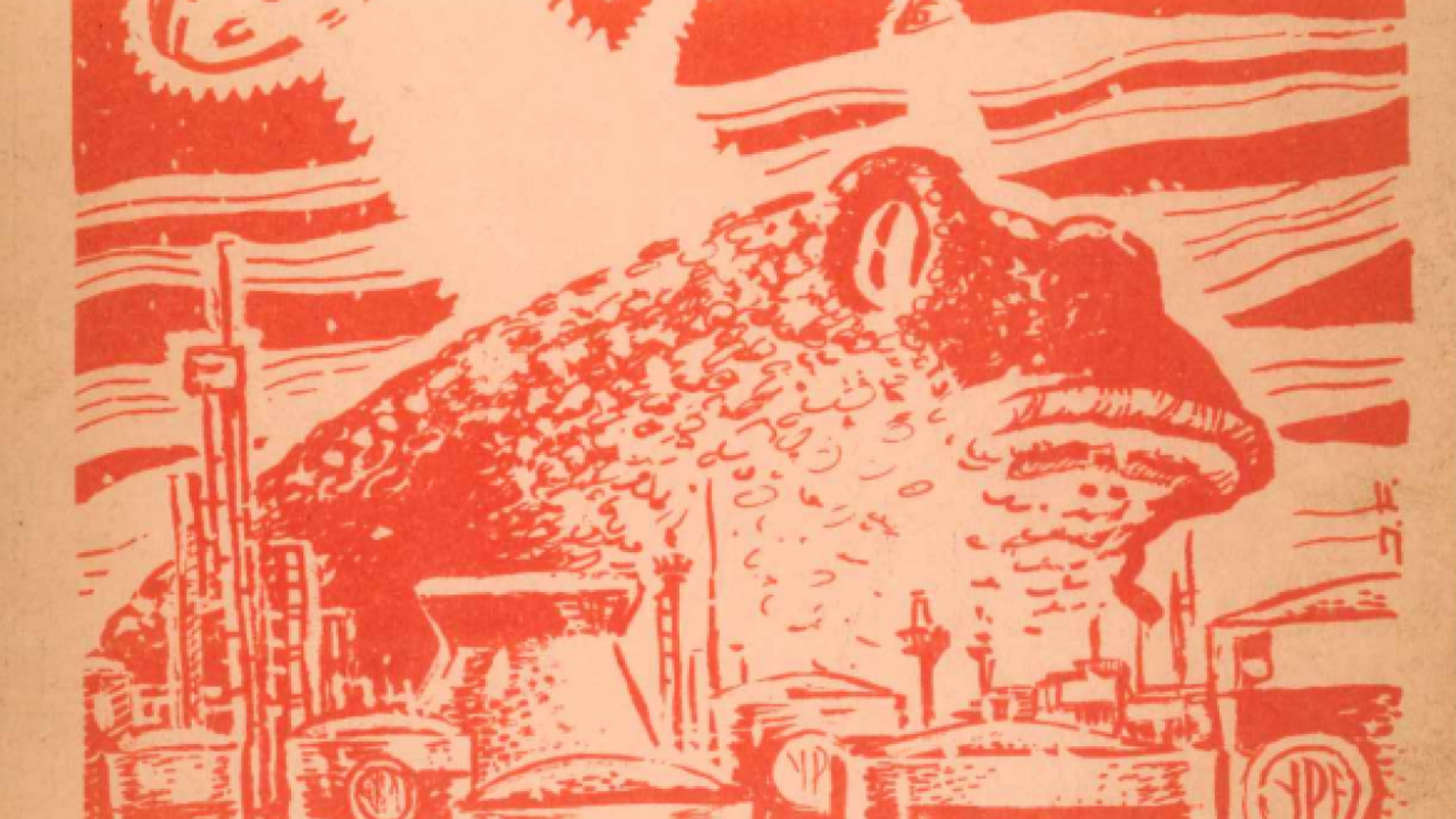
There’s a ghost that haunts the homes of every resident of Berisso, Ensenada, and Greater La Plata (Argentina). It’s a collective fear that isn’t spoken aloud, not because it’s taboo, but out of fear of invoking tragedy. Because it’s not an illogical fear. It’s grounded in reality. It was a real risk at some point in Argentine history.
Like a vast monster, the La Plata refinery has a crude oil refining capacity of 210,000 barrels, a being made of immense tanks, smokestacks that belch fire twenty-four hours a day, seven days a week, with a parade of tanker trucks coming and going and generations of workers who have been around since the Alvear government to the present, coexisting with the great ghost. With that great dragon.
 Roberto Chuit Roganovich
It’s no wonder. The elders have established an oral tradition of telling their descendants that, following the coup of the Revolución Libertadora (1955), there was a real threat to bomb the refinery, which can be read in the opening pages of Operación Masacre. Part of the myth is that Perón stepped down from the presidency for that reason. What is not a legend at all was the exodus of the inhabitants of the city of Ensenada to escape a fiery death. It was no small matter: on September 16, 1955, the same day as the bombings of Plaza de Mayo, there was an attack on the Campamento neighborhood. Three days later, naval forces led by the ARA 9 had blown up 9 of the 11 tanks at the Mar del Plata refinery.
The elders have established an oral tradition of telling their descendants that, following the coup of the Revolución Libertadora, there was a real threat to bomb the refinery.
Similarly, the generation that lived through the La Plata flood of 2013 testified that, while the waters drowned the victims of the disaster, many of those affected watched as a ball of fire began to rise from the other side of the woods. The basins filled with treated water overflowed, and the mixture of industrial and rainwater caused an oven and a distillation unit to ignite. Death by fire and water. But fortunately, once again, and even though it was in the midst of another tragedy, that apocalyptic ending was avoided.
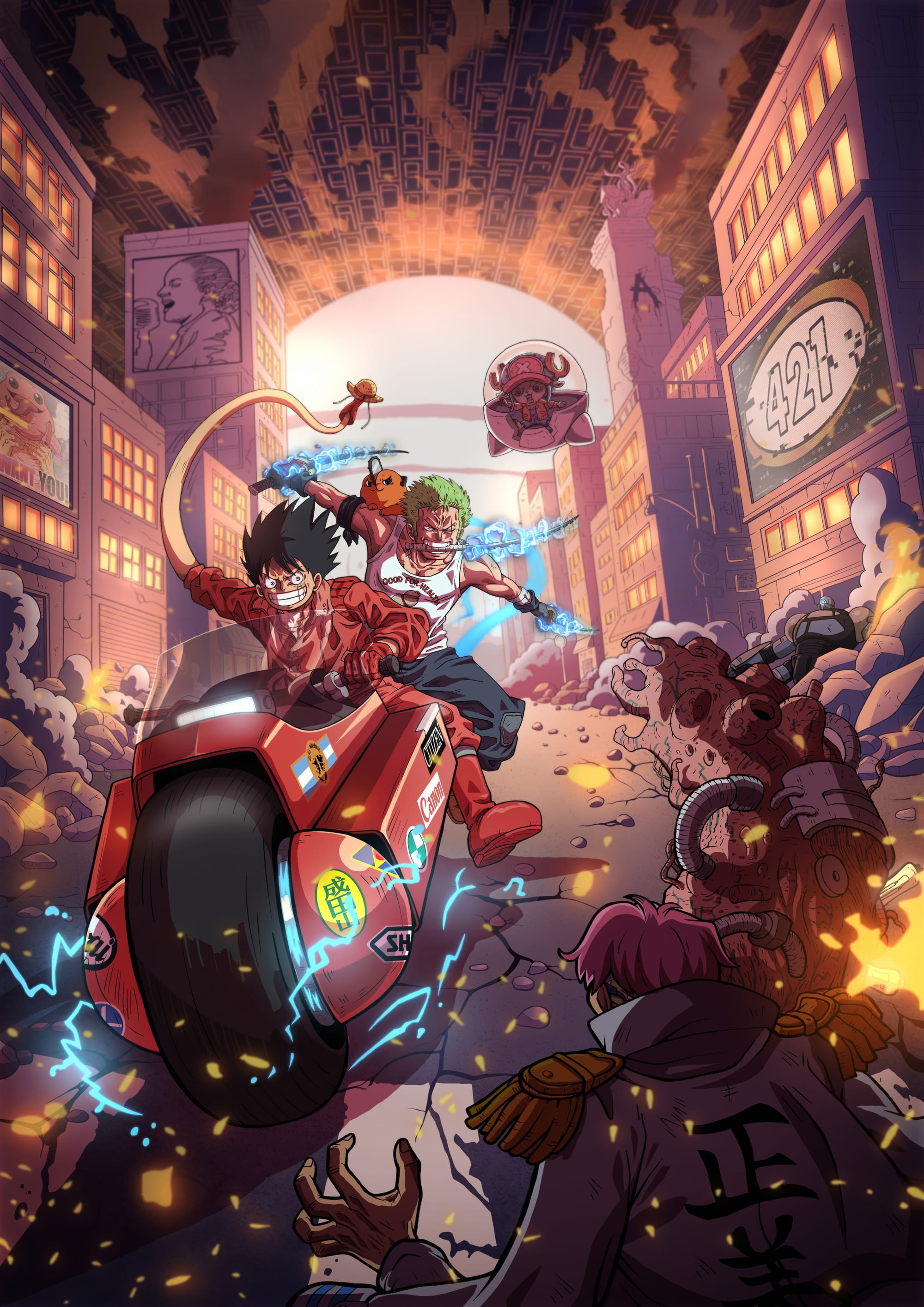
The ever-present ghost of an explosion that could take the whole city. Like something out of old videos of atomic tests or the classic scene from Akira, where Tokyo is pulverized in the blink of an eye. Something fictional. Something that has already happened.
“When they reached the tank, they surrounded it. They climbed halfway up and there they were, pressed against the tank, forming a sort of tight belt. The pulse of its light became sharper. Suddenly, a tremendous explosion threw him to the ground and the tank ignited. Almost immediately, the coded whistle of the alarm siren sounded. Juan reacted as best he could and, crossing the Avenue, found himself running through the field towards 66th Street.”
On February 10, 1982, something emerged from the depths of the stream near the petrochemical plant and set off a pandemonium that would require the joint action of factory workers, police, military, and scientists from the University of La Plata. An unstoppable threat, like the ships in Mars Attacks, Independence Day, or The War of the Worlds. But they would take an unusual form. They wouldn’t be Kaijus, they wouldn’t be Triffids. They would be frogs.
“The Fire Batrachians” is a 50-page novella that was printed in a sort of little-known pamphlet, of which only two or three copies remain. The work of writer, poet, politician, and distinguished citizen of Berisso, Raúl Filgueiras, the plot jumps from one false protagonist to another, constructing a choral narrative in which humanity makes first contact with an alien race and the wave of attacks on the YPF refinery. And these witnesses to the hostility of civilizations coming from distant stars are not exactly action heroes or men of superhuman feats. We’re talking about workers, soldiers who have to wield a flamethrower, or English-named academics who didn’t study to fight an indestructible enemy.
 Juan Ruocco 🧙♂️
Julián Axat details in an article on his blog El Niño Rizoma the symbolic rescue of something that only a few knew about. He narrates the prior search and the mention of "The Fire Batrachians" in the book “History of Latin American Science Fiction II,” as a foundational text of the genre in the region.
We have all felt the impact of El Eternauta on our journey through science fiction. There’s a bit of that here too; as Axat mentions in the text, the influences of Wells are present. The arrival of something invincible that crushes any attempt at resistance and requires thinking outside the box just to imagine how to defeat it. Obviously, the trauma from the bombings at Plaza de Mayo and the refinery in Mar del Plata, along with the armed confrontations during Isaac Rojas' insurrection, make it easy to perceive the distorted reflection of great military fear. But there’s an element of surprise in "The Fire Batrachians". Just as in Oesterheld's work (when the beetles resist the militia's attack at the Monumental), it’s the familiarity of the settings that brings a smile to the face and sparks the imagination.
The trauma from the bombings at Plaza de Mayo and the refinery in Mar del Plata, along with the armed confrontations during Isaac Rojas' insurrection, make it easy to perceive the distorted reflection of great military fear.
As we mentioned earlier, there’s a very effective use of the false protagonist, where each shift in perspective acts as a magnifying glass on a place, an occupation, or a type of person. The story begins with two brothers: Juan and Antonio. The former gets off a bus on Avenida del Petróleo, the street that cuts through the industrial area to connect La Plata and Berisso. Calle 60 is symbolic; it has a particular mystique: the factory landscape on either side, the tanks and red lights, the immense towers and columns of fire illuminating everything. There’s a section that once had a dense grove and a cabin in the middle, far from everything, attributed to the presence of some hermit, axe in hand, lurking in the woods, tinted by the red of the flames.
The characters in "The Fire Batrachians" are not the classic protagonists of a traditional 1950s science fiction story. They are embodiments of a way of thinking and a nearly extinct way of life. A world of workers united under an ideal of organized community. Antonio, for example, works at the Swift meatpacking plant. This is why Berisso is the “kilometer 0” of Peronism. In the novel, the working class is present at all times. Workers from meatpacking plants or factories, police or military, academics and scientists, all are part of something greater than themselves. Raúl Filgueira builds characters through an ideal, individuals prepared for a purpose larger than the individual. The great mass of immigrants and children of immigrants who came to make their new land great.
“Emilio wandered among the tanks. He was one of the best firefighters at YPF. Aware. Just as a man in constant contact with danger should be. And his awareness extended beyond mere instinct for personal survival; it was directed towards preventing accidents for his colleagues and the loss of company materials.”
This last part (“the loss of company materials”) can be seen as a reflection of savage capitalism and worker alienation. But it’s not just any company; it’s YPF, it’s the national heritage, it’s the homeland itself. Thus, the invasion not only jeopardizes the lives of the protagonists but also threatens the notion of sovereignty that is endangered each night with a new attack from the mysterious invader.
The creatures that give the work its name are not agents of destruction or star colonizers, but, as is revealed later, explorers who have become stranded on our planet and have no way to return. The attacks on the fuel depots serve no other purpose than to satisfy their hunger for energy to embark on their journey home. Little by little, with the effort of men, their courage, and their knowledge, the enemy transforms into a misunderstood creature that needs assistance: starving organisms that find sustenance only in what fuels our machines.
"The Fire Batrachians" is a science fiction novel. Therefore, although it may disguise it, it has a political component. But it is written with intelligence and knows how to wield its power. It’s not a Peronist manifesto that will repel anyone who doesn’t sing the march, but rather an ode to workers, to a city, and a story of invasion with a twist. Filgueira was a historic worker at the Swift meatpacking plant and, more importantly, played a crucial role in Berisso's autonomy, becoming the first commissioner who would later pave the way for Aschieri, the city’s first mayor. In other words, it’s a science fiction novel written by a key figure in the city’s history. Worker science fiction that was born right in the heart of local history.
Julián Axat’s rescue led me to a lot of questions. The three surviving copies seemed to correspond to those old tomes of Lovecraft’s stories that would get lost on library shelves and only come to light when the planets aligned and some academics made an effort. Obviously, the appearance of “The Fire Batrachians” makes us wonder if there are other novels of a similar style by the author. For now, in the cited works of the poet, there’s one called “When the Bikáteros Descended on the Balandra,” whose search has led me nowhere. His books are out of print, and there are no new editions, and the path to them involves doing the same work as Axat: asking, searching, discovering. Something that seems more extraterrestrial than space frogs: taking the time to tackle a reading that isn’t accessible to everyone.
The three surviving copies seemed to correspond to those old tomes of Lovecraft’s stories that would get lost on library shelves and only come to light when the planets aligned and some academics made an effort.
I had never heard of Raúl Filgueira, and I’m from Berisso and worked in a public library. There, the only thing I heard was the same poems about the homeland, over and over again. I had to look outside my land to find something that spoke to me in the same language. Had I failed as a Berissense, or had the institutions that educated me failed? Meanwhile, the frogs remained hidden in the damp darkness, where they felt at home. How many young writers think they are pioneers without knowing that there are masters who have already played with the same tools? And writing is never a race to see who gets there first, but a place to seek advice, to sharpen the knives. Everything has already been done, which is why it’s good to find that school on which to build your own voice.
Fortunately, people like Julián Axat are there to rescue old works. We owe it to the enthusiasts, the crazies, the explorers, the rescuers of memory. There may be, hidden from the eyes of the curious, other works that extend a bridge to those who gaze at the skies in search of strange lights and unsettling visitors. Hidden stories, where the pulp occurs in our streets, where Wells and Bradbury drink mate and ride the bus. And they will continue to exist, because science fiction is a national heritage. Because we will never stop imagining a new future, every day.
Meanwhile, the great giant continues to sleep. Its chimneys release fire with the same vigor they did 90 years ago. The black, bubbling matter that mixes inside is regurgitated to set in motion the vehicles of millions of compatriots. The ghost of fire and destruction lurks in the minds of those who live around it, knowing that it only takes a spark to wipe them off the map. Perhaps one day the catastrophe that many have dreamed of will occur. Perhaps it will never happen. But not only dragons dream. And there is always a worker who imagines the near and the fantastic under the same flame.