A Beginner's Guide to Reading X-Men Comics
Born with the X gene or a newcomer thanks to X-Men '97? From Stan Lee to Morrison, this journey takes you through the golden ages of mutants. An essential guide to understanding why the X-Men are one of the most fascinating dramas in comic book history.

14 de mar. de 2026 — Fernando Bogado
Two things have drawn the general public's attention back to the X-Men in the last two years. One, the latest trailer for Avengers: Doomsday, where the mutants take center stage. The other is the upcoming release of the spectacular series X-Men '97 in 2024, a true hit with both audiences and critics that boldly attempts to revive a 90s lore and "extend" it to other adapted sagas that have appeared in the series' issues. This humble contribution, which follows the saga of guides like those for The Fantastic Four, Batman, or Superman, aims to guide those who entered the X-Men universe through the movies or the latest series. And, as a bonus, it’s a knowing nod to those who embraced their mutant nature long before, as readers of Forum, Vid, or Símbolo, who watched the first season of the X-Men Animated Series on Fox Kids or Telefé, or who spent countless nights playing video games.
Hold on a second, brainiac... Who are the X-Men?
For many, the X-Men were born as a metaphor for Civil Rights in their mutant DNA: Xavier is Martin Luther King, Magneto is Malcolm X, the mutants represent African descendants leaning towards a life in harmony or towards racial struggle for dominance. But just as history repeats itself (as Marx said Hegel said), the origin of the X-Men also unfolds in two timelines. Neither ever truly reaches the label of farce, of course: everything in the X-Men always skirts tragedy; better yet, the most intriguing of melodramas.
The X-Men were born as a metaphor for Civil Rights in their mutant DNA: Xavier is Martin Luther King, Magneto is Malcolm X, the mutants represent African descendants leaning towards a life in harmony or towards racial struggle for dominance.
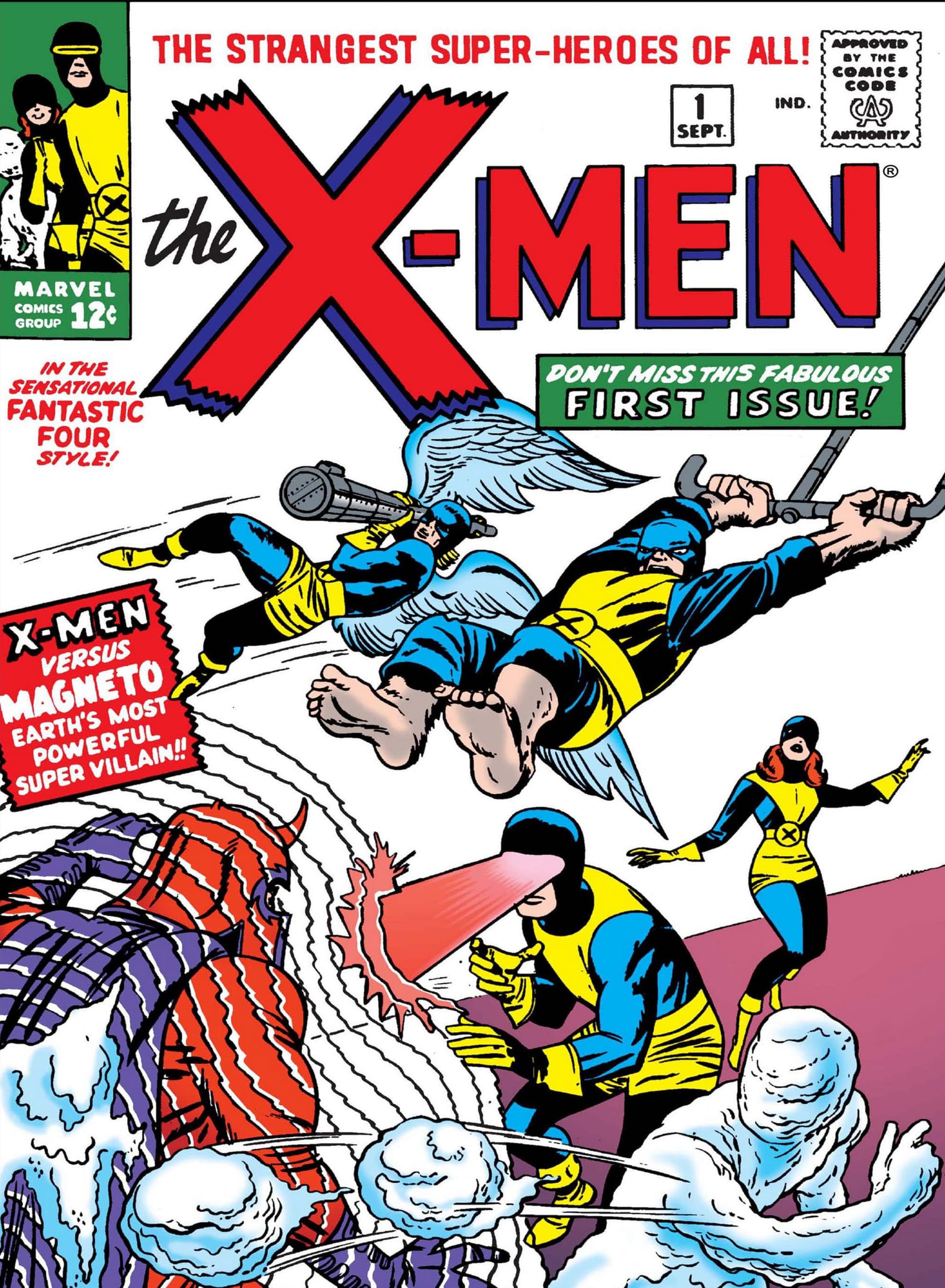
The first version, X-Men number 1, appeared in August-September 1963, created by Stan Lee and Jack Kirby, the two responsible for launching Marvel Comics itself with the invention of The Fantastic Four (1961). In fact, if one reviews the cover of this first mutant issue (which was originally going to be called the Merry Mutants, a title that more than one writer with a taste for kitsch has wanted to revive), one will notice an indication that what is about to be read carries much of the spirit of the original quartet within its pages. There, the reader will discover for the first time Professor Charles Francis Xavier, a paralyzed mutant with telepathic (he can read minds) and telekinetic (he can move things with his mind) powers that challenge any prior and even subsequent ideas of what mind control can do (hypnotists addicted to Susana Giménez's show are trembling!... Oh, right, that doesn't exist anymore).
Xavier has founded a School for Gifted Youngsters, as the Spanish translation goes. There are his five students, the cornerstone of training in this mysterious institute: Cyclops, Beast (without the blue hair that characterizes him today), Angel, Iceman, and Marvel Girl, a name that never quite suited Jean Grey. In that first issue, they face the quintessential enemy of the X-Men, Magneto, master of attraction, whose first version was much closer to the typical villains of the Silver Age, still far from the numerous nuances he would acquire over time. Some X-Men would be added, but the most stable were undoubtedly Havok, Cyclops' brother with the ability to shoot plasma blasts, and Lorna Dane, later known as Polaris, who would turn out to be the daughter of the master of magnetism (along with Scarlet Witch and Quicksilver), possessing the same abilities as her progenitor.
The original X-Men series would be somewhat the ugly duckling among the multitude of titles created by Kirby and Lee, to the point that they ended their run at issue 66, later dedicating themselves to reprinting classic stories until the mid-seventies. During those years, the X-Men would appear in some stories, and even their characters would have a new life in other collections, as happened with Beast, who would undergo the transformation into the blue-haired creature (though he was originally gray) and then join the ranks of The Avengers, a series that was born alongside the X-Men and had won the battle in that initial stretch of history. But this is the first origin; let’s move on to the second, which is perhaps much more relevant.
In 1975, Roy Thomas, but especially Len Wein, two writers who also acted as editors and who viewed the idea of creating a group with members from different parts of the world favorably, got to work. Thomas had been the writer for the last stretch of the original X-Men before their closure, having a memorable run alongside the incredible Neal Adams (reading those comics is truly an unmatched comic enjoyment exercise). But the truth is that, despite this intention to assemble a multicultural group, Thomas could do little, at least until the appearance of Giant Size X-Men n° 1, the legendary Second Genesis, which would be entirely in the hands of Len Wein and a young intern who had his feet planted in the theater world: Chris Claremont. This third member is key, and in a way, you can't think of the X-Men of '75 without the characterization of the beloved Chris, or without the costumes, poses, color combinations, and the striking nature of his visual concepts, led by Dave Cockrum. The latter was an artist who had left DC after a silly fight over original art and had left an indelible mark on the history of the Legion of Superheroes, having been responsible for the makeover of all of them to enter the decade of progressive rock, but also of disco music. Several sketches of new characters, originally intended for a spin-off of the Legion, called The Outsiders, would remain floating until they found their home among the new multicultural mutants.
You can't think of the X-Men of '75 without the characterization of the beloved Chris, or without the costumes, poses, color combinations, and the striking nature of his visual concepts, led by Dave Cockrum.
But who are these new mutants? The list says it all; they are those characters who have identified with the franchise practically since the moment they appeared: Storm, a Kenyan mutant with the ability to control the elements; Nightcrawler (yes, I'm saying it with the Castilian tone of the Spanish translations), a German mutant resembling a blue demon with the ability to teleport; Wolverine (here I’m being purist, but you can also call him Lobezno or Guepardo, I won’t be offended), originally a Canadian enemy of Hulk who appeared in issues #180-#181 of that collection and who now joined a mutant group; Colossus, a humble and sensitive Soviet farmer capable of transforming into a steel giant; Sunfire, a Japanese character who was revived from Roy Thomas's era, who can fly and project fire from his body; Banshee, a former enemy of the X-Men, now on the side of good, with the ability to fly and unleash sonic blasts from his mouth; and Thunderbird, a Native American Apache with enhanced strength, speed, and perception. Of these characters, Storm and Nightcrawler were already in the sketches for Outsiders. Wolverine was created by Wein and John Romita, although his first appearance was in the hands of Herb Trimpe (and Thomas today claims he had a hand in it too). Banshee and Sunfire came from the early days of the series. The rest were all ad hoc creations, but sensitive to this search for a multicultural group, which is surprisingly ahead of its time. Today, there's a lot of talk about “forced inclusion”? Well, imagine what it was like in the mid-seventies to present a group that included an African woman, a German later revealed to be Catholic, an Apache, and even a superhero raised by the red enemy.
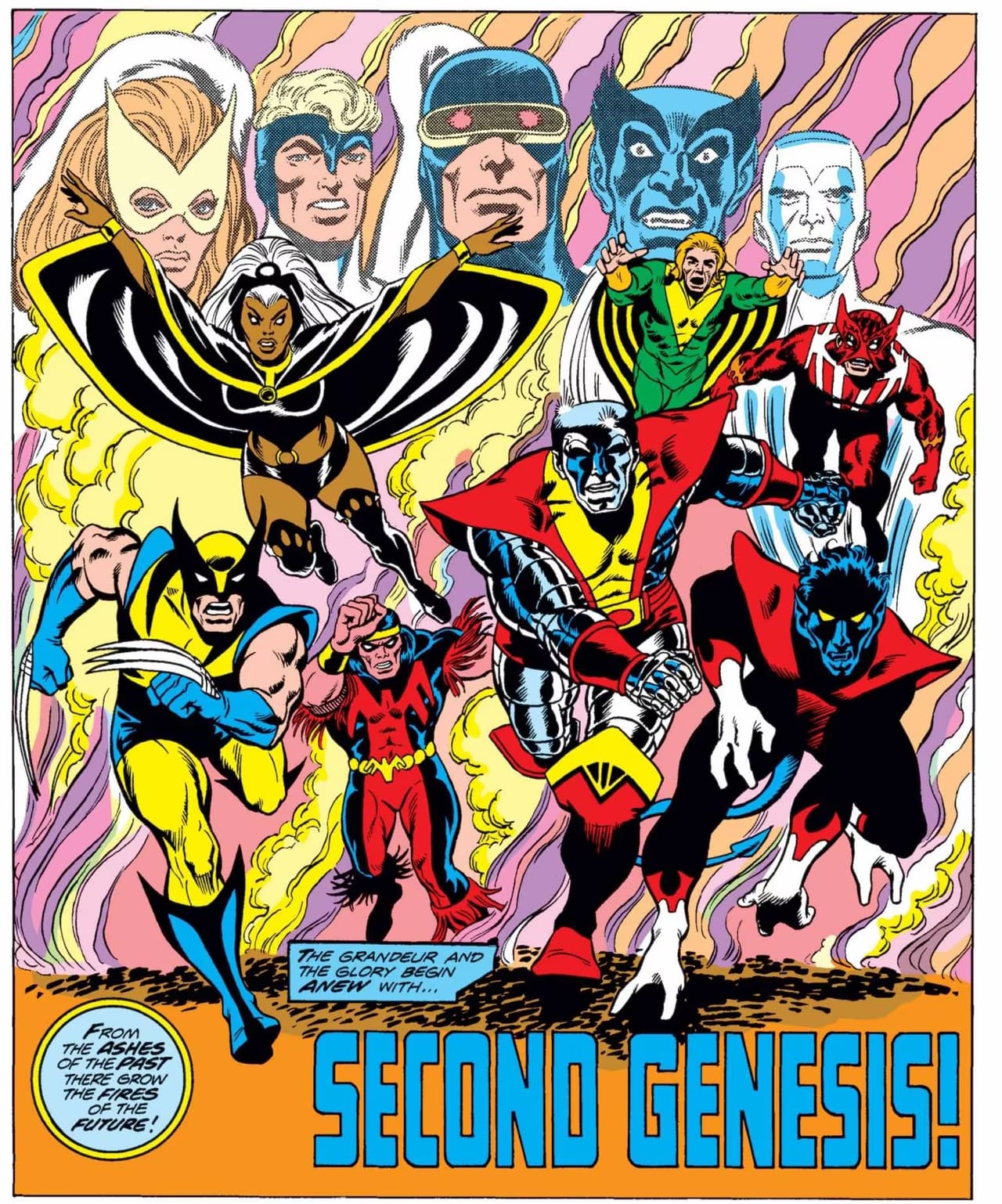
Although the story of that issue is quite simple (the new X-Men have to save the old X-Men, trapped by a mutant island called Krakoa), following its success, the original title was revived, and reprints ceased. Original stories began to be created (at first, bi-monthly) under the guidance of Wein's assistant, Chris Claremont, who would gradually take ownership of the series, giving it a stamp that would set the pace for the 1980s. Indeed, developing his ideas with Cockrum, Claremont would inaugurate the story of Phoenix, with Jean Grey's transformation in issues 100-101, to later unfold in a cosmic story that would continue with the artist who replaced Cockrum and would take the series, alongside Claremont, to the top of sales: the incomparable John Byrne.
From 1975 to 1991, we cannot think of the X-Men without Claremont's writing and his way of constructing the series. I highly recommend the six-part special dedicated to “Chris Claremont's X-Men”, produced by one of the best podcasts dedicated to the world of comics, Sala de Peligro. Each episode has an average duration of six hours, but if you're eager to dive into this adventure, I can only recommend it: they leave nothing out.
Sorry: and the recommendations?
Yes, of course, let’s get to the point after this dedicated introduction. I’m going to recommend four possible “entry comics” to get into the mutant world, which, of course, are just suggestions to take the first steps. I won’t recommend either of the two issues mentioned above, as they are expected starting points. Here we go in another direction. Like in a labyrinth, any door is valid to get lost.
“Rubicon” (X-Men vol. 2 #1 to #3)
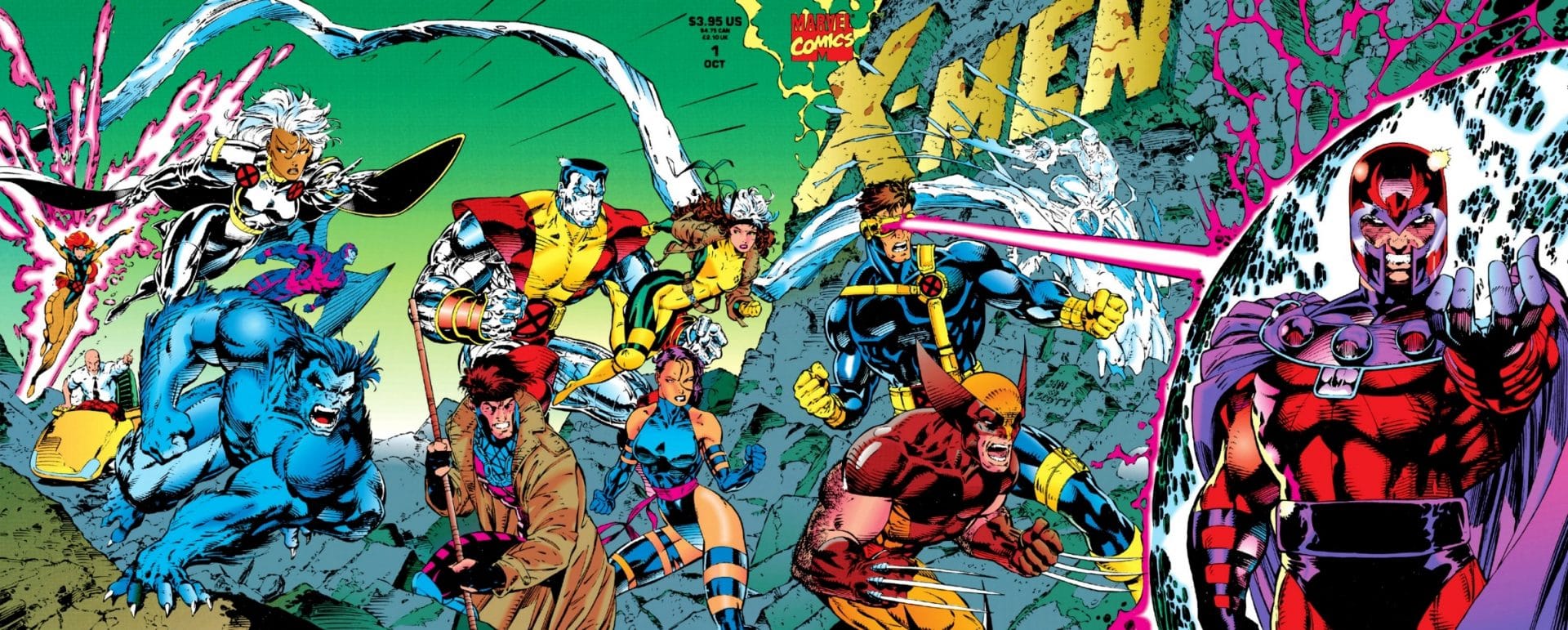
The title I gave to the first saga of volume 2 of the X-Men refers to the title of the best-selling comic book issue in history. Yes, with over 8 million copies sold and a quadruple cover, this issue entered the Guinness Book of Records, although with the little trick that to complete the artwork, you had to get more than one copy (in other words, you needed four versions of issue 1 to have the complete picture). This story lays certain foundations that would continue later: the X-Men's time based in Australia (the “Outback Era”) and the gradual dissolution of teamwork to become a more ensemble comic, where each character lives a different adventure. And, of course, the redemption of Magneto, a complex and dense character (mutant hero, Holocaust survivor, aware of the ambiguity of a struggle for survival against the human enemy, etc.); so much so that he became a stable member of the School, educating the New Mutants, the group of the youngest, and helping the central group.
The scattered characters would reunite only in the "Muir Island Saga" to form a large team of X-Men. So large that it had to be split into two: the Gold team and the Blue team, honoring the colors of the costume that referred back to the original team's school uniform. In these first three issues of volume 2, dedicated to the Blue team (Cyclops, Wolverine, Rogue, Gambit, Beast, Psylocke, and Jubilee), but with participation from the Gold team (Storm, Jean Grey, Iceman, Colossus, Angel), Xavier's students must confront a Magneto who has returned as a villain, angry over the manipulation he suffered at the hands of Dr. Moira McTaggert and convinced that the only way to live on this planet is to impose mutant will over human.
 Amadeo Gandolfo
It's easy to find, from the first issues of Símbolo published back in the nineties in Argentina to the more polished and higher quality editions, in Spanish and English, that can be purchased on the reference page for these acquisitions. Perhaps the most recommended edition is the Must Have from Panini, titled "Mutant Genesis 2.0," which contains issues #1 to #7 of volume 2 of X-Men.
"E for Extinction" (New X-Men #114-#116)
Something I didn't mention before and feel is necessary to highlight: the X-Men have always had to engage with their cousin from across the multiverse, the DC series Doom Patrol. The similarities are so numerous that many believe X-Men is the result of corporate espionage. The fact that Niles Caulder and Charles Xavier share a wheelchair and are both super-intelligent, or that both the X-Men and the Doom Patrol (even in Spain, they noticed this similarity: X-Patrol, Doom Patrol) are a group of misfits seeking to be understood, well, those are coincidences that go beyond mere zeitgeist. That said, in the early 2000s, what better way to refresh the exhausted mutant franchise, already with a film adaptation under its belt (the one by Bryan Singer), than to turn to the writer who made the Doom Patrol relevant again at the end of the eighties and even aesthetically daring. Of course, we're talking about the Scottish wizard, Grant Morrison.
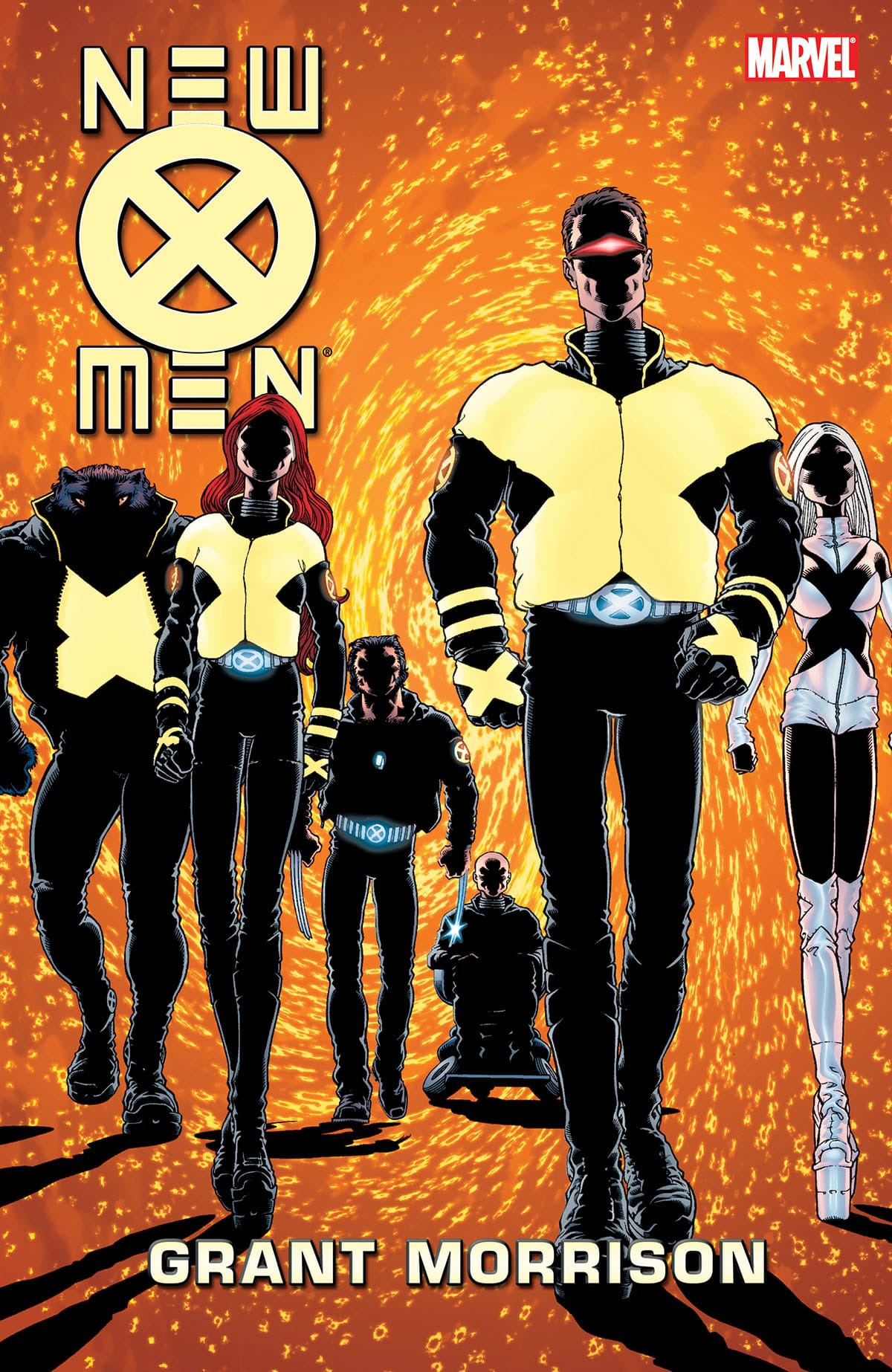
Morrison takes the characters from the X-Men, keeps the ones that interest him most (Cyclops, Wolverine, Jean Grey, Beast, Xavier), shifts a villainess to the good side (the White Queen, Emma Frost, who had already joined the X-Mansion during the nineties era of Generation X as a teacher), and dares to carry out an act of complex repercussions that is still being explored in comics today: a mutant genocide on a massive scale in Genosha, an ancient African nation created by Claremont as a metaphor for Apartheid and repurposed as a mutant paradise, now destroyed by killer super sentinels. Yes, it's the same thing seen in the episode "Remember It" from X-Men '97. From there, he introduces Cassandra Nova, Xavier's twin sister, and revisits the sometimes dark past and the secret agenda of Professor X (a topic that would be revisited more than once throughout the entire history of mutants).
Grant aims to portray mutants not as the eternal victims of humanity, but as the next step in evolution. The extinction hinted at in the title is not that of the mutants: it is the extinction of humanity.
Frank Quitely's artwork, a recurring partner of Morrison, is spectacular, and here the beloved Grant seeks to show mutants not as the eternal victims of humanity, but as the next step in evolution. The extinction hinted at in the title is not that of the mutants: it is the extinction of humanity, which, despite its violent actions, has its days numbered.
Morrison's run is fully collected in its respective sagas, and it's even available in the hardcover black editions from Salvat, so there's no way to miss it in print.
"Gifted" (Astonishing X-Men #1 to #6)
Following Morrison's lead, Joss Whedon (who would later hit it big with his entry into the MCU with Avengers) and the sadly deceased John Cassaday inaugurated a new era for the mutant franchise, reviving the astonishing title, complementary to the uncanny, a fundamental adjective in mutant life. The authors focused on a solid base of characters: Wolverine, White Queen, Cyclops, and Beast, adding Kitty Pryde (a fan-favorite character and Whedon's favorite) and resurrecting the unjustly deceased Colossus. The latter hadn't been seen in the X-pages since his death, a necessary sacrifice to end the Legacy virus (yes, a metaphor for AIDS).
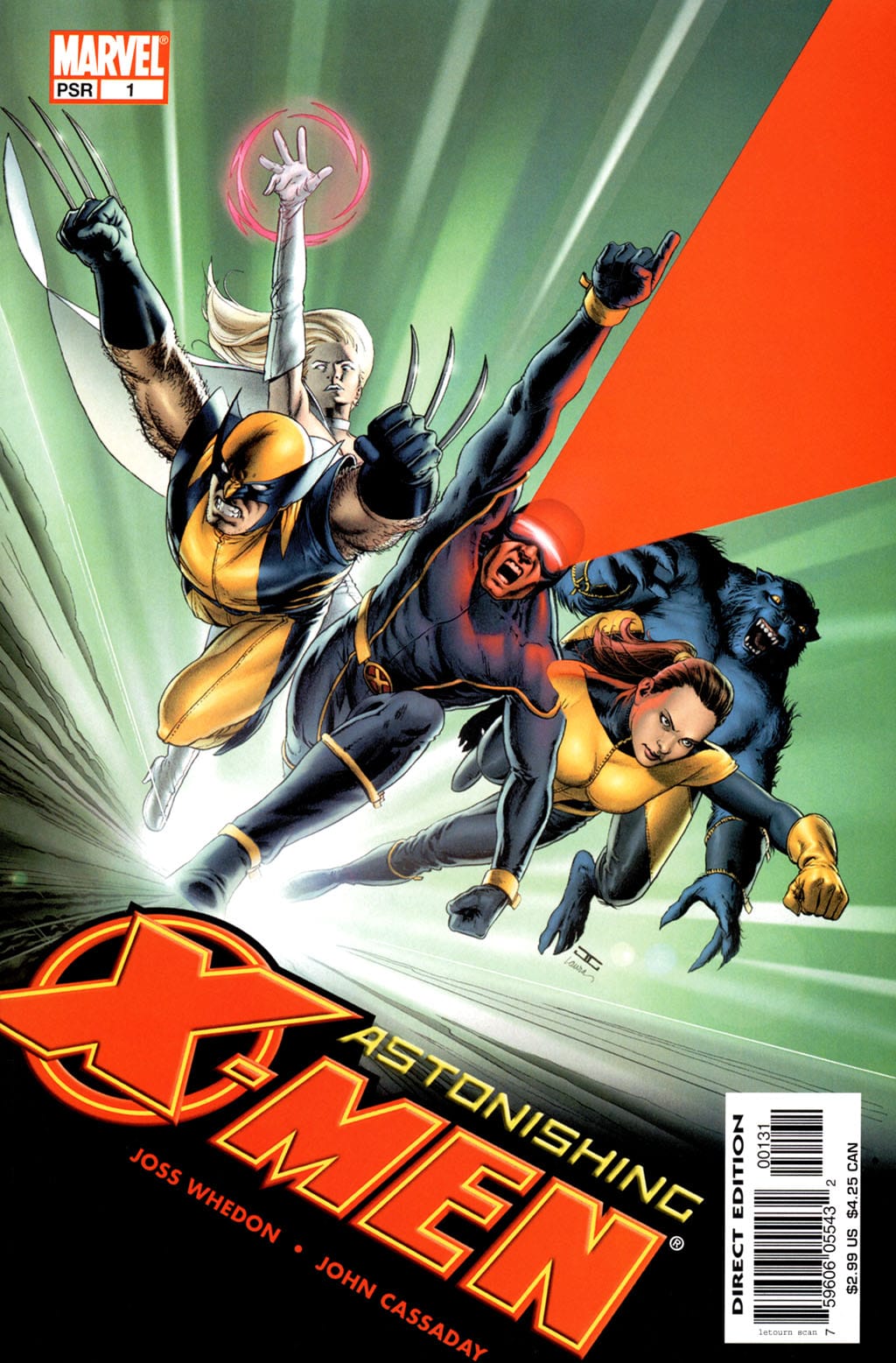
Whedon returns a bit to the original foundations: characters with clear roles, but also the idea that the X-Men are, above all, a group of superheroes. This leads them to face everyday situations, like stopping robberies or civil threats, all to show that mutants are there to help, not just to combat their own enemies.
Cassaday's artwork is out of this world: his double splash pages with characters walking towards the camera, slightly tilted, make the enjoyment of this comic come from both the story and its page layout. This is said by someone who pays more attention to dialogue and narrative. Moreover, this story introduces the invention of a "cure" to stop being a mutant, which has been adapted in X-Men: The Last Stand. It's not the best of the series launched by Singer, but it does have, I believe, the best fight sequence (against a sentinel in the Danger Room).
It's available in all formats, also in the Salvat collection: there's no way not to have it for very little money.
"The Dark Phoenix Saga" (Uncanny X-Men #129 to #138)
It's impossible to talk about the X-Men without referencing this saga. Obviously, it requires a lot of prior reading to fully understand, but it's so classic, so important to the history of the X-Men and all Marvel comics, that not mentioning it would be a sin. It's like talking about Legion of Superheroes and not considering the Great Darkness Saga. Simply put, it can't be done.
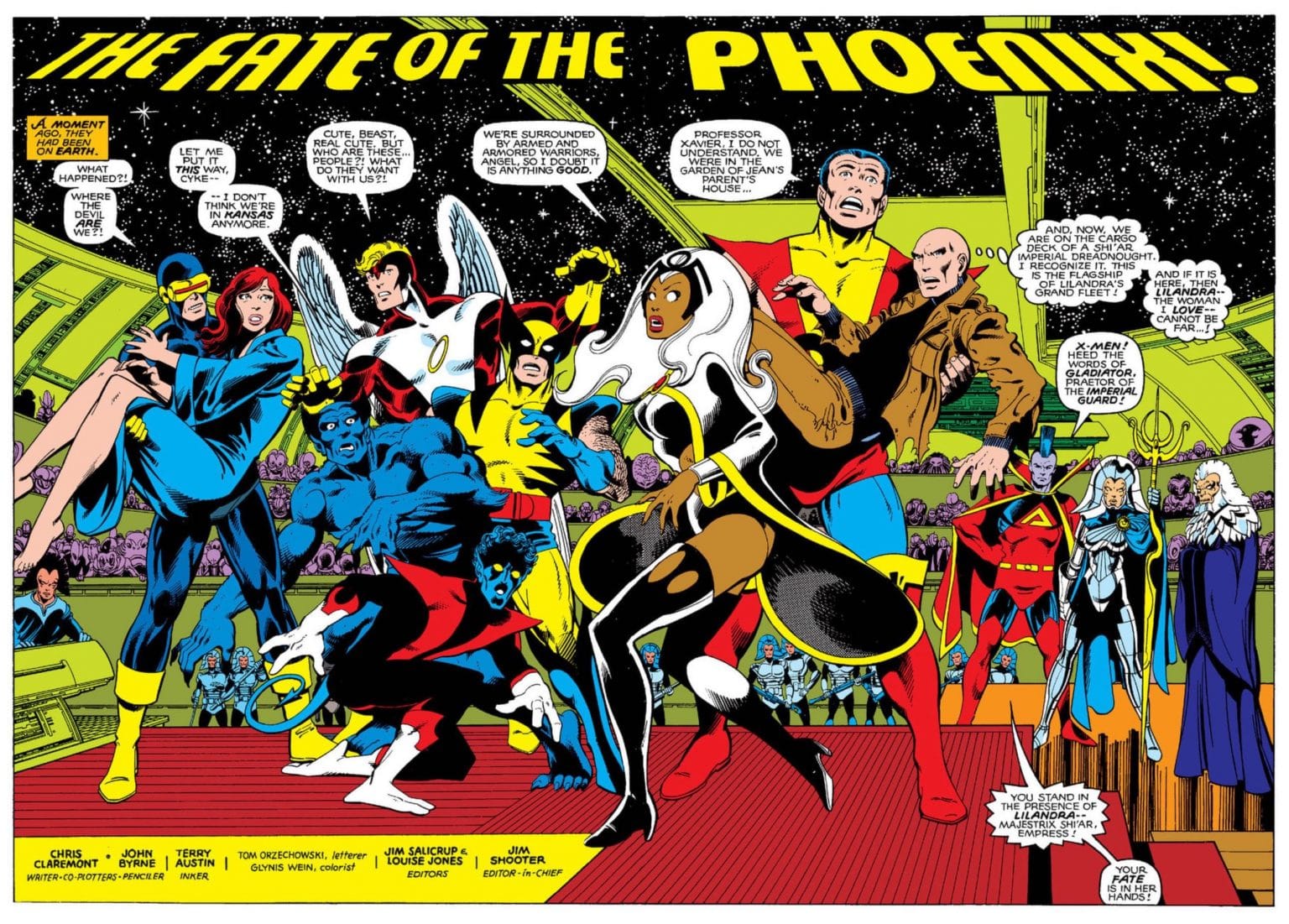
What's in this story? Everything. First, the resolution of the Phoenix story, started by Cockrum, now closed by the masterful hand of the best John Byrne (well, he has other better stages too, just check out his run on The Fantastic Four). There's such an incredible extension of the initial lore that the story begins on Earth and ends, once again, in an interstellar conflict, where the Shi'ar reappear. In the early issues, we see the debut of the Hellfire Club in the pages of the X-Men, recurring enemies of Xavier's students, led by Sebastian Shaw, but also featuring the relentless Emma Frost as the White Queen. Assisted by Mastermind, an old enemy of the X-Men now transformed into Jason Wyngarde, the Club seeks to seize the immeasurable power of the Phoenix, the beloved Jean Grey now transformed into a cosmic entity capable of wreaking havoc on a universal scale, no longer just the Solar System. Obviously, it goes wrong: Phoenix begins to turn to the dark side (of the Force?) and stops being the kind Jean Grey to become a chaotic entity that devours a sun and kills billions of creatures from the D'Bari civilization. Accused of intergalactic genocide, Jean is taken by Lilandra, Shi'ar Majestrix, to trial by combat, a resolution in medieval style that Game of Thrones later made fashionable. Who will face off on the dark side of the Moon, in an ancient Kree city, for the fate of Phoenix? The X-Men and the Shi'ar Imperial Guard, created by Cockrum as an echo of his beloved "legionnaires." Thus, each member of the Imperial Guard is a copy of a character from the Legion of Superheroes, to the point that Gladiator is none other than Superboy (or Mon-El, if you prefer). That's the level of power we're dealing with.
It's rare to recount the ending of such a well-known story, but the truth is that due to editorial pressures from Jim Shooter, the editor-in-chief, the original story, which ended with Jean's survival, had to be modified: someone who had committed such a magnitude of genocide could not survive. In conclusion, Jean/Phoenix commits suicide to end the atrocities of the cosmic entity. Issue 138 of Uncanny X-Men is a cornerstone of everything that would come in the Bronze Age, to the point that even today, this story is revisited as a trauma.
While Claremont's "river story" model works here exemplarily, making it so there are no specific cuts marking when a saga begins or ends, it is true that reading these issues in one volume, despite accumulating references to other stories, is a magnificent springboard for continuing to read mutant stories. And also for diving into the cosmic side of a series that has as much social metaphor as it does space epic.
What remains outside.
There are many things left unsaid. I didn't talk about the saga "Days of Future Past," another pivotal moment in the Claremont-Byrne era; I didn't mention "From the Ashes," with the incredible artwork by Paul Smith; I didn't stretch to the "Mutant Massacre"; and don't even get me started on the "Age of Apocalypse" from Hickman's relatively recent run. I also left out other series, like the amazing Excalibur (which I like more and more).
Let the reader go and find their favorite mutant factor. The future will tell if these recommendations have brought new readers to a constantly evolving X universe.