Behind the Scenes at Quilmes Rock 2025
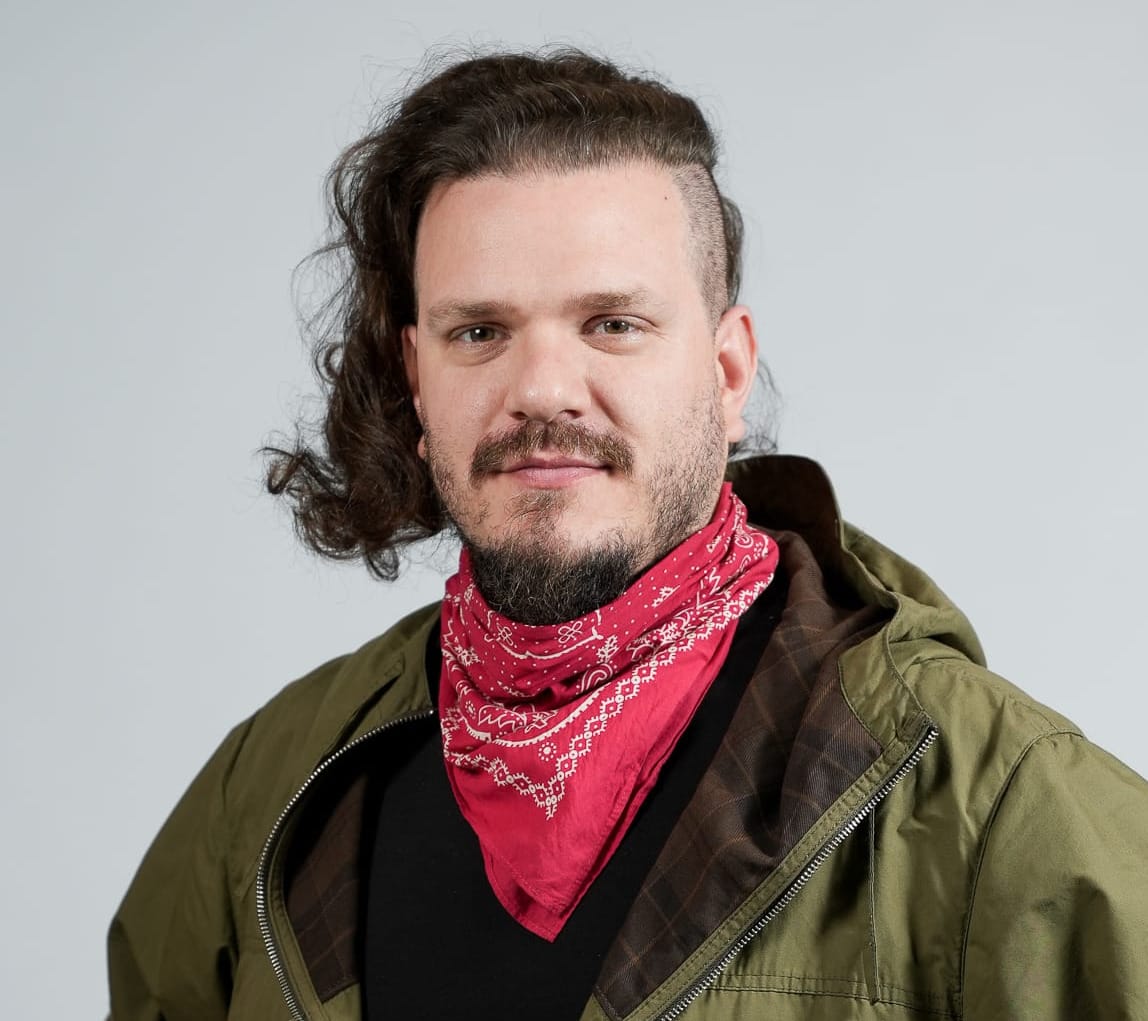
15 de abr. de 2025 — Juan Ruocco 🧙♂️

Quilmes Rock Minus One
It all started with Pablo Wasserman's idea to do a live Circulo Vicioso show from Quilmes Rock. For one of those strange reasons that move the universe, one of the most important music promoters in the country is a follower of Circulo Vicioso, the live show we've been doing for five years with Pablo, which we stream nearly every week on YouTube. The idea came about from the possibility of a collaboration between Quilmes Rock and us. Things took shape until "the appointed hour" arrived.
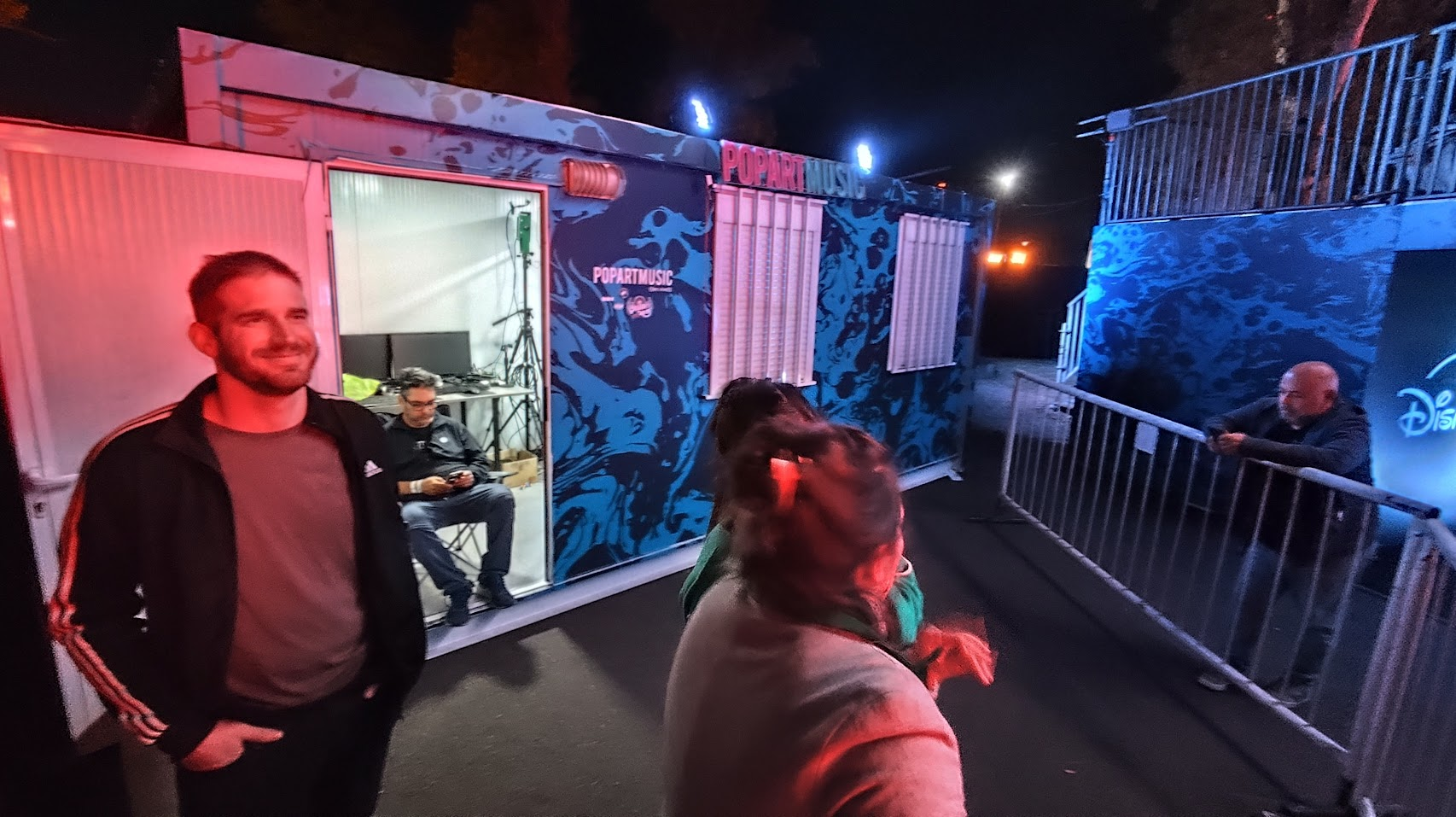
On Friday, April 11th, around 3 PM, we arrived at the Tecnopolis grounds to iron out the last details and test the stream. The bottlenecks at the entrance already hinted that it was going to be a massive event. After getting our credentials sorted and greeting Dillom, who was just leaving his soundcheck, we headed to the broadcast booth, located right next to the Disney - Flow one, the team in charge of the official stream. While we finalized the details to go live, we had the luck of catching some soundchecks. Watching Las Pelotas play Sin Hilo for the fifty crew members below the stage is an experience hard to forget.
The feeling of streaming live while bands you love, that shaped your life, or that you simply know just for being Argentine, play right next to you is a truly unforgettable experience. Now I understand Mikki Lusardi and Bebe Contepomi, two titans in the fine art of live rock broadcasting. On the other hand, witnessing the festival's backstage preparations gave us a firsthand look at the material conditions that bring an event of this scale to life. In Argentina, the ability to organize large-scale festivals -- or mega events, as the people who work there call them -- has been perfected over the years. And it manages to mobilize some 50 to 60 thousand people per day.
Unlike stadium shows -- which can have similar capacities, think of any River Plate concert -- where a pre-existing infrastructure is already in place, festivals involve building a kind of mini city where there wasn't much before. From the 150 tons of equipment to set up the festival's five stages to the 3.5 km of cables to connect everything and/or the 7 km of barriers to guide and contain the crowd. All that's missing is knowing how many kilos of food were consumed, the liters of drinks demolished, and the number of available restrooms to get a full sense of the event's magnitude.
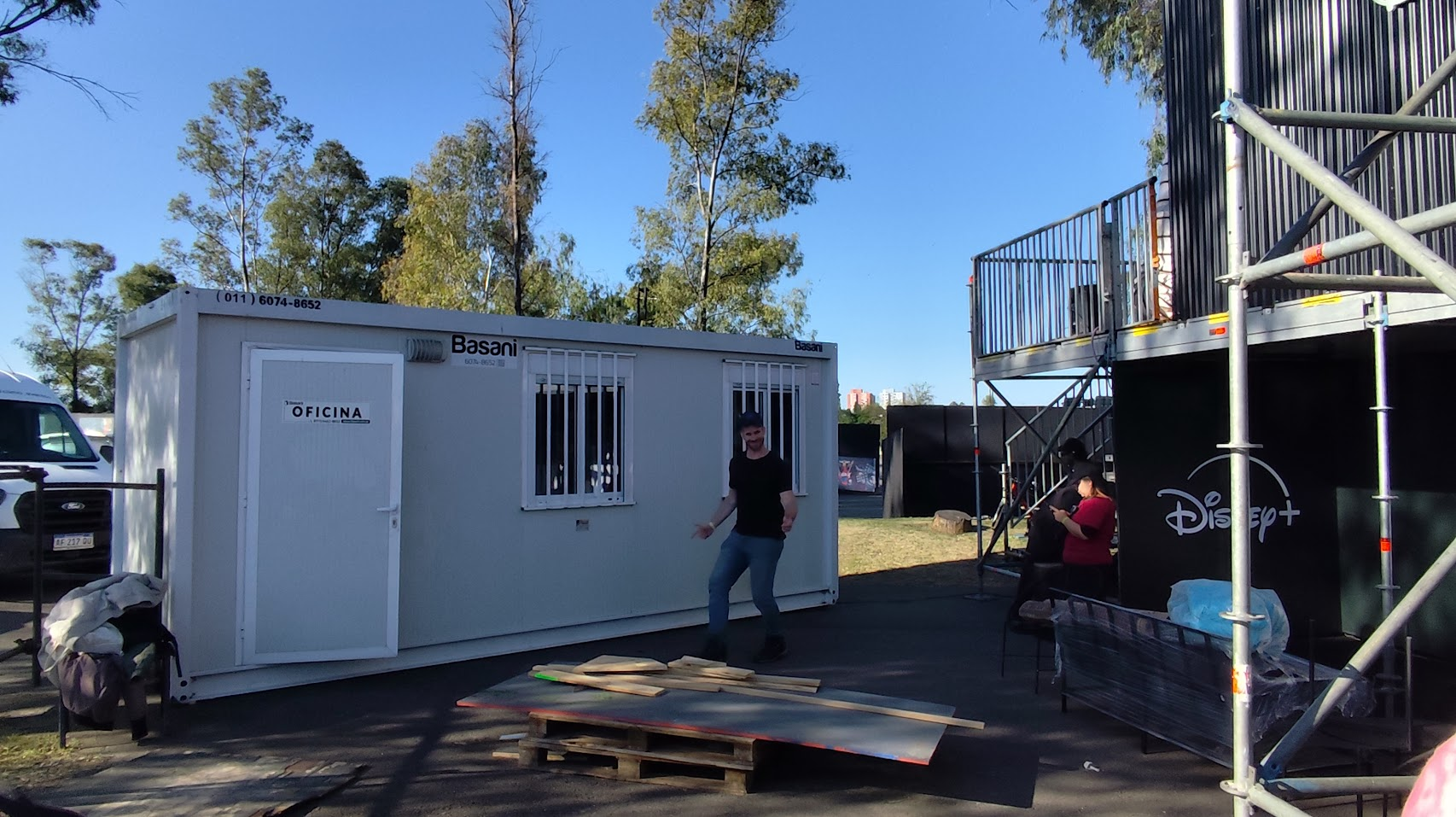
Because behind the enjoyment, the memories, and the emotions that music generates, there's a mountable and dismountable infrastructure that makes it all happen. As I like to say, it's a type of interface between the audience and the artists. The beauty of having had access to that space beforehand is that it allowed us to see the final strokes of that assembly. But even this entire deployment of industrial-scale Meccanos, Legos, and Rastis is just a detail -- yes -- once the music starts playing and the show everyone came for begins to unfold.
We wrapped up this first day by talking with Matias Loizaga, one of PopArt's top executives and the brain/organizer behind the festival, the person who invited us to be part of it and put everything within his reach to make it happen.
Quilmes Rock Day 1
We arrived on the first day of the festival with sky-high expectations. We got there early, knowing the first day was going to be especially tricky access-wise. It's like your workplace is suddenly shared with 60 thousand people and there are two kilometers between the entrance and your desk. Luckily, everything went smoothly and we set up in the booth. That first day we were visited by the beloved Luis Paz (one of the three pillars of 421), friend of the house Juan Ruffo, and Juan Ingaramo stopped by after his set.
We could do a brief analysis of what each of Argentina's festivals is about, from Lollapalooza to Cosquin Rock, through Baradero Rock, a metal one (Monsters), or the now-defunct Pepsi Music and Personal Fest, trying to put together a loose phenomenology of the whole thing. But we'll leave that to the regulars and veterans of the Argentine music circuit. The Quilmes Rock proposition, as we discussed with Lucho, is in a way about creating a "state of affairs" around Argentine rock, or "rock nacional" as we used to call it.
This state of affairs is a kind of musical snapshot of the moment, where the most established artists, the biggest crowd-pullers, are brought together alongside bands that might be just starting out or bands that have been playing for years, many years, and whose draw isn't quite as massive. In other words, there's a bit of everything. From the audience's perspective, it's a great opportunity to see several bands per day, take in everything that's happening, and see what comes of it. For me, it worked as a kind of update on the general state of rock music in Argentina -- a genre that's been talked about endlessly, whose death has been declared countless times, whose title countless new artists have claimed for themselves, and yet, there it is.
The first thing I can say is that Argentine rock is in excellent health. If there's one thing I observed during these intense days of music, it's that the emotional and affective bond between the audience and the artists is intact. That's the first thing to highlight. Distance from the phenomenon -- I don't usually go to festivals, and if I do, it's for very specific things -- sometimes makes you lose that crucial sense: the information that reality provides.
From hearing the classics of established bands to watching kids jumping to Calamaro songs or hearing Imagenes Paganas live, sung by a Moura. The Argentine musical tradition has a breadth, variety, vitality, and professionalism that leaves you with a very optimistic vision for the future. Argentine rock in all its branches is alive and well.
Because it's no longer just about the relationship between the audience and the artist (though without that there's nothing) -- the professionalization of the industry is total. These are things you perceive in a special way when you're backstage. Despite years of economic crises, exchange rate fluctuations, multiple dollar quotes, and recessions, music keeps mobilizing, keeps being enough to move enormous amounts of money, and the quality displayed at each event surpasses itself year after year. From the sound towers, stages, and screens to the food options, ticketing systems, and a long list of etceteras. On top of all that, you have to add the stress placed on a system like this when 60 thousand people simultaneously want to do the same thing (eat, grab a drink, use the restroom), plus the entry and exit from the grounds, which is always complicated.
Musical highlights: Calamaro (first time seeing him live), Miranda! who absolutely killed it from start to finish and brought Lali on stage for their show. That's when you understand the magnitude of these new pop stars of the national variety. There wasn't a single human being without a phone in hand trying to capture something of the singer's aura. The addition of Dillom to the lineup is interesting because it's precisely where the debate between "rock" and "urban genre" stands. At a festival that was overwhelmingly dominated by rock bands performing all their music live rather than over backing tracks, the inclusion of an artist who emerged from the other side of the fence but seems to be veering into the fold of rock nacional serves to build a generational bridge (Miranda! and Calamaro have both collaborated with him multiple times) without abandoning a somewhat stricter criterion for incorporating artists who come "from a different scene."
Quilmes Rock Day 2
By the second day, everything was running like clockwork. I arrived early and caught Fonso y las Paritarias, who later made an appearance on the stream. A band that's been having a solid run and one I like to classify as "psychedelic rolinga." Then Theo dropped by, from Theo y Simon, a band I was completely unfamiliar with but embraced instantly after Theo confessed to being a programmer and a follower of Circulo Vicioso. Luckily, before we left, we got to see their show, and they crushed it. Tons of punk energy unleashed on stage. Love at first sight. Go listen to them.
I also caught El Mato (who was playing while we were live), Los Cafres, Dante, and Conociendo Rusia. Due to other work commitments, I missed -- ouch -- Los Ratones and the emotional Seru Giran reunion. It was one of the festival's big viral moments, where all the nostalgics got to play their "now THIS is rock" card. Many of those moments were also captured by Alejandra Morasano in her photos for this 421 Gallery.
Quilmes Rock Day 3
Between the third day of the festival and the second, a full week went by -- enough to recharge and get ready for the final sprint. We arrived, went through the whole credentials process again (which by now was running perfectly), got into the parking lot, and started walking. I think this was the day I saw the most bands. We started with Fantasmagoria on the main stage and then went to see Boom Boom Kid. The Fun People experience, but in parts. Both bands are in a great musical moment. Fantasmagoria is very consolidated with a solid repertoire. BBK remains one of a kind, at times even throwing in growls and blast beats.
BBK must have been the only musician who played death metal at Quilmes Rock, which also makes me think that for future editions of the festival it wouldn't be a bad idea to set up a stage with the "new guard" of Argentine metal. I'm thinking Avernal, Undermine, Nvlo. Beyond classics like Rata Blanca, A.N.I.M.A.L., and Horcas, it's time for the new generations of Argentine metal to step up.
Then it was time for the headliners: Los Autenticos Decadentes (timeless), Rata Blanca, and finally Babasonicos, whom I had never seen on such a big stage. Good show, though for me it lacked a bit of punch. But I'm the distortion guy, so I'm not exactly objective.
Quilmes Rock Day 4
The last day. Everyone already wrecked and wanting to wrap things up more than anything, but thrilled to have been part of a one-of-a-kind event. And at the same time, waiting for the day's and the festival's heavy hitter: Los Piojos. Our entire stay at Quilmes Rock oscillated between two tensions. On one hand, we were riding with the big guns. PopArt, who invited us to participate in the event and deployed their technology in service of this humble show, is none other than the most important music production company in Argentina, and going into a festival they organize gives you a level of access similar to typing "Klapaucius" in The Sims or "IDDQD" in Doom.
Yes, it's experiencing a festival in god mode. A succession of different-colored wristbands that grant you different levels of access (or clearance, as the Americans say), which can range from entering the press area to grab a couple of empanadas, to the VIP to mingle with the jet set accustomed to freebies and schmoozing, or even getting into the backstage dressing rooms. I use it and recommend it. Access to the behind-the-scenes completes a panorama that is very hard to perceive as just an "audience member." It's like looking at the back of a tapestry.
Now, as in any industry or guild, it's not enough to just walk in and come "on behalf of." Much less in an environment like the music scene, where everyone knows each other, they tend to see each other more than once a year, and they tend to operate more like a brotherhood. In other words, there are ranks. Hence, the wristbands alone weren't enough to secure the presence of top-tier musicians on the stream. There's a whole series of steps involved in being able to interview, say, a Walas, Ale Sergi, Andres Calamaro, Juanse, or Adrian Dargelos. Things that get unlocked by being known in the scene, personal relationships, and trust. On top of what it means for someone who's about to perform or just performed to have to go hang out for a while with two guys they don't know. Even so, we managed well enough to land a brief but beautiful interview with Maikel and El Mono from Kapanga -- a dream truly fulfilled.
A hectic day, but one that gave me enough time to see Los Tabaleros (who blew up the Enigma stage), Kapanga (timeless and indestructible despite El Mono's heart attack at a show some time ago), Massacre (who took charge of keeping the afternoon going and throwing poisoned darts at the powers that be), and finally experience the emotional tidal wave that is Los Piojos -- a band I got to see for the first time. This is where you have to pause and realize they play in a league where currently only La Renga stands alongside them, and if he were still performing, El Indio. There are no other bands that draw this many people on their own and are so deeply woven into Argentine culture. It truly is a spectacle worth experiencing in itself.
Aftermath
As I wrote above, Argentine rock is in excellent health. Every component of the industry works like clockwork. The key to this Quilmes Rock (an iconic brand for Argentina and rock, if there ever was one) was the combination of a first-rate, fully national lineup and a total predominance of rock and its branches (music played live by musicians) that sets it apart from the rest of the offerings on the local festival map. How many beers has the brewery from the southern suburbs of Greater Buenos Aires sold thanks to rock culture? That's why everything feels organic in this edition I'd dare call historic. For its scope, its impact, and because it charts a very clear course to follow -- one I believe is the right one. On our end, all that remains is gratitude and knowing we'll see each other at the next one.