Being Fat Today
The word gordo has been retooled online, and fatness can even operate as identity –but it still carries stigma, and it still comes with real, everyday costs.
30 de dic. de 2025 — Juanma La Volpe
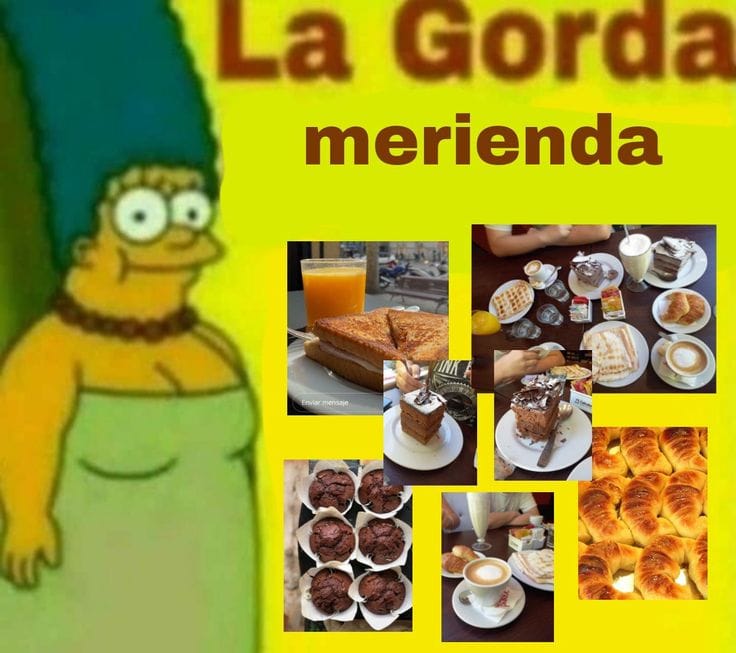
I remember seeing a meme: an overweight Marge Simpson surrounded by photos of cafés and cakes, captioned "La Gorda merienda". A few months –and a lot of laughs– later, a new pattern started spreading in a small corner of the internet: pairing gordo with a topic to label someone who's deep into something. The Warhammer guy. The PC guy. The Linux guy. The soccer guy. Suddenly, these hyper-specialized "gordos" and "gordas" became part of social-media culture –and it started bleeding into real life.
As a real-deal gordo, my first reaction was rejection. Nobody carved in stone what it means to call someone "gordo jueguitos", but my first thought was: it implies you planted your ass in a chair and poured hours into something, at the expense of your life, your body, your health. Maybe I'm overreading it, but I've been fat for 34 of my almost 40 years.
If the word has a "positive" twist now, it also implies that being fat is bad –and that's what I've lived with my whole life. I've wanted to write about this for years, but I didn't dare go this personal. So here we go. This isn't a how-to on being fat or not being fat. It's just my experience –and if this does anything, I hope it makes someone feel a little less alone, or helps a thin person understand what this can be like.
Growing Up Knowing You Won't Be the Hero
I've been fat since I was six. It started, they told me, when I was put on corticosteroids to avoid surgery for a health condition –surgery I ended up needing anyway. Or at least that's the "secret origin" I was given, the one I built my story around. I also come from my dad's side of the family: big people, food people, people with rituals around eating. For years, Sundays meant the whole family together, and my grandma would make this giant skillet –almost like a paella– loaded with pancetta and fried eggs. The "men" of the family would eat it with nothing but bread, elbowing each other like it was a friendly survival game. There were lots of traditions like that: food as the glue.
The flip side: my grandma had suffered as a kid for being fat. So during the week she'd cycle through magazine diets, nutritionists, and support groups like ALCO (a well-known Argentine weight-loss group tied to Dr. Alberto Cormillot). When my weight became "a problem", and under her pressure, I got pulled into the same circuit: the tuna diet, seeds taped to your ears –and, worst of all, those group meetings.
And the culture I grew up with –like any '90s kid– rarely showed a fat character as something good. We were comic relief or villains: the walking punchline, or the gross, dirty one, always shadowed by the "sin" of gluttony. No fat superheroes, no fat protagonists in the mainstream. And it wasn't just what I saw –it taught everyone else what a fat kid was supposed to be. School bullying was constant: nicknames, sometimes a beating. I was lucky to have a family that held me up and taught me to push forward. Otherwise, who knows –maybe I'd be a fat psycho running the country.
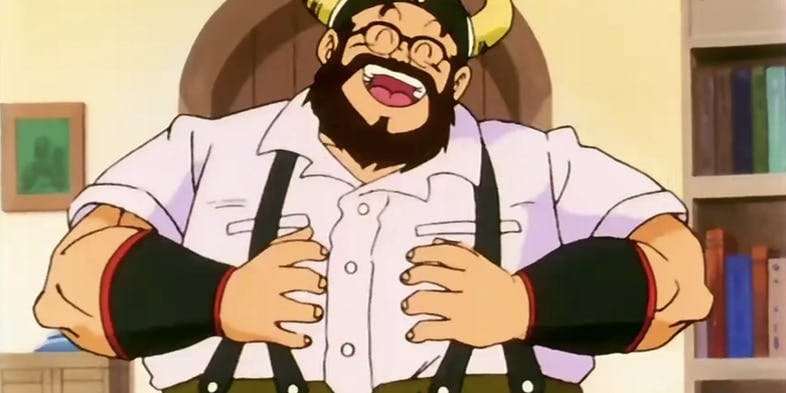
Every so often I'd find a character who made me feel better. I loved the Ox-King from Dragon Ball –the guy I basically turned into. He fits an archetype: intimidating on the outside, a sweetheart underneath. Toriyama would send villains his way just to beat him up, because he's one of the purest characters. Watching him get knocked down, gifts for his grandson Gohan spilling everywhere, made you hate the bad guys even more.
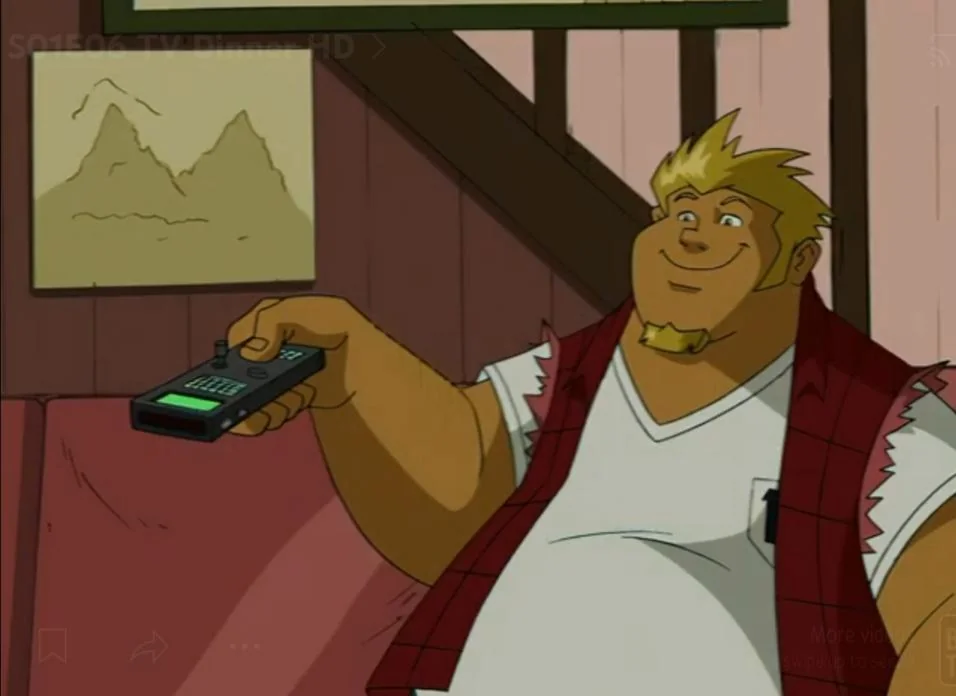
The other thing that made me feel seen was the Ninja Turtles and their love of pizza –I always read them as "gordos" like me. But it took a long time before I saw a fat lead character on screen. It happened with a half-forgotten Cartoon Network show, Megas XLR (2004). I was already a teenager, but obviously I hadn't let go of what I loved. The show gives you Coop: a fat, nerdy mechanic who gets a giant robot and uses it to save the world. It didn't run long, and thanks to Warner-era rights/ledger nonsense it's been hard to see again –but it hit me. The writing and animation weren't masterpieces; the point was: someone like me was the hero.
The Punk Gesture
In my twenties –after a childhood of diets that didn't work and constant pressure about my body– I decided: if my being fat bothered everyone, then I was going to be fat. That's when my relationship with my body really began. It was a double-edged sword: self-acceptance is good, but flirting too close to that fire can burn you. And in my house, fatness was always tangled up with mental health.
It took me a long time to talk to therapists about my body, but one of them helped me see a pattern: food as reward and food as punishment. If I felt good, I celebrated by eating. If I was depressed, I punished myself by eating. That loop came with shame and sadness I carried alone, even when I tried to "manage" it. I went through phases of intense training –karate, boxing, sumo, even pro-wrestling. I tried to eat better too, but sometimes you can't sustain it, because without warning life cranks the difficulty up.
What also kept me going was realizing someone could love me –and I could fall in love. That mattered, because most of the fiction I grew up with treated that as impossible for someone like me. The punk gesture wasn't "I'll be fat out of spite". It was: I'm going to love myself as I am –and that's when you start shining differently. One night I watched Hedwig and the Angry Inch, a film about identity and self-acceptance, and it was a turning point. I was going through a lot, and the movie showed up –mysteriously, perfectly timed– on I.Sat. It helped me in a way I still can't fully explain.
I'd reached a place where I could accept my body, even feel attractive –but after I turned 34, everything went to hell.
Oh baby have a fry / Our life is sedentary
The Labyrinth
2020, the pandemic –you were there. I was working at an ad agency on a client that owned me 24/7. In January I got promoted and suddenly I was managing 20 people. A few months later COVID hit and we were locked inside. I switched industries, had two pretty brutal experiences in the video-game world, and between stress and bad choices I started the pandemic at 120 kg and finished it near 150.
Every day got harder. Even when I tried to work out or eat better, I couldn't keep it going –and that sent me back into a dark place.
Without even noticing how far I'd gone, by December 2024 I was at 175 kg. At that point I'd lost the plot of my "I'm going to be fat" plan. I went through situations that left me humiliated and ashamed. Leaving the house got hard –not only emotionally, but physically. Moving that body was work, and there were places where I felt like I simply didn't fit.
The breaking point came one morning when I woke up with my left arm numb –a sensation that lasted almost two days. That, and realizing I was missing out on my friends and my girlfriend. She was there in my worst moment and helped me learn to love myself again. My idea of being fat hadn't changed –but I needed a balance: between being fat and not, between living and dying, between leaving my house and never being able to again.
What helped was finding a nutritionist who also brought a psychological approach –tools to work through anxiety and frustration. I cut back on weed –which I love, but it wasn't helping the cocktail– because it left me glued to the couch and hungry. And at first I had to cut two very Argentine staples: flour and Coca-Cola. No drug has ever made me sweat like withdrawing from those two. These days I allow them only on very special occasions.
Being Fat Today
In the first half of 2025 I lost 40 kg. My goal is to get back to my pre-pandemic weight –now a bit postponed, because sometimes you've got too many fronts and you can't win them all at once. This is what it's like: living day to day with cravings, guilt, anxiety. And while I watch the world go by and see the word gordo get repurposed and attached to things I love, I still wonder how I feel about it. Sometimes change comes from inside us; sometimes it's pushed by the environment. I'm not naïve –I know a lot of people have had a very, very hard time being fat.
I'm writing this as a middle-class, nearly 40-year-old white cis man who grew up with a present family. Change those variables and the story changes; sometimes it changes even if you don't. Being fat today is still a problem –and a stigma. Prepaid health plans don't want to cover you; plenty of places aren't built for bigger bodies; and the online world keeps blurring everything with beauty standards that push you to inject God-knows-what to lose weight fast, if you can pay. As Cartman says in South Park: "Rich people get Ozempic and poor people get body positivity". That's kind of the mood right now.
My visit to Ceibo with 421 was my last day before I changed how I eat
But my gordos and gordas: you can do whatever you want. A lot of the time, shame is what puts the limits on us. I once read something –via my friend Juan Ruocco, though I don't know where he got it from: "A gordo should know that a gordo can". You can be whatever you want. You can be loved. You can be sexual and attractive. You can be just like anyone under 100 kilos. As "nerd" has become more accepted, "fat" has crept in a little too –and even if the system still mistreats us, a lot of us (at least among ourselves) are learning to accept ourselves more.
This is daily work –building better environments for everyone. This piece was hard to write. I had a thousand things I wanted to say, and I don't know who it'll interest or help, but I hope it reaches someone who needed it. I've suffered, I've been okay, and I'm still here: fat, and proud.