Buenos Aires Bluegrass: Bluish Grass Grows in Parque Avellaneda Too

6 de dic. de 2025 — Clari Ruocco
I wanted to explain to 421’s readers what kind of music bluegrass is. Where it comes from. How it emerged. What it has to do with the bluish pastures of rural Kentucky. So I asked Henry, Jonah, and Amalia if they could help me with some context.
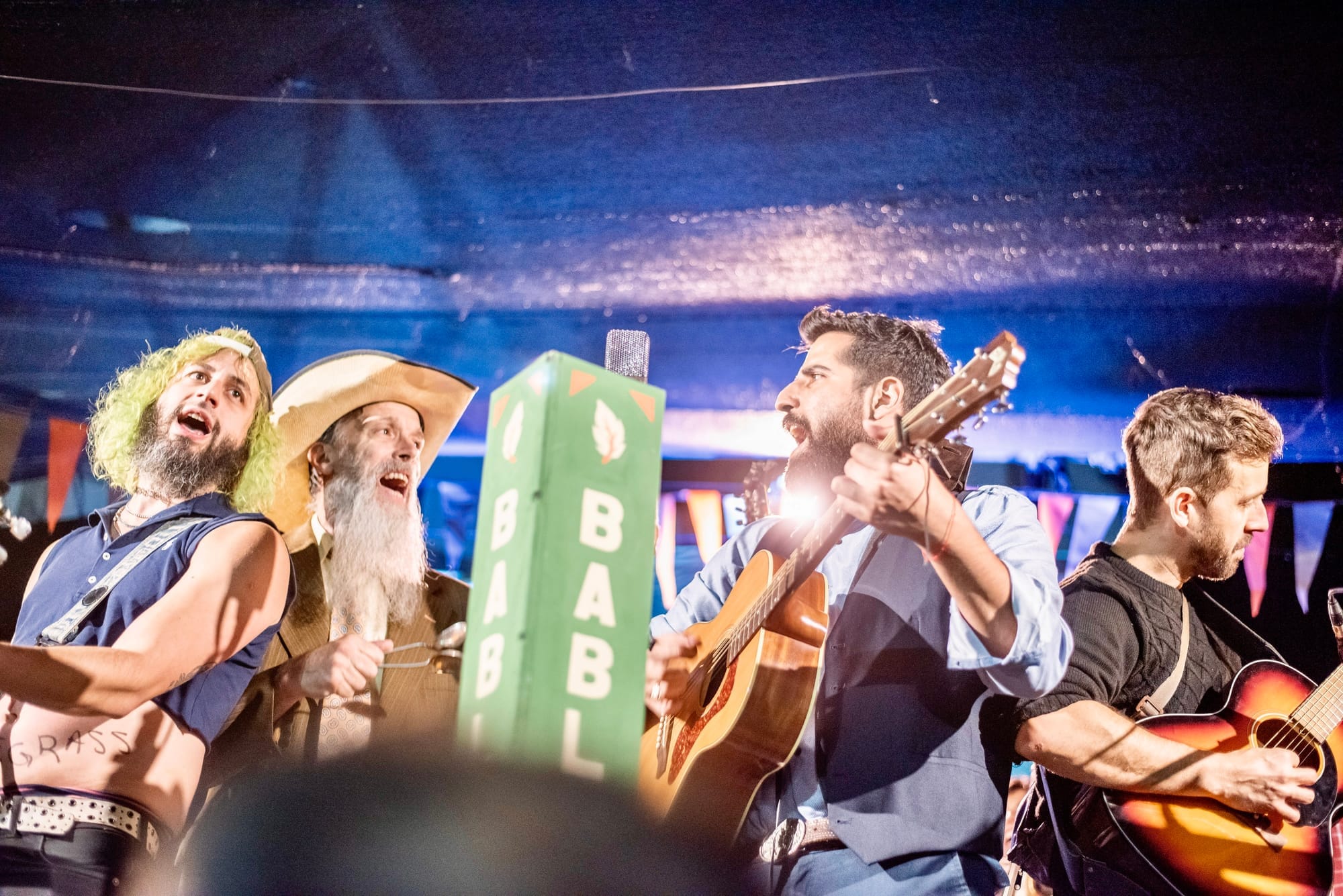
All three of them are American, but none of them has ever seen those pastures. Instead, they’re part of Buenos Aires’s emerging bluegrass scene which, from a very urban and cosmopolitan corner of the world, has been carving out its own space among the city’s many sounds. So much so that on Sunday, December 14, starting at 3 p.m., the fourth edition of the Buenos Aires Bluegrass Festival (BABluegrass) will take place — a free, outdoor event that brings together a handful of bands and scene-makers at the Chacra de los Remedios in Parque Avellaneda.
While the different musical projects on the bill are busy putting together setlists, coordinating schedules with the organizers, thinking about outfits and tuning what feels like endless strings, I want to tell the story of a small community of American expats and porteños who meet up to play a very specific set of tunes, on instruments like banjo, mandolin, and fiddle.
My sources, however, have left me with almost no time for a genealogical deep dive into the genre itself. Anything to do with history, they say, I should take up with Norman — a walking bluegrass Wikipedia who now calls the Belgrano neighborhood home.
But then Henry pushes back: “For your article, why don’t you try an angle that follows the journey of a good-looking, brooding banjo player who’s still looking for his place and his people?”
The Cool Uncle
In addition to being an accomplished musician, Henry is very good at telling stories. He’s bound to come up with a good one, so I give him the floor:
“I have an uncle, Kim, who’s a very, very eccentric character. He makes homemade ice cream with liquid nitrogen and has had something like seventy different jobs in his life — from teaching Hydrology at a community college to working as a freelance writer, to guiding whitewater kayak trips.
He lives in Wyoming and he’ll only do something if he can do it perfectly and exactly the way he wants.
Kim had a 1970 Baldwin ODE banjo, a pretty interesting model. And right around the time when I was twelve or thirteen and going through my rock phase, he decided his banjo career was over. He couldn’t play the way he heard himself playing in his head. He couldn’t make the music sound like it did when the banjo players he admired most played it.
Kim refuses to get on planes, but he drove halfway across the country from Wyoming to visit my family in Massachusetts — about 3,000 miles away. He was driving some kind of Subaru or Toyota. He showed up at our house and just handed me his banjo, telling me he couldn’t find any possible use for the instrument anymore.
For some reason I still don’t understand, there were bluegrass records in my house. My dad had Double Banjo Bluegrass Spectacular, by Tony Trischka. We put it on right away. And I’m like, What is this?! I had just learned Angus Young’s guitar solo on ‘Problem Child’ by AC/DC and I loved Axl Rose — I wanted to be like him when I grew up. My parents were terrified that I’d end up being a musician because they didn’t want me to become a drug addict. But at the same time, they were secretly happy I had finally found something that really interested me.
My dad and Uncle Kim stayed there listening to those bluegrass records. We also had a stack of banjo instruction books lying around the house — I have no idea why. So I grabbed them and told myself, Well, that’s it. Tonight I’m going to become a banjo player. I think that same night I figured out a couple of tunes from those books.
Then I put the banjo back in its case and didn’t take it out again for years, until a friend from college who played bluegrass pushed me to pick it up again. And I thought, I could give this another try.”
“Did you bring the banjo when you moved to Argentina?” I ask.
“Absolutely”, Henry says.
A Six-Pack of Quilmes
Henry continues his autobiographical story:
“When I came to Argentina I brought the banjo, but I had no idea what the bluegrass scene was going to be like. I remember Googling before I moved: bluegrass Argentina.
The first thing Google suggested was this amazing band, Che Apalache. I remember listening to them and thinking, Wow, they’re good. I wrote to them and told myself that once I got to Argentina I had to become friends with them. But by the time I arrived, the band had already broken up, and they never replied.
Founded in 2013, Che Apalache was a musical project led by Joe Troop and featuring Martín Bobrik, Pau Barjau, and Franco Martino. Produced by the legendary Béla Fleck, their debut album was nominated for a Grammy for Best Folk Album in 2020. When Joe moved back to the United States for good, the band dissolved. Pau, Franco, and Martín still play in projects you can catch around the city, such as Angry Zeta and Rodeos.
“The second band Google suggested was one called Estación 39. I wrote to them too, and they actually replied: Hey, when you’re in Buenos Aires, let’s meet up or something!
The scholarship that brought me to Tucumán included an orientation seminar in Buenos Aires, so I got in touch with the band and went — banjo in hand — to Danny Boy’s place, Estación 39’s mandolin player.
There were a lot of people there that night, all playing this music I knew — music that reminded me of home in a strange way, because it’s not exactly from my home. And then there’s this question: how can you play music that’s ‘from’ a specific place in 2025? We’re all little collages of different interests, layered with all the experiences that have rubbed off on us.
That’s how I found my way into this scene. I showed up at Danny’s with a six-pack of Quilmes (laughs). At the time I thought it was the best beer ever invented, because it was vastly better than cheap beer in the U.S. — and I still think that’s true.
Everyone there was incredibly sweet, and after a while we went to another bar. Later I realized it was Antiguas Lunas, where Estación 39 were playing that night as part of a bluegrass series they used to organize. Norman was there too, and he bought me another couple of beers. I was like, This is so lovely. And when the bands wrapped up, we kept going with an old-time music jam.”
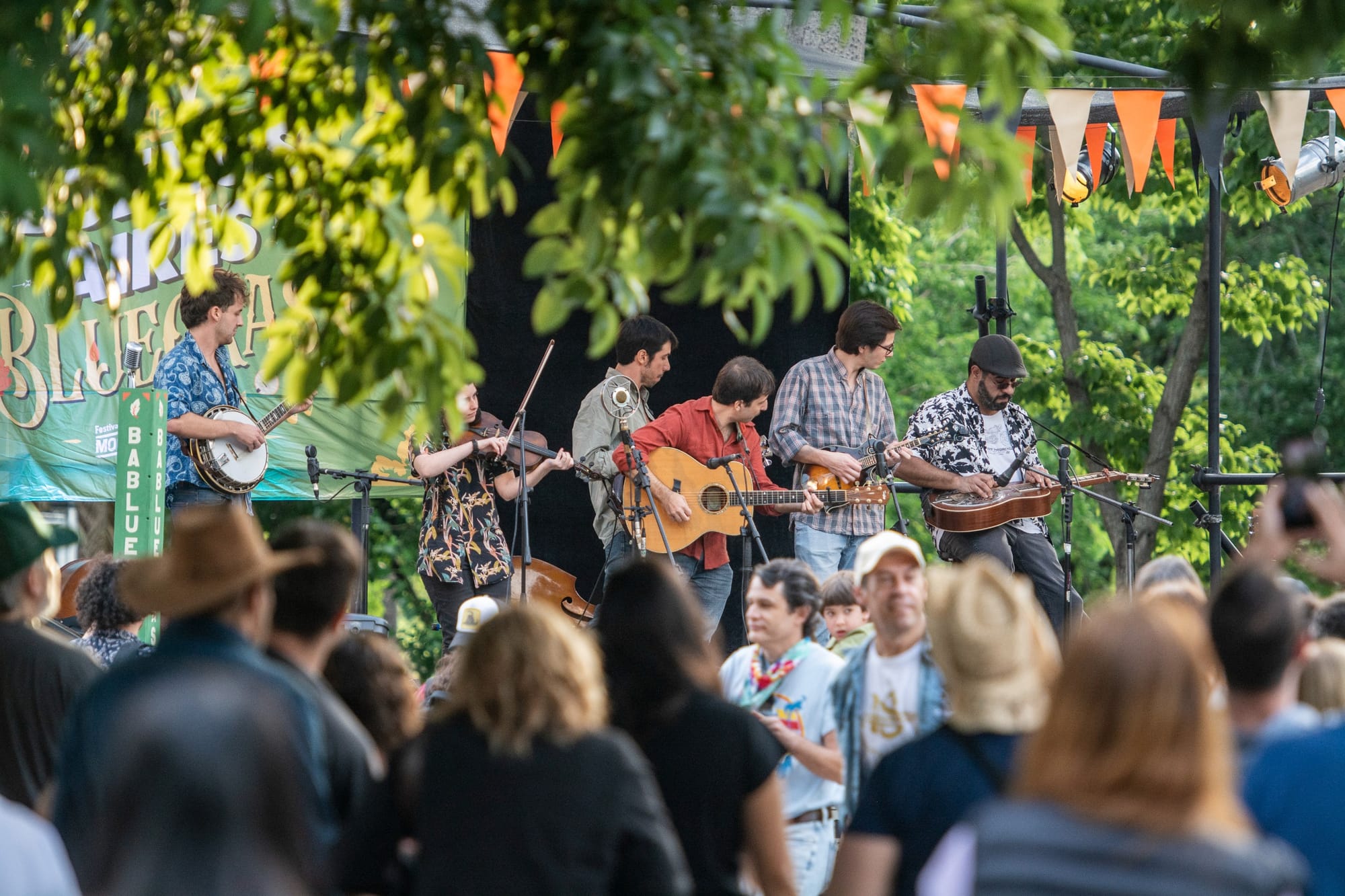
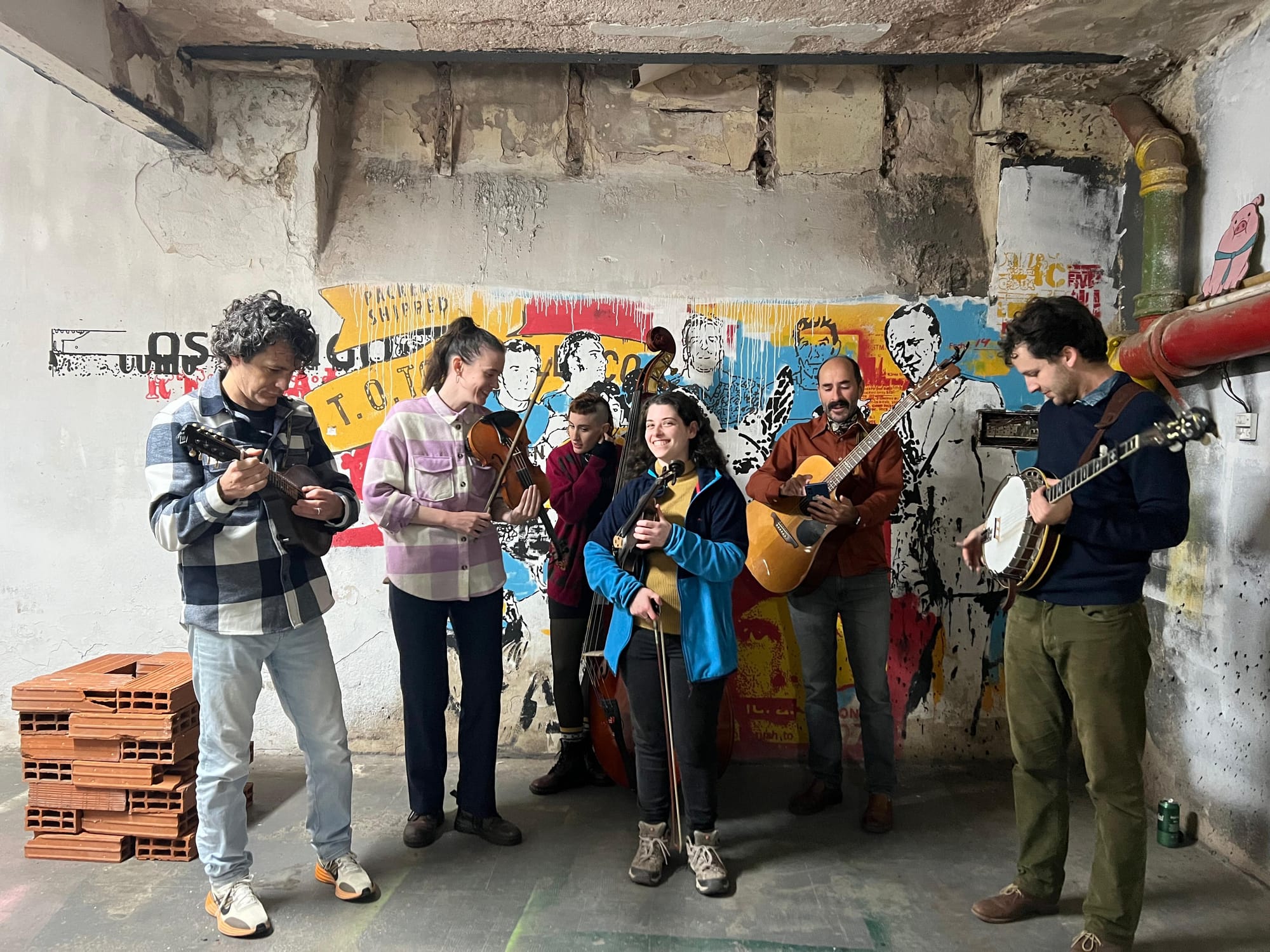
Whenever he manages to save up some cash — and doesn’t mix up Argentina’s long-weekend dates — Henry Colt travels from Tucumán to Buenos Aires to play banjo with his friends and wave the flag for the Baigorria String Band. The project also features Alani Sugar (fiddle), Nuala McLoughlin (fiddle), Jonah Schwartz (mandolin), Eric Brown (acoustic guitar), and Mariana Suárez del Cerro (double bass).
This year, “La Baigorria,” as everyone calls them, will play the Buenos Aires Bluegrass festival for the first time. And may the spirit of Bill Monroe finally help them decide on the cover art for their debut album.
Next Stop: Parque Avellaneda
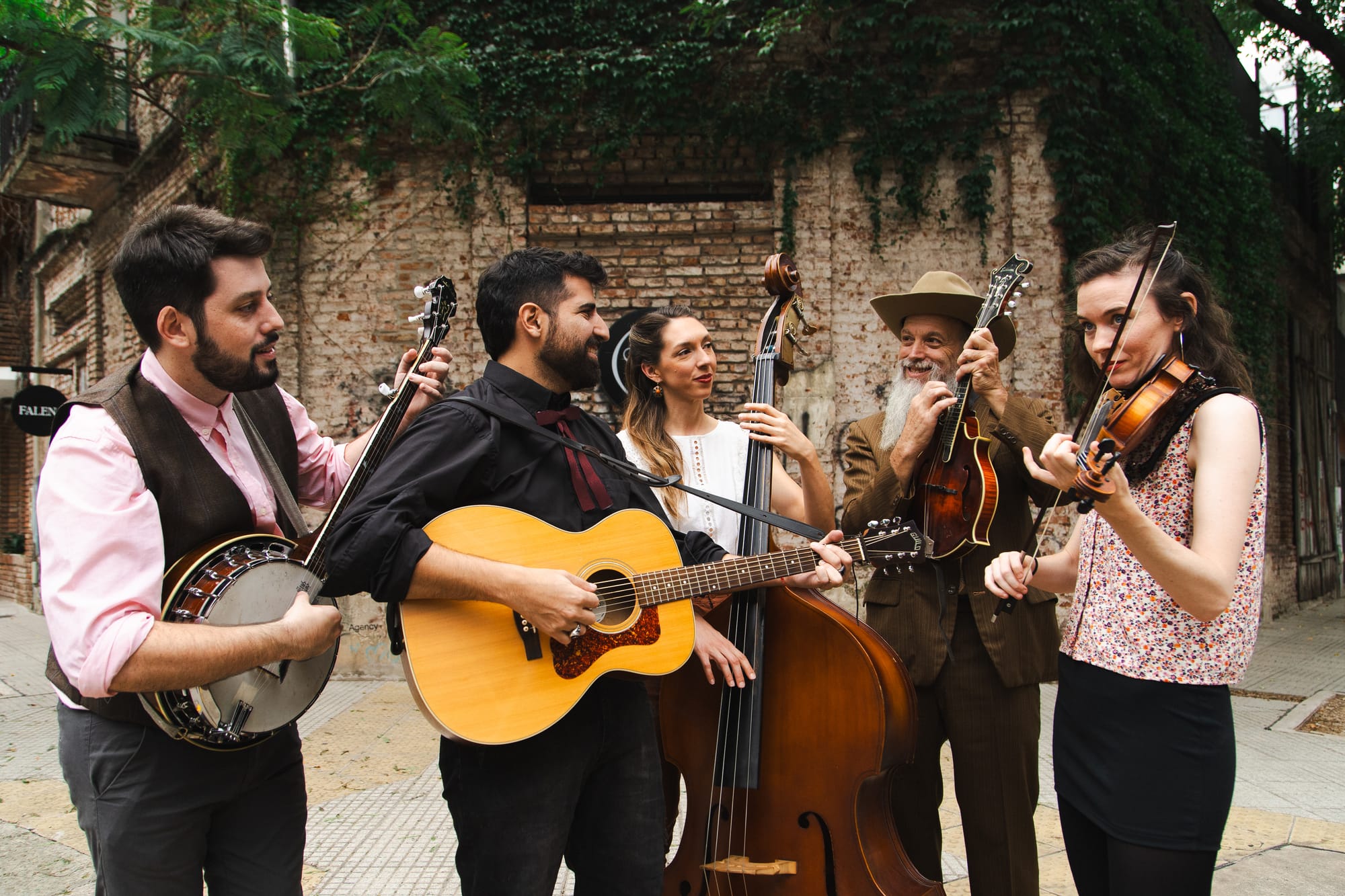
Beyond welcoming the newly arrived gringo, Estación 39 make music, tour Europe, record albums, and organize shows and festivals. The band is made up of Irina Rabenstein on double bass, Nuala McLoughlin on fiddle, Juma Molina on banjo, Matías “Matt” Giliberto on acoustic guitar, and “Danny Boy” Wexler on mandolin.
After immersing themselves in the bluegrass songbook, they gradually began writing their own material and putting a bluegrass spin on local classics like “Mañanas campestres.”
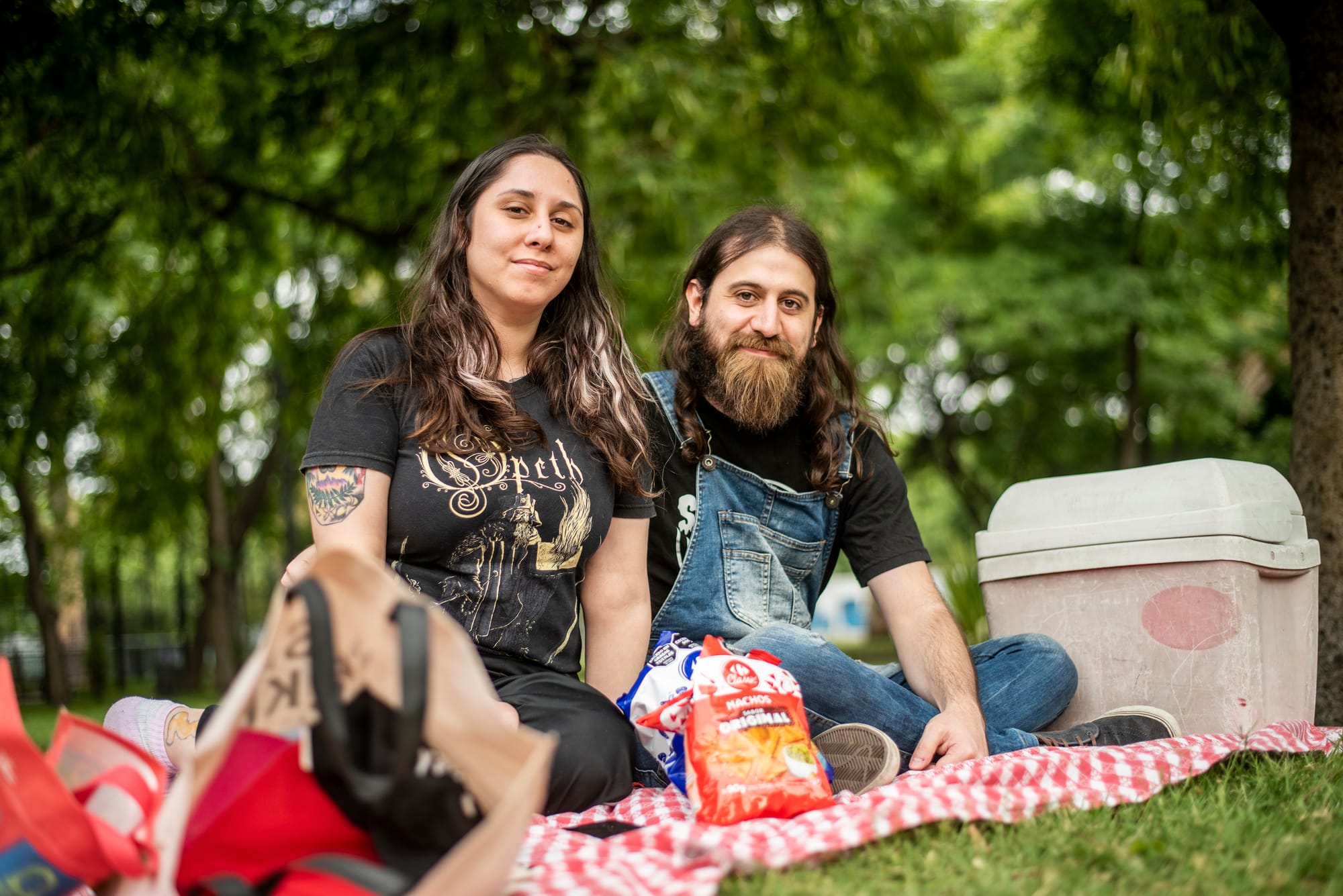
Since 2023, Juma and Matt have also been working to build a festival that could bring together different bluegrass and bluegrass-adjacent projects in a space that’s family-friendly and open to everyone. That’s why they’re so committed to finding venues where they can host a festival without charging admission, preferably outdoors — somewhere you can bring your mate gear, a lawn chair or a blanket — and where the whole thing can grow and sustain itself through the efforts of everyone who wants to pitch in.
But wait — doesn’t Argentina already have country music festivals? Wouldn’t bluegrass more or less fit in there? The band explain, gently and with a lot of care, why this particular festival had to exist:
“With Estación 39 we usually play at almost every country festival in the country — and there are quite a few. Over time we noticed that local country has drifted toward a more rock-oriented sound. Even the blues here is very rock-leaning.
You look at the line-ups and you see electric guitars, drum kits, electric bass. Our thing is very acoustic, and in that kind of setting it’s hard to mic and amplify us properly. At times, we felt like total outsiders. We just couldn’t compete with how loud the other bands were.
So we started feeling the need to grow a scene that could also connect with the old-time music jam, for example. Meanwhile, we kept thinking: you’ve got Buenos Aires Jazz, Buenos Aires Tango, Buenos Aires Reggae, Buenos Aires Rap… So we told ourselves, We need a Buenos Aires Bluegrass.”
As the editions went by, the organizers also set out to make room for bands from other parts of the country. In this fourth edition, alongside (more or less) Buenos Aires-based outfits such as Baigorria String Band, Estación 39, Robert’s Rat, Bonanza, Rodeos, Angry Zeta, and Sierra Ferrets, you’ll see Negráss from Córdoba, Cincinato from La Plata, and Johnny Boy and his Dancing Crickets from Olavarría.
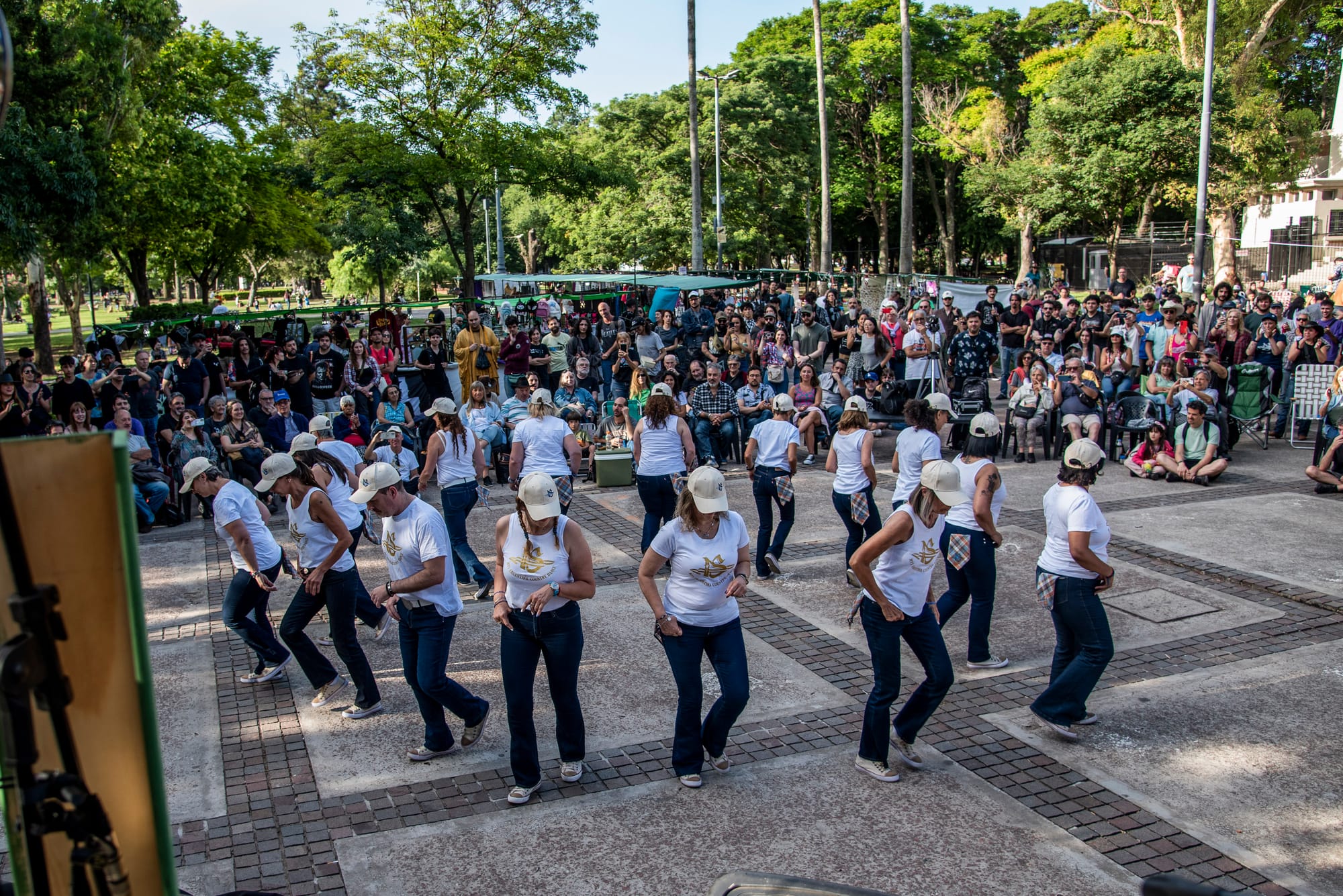
As a bonus, on top of the live music there will be a small fair and a few workshops. My favorite is the must-have moment in the afternoon when you get to show off your line-dancing skills by following the lead of the dance company MyS Country Dance Argentina.
Year after year, the Buenos Aires Bluegrass festival keeps gaining ground. When I ask the bands what they’d like to see happen in the future, they don’t hesitate.
“More people in the audience”, says Nuala.
“More friends”, adds Eric.
And Juma and Matt — with their eyes set on building and stirring up the scene — dream of bringing in projects from abroad and broadening the festival’s sonic palette. In the second edition, in 2024, Canadian musician Petunia (Petunia & The Vipers) joined the line-up at the last minute, and everyone who heard him yodel still talks about it with a kind of nostalgic glow.
For now, the local bluegrass scene is coming together once again to celebrate its place on Buenos Aires’s sound map, alongside everyone who shows up on December 14 from 3 p.m. at the Chacra de los Remedios in Parque Avellaneda. Admission is free.
Still craving some historical trivia? Here’s Norman with three things you might like to know:
See this post on Instagram
A post shared by Buenos Aires Bluegrass (@babluegrass)