Catalog of Argentine Dinosaurs: 50 Discoveries of the Third Millennium

1 de oct. de 2025 — Luis Paz
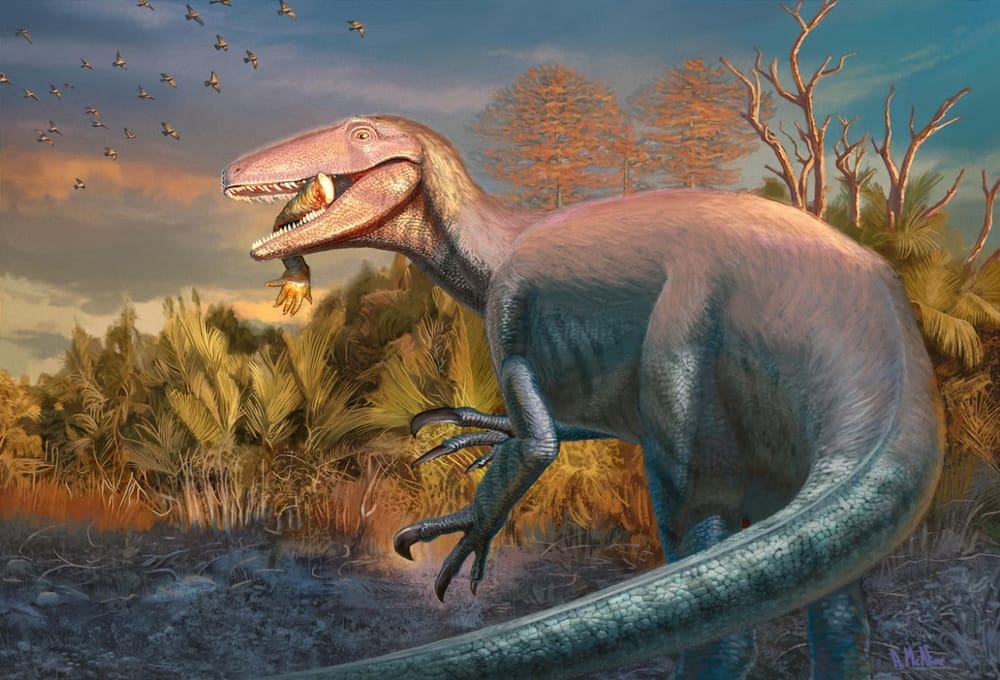
In the first part of this Catalog of Argentine Dinosaurs we reviewed the early days of local paleontology in foreign hands, saw how it became almost a national cause in the second half of the 20th century, and recalled the major dinosaur discoveries on Argentine soil through 1999. In this second part we will look at what has happened since the turn of the millennium.
From the year 2000 onward, milestones in Argentine paleontology exploded thanks to a combination of scientific, legal, and logistical factors. On one hand, the professionalization and expansion of local teams (CONICET, museums, universities) with fieldwork campaigns, laboratories, collections, and projects such as the Centro Paleontologico Lago Barreales at the Universidad Nacional del Comahue. This was also made possible by the consolidation of a national legal framework that regulated permits, collections, and the fight against fossil trafficking (Law 25,743, enacted in 2003), placing the Museo Argentino de Ciencias Naturales (MACN) as the enforcement authority. And, of course, tools and technologies also improved -- detailed cartography, geochemistry, and magnetostratigraphy. Even developments in national logistics and infrastructure opened new road cuts that led to discoveries: for instance, Ekrixinatosaurus was found thanks to a gas pipeline construction project.
In this accelerated pace of discoveries, the role of public institutions proved crucial. Fundamentally the MACN/CONICET partnership with their collections and legal authority; provincial and municipal museums with their repositories and exhibitions; and national universities with their field laboratories and research teams. All institutions funded by some level of government (national, provincial, or municipal).
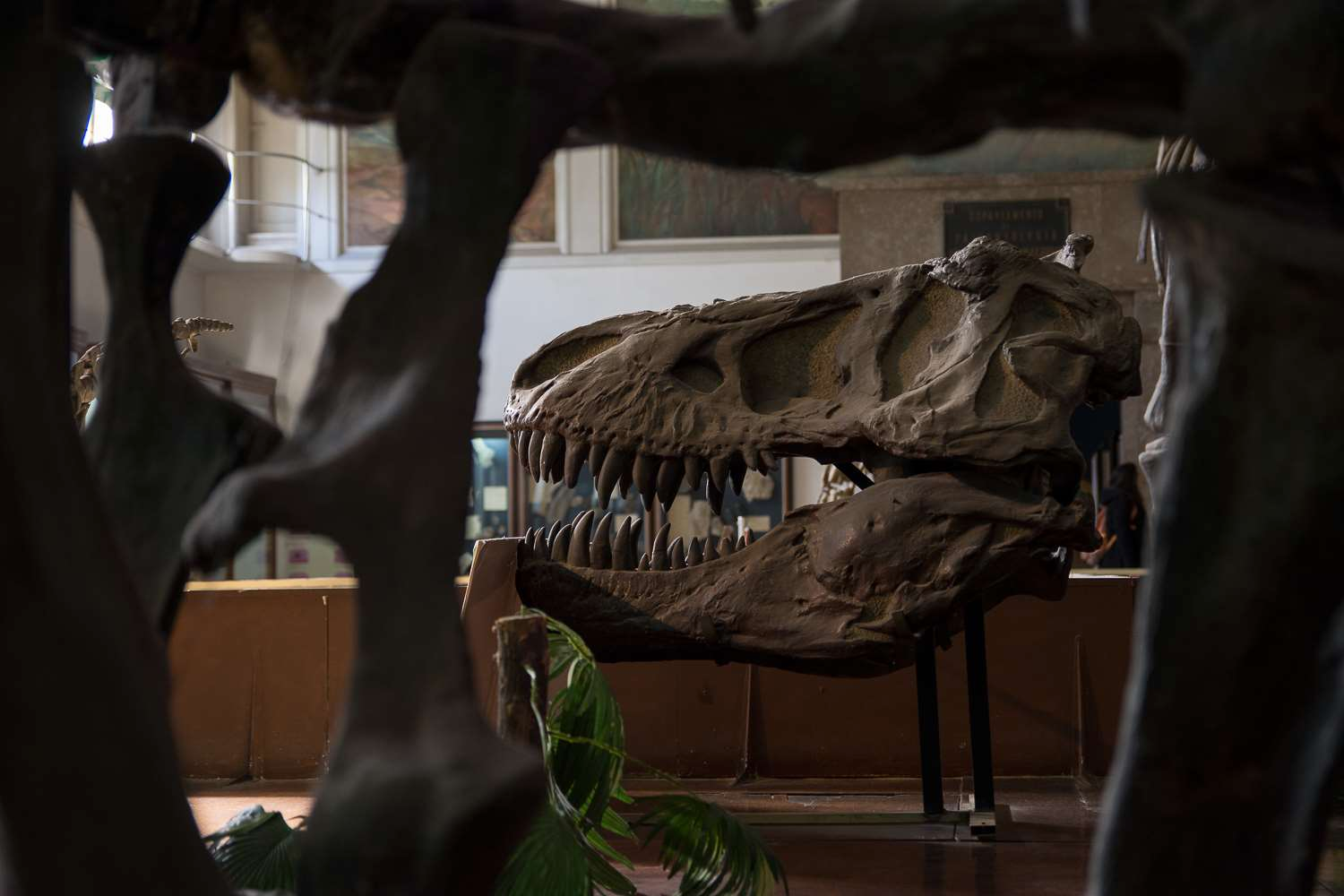
The perfect storm
According to available information, at least 50 dinosaurs that inhabited prehistoric Argentine soil have had their remains found in the last 25 years. The number is yet another crowning glory, of course, but beyond the conditions that allowed the most majestic creatures of prehistory to live here, what is equally striking is the way those remains were preserved, in many cases yielding nearly complete skeletons.
There is a geological key to this: the Neuquen Basin, a retroarc/foreland system with sustained subsidence throughout the Mesozoic, where thousands of meters of sandstones, siltstones, and tuffs from the Neuquen Group (Cretaceous) accumulated in braided rivers, floodplains, and aeolian desert margins (Candeleros, Huincul, Portezuelo, Plottier, Bajo de la Carpa, Anacleto). This stacking records very different ecosystems (forested riverbanks, dunes, ephemeral lagoons), which multiplies niches and burial probability. That is why the basin is one of the most complete records of Mesozoic vertebrates in the world, and it feeds much of Patagonian diversity.
From this primordial soup or perfect storm for saurian splendor, however, the explanation of how and why the remains are so well preserved does not fully emerge. Two recurring reasons stand out: rapid burial (for example in northern Rio Negro, where La Buitrera had giant dunes that buried organisms) and volcanism (which aids early mineralization, as in the Auca Mahuevo area of the Anacleto Formation). These contexts maximize anatomical detail and fossil traces.
On the other hand, although dinosaurs lived under varied Mesozoic climates, modern Patagonia is arid: sparse vegetation, loose soils, and continuous wind/fluvial erosion expose large Cretaceous windows from Neuquen to Santa Cruz. This aridity makes it easier to spot bones "on the surface," something that does not happen in dense jungles.
Now then, without further ado, the 50 dinosaurs identified in Argentina so far in the 21st century, including the recent Joaquinraptor casali. And there are so many that we will need to classify them by diet.
THEROPODA (carnivores and relatives)
A clade of dinosaurs characterized by being mostly carnivorous and walking on two legs (obligate bipeds).
ABELISAURIDS
These were the dominant carnivores of the Cretaceous in the Southern Hemisphere. They were characterized by extremely reduced arms and cranial ornamentation such as horns, crests, and protuberances. This is the group to which Carnotaurus sastrei belongs.
Ilokelesia aguadagrandensis (1998)
An abelisaurid from the Huincul Formation, Plaza Huincul (Neuquen), with an estimated age of 98-90 Ma. Described by Coria and Salgado; 5 m long with an estimated weight of 800 kg. The name comes from the Mapuche words ilo meaning "meat" and kelesio meaning "lizard," plus the locality where it was found, Aguada Grande. It displays transitional features in the skull and pelvic girdle that help anchor primitive characters of the clade. Its material contributed to refining the characteristics that define the family and understanding how the appearance of Patagonian abelisaurids evolved.
Aucasaurus garridoi (2002)
Its name means "Auca lizard of Alberto Garrido," after the area where it was found, Auca Mahuevo (Neuquen), from the Anacleto Formation (Santonian-Campanian, ~75 Ma). A medium-sized abelisaurid, 7 m long and approximately 700 kg. Found by teams from the Museo Carmen Funes / Proyecto Auca Mahuevo and described by Coria, Chiappe, and Dingus. Compared to Carnotaurus, it had longer arms and skull, and bore two small protuberances that did not quite reach horn status. Found in a context rich with titanosaur nesting sites and tuffaceous layers that favored preservation. Important for understanding the diversity and cranial morphology of Patagonian abelisaurids.
Ekrixinatosaurus novasi (2004)
Its remains come from the Candeleros Formation (Neuquen Basin, ~98-97 Ma). Its name means "Novas's lizard born from an explosion," because it was discovered after a blast during mining operations; described by Calvo and colleagues. A large abelisaurid, 10 m long, with a proportionally larger skull than other abelisaurids. It represents an early phase of the abelisaurid radiation in the Southern Hemisphere and coexisted with other large carnivorous dinosaurs like Giganotosaurus. Its discovery context underscores the role of modern infrastructure in paleontological prospection.
Skorpiovenator bustingorryi (2009)
An abelisaurid from the Huincul Formation (Neuquen, ~95-93 Ma). Described by Canale and collaborators, with a very well-preserved articulated skeleton. Its name means "scorpion hunter," alluding to the local scorpions; the specific epithet honors Manuel Bustingorry, owner of the ranch where it was found. At a total length of 6 m, the skull was short and robust, ornamented with crests, tubercles, and nodules. It is key for characterizing cranial variation and internal systematics of Abelisauridae in the mid-to-late Cretaceous.
Tralkasaurus cuyi (2019)
A dinosaur from the Huincul Formation (Rio Negro) (97-93 Ma), described by Cerroni and collaborators. A small-to-medium abelisaurid, 6 m long. The name comes from the Mapudungun word "tralka" meaning "thunder," and refers to the El Cuy department. Robust skull and proportions that suggest niche partitioning relative to larger abelisaurids. It possesses a set of features that do not entirely clarify whether it is a primitive abelisaurid or falls within the more specialized group.
Niebla antiqua (2020)
An abelisaurid from the Allen Formation (Rio Negro) (72-66 Ma), described by Aranciaga Rolando and collaborators. The name refers to the foggy days during its excavation. It was relatively small, 4 to 5 m long. The material is fragmentary and disarticulated. It falls within the more specialized group of abelisaurids and had a unique pectoral bone structure within the group.
Llukalkan aliocranianus (2021)
An abelisaurid from the Bajo de la Carpa Formation (Neuquen/Rio Negro) (86.3-83.6 Ma). Described by Gianechini and colleagues. Its name Llukalkan comes from Mapuche and means "the one that causes fear," and from the Latin aliocranianus, "with a different skull." The skull features peculiar middle ear cavities and pneumatization, suggesting differentiated auditory sensitivity. It coexisted with other abelisaurids, indicating high local richness of the group in semi-arid Santonian environments of the Neuquen Group.
Elemgasem nubilus (2022)
A small abelisaurid from the Portezuelo Formation (Neuquen) (90.5-88.5 Ma), described by Baiano and collaborators. The name Elemgasem is that of a Tehuelche god, master of all animals and capable of petrifying others, and nubilus refers to the cloudy days during its excavation. The fossil exhibits spondyloarthropathy (a disease of the vertebral joints), making it the first known case of this condition in a non-avian dinosaur.
Koleken inakayali (2023)
An abelisaur from the La Colonia Formation (Chubut) (69 Ma), described by Pol and collaborators. The specimen corresponds to a subadult 6 years of age and 5 m long. The name koleken comes from Teushen and means "the one that comes from clay and water," as it was found in sediments corresponding to clayey mud from an estuarine environment. The specific name inakayali honors the last Tehuelche chief, Inakayal. It has been suggested that it could be a juvenile stage of Carnotaurus, since it shows very few differences from it -- particularly the lack of cranial horns, which could be explained as part of the animal's growth if they were the same species.
CARCHARODONTOSAURIDS
These were the largest predators of the Southern Hemisphere, living between the Late Jurassic (154 Ma) and the Late Cretaceous (89.3 Ma). They were dinosaurs of great length and size but gracile compared to tyrannosaurids. They had thin, serrated teeth. Giganotosaurus belongs to this group.
Tyrannotitan chubutensis (2005)
A carcharodontosaurid from Chubut (Cerro Barcino Formation) (118-112 Ma). Described by Novas and collaborators. Its name means "tyrant titan of Chubut." At 12 m long with an estimated weight of 7 tonnes, it is the oldest known carcharodontosaurid. Long skull with large serrated teeth, robust vertebrae, and powerful limbs; an apex predator predating the rise of megaraptorids. Its size and anatomy place it among the largest Gondwanan theropods, distinguished by the lack of pneumaticity (air sacs in the bones that lighten the structure) in the sacral region and tail vertebrae.
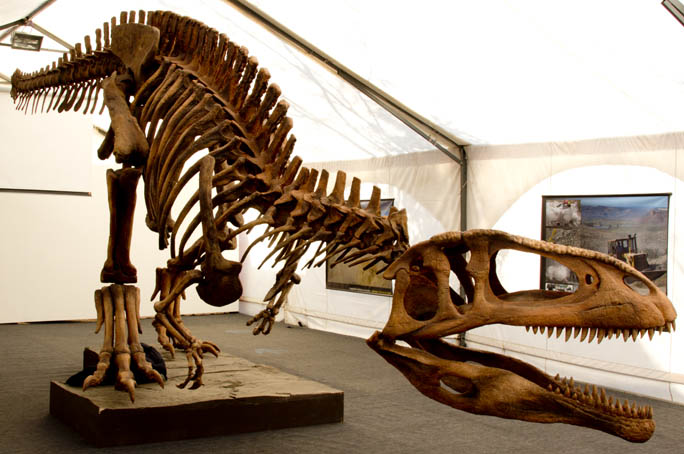
Mapusaurus roseae (2006)
A carcharodontosaurid from the Huincul Formation (Neuquen) (97-93.3 Ma), described by Coria and Currie, with between 7 and 9 individuals found in the excavation. It is estimated to have been 12 m long and weighed 6 tonnes. The name comes from the Mapuche word Mapu meaning "earth," and roseae for the color of the rocks where it was found -- that is, "lizard of the rosy earth." It has not been determined whether the accumulation of skeletons suggests possible gregariousness or is the result of a natural trap.
MEGARAPTORIDS
Theropod dinosaurs characterized by long, robust arms with powerful sickle-shaped claws. They were the largest predators in the Southern Hemisphere during the Cretaceous (128-66 Ma). This group is defined by the species Megaraptor namunhuaiquii.
Aerosteon riocoloradensis (2008)
A megaraptorid from the Rio Colorado Formation (Mendoza) with extreme skeletal pneumatization; described by Sereno and colleagues. Its name comes from the Greek aeros and osteon meaning "airy bones," referring to its "hollow" bones (pneumaticity), a structure also found in birds. It provides evidence not only of the close theropod-bird relationship, but also yields data about the possible internal anatomy of dinosaurs.
Murusraptor barrosaensis (2016)
A megaraptorid from the Sierra Barrosa Formation (Neuquen) (93-89 Ma), described by Coria and Currie. Its name means "wall thief," as the specimen was found in the wall of a canyon. Approximately 6.5 m long, it had hypertrophied manual claws, a broad rib cage, and diagnostic axial features of the clade. It is a key specimen for defining the characteristics that make Megaraptoridae distinctive and their relationship with other tetanurans. Additionally, the specimen shows signs of infections on the left side of the skull that deformed the cranium, believed to have been caused by another theropod.
Aoniraptor libertatem (2016)
A megaraptor from the Huincul Formation (Rio Negro/Neuquen) (97-95 Ma), described by Motta and collaborators. Its name combines the Tehuelche word aoni meaning "south" and the Latin raptor meaning "thief"; libertatem refers to the declaration of Argentine independence, which was celebrating its 200th anniversary when this dinosaur was described in 2010. Approximately 6 m long.
Maip macrothorax (2022)
A giant megaraptorid (9 m long) from the Chorrillo Formation (Santa Cruz) (70 Ma). Described by Aranciaga Rolando and colleagues. Maip is the name of a mythological being from Ainokenk culture, a malicious entity known as "the shadow of death that kills with cold wind," since it was extracted 30 km from El Calafate in a high-altitude area. The specific name macrothorax or "large chest" refers to this dinosaur's wide thoracic cage. It is the largest megaraptorid from South America, showing how this group reached larger sizes toward the end of the Cretaceous.
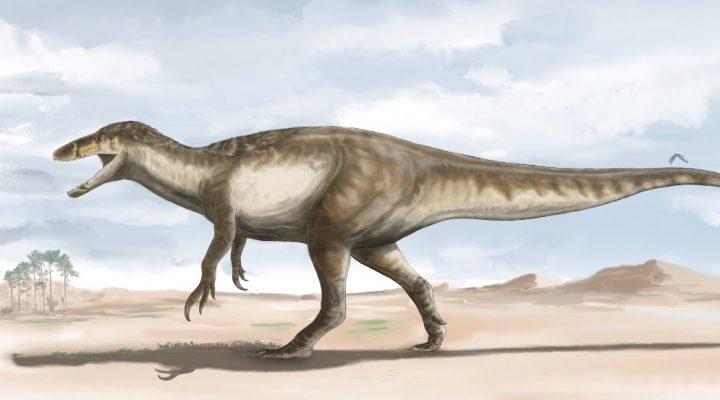
Joaquinraptor casali (2025)
A large megaraptorid from the Lago Colhue Huapi Formation (Chubut) (70-66 Ma). Described by Ibiricu and colleagues. With an estimated length of nearly 7 m and a weight of 700 kg, the specimen is inferred to have been 19 years old. Its generic name honors Joaquin, the first son of the lead author, and the informal name of the site where it was found, "Valle Joaquin," while the specific epithet references Dr. Gabriel A. Casal. The holotype was found with leg bones of a crocodylomorph trapped in its jaw: rare direct evidence of diet.
UNENLAGIINE RAPTORS
Small to medium-sized raptor dinosaurs, probably feathered, with slender and agile bodies. Unenlagiines are exclusively South American, lived at the end of the Cretaceous, are characterized by an elongated snout, and are the closest relatives of birds among raptors.
Buitreraptor gonzalezorum (2005)
An unenlagiine from La Buitrera, Candeleros Formation (Rio Negro) (98-97 Ma). Described by Makovicky, Apesteguia, and Agnolin. Its name means "raptor of La Buitrera, of Fabian Gonzales and Jorge Gonzalez." It is calculated to have been 1.2 m long and weighed up to 5 kg. It is the most complete dromaeosaurid specimen found in the Southern Hemisphere. It likely hunted small animals such as mammals and small lizards.
Austroraptor cabazai (2008)
A large unenlagiine (~5 m) from the Allen Formation (Rio Negro) (71-70 Ma). Described by Novas and collaborators; its name means "southern raptor/thief." It is estimated to have reached 6 m in length and weighed 350 kg, making it one of the largest known raptors. Its elongated skull with small conical teeth suggests a piscivorous diet. It is the youngest (most recent) and largest record of dromaeosaurids (raptors) in the Southern Hemisphere.
Pamparaptor micros (2011)
A small unenlagiine from the Portezuelo Formation (Neuquen) (93.3-85.5 Ma), described by Porfiri, Calvo, and Santos. Its name means "small raptor of the pampas." The specimen consists of an articulated foot. The total size is believed to have been between 0.5 and 0.7 m long.
EVOLUTIONARY ENIGMAS
Here I have grouped some dinosaurs whose relationships with other groups remain unclear, are still debated, or do not yet have a specific placement within the evolutionary context of theropods.
Bicentenaria argentina (2012)
A basal coelurosaur from the Candeleros Formation (Rio Negro) (~90 Ma), described by Novas and colleagues. Estimated size of 2.5 to 3 m long and a weight of 40 kg. The name honors the 200th anniversary of the independence of the Argentine Republic. Multiple individuals were found in the excavation, predominantly juveniles; because there were several individuals of different ages, the authors interpreted it as a small herd that perished in a flood.
Alnashetri cerropoliciensis (2012)
A small theropod from La Buitrera, Candeleros Formation (Rio Negro) (95 Ma). Described by Makovicky and collaborators. It belongs to a group called Alvarezsauroidea, characterized by the extreme reduction of their fingers, having barely a single developed digit on each arm. Its name means "slender legs from Cerro Policia"; it was very small, just 60 cm long.
Gualicho shinyae (2016)
A theropod with extremely reduced arms from the Huincul Formation (Rio Negro) (~93 Ma). Described by Apesteguia and colleagues; the name Gualicho is a malevolent spirit feared by the Tehuelche people, referencing the complications the researchers faced in obtaining the fossils; the specific epithet honors technician Shinya Inoue. It was 6 m long and had reduced arms with only 2 digits on each hand. The reduction of arms and digits demonstrates that this was a convergent trend among several groups of carnivorous dinosaurs as they increased in size, similar to abelisaurids and tyrannosaurids. Its closest theropod affinities remain under debate.
Overoraptor chimentoi (2020)
A paravian from the Huincul Formation (Rio Negro) from the Late Cretaceous (~97-93 Ma). Described by Motta and collaborators. Its name means "piebald raptor of Chimento," in honor of Dr. Roberto Nicolas Chimento, who discovered the remains. It measured approximately 1.3 m long with very long arms and legs. It had a mixed combination of features. Its legs were typical of a running raptor with the classic recurved claw, yet its arms had anatomical features similar to those of birds. This fossil is important for understanding the evolutionary transition between raptors and birds.
SAUROPODA (long-necked herbivores)
A group of herbivorous dinosaurs known for being the largest land animals that ever existed. They dominated terrestrial ecosystems from the Late Triassic (about 210 million years ago) until their extinction at the end of the Cretaceous (66 million years ago).
REBBACHISAURIDAE
A family within the Diplodocoidea group, characterized by long necks and whip-like tails. Rebbachisaurids in particular are distinguished from other sauropods by their characteristic teeth, which have a low angle, internal wear facets, and asymmetric enamel. They also had numerous rapidly replacing teeth.
Zapalasaurus bonapartei (2006)
A rebbachisaurid from the La Amarga Formation (Neuquen) (Aptian-Albian, ~130-122 Ma), described by Salgado and collaborators. Estimated at 15 m long. Its name means "reptile from Zapala of Bonaparte"; Zapala is the locality of origin, and it is dedicated to Dr. Jose Bonaparte. It had a very long neck that allowed it to feed at different heights without having to move much.
Cathartesaura anaerobica (2005)
A rebbachisaurid from La Buitrera (Rio Negro), Huincul Formation (97-93 Ma). Approximately 17 m long and 15 tonnes, described by Gallina and Apesteguia. Cathartes is the genus to which vultures belong; since this dinosaur comes from "La Buitrera" (the vulture roost), hence "vulture lizard." The specific epithet comes from the company Anaerobicos S.A., which provided logistical support during the excavation. It had a long neck and a light build with a limited dorso-ventral range of motion.
Comahuesaurus windhauseni (2012)
A rebbachisaurid from the Lohan Cura Formation (Neuquen) (117-100 Ma), described by Carballido and colleagues. Its name means "reptile from Comahue of Windhausen"; Comahue is the region where it was found, and it honors Anselmo Windhausen, who contributed significantly to the geological study of Patagonia. The remains were found as a "bone bed" that included 3 distinct stacked individuals. Its discovery helps to understand the early evolution of rebbachisaurids in South America.
Lavocatisaurus agrioensis (2018)
A rebbachisaurid from the Rayoso Formation, Neuquen Basin (Aptian-Albian, ~125-109 Ma), described by Canudo and collaborators. The generic name references Rene Lavocat, a French paleontologist, while the specific name refers to Agrio del Medio, the locality where it was found. Notably complete skull, elongated, and very similar to its northern relative Diplodocus. Its most notable feature is evidence of a keratinous beak-like covering on the anterior part of the snout.
DIPLODOCIDAE
A family of sauropod dinosaurs that dominated the landscape during the Late Jurassic (about 155-145 million years ago), primarily in what is now North America, Africa, and Europe.
Leinkupal laticauda (2014)
A diplodocid from the Bajada Colorada Formation (Early Cretaceous, ~136.4 Ma) (Neuquen), described by Gallina and collaborators. Its name comes from the Mapudungun words Lein meaning "to vanish" and kupal meaning "family," referencing the fact that it is the last known diplodocid on a global scale. The species name comes from the Latin latus "broad" and cauda "tail," because it has wide caudal vertebrae.
TITANOSAURIA
Sauropods in this group are characterized by small heads, spatulate teeth, and varied body shapes. They were the most diverse and successful group of sauropods in the Southern Hemisphere during the Cretaceous. Not only skeletons are known but also trackways, nesting sites, and even coprolites. Argentinosaurus (a lognkosaurian) belongs to this group.
Basal or uncertain-position titanosaurs
These represent early or primitive forms of the group, often known from fragmentary remains, mainly from the Early and Middle Cretaceous. Many developed bony plates (osteoderms) on their backs for defense.
Malarguesaurus florenciae (2008)
A titanosauriform from the Portezuelo Formation, Malargue (Mendoza) (Cretaceous, ~89 Ma). Described by Gonzalez Riga and collaborators. It is estimated to have been 18 m long and weighed 20 tonnes. Its name means "Malargue lizard." A robust sauropod distinguished by the unique shape of its caudal (tail) vertebrae, which display a transitional morphology between primitive groups and more advanced titanosaurs.
Narambuenatitan palomoi (2011)
A titanosaur from the Anacleto Formation (Neuquen) from the Cretaceous (83-75 Ma), described by Filippi, Garcia, and Garrido. Its name means "titan of Puesto Narambuena of Palomo," in reference to the site where it was found and to its discoverer, Salvador Palomo. It is estimated to have been 12 to 14 m long.
Traukutitan eocaudata (2011)
A titanosaur from the Bajo de la Carpa Formation (Neuquen), from the Late Cretaceous (~85 Ma). Described by Juarez Valieri and Calvo. Its name Trauku is the name of a giant mountain spirit in Araucanian mythology, combined with the word titan. Eocaudata comes from the Greek eos meaning "dawn" and cauda meaning "tail," in reference to the primitive ("basal") form of its tail vertebrae. The caudal vertebrae were amphiplatyan, uncommon in titanosaurs. It is estimated to have been about 24 m long and weighed approximately 29 tonnes.
Notocolossus gonzalezparejasi (2016)
A giant titanosaur from the Plottier Formation (Mendoza) from the Late Cretaceous (86 Ma), described by Gonzalez Riga and collaborators. Notocolossus comes from the Greek notos meaning "south" and kolossos meaning "colossus." And gonzalezparejasi pays tribute to Dr. Jorge Gonzalez Parejas for his support of paleontological research in the region. It is estimated to have been 25 to 28 m long and weighed between 40-60 tonnes. The second specimen preserved a complete right hind foot, an extremely rare find in titanosaurs. This foot shows a compact structure adapted to support extraordinary weight.
Choconsaurus baileywillisi (2019)
A titanosaur from the Huincul Formation, Villa El Chocon (Neuquen), Late Cretaceous (93-96 Ma). Described by Simon, Salgado, and Calvo. Its name means "El Chocon lizard of Bailey Willis," in reference to the discovery site and in honor of American geologist Bailey Willis, who conducted important stratigraphic studies in the region at the beginning of the 20th century. It is estimated to have been 18 m long and weighed 25 tonnes. It retains anatomical features that its more evolved relatives lost, such as certain details in its vertebrae and hands.
Ninjatitan zapatai (2021)
A titanosaur from the Bajada Colorada Formation (Neuquen) from the Early Cretaceous (140 Ma), described by Gallina, Canale, and Carballido. The name Ninjatitan pays tribute to Argentine paleontologist Sebastian Apesteguia, nicknamed "el Ninja," while zapatai honors Rogelio Zapata, a technician at the Villa El Chocon museum who found the specimen. It is estimated to have been 20 m long. Considered the oldest known titanosaur, it anchors the origin of the clade near the beginning of the Cretaceous and reinforces the hypothesis that this group originated in South America.
Saltasaurids and relatives (armored or small-bodied)
Considered the most evolved titanosaurs, they lived at the end of the Cretaceous, approximately between 84 and 66 Ma. Most were relatively small for sauropods, measuring between 8 and 15 m long. They were the first sauropods in which the presence of osteoderms (bony skin plates) was confirmed -- armor similar to that of crocodiles that served as defense against predators such as abelisaurids.
Bonitasaura salgadoi (2004)
A titanosaur from Cerro Policia (Rio Negro), Bajo de la Carpa-Anacleto transition (85 Ma). Described by Apesteguia. The name comes from the discovery quarry, "La Bonita," while salgadoi honors the renowned Argentine paleontologist Leonardo Salgado. It was about 10 m long and weighed around 5.5 to 6 tonnes. Its most unusual feature is its square-shaped jaw with a sharp edge behind the front teeth. This edge is believed to have been covered by a keratinous sheath (beak) that it used to cut tough vegetation. A case study in Patagonian craniology and taphonomy.
Overosaurus paradasorum (2013)
A titanosaur from Cerro Overo (Neuquen), Bajo de la Carpa Formation (Santonian; 84-78 Ma). Described by Coria and colleagues. With an estimated length of just 10 m and a weight of 5 to 7 tonnes. Its name means "Overo lizard," in reference to the locality where it was discovered, and paradasorum pays tribute to the Parada family, who facilitated the discovery and excavation. The fossil is notable for including an exceptionally complete articulated vertebral series from the neck to the tail.
Sarmientosaurus musacchioi (2016)
A titanosaur from Chubut (Bajo Barreal) from the Cretaceous (100-89 Ma), described by Martinez and collaborators. It is estimated to have been 12 m long and weighed 10 tonnes. Sarmientosaurus references the city of Sarmiento, near the discovery site; and musacchioi is a tribute to Dr. Eduardo Musacchio, a geologist and educator at the Universidad Nacional de la Patagonia San Juan Bosco. It had very large eye sockets (40% of skull length), suggesting superior vision compared to other similar dinosaurs. The structure of its ear and neck indicates that it habitually held its head tilted downward, suggesting it fed primarily on ground-level vegetation.
Nullotitan glaciaris (2019)
A titanosaur from the Chorrillo Formation (Santa Cruz) from the Cretaceous (70 Ma), described by Novas and colleagues. It is estimated to have reached 20 to 25 m in length. Nullotitan pays tribute to geologist Francisco Nullo, who discovered the first remains in 1980. The epithet glaciaris is due to the fact that the discovery site offers a direct view of the Perito Moreno Glacier.
Lognkosauria (the titans among titans)
This group includes some of the largest and heaviest land animals that ever existed, with most of their remains found in South America, particularly in Argentine Patagonia. They were characterized by massive vertebrae with very robust neural spines and an extremely wide rib cage. Although some members were of "ordinary" size for a titanosaur, others represent the upper limits of terrestrial biological mass. They lived during the Late Cretaceous (101-66 Ma).
Mendozasaurus neguyelap (2003)
A lognkosaurian from Mendoza (Coniacian; 89-86 Ma), described by Gonzalez Riga. Its name comes from the province of Mendoza and the Huarpe word neguyelap, meaning "first lizard." It is estimated to have been 18 to 22 m long, with a weight of 16 tonnes. It had a notably robust neck with very wide and tall neural spines, along with spherical osteoderms (bony skin plates) for protection. A basal reference point for Lognkosauria.
Puertasaurus reuili (2005)
A sauropod from the Cerro Fortaleza Formation, Santa Cruz (Cretaceous, 70-68 Ma), described by Novas and collaborators. Named in honor of Pablo Puerta, a technician at the Museo Egidio Feruglio who made the discovery, and Santiago Reuil, who reconstructed the vertebra from 60 fragments. Its dorsal (back) vertebra measures 1.68 m wide, making it the widest known vertebra of any sauropod. Only 4 vertebrae are known (one cervical, one dorsal, and two caudal), representing barely 3% of its skeleton, making precise estimates of its total size difficult. It is believed to have been as large as Patagotitan.
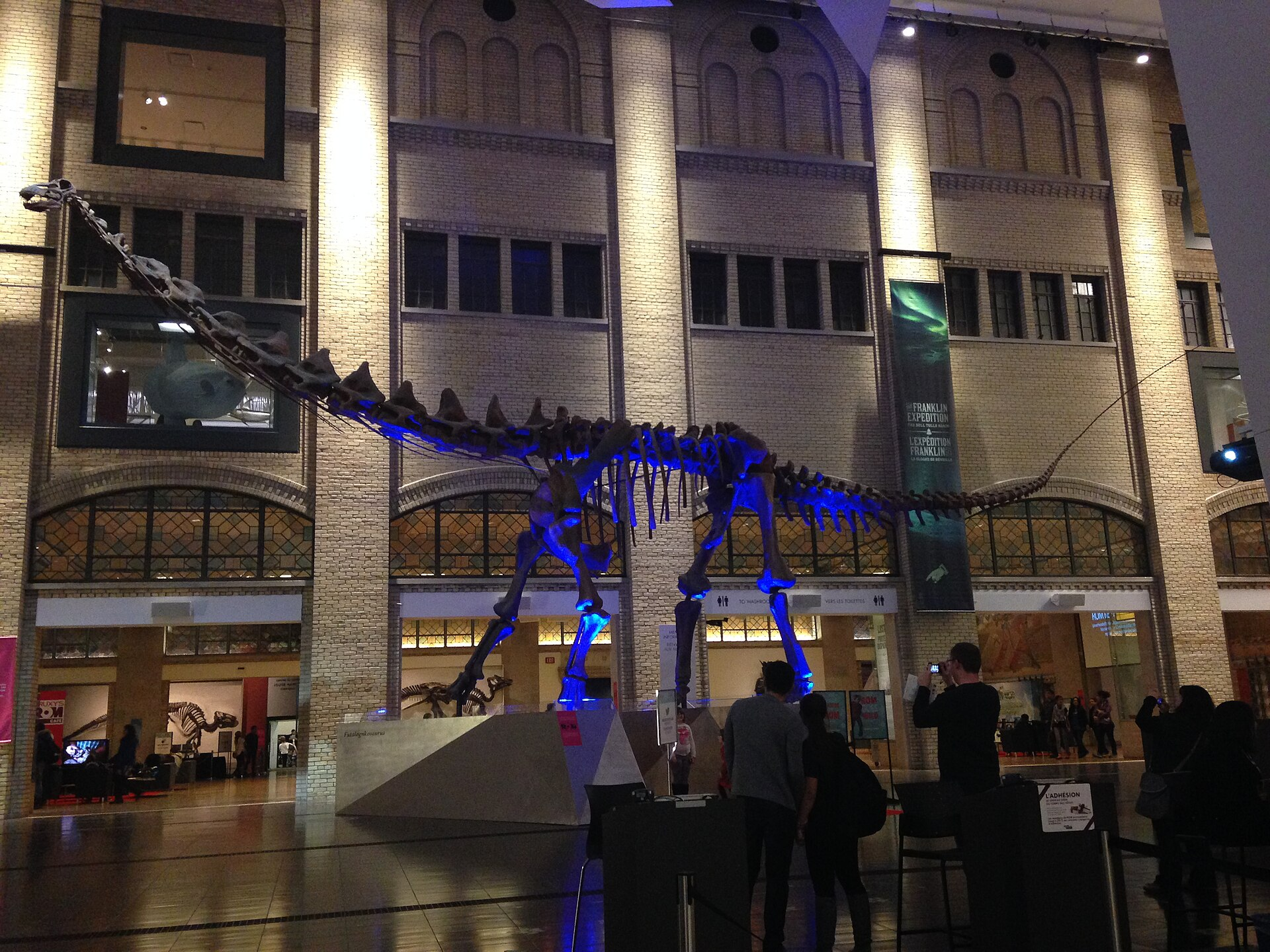
Futalognkosaurus dukei (2007)
A giant lognkosaurian from Lago Barreales (Neuquen), Portezuelo Formation (Late Cretaceous, 87 Ma). Described by Calvo and collaborators; it is estimated to have been 26 to 30 m long and weighed 30 to 50 tonnes. Its name comes from the Mapudungun words futa meaning "giant" and lognko meaning "chief," combined with the Greek saurus meaning "lizard." It translates as "giant chief lizard." The species name dukei comes from the Duke Energy company, which sponsored the excavation. About 70% of the skeleton was recovered, including a nearly complete neck and an immense pelvis nearly 3 m wide. It had 14 cervical vertebrae with very tall neural spines shaped like "shark fins," indicating extremely powerful musculature.
Patagotitan mayorum (2017)
A giant titanosaur from the Cerro Castano Member (Chubut), Cretaceous (101 Ma). Described by Carballido, Pol, Cerda, and colleagues from multiple individuals. It was found in 2012 by a ranch hand at the Mayo family's estancia (hence the name mayorum). The excavation, led by teams from the MEF (Museo Egidio Feruglio), recovered more than 150 bones from at least 6 individuals, making it one of the most complete known titanosaurs. It is estimated to have been about 37 m long and weighed 70 tonnes.
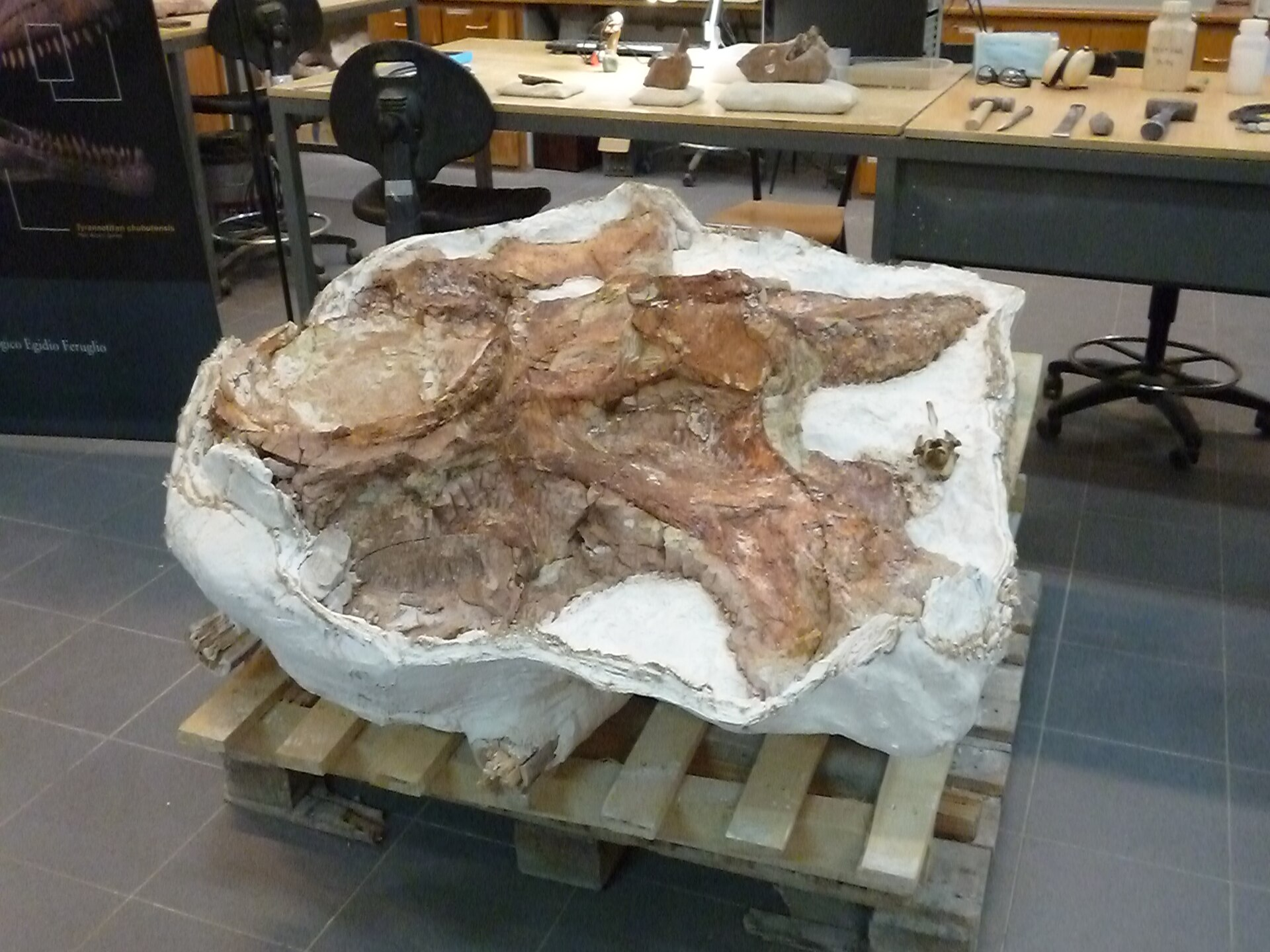
Chucarosaurus diripienda (2023)
A giant titanosaur from the Huincul Formation (Rio Negro), Late Cretaceous (90 Ma). Described by Agnolin and collaborators. It is estimated to have been about 30 m long and weighed between 40 and 50 tonnes. Its name comes from the Quechua word chucaro meaning "untamed animal" and the Latin diripienda meaning "scrambled or disordered." Despite its colossal size, it had more slender and gracile limbs compared to other titanosaurs of similar dimensions.
ORNITHISCHIA (ornithopods and thyreophorans)
Dinosaurs that lived from the Late Triassic through the end of the Cretaceous (228 to 66 million years ago). They were predominantly herbivorous or opportunistic omnivores.
BASAL ORNITHOPODS
This is a group of running, agile, small-to-medium-sized dinosaurs that appear to have been very successful and diverse in Patagonia.
Anabisetia saldiviai (2002)
A running ornithopod from the Cerro Lisandro Formation (Neuquen), Late Cretaceous (95 to 92 Ma). Its fossils were originally found in 1985 by local farmer Roberto Saldivia Blanco; described by Coria and Calvo. The name honors its discoverer and archaeologist Ana Maria Biset. It was a bipedal, agile herbivore about 2 m long and 20-25 kg. It had long hind limbs adapted for running and an extensive tail for balance. It is believed to have lived in marshy environments or areas with abundant rivers and dense vegetation.
Talenkauen santacrucensis (2004)
A basal iguanodont from the Cerro Fortaleza Formation (Santa Cruz), Late Cretaceous (76-70 Ma). Described by Novas and collaborators. Its name means "small skull" in the Tehuelche language, in reference to the proportions of its head relative to its body. It was 4 to 4.7 m long and weighed about 300 kg. It had oval bony plates along the sides of its ribs. Unlike armor, these plates (uncinate processes) are believed to have aided in lung ventilation during breathing, similar to modern birds. It was a bipedal, agile herbivore. It retained primitive traits such as teeth at the tip of the beak and a first toe, features that its more evolved relatives lost.
Isasicursor santacrucensis (2019)
A gracile ornithopod from the Chorrillo Formation (Santa Cruz), Late Cretaceous (75-70 Ma), described by Novas and collaborators. Its name means "Isasi's runner," in honor of its discoverer, paleontology technician Marcelo Pablo Isasi. It was a bipedal herbivore about 4 to 5 m long with an estimated weight of 180 kg. Its hind legs were highly adapted for running, suggesting it was a fast animal. The finding of individuals of different ages at the same site indicates they probably lived in herds.
Mahuidacursor lipanglef (2019)
A small ornithopod from Cerro Overo (Neuquen), Bajo de la Carpa Formation (Late Cretaceous, 86-83 Ma). Described by Cruzado Caballero and collaborators. Its name comes from the Mapuche word mahuida meaning "mountain" or "hill," and the Latin cursor meaning "runner." And lipanglef means "light arms." The full name translates as "mountain runner with light arms." It is estimated to have been 6 m long. It was a herbivorous dinosaur.
HADROSAUROIDEA
These are the most evolved ornithopods, also known as "duck-billed" dinosaurs. They had thousands of teeth organized in complex columns designed to grind tough vegetation before swallowing it.
Bonapartesaurus rionegrensis (2017)
A hadrosaur from the Allen Formation (Rio Negro), Late Cretaceous, described by Cruzado-Caballero and Powell. Its name pays tribute to Argentine paleontologist Jose Fernando Bonaparte. It is estimated to have reached 9 m in length. It is characterized by extremely long neural spines on its sacral and caudal vertebrae, with a height exceeding 3 times that of the vertebral body. The holotype notably presents evidence of disease, including healed fractures in the tail and a possible bone tumor (neoplasm) in its left foot, which provides unique data on the health of these dinosaurs.
THYREOPHORA
This group includes dinosaurs with dermal and defensive armor. They were exclusively herbivorous, with small heads and beaks for processing low-growing vegetation.
Jakapil kaniukura (2022)
A basal thyreophoran from the upper part of the Candeleros Formation (Rio Negro), Late Cretaceous (97-94 Ma). Described by Riguetti, Apesteguia, and Pereda-Suberbiola. It was 1.5 m long and weighed between 4 and 7 kg. Ja-Kapil means "shield bearer" in Puelche, and kaniukura means "stone crest" in Mapudungun. It was protected by rows of osteoderms (dermal bones) in the shape of shields covering its neck, back, and tail. It was a bipedal herbivore with a strong, short jaw.
UNCERTAIN POSITION
Isaberrysaura mollensis (2017)
A neornithischian/basal thyreophoran from the Los Molles Formation (Neuquen), Middle Jurassic (168-170 Ma), described by Salgado and colleagues. The name references the formation where it was found and Isabel Valdivia Berry, who discovered the remains. It is estimated to have been 5 to 6 m long; it is believed to have been mostly bipedal and lacked the characteristic bony plates of its more advanced relatives. The holotype specimen preserved fossilized stomach contents consisting of a large number of cycad seeds. This suggests it swallowed them whole and acted as an important seed disperser in its ecosystem.