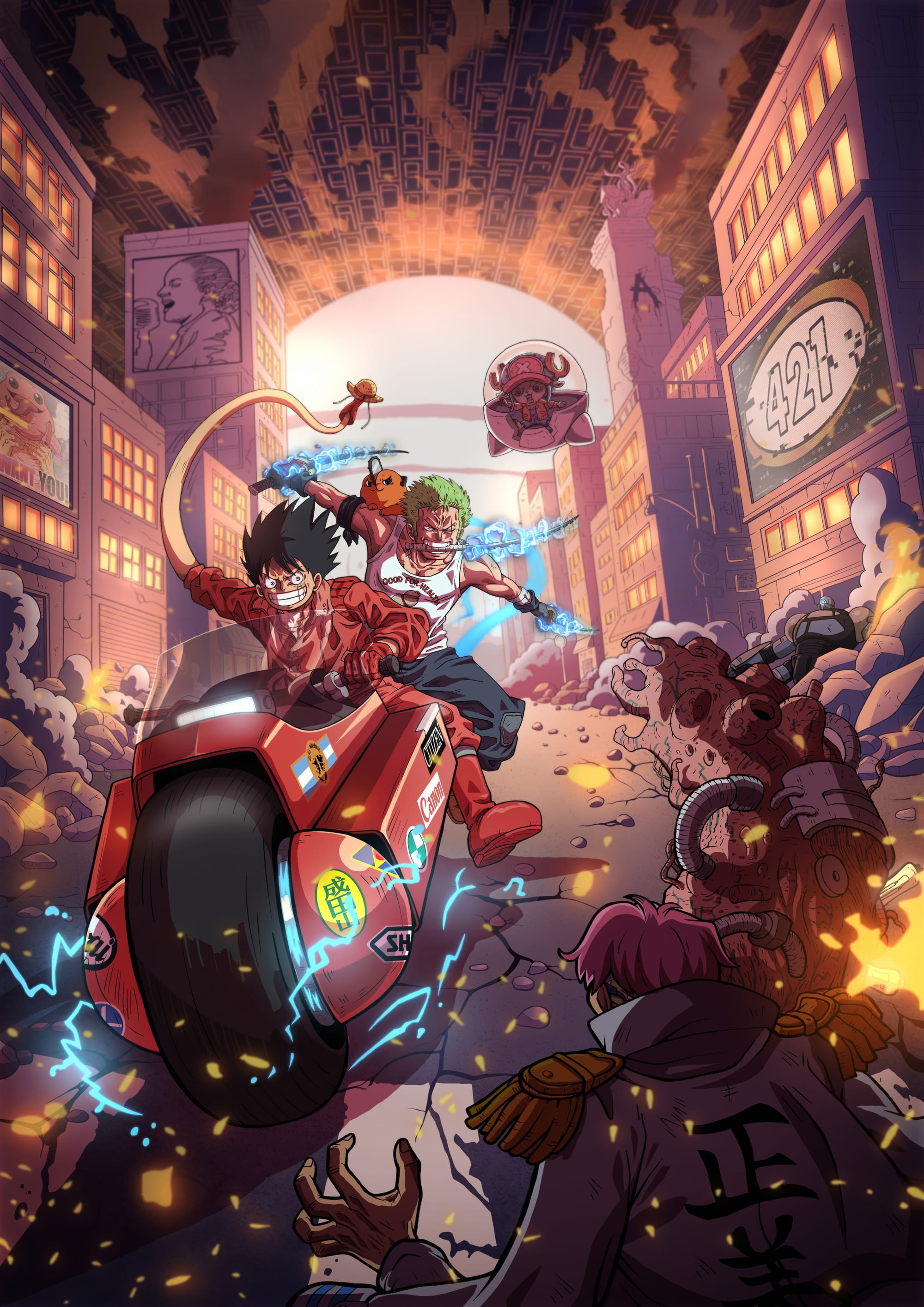
Chainsaw Man, the Reze Arc, and the Mystery of Tatsuki Fujimoto

19 de sep. de 2025 — Belu Liendo
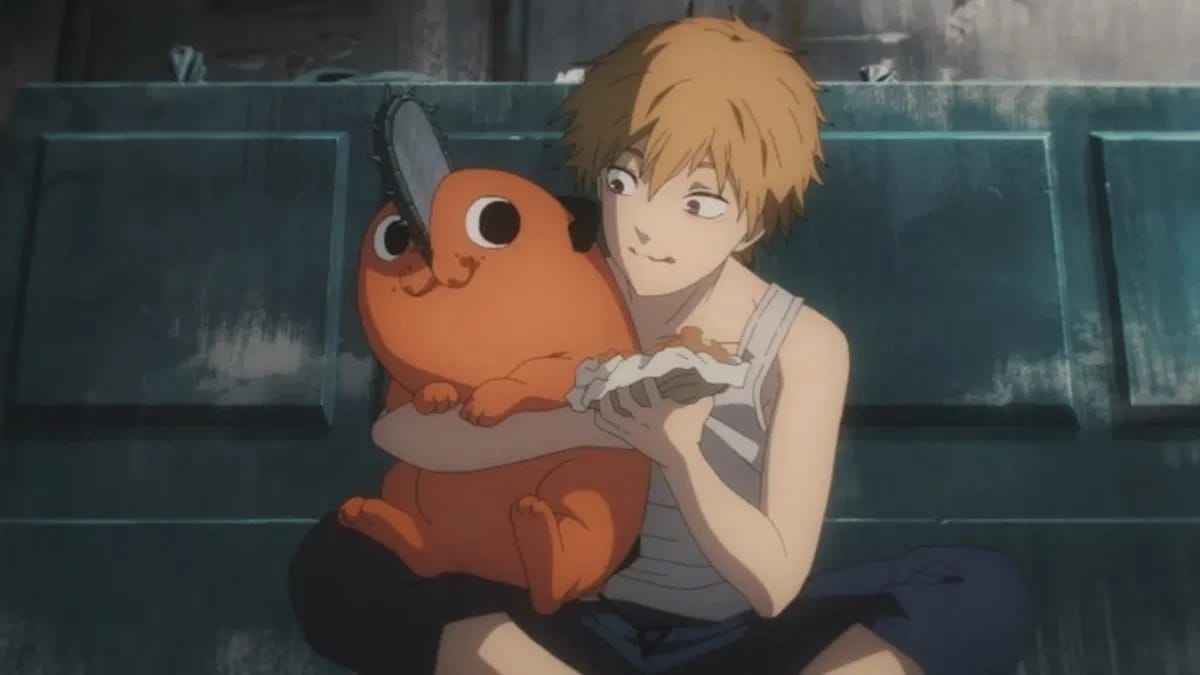
Chainsaw Man is the most famous manga by Tatsuki Fujimoto, as we recently covered. It has been published chapter by chapter since 2018 in Weekly Shonen Jump magazine. It is also being collected in tankobon volumes, with 21 already released. Additionally, in 2022 its anime adaptation began airing, produced by mega studio Mappa, which delivered 12 brilliant episodes covering the first four volumes of the manga. To this day, it is the most expensive anime this studio has produced, and it shows in the production quality, from the exquisite animation effects to its music and character portrayals.
There was no news about the continuation of the anime until, at the end of 2023, like a little Christmas gift, they announced the movie Chainsaw Man – The Movie: Reze Arc. A direct sequel to the last episode of the anime, adapting volumes 5 and 6 of the manga. To be more specific: from chapter 39 through chapter 52.
The film picks up the story linearly where the first season of the anime left off. At this point, Denji works in the Government's Special Division 4 of Devilhunters. After his long-awaited date with Makima, he goes for a walk in the rain and meets a girl who works at a cafe. This girl catches his attention in a powerful way. I won't tell you any more than that.
Chainsaw Man – The Movie: Reze Arc premieres this Friday, September 19th, in Japan. Outside the country, distribution will be handled by Crunchyroll and Sony. In Argentina and the rest of Latin America, it won't arrive until October 23rd.

Denji, Pochita, and Makima
Watching and/or reading Chainsaw Man is like witnessing a car crash: painful, but you can't look away. It's a slasher, it's satire, it's macabre horror, it's dark comedy, it's an homage, it's existential, it's anguishing, it's uncomfortable, and it's... tender. The anime is everything you need when you have four or five free hours on a weekend because you're neither funny nor good-looking and you want to watch something that keeps you from losing it -- whoever gives up first loses, heads up. When it came out and finished airing, I watched all 12 episodes three times in one week.
Chainsaw Man subverts quite a few traditional tropes and cliches from manga and anime. To start with, it's supposedly a shonen manga, meaning it falls within the demographic aimed at teenagers and young adults. The main characters of works in this demographic are always happy kids or teens with grand ambitions and super altruistic dreams of justice. The main character of this work is Denji, a 16-year-old living in the most abject poverty because his father took on a massive debt with the yakuza mafia and decided to off himself because he couldn't pay it off, leaving his son with this colossal burden that he must chip away at to avoid being murdered. How does he do it? By killing devils.
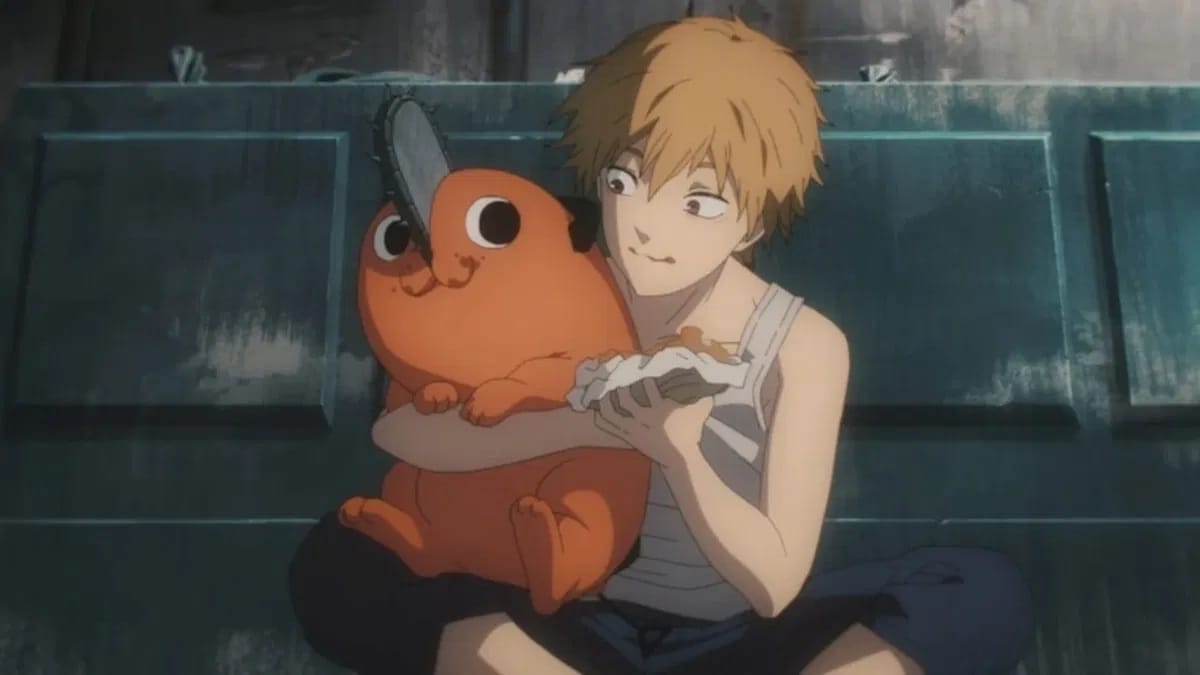
For obvious reasons, the kid has no formal education, is markedly malnourished, sold some of his organs, and has difficulty socializing. He's apathetic and doesn't have many desires because, due to the marginality and constant persecution he endured since childhood, he can only think about satisfying his most basic needs. This is the moment
when Fujimoto decides to mock the dreams of traditional shonen protagonists: Denji's only dream is to be with a woman.
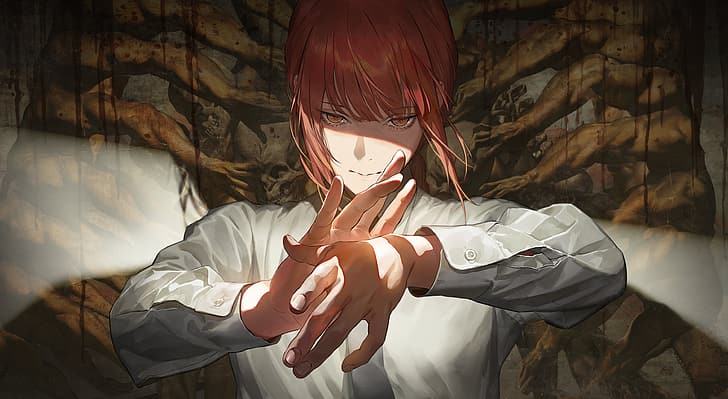
These traits make Denji a vulnerable character, exposed to being manipulated with extreme ease. But, aside from being miserable, Denji is the best friend of Pochita, the chainsaw devil. Through a series of events, they are recruited by the Japanese government through a very beautiful woman named Makima, who promises to fulfill all their desires in exchange for working as devil hunters for them. All of this happens in the first episode of the anime -- no spoilers here.
The story takes place in 1997, in an alternate timeline where the Soviet Union still exists and the attack on the Twin Towers already happened, but other historical events seem to have never occurred. One of the most important threads is the construction of the devils: they are born in hell from their manifestation, and each one has a name that correlates with something that exists and is feared
by humans, whether concrete or abstract. Their strength and power depend on the collective consciousness and history surrounding their names.
The devils in this work are the materializations and incarnations of human terrors, from the most absurd and everyday to the primordial: those that have accompanied us like a shadow since the dawn of humanity. With this premise, Fujimoto works extensively on the collective fears of
Japanese society.
The Mystery of Tatsuki Fujimoto
Fujimoto is the most controversial and representative mangaka of this era of anime, but everything we know about him is based on estimates. He's quite young for everything he's achieved, around 31 or 32 years old. Apart from Chainsaw Man, he published Look Back, Fire Punch, Goodbye Eri, Fujimoto Tatsuki Tanpenshu, and Futsu ni Kiitekure.
He was born in Nikaho, a small town in Akita Prefecture, and his first artistic training was attending the oil painting classes his retired grandparents went to. His favorite movies are Leon the Professional and The Texas Chainsaw Massacre. Since he doesn't particularly enjoy drawing (he prefers telling stories), he takes on several assistant students.
This is the only video of him that exists, a video in which he is trying to levitate:
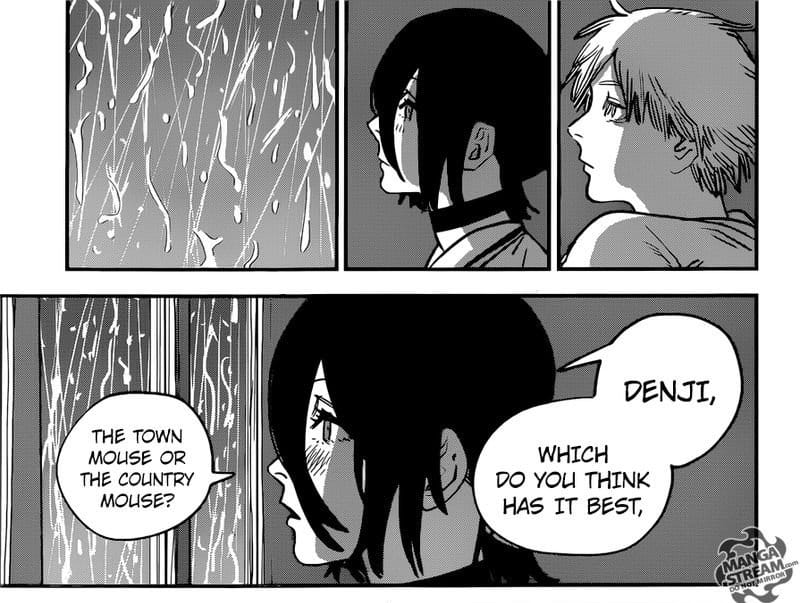
One of the narratives that inspired Fujimoto in creating Chainsaw Man was Aesop's Fable of the Town Mouse and the Country Mouse: "The country mouse lives safely, but cannot eat delicious food like in the city. The city mouse can eat delicious food, but runs a greater risk of being killed by humans or cats."
Throughout the work, Denji finds himself trapped in this dilemma. For him, his new life means greater freedom than what he had when he worked for the yakuza, but it also means more anxiety. The irony emerges that the better he performs as a devilhunter, the more freedom his superiors grant him, but for him that only translates into
suffering because he's used to not being accountable for his actions, since he was a slave for nearly his entire life.
With the capacity to act comes the possibility of regretting
the decisions we make. That is the risk that freedom carries, but facing it is how we overcome. Is it worth it? No idea, but you have time to watch all 12 episodes of the Chainsaw Man anime before the Japanese premiere of this movie. Get on it.