“You Have to Change Your Life”: Self-Improvement or Narcissistic Trap? Sloterdijk's Perspective
Why do we always feel like we need to try harder? From Sloterdijk's philosophy to “capitalist realism,” we explore the tension between modern self-help and the age-old command to “change your life.”

10 de mar. de 2026 — Mariano Vilar
There are a series of more or less brief questions that everyone asks themselves when they wake up. Why am I not happier? Why do I have to do this? What’s the point of all this effort? If we have a pet, or even if we just watch cute animal videos during our morning scroll, we can add a variant that has accompanied us for millennia: why can’t I just be an animal and be done with it? What do we gain from all this?
There’s no shortage of explanations for human dissatisfaction. The history of philosophy, religion, and more recently psychoanalysis and sociology, are abundant on this topic. The supposed dignity of the human being, that featherless biped, is a double-edged sword. Pico della Mirandola, in the midst of the Renaissance, said that our nobility lies in our mobility. The angel is an angel, and the dog is just a dog, but man can be an angel, can be a dog, or even a mollusk, and this mobility is his domain. But the choice is not neutral. It matters whether you are a therian or a saint. With the possibility of ascension comes a condemnation for those who do not attempt it. Just as many mornings we wonder what all this effort is for, we are also plagued by the doubt: shouldn’t we be trying harder?
A famous sonnet by the German poet Rainer Maria Rilke (1875-1926) describes a torso of the God Apollo. The two tercets that close it proclaim:
If this disfigured and broken stone did not stand under the transparent arch of the shoulders nor shine like the skin of a beast;
nor sparkle on each side like a star: because here there is not a single place that does not see you. You must change your life.
This last phrase (“Du musst dein Leben ändern,” in the original German) is the title of one of the most important works by philosopher Peter Sloterdijk. It is the synthesis of an ancient mandate that every era and culture finds a way to renew. We are under the gaze of a force that calls us to surpass ourselves, that tells us that the life we live is not the best possible life, and that this other life is not just a static and indifferent possibility.
The central concept that runs through Sloterdijk’s book, and that can also be found in some of his other works, is that of “anthropotechnics.” The idea itself is not very complex: there are techniques, practices, and (above all) exercises that make this animal creature that we are more human. These techniques vary throughout history and in each context, but they always involve a “vertical tension,” an idea that there is something beyond the everyday and the basic demands of survival and social life, something that calls to all of us but that only some choose to listen to and pursue. There are, says Sloterdijk, those who go with the flow of life and float in its river, and those who pull aside to the shore to seek something different. One could not exist without the other.
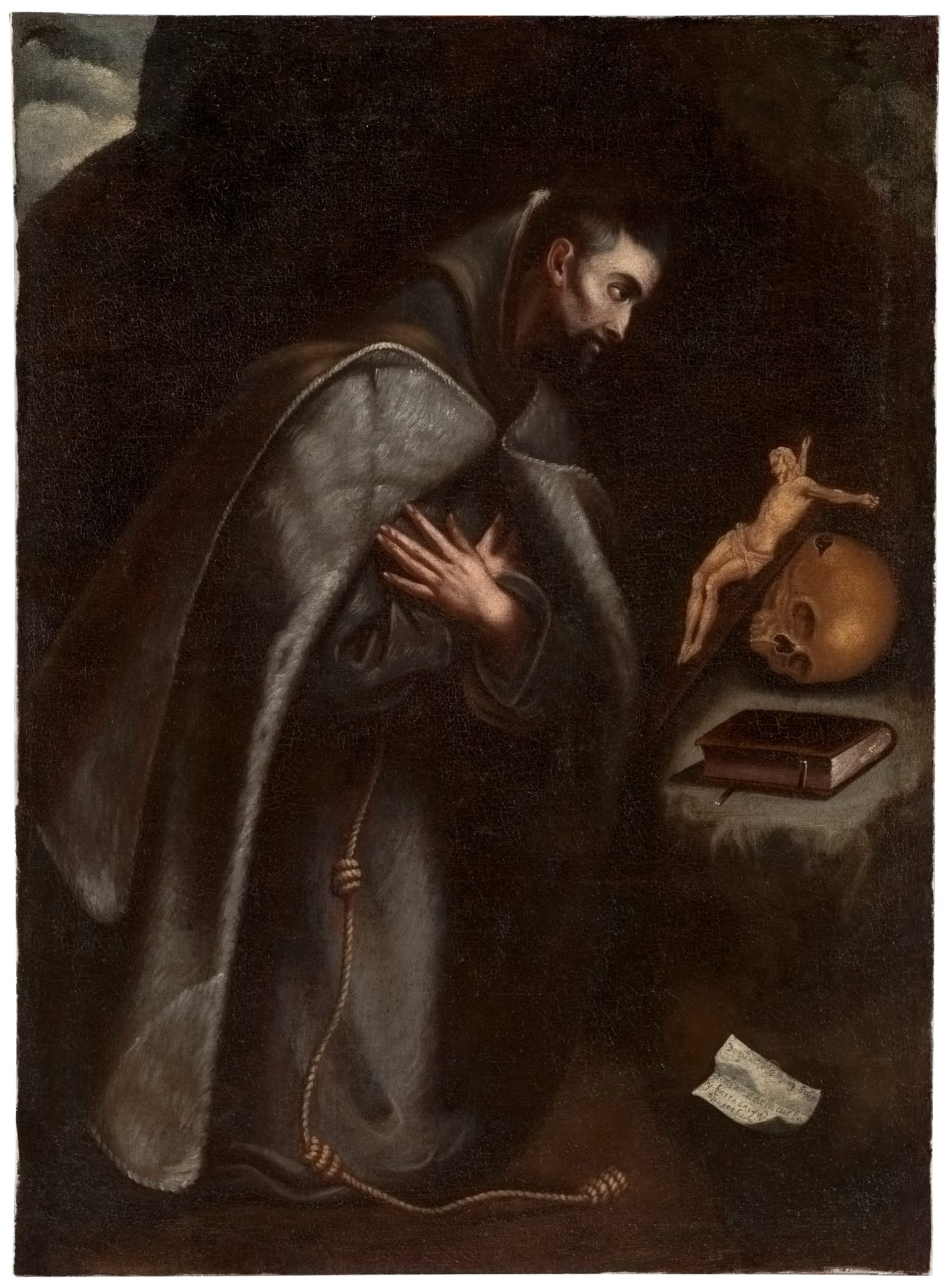
The historically most recognizable forms of this process are philosophical and religious (and often a combination of both). Many could fall into the category of “asceticism.” Fasting, prolonged silences (Pythagorean students could not speak for five years after entering his school), meditations, isolations, separations, renunciations. Common life, common language, common feelings, but also food, sleep, sex, and reproduction: all are under suspicion. In the Western tradition, there are two major models that often functioned in tandem: the Greco-Roman Stoic or the Christian monk (and especially the saint, and even more so, the martyr). With their differences, both learn that the concerns that plague most mortals are spurious and ridiculous (if not directly sinful) in the face of a greater order: nature understood as a total rational destiny, or God.
Modernity had to find a way to maintain these ideals in a largely secularized world less inclined toward asceticism. In turn, the authority of the past (the sculpture of Apollo understood as the ideal of humanity in frequent contact with the divine) was relativized to the point of nearly extinguishing: progress is in the present that extends like an arrow toward the future. In Thus Spoke Zarathustra, Nietzsche found a way to tackle the problem of self-overcoming in the figure of the acrobat. It is he (or she) who is suspended in the air between the “last man” (the degraded humanity insensitive to any self-overcoming) and the Übermensch (or “superman”), trying to make the journey without crashing to the ground.
Just as secularization forced a rethinking of spiritual exercises, the other challenge is democratization. Aristotle or Plato had no major issues imagining and conceptualizing forms of self-overcoming (for example, the praise of the contemplative life as the closest to the divine) that excluded slaves and women. Stoicism and Christianity, each in their own way, significantly broadened the spectrum, but there was always another (be it an infidel, a sinner, a heretic, or a group of people simply too obtuse to accept the mandate to change their lives) outside the range. In an increasingly globalized world where values tend to seek common denominators over historical factionalism, suddenly a question arises that the ascetic rarely had to confront: who do you think you are?
Postmodern identities
But of course, the era we live in now, whatever you want to call it, is not lacking in exercises nor “philosophers”, often replaced by gurus. The mandate persists, and perhaps it will have to persist as long as humanity populates the universe. You must change your life: sign up for the gym. You must change your life: read self-help books, become a neo-Stoic, and run barefoot down the road. You must change your life: disconnect from the internet, start a cult, wake up at 5 am, take a cold shower, and start trading, bro.
For Sloterdijk, religion is ultimately just a somewhat imprecise way of referring to different sets of anthropotechnical exercises. Without them, existence becomes increasingly meaningless. What does it mean to be a Christian without the demand to be a good Christian? And in that demand lies the vertical tension, the mandate, the presence of God’s gaze. The other is aesthetic, it’s a nice hobby, a way to distinguish yourself from your family or your atheist friends. If religion demands nothing from you, perhaps you’re not doing it right.
But this problem goes much deeper. Because one of the strongest tensions of our time is the one that exists between identity and exemplarity. The idea that being who we are is fine, or even that it is the only mandate we should heed. Advertising reminds us insistently: this product or service enables you to be who you are. But identity politics also encounter this essential obstacle. If identity is your refuge, if the only tension is immanent and only asks you to self-validate, how do you surpass yourself? How do you avoid getting trapped in a closed loop of self-confirmation? The issue is complex. It makes sense that shedding stereotypes is liberating. Rilke’s Apollo is still a white European male with ample musculature: why should a trans Latina woman feel addressed by him? But the relativization of every ideal, of every vertical tension, also leads to a comfort that, in the short or medium term, leaves us dissatisfied once again.
To the morning question of what the effort is for, or the guilt for not having tried hard enough and for having settled for assuming something, a further problem arises, one that derives from “capitalist realism,” to use the expression of Fisher. Under conditions of exploitation, the effort to survive and maintain a functional mental stability is so great that there may be no room for acrobatics or exercises. There is no space for renunciations or overexertions if your tension is to make it to the end of the month.
And yet, the call does not disappear. You must change your life, that voice continues to whisper to us, but modernity introduced a crucial detour in this demand. As Sloterdijk himself points out, starting from the Enlightenment and the great political feats, the vertical mandate mutated toward the macroscopic: it is no longer just about changing your life, but about changing the world. The revolution tried to replace asceticism. The activist took the place of the monk, and social utopia replaced paradise.
But here is where capitalist realism closes the trap. When changing the world is perceived as a closed enterprise, that immense transformative energy bounces against collective impotence and falls back on the individual. It crushes us in the form of perpetual and solitary self-improvement. We find ourselves trapped in an irresolvable tension. On one hand, the urgency for large-scale change that always seems out of reach. On the other hand, the pressure for subjective optimization that, isolated from its material conditions, risks becoming mere narcissism.