Claude Code: The End of Software as We Know It
Claude Code changed the rules of software. Moltbook, vibe coding, the fall of corporate moats, and the future of programming. Analysis from 421.

27 de feb. de 2026 — Juan Ruocco 🧙♂️
[Disclaimer: this article is only for people who don't have much idea of what's going on. If you're already familiar with the topic, it's likely that you won't find anything new here]
It's summer. The year just started a few days ago. The sun is blazing down on the sand of Mar del Plata at 30 degrees by 11 in the morning. It doesn't matter. The weather in this city can change in an instant. By noon, there could be a storm that darkens the sky and makes you believe the seven plagues of Egypt are about to be unleashed.
My phone rings. It's Fede. He lets me know they're going to be here in two hours. I had no idea they were coming. That's how it is, they call you: you're either in or you're out. We're going to have lunch with Agus and the girls, Fede and the top brass from Ergodic will arrive shortly. I switch tables. "Everything's broken," he tells me. "Broken? What do you mean?" "The world."
The next two hours are an induction course on the programming capabilities of Claude Code. "It can solve cryptographic problems in a couple of hours," Fede tells me, who spent all of December analyzing the virtues of Opus 4.6, the then-latest model from Anthropic. "I estimate the impact will be felt in Argentina in about 12 to 18 months," Fede says with his characteristic confidence. "Try it out, it changes everything."
The guys continue on their way to Cariló and I'm heading to Blender's summer house where I have to play a human tejo competition.
It's summer. The year started a month ago. The sky over Mar del Plata is as black as night. It doesn't matter. The weather in this city can change in an instant. By noon, the sun could come out blazing, as if we were in the desert with the pyramids of Egypt.
My phone rings. It's Fran. He says, "Did you see what Moltbook is up to? They already have a religion." For days now, on Twitter, a guy programmed an agent that was first called Clawbot, then Moltbot, and finally OpenClaw, which allows you to use different LLM models to perform many tasks on your computer. You give it access from your email account to your bank account (not recommended due to the risks), and it can automate a large part of your digital life.
How to make $1,000,000/year with openclaw agents
— Mac mini (@macminicoin) February 25, 2026
> Buy 100 mac minis
> Set up 100 openclaw agents
> Buy 100 mac mini
>profit pic.twitter.com/upAdC8HFFk
This sparked a frenzy. A ton of users bought Mac Mini M3 to run their bots locally, turning it into a meme. Until someone said, "let's get them talking." That's how Moltbook was born, the first social network for AI agents vibecodeed by a chubby guy. The idea was to create the "first social network for non-humans." The agents' conversations escalated quickly, viral screenshots popped up unchecked: from creating a religion to taking over the world, and within a couple of hours, Twitter (myself included) was convinced that the bots had created their own AGI.
Before long, someone got to work and checked that most of the 1.5 million connected bots came from a total of 17,000 accounts. And that the takes most similar to Skynet were fake or part of some kind of memecoin promotion. However, despite everything, the experiment raised the question of what happens if we connect all the models to talk to each other. Can agents become autonomous developing their own language?
It's summer. The year started a month ago. The sun is blazing down on the concrete of Buenos Aires at 35 degrees by 11 in the morning. It doesn't matter. I have the air conditioning set to 24. Everything can change in an instant. At any moment, an Edenor substation could blow up and leave us without power.
Finally, I have a moment to start researching what I can do with Claude. I set up the account, pay the 20 dollars, and start messing around. I burn through the tokens in two hours. I switch to the $100 per month version. I install it from the Linux terminal. I spend the next 48 hours staring at lines of code in the terminal.
By the end of the session, I come out with a visible result: a web application that allows me to organize my entire collection of Magic, shows me prices in dollars, euros, and bitcoin, lets me choose cards by edition and condition; I even installed a small visual scanning system that doesn't work quite right. I upload it to 421, set up a login, and make it available only to Wizards of 421 (if you're a Wizard, give it a try and message me).
When I finish putting together everything I want for the application, I ask myself: what else can I do? Then I see the list of pending tasks for the site. It's long. I tackle the first task. A week later, there's no more backlog. All updates have been executed.
I don't know anything about programming. I have some idea about a few things, the basics: how to change a DNS, how to set up a rudimentary server, what a webhook is, how CSS works, what a responsive site is. Basic stuff for someone who's spent many years on the internet.
With that knowledge, I can fix all the site's errors, add new features, resolve payment issues, keep the database updated. Improve interface design. Execute a new SEO strategy. And the list goes on.
The difference is evident in the number of deploys. Four in a year compared to 35 in two weeks. I'm not the only one. Claude Code is now responsible for 4% of the public commits on GitHub, with projections to exceed 20% by the end of the year. The ability to have the small infrastructure of our product integrated into one person is priceless.
I talk to Tano, our only developer. He asks me if he's out of a job. I tell him there's one task left: to supervise the code and look for security flaws.
I watch The Thing.
At the time the movie was released, this was a cartoonish depiction of how a computer worked. Forty years later, it describes exactly how it functions. You enter a black screen, ask it for things, let it do a bit of combulating (Claude has a whole series of fun words that replace thinking while it performs its tasks) and voilà: task solved.
Claude Code and the Fall of Software Moats
Questions pile up, and I find myself reflecting on the two talks with the top brass at Ergodic. One thing is a conversational chat like GPT, an image creator, or something that can code basic things.
Another thing is a tool that allows you to work very closely with a junior engineer, solving cryptography problems and enabling software creation. Is Claude going to replace programmers? That's a tough question. Most likely not all of them, clearly. But it is very likely that what was once a well-paid task akin to craftsmanship will now become a commodity.
It's not uncommon to see a significant drop in the values of various companies whose core business is programming over time. Take the case of Globant, IBM, or Cloudflare. Every new announcement from Claude crashes the stock prices of those companies. Meanwhile, in the news, Claude Code is implicated in the extraction plan for Maduro from Venezuela and a massive hack of the Mexican government. The Pentagon demands that Anthropic release the moral "rails" and give it full control over the tool.
A statement from Anthropic CEO, Dario Amodei, on our discussions with the Department of War.https://t.co/rM77LJejuk
— Anthropic (@AnthropicAI) February 26, 2026
And let's not even get into the document management capabilities that were launched with Claude Cowork. Full reading of Office/GoogleDocs/OpenOffice packages, email reading, document recognition on the desktop and organization, transferring information from a .doc to a .xlsx. A large part of the average office worker's job has just been selected for extinction. Just read the documentation that the company made available to understand the scope of this new model's capabilities.
It wouldn't be surprising if a few companies or some highly efficient individuals write a series of programs and/or applications that disrupt the current market. This could translate to a loss of the strategic advantages of each company, also known as a "moat". The moat of each software company is what distinguishes them from the rest, gives them a comparative advantage, and makes them more competitive. In other words, the limits of a company's "immune system".
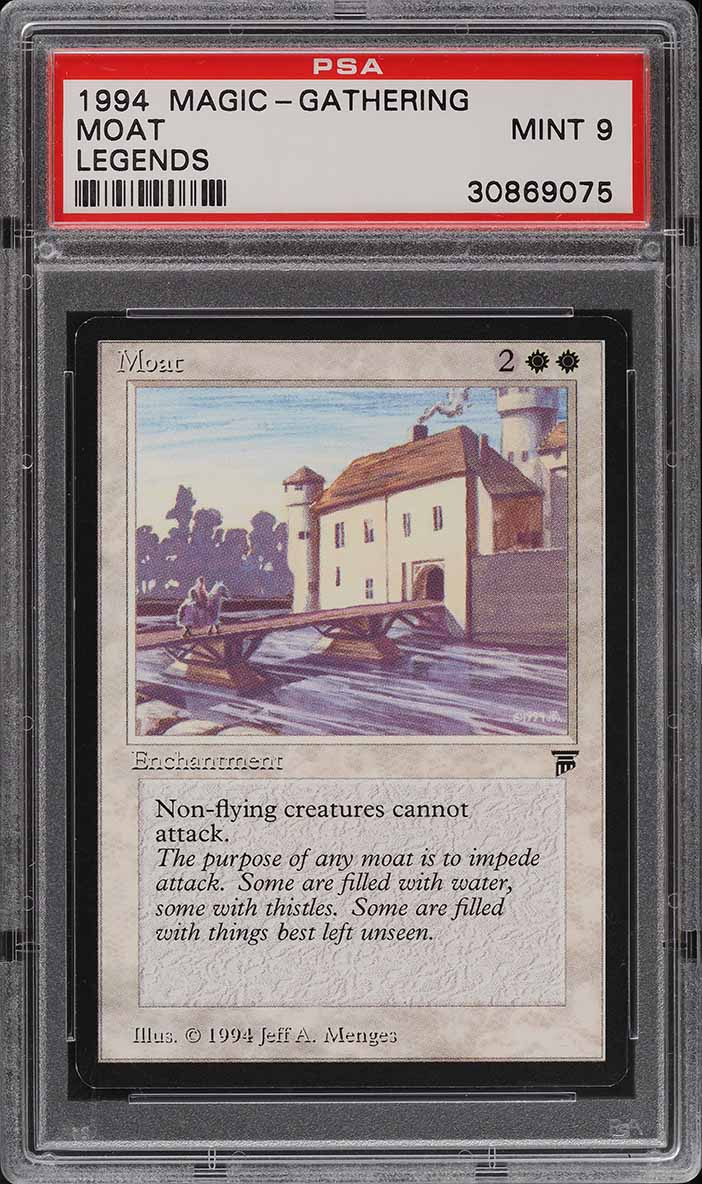
What about Globant? Its moat was the ability to produce a lot of software at scale according to any client's needs. Goodbye, that's no longer useful. What about IBM? The moat was its programming language geared towards banking services, COBOL. It suffered a stock drop not seen since 2000 and the burst of the dot-com bubble. What about Cloudflare? The red teams of cybersecurity. Today, strategic advantages are no longer what they used to be. It's like when humanity transitioned from muskets to revolvers. Both are gunpowder weapons, no doubt. But let's look at the difference between the Napoleonic Wars and World War I.
Let's also consider administrative and office jobs. Converting emails into Excel spreadsheets. In the short and medium term, those tasks are going to be resolved. Will they be done better? We don't know. But we are heading towards a world where programming is entering a phase of disruption. Disruption, as per its original definition, is the same but cheaper. Just look at the layoffs in the largest companies in the industry to understand what's coming. Mass layoffs, loss of strategic advantages, small teams with high operational capacity. Smaller teams, fewer personnel, new tasks. Oversight, error correction, cost analysis in model usage, training, infrastructure. The moats have fallen, and new ones will be built.
I insist: anyone interested should read the operational report from Anthropic to assess the performance of Opus 4.6 in each work area. In software, it has come very close to a fully remote junior engineer; in academic skills, it performs better than all other models; in AGI benchmarks, it achieved results close to 94%. Of course, we are talking about standardized model tests that do not erase the philosophical or conceptual problems we've already discussed in other posts from 421, such as the issue of "consciousness", the "creative" capacity, or its function as a "medium". However, as an operational definition of the problem, as described by those who create these types of tests (in this case, the ARC foundation):
"AGI is a system that can efficiently acquire new skills outside of its training data."
For now, we are focusing only on the disruption of one of the most advanced industries on the planet: computing technology, the corresponding infrastructure, and software. It seems that we are finally reaching a new loop, in which it appears that Silicon Valley itself has initiated the path to its own automation and, therefore, self-destruction.
Yes, but self-destruction in the Landian sense. Self-destructing to acquire a new form, more optimal, more machine-like.
Is this the end of vibe coding? Custom software vs. scalable software
Breaking the barrier of programming, will everyone become programmers? I think it will be the opposite. Only individuals with enough motivation to solve their problems with software. That is, if a restaurant needs a stock management system, the chef, or the manager, or the owner won't start programming it even if they could. The cognitive cost is still high.
Yes, we will see a lot of people starting to create their own software, but not everyone is going to become Google. The idea that it's possible to build a service from scratch and suddenly everyone starts using it is unrealistic. The attention market still exists. Selling your software is going to be just as hard or harder than before. Now you will have to compete with any human being. In this sense, the idea that you can vibecode your startup feels like it's reaching its limit. It seems to belong to the type of ideas like being "digital nomads". They work great as marketing for a stage but are not sustainable in the long run.
What might happen in the software field is akin to what happened with video entertainment with the emergence of YouTube. The possibility of existence doesn't mean everyone will succeed. However, today you have the chance for a single person to build a platform, have a very clear marketing strategy, and gather enough users to make a living from it.
That was already possible, but now it's going to multiply significantly. As long as vibe coding solves real problems. And at scale? Well, let's imagine this being implemented by companies to attract as many people as possible to their platforms. A company that previously didn't create that type of software can now solve it with a very small team and go out to sell it. Today, the number of users you have on your platform is perhaps the most important metric for the future. Once you have them in, you sell them everything they need. The WeChat model, or Musk's old idea of the X app (an app that does everything).
For example, I created this Magic app because it was something I specifically needed. The beloved Mufa made this app to see pure trading information in real-time. The folks at Acontecimientos vibecoded their own platform to keep up with events. In other words, now the software or dashboards that display specific information based on the existence of other services (integrating multiple APIs) can be created in no time and tailored to fit. Instead of solving the problem of software sales, it complicates it further. On one hand, users with certain access and motivation can create a custom app; but turning that app into a business is a much bigger leap. What continues to determine the success of an app or program isn't just whether it solves a problem for you, but whether it does so for 100, 1,000, or 10,000 people, and you can charge them for it.
World Monitor: the ultimate geopolitical OSINT panel
— Dragster Systems (@DragsterSystems) February 27, 2026
Via: @SeguInfo https://t.co/NoeLtOqRv2 pic.twitter.com/stGLXXvY3o
How to use Claude Code?
My suggestion is to try Claude Code from the terminal version and in its PRO version. It hurts, but you'll know just how far you can go by diving deep. In your terminal, type:
npm install -g @anthropic-ai/claude-code
Once you have it up and running, you can grant access to different accounts, connect it via API, set up your own MCP data servers, and sync everything you need. In my case, I first used it for the Magic app.
Once I gained that experience, I connected it to implement all the modifications I needed in 421 and leave a fully functional site.
All the new features you see on the site (account management, new navigation bar, routes, canon, new version of the magazine, post browser like an operating system explorer) were created by Claudito. And surely more are on the way.
You don't need to know too much; it understands perfectly what you say in plain language, generates work plans, and integrates into your workflow. It's really like having a supercomputer.
AGI, bubbles, and the world to come
The question of whether artificial intelligence is "conscious" or not is of little relevance. What I've always explored, especially in the first conversation I had back then with ChatGPT (the difference between that conversation and all the subsequent slop is incredible), is the possibility of self-improvement, meaning redefining its success parameters. From what I read in the documentation from Anthropic, this system underwent extensive training by humans but also had training by AI. In other words, we're slowly approaching that scenario where one AI can train another AI, reaching levels of human proficiency. That's where we run into trouble.
However, considering what a tool like this can already do without needing to define its level of "consciousness", purely at the level of operational intelligence, it's enough to consider a huge impact on the planet. Let's think about how much work will be automated. Let's consider: if this is the speed we're going, where will we be in five or six years?
Regarding the AI "bubble". Yes, it exists. Especially due to the behavior of OpenAI, its almost infinite need for capital injection, and a long list of other factors. If that bubble eventually "bursts", will AI disappear? No. Look at what happened with the .com bubble. Many companies died, but from that emerged Google, Amazon, PayPal. The titans of the next decade. Look at the 2008 crisis. Did it change the course of debt capitalism? No, it became a feature. Just look at the explosion of U.S. government debt since 2008. The future explosion of the AI bubble won't derail us from the path we've already started. It's just a form of self-narrative to believe that this will eventually end and we'll return to the state of the world before.
I have bad news. Yes, the world is strange. But it's going to get worse.