The Origins and Challenges of Cloning: From Hass Avocados to Argentine Polo Horses
28 de mar. de 2026 — Juan Carballeda
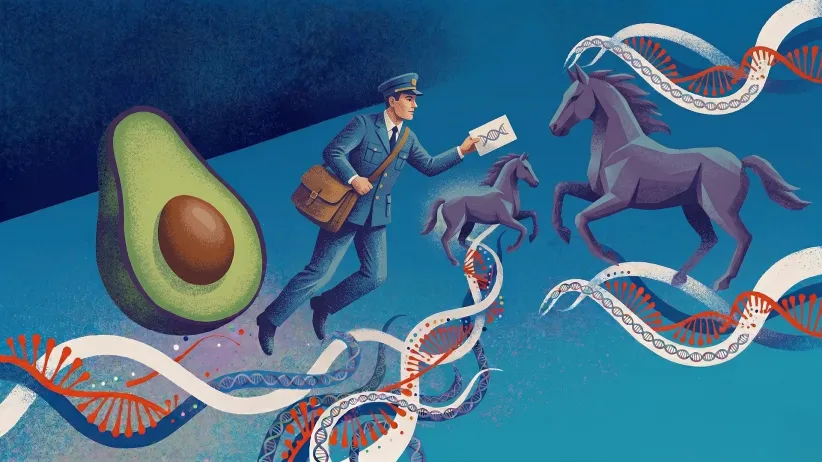
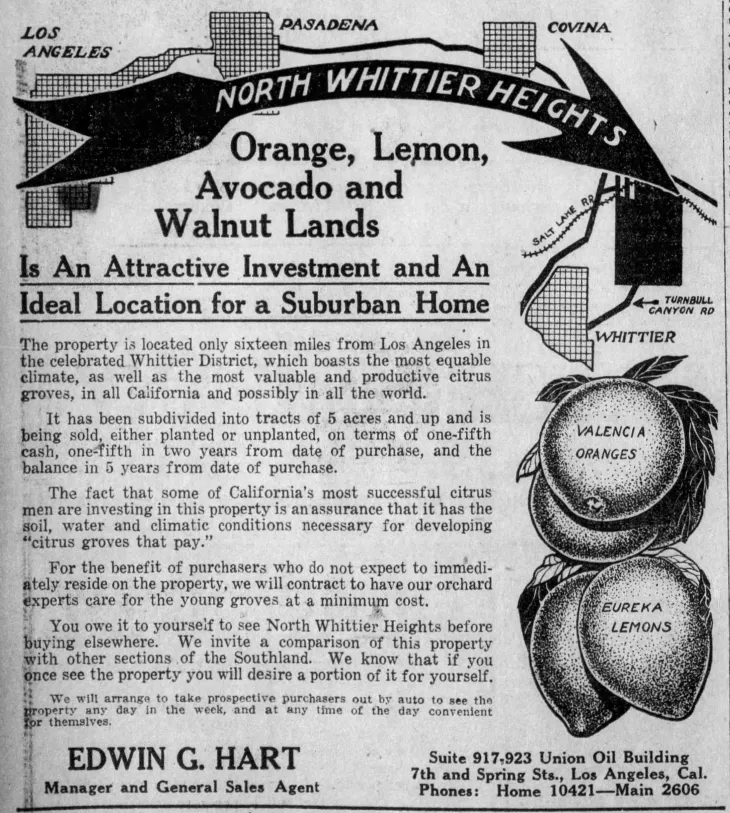
In the 1920s, a U.S. Postal Service employee named Rudolph Hass stumbled upon an ad from Edwin Hart, a real estate promoter selling land for cultivation. The ad claimed it was a great deal to grow avocados.
Rudolph, who had previously worked in the noble profession of door-to-door sales before becoming a mailman, wondered if it would be a good idea to plant that tree and make some money from its fruits. In California, where he and his family lived, avocados were widely consumed but considered a luxury, selling for a dollar each. Rudolph had a decent salary, earning 25 cents an hour.
Eventually, thanks to a loan and some savings, he ended up buying nearly an acre of land that already had a few avocado trees. At that time, the most common variety in California was La Fuerte, named after its survival through a significant frost. Rudolph wanted a different variety and bought a bag of seeds supposedly from a Guatemalan variety. He managed to germinate them and grafted them onto large trees, a common method in botany that saves a few years until the plants bear fruit.
He had luck with several trees, except for one where the graft didn’t take. He was about to cut the tree down but, probably out of laziness, decided to leave it be. A few years later, in 1931, the plant produced six avocados, and the following year, 125. Still, it wasn’t good news: the avocados had rough, dark skin and looked rotten.
Rudolph decided it was finally time to cut the tree down. But just before doing so, his daughter tried one of the avocados and told him it was delicious. Inside, they were creamy and had a good texture. So he decided to take some to the office to share with his coworkers. Everyone agreed with his daughter and asked him to bring more.
He might have thought, 'Thank goodness I didn’t cut down that tree.' Still, with that appearance and such a soft interior, the new variety probably wouldn’t hold up well during transport. To test it out, he took advantage of his job at the post office and sent a box to Chicago and back. Several days later, after crossing the country and covering nearly 7,000 kilometers, when they arrived back, the avocados were intact. In 1935, he decided to patent his avocado as a new variety and, as was customary at the time, named it after himself. The Hass avocado was born.
All the Hass avocados in the world, which account for over 80% of all avocados consumed and generate billions of dollars each year, originated from one tree (which almost got cut down twice) that was cloned.
The avocado plant, Persea americana, is native to the Americas and can reproduce through self-pollination, meaning its own pollen germinates on its flowers, or through pollen from another plant. The problem is that since gametes (pollen or eggs) are generated by randomly crossing the chromosomes of cells, it’s nearly impossible to recreate the original genome when obtaining the seed.
So, if someone plants a Hass avocado seed, with a bit of luck, in a few years the tree will produce avocados, but they will never be like the originals. So, if it’s impossible to reproduce it through the seed, how have the millions of Hass avocado trees in the world right now been reproduced?
They are clones. All the Hass avocados in the world, which account for over 80% of all avocados consumed and generate billions of dollars each year, originated from one tree (which almost got cut down twice) cloned through cuttings over and over again around the world.
 Admin
Admin
Plants can reproduce through cuttings because, under certain conditions, differentiated tissue can dedifferentiate to then give rise to all the structures of the organism, such as the stem, roots, or leaves. This is a spectacular feature of plants that allows, for example, to take a cutting from a plant we like and, with a bit of luck, have it on the balcony. It also makes it relatively straightforward, starting from a fragment of a leaf or another structure that has undergone some genetic modification, to generate a complete plant with that modification. This was first achieved in 1983 with herbicide-resistant tobacco plants.
In animals, however, it’s much more difficult than just taking a piece of the organism and expecting it to regenerate completely.
Copycat
Ralph Wedgwood was an English inventor who made life easier for administrative employees around the world. In 1806, he patented carbon paper, a thin sheet coated with ink that, when placed between two white sheets, allows you to copy what you write on one of them. A dream come true 130 years before photocopiers were invented to solve the problem at its root. I recently learned that when you copy someone in an email and put them in CC, that 'CC' comes from 'carbon copy,' a lovely nod to the 19th century, the best of all.
But CC was also used in 2002 for 'copycat,' the first cloned pet in history, named Rainbow. Which was, obviously, a cat. Actually, a calico cat, keep that in mind. The incredible thing is that, despite being cloned, Rainbow's clone looked almost nothing like the original cat.
Cloning organisms is something we've been doing for quite a while. In fact, back in 1885, Hans Adolf Eduard Driesch, a German biologist and philosopher, cloned a sea urchin from a two-cell embryo, meaning that the first cell of the organism had only duplicated once. Hans Adolf shook them up, managed to separate them, and magically each of those cells developed into a complete sea urchin. Two cloned sea urchins in the 19th century.
The same thing happened a few years later with a salamander. Another Hans, this time Spemann, succeeded in separating the embryonic cells of this animal, and each one developed into a different salamander, a clone of the other.
While the experiments produced clones of animals, that is, twins obtained through artificial methods, in both cases they started from embryos. Let's say they are clones, but cloning was pretty straightforward.
The first attempt using differentiated cells was in 1958 when John Gurdon transplanted the nucleus of an intestinal cell from a tadpole into an enucleated frog egg. As a result, he obtained genetically identical tadpoles to the one that carried that intestinal cell. This was hugely significant, not only because it resulted in many identical tadpoles but also because it finally demonstrated that a differentiated cell (in this case, from the intestine) contains all the genetic information of the organism.
While all the cells of an organism have the same genetic information, the secret lies in which genes are expressed in certain situations. There are modifications in DNA that do not affect the information itself but can be very important, causing some genes to be turned on or off in different cells. Epigenetics is the branch that studies these modifications. The prefix “epi,” which comes from Greek, means “above.” But we'll get back to that (the second thing I promise to revisit, I hope I don't forget).
These epigenetic differences, which accumulate in cells as they differentiate, made us think for many years that cloning mammals was impossible. Until in 1996, Ian Wilmut managed to clone, after 277 attempts at nuclear transfer of differentiated cells, in this case from mammary gland cells, the sheep Dolly.
The cloning method that produced Dolly has improved over the last few decades, and today there are thousands of clones, including, among many others, cows, goats, mice, rats, rabbits, dogs, wolves, cats, and horses. In fact, in February 2001, Dolfina Cuartetera was born, a polo mare who, according to her breeder, Adolfo Cambiaso, was the best in history, and for that reason, she would be cloned multiple times. Polo horses need to have certain characteristics like speed, agility, and maneuverability. Additionally, temperament is crucial because they need to be able to respond under pressure while the rider controls them with one hand on the reins (the other holds the mallet) and gives weight signals to go forward and backward.
Dolfina Cuartetera was cloned repeatedly. In fact, during Cambiaso's hundredth match in 2017, the player came out in each period of play with a different clone and in the eighth, the last one, with the original mare who had retired a few years earlier, in 2015.
Dolfina Cuartetera, a very beautiful brown mare, had all those characteristics. In fact, the first time Cambiaso got on her, he said, “this is the best I have.” The truth is, he was right: until her retirement in 2015, Dolfina Cuartetera won the most important championship in that sport for 10 consecutive years. That's why Dolfina Cuartetera was cloned repeatedly. In fact, during Cambiaso's hundredth match in 2017, the player came out in each period of play with a different clone and in the eighth, the last one, with the original mare who had retired a few years earlier, in 2015.
The terrible thing is that the clones had different markings on their faces, just like CopyCat. And that's due to epigenetics. The coat color pattern in many mammals is often influenced by epigenetic factors. In cats, it has to do with the silencing of the X chromosome.
Mammals can be XX or XY. This is the pair of chromosomes that determines the biological sex of the animal. The point is that the X chromosome is much larger than the Y chromosome and therefore contains many more genes. So, females have much more genetic information for many genes, which creates an imbalance that needs to be resolved.
Cats, for example, silence one of the X chromosomes. That process is random, and since the genes that determine coat color are on that chromosome, female cats have unique patterns, and that mix can result in three different colors. That's why if you see a three-colored cat (a calico cat), it's almost 100% likely to be female. But if you clone her, it's nearly impossible for her to have a similar color pattern because the silencing of the X chromosome, where the coat color genes are located, occurs randomly. That's what happened with CopyCat.
On top of that, many health problems are known to occur due to epigenetic factors. It is well-known that cloned mammals often live shorter lives and develop a lot of diseases more frequently.
So why do we clone?
I don't know if there's a real reason to do it. In biomedical research, having genetically identical animals could reduce the experimental noise that comes from variation among animals of the same species and allow for clearer observations of the effects of a drug, a mutation, or an environmental condition. This way, the number of animals used in experiments can be reduced.
In polo mares, having genetically identical individuals that undergo the same training regimen could be a good idea, in addition to the endless publicity someone could get from playing a match with cloned mares.
But if you ask me, I’d say that nowadays we do it mostly to mess around.