Cosquin Rock, Valle de Punilla, and Mountains in Culture

21 de feb. de 2025 — Luis Paz
Any fool can end up holding an executive position. Even the highest one in a country. Setting that aside, there are people -- generally skilled and/or consistent -- who through various paths can amass a magnitude of valid power. But nobody achieves true power, exact power, like the mountain. The mountain is the planet's last bastion of resistance. Foolproof. How many were born with the world? How many have died?
The mountain's reward
Every great civilization reserves a divine nature and a transformative effect for its geographical peaks. It makes sense that this would be the mountain's incentive, because it may offer beauty, purity, grandeur, and perspective, but altitude also means exertion, exhaustion, lack of air, dehydration, bugs, hunger, heat, storms, avalanches, and blood. A demanding quest for people, for horses, for trucks.
The mountain demands exceptional energy and extreme attention from anyone who treads on it, because without needing to do anything on its own, it can kill you. That is why its reward must be immense. And, traditionally, we granted it the greatest ones: for some peoples, mountains reward with immortality; for others, they are the home of the highest powers, a portal to other worlds, or the very center and axis of our planet.
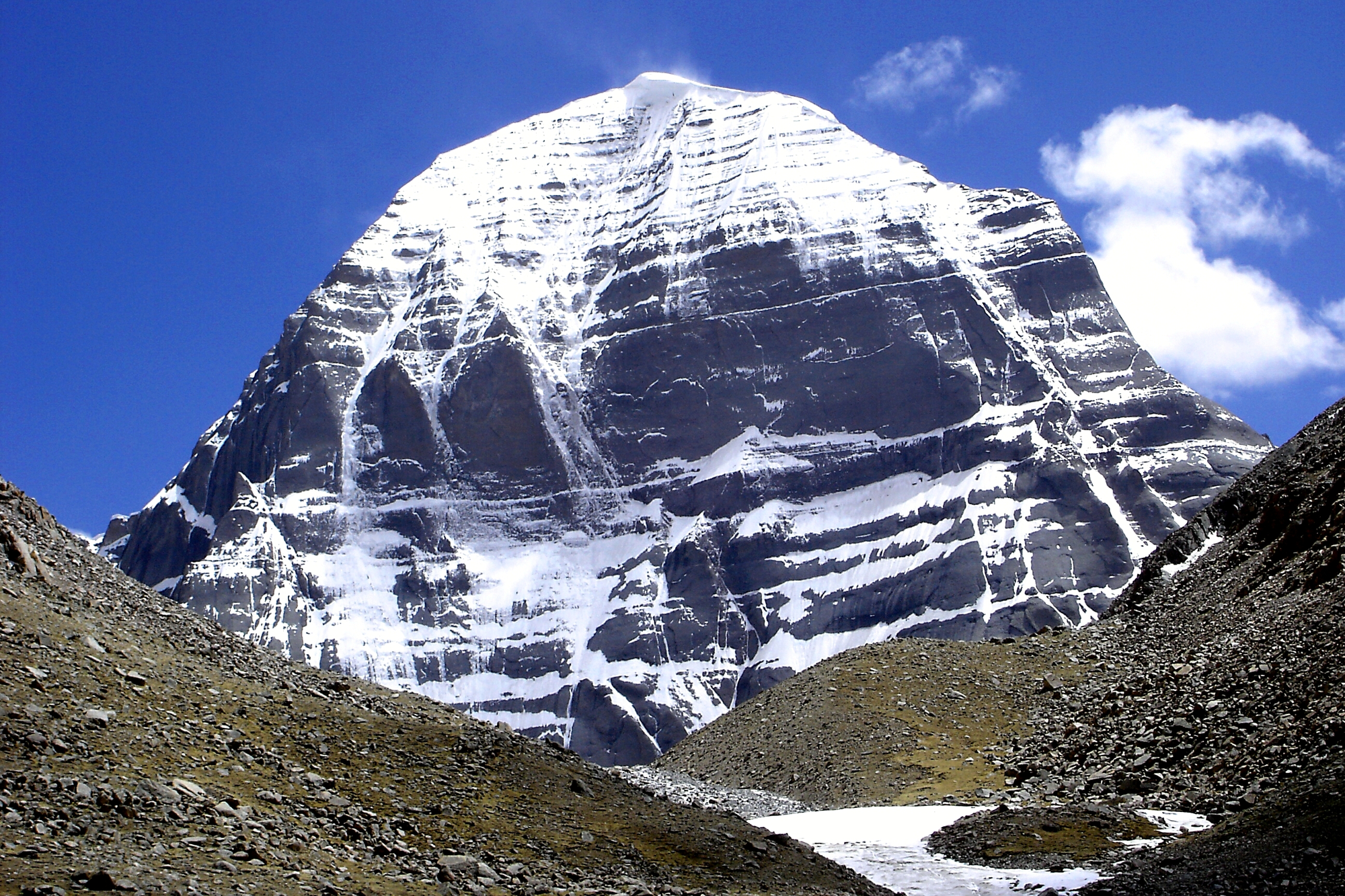
We learn from the beliefs of Andean and pre-Andean cultures, but mythical peaks are replicated across all civilizations and religions, such as the Mesopotamian (the Zagros mountains), Greek (Olympus and Parnassus), Celtic (the Hills of Tara), Hindu (Kailash in the Himalayas), Inca (Machu Picchu), Maya (Chichen Itza), Aztec (Popocatepetl), Judeo-Christian (Mount Tabor), Islamic (Arafat, the "Mountain of Mercy"), and even Japanese Shingon Buddhism (Mount Koya among the Kii Mountains). What if the Egyptians built the pyramids precisely because they lacked an omnipresent peak?
Valle de Punilla
The Sierras de Cordoba are the first mountains you see when traveling from Buenos Aires westward, before the Andes, Chile, and the Pacific come into view. They are two parallel strips of rock formations, like a pair of combed lines in the northwest of the province, which have been forming since the Paleozoic (580 million years ago) and reached their current state about 25 million years ago -- 5 million years before the Andean mountain range.
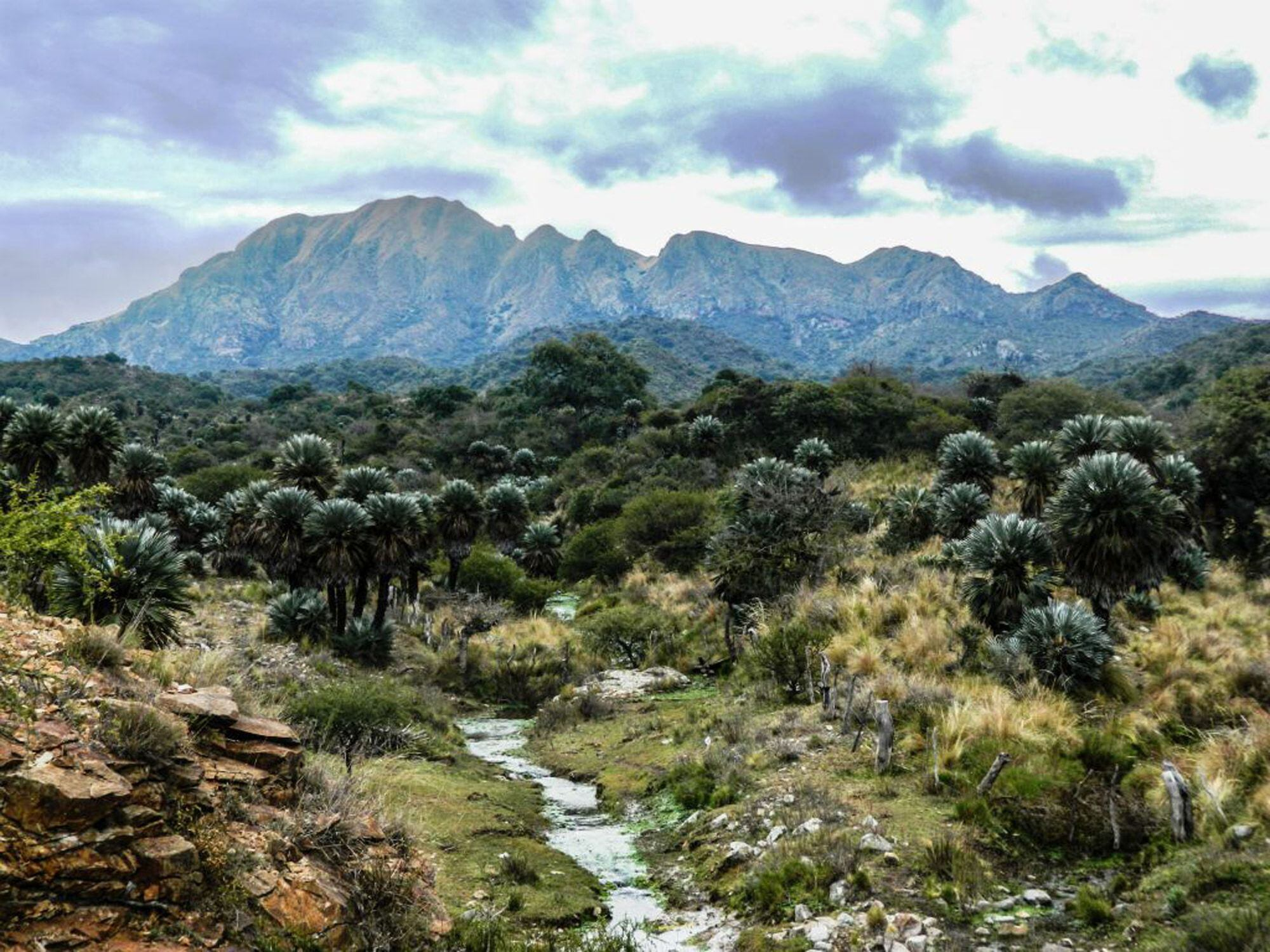
Two hours north by road lies Cerro Uritorco, at nearly 2,000 meters of altitude and all its mythical and mystical stature. Three hours west by road, in the Valle de Traslasierra, you will find Pocho, its Miocene volcanic chimneys, and its exotic yatay palms -- a historic pilgrimage area covered in three-day guided hikes. And four and a half hours to the southwest, near Villa Dolores, stands Cerro Champaqui, the region's highest point at 2,790 meters above sea level.
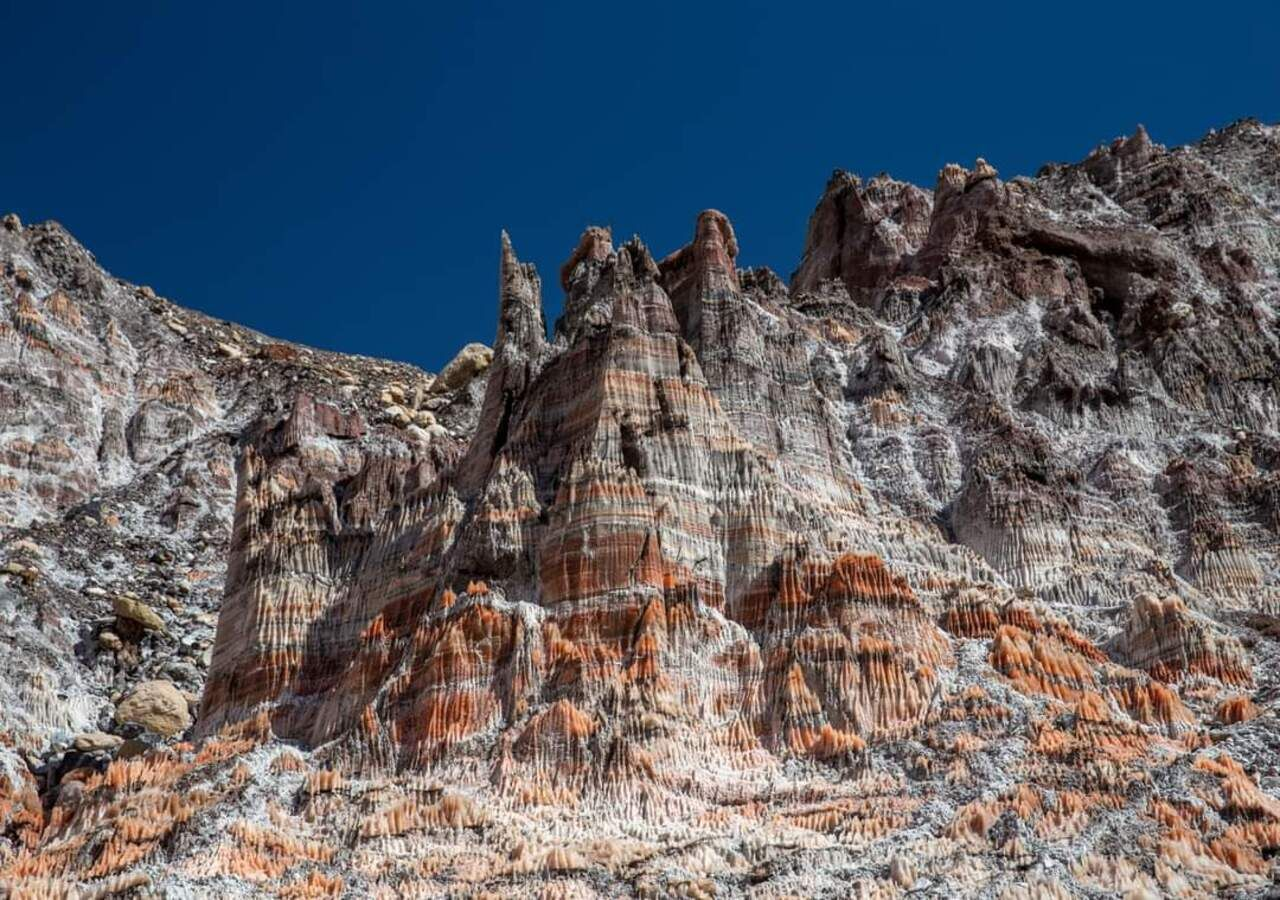
But one of the most mind-blowing places in all of Cordoba is the town of Soto, also near the sierras, where you can find a rock that is unique in the world, only recorded there and in a place in Japan called Minederayama. It is cordieritite, an exclusive stone that can be seen adorning the stairways of Patio Bullrich: a very particular type of orbicular granite, with spots resembling the skin of some feline.
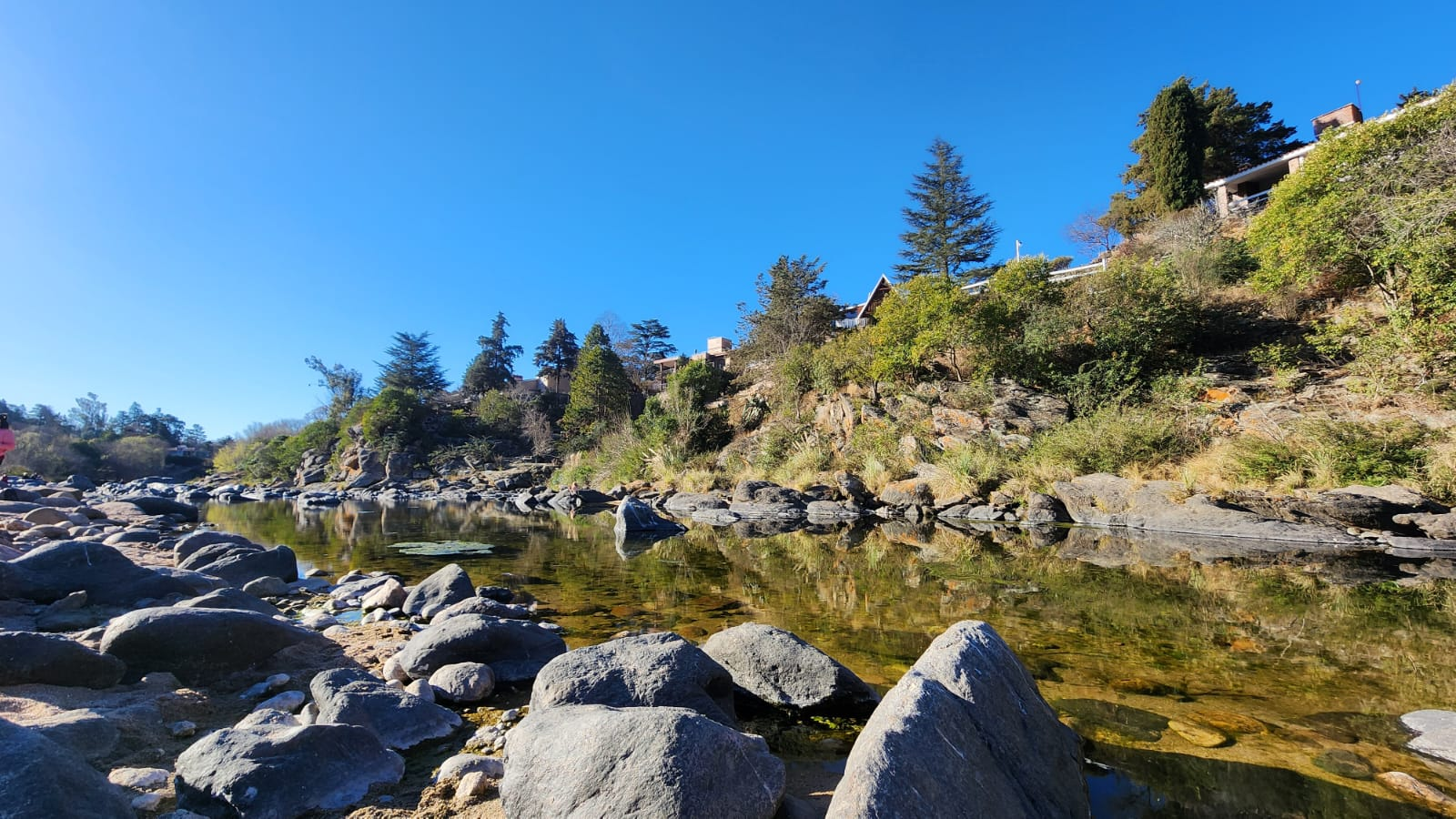
Located between those parallel bars of sierras, 50 kilometers west of Cordoba's capital city, lies Valle de Punilla -- an area of rolling, occasionally steep terrain, of dirt, rock, and scrubland, flanked by the Cosquin River and crowned by hills of woodland and mud, as humid as you would expect from a zone with so many waterways that they were simply numbered: Rio Primero (First), Segundo (Second), Tercero (Third), Cuarto (Fourth), Quinto (Fifth)...
Punilla sits roughly at the center of the mountain transect that runs from Embalse Rio Tercero at its southern end, growing northward to La Cumbre and Capilla del Monte. In total, the mountain formation spans 430 kilometers -- a bit longer than the distance between the Obelisco in Buenos Aires and the Rambla in Mar del Plata. That is a lot of ground to cover on foot.
Cosquin Rock and the mountain
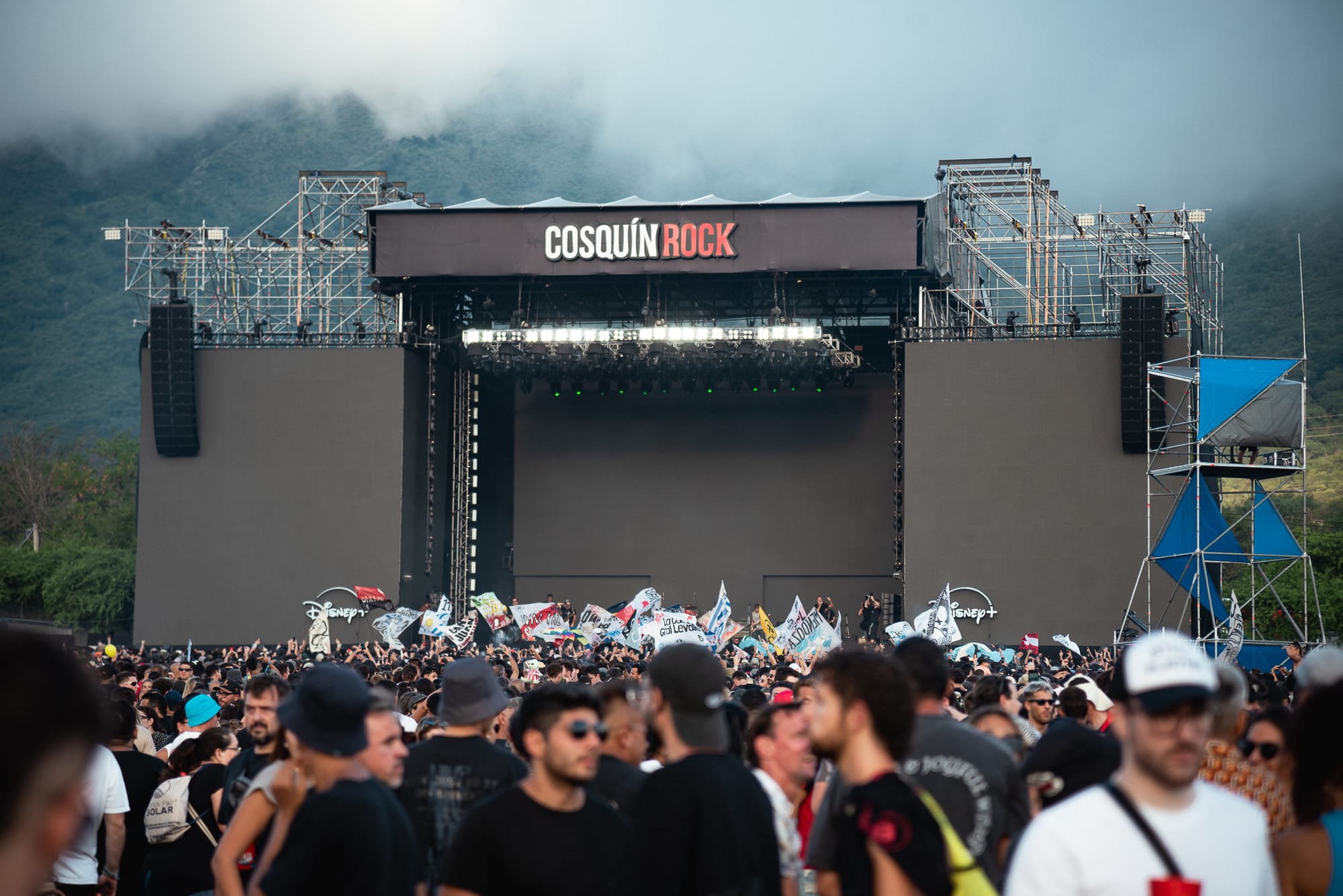
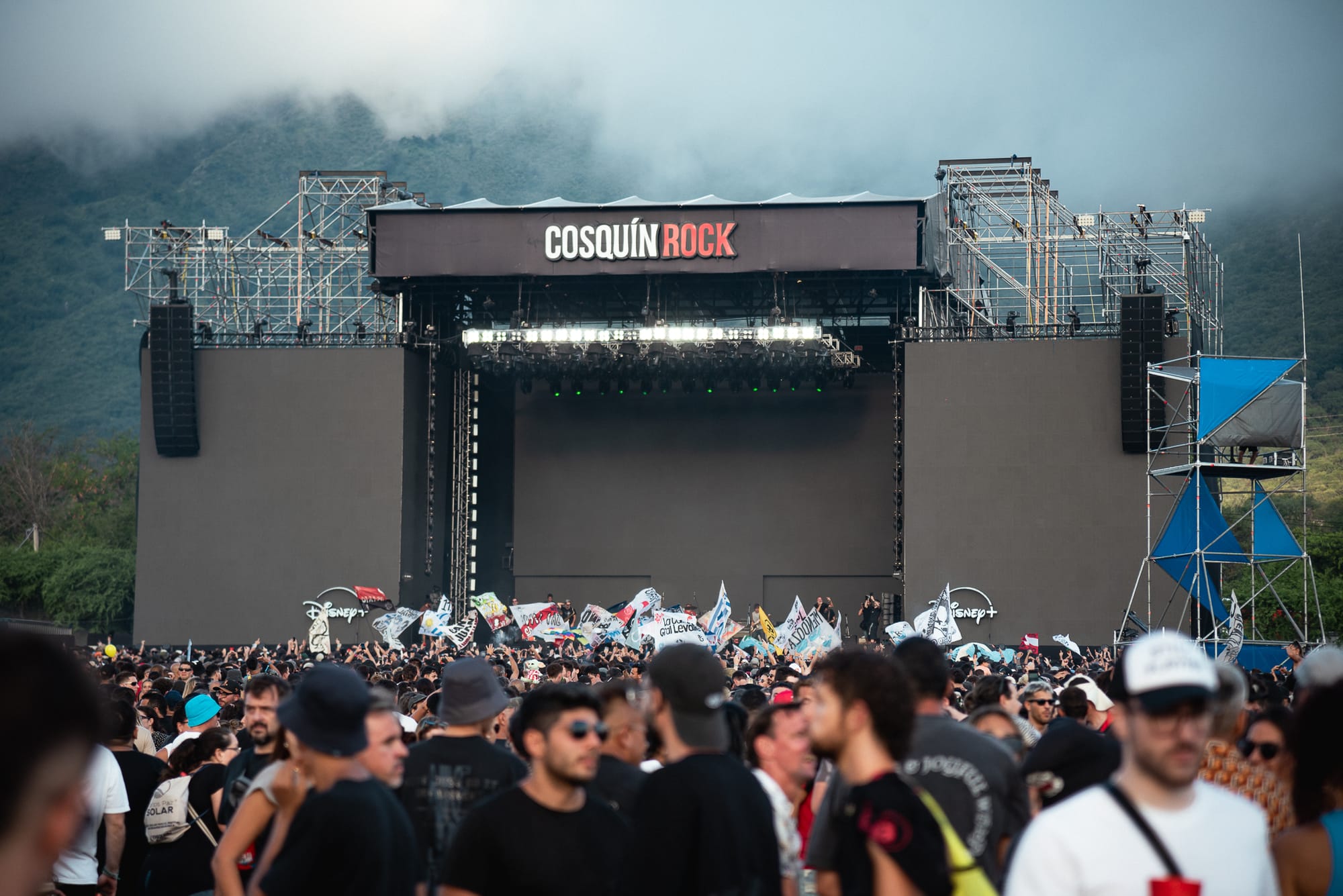
It is also partly because it set up residence there, at the Aeroclub de Santa Maria de Punilla, that Cosquin Rock established itself as one of the biggest, loudest, and most powerful Argentine festivals. For people who work in the music industry -- from artists and technicians to producers, publicists, and journalists -- Cosquin Rock is one of the most rewarding and demanding experiences of the year. For the audience, of course, it is too. Every edition someone says "This is my last Cosquin" and every year there is also someone who says "I missed coming to Cosquin so much." Facts.
With 25 years of history, Cosquin Rock is also the largest of the "mountain festivals" currently held (Wine Rock, in Lujan de Cuyo, Mendoza) or previously held (Rock del Valle, in Tafi, Tucuman, for which in 2010 I wrote the trippiest chronicle of my life) in Argentina. In fact, it is one of the most attended regular public events not only in the country, but worldwide.
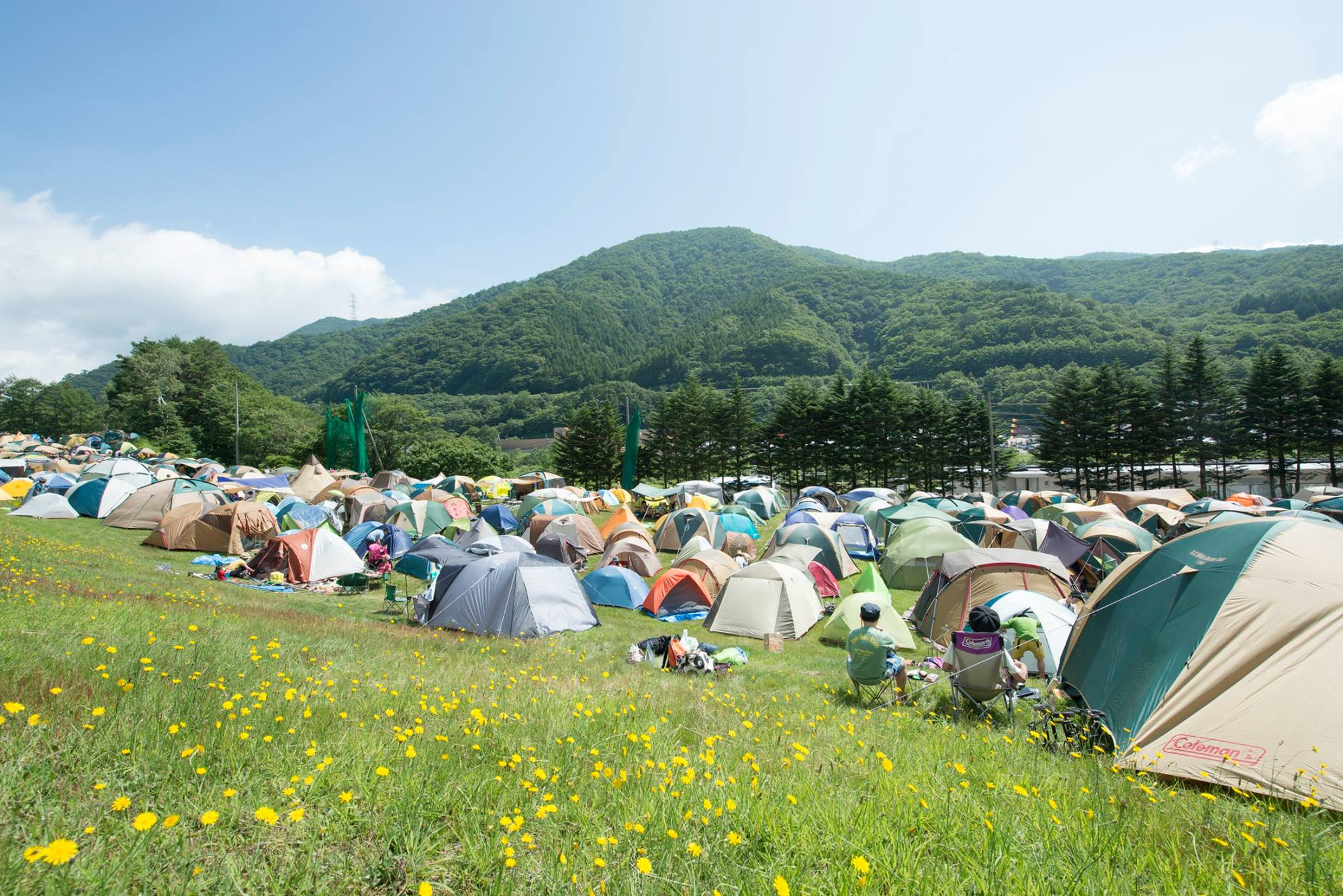
On a global scale, Cosquin Rock belongs to a select group of mountain music festivals, whose undisputed flagship is Japan's Fuji Rock Festival, held in late July in the mountains of Niigata, near the mythical Mount Fuji. It started shortly before Cosquin Rock, in '97, and currently gathers roughly the same number of artists (several dozen) and attendees (around 100,000 people). Below Fuji Rock and Cosquin Rock, the range expands from Telluride, a bluegrass, folk, and Americana festival in the San Juan Mountains (Colorado, United States), to Snowbombing, a house and techno event held among posh ski slopes, snowy forests, and igloos in the Tyrolean Alps (Mayrhofen, Austria). "Snowbombing" -- what a name.
In these cases, as in the religious ones, the pilgrimage to the mountain -- which sometimes is done on foot and sometimes on a bus from Gonzalez Catan blasting Los Redondos -- serves as the prelude to the real effort, which is the ascent of the mountain -- which sometimes is done with water and sometimes with a 70/30 fernet and Coke while singing Los Redondos. Cosquin Rock is perhaps the loudest way in which culture takes possession of the mountain for a while, but art, beliefs, and stories are littered with mountains, just as rocks are surrounded by all kinds of wild symbolism.
The peaks of culture
The modern world has not added mysticism to rock formations in centuries, but it has played at imitating them with skyscrapers, obelisks, and the garbage mountains of landfills and their international counterparts. After religion and industry came mass culture and, with it, the mountain gained new layers of symbolism in film, literature, comics, and video games. Almost always as a mysterious territory, a lair for heroes and villains, or as a metaphor -- more or less far-fetched -- about inner struggles, personal growth, or spiritual connection; about the value of sacrifice, perseverance, and so on.
In comics, Marvel has Mount Wundagore and Crom, the peaks of Krakoa, the vibranium of Wakanda, and Magneto's mountain bunkers, while DC had the secret mountain headquarters of Superman's Fortress of Solitude, Mount Justice, and the mountains of Paradise Island.
There are films ranging from the B-movie cult classic The Beast of Hollow Mountain, from 1956, where the "mountain" is a little hill at the end of a small field that houses a T-Rex; to the hipster-canonized cult of Into the Wild, where the "mountain" is about growing up. Literature has the elevations of Arrakis in Dune, the Bridle Range in Hyperion, H.P. Lovecraft's Mountains of Madness, and The Fellowship of the Ring, which is something like 200,000 words by Tolkien about a hike to a mountain.
And I almost forgot about Magic: The Gathering and the mountain as a source of mana and strength, of fire and dragons, dwarves and gold. The second-best color in Magic after black, whose symbol is the skull, is red -- and its symbol is a mountain. The mountain as power just barely below the power of death.
Although, to my taste, one of the most wonderful settings -- alongside literature -- for immersing yourself in a mountain experience through art is video games. The canonical case is surely Journey, from 2012, which literally consists of pilgrimaging toward a glowing mountain, accompanied by epic music that forces a feeling of spiritual transition. In a more interactive fashion, Breath of the Wild, from The Legend of Zelda saga, also has Link wandering through an open world of sierras, valleys, and mountains, doing whatever he feels like.
Other examples might be Shadow of the Colossus, where the mountains are the first monster to overcome before each actual enemy. Or Elden Ring itself, perhaps the most balanced of the post-pandemic gaming hits, which features the Mountaintops of the Giants and rewards those who traverse its most extreme mountains with equally epic doses of loot and powers. Even Red Dead Redemption 2 or even Fallout: New Vegas have quite a bit of that same vibe of wandering among rock formations.
And then there is music, of course, and among it Argentine rock. To start with, the legend of Sumo -- one of the five most important bands in the history of local rock -- in Nono, 130 kilometers by road from Punilla, which includes Las Pelotas' perfect attendance at every edition of Cosquin Rock. Then the mountains of water and salt from Mariposa tecknicolor, by Fito Paez, could very well be those of the Salinas Grandes, near the Cordoba sierras. Bersuit is much more literal -- no matter when you read this -- in El tesoro: "In the mountains of Cordoba I will find you."
But if there is a line I love, it is -- as it could only be -- one by Adrian Dargelos. And it works for me because of the sense of continuity it brings to the matter of the mountain journey. In El maestro, one of the simplest and most perfect songs by Babasonicos, he sings: "At the foot of the mountain, someone waits for me to help me see through." Anyone who has ever summited a peak knows this. From the top of a mountain, one of the things that is revealed is the existence of infinite peaks and undulations across the terrain. It never ends. But it is traversed, of course, with the XP earned from every mountain you step on.