Rethinking David Lynch's Filmography: Baroque Surrealism?

31 de mar. de 2026 — Rocco Fregoti

More than a year ago, David Lynch passed away. This must be the thousandth retrospective that has come out about him, so let’s try not to fall into clichés. When I heard the news, I took it upon myself to watch his filmography and his series Twin Peaks. Partly out of a sense of intellectual duty to complete a viewing and thus have an informed opinion, partly out of feeling indebted, and lastly because a remarkable guy whose filmography inspired many people has died. If Lynch could have sued Konami for all the things they borrowed from his films to make Silent Hill, he would have sent the company into bankruptcy, just to name one example.
Lynch draws from surrealism, of course, but he also incorporates elements of the baroque, both aesthetic movements from different eras that, however, intersect in his work between dream and reality.
A tempting initial approach to analysis would have been to discuss his work in chronological or thematic order, holding their hands tightly and explaining everything, revisiting the same themes over and over again... I think that would be the most insulting thing I could do to David Lynch. First, because he himself grew tired of telling his interviewers to stop asking him about the meaning of his films, as it’s up to the audience to interpret them. Second, and for reasons that will become clearer when we move on to the analysis itself, our artist was more of the “style first, substance later” genre. Narration is about expressing through symbols, directives, and references; much more than through dialogue or plot progression. Explaining the plot of Blue Velvet wouldn’t take me long, but explaining the fear that Dennis Hopper generates in that film would require me to write an encyclopedia.
Our reading hypothesis is that Lynch draws from surrealism, of course, but he also incorporates elements of the baroque, both aesthetic movements from different eras that, however, intersect in his work at the intersection between dream and reality. Everything we dream is manufactured from what we experience while awake: when the ineffable occurs in our experiences, and our Heaven and Earth swap places, our greatest fears (even those we didn’t know we had) come to light, leading to trauma and madness. It is to these consequences that Lynch's filmography is dedicated.
Surrealism: the ineffable of the interwar period, the falsehood of bourgeois society
Surrealism is an aesthetic continuation of Dadaism, and it is part of the 20th-century aesthetic vanguards, artistic movements that questioned classical aesthetics, breaking formats to prefigure a new way of thinking about art and, why not, society. Surrealism is primarily recognized for its dreamlike character: Bresson called for unleashing imagination, for dreams. At first glance, of course.
The dreamlike is not inexplicable, nor is surrealist art. It must be interpreted, and in the psychoanalytic tradition, this also reveals quite a bit about the observer, about what they believe or choose to believe. The dreamlike, when we talk about surrealism, is not subjected to traditional logic, and the communication between art and the public is obscured.
Lynch was prone to the fantastic, but not to fantasy. More Gregor Samsa wakes up as a bug, less The Fellowship of the Ring, if you catch my drift. Even the extended world of Twin Peaks lacks a magical and narrative system that logically frames it: there are supernatural entities that intervene in our lives, some are malevolent, others not so much, but they do not form an ordered pantheon. BOB is a demonic entity, but he is not a Baphomet: he is the villain of the narrative, but he is not the King of Darkness. The beings of the Black Lodge speak backwards, are deformed, create tulpas that, when broken, reveal a vacant face and black smoke. But there is no mythology that frames them. In fact, much of the series revolves around the fact that neither the FBI nor the army can truly understand BOB. What matters is that, besides being relentless and terrifying, BOB is strange, he is unsettling. He is not just malevolent; his evil does not fit neatly into a box.
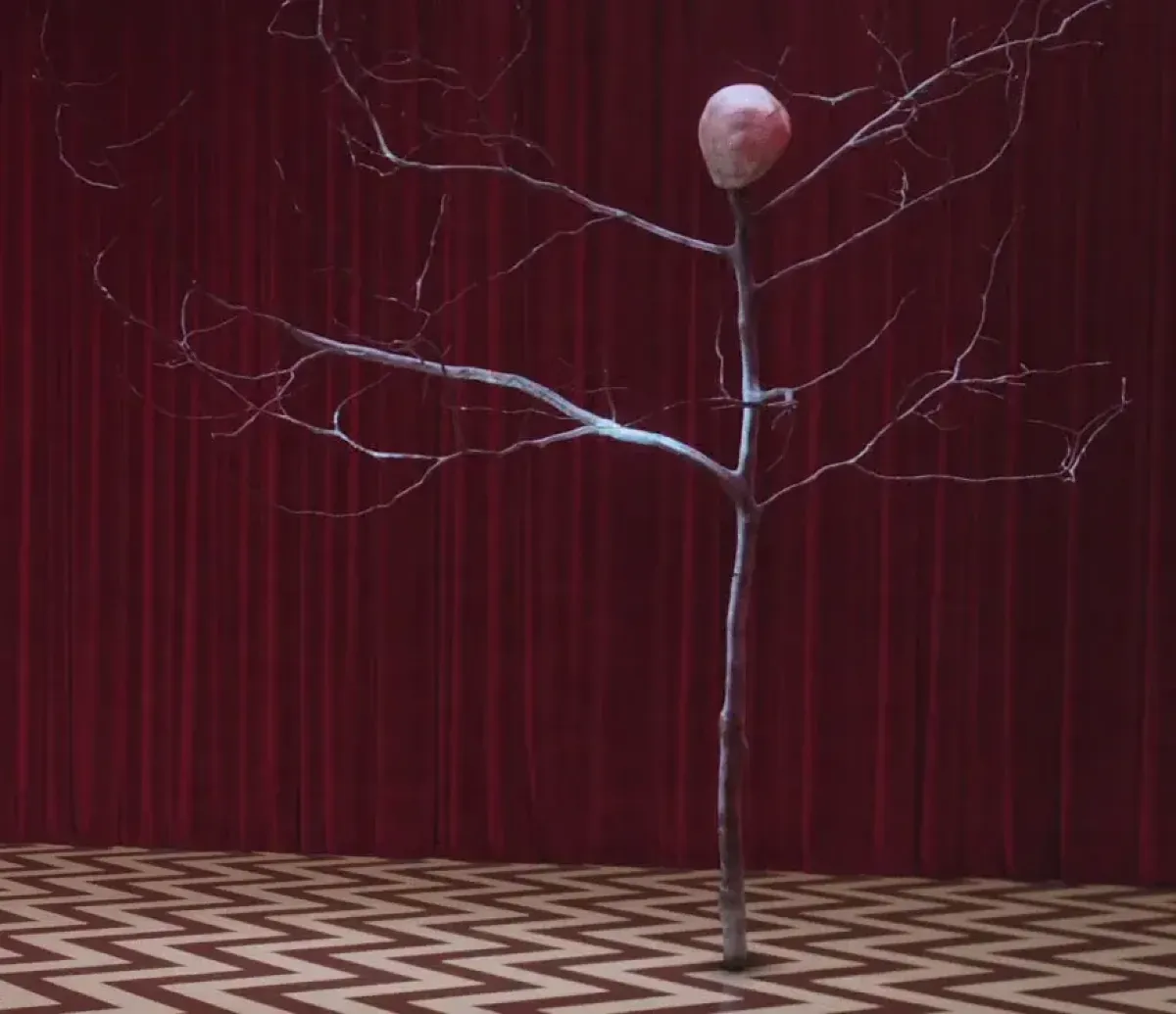
Let’s also consider the circular narratives of Lost Highway and Mulholland Drive. They are opened and closed by a thunderous sound, lightning and electrocution, the dance and the discordant, aggressive laughter; there are specters of the past that remind their protagonists that what they are living is indeed a fugue. While in Blue Velvet, Dennis Hopper's character beats the protagonist, the old prostitute he brought starts dancing on the hood; in a fit of madness, Lula Pace's mother paints her entire face with lipstick, and before the trio of hitmen execute her detective boyfriend detective, they subject him to a bizarre psychosexual torture... Why? Well, for the same reason there’s an old lady laughing in the apartment where they try to rape Ricardo in Okupas, or why in Kipling's poem Boots, what drives soldiers mad is not the war crimes but seeing their footwear while marching. To survive, the mind focuses on the inconsequential, makes a fugue to escape the traumatic event, only to stumble back into it. Constant shock, post-traumatic stress, returning to the same event, over and over again, like, oh surprise, the protagonists of Lost Highway and Mulholland Drive.
Twin Peaks lacks a magical and narrative system that logically frames it: there are supernatural entities that intervene in our lives, some are malevolent, others not so much, but they do not form an ordered pantheon.
Of course, if there are Lynch films known for their incomprehensibility, the gold medal goes to Eraserhead and Inland Empire. If I had to describe them in one word, it would be alienating. They are uncomfortable: the tumor baby, Laura Dern's cyclothymia inhabiting hostile zones. But what’s important is the aesthetic vocabulary, because these stories could be told differently. Lynch chose that way.
For Adorno, a work of art is one that tells the truth about a false society, a society that alienates its inhabitants. The more false the society, the darker the art, the more imprecise in its communication and the more uncomfortable in its representation. Lynch is an American director, and his work is quite critical of his country. Inland Empire, Lost Highway, and Mulholland Drive deal with the illusions of Hollywood and the production of films as factories that chew people up and spit them out. Blue Velvet and Twin Peaks subvert the classic narrative of friendly small-town life.

The baroque: chiaroscuro, darkness and light
But Lynch could have been even more surreal and used a color palette like the one Satoshi Kon used in Paprika, a hyper-aggressive combo due to its flamboyance, and thus delve deeper into the dreamlike. He could have been psychedelic, and made the narrative even more incomprehensible. Let’s be honest: Eraserhead and Inland Empire are super hostile, but there is a certain logical order to what happens. First, dreams are tied to reality, representing experiences. At the same time, Lynch always manages a constant back-and-forth between day and night, the carpet and what lies beneath it, something he expresses with the palette and lighting, the chiaroscuro and strobe light as an emergence of the supernatural, the passage from the normal to the eerie.
Let’s talk about the baroque. The baroque was noted for its aesthetic refinement, for its mechanical and rationalist logic of presentation, contrasting sharply with surrealism. Precise aesthetic language versus free. But aside from that, they have many commonalities. First, the baroque is a response to the crisis of religious faith brought about by the scientific construction of the world, closely linked to the philosophical currents of its time (Descartes and Hobbes, for example). In the baroque, there is also a concern for the dreamlike, stemming from the impossibility of distinguishing wakefulness from sleep, reality from illusion. The traditional categories of scholastic medievalism (religious, moral) were shattering like glass, while Europe bled in civil wars. A new order was needed to clarify confusion and end chaos: that’s why Descartes begins by discussing uncertainty to propose his method and metaphysical foundations for analyzing reality; that’s why Life is a Dream ends with the monarchy asserting itself.
Lynch not only directed films invaded by the fantastic but also overflowing with the aspects we don’t want to talk about. What overwhelms us, the traumatic. Is Fire Walk with Me the story of a girl pursued by a spectral entity? Yes, and it’s also the story of a young woman who was repeatedly raped by her father, treated as a sexual object by all the men in her life (her boss, her confidant, her psychologist, her high school friends); a girl who took on countless noble projects but fell into prostitution and cocaine use. Inland Empire is also a very surreal film; what is not at all surreal is what happens to its female characters.
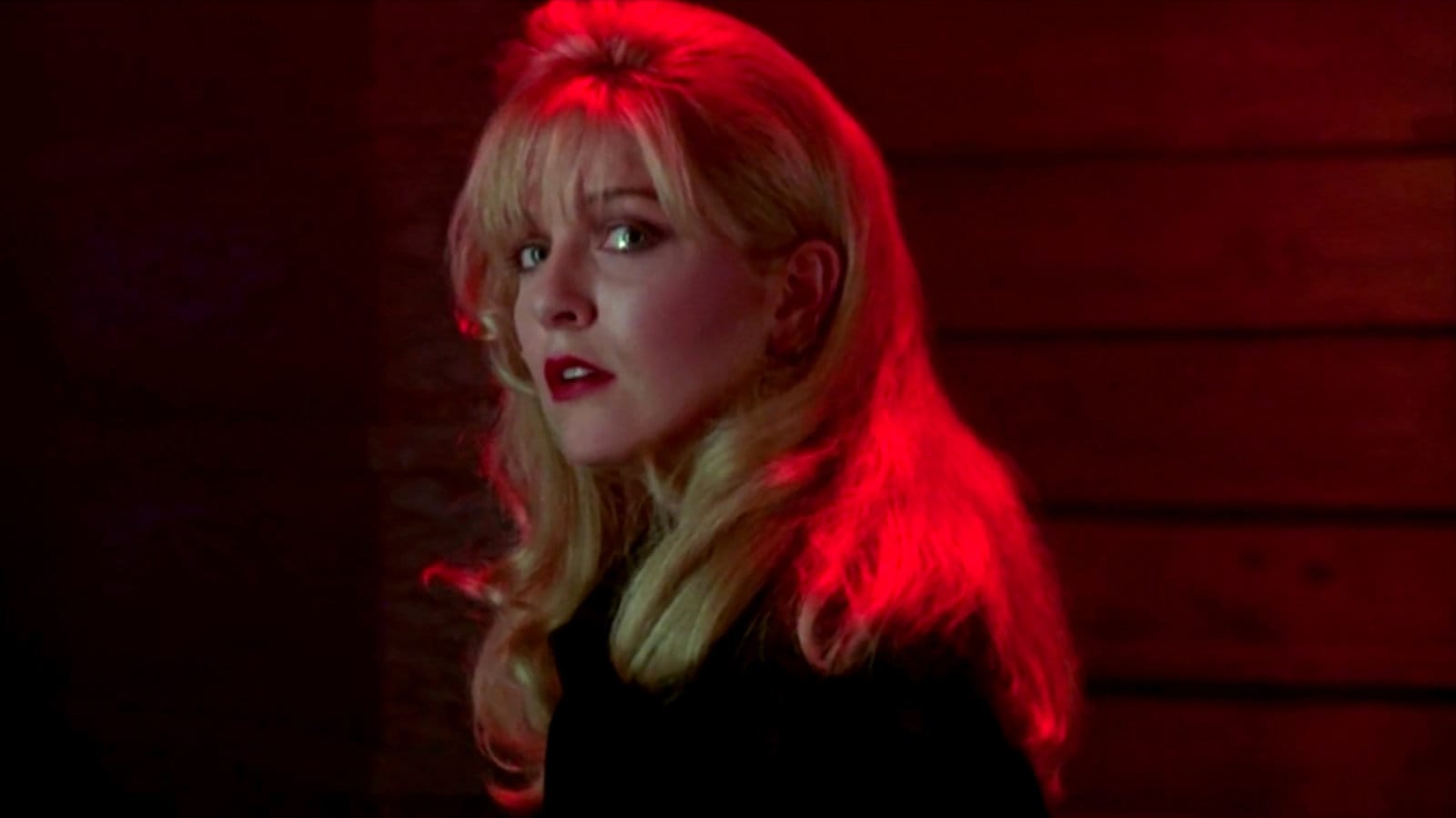
It’s true that the character in Lost Highway is trapped in a cycle of reincarnation, but it’s also the story of a person who committed something so horrifying (and for such pathetic reasons) that he prefers to flee from himself and deny reality. Quoting the protagonist: “I like to remember things my own way: how I remember them, not necessarily the way they happened.” The confusion between dream and reality arises first from the ineffable, but also because the dream is, in principle, indistinguishable from reality. Of course, in Lynch, the dream always shatters like glass when one remembers what happened. Then, all the moral and personal beliefs we had collapse, and we must reinvent our frameworks or die trying.
Where there is darkness, there is also light. Lynch is critical of Hollywood, certainly, but he understands very well that cinema can make us believe, it can wonder: that’s why there’s a constant reference to The Wizard of Oz. In Wild at Heart, every scene with Nicholas Cage and Laura Dern is overloaded with love, desire, and passion. It’s Glinda, the Good Witch of the South (played by Laura Palmer), who convinces Sailor to grow up, stop being a king of the asphalt, and start a family with Lula. Blue Velvet ends well; they kill the city’s thug, dismantle his conspiracy, and free Dorothy (wink-wink, Dorothy goes back home), happy ending. There is love in his filmography, camaraderie, and friendship, for which it is worth giving everything. Like in the baroque, the presence of chaos, evil, and doubt exists to give way to the reaffirmation of noble values.
“Nothing will die”
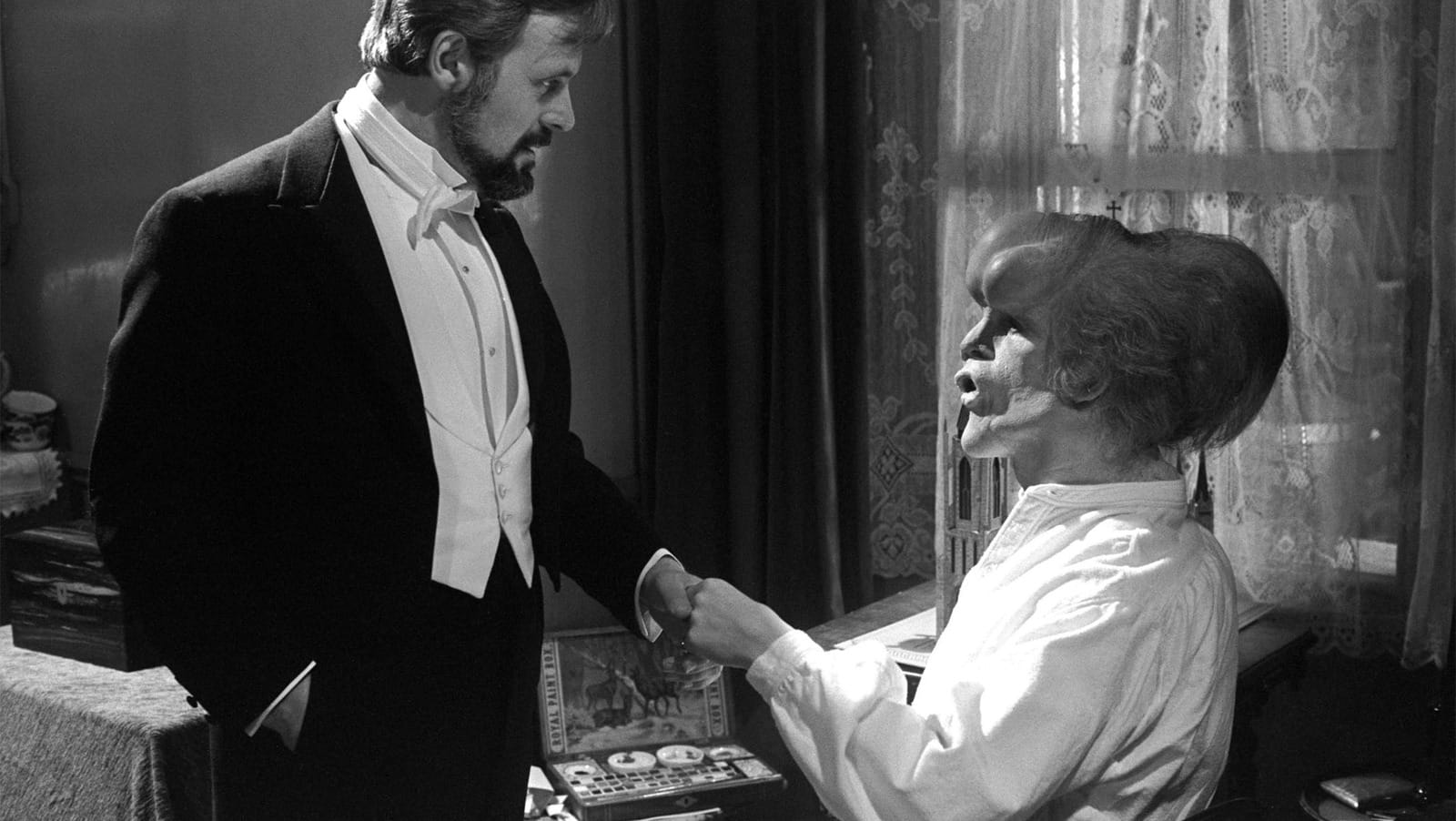
There is chaos and there is light, there is evil and there is redemptive love. And, in the end, we move towards the light. The film with which Lynch enters the arena of great directors is not his debut, but Elephant Man, the saddest movie you will ever see: a deformed man, a circus spectacle, pursued and abused by everyone. It is also the film with the most moving and beautiful ending, a radical reaffirmation of human nobility and compassion. It ends with Merrick’s mother, our poor but ultimately happy protagonist, reciting the poem “Nothing will die”: everything will continue beyond ourselves, but we will be there, just as part of the whole, undifferentiated within it.
"There is no band," the magician shouts in Mulholland Drive, but we can hear the instruments; it's a recording, they'll say; yes, but at some point, the band played. Lynch has passed away; it's been over a year now. His work isn't particularly vast, the things he created weren't bestsellers, and he didn't engage in contract filmmaking, at least not like other directors. But he was fiercely creative: many people borrowed his ideas, and they will continue to do so. While he was never a box office hit, his work is an unavoidable reference. Because what defines a great artist is that they are outlived by what they created.
The director is no longer with us. We have his films.