Death Stranding 2: Dystopia's Victory Is the Descent into Cynicism

11 de jul. de 2025 — Axel Bosso
"Although the future is a product of the entire present that precedes it, tomorrow does not belong to today."
Kobo Abe, In Search of the Present
I cannot conceive of my life without the internet. It's simply impossible for me. Even though I may have spent the first third of my life without actively using it (whether due to development, age, or access), the rest of my years have been significantly shaped by it. How I discover places, make plans, catch up on the news, think about topics, and engage with culture are all mediated by the internet. To a greater or lesser extent, how I meet people and interact with them is, too.
Being "chronically online" has given me opportunities, surprises, and problems. My profession, which I've been practicing for seven or eight years now, exists exclusively thanks to the internet. I met my last two serious partners (including my current one) on Twitter, as well as some of the friends I hope will last me a lifetime. But at the same time, always diving deeper and trusting what we find and the people -- if they even are people -- we interact with online is dangerous. To give just one example, if I had locked myself into the readings of the pathetic guys I followed when I was 17, during one of my emotional low points, I'd probably be a textbook incel today. At the very least.
The point is that Death Stranding is a work about many things. Our potential relationship with life and death; the transmission of culture; imperialism and colonization -- not only territorial but also virtual; the tension between the manual and the automated; the connections we establish with others; and of course, human extinction. It is also a story about the internet and the central role it plays in many of our lives.
The Deliveryman
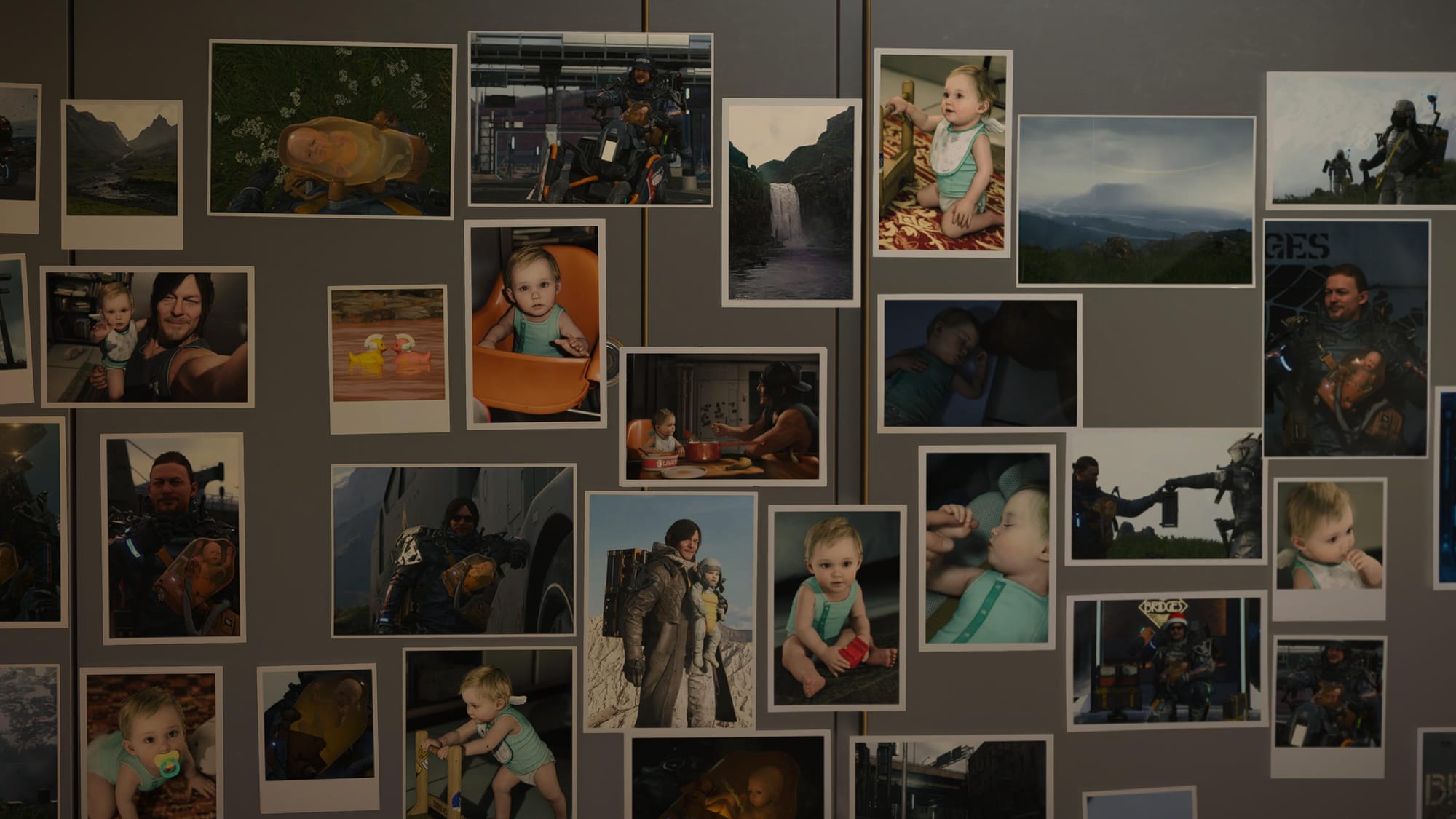
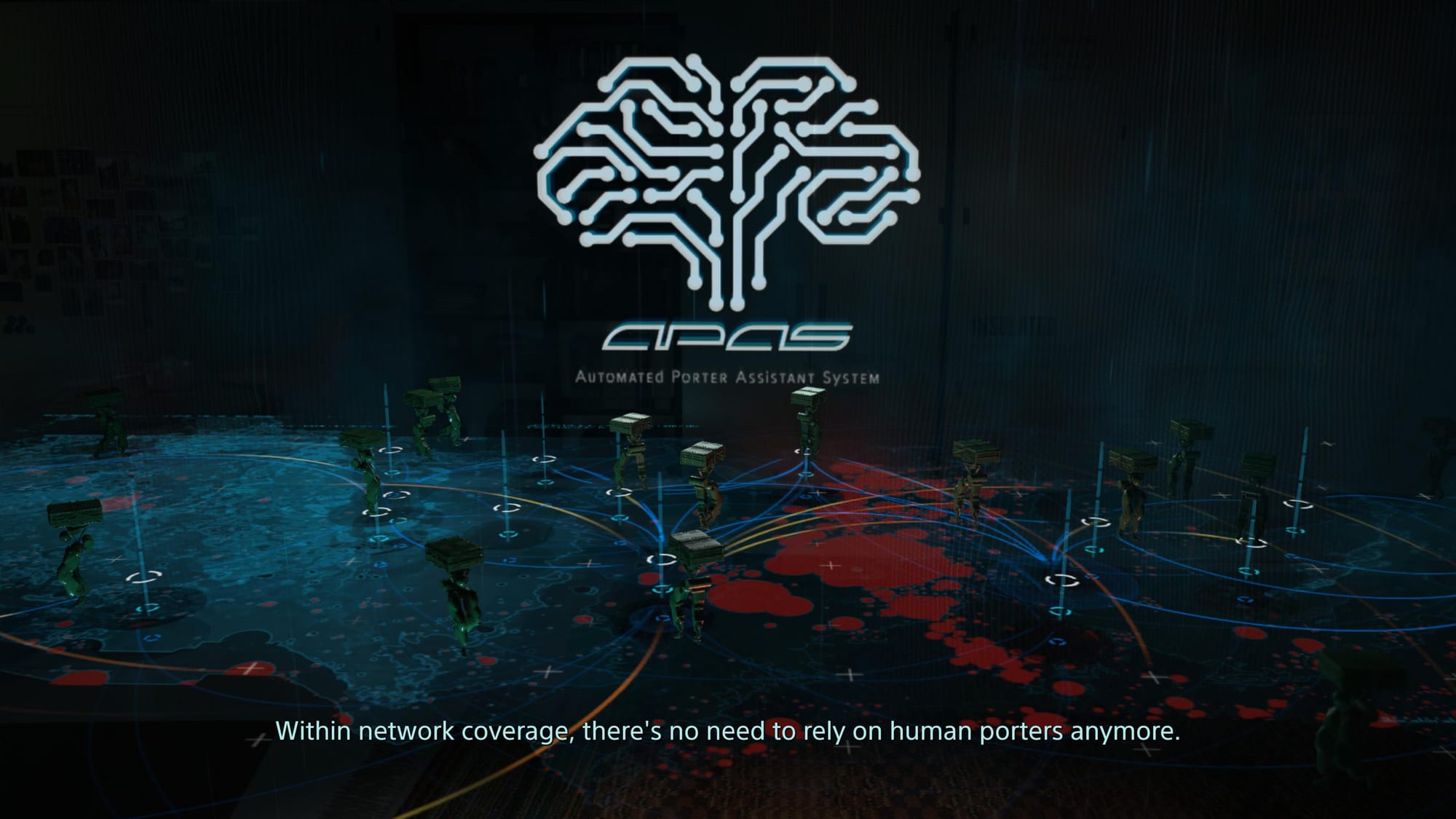
If you haven't played either of the two Death Stranding games, here's the summary: the protagonist, Sam Porter Bridges, is a resourceful package deliveryman trying to reconnect continents (a fictional version of the United States in the first game; Mexico and Australia in the second) in a devastated universe. He does this by integrating different terminals into the Chiral Network, a sort of "super internet."
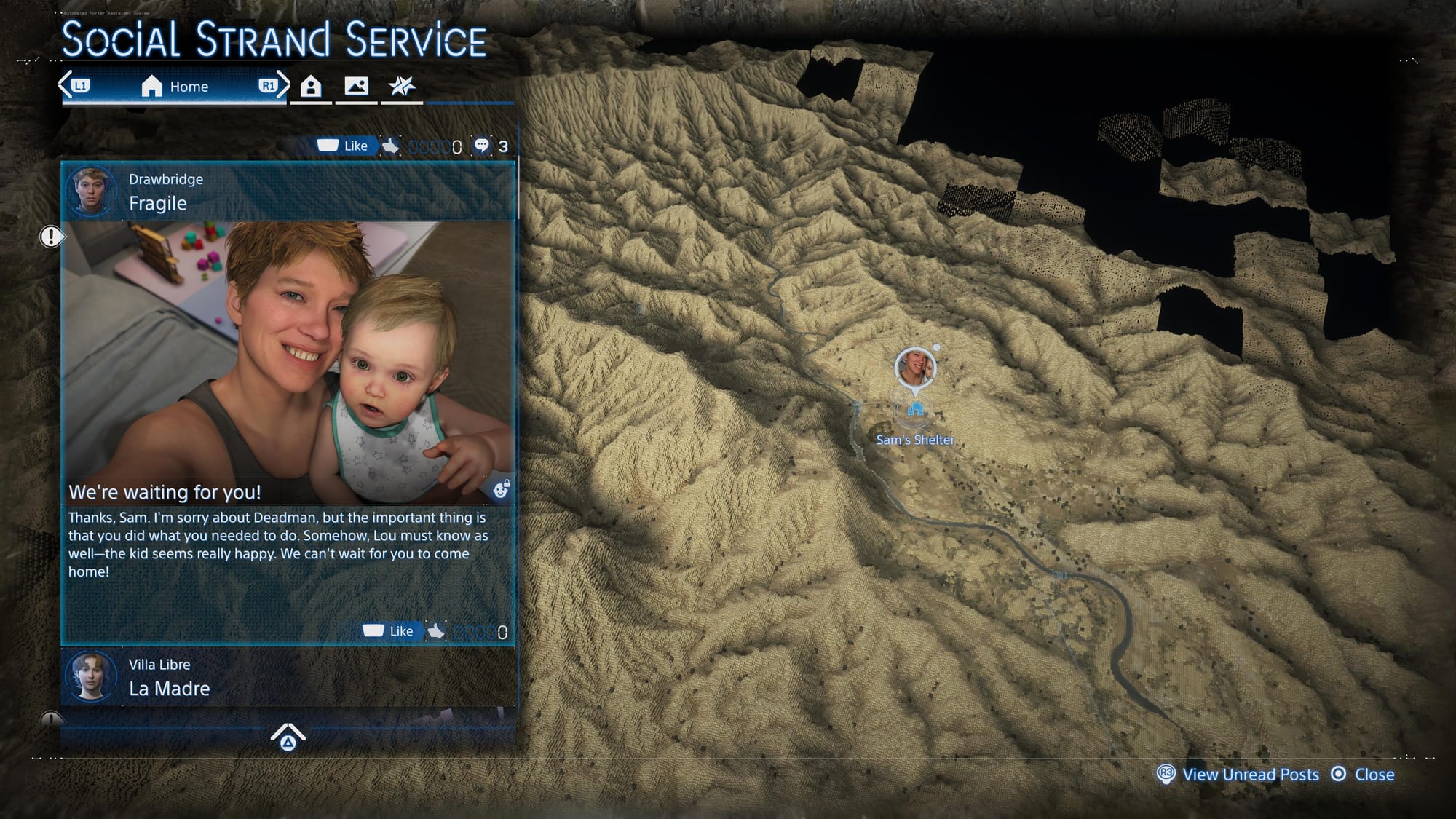
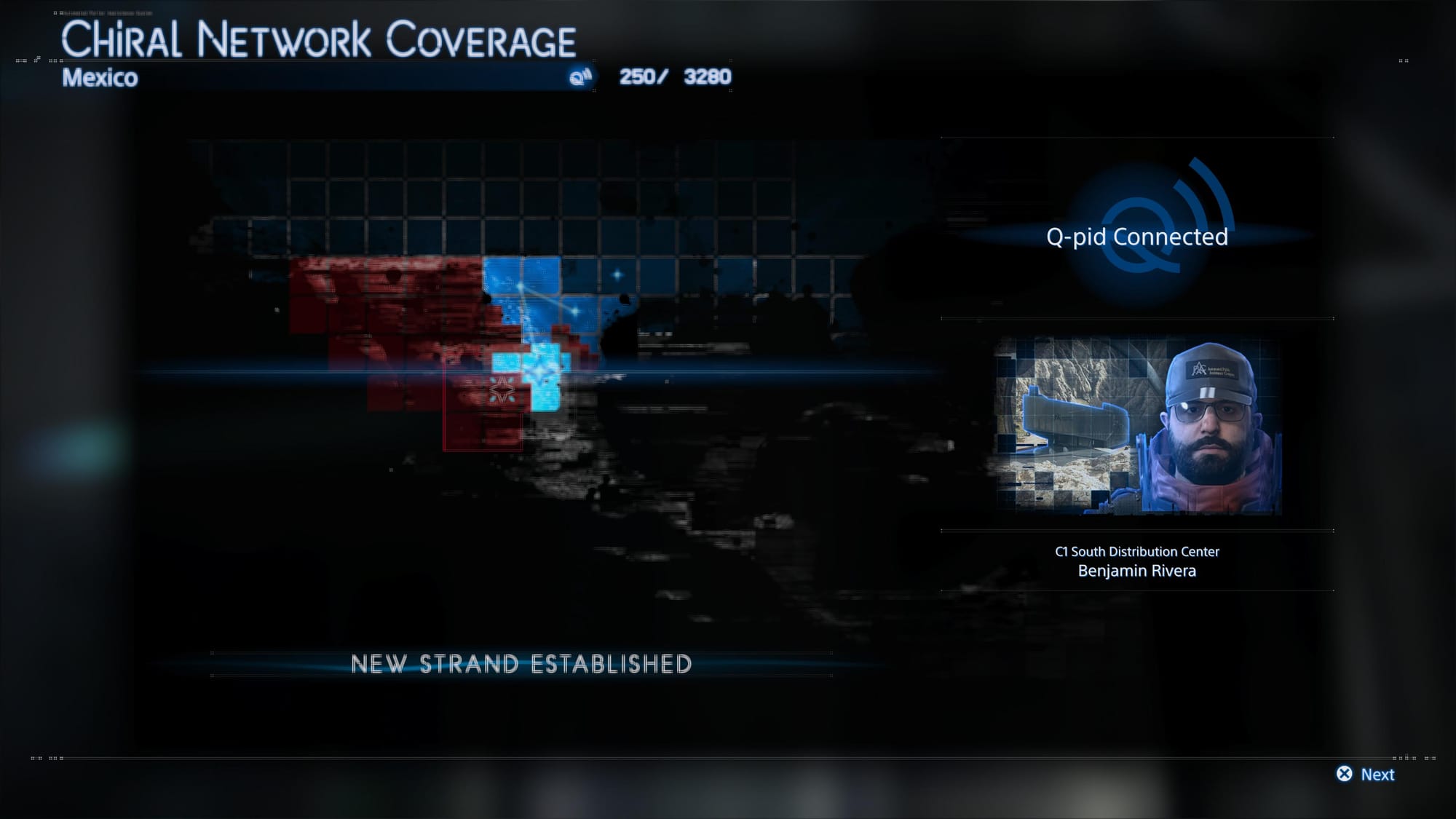
You arrive at the terminal-bunker with the requested package, talk to its representative, and they normally give you their consent to connect to the network. From that point on, the terminal connects with all the others that have already joined, and they share schematics for constructions, weapons, and other nice details. In the sequel, there's an internal social network (a mix between Facebook and Twitter/X) where people share tips, news, and photos. We can also start using all our tools, learned at previous terminals, in the territory of the terminal we've just linked to the network.
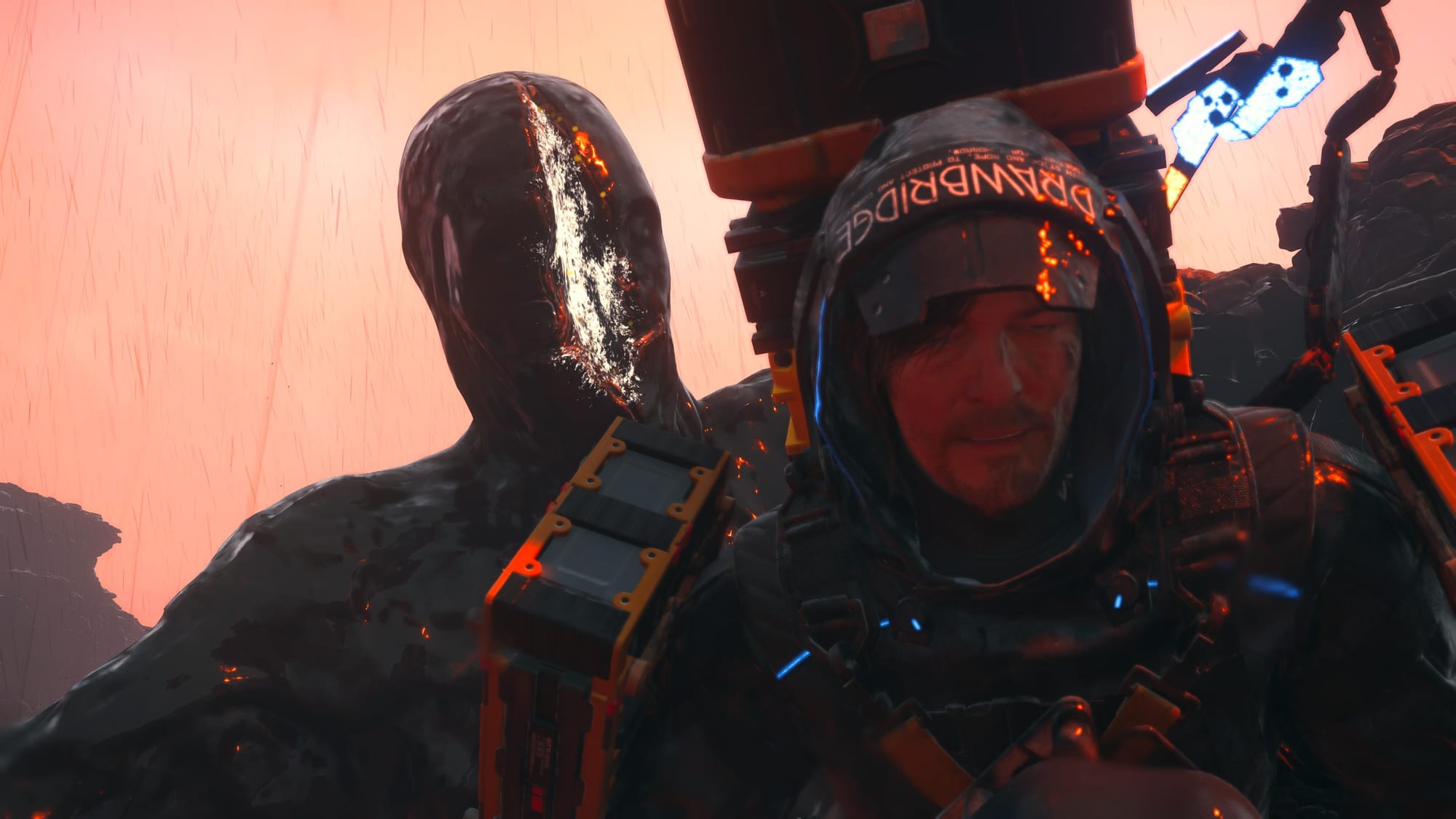
Naturally, there's a plot in both games that drives Sam to connect as many terminals as possible and "reconnect" the continent. In the first one, there's a palpable sense of urgency: the entire Earth seems to be disconnected, survivors live in precarious conditions but with specific valuable goods, and you need to gather information to prevent the "Death Stranding" itself: essentially, the extinction of humanity.
In the sequel, the horizon is somewhat more abstract: once again you have to reconnect continents, but the goal seems a bit more altruistic: "We need to connect these lands so we can connect with the rest of the world." Curiously, this time we do it under the umbrella of a private organization (in the first game it had close ties to the government), and our new boss ("The President") exudes a humanism that is clearly hiding something from us.
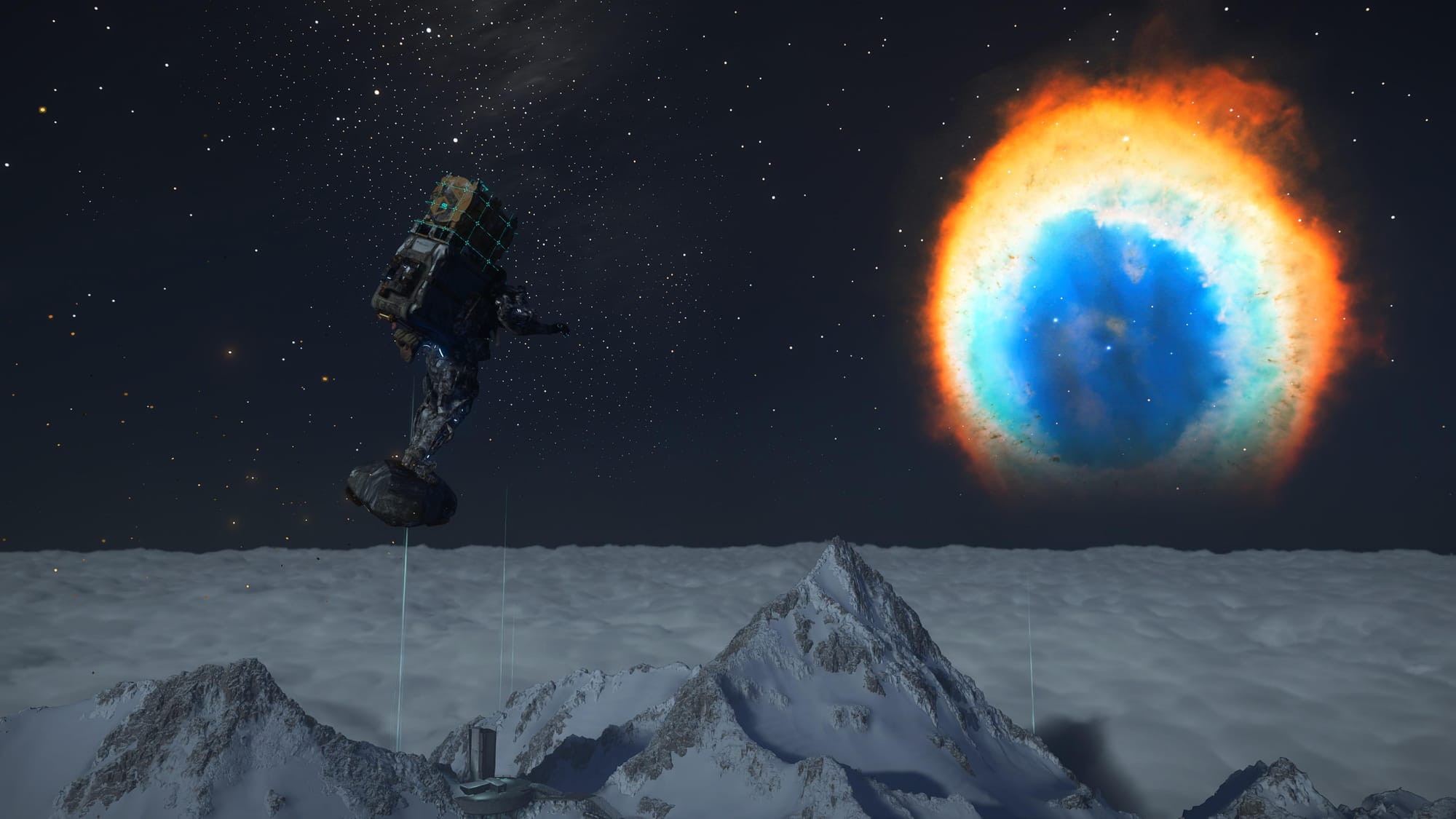
The Gestation of Cynicism
Over the course of hours completing orders and deliveries, a slow gestation of cynicism begins. There's an insidious distrust about what we're doing, with whom, and to what end. Every connection we make improves our network and seems to benefit new members, but at the same time it generates instabilities across the continent. Even geographic transformation problems that affect those outside the Chiral Network far more. When we show up at the doorstep of the disconnected offering them a chance to join us, is it a benevolent offer or is it steeped in a sophisticated coercion?
Nowadays, how many activities and professions in our daily lives are tied to being connected? Of course, there are still jobs that don't require it at all. But how many large businesses operate outside a system like Mercado Pago? I don't entirely buy the theoretical framework of Greek-Australian economist Yanis Varoufakis and his conceptualization of Technofeudalism, but within it I find a solid point: cloud capital. For years, we've been contributing to social networks and systems for free, voluntarily exposing our photos, videos, opinions, thoughts, and personal data (our lives?). The payoff is something vague in the vast majority of cases. A space of artificial connections, perhaps?
Both installments of what is now Hideo Kojima's saga play with this idea of total exposure, of who we're connecting with and why every connection we make can present dangers. This is emphasized more in Death Stranding 2 ("Should we have connected?" was its tagline), because of the consequences mentioned and also because of what happens in its final hours. Without spoiling too much of a somewhat predictable twist, I'll just say: never trust corporations. Failing to associate them with the control of our lives can be a costly mistake.
The Play Space and the "Other Sams"
It's interesting how Kojima and his team at Kojima Productions present us with our play space. If we play online, we're connected to other "Sams," but we never see them. We can use tools and structures they've left in "their world," like ladders, ramps, highways, vehicles, zip lines, and ropes; and they can use ours. There's no currency of exchange, and the economy is expressed through the use of our own resources or those from the terminals. We only receive and give likes by sharing structures, using others' creations, and completing delivery orders.
We can give a "like" to other players' constructions and to posts on the social feeds of non-playable characters, but we can't give a "dislike." Nor can we interact with them through free messaging, vandalize their structures, or much less invade and harm them. We only leave basic signs and symbols of encouragement or warnings. There's very little room for trolling, like leaving a poorly placed bridge, but it's almost insignificant. There's no leaving hurtful comments, no doxxing, or any of the things that are commonplace on our actual social networks.
The result is highly pleasurable. It's one of the least toxic "communities" (if we can even call it that) in online video games. Everyone cooperates with each other to a greater or lesser degree toward their specific goals. The obstacles and difficulties don't come from other players but from the hostile environment and enemies controlled by artificial intelligence. We can't attack or distrust one another. We can only distrust those we're meant to distrust.
Kojima Fixes This
I don't want to be (too) naive. The fact that Kojima Productions restricted the possibilities for free will speaks to an authoritarian vision, or at the very least a controlling one, for the world of Death Stranding. It's a thread with many edges that deserves its own essay. In this piece, I want to focus on another one of its consequences: the glimpse of how powerful and restorative we can be as a community when we have the means and the incentive.
Removing the possibility of interpersonal conflicts is cheating, but it's also positing, at least in a limited way, a different perspective on the prevailing cynicism of our era. Anyone who's chronically online knows how easy it is to fall into a social media rabbit hole that colors everything we feel about the world, about others, and about ourselves, leaving us on the edge of the abyss, resigned to a tomorrow that will always be worse. The benefits of the internet feel insignificant when I'm constantly thinking about how rotten the world is and the lack of any future in my life.
Kojima inverts this. The director cites Japanese writer Kobo Abe as an inspiration for the philosophy behind the gameplay of the first Death Stranding. In one of the earliest stories attributed to him, Abe defines the "stick" as humanity's first invention, created as a weapon to ward off everything bad and unwanted, and the "rope" as the second, with the opposite function. Both are tools we have for interacting with others; and placing the emphasis on the latter allows for different interactions with each other and, consequently, different communities. Cynicism diminishes. Personal resignation and individualism are transformed into a helping hand for our companions.
Sam Is Technically Immortal
As if that weren't enough, Sam is technically immortal. Death doesn't exist for our protagonist, at least not in the conventional way we know and use in other games. The "Game Over" screen upon dying returns us to our body, under different conditions depending on the cause of death, which aren't relevant here. This apparent lack of fatality, so important in many games and stories, which could be seen as a reduction in difficulty, moves me in Death Stranding: our death is not an obstacle to helping others.
This shift in perspective on the dystopia presented here compared to other video games is also reflected in one of the key differences between the original Death Stranding and its sequel: the tone. Both are sad games with melancholic atmospheres and characters driven by their traumas. But the degrees of these elements vary, and Death Stranding 2 embraces the absurd.
Sure, the original already did this a bit: Sam carries a baby in a capsule connected to his suit, which allows him to see ghosts in areas where it rains a substance that accelerates the passage of time; you can urinate outdoors and your waste becomes the raw material for grenades; among many other things. Still, the sequel is far more delirious in this regard. The friction in its gameplay decreases and we get new gadgets and buildable structures, like a coffin-skateboard that lets us ride across nearly the entire terrain of the game as if we'd booted up Tony Hawk's Pro Skater. We travel with the soul of a therapist trapped in the body of a puppet, strapped to our waist, and we can toss it into the air to detect enemies or hurl it at them to create a distraction. All this among hundreds of playable examples, represented in beautiful clips of the game.
i love hideo kojima's newest game, metal gear solid 6 pic.twitter.com/5qM7MBP9S6
— Max Blumenthal (@RinHara5aki) June 30, 2025
Tomorrow Never Knows
Kojima's writing is not at all subtle with many elements of its story and characters, and perhaps the clearest example is Tomorrow. She comes from a "parallel land" where only death is known, and we try to adapt her to our world, where there's also death but other things too. Obviously, something happens with Tomorrow at the end of the game, and we're essentially trying to "save tomorrow." The lack of subtlety is inversely proportional to the emotional impact and the message of hope that the director wants to give us through his work. In the face of books, series, films, and other games capable of projecting a cruel nihilism and an overwhelming cynicism, Kojima still wants us to think about another possible path.
"To live is to imagine ourselves in the future. And we inevitably arrive there. Even if our place in that future is not the one we envisioned." With this quote and the one from the beginning, both attributed to Kobo Abe, Kojima closes the main story. It's a crystal-clear message, but no less effective and heartfelt for it.
I can't imagine a life without the internet and its dozens of problems, including the ones we already have and the ones coming with the advance of certain technologies. But I'm also grateful for it. I try not to sink into the palpable resignation of every day. Sure, without revolutionary visions or paradigm shifts, the structural problems will persist. But so will the bridges we build between each one of us.