Can You Put a Price on Peace? Thrash Metal vs. the State of National Security
What is the deep state? From QAnon to the left, many argue that the US government is run by the security bureaucracy, arms corporations, and the media. Since its inception, thrash metal has been responsible for denouncing the dual state.

7 de feb. de 2026 — Zipi González
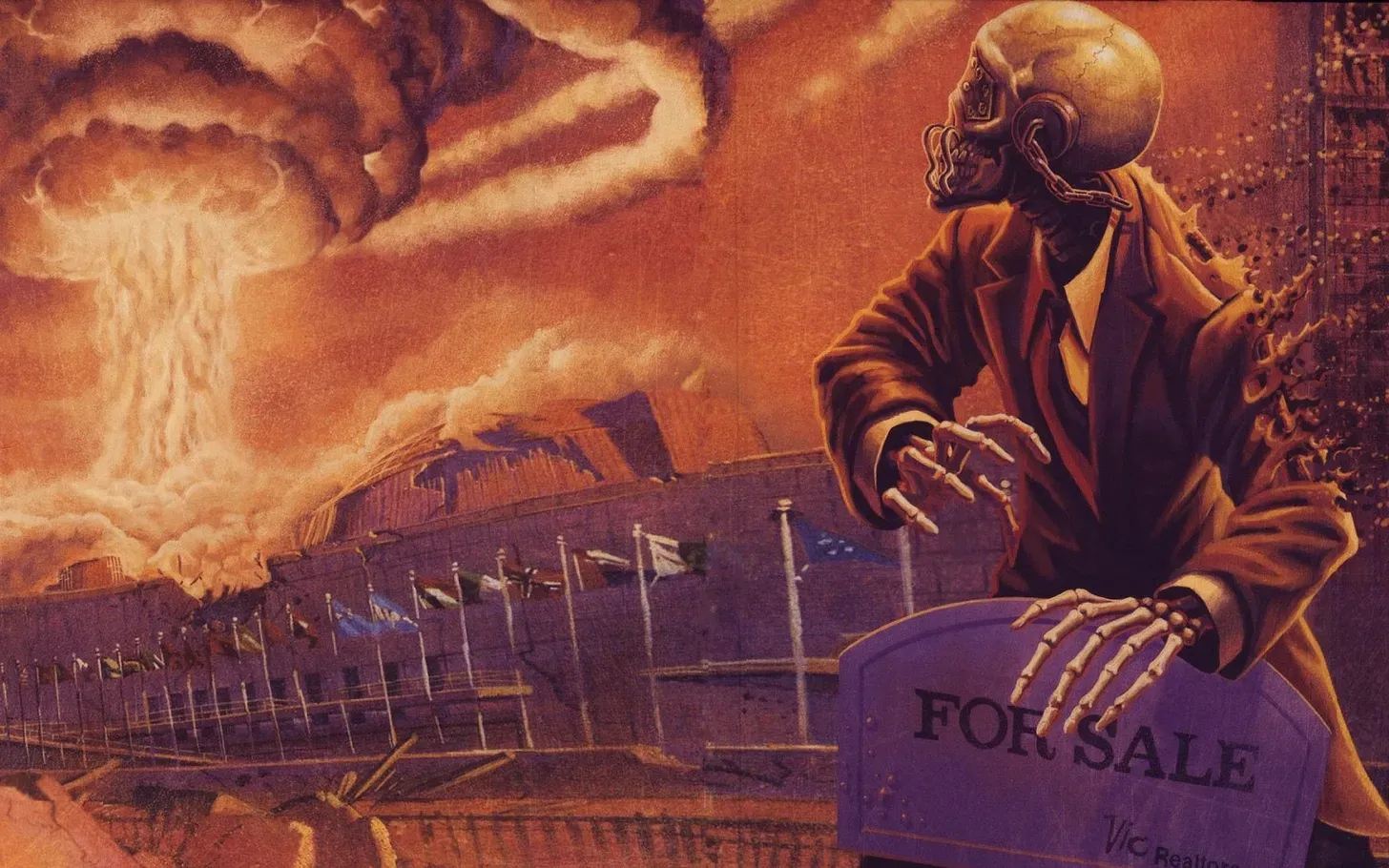
Have you ever heard of the concept of the "Deep State"? That conspiracy theory, fictional or real, suggesting that there exists an underground network pulling the strings of the federal government of the United States of America. A "State behind the State," made up of members of intelligence and security agencies, globalist industrial and financial interests, the media, and Hollywood actors and producers.
While this theory originates from American issues, it has gained popularity in public discussion in recent years. You’ve probably come across the idea before, and if not, welcome: it’s an endless rabbit hole.
Various versions of this theory have circulated in North American culture since the 1950s. In recent years, different online groups (generally belonging to the right or the alt-right) from forums like 4chan or 8chan have developed modern forms of this theory. QAnon and the Boogaloo Movement make the existence of a Deep State a central part of their agenda. However, the theory gained popularity and mass appeal during Donald Trump’s presidency, which helped spread the idea that an administrative bureaucracy was conspiring against his government.
But the right doesn’t have a monopoly on suspicion: we find similar constructs on the left. They prefer to talk about the "military-industrial complex," that alliance of generals and contractors who profit from endless wars.
Cryptocracies, invisible governments, or secret organizations are themes often used in popular culture. However, the real roots of these conspiracy theories have rarely been treated seriously. Beyond the myth, they have a real foundation: the American administrative bureaucracy created, during the Cold War years, mechanisms to expand its arbitrary power and became a threat to democracy and the republic.
One of the few serious attempts to denounce the consequences of the American Dual State emerged from a musical genre that successfully positions itself on the margins of the mainstream: metal.
Next, I will explain how distorted guitars and double pedals highlighted the danger of the United States ceasing to be a democracy of the people and for the people.
Antidote to Peace and Love
Metal emerged in the last gasps of the sixties counterculture. The music industry at that time was filled with hippies preaching messages of peace, love, and brotherhood. Rock was All You Need is Love by The Beatles, drenched in the paraphernalia and rainbow of flower power.
By the end of the decade, some young people, born from within the movement, felt that after the Kennedys, the trauma of Vietnam, and the civil rights movements, not much had changed.
Metalheads rose from the ashes of the world and that failed revolution.
The first true metal band was Black Sabbath. Their first two albums from 1970 are quite similar to the blues rock or hard rock that was popular at the time. However, the main difference with Sabbath lies in the themes. Metal was born as an aesthetic fracture: the rainbow was replaced by black.
Sabbath's lyrics brought evil to the forefront. In War Pigs, war is not a political abstraction, but a witches' sabbath with generals guiding the masses, bodies burning on the battlefield, the roar of killing machinery, lobotomies, corrupt politicians...
In the words of Ozzy Osbourne, Sabbath was born as an antidote to the idea of peace and love. While Bob Dylan's folk protested with metaphors, bands like Metallica, Megadeth, or Slayer preferred visceral expression.
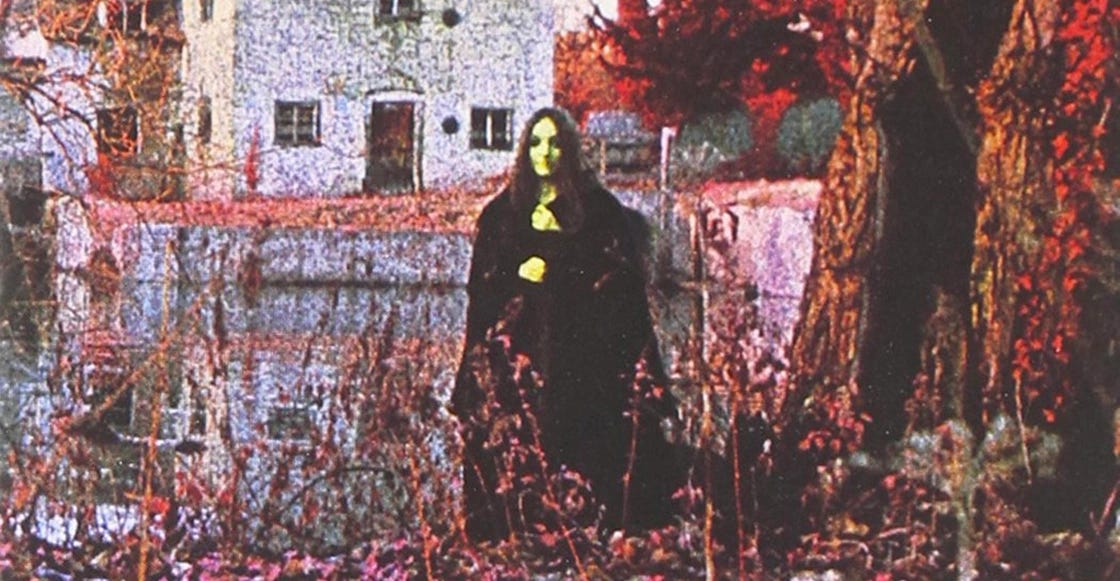
Metal stared chaos in the face. It’s the difference between a pacifist discourse and the opening of Saving Private Ryan: the focus is on dismembered bodies, drums crashing against flesh, and searing fire. Metal placed the listener in the middle of the crossfire.
Although many heavy and glam metal bands — Judas Priest, Scorpions, Mötley Crüe, Def Leppard — opted for hedonism, it was the extreme branches — thrash, death, and black metal — that professionalized the aesthetic of chaos.
This origin is essential to understand why, in the mid-eighties and early nineties, some bands would develop a type of political critique that is special and almost exclusive to the genre.
…And Justice for Few: Denouncing the Dual State
The political discourse of these heavy metal bands was a denunciation of the National Security State (NSS).
This system, consolidated in the seventies, has its roots in the National Security Act of 1947, which centralized military command and created the Central Intelligence Agency (CIA). The main objective was the integration of domestic, foreign, and military policies. This allowed military services and government agencies to cooperate more efficiently on matters related to national security.
This last point is crucial. The text of the law never defined the scope of the concept of national security. The law granted agencies the freedom to interpret their own jurisdiction. The problem is evident: the National Security Council (NSC) and the CIA began to operate above any legal framework.
National security became the backbone of state policy. The system was built on an economic reality: war as the engine of the U.S. After the Great Depression, the primary concern of the American establishment was to maintain high employment rates and a robust industry. The way out of the crisis of the thirties was World War II: the conflict revitalized the American economy through mass production of weapons and stimulation of heavy industry. As a result, employment recovered and the social fabric was restored.
American politicians and economists built a common awareness from this of the importance that the arms industry had on the health of the economic system and, consequently, on the internal peace and security of society.
As Keynes would say, capitalist economies can be stimulated through the construction of pyramids, earthquakes, and wars. Between 1959 and 1974, 75% of federal government purchases had strictly military purposes.
In all this, the Cold War was a unique opportunity to perpetuate this "state of emergency" for decades, delegating power to the arbitrariness of agencies and corporations.
As Marcus G. Raskin, a former advisor at the NSC, argued, this system was a "constitutional distortion" that threatened citizen freedom. For many, the state had suffered a silent coup executed by intelligence and the war industry. That invisible coup was the main target of American thrash metal in the mid-eighties.
The maturity of thrash metal transformed punk rage into critical thought. Under Reagan's conservatism, bands like Megadeth, Testament, and Nuclear Assault abandoned hedonism to attack the system. This denunciation was not partisan, but "anti-political": the metalhead positioned themselves in a place of moral superiority, denouncing a corrupt "other" (the power) while remaining "trve," detached from market interests.
It was very important for metalheads to be outside traditional politics. For them, political (or corporate) power and moral integrity are mutually exclusive. The metalhead demands honesty and authenticity from their peers. This is why the harshest slander among metalheads is to be called a "sellout."
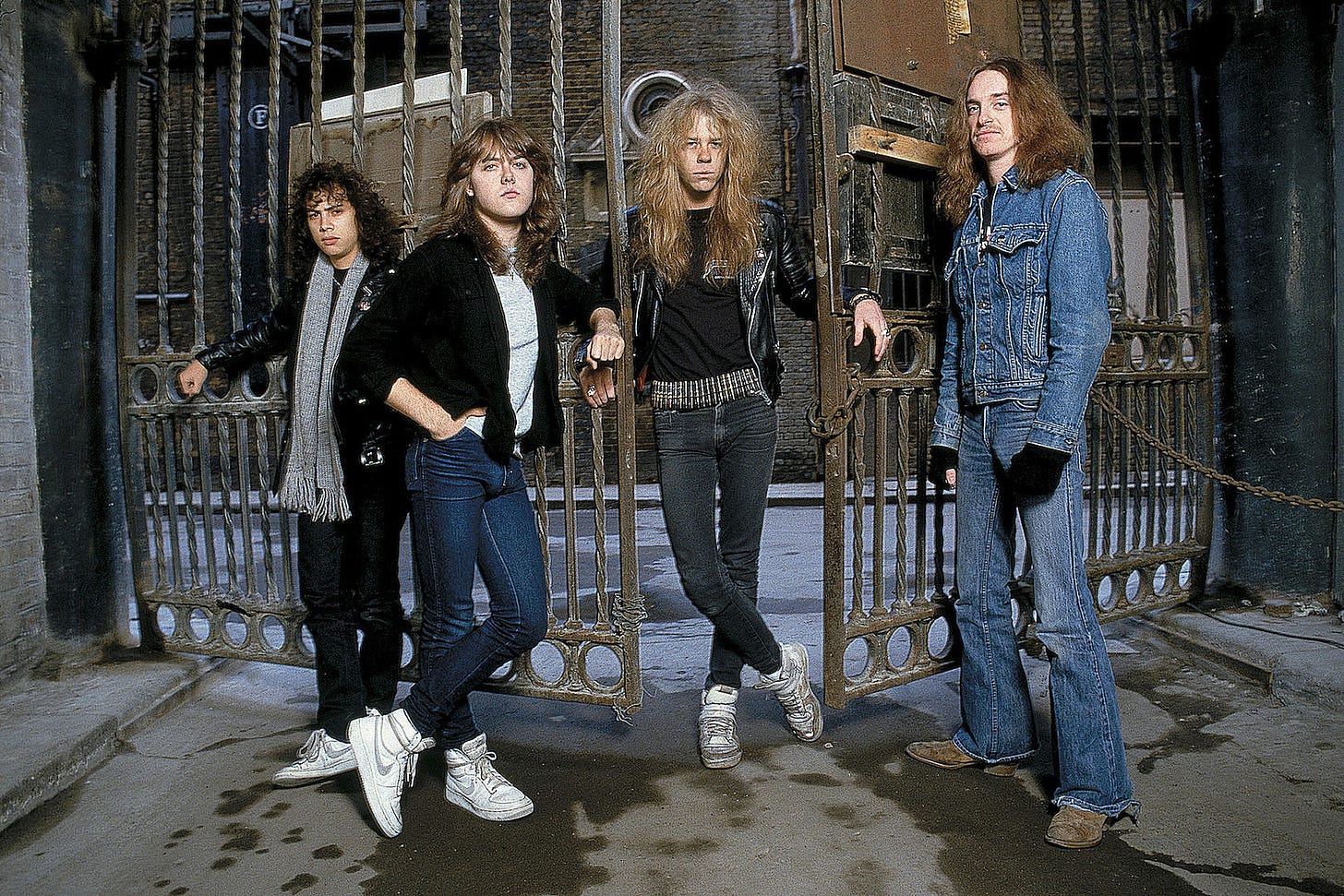
This differentiation between a morally unblemished "us" and a corrupt "them," combined with poetry devoid of euphemisms, is key to the constitution of the anti-system, anti-establishment, and conspiratorial narrative.
One of the main themes represented in albums from this era is the war machine. In the iconography of the time, the nuclear threat is omnipresent: Peace Sells… But Who’s Buying? by Megadeth, The Ultimate Sin by Ozzy Osbourne, Infernal Overkill by Destruction, and basically the entire discography of Nuclear Assault. If we broaden the search to heavy weapons in general, the list is endless.
The push for arms programs and the encouragement of the policy of "mutually assured destruction" is the plot of Rust in Peace… Polaris by Megadeth. The song is narrated from the perspective of the Polaris ballistic missile, an essential part of the British nuclear deterrent during the seventies and eighties. The lyrics expose that, despite the very existence of this arsenal being a danger to humanity's survival, it continues to be developed and expanded. A few years earlier, Megadeth described a landscape of nuclear apocalypse in the song Set the World Afire.
Similarly, in Blackened by Metallica, the decomposition of the world is described in an atomic winter. The examples are endless: the seven-minute bulldozer of the Canadians Voivod, Nuclear War; the catchy And Then There Were None by Exodus; the chronicle of the last surviving man after nuclear devastation in Last Man Alive by Whiplash; the self-explanatory Thermonuclear Devastation by Onslaught.
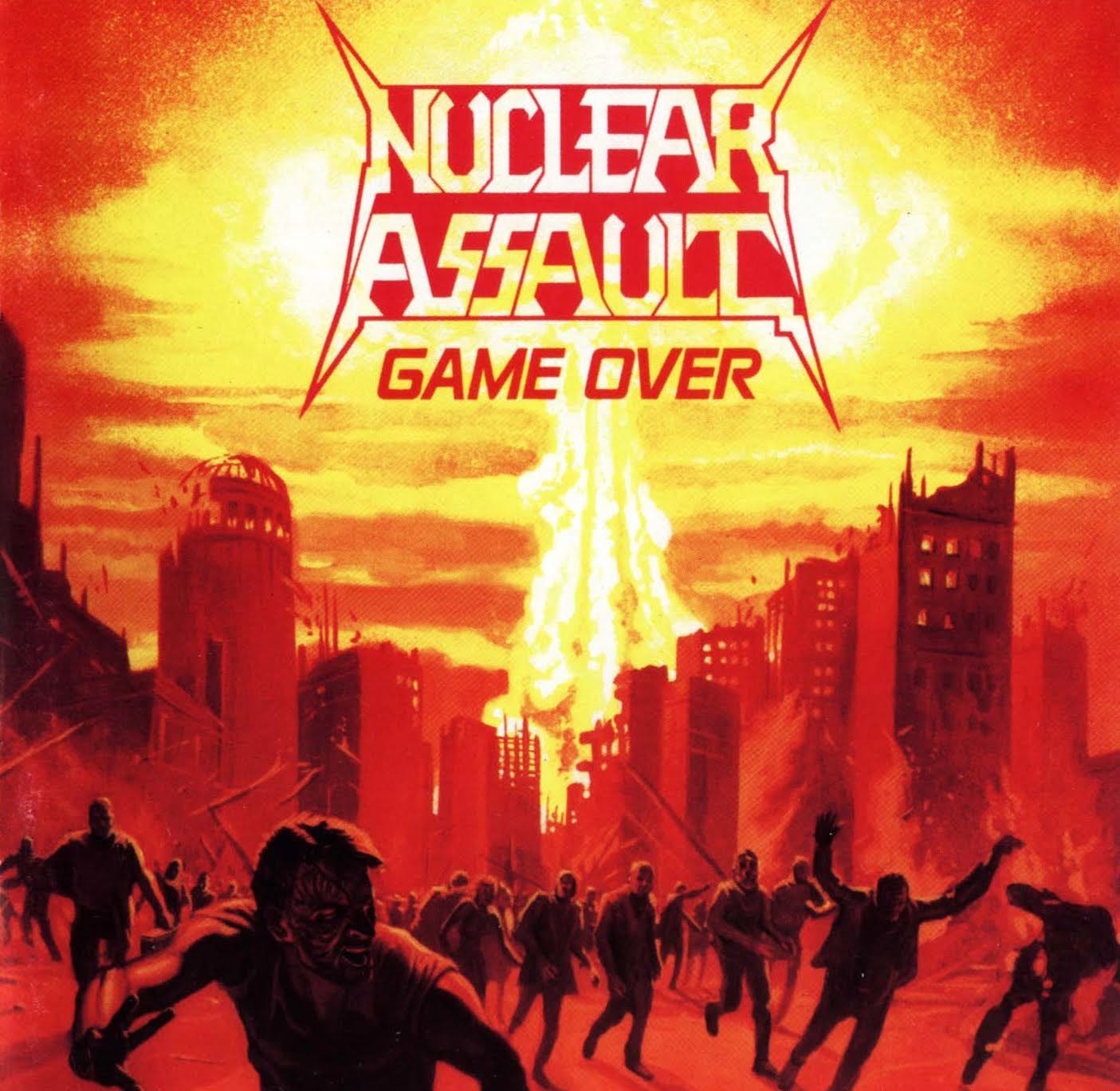
The song Best Defense by Atrophy speaks of the development of the arms industry to reproduce a bureaucratic power scheme and the concentration of economic capital.
The joke that the Pentagon has become
Winning a war is the last thing on their minds.
Professional promotion is all they care about.
Our poor go hungry in cities across the states
Defense contractors steal food right off their plates
Megadeth, for its part, asks: “Peace is for sale, but who’s buying?” Armed conflicts are a business for a large part of the establishment. The system claims to defend order and moral decency, but at the same time benefits from war and the oppression of other countries.
The U.S. involvement in senseless wars is another of the extended plots in the genre. The lyrics speak of the dehumanizing and alienating effects that war has on the population and, above all, on recruits.
Taking the perspective of a soldier receiving orders from their superior, Metallica portrays the absolute dehumanization of war in Disposable Heroes.
Child soldier, made of clay, now an empty shell
Twenty-one, only son, but served well
Raised to kill, not to care, do what we say
This idea of the soldier as an empty shell deepens in One, where humanity is literally imprisoned in a body without limbs, without senses. The soldier is no longer a man, but a disposable automaton, a killing machine condemned to oblivion.
Trapped in myself, my body is my cell
The landmine took my sight
Took my speech, took my hearing
Took my arms, took my legs
Took my soul, left me with a life in hell
The same theme is reflected in the song War Ensemble by Slayer: war transformed into a sport, where the only thing that matters is how many people you can kill. Atrophy narrates this more literally in Killing Machine: a 17-year-old who enlists in the army and gradually turns into a machine obsessed with killing. "Once you're dead, you'll be forgotten and replaced by someone new,” one of the verses states.
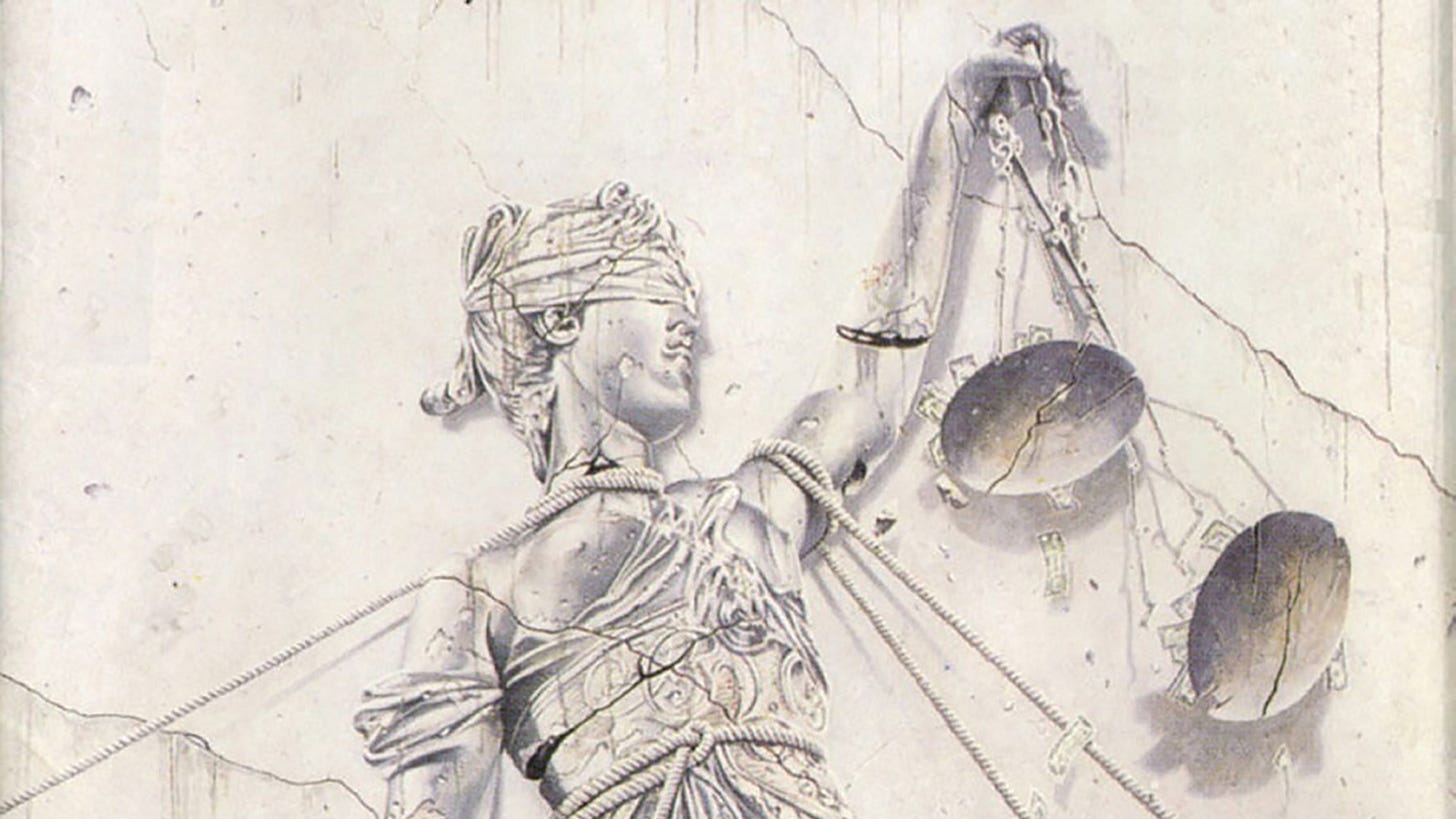
Surf Nicaragua by Sacred Reich takes a humorous approach to the subject. The song explains how recruits undergo a performance and play at being G.I. Joe. It also portrays how the system strips the soldier of purpose: they enlist for an ideal, to defend the 'American way of life', but are sent to fight in Nicaragua or to intervene in the internal affairs of nations they neither know nor care about. The 'fight for democracy' is just another empty shell.
The interference of security and intelligence agencies in internal and external political affairs is a concern expressed by some bands of the era. The Dutch band Asphyx in Serenade in Lead narrates, from the perspective of an intelligence agent, the criminal interventions serving dark interests.
I'm going to tear apart your society
Change the course of history
Time to break their passivity
Put an end to this stupid diplomacy
C.I.A., a song by Riot, tells the story from the perspective of an intelligence agent boasting about his authority and power. Like a cowboy, he acts outside the law: he is part of a privileged social elite, with the power to directly influence public and private affairs.
Other bands denounce the deliberate creation of internal disorder to build an enemy that justifies intervention in social conflicts. Chaosmöngers by Voivod describes how subversive organizations play the establishment: they create chaos, instill fear, and in this way, surveillance and social control are legitimized. When Freedom Dies by Nuclear Assault states this directly.
United in a time of need
Against a common enemy
The years of death endured, the years of pain
Against an evil force that is not in its right mind
We become the enemy!
When freedom dies for security
In the 1980s, television solidified as mass entertainment, and metal bands quickly became aware that this novelty, in the hands of the wrong people, would function as tools of manipulation.
Brainwashed by Nuclear Assault starts with tirades against the radio as a means to spread consumerism and shallow commercial music. It also describes television as a machine that batters the mind with biased news and stupid sitcoms. The consequence: a population that loves a system that despises it.
Ultimately, metal reveals that democracy is a facade. The real state is not one of laws, but the "Deep State": an oligarchy of generals, bureaucrats, and corporations that have hijacked popular sovereignty. For metal, the people are no longer sovereign; they are simply fuel for the machinery.
Conclusion
In 2009, Dave Mustaine, leader of Megadeth, defined his album Endgame as a warning against the "New World Order."
As a Christian, I believe that the 'endgame' is about a world government, a global currency. It's all part of a master plan. I know there will be a catastrophic moment. We are watching our country disintegrate right now, and it’s scary. That’s what 'Endgame' is about: educating our fans, showing them a bit of what’s going on inside the administration and that things haven’t changed at all; it’s all about people being led by people who have the money.
In Lying in State from the 2016 album Dystopia, one of the verses expresses the following:
What we are witnessing is the decline of Western civilization.
Crushing our potential and stacking it up, how will history portray us?
Attacking the family, attacking their faith and dreams.
Attack the body, and the head will fall.
His rhetoric is very close to that of the 4chan forums: the supposed conspiracy against 'Western values', the pursuit of a global government that eliminates nations...
Dave Mustaine stated that he is not part of or supports any political party. He expresses no sympathy for any leader. He maintains the anarchic and anti-establishment spirit of his origins.
James Hetfield, leader of Metallica and its main lyricist, said in a conversation with Joe Rogan in 2016 that he was tired of the political correctness of his hometown of San Francisco, California. He moved to Colorado, where he is in touch with nature and can lead the quiet life he says he needs. This state allows him to pursue his unique hobby of hunting animals.
In the past, the vocalist of Metallica expressed in the media that he has never voted in any election; he is not interested. He declares that he does not support any political party.
Some veteran musicians from the thrash scene today flirt ideologically with the conservative right.
This shift towards libertarian conservatism responds to a key phenomenon: the establishment — financial corporations, intelligence agencies, universities, the media, Hollywood — absorbed the counterculture.
The center of intellectual, economic, and political power has taken shape in a "well-thinking" cathedral. They incorporated environmentalism, feminism, the Black Lives Matter movement, and LGBTIQ+ pride. In doing so, they turned them into commodities and mechanisms of ideological control. Today, the statu quo is "well-thinking"; that’s why the metalhead — genetically anti-establishment — feels more at home with the right than with institutional progressivism.
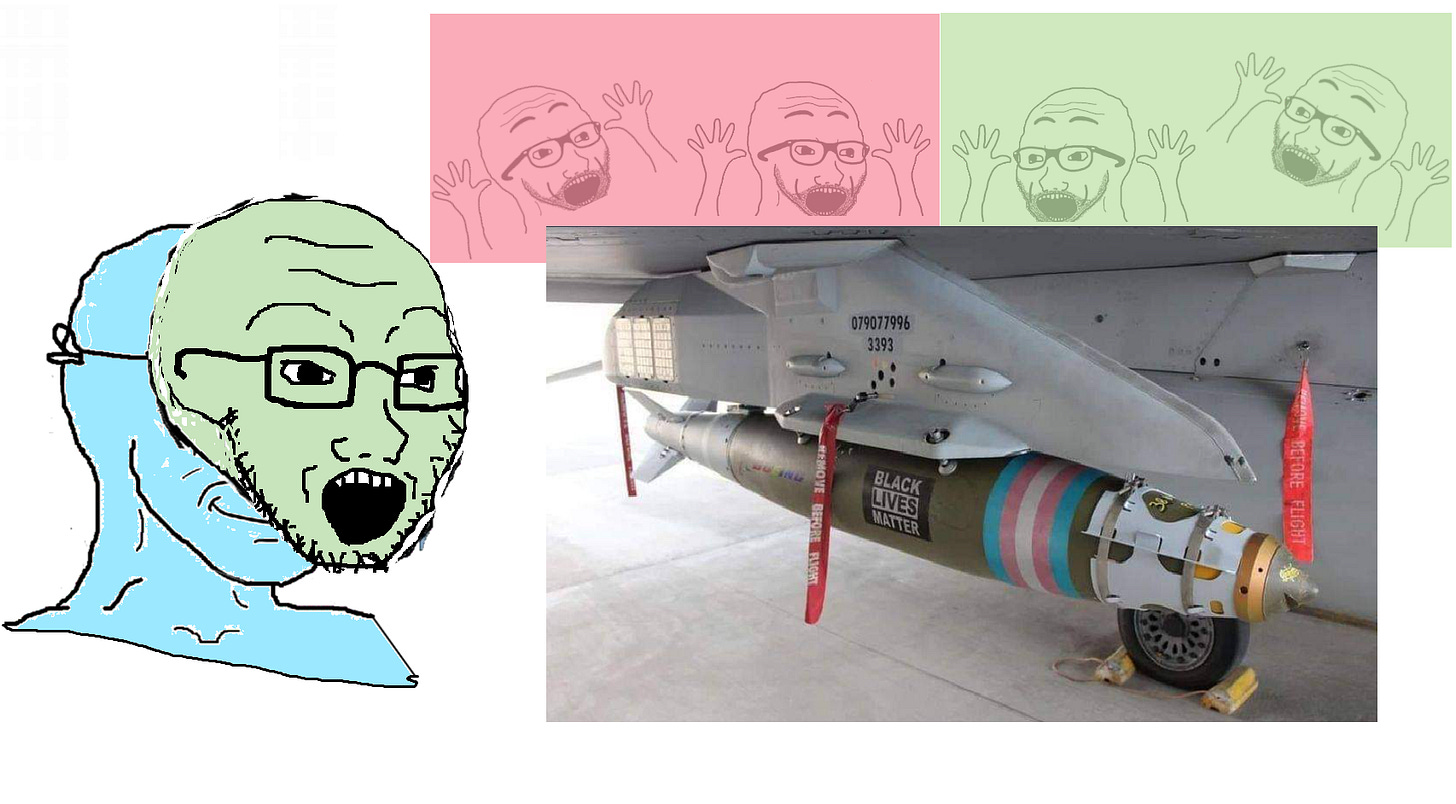
However, 21st-century thrash keeps the flame alive. Bands like Municipal Waste, Havok, and Violator have picked up the genre's tropes, swinging between antifascism and a critique of the Dual State.

Thrash doesn’t fit into the traditional political compass. It’s a symptom of the times: the bewilderment in the face of an increasingly globalized world, where individuality dissolves in the complex web of inaccessible corporate interests. In this crisis of classical institutions, thrash was one of the first musical genres to tackle the issue in its complexity: digging down to the roots of decay, to that bone that no one wants to see.