A Catalog of Argentine Dinosaurs: 20th Century Discoveries

24 de sep. de 2025 — Luis Paz
Just hours ago, in the early morning of this Wednesday the 24th, I was reviewing this article when I saw, almost in real time, a piece of news that gave it new meaning and forced me to start it differently: the confirmation that remains found in 2019 at the headwaters of the Chico River, near Lago Colhue Huapi, in southern Chubut, did indeed correspond to a new dinosaur that inhabited Argentine soil about 70 million years ago.
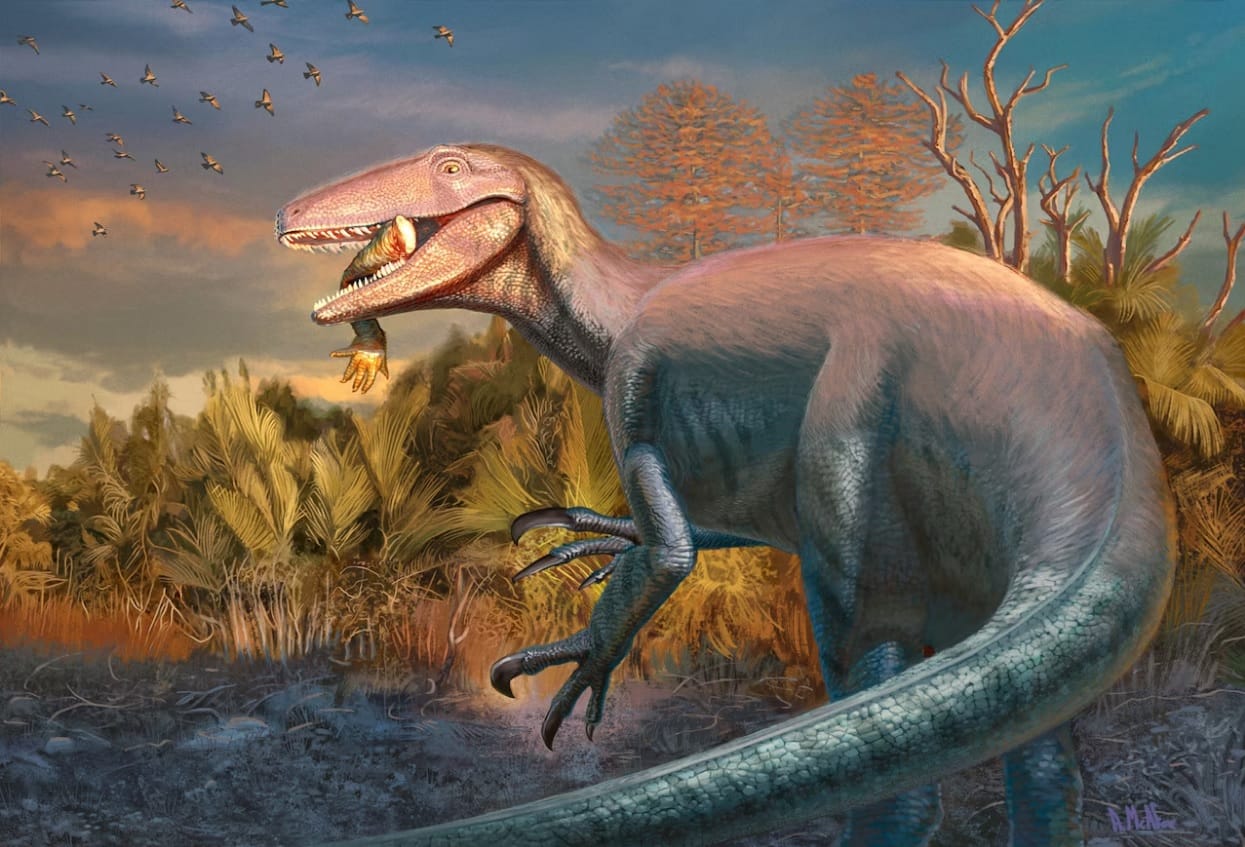
It's the Joaquinraptor casali, seven meters long and weighing a thousand kilograms. Elongated skull, long tail, and considerable arms with brutal claws. The closest thing to a Deathclaw from Fallout that ever walked the country. The image below is an illustration by Andrew McAfee for the Carnegie Museum of Natural History. Yes, it ate crocodiles.
But to get to this creature we need to go quite far back, 132 years into the past, to the beginnings of Argentine paleontology and the pioneering discoveries of 1893. In this first installment of the Catalog of Argentine Dinosaurs at 421 we'll cover those early precedents and everything that happened during the 20th century.
The Argentine singularity
The Argentine paleontology, or at least the discovery and study of dinosaur remains in the country, is a tradition that has produced findings across three different centuries. The journey begins with the naturalist exploration of 19th-century pioneers, with their collecting and observations; moves to the institutionalization of study in the 20th century, with universities, ministries, museums, and CONICET; and arrives at the 21st century adding the application of new technologies and the design of heritage protection frameworks.
Along that arc, we go from finding little bits of bones or loose teeth to discovering nearly complete skeletons or whole nests of fossil eggs, reaffirming Argentina's singularity. Because just as our ufology is unique in the world, this land also contributed pivotal information for the study of dinosaurs and other prehistoric life forms.
We're a reference point due to the exceptional record of Mesozoic remains in Patagonia, the Northwest, and fundamentally the basin of Ischigualasto (Valley of the Moon), San Juan. This unique site where some of the oldest known dinosaurs in the world were found, such as Herrerasaurus ischigualastensis, in 1963, the beginning of modern paleontology in Argentina and marking South America as a crucial evolutionary stage for the most iconic reptiles of the past.
In the '80s came the northern Saltasaurus loricatus and the Patagonian Carnotaurus sastrei -- a short-armed hug for Juan Ruffo --, which already began to show strong differences between the creatures from the south and those from the other hemisphere. In the '90s came the Amargasaurus cazaui and the patriotic Argentinosaurus huinculensis -- on your feet, people -- one of the most colossal creatures to ever walk the face of the earth.
And the crowning glories don't end there: later would come the titanic sauropods that pushed gigantism to biological limits, distinctive and unique theropods that existed nowhere else, basal Triassic faunas that explain the origin of many dinosaur groups, and records of some singular reproductive strategies like nesting sites. Among so many milestones, other key figures emerge such as Jose Bonaparte and Osvaldo Reig. And sustained public outreach from institutions like the MEF, in Trelew, or the Natural Science Museums of La Plata and Buenos Aires.
Legally, the findings and discoveries are covered by modern legislation and are cultural assets recognized by Law 25,743 on the Protection of Archaeological and Paleontological Heritage, from 2003, which regulates their protocols and forms of safeguarding, circulation, and study. But everything that's been happening in the 21st century regarding Argentine dinosaurs will come in part 2.
The dinos are ours, the pioneers are not
Like it or not, the first to describe or propose native species from Argentina based on fossil finds were foreigners. In 1893, the British naturalist Richard Lydekker defined the first two local dinosaurs: the Titanosaurus australis (today Neuquensaurus australis) and the Argyrosaurus superbus, both Patagonian and with descriptions still under debate.
In 1899, with a chunk of femur and a tooth found in Santa Cruz, Italian-Argentine Florentino Ameghino erected the Loncosaurus argentinus. In 1901 it was the Englishman Arthur S. Woodward, with the Genyodectes serus. And in 1929, the German Friedrich von Huene added the Laplatasaurus araukanicus (found in Neuquen, mind you) and the Antarctosaurus giganteus. And although I got excited thinking that by 1947 we had the first Argentine dinosaur defined by an Argentine scientist, I took the bait: the Angel Cabrera who placed the Amygdalodon patagonicus was actually Spanish.
But then, 1963 saw the big bang of Argentine paleontology proper, the meeting point between native species and native observer, with the description by Osvaldo Reig of Herrerasaurus ischigualastensis, a sort of velociraptor criollo. The creature that kicks off our the Catalog of Argentine Dinosaurs, with ten species found between 1963 and 1998.
Herrerasaurus ischigualastensis (1963)
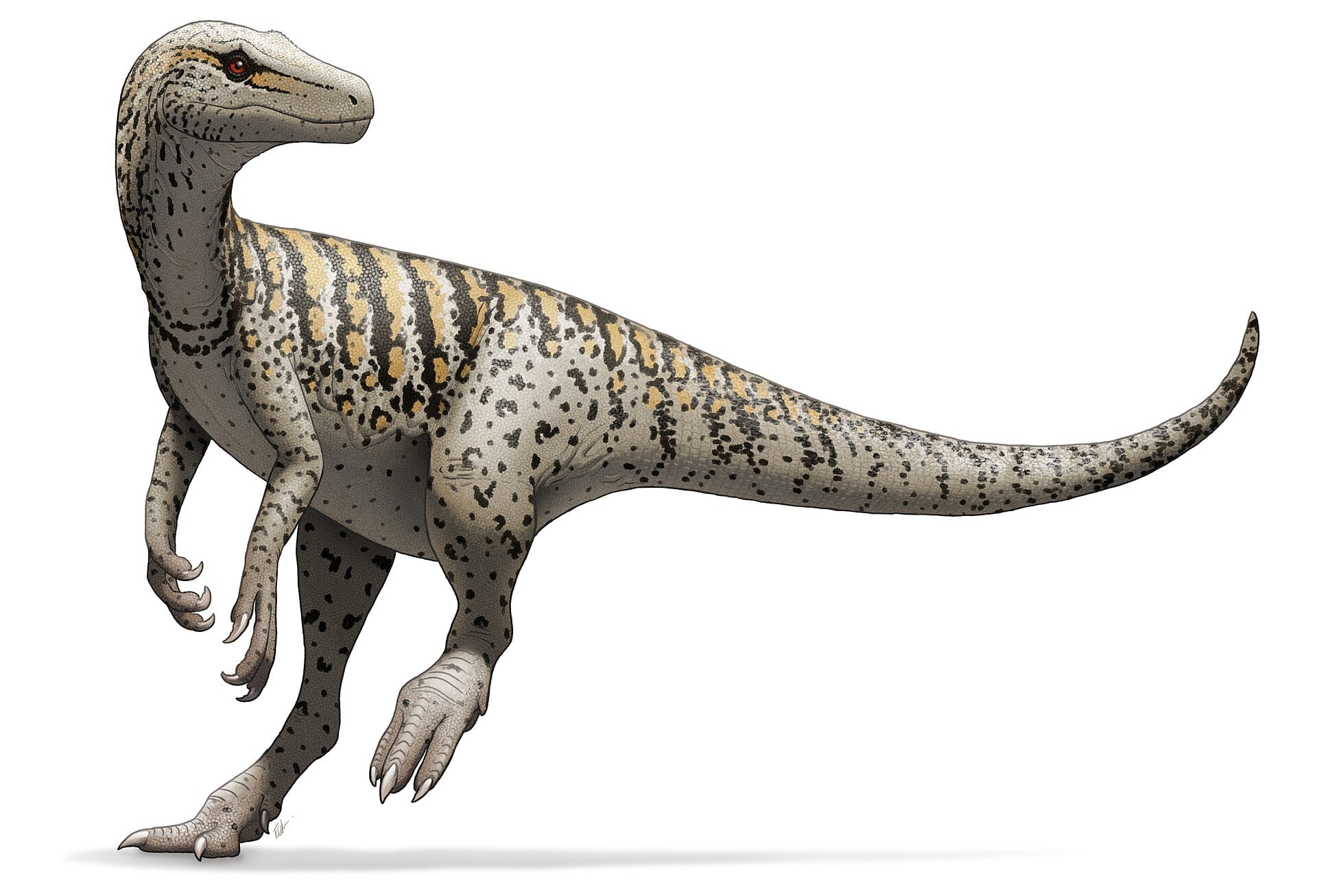
Described by Osvaldo Reig in 1963, Herrerasaurus ischigualastensis comes from the Ischigualasto Formation, in San Juan, dated to the Carnian (Late Triassic, ~231 Ma - million years ago). The holotype (PVL 2566) includes a nearly complete skull and much of the skeleton. Named in honor of Victorino Herrera, the local guide who discovered the first remains in 1959 in the "Valley of the Moon."
It measured 3 to 6 meters long and weighed about 200-300 kg. It was bipedal, with robust hind legs and shorter forelegs equipped with claws. Its elongated skull had curved, serrated teeth adapted for a carnivorous diet.
Its scientific importance is enormous: it represents one of the oldest known dinosaurs and has been central to debates about the early evolution of theropods and saurischians. The Ischigualasto fossil assemblage also shows the coexistence of Herrerasaurus with other basal dinosaurs and synapsids, offering a unique view of Triassic ecosystems.
Saltasaurus loricatus (1980)
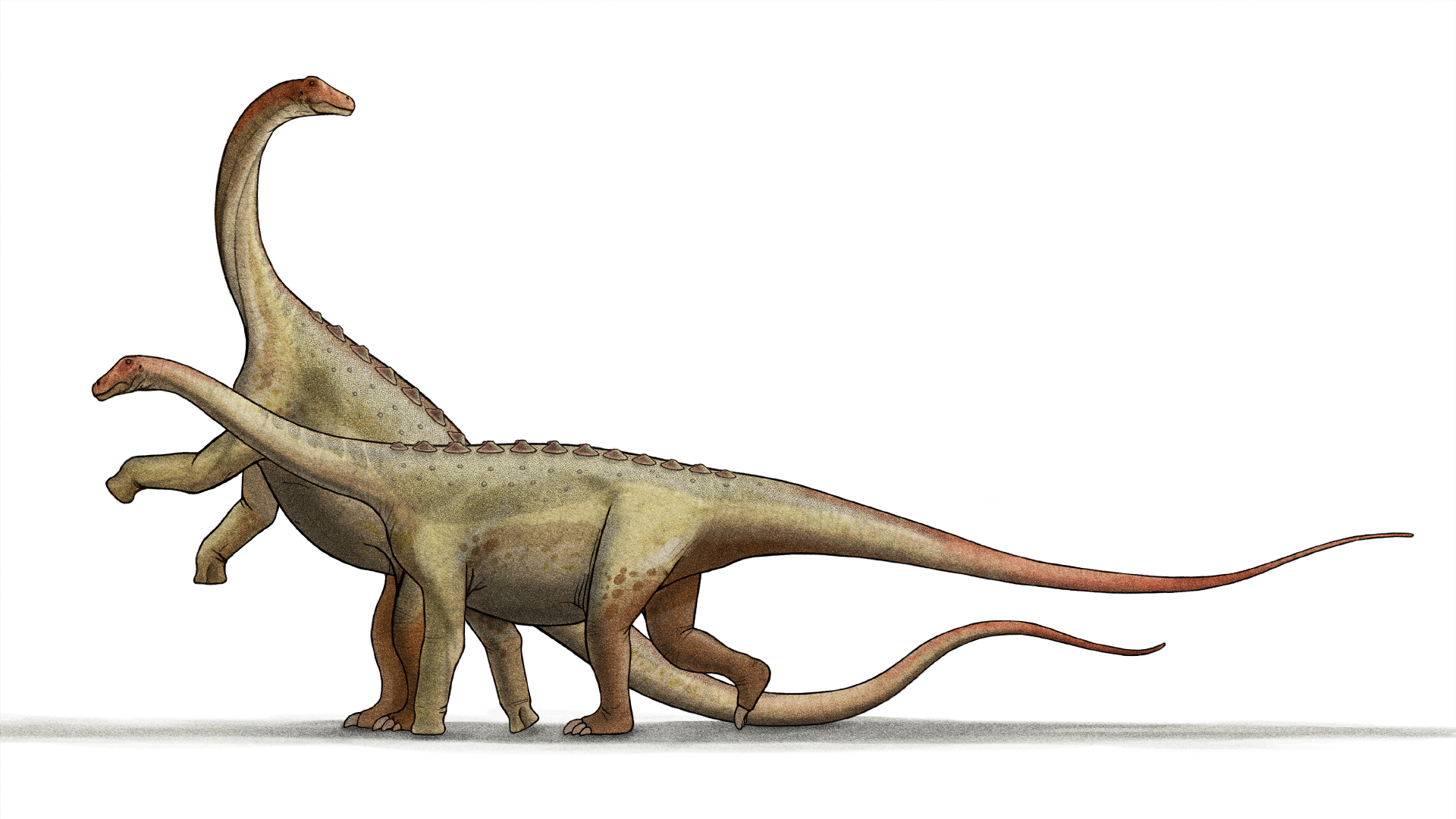
Jose Bonaparte and Jaime Powell described in 1980 Saltasaurus loricatus based on remains found in the Lecho Formation (Campanian-Maastrichtian, Late Cretaceous ~73 to 66 Ma) in Salta. Saltasaurus means "reptile from Salta," while loricatus means "protected by small armored plates."
Era un titanosaurio de pequeño tamaño en comparación con otros miembros del grupo, de unos 12 metros de largo y un peso máximo de 6 toneladas. Su rasgo más destacado es la presencia de osteodermos (placas óseas dérmicas) en el dorso, constituyendo la primera evidencia clara de “armadura” en un saurópodo.
The holotype includes vertebrae, limb bones, and dermal plates. The combination of reduced size, gracile proportions, and dermal armor distinguishes Saltasaurus from other giant titanosaurs.
Abelisaurus comahuensis (1985)
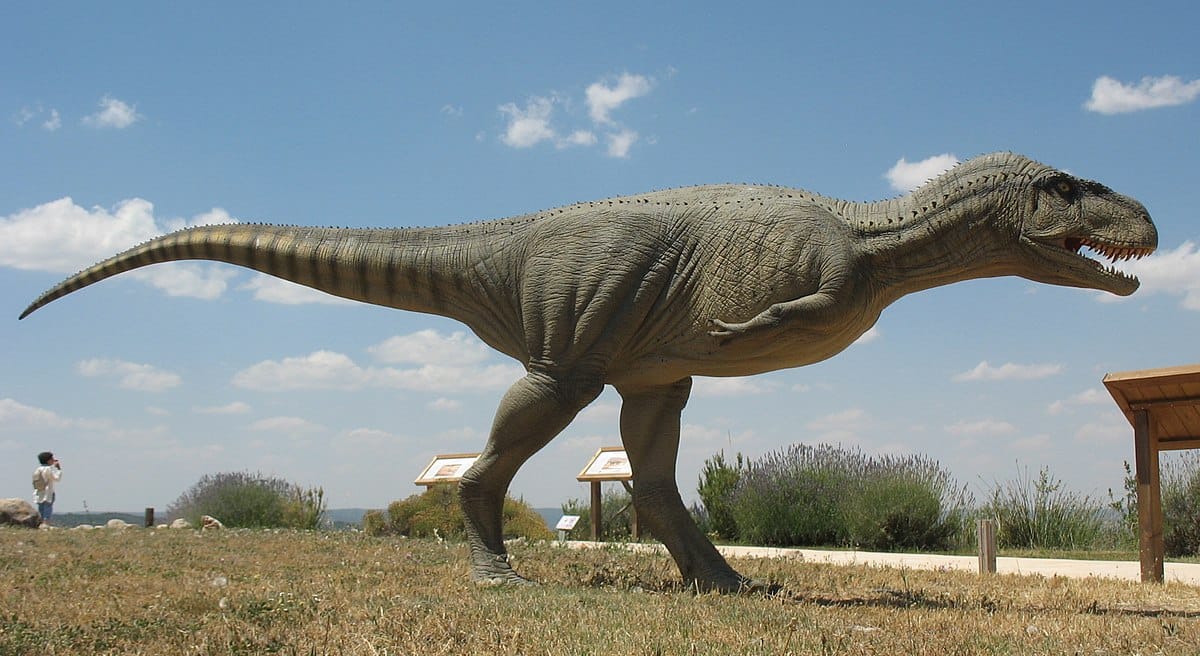
Abelisaurus was described by Bonaparte and Novas in 1985 based on an incomplete skull (holotype MC 11098) found in the Allen Formation (Late Cretaceous, Rio Negro/Neuquen ~83 Ma). Its name means "Abel's lizard from Comahue."
It's estimated to have reached 7-9 meters in length and 1.6 tons. Its robust skull, with a powerful jaw armed with long, laterally compressed teeth, places it among the abelisaurids, a group characteristic of Gondwana. And although it didn't possess large horns or bony structures like its relatives, it had two small rough crests on its head.
Although known only from its skull, the find was fundamental because it demonstrated the existence of a previously unknown lineage of theropods. Its description preceded the discovery of more complete skeletons like Carnotaurus and other Patagonian abelisaurids, consolidating Argentina's importance in theropod paleontology.
Carnotaurus sastrei (1985)
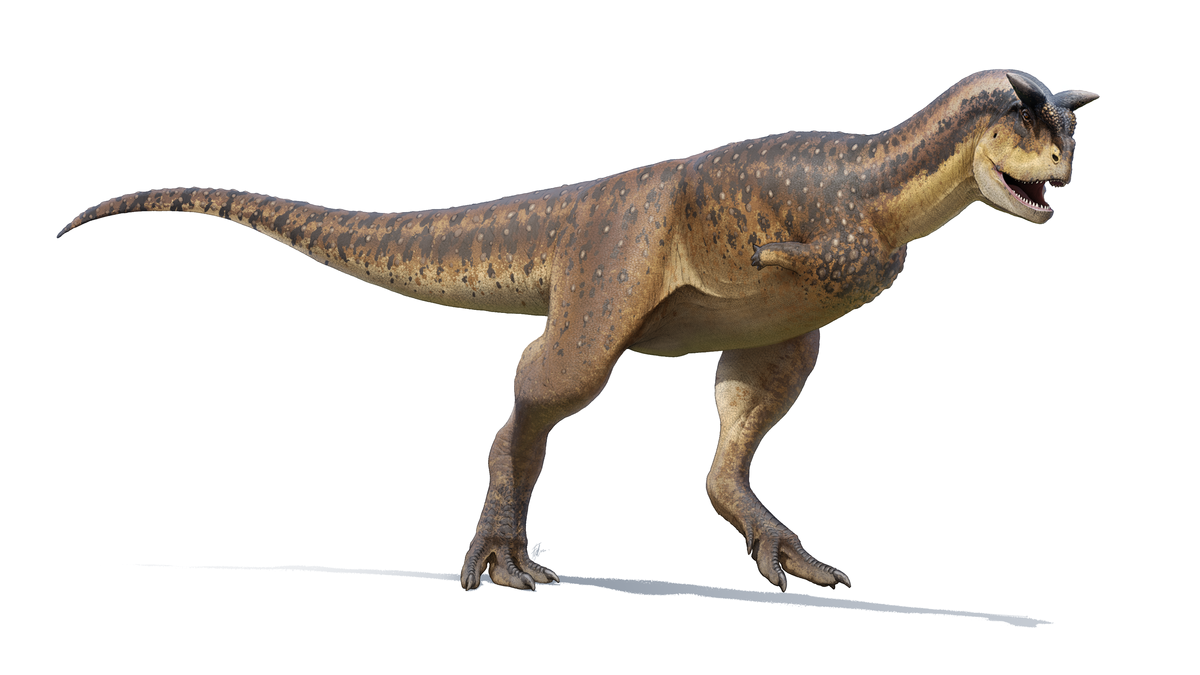
Discovered in 1984 in Chubut and described in 1985 by Bonaparte, Carnotaurus sastrei comes from the La Colonia Formation (Late Cretaceous, ~72-69 Ma). The holotype specimen (MACN-CH 894) is nearly complete and includes an exceptionally well-preserved skull. Its generic name comes from the Latin carnis meaning "meat," and torus, meaning "bull," making it the "carnivorous bull." Meanwhile, sastrei honors Anselmo Sastre, owner of the ranch (Pocho Sastre) where the first and only specimen was found.
At 7-8 meters long and 1.5 tons, it's distinguished by its horns above the eyes, short snout, and extremely reduced forelimbs. Skin impressions were found showing a mosaic of non-overlapping polygonal scales. Additionally, the skin was embedded with small osteoderms aligned parallel to the spine, similar in appearance to modern crocodiles.
The complete skeleton allowed detailed reconstructions of abelisaurid anatomy and biomechanics. Today it is one of Argentina's most iconic carnivorous dinosaurs, key to understanding this group's radiation across Gondwana.
Amargasaurus cazaui (1991)
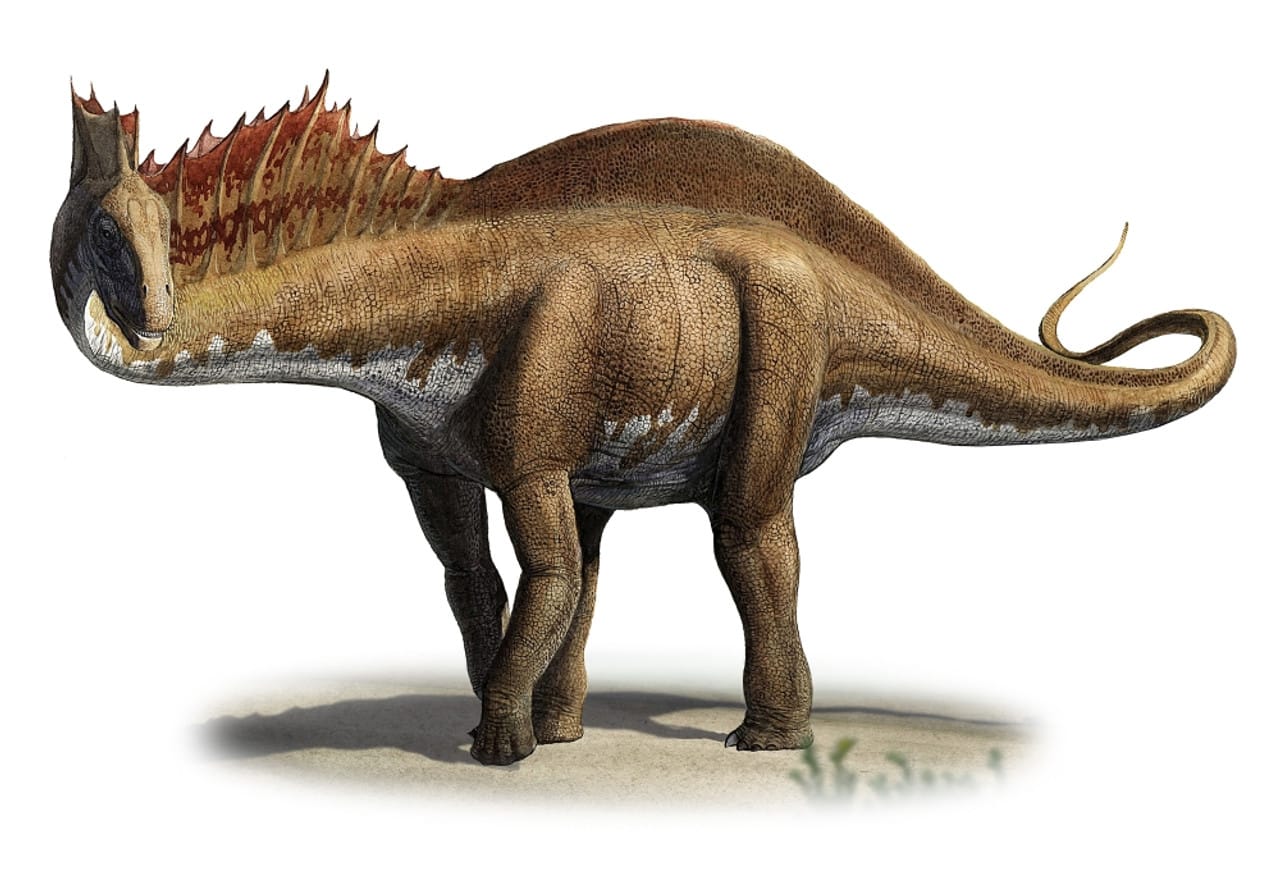
Described in 1991 by Salgado and Bonaparte, Amargasaurus comes from the La Amarga Formation (Barremian-Aptian, Early Cretaceous, Neuquen ~129 to 122 Ma). The holotype (MACN-N 15) includes a nearly complete skeleton. Its name means "lizard from La Amarga," in reference to the La Amarga Formation where it was discovered. The specific epithet, cazaui, honors geologist Dr. Luis Cazau.
About 10 meters long and weighing 3-4 tons, it belongs to the dicraeosaurids, and its distinctive feature is the series of extremely elongated, bifurcated cervical neural spines, possibly covered by a horny structure. It's believed these were used for display, combat, or defense.
This find expanded knowledge about diplodocoid sauropods in Gondwana and revealed remarkable morphological diversity. It is one of Argentina's most singular sauropods and a recurring figure in studies on the function and evolution of dermal structures in dinosaurs.
Eoraptor lunensis (1993)
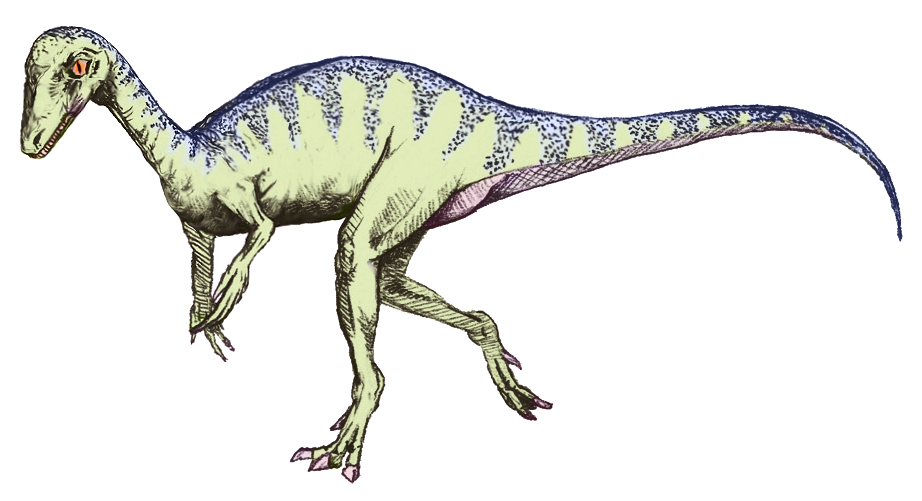
Eoraptor was described in 1993 by Sereno, Novas, and collaborators, based on a nearly complete skeleton found in Ischigualasto, San Juan. It dates from the Carnian (Late Triassic, ~231 Ma). Its name means "the first hunter of the Valley of the Moon."
It measured approximately 1 meter long and weighed 10 kg. It had a light skull with heterodont teeth, meaning it had both carnivore-type teeth and others similar to herbivore teeth, suggesting an omnivorous diet.
It is considered one of the most primitive known saurischians. Its excellent preservation has been crucial for understanding basal dinosaur anatomy and the earliest stages of their diversification.
Argentinosaurus huinculensis (1993)
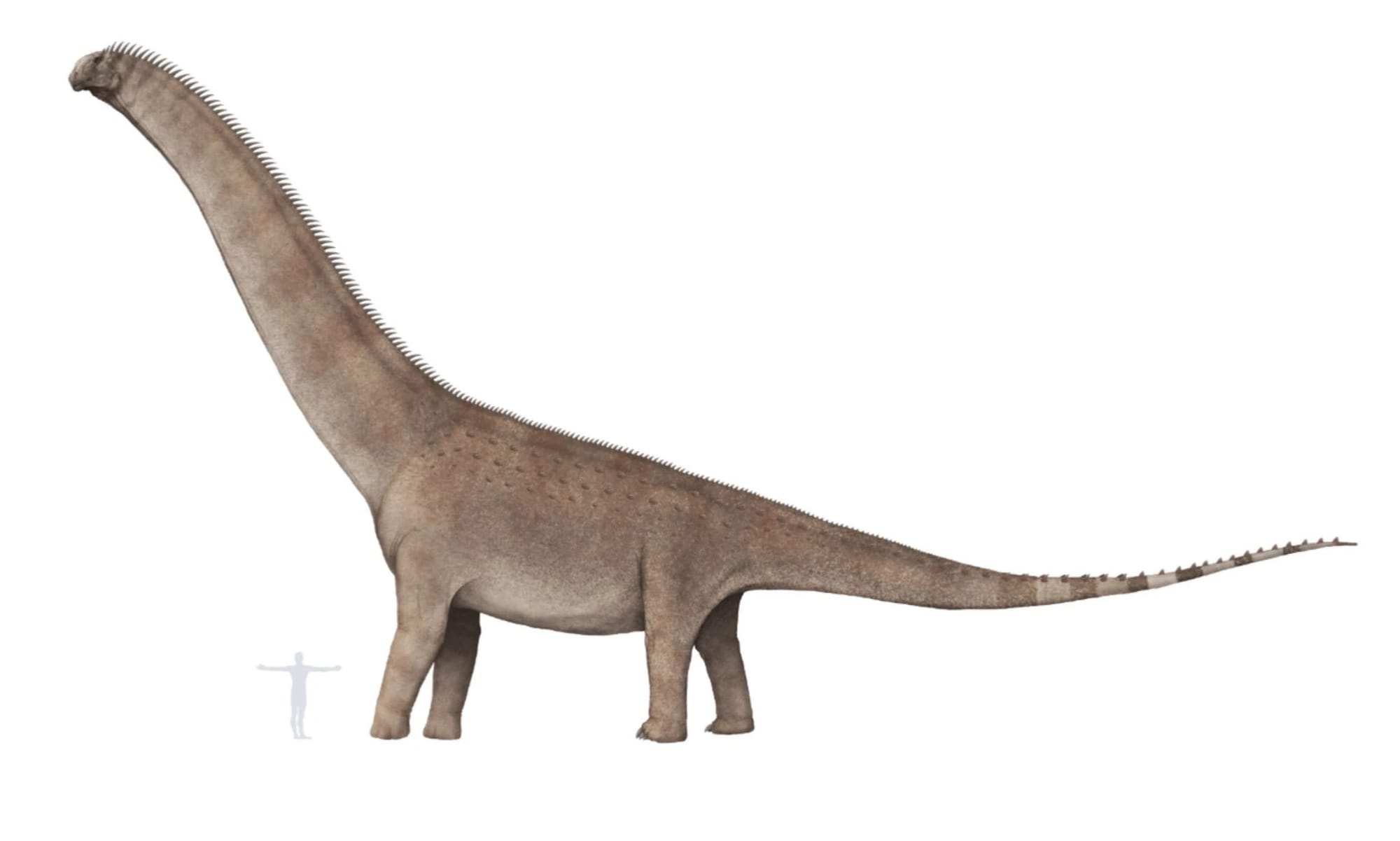
Described by Bonaparte and Coria in 1993, Argentinosaurus comes from the Huincul Formation (Cenomanian-Turonian, Late Cretaceous ~96 to 92 Ma) in Neuquen. It was found in 1987 by a rancher and excavated in 1989. Its name means "reptile from Argentina from Plaza Huincul."
Although the material is incomplete (mainly vertebrae and limb bones), it's estimated to have exceeded 30 meters in length and weighed several dozen tons, making it one of the largest known land animals.
The description of Argentinosaurus marked a milestone: it consolidated the image of Patagonia as a land of giants and opened a research path into extreme gigantism in titanosaurs, with subsequent comparisons to Patagotitan and Dreadnoughtus.
Giganotosaurus carolinii (1995)
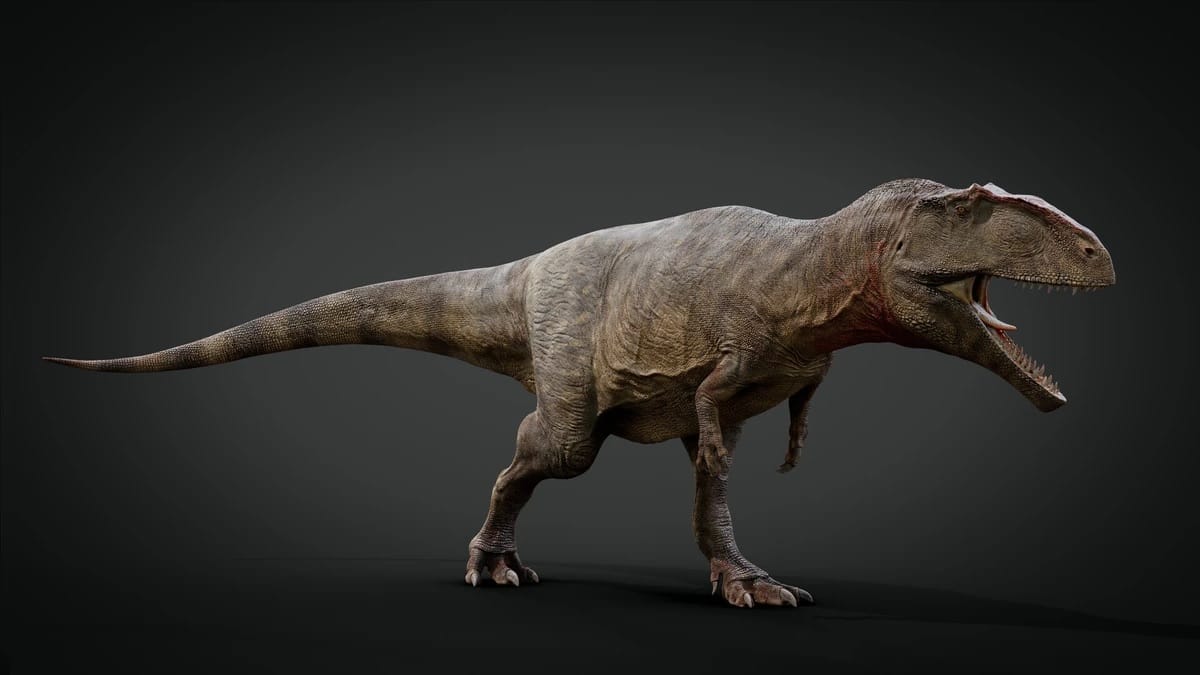
Described by Coria and Salgado in 1995, based on remains found in 1993 by amateur Ruben D. Carolini in the Candeleros Formation (Cenomanian, ~98 Ma) in Neuquen. The holotype (MUCPv-Ch1) includes much of the skull, vertebrae, and postcranial elements. Its name comes from the Greek gigas, "giant," notos meaning "south," and saurus "lizard," meaning "the giant lizard of the south." Its specific name recognizes the amateur who discovered its remains in 1993, Ruben Carolini.
It measured about 12-13 meters long, with an estimated weight of 8 tons. Its skull reached almost 1.8 meters, with serrated teeth adapted for a carnivorous diet. It belonged to the carcharodontosaurids, a group of large theropods from Gondwana.
The importance of Giganotosaurus lies in having demonstrated that South America harbored predators of comparable size to Tyrannosaurus rex. Furthermore, its association with remains of large sauropods suggests its role as an apex predator in the Cretaceous ecosystems of Patagonia.
Gasparinisaura cincosaltensis (1996)
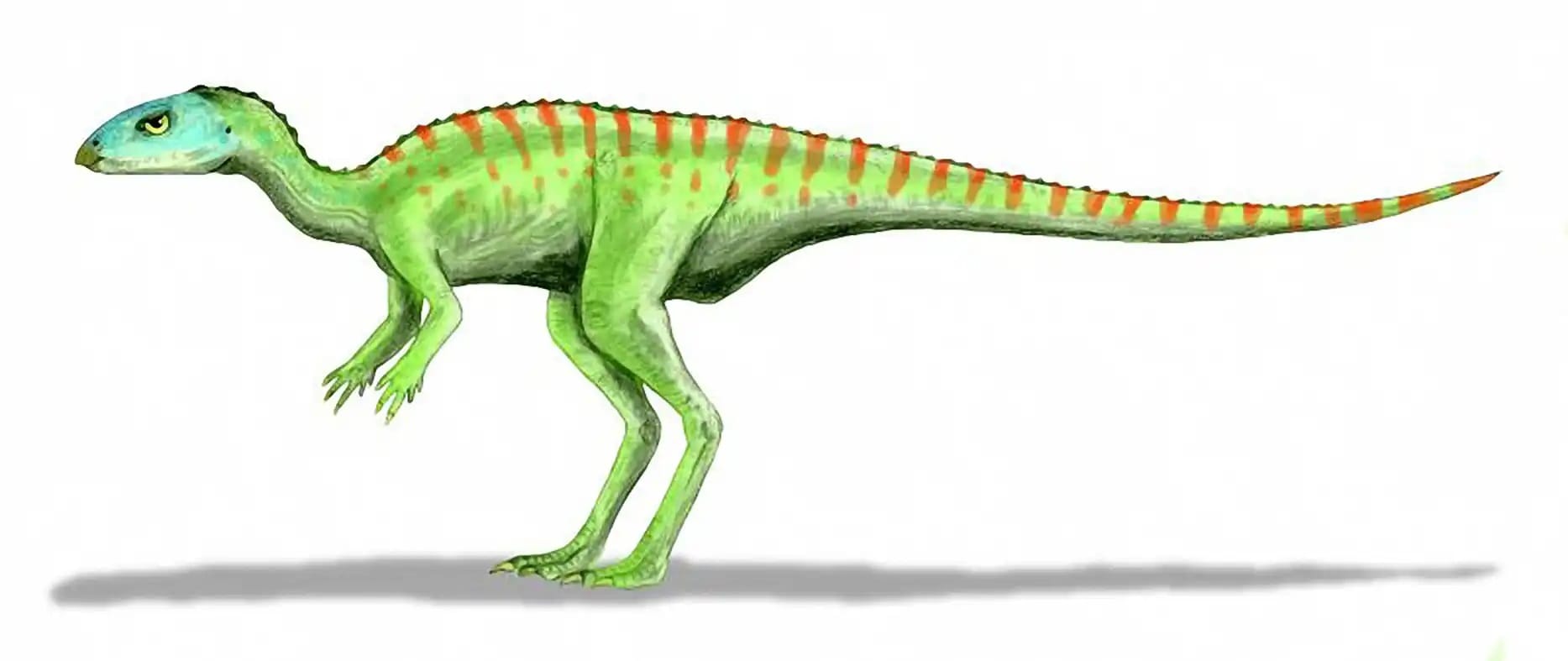
Found in 1992 near Cinco Saltos, Rio Negro; described by Coria and Salgado, from the Anacleto Formation (Neuquen) of the Late Cretaceous (~82 Ma). Its name is dedicated to Argentine paleontologist Zulma Brandoni de Gasparini, meaning "Gasparini's reptile from Cinco Saltos." The holotype (MUCPv-208) consists of a partial skeleton with a complete skull.
It was a small bipedal ornithopod of 1.5 m in length and 13 kg in weight. With a rounded head featuring very large eye sockets positioned high on the skull. It had slender hind legs and gracile forelimbs. This fossil presented gastroliths, small stones voluntarily ingested by the animal that helped grind plant material, indicating its adaptation to herbivory.
It represents the first well-documented ornithopod from South America. Its discovery expanded knowledge about the distribution of iguanodonts in Gondwana and provided a more complete picture of the ecological diversity of the Patagonian Cretaceous.
Megaraptor namunhuaiquii (1998)
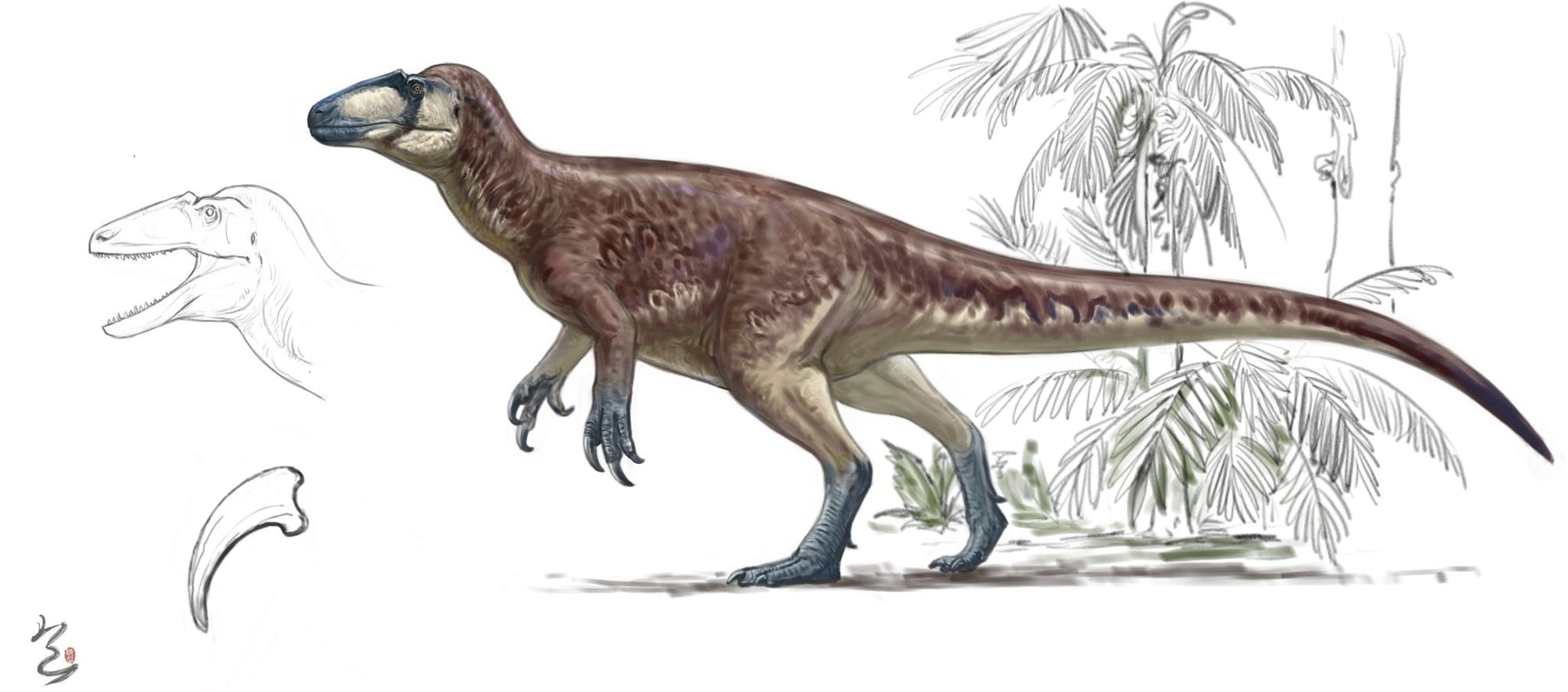
Described by Novas based on remains from the Portezuelo Formation (Turonian-Coniacian ~90-88 Ma) in Neuquen. The holotype (MCF-PVPH 79) consisted only of fragmentary limb bone material. Initially interpreted as a foot, it was later confirmed that its giant claw belonged to the hand when a more complete specimen was found in 2004. The genus name comes from the Greek mega, meaning "great," and from the Latin raptor, "thief," while the species name derives from Mapudungun namun, meaning "foot," and huaiqui, "lance." Therefore, it would be the "giant thief with a lance on its foot."
It reached 8-9 m in length and around 1 ton in weight. Its hands were elongated with large sickle-shaped claws, making it a unique feature among large carnivorous dinosaurs.
It belongs to the megaraptorids, a singular group of South American theropods. Its discovery revealed a unique lineage of predators in Gondwana, with adaptations different from other theropod groups. Its exact evolutionary relationship with other groups remains a matter of debate.