Dungeon Synth in Argentina
A child of black metal and role-playing games, this genre evokes epic worlds with 80s keyboards. From being a solitary refuge during the pandemic, the Argentine scene is now emerging with force: labels, fanzines, and events such as Umbrales show that the genre is more alive than ever.
6 de mar. de 2026 — Ariel Pukacz
During the 1980s, the United States experienced the satanic panic: suburban parents were alarmed that their children were getting involved in strange things. The "strange things" were pretty innocent and incel-like: hanging out in their rooms with friends listening to heavy metal and playing role-playing games. Both the music genre and the mind theater evoked an imagery that, according to parents, had satanic undertones. It's true there were some brutal murder cases, but they were scapegoated to associate metal and twenty-sided dice with eternal darkness.
The dungeon synth is a musical genre that intertwines both worlds, mentally crafting an epic fantasy universe rooted in black metal, but interpreted through synthesizers and keyboards reminiscent of the 1980s. It’s the perfect soundtrack for Dungeon & Dragons sessions, Magic card tournaments, and even video games. This is music with a heavy conceptual load, capable of evoking a concrete imagery, much like surf music or the Muzak company, which was responsible for creating ambiance in elevators and stores across the United States.
101 dungeon synth
In 1981, Lester Bangs wrote an extensive piece on the origins of punk, listing a series of aesthetic thefts that preceded the music and traced back to Napoleon Bonaparte. His point was that it’s always possible to look further back, but a consensus starting point is necessary, as has been done in Argentine rock with La Balsa. The same applies to dungeon synth: I like to consider the pioneers of German kosmische music, with their passages of synthesizers and concrete music, as its genesis. This crossover makes sense when you take as an example the first EP by the Norwegians Mayhem, “Deatcrush,” from 1987, which included a quasi-martial intro performed by Conrad Schnitzler, founder of Tangerine Dream and Kluster. This same influence was key to the work of Jim Kirkwood. The Brit is the father of the genre: his first album, “Where Shadows Lie”, was released in 1990 and, while it contains all the elements of what we now know as dungeon synth, its proposal is closer to Vangelis soundtracks than to Emperor.
Kirkwood's work emerges from synthesizers that narrate instrumental passages conceptually and narratively inspired by epic fantasy writers like Michael Moorcock and J.R.R. Tolkien. Middle-earth was also crucial for Varg Vikernes, the murderer behind Burzum, one of the most important and infamous names in Norwegian black metal, who has also been a major figure in shaping dungeon synth. Since almost the beginning of his solo career, his albums have featured songs made entirely of synthesizers and with a full dungeon synth atmosphere (the closing track of his first album is titled Dungeons of Darkness).
Around the same time, Mortiis, the original bassist of Emperor, shaped his ideas under the concept of dark dungeon music with the release of his 1993 demo “The Song of a Long Forgotten Ghost,” composed of a single track lasting nearly an hour. Mortiis's distinctive look is far from classic black metal: he doesn’t use corpse paint but rather plastic prosthetics that make him look like an orc. Over the years, Mortiis developed different aesthetics and sound explorations (some more minimalist, others closer to synthpop and even industrial music) which he referred to as “eras”; he even recorded under different aliases, a common practice in the genre.
Until now, what was common was that this music was primarily created by members of black metal bands and led by synthesizers that evoke fantastic and epic worlds, but there was no consensus on what to call this music. Other foundational artists like Pazuzu or Depressive Silence didn’t label what they did; everything fell under a broad spectrum of dark ambient. The aesthetics and sound of this unnamed music began to replicate and amplify globally until in 2011, retroactively, fan Andre Werdna gave it its definitive name by creating the blog Dungeon Synth. This need to explain a past sound from the present is not new, whether it’s with the compilation Nuggets, curated by journalist Lenny Kaye (who later became Patti Smith's guitarist), which helped shape what we now know as garage rock, or the compilations of lost rhythm & blues, listened to by Mods, which were dubbed freakbeat.
The inaugural post of the blog, published on March 17 at 8:36 PM, explained two decades of music:
“Dungeon synth is the sound of ancient crypts. The breath of tombs, which can only be adequately conveyed through primitive, necrophilic, lo-fi music, forgotten and ignored by the mainstream society. When you listen to dungeon synth, you are consciously choosing to spend your time in a cemetery, contemplating, by candlelight, a dark tome that holds subtle secrets about places that any sane person would avoid. I will do everything I can to make you, dear readers, familiar with this genre. This genre that only attracts the most tormented outcasts, those who long for the forgotten magic of the dead, to remain forever in the shadows of decaying graves.”
The Argentine pioneers
While since the pandemic we can talk about a local dungeon synth scene, there have been cases of artists who took their first steps long before. The first artist known in our country is the mysterious Friedrich Curwenius. In 2002, he released “The Desolation of the Blandstein” under his alias Mitternacht. This is an album that takes elements from melodic black metal and dark ambient, with orchestrations, fast drums, and monologues that provide a narrative and conceptual thread.
“Dungeon synth is perhaps the most suitable ambient genre for storytelling, even without lyrics. A story can be told just with the titles of the songs: the composition of each piece must be atmospheric enough to take the listener's mind to the place it wants to go; being purely musical could influence (or not) the quality of the narrative. Of course, adding lyrics always allows for expanding the story,” he explained in an interview with the Dungeon Synth blog in 2013.
It’s common for a single artist to spread a ridiculous amount of parallel projects that play with different aesthetics or subgenres. Over the years, Curwenius has embodied bands like Goblintropp, Eislandshaft, and Vridd Gren.
The next step was taken by Unsilent and his project Amólfar in 2009. Unsilent arrived at these sounds during the 1990s when he started listening to death and black metal. His first steps in the style were with the Reason software, but over time he began incorporating real instruments. Besides Amólfar, he has been part of the black metal duo Invisvm and has other projects like The Descent Of The Sun, Funus Tristitiae, and Beneath the Wind. “In general, I like to create music that has different concepts like nature or religion itself, like one of my projects Funus Tristitiae, which is funeral doom inspired by cemeteries,” Unsilent explains, who, although he has participated in local compilations and celebrates the growing number of projects, tends to stay somewhat on the sidelines of the scene.
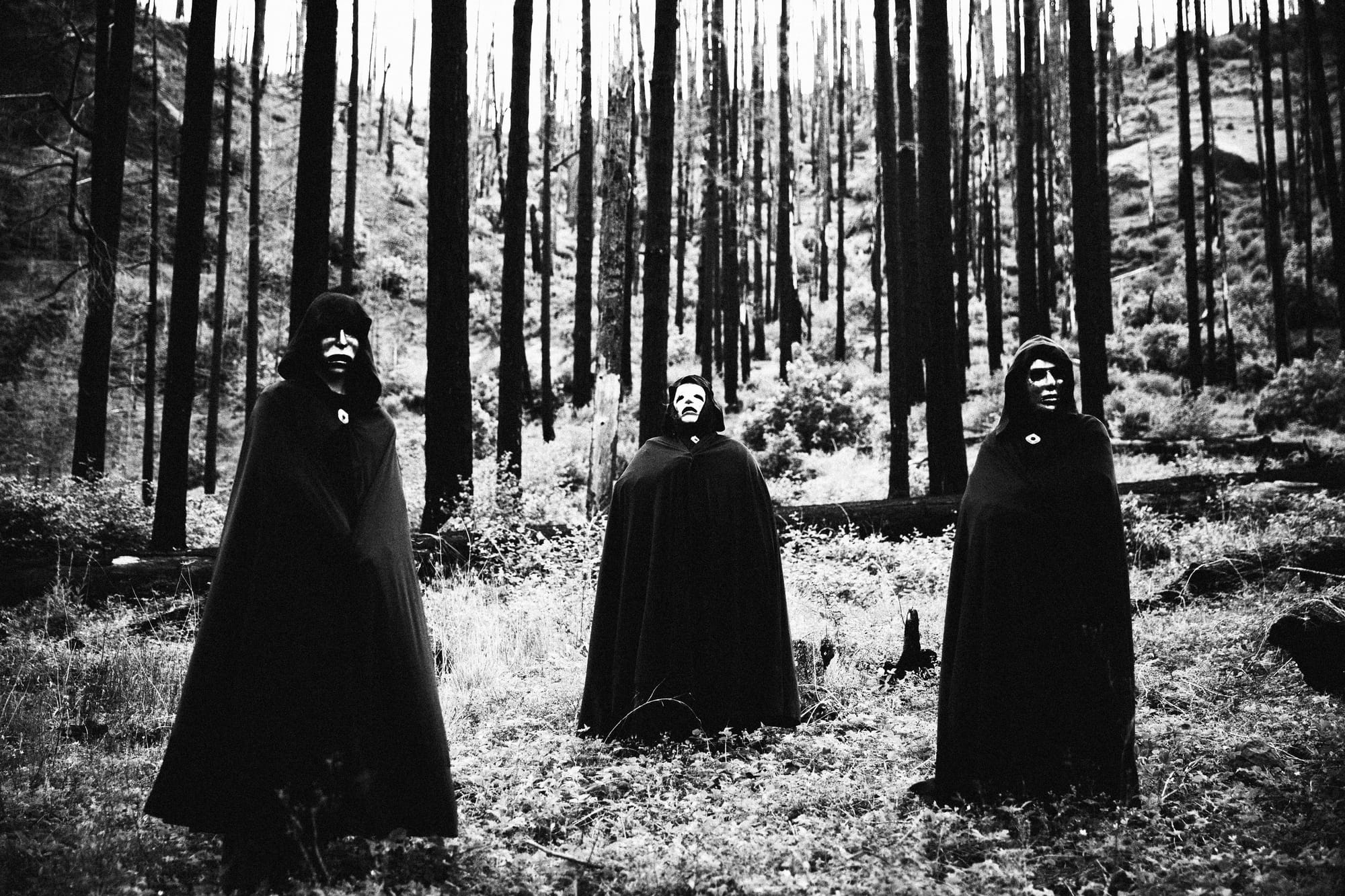
Silencio Permanente was born in 2016, currently based in Mar del Plata, Argentina. “I lived in Norway for about five years because of black metal. I discovered there was a genre that mixed all the aesthetics and designs of black metal with synthesizers. I came from the hardcore scene and liked synthesizers but had never found anything related to black metal and ambient, so when I found this genre, it clicked for me,” explains Fausto, the artist behind the project. The first two albums were recorded in Norway, but when he returned to Argentina, he found that playing live was a complicated experience; there was no scene, and what he did didn’t fit with hardcore. “It was like people didn’t understand or rather it was a different audience, and they would say, 'What are you playing, dude? You used to sing hardcore, what is this? Nobody sings, it’s boring.'”
Covid and the new scene
The lockdown generated some really strange obsessions. While some started making sourdough bread, others dove deep into the most obscure and marginal music. It was the perfect setting for new dungeon synth projects to emerge, as it invited solitary recording from home. MIDI controllers and plugins have democratized the ability to make music; it has become less of a prohibitive activity, and with a little skill, one can achieve a good result from home production.
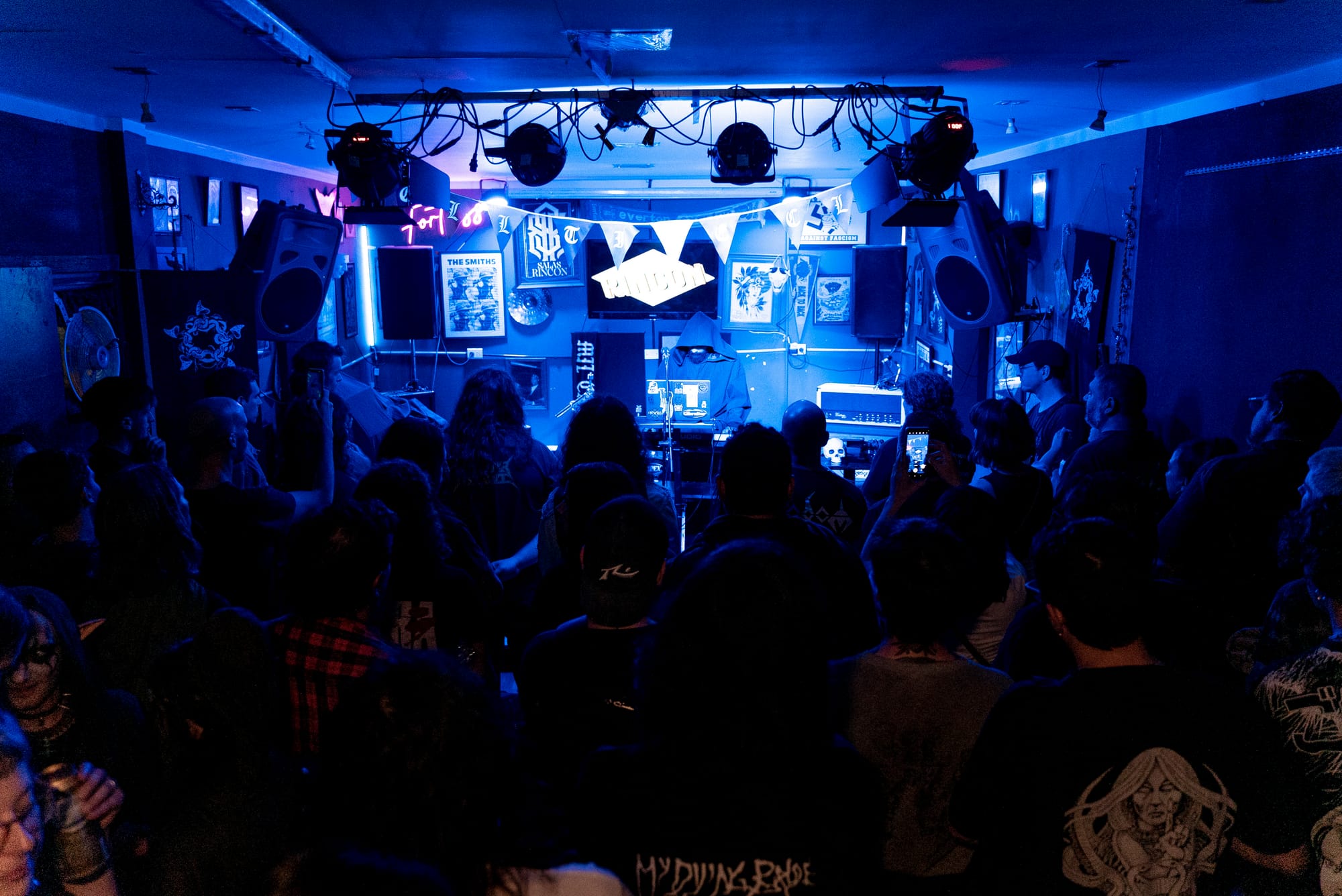
Globally, around this time, dungeon synth emerged from the caves and became a genre with live performances. Fausto has toured with Silencio Permanente in the United States and Europe, where he noticed that in many cases, the focus is on sound, the music, rather than the performative aspect. “Live shows are particular because often it’s just a guy with a laptop who looks like he’s sending an email, he’s back there behind the computer, there’s not much excitement. (…) Having real synths sometimes makes a difference. Beyond that, there are spectacular projects that record everything with MIDI. Dungeon synth doesn’t really go for having analog or modular synths, it leans more in another direction. I really love synthesizers, and when I play live, if the transport allows it, I try to bring the gear I like and that makes me feel comfortable to play. When we went to the United States, we brought a ton of gear.” The stage presence of Silencio Permanente is highly accomplished, very theatrical: robes and masks, smoke, stacks of synthesizers.
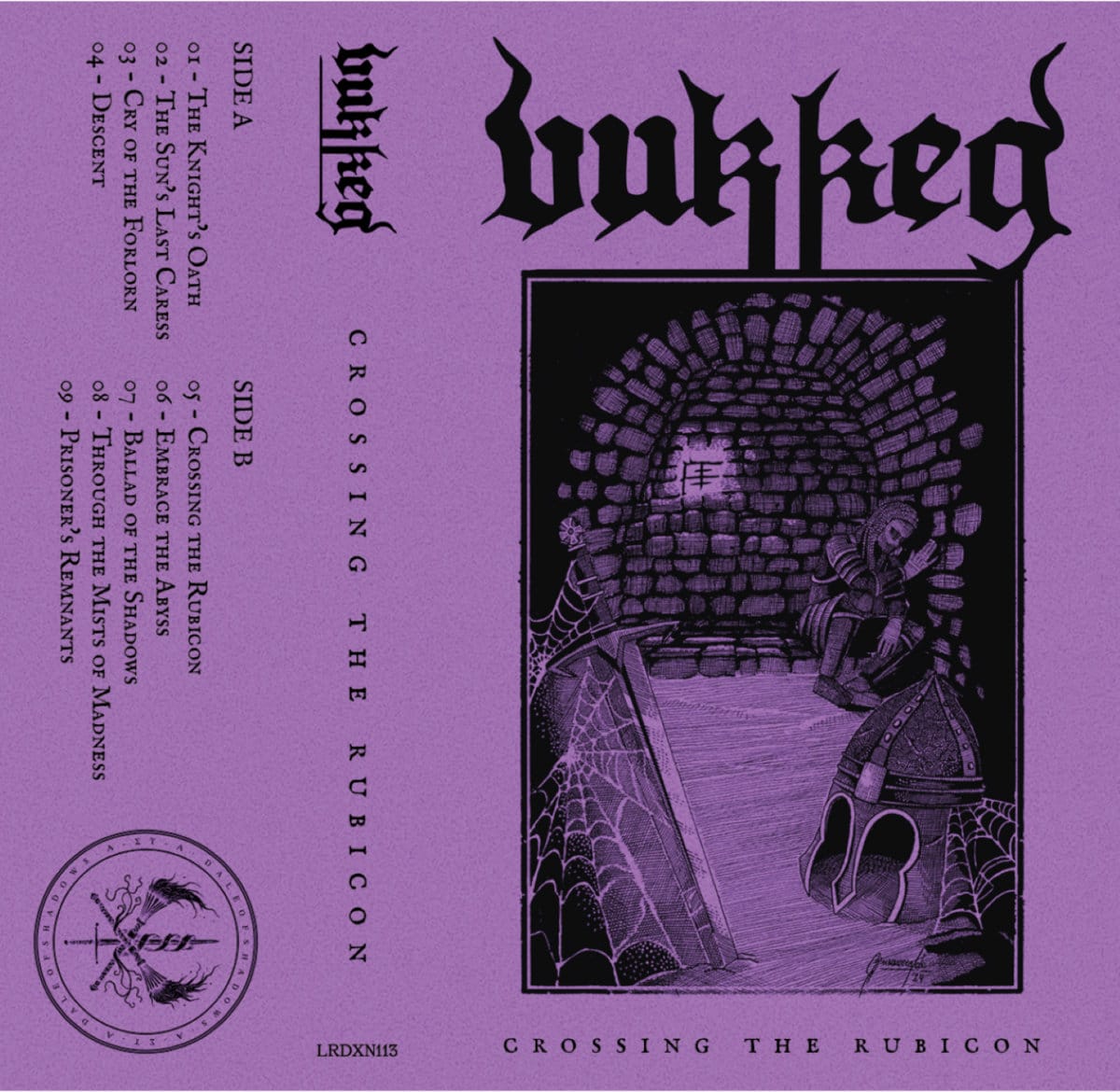
Almost at the opposite end is Vukkeg, which is Alan with his controller and computer. The difference in the live performance of both projects creates a clear and interesting contrast regarding the different approaches within the scene. Alan explains that many of the albums list the gear used; there’s a willingness to specify how the sound was achieved and to highlight the limitations, in a genre that celebrates lo-fi sound even if it was recorded with high-end equipment. “There’s a bit of the mentality of ‘this is my gear, and I’m going to go all in with this. It’s the sword I have, the sword I forged, and I’m going into battle with this.’”
Alan came from playing drums in a death metal band, but in 2008, thanks to a Facebook friend, he discovered more melodic black metal and was blown away by the more instrumental tracks filled with synthesizers. He started sketching out his own ideas with Reason 4. “I didn’t understand much; I just started messing around to make ambient music, without any structure, without musical knowledge, and those recordings just sat there until Mortiis came in 2018. In the meantime, I had made a ton of demos but hadn’t thought about releasing them. It’s like drawing a doodle. You don’t think that doodle can turn into something that someone will look at and enjoy.” The Mortiis concert was an epiphany; from then on, it was no longer just about doing exercises in the solitude of the computer.
With a broken leg from a soccer match and stuck at home, Alan began to revisit these ideas. Thus, Seven Black Books was born, a project initially inspired by the video game Skyrim, featuring an adventurous and orchestral flair, where the stage presence takes on a bit more character (he wears a black robe that barely reveals his face). By early 2022, he uploaded the album to a Drive that he started sharing with acquaintances. Until it reached the ears of the label Out of Season, one of the strongest names in dungeon synth, which showed interest in releasing it. They produced 150 cassette copies of the album “The Sorcerer’s Path.”
Vukkeg emerged as a more minimalistic parallel project, from which to compose with less complexity, resolving compositions in a less obsessive and more direct manner. “There’s something I want to avoid at all costs these days, and I learned this the hard way: the issue of not releasing something until it’s perfect. You have to put out what you have. If it exists, it’s perfect. If once you release it, you think there’s a mistake, something that went wrong, take that lesson and apply it to the next thing you do,” Alan insists.
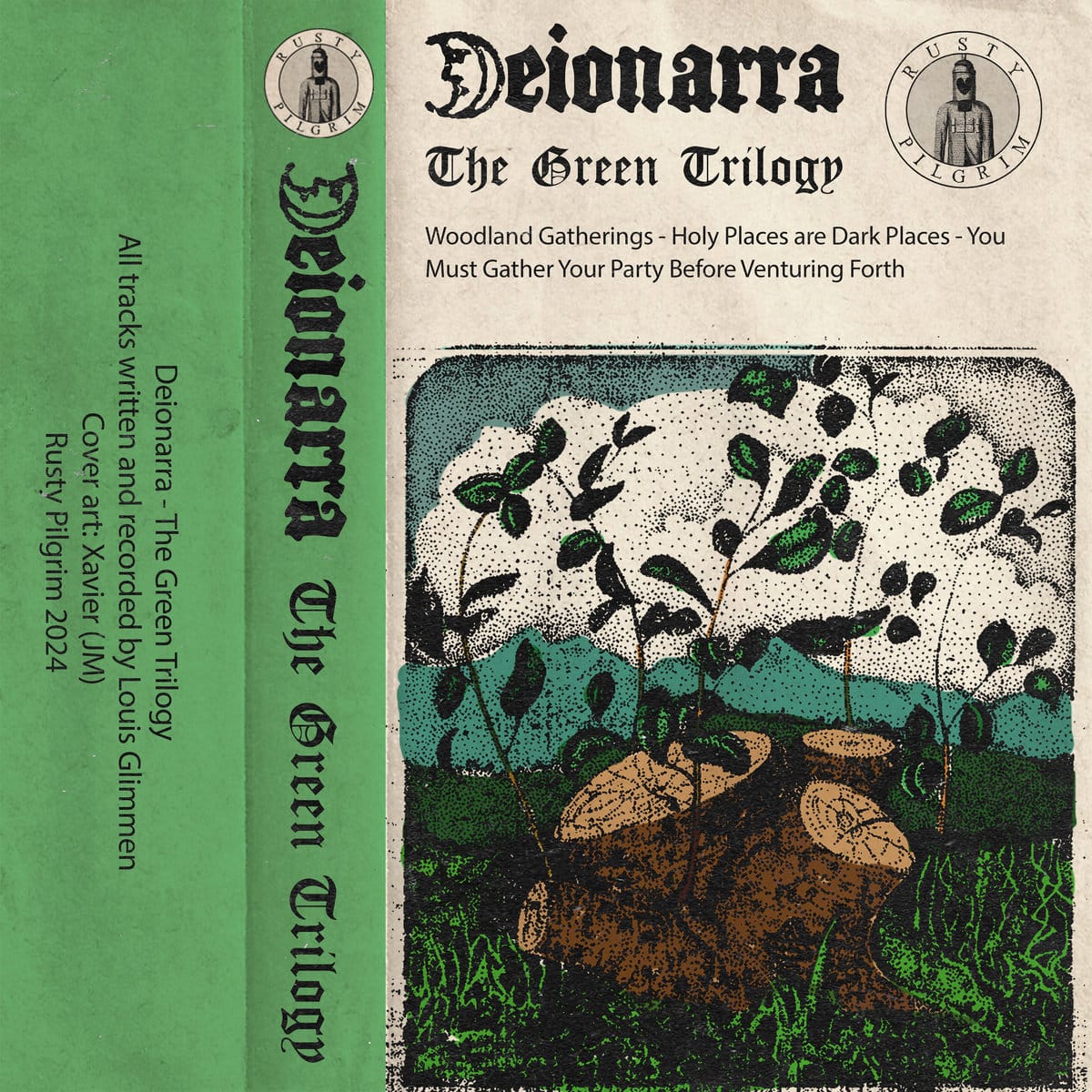
Miguel lives in El Bolsón, in the province of Río Negro, Argentina, and from a distance, he runs the label Rusty Pilgrim, based in the United States, dedicated to releasing cassettes in the genre. The label was created to encompass all his dungeon synth projects, including Deionarra, Woodland Gatherings, Dread Dream Orchestra, and Patagonia Oscura, which incorporates folkloric elements. He shares Alan’s view: the beauty of the genre lies in its imperfection and lo-fi character. “Dungeon synth is music that has a lot to do with solitude, with staying home recording, with whatever elements you have. That’s why it’s hard to talk about a 'scene,' but at the same time, we all understand that in dungeon synth, the more human, the better. That’s why there’s so much rejection of AI in DS communities. The charm of the genre is that it’s imperfect, handcrafted. It’s no coincidence that in an era where everything is dictated by algorithms, something like dungeon synth resurfaces. The cassette isn’t 'retro.' It’s a cheap and beautiful format; it just doesn’t serve the industry anymore,” he points out.
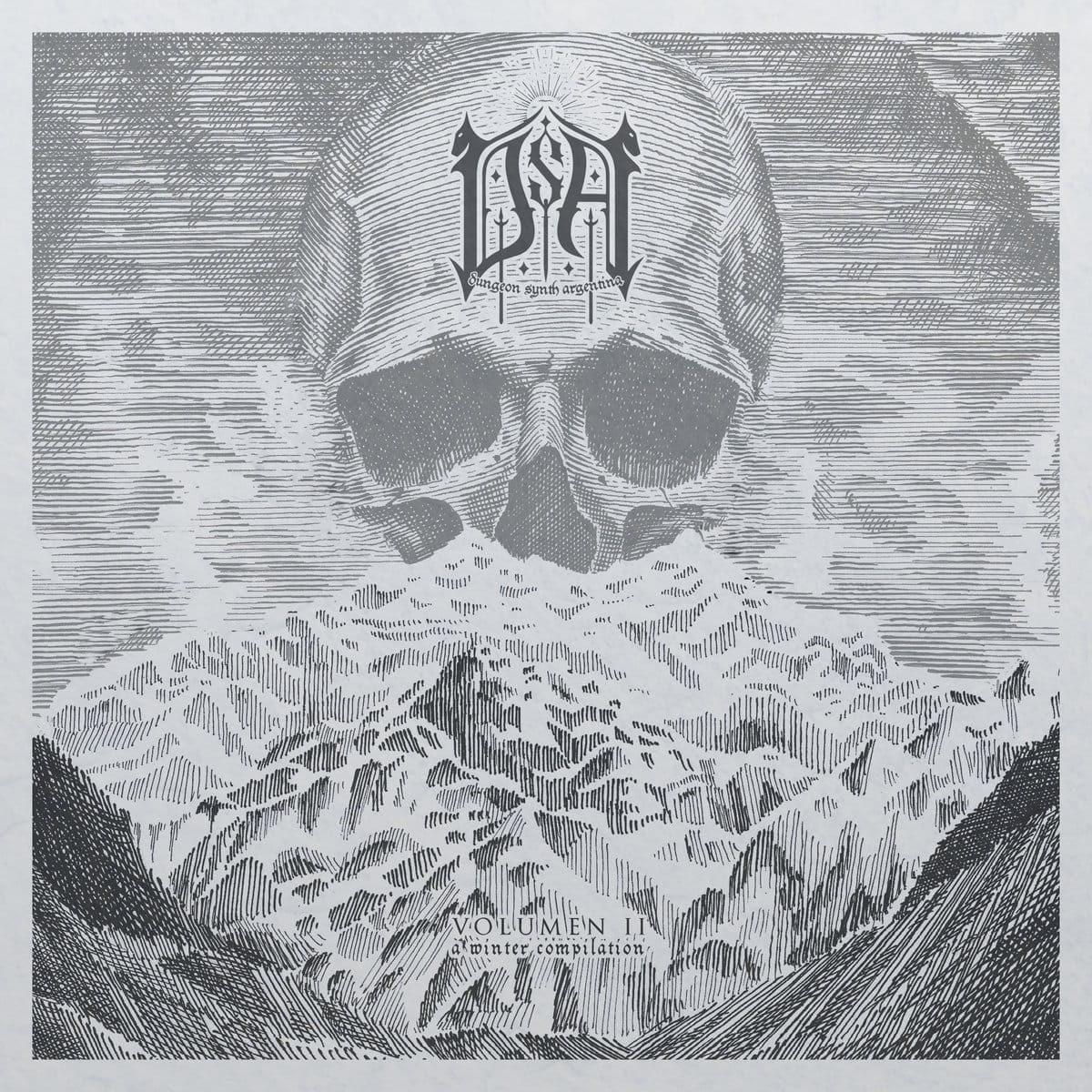
Both Alan and Fausto maintain that for a scene to exist, there must be a social component, events, and real human interaction among people, not just links to albums. The first step to bring together local projects was the compilation that emerged on the Bandcamp Dungeon Synth Argentina, created by Mauro from Criptadel. It spread by word of mouth and through Instagram posts: “If you have a dungeon synth project and you’re from Argentina, reach out to us.” By February 2023, the first volume was released, and by July 2024, the second, featuring projects from Buenos Aires, Río Negro, San Juan, and Córdoba. What’s interesting about both volumes is the variety of interpretations of the genre. Each project encapsulates its own imprint and conveys a unique imagery, from epic battles under the scorching sun to mysterious walks in foul-smelling catacombs. It’s necessary to do a bit of name-dropping to understand the number of projects that participated in the compilations besides those already mentioned: Elrinn, Braveslair, Estantigua, Mañkewe, Aventyr, Erebus, Raxhul, Karma Pylons, Northern Eternal, Kasriel.
Miguel is a supporter of platforms that aim to build community, like Bandcamp, which, unlike Spotify or other apps, allows maintaining contact with listeners and buyers. “Thanks to Bandcamp, I have the emails of everyone who bought an album from me, digital or physical. Streaming doesn’t want that; it doesn’t want you to have control over what you do. (…) The connections with other Argentine projects (or from anywhere else, in my case) happened this way: someone liked an album and sent me a message on Bandcamp, which comes to my email.”
Rarely is a scene self-aware of its genesis. Malabia is a fanzine that was created precisely to document what had already happened and what was unfolding in real time. It’s a fanzine born from confinement, as an exercise to try to explain in Spanish the phenomenon of the genre on a global level but also in Argentina. “My connection to the local scene comes from writing a chronicle of the projects here for my fanzine and detailing a bit of their discography, from where they make their music to how far they’ve reached. I contacted almost everyone, but I wasn’t lucky enough to get full responses. Still, I ended up mentioning everyone I knew. With some, I had more communication, and we built a connection that led me in 2025 to organize a purely dungeon synth concert with projects from various parts of Buenos Aires,” explains Nacho, its creator, who presented the first volume in October 2023 at the Heavy Book Fair in Buenos Aires.
Umbrales was born from the excitement of Fausto, Alan, and Nacho to bring dungeon synth from the virtual world to live performances. It was the first event entirely dedicated to the genre that has been recorded in the region. In its first edition, in April 2025, Aventyr, Silencio Permanente, and Seven Black Books performed, along with a DJ set dedicated to the genre by Criptadel and a dance performance by the duo Ergotismus Convulsivus. For the second gathering, in December, Vukkeg, Silencio Permanente, and Kasriel played. The enthusiasm was contagious: Gustavo Fabián, an illustrator and graphic designer for metal albums, joined in to create the flyers, while visual artist Mala Sangre took care of projecting super cursed images, and Criptadel again handled the music. Umbrales was an event that achieved a first connection for the dungeon synth community and also attracted curious onlookers. Besides the music and the social aspect of the event, the fanzine Malabia, created by fantasy illustrators and esotericism book artists, was available for purchase.
Fortunately, the universes that make up the imagery of dungeon synth have begun to intersect. During January at the bar El Destello, there was a gathering of Magic: The Gathering players, and it was accompanied by music from Vukkeg.
The magic of dungeon synth is being able to witness in real time a scene that is taking shape, like an organic, living entity with its own rules and idiosyncrasies. As Alan explains, “We need to take away a bit of the solemnity. They call themselves Lords of whatever. We’re not medieval knights; we’re just playing at being them.”