Ethrex, a Key Piece for Ethereum's Future Built in Argentina

16 de jul. de 2025 — Admin
Ethereum is becoming the world's financial infrastructure. While that might sound abstract, its integration with the global financial system is very concrete. It's a network that enables the transformation of physical or legal assets into programmable digital formats: from bonds and stocks to driver's licenses or property records. And this transformation isn't theoretical. It's already happening, especially through the use of stablecoins.
More than 4 billion people live in countries with fragile currencies. For them, accessing digital dollars is a necessity. Since 2020, stablecoin usage has multiplied by 60 and now exceeds 200 billion dollars. In many cases, they're used directly on Ethereum, the only network that combines security, decentralization, and flexibility at scale to support this new financial system without intermediaries. Today, millions of people in emerging economies save, receive salaries, or make payments in USDC or USDT from a phone with internet access, without going through banks or governments.
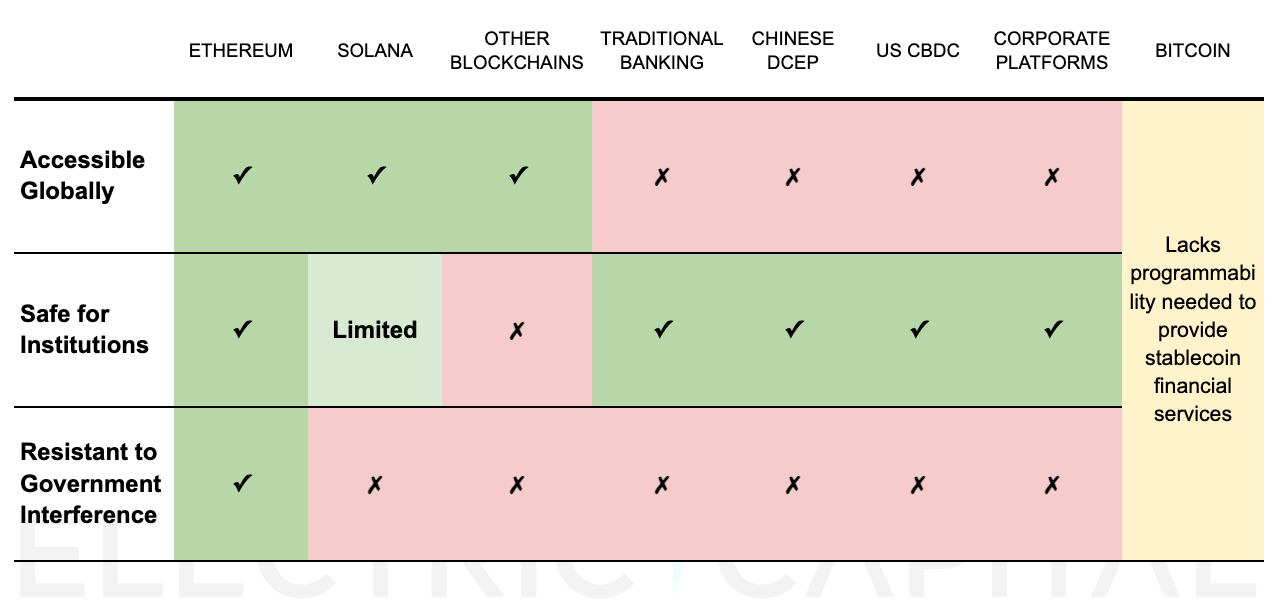
Ethereum doesn't just allow you to send and receive these assets -- it also provides the tools to earn a financial return. There are thousands of options for obtaining loans, using them as collateral, earning interest through staking, and a wide range of other possibilities. It's a network without banks, but with cryptographic guarantees. And as more users enter the system, the more essential it becomes for that infrastructure to be reliable, fast, and scalable.
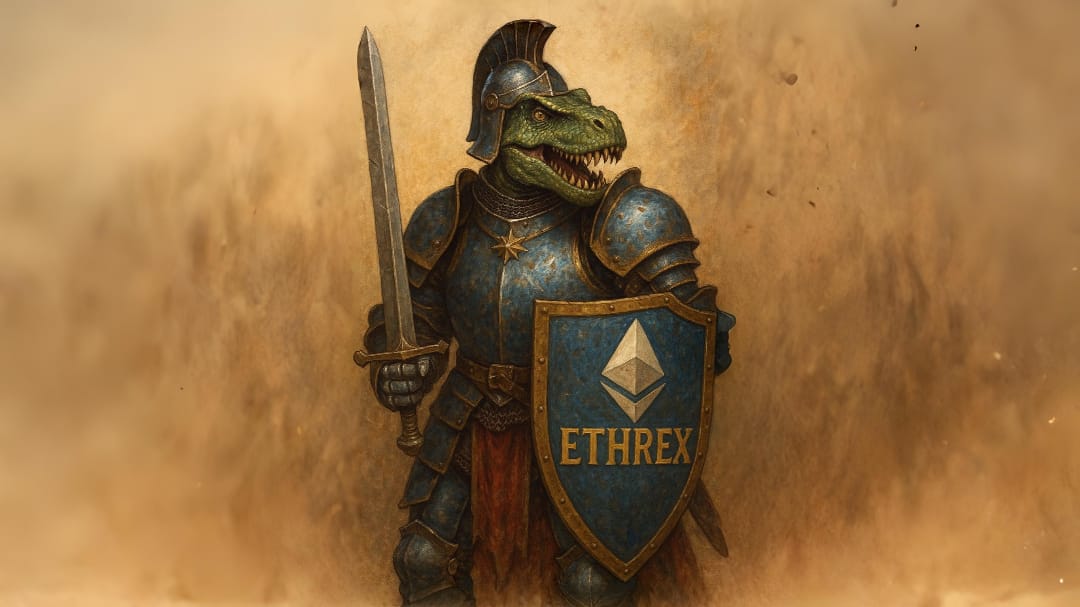
To make this a reality, a key piece is being built from the southern hemisphere: Ethrex, the first execution client for Ethereum developed outside of Europe and the United States. More precisely, from Argentina. "Clients" are essentially the foundational software that keeps the network alive -- the programs that allow you to connect to and participate in Ethereum. They process blocks, validate transactions, and in some cases execute smart contracts or participate in consensus. Their importance is strategic. But let's see why.
The Layer One (L1) Problem
At its base layer (L1), Ethereum today has clear limitations: each block can only process a limited number of transactions. This creates congestion, and congestion drives up fees during periods of high demand. For Ethereum to scale and serve billions of people, it needs to multiply its capacity without sacrificing security or decentralization.
That's where rollups (L2) come into play: networks that process transactions off Ethereum but then validate their results on the main network. They act as highways built on top of Ethereum, capable of handling more traffic at a lower cost. Among them, the most advanced are ZK-rollups, which use mathematical proofs to demonstrate that everything was done correctly, without needing to review each transaction one by one. ZK stands for "Zero Knowledge."
Zero-Knowledge Proofs
A zero-knowledge proof is a mathematical technique that allows you to prove that a piece of information or a computation is true, without needing to reveal all the data involved or repeat the operation. Think of someone emerging from a roofed maze: it's undeniable proof that they solved the puzzle, even though we don't know how they did it.
Applied to a system like Ethereum, this technology makes it possible to validate massive amounts of transactions with a single compact proof, drastically reducing costs and increasing speed, without compromising security.
Thanks to this architecture, ZK-rollups can drastically increase the volume of transactions per second, reducing costs to just a few cents. This way, Ethereum can continue scaling as a global payments platform, integrating billions of daily transactions.
What Is a ZK-Rollup
A ZK-rollup combines the best of both worlds: it's a network that processes thousands of transactions off Ethereum and then sends a cryptographic proof (ZK) to the main network demonstrating that everything that happened is valid. Ethereum doesn't need to re-verify everything: the proof is enough. That's why ZK-rollups are one of the key pieces in the ecosystem's scalability. They allow Ethereum to grow without losing its guarantees of security and decentralization.
Ethrex was designed to support this type of network from the ground up. And this kind of development is crucial for Ethereum to grow sustainably, maintaining its guarantees of security and decentralization, while delivering a user experience closer to the standards that make internet browsing possible: fast, smooth, and accessible for everyone.
ETHREX: Diversity and Technological Sovereignty
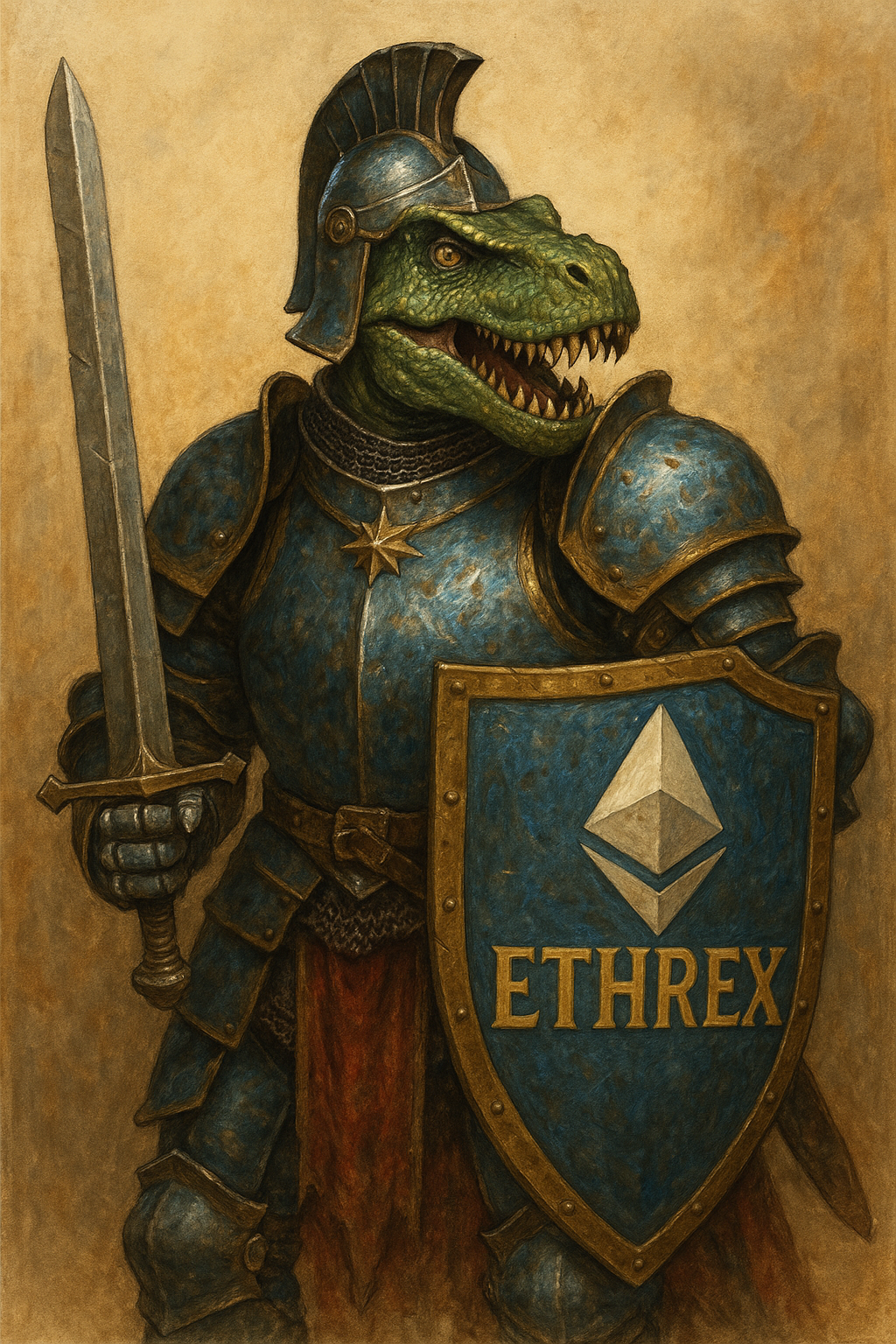
If Ethereum is truly going to become the world's financial backend, it needs a software foundation that is robust, diverse, and distributed. It can't depend on five critical components developed by a handful of teams in just two regions of the world (the United States and Europe). Technical diversity provides resilience; geographic diversity provides independence. The more teams that build key protocol components from different realities, the stronger Ethereum becomes as global infrastructure.
Ethrex isn't just a new client. It's the central component of a complete stack that will allow anyone to launch rollups with a couple of clicks. In these new networks, the execution client is the heart of the system: the component responsible for processing transactions and executing smart contracts. But not all clients were built for that task. Ethrex was designed from scratch with a simple modular architecture, making it compatible with multiple components and standards within the ecosystem. It's like an engine designed to integrate with parts from different manufacturers: a flexible, interoperable infrastructure that's easy to adapt to different contexts and regulatory needs.
It's written in Rust, a modern, efficient, and safe programming language, ideal for building critical software. From the start, the focus was on three core aspects: structural simplicity, system robustness, and predictable performance. The goal was to create a client that is easy to audit, maintain, and deploy, capable of supporting both the main network and advanced execution environments like ZK-rollups.
Today, launching a Layer 2 typically involves negotiating with closed platforms, dealing with opaque technologies, adapting to commercial restrictions, or depending on infrastructure controlled by others. What is theoretically open and decentralized remains, in practice, difficult to access. Ethrex was born to change this. So that with a single click -- and a few configurations -- you can launch your own network, wallet, or payments platform, without intermediaries or private agreements. Built as open source, Ethrex aims to give control back to those who want to build on Ethereum, without barriers or friction.
Who Is Behind Ethrex?
Ethrex is developed by Lambda Class, an Argentine engineering company founded in 2014 in Buenos Aires that over the past decade has grown to a team of 200 people and expanded to Uruguay and Spain. They work on distributed systems, cryptography, artificial intelligence, and even video games, and are recognized for their contributions to the Ethereum ecosystem and to cutting-edge projects in verifiable proofs and complex system design.
The development of Ethrex doesn't just involve the software itself -- it represents a strategic footprint in the region: more than 50 engineers participated at the very core of the protocol, gaining hands-on experience in cryptography and distributed systems. This process not only builds technical capital that's hard to replicate, but is beginning to turn the southern hemisphere into a relevant node in the global conversation about blockchain.
According to the company, the creation of Ethrex is part of a comprehensive strategy by Lambda Class that enables companies, governments, or institutions to incorporate Ethereum into their daily operations without friction, without relying on intermediaries, and without paying the unnecessary costs of legacy infrastructure. Because if Ethereum is going to be the core of the future financial system, we need more than connected nodes: we need sovereignty over how it's accessed, built upon, and scaled. Ethrex is a concrete contribution in that direction. From South America, for the world.