Everything You Need to Know to Understand the Reddit vs. Wall Street Episode

31 de ene. de 2021 — Juan Ruocco 🧙♂️
I
On August 21, 2020, YouTube user Roaring Kitty shared a video analyzing GameStop's stock price. The company sells video games, console accessories, merchandise, and board games, with five thousand stores across the United States and operating as a used video game exchange. It is the largest used game buy/sell chain in the United States. The video was titled "The Big Short SQUEEZE from $5 to $50? Could GameStop stock (GME) explode higher?".
Roaring Kitty explained that although GameStop was facing decline due to online video game sales, there were positive factors that could position it as a relevant company in the market. However, major investment funds (hedge funds) were betting against the company through "shorts," trying to capitalize on the stock's decline.
Doing a "short" involves borrowing shares to sell them, expecting the price to drop. When it drops, you buy them back, return them, and pocket the difference. If they go up, the losses are potentially infinite.
An example: if I believe Cachito Inc. will drop, I borrow 100 shares at $100, sell them for $10,000. When they fall to $50, I buy the 100 shares for $5,000, return the loan, and make $5,000.
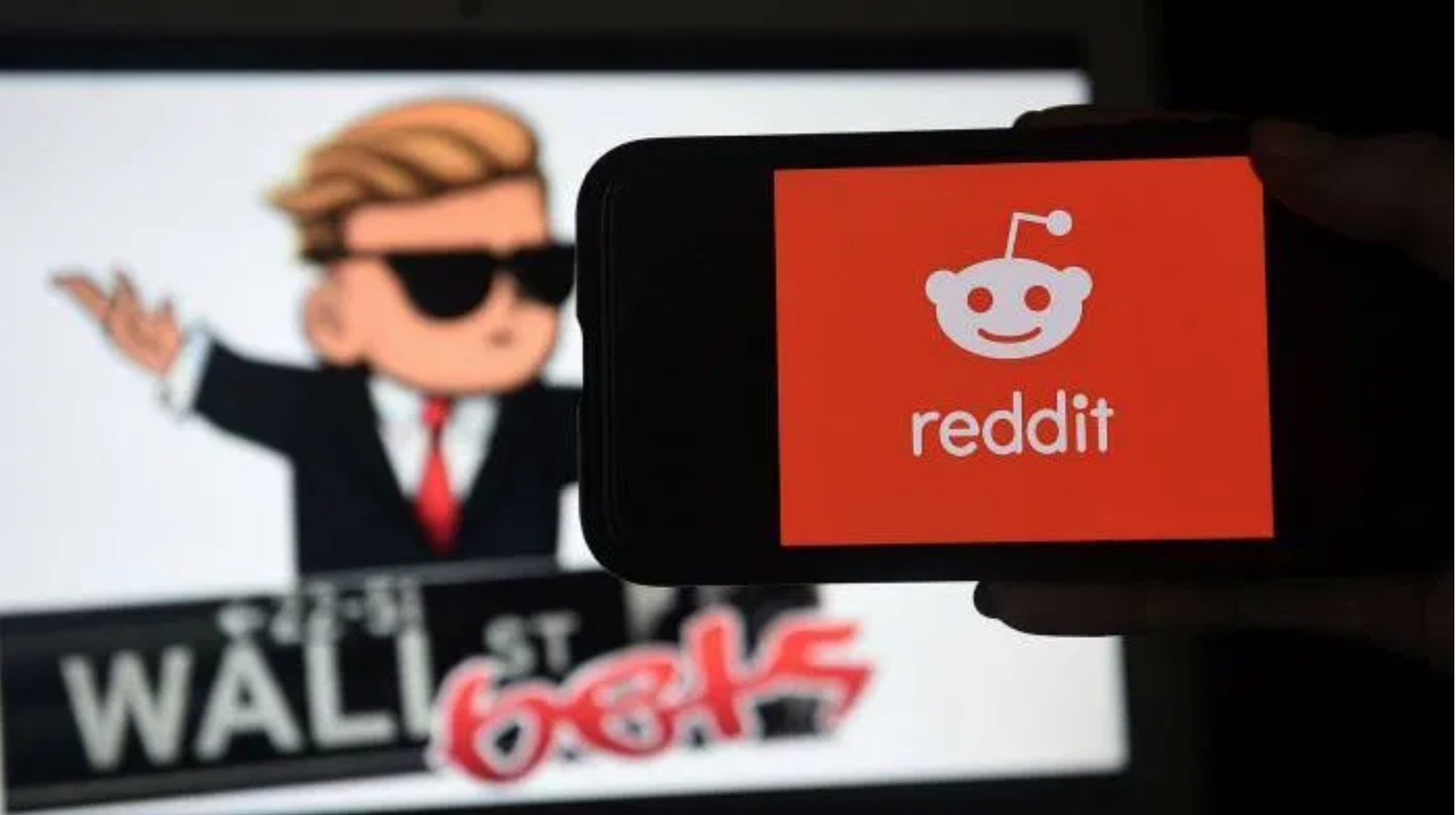
Funds like Melvin Capital and Citadel were carrying out this maneuver when the subreddit r/WallStreetBets interfered. Reddit is a social platform where users create communities on various topics. WallStreetBets, described as "Like 4chan found a Bloomberg terminal," is a space dedicated to financial discussions with a provocative and ironic tone.
II
On January 22, 2021, users of r/WallStreetBets initiated a massive GameStop stock rally. Without formal coordination beyond articles on the subreddit, they bought GME and bet against Melvin and Citadel's short, causing a "short squeeze" that caught the funds off guard.
The play was effective: the price skyrocketed, forcing the funds to buy back shares to avoid greater losses. This generated even higher surges. In five days, GME shares were trading at $396 USD, nearly ten times the initial value. During the run, Wall Street suspended buying and selling multiple times due to "excessive volatility."
While this was happening, media outlets spread the news like wildfire. The meme of small buyers against Wall Street giants was irresistible, creating positive feedback that led more users to join WSB. The frenzy reached other companies like AMC, Blockbuster, and Nokia.
Many investments were made through RobinHood, an app that gained popularity during the pandemic, allowing regular users to buy and sell stocks without certification. This coincided with $1,200 USD stimulus checks delivered by Donald Trump, generating a boom of "small investors" in 2020.
However, during the GME run, RobinHood stopped purchases several times, and users reported that the app sold their shares without consent. The scandal was such that WSB users negatively rated the app on Google Play, but Google deleted those ratings. RobinHood users thus felt the blows of the economic establishment trying to halt bullish movements.
III
Although GameStop news moved to the background, the dispute continues. Melvin and other funds claim to Reuters that their positions are closed. But WSB users are skeptical, suspecting that while the original positions were closed, new positions were opened to obtain profits.
An important factor: which narrative prevailed. Most information circulated second, third, or fourth-hand. Except for a few informed journalists, the public was unaware of the dynamics of online communities and professional funds. In a "global game of telephone," wild versions circulated: from "far-right" attacks to "the end of capitalism."
The event leaves important conclusions: first, the massive market coordination by users with no mutual contact. This is decentralized action, an "attack" with no visible center. This dynamic occurred before in GamerGate (a battle between fans over press-gaming company collusion) and the 2016 presidential elections (decentralized actions installing narratives through memes). Subsequent analyses by traditional media tried to explain these phenomena under centralized models and failed. Spontaneous coordination and the use of memes as weapons for narratives ("weaponized memes") is a fascinating field for research.
Second, the ironic approach of these groups. Few truly believed GameStop had "good fundamentals." The movement was not motivated by belief in what was being bought, but by belief in the group. The cohesion among users defying established power was stronger than the "value" of the shares.
This is a meme that implies behavior. Like the "ice bucket challenge" or the "harlem shake," the GME bull run is memetic behavior implying real action with a "performative" sense. This is corroborated by reading featured posts on r/WallStreetBets.
While waiting for the stock market to reopen, those holding positions (who bought and didn't sell) could make a lot of money by selling, but they urge others to hold firm positions, to have "diamond hands" (versus "paper hands" who sell quickly) and to hold until Melvin and Citadel's positions close, trying to drive them to bankruptcy. Whether real or collective illusion, it motivates users to stand firm against financial, technological, and media attacks.
Finally, the ironic approach reveals a rupture between the order of "insiders" and the "ignorant mob." Internet users with decentralized organization challenge the predictive models of professional Wall Street funds. The line between experts and the uninformed blurs until it becomes unrecognizable.
As philosopher Santiago Gerchunoff points out, "irony is the mark of democratization, erasing the borders between the elite and common people." Keith Gill (Roaring Kitty), sitting in a gaming chair in front of two monitors, watches with satisfaction as his bullish thesis on GameStop is confirmed, summarized in a five-minute video uploaded to YouTube almost five months earlier.
This article was originally published on Cenital on January 31, 2021.