Throwing Hands in Las Vegas: EVO 2025 Honored Fighting Games

12 de ago. de 2025 — Axel Bosso
"I promise to keep working hard until I have no strength left."
Daigo The Beast Umehara
The Evolution Championship Series, known as EVO, is the most popular fighting game competition in the world. I'm not sure if it's the best or most important one today. But its relevance and impact on the genre is undeniable, nearly 20 years since its first edition in 1996.
Fighting games are one of my favorite genres, and perhaps the one I perform best in. They demand a dedication and effort similar to learning to play a musical instrument, thanks to the execution skills, the recognition and replication of patterns, the creativity, the ability to improvise on the fly, and more. The essential difference is that we normally develop these skills to defeat an opponent, and what we compose changes every second based on their decisions.
Going to EVO had been a dream since my late teens, when I started getting seriously interested in this universe, its rules, and its icons. Just being there and watching matchups between legends of the scene would have been enough, but I decided to raise the stakes and go as both a journalist and a competitor. Below you can read about my weekend of nonstop virtual brawling, at the beginning of the month at the Las Vegas Convention Center, its main venue (not the only one).
Day zero: credentials
Arriving in the peculiar city of Las Vegas and my first impressions of Nevada's tourist hotspot deserve their own piece. As a side note, the heat in this desert full of attractions and excess is something else. Walking those long streets under the sun and its suffocating weight was not my favorite activity that Thursday, July 31st. But I had the day off and had to make the most of it. For instance, picking up my badges.
The Convention Center is quite large and can hold thousands of people on its ground floor, with no trouble getting around because there are crystal-clear signs everywhere. Plus, the powerful air conditioning was a blessing. Once inside, I had my press and competitor passes in minutes, along with a refillable water bottle and a jacket. Impressed by the smooth organization, I wondered if the rest of the weekend would be the same. It was.
Day one: a taste of everything
The day started early: up at 7 AM to get ready with plenty of time, have a calm breakfast, and make room for the nerves and expectations. I arrived around 9, when EVO opened its doors, and quickly made my way into the pools area, where the vast majority of matches across all tournaments are played during the first two days. There was already a significant crowd dishing out digital violence.
The pools area had numbered tables going up to the 400s, and at the far ends were the main stages, where the matches being broadcast live take place. Heading toward the booths for each game and company present at EVO, I was greeted by large setups featuring Tekken, 2XKO, Street Fighter, Virtua Fighter 5 R.E.V.O. and its upcoming sequel (sadly not available to try), among others, including what is possibly the genre's biggest recent bet: Marvel Tokon: Fighting Souls.
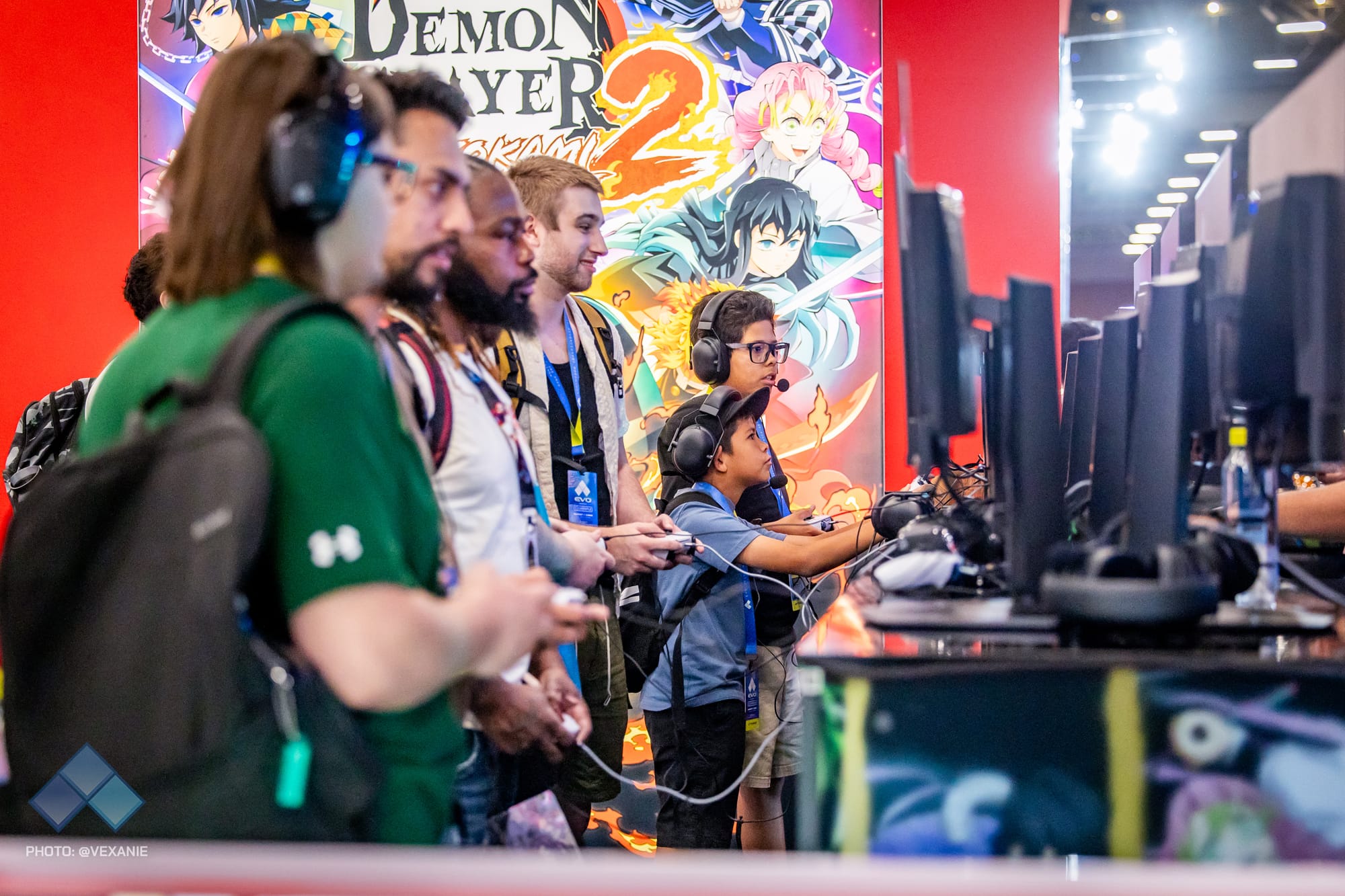
After Marvel vs Capcom 2 introduced 3v3 fights, the 4v4 format remained absent from the mainstream for decades. It was thought to be impossible until Arc System Works came along, the storied developer behind Guilty Gear and Blazblue, kings of anime-style 2D fighters. More recently, the title that Marvel Tokon uses as one of its clear references is Dragon Ball FighterZ. The line to try it was endless, wrapping around the booth several times. Being a journalist sometimes pays off, and I headed to my appointment to play with a developer and learn what this game is all about.
Marvel Tokon is genuinely doing something new, and not just with its eight-player fights, but also in its overall design: each player has a single health bar and starts in a 2v2, having to unlock the other characters through in-match actions. This opens up a whole new universe of possibilities, along with entirely new ways of thinking. It's literally a game that rewires your brain.
The rest of the day continued with a chat with a Digital Eclipse representative about the upcoming classic Mortal Kombat collection. I got to test the Trilogy restoration (very solid) and discuss trivia about the franchise with a friendly guy, until he excused himself to "follow" the original Sonya Blade actress from Mortal Kombat 3, Kerri Ann Hoskins.
Then came an interview with Ken Miyauchi, producer of Guilty Gear Strive, who currently leads the franchise while Daisuke Ishiwatari, the original creator, explores new horizons. We talked about the current costs and challenges of making video games, and how to keep them alive for four years, as Strive has done. He also told me about what it was like working with CD Projekt, creators of The Witcher; and about bringing Lucy to life, the Cyberpunk: Edgerunners character who will soon join the Strive roster.
My scheduled plans wrapped up with a visit to the Victrix booth, a brand of specialized fighting game controllers made by the iconic Turtle Beach, which has plenty of tempting gear for every taste: I picked up a leverless Pro KO that I'm still dying to try.
At the general booths I saw it all: large images of Jin and Kazuya battling in Tekken 8, a huge Vi prop for Riot Games' fighting game entry, collectible Sagat figures welcoming you at the Capcom booth. I really appreciated the EVO museum, where you could explore the evolution of fight sticks over the years or the visual transformations of various characters, like Scorpion in Mortal Kombat or Reina in Tekken 8. The most colorful attraction was a setup where you could attempt to recreate the legendary EVO Moment 37, in which Daigo, down to a pixel of health, lands 15 perfect parries against Justin Wong's Super and wins the match. The crowd tried to recreate the feat, but no one pulled it off.
EVO is the people
If standing in line to try new or upcoming games wasn't your thing, there was also an artists' section and every kind of merch you could imagine. Mostly related to the genre, though anime has a close relationship with it, so the booths were packed with Japanese animation designs.
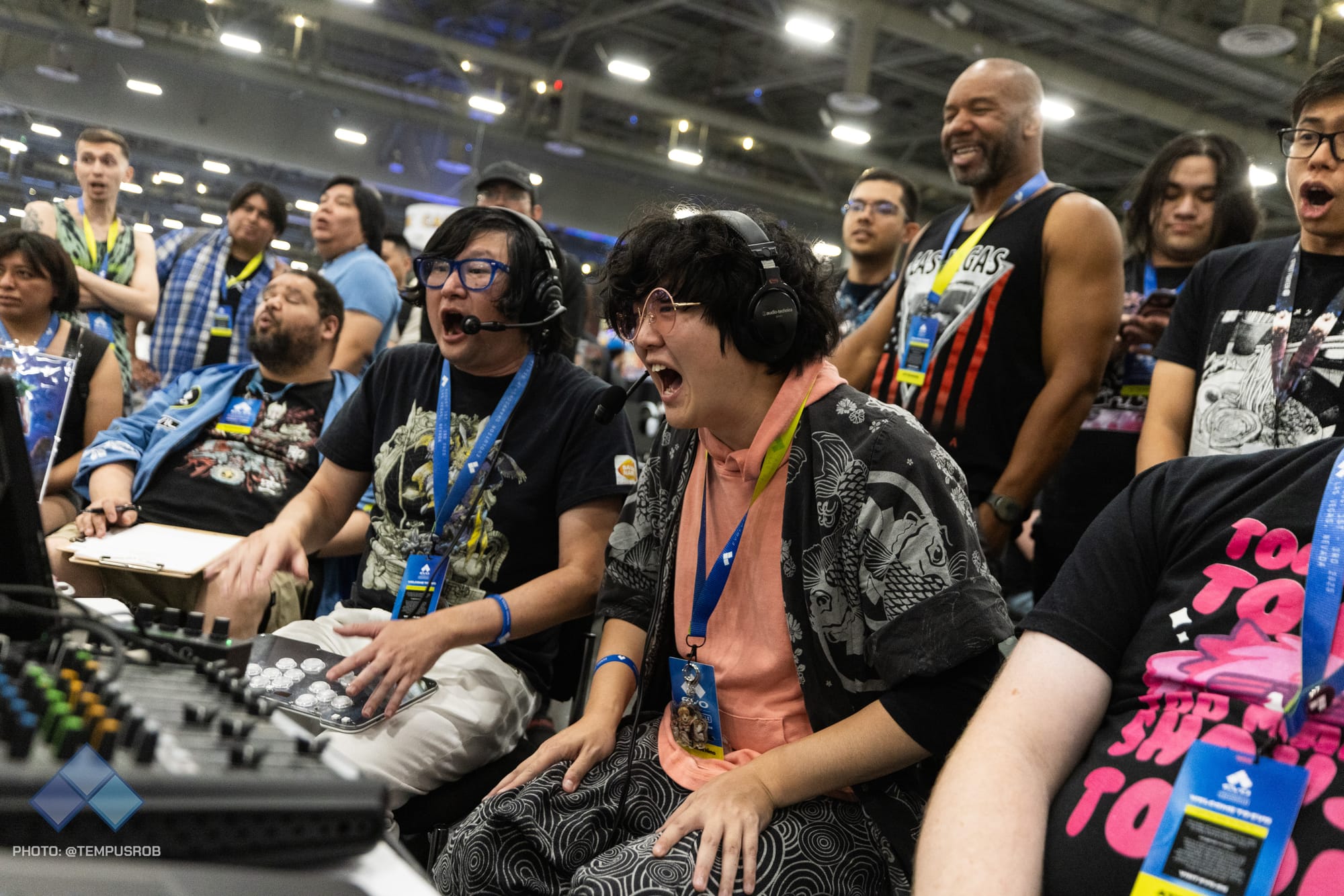
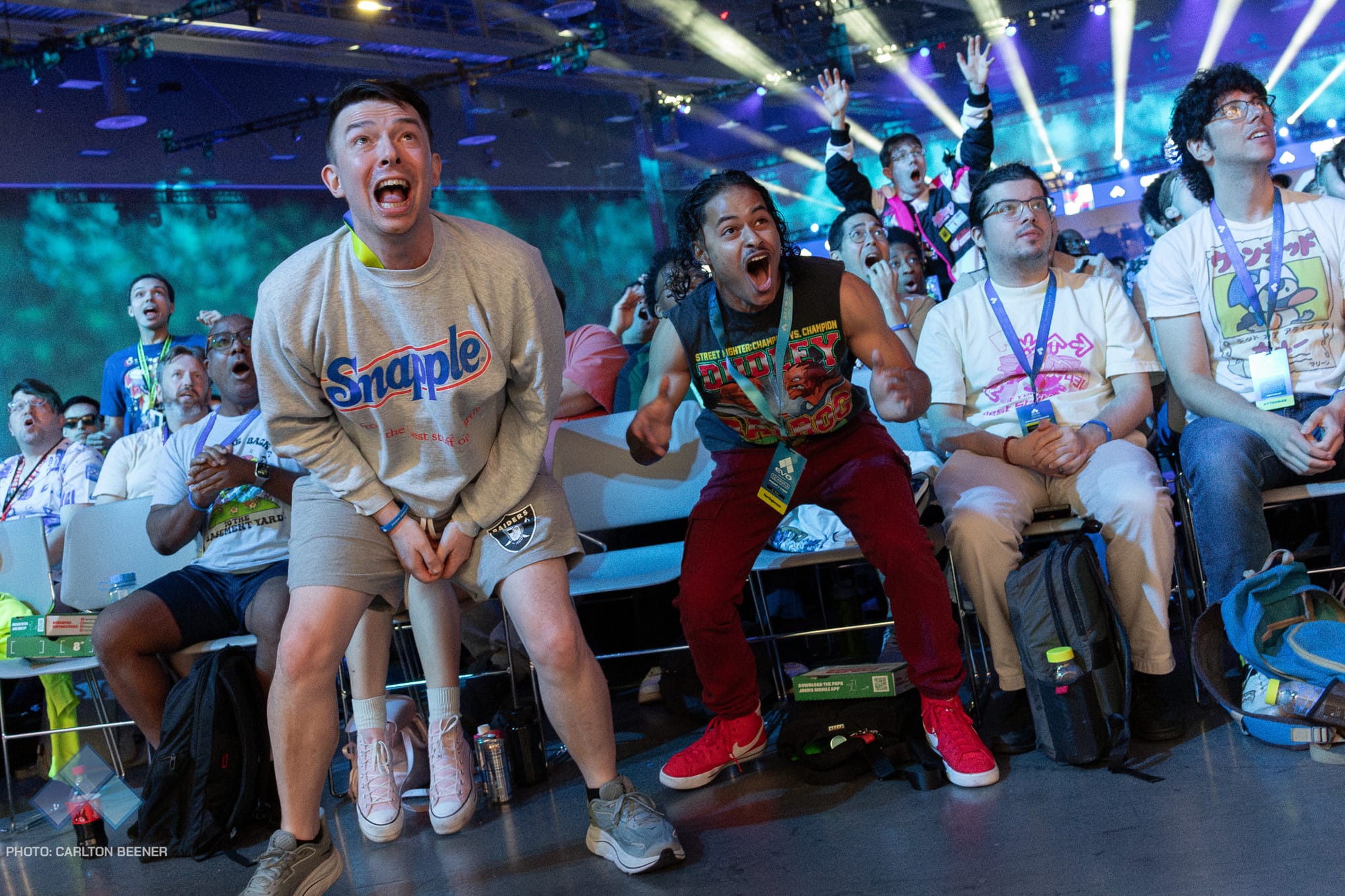
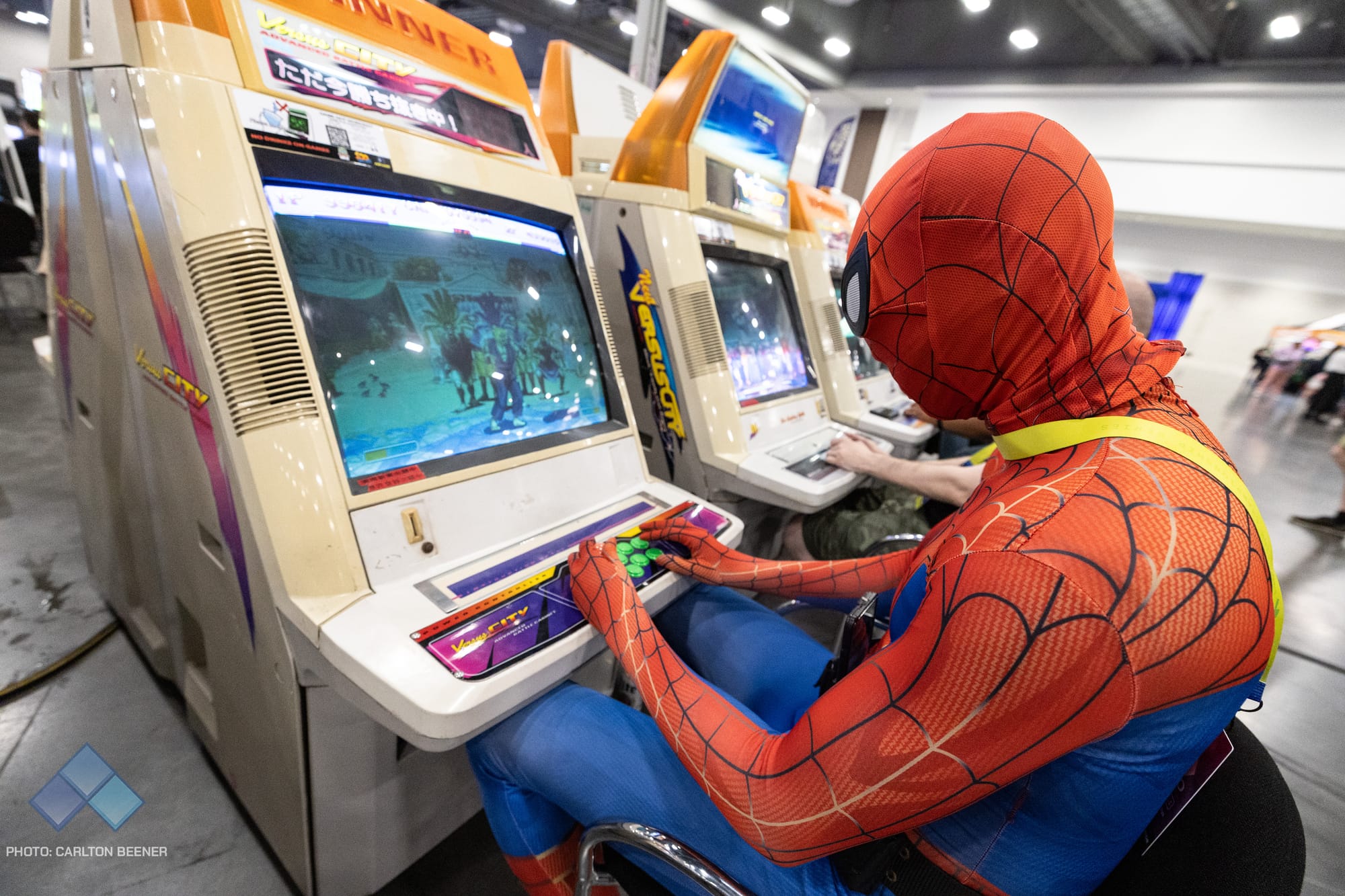
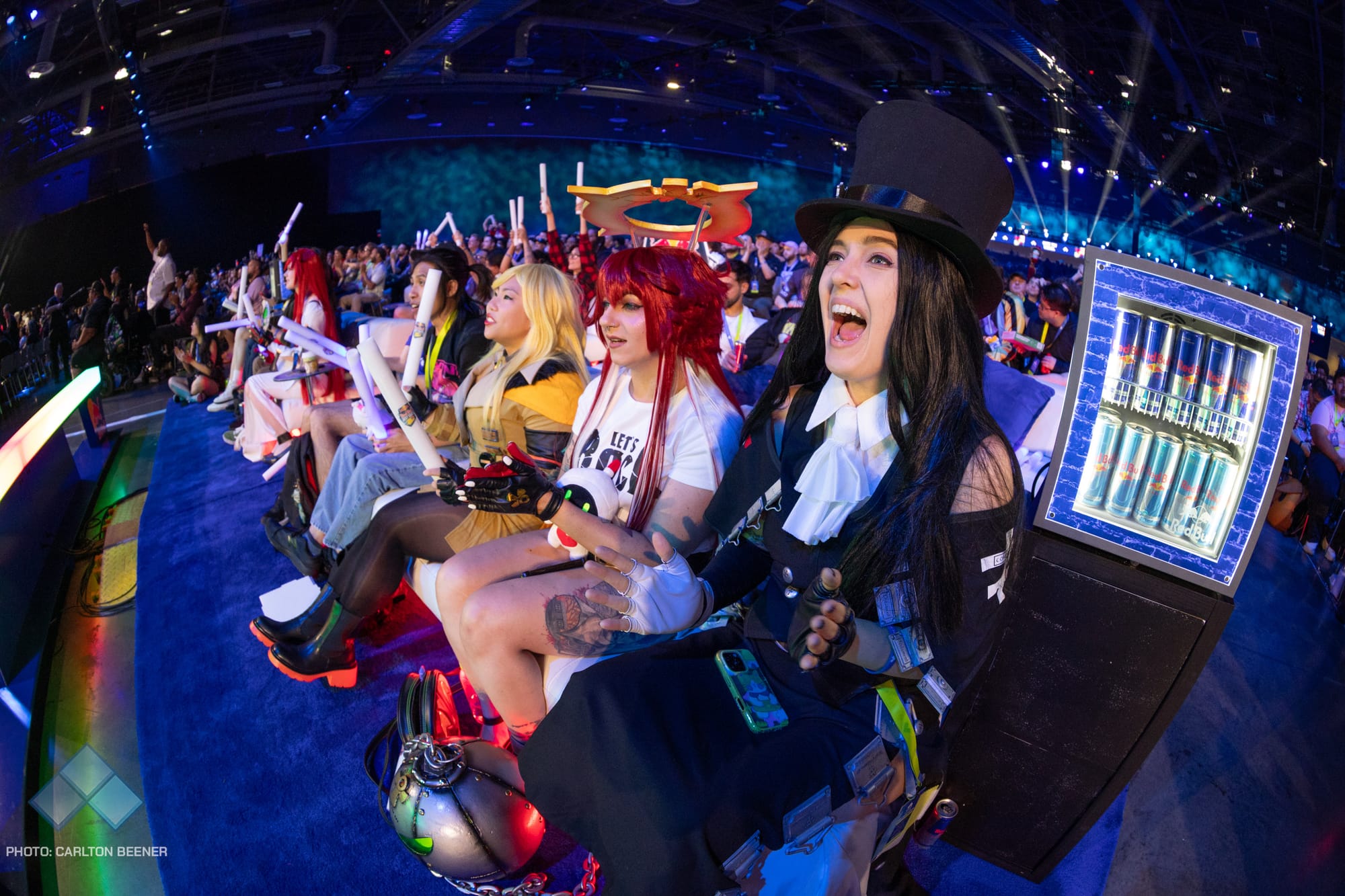
However, the most important thing about EVO -- I was already starting to realize on the first day -- is the people. Chatting with strangers who become good acquaintances, watching fans cosplaying their favorite characters, trying some of the hundreds (?) of original arcade cabinets freely available, featuring tons of classics and games I'd never seen before. Among them, plenty of bizarre rhythm games.
And of course, if you're at EVO it's usually to play fighting games, which is why there's a whole section reserved with consoles or a space to bring your own and set up your own station. Attendees spend time in that "lab," run casual matches, and even organize impromptu tournaments. It's a beautiful space where you could easily spend the whole day while admiring your opponent's exotic controller, like one that was essentially a rectangular planter with plants and buttons.
Debut and farewell
For some strange reason, before competing in Tekken 8 I decided to warm up by playing some Strider on the original arcade cabinet. I wandered around until it was time and headed to my table, with a lot of people around. The pool tables have four monitors and consoles, so that eight people from a bracket can play at the same time.
Against my first opponent I got the Player 1 side, the left one, and immediately made my first blunder: I picked a stage instead of setting it to random, which my opponent, very politely, pointed out. We started over, and he punished me in the first match, 3-0. Since it's a best-of-three matches format, I had another chance and I took it: I ended up winning the set and sending my opponent to the losers bracket, which wiped the calm expression off his face.
My next match was against someone I clearly wouldn't have beaten even on my best day: I'm simply not there yet. That Reina kept me guessing the entire time, and I got it wrong almost every time. On the rare occasions I landed a launcher, I dropped my combo instantly. The beating I received made my opponent's gesture even more commendable: he told me what I was doing wrong and invited me to play online when we both got home. It was a pleasant surprise, and I thanked him.
The third and final match was much closer, against a girl who seemed just as nervous as I was. Since I decided to play with only one earbud in, I could hear the people around me. Not only did no one laugh when we dropped our combos left and right, but they cheered with every good hit. Hearing a "YEAH!" from a stranger after landing a solid punish gave me a feeling I wasn't expecting.
The quick elimination in Tekken 8 didn't surprise me. After all, I don't have many hours in this title. In the gap before my Street Fighter 6 bracket, I decided to do things right: I went to warm up my fingers at a free station. After a while, a guy came up and asked to play. "This is EVO," I thought. He beat me up pretty well, but it helped me head into my bracket feeling motivated and more confident.
Unfortunately, Street Fighter went even worse: I didn't win a single match. My first opponent was way above my level; an excellent Kimberly player who, the following day, would go on to take a game off Leshar, a pro player who made the Top 8. He destroyed me, but talked to me with the best attitude. He put a smile on my face and got me in a good mindset for my next match in losers. A match I would have won easily on a good day, but that here ended up sending me home.
Thirteen hours after walking in, carrying a sea of emotions, I left the venue and called it a day.
Day two: walking among gods
The next day started on the wrong foot: my first appointment of the day had a problem -- I wasn't formally scheduled -- and I missed it. I killed time by repeating all of the previous day's free activities, until it was time to play Invincible VS for the first time, and against its art director: Dan Eder, a great guy who, while explaining the game's mechanics to me, left all sorts of virtual bruises on me.
We enjoyed a few rounds of this title, which has a lot of promise and potential. Eder was the lead character designer for MultiVersus (a Ferrari that Warner Bros. crashed), and Skybound Games picked him up after seeing his fan art of the series. Eder spoke with genuine affection about his work and everything he loves about the game he's building with his team, and we geeked out for a while about the Invincible comics and their animated adaptation.
Later I had the chance to interview key producers from Virtua Fighter, that titan that kicked off the 3D fighting game sub-genre three decades ago. With Seiji Aoki we discussed the current state of Virtua Fighter 5, the franchise's latest installment so far, which has continued to receive updates and new versions since its original release in 2006. He sounded happy with where Virtua Fighter stands today, and even more so with the new version, R.E.V.O., which is coming to every console (even Switch 2) with new modes for those who enjoy playing offline.
Then it was Riichiro Yamada's turn, producer of the future successor to Virtua Fighter 5. We still don't know much about this installment (we haven't even seen a gameplay demo) but expectations are high. Yamada sounds confident in his vision and certainly knows what Virtua Fighter's core identity is about: pushing the technical capabilities of the moment to their limit and delivering the most realistic fights possible, free from the fantasies of Tekken. He couldn't give me many details, but the project seems to be on the right track.
Meeting the GOAT
After trying Ken in Fatal Fury, the excellent DLC character already available for purchase in SNK's brand-new City of the Wolves, came one of those moments I never thought I'd have in my life: interviewing Daigo Umehara, one of the most renowned professionals in the fighting game world. Even though he's far from his competitive peak -- understandable at 44 years old, an unusual age for esports -- he still shows up to every event he can, and his name continues to command admiration and respect from the new kings of the scene.
I arrived at a private Red Bull room and was asked to wait a bit: Daigo hadn't shown up yet and they didn't know where he was. Nothing unusual for the legend known for napping anywhere and being remarkably relaxed in many situations. But when it was finally time to sit down with him and his interpreter (Daigo doesn't speak a word of English), I was flooded with emotions from years of following a career and a life that very few can even dream of.
We talked about the current state of the FGC, his long career, how tired he is, and his "responsibility" to future generations. Listening to him was like listening to one of your greatest idols, in whatever discipline you're passionate about, but with warmth, enthusiasm, and care in every answer, wanting to be as clear and thorough as possible, delivering insights that only the truly great with humility can share. Like his fears that the esports "bubble" might burst overnight, or his doubts about what he'll do when he eventually has to retire (for now, not even close).
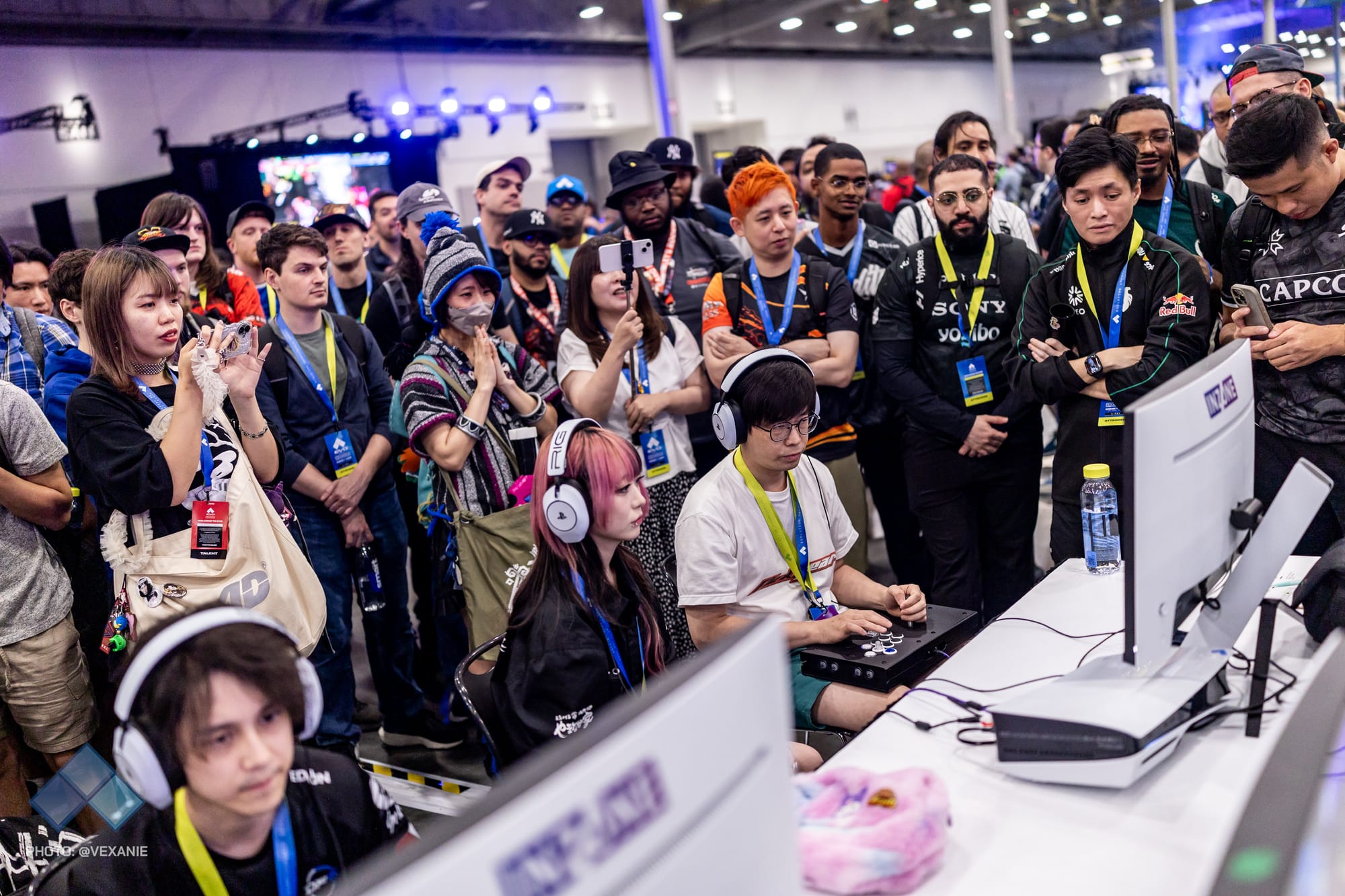
Obviously, the rest of the day was a comedown after that, but still exciting. Since it was the second day of pools, only the best were left: it was common to be standing around a table watching monsters like Punk play, while other current top names like the Birds and Tokido watched. The hype that built up around these clusters was incredible, almost as much as the down-to-earth vibe I got from several pros I chatted with in passing. They also took photos with fans without dropping their smiles, and always came across as just one of the crowd.
Near the end of the day, I made my way to the indie games section, which I'd ignored on my first day. I wasn't too surprised, since I'd expected it, but it's where I found some of the most interesting titles of the day. For example, Mega Knockdown, a sort of turn-based fighting game that completely changes the nature of combat. Or the low-hit-count bouts in Dojo Masters, where players were extremely patient and careful with their moves.
The standout was Exploding Judo Federation. A title where the fighters (humans and strange creatures) are judokas. The match ends when you land a throw on your opponent. According to its creator, "it's like fighting using judo in a minefield." A notable figure was Andrea "Jens" Demetrio, who was also showcasing another game he made entirely on his own: Schwarzerblitz. A name to keep an eye on.
And so, a bit earlier than on the first day, I headed off to enjoy the delights of Tacos El Gordo and rest up for the finale.
Day three: the good kind of bread and circus
Sunday's plan was simple: watch as much as I could in the Arena, where the Top 8 for all the most entered games are held. The day kicked off at 10 AM with Guilty Gear Strive, though I arrived a couple of matches late because I took the chance to do some shopping and walk the showroom (once again).
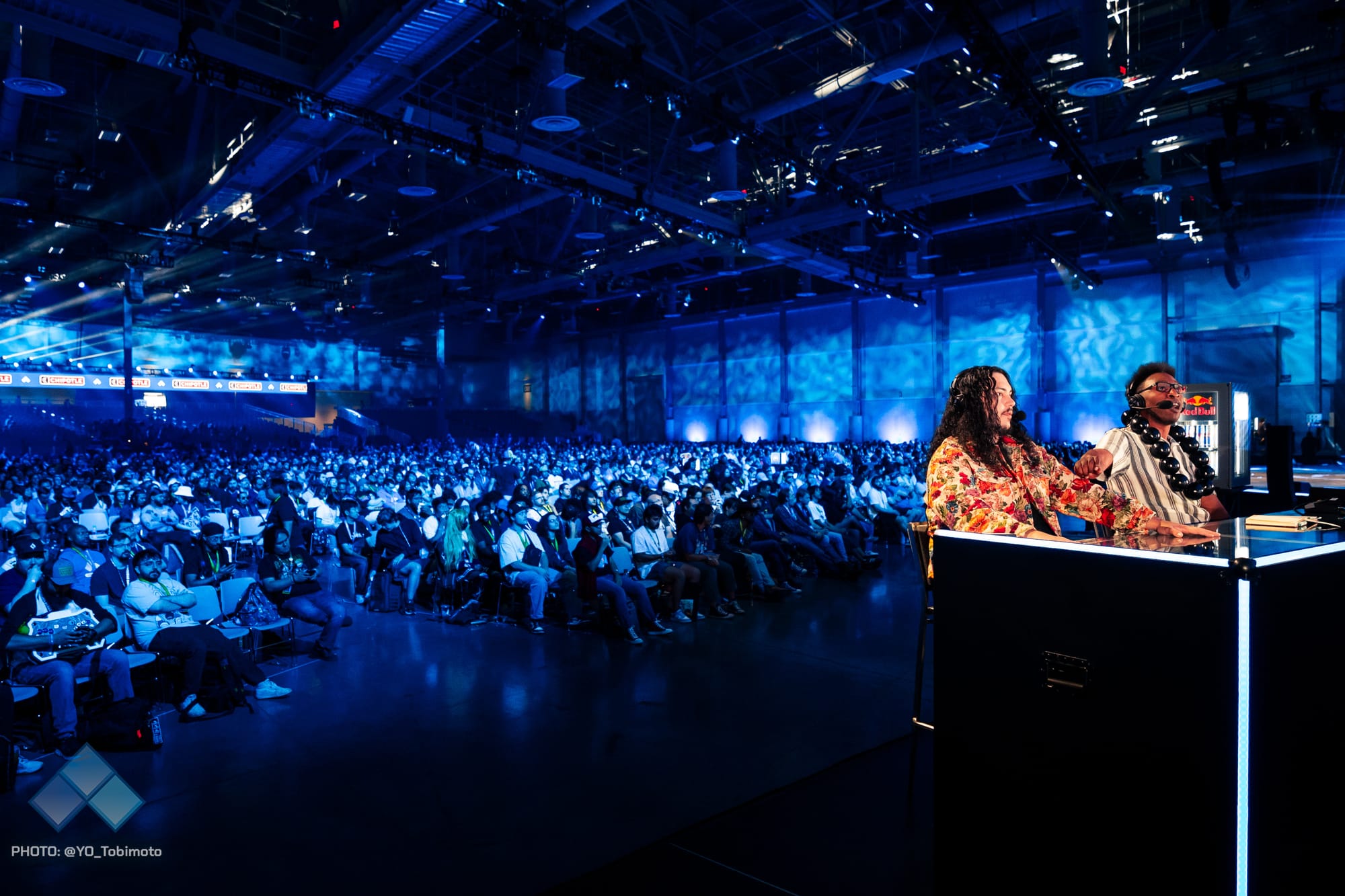
When I finally got into the arena, I sat in the front rows, taking advantage of seats that wouldn't be available much longer as the hours went by. With a couple of water bottles and snacks in my backpack, I got ready to enjoy one of the other big reasons I'd dreamed of going to EVO: watching high-level matches on a big screen, with the icons "right there," and the chants and emotions of hundreds of spectators, like being at a national team soccer match.
The experience was fantastic. You didn't need to get to the finals to experience skin-tingling moments of tension, and the passion of the audience came through with every combo, every whiff punish, or every special move placed at just the right moment. I love Strive, even though I haven't touched it in years and don't watch matches outside of EVO. Still, its Top 8 managed to thrill me over and over again.
When a Top 8 ends -- typically lasting around two hours -- all participants are awarded their prizes and there's a break before moving on to the next game. But before that break, there's usually a main course for spectators: announcements about the future of the game you just watched, or of other titles on the horizon. Whether this EVO's announcements were "good" or "bad" isn't something I care about right now. What matters to me is something that can't be put into words: the emotion with which the audience experiences it, as a community, is beyond description. These are moments that can't be manufactured. We're gathered as a community, breaking bread, and enjoying what moves us. It doesn't get better than that.
After Guilty Gear Strive came Fatal Fury: City of the Wolves. We saw excellent matches, but Go1's performance -- a pro who has demonstrated his expertise across countless games for years -- deserves endless applause. Sure, we'll all remember Kojikog's moment, grabbing his head and acting like he was having a breakdown on camera, echoing a classic rivalry between him and Go1. But the best part was watching Go1, who had some moments of doubt here and there, come out on top once again.
Before Tekken 8 started, I took the opportunity to do one last walkthrough of EVO. I saved my seat with a water bottle -- incredibly, it worked! -- and took my break, where I caught some things I'd missed, like Shinkiro, the classic SNK artist, signing autographs.
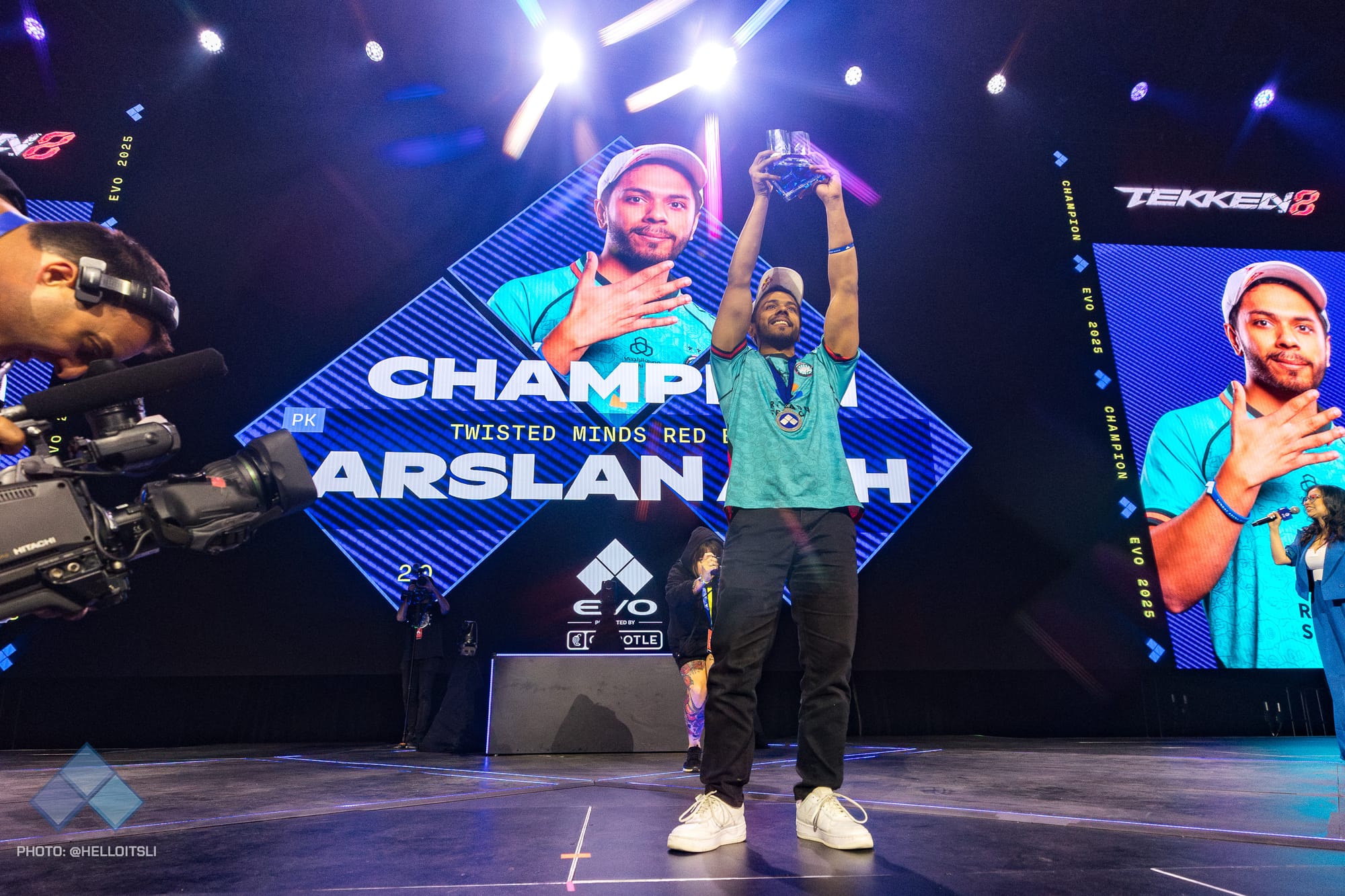
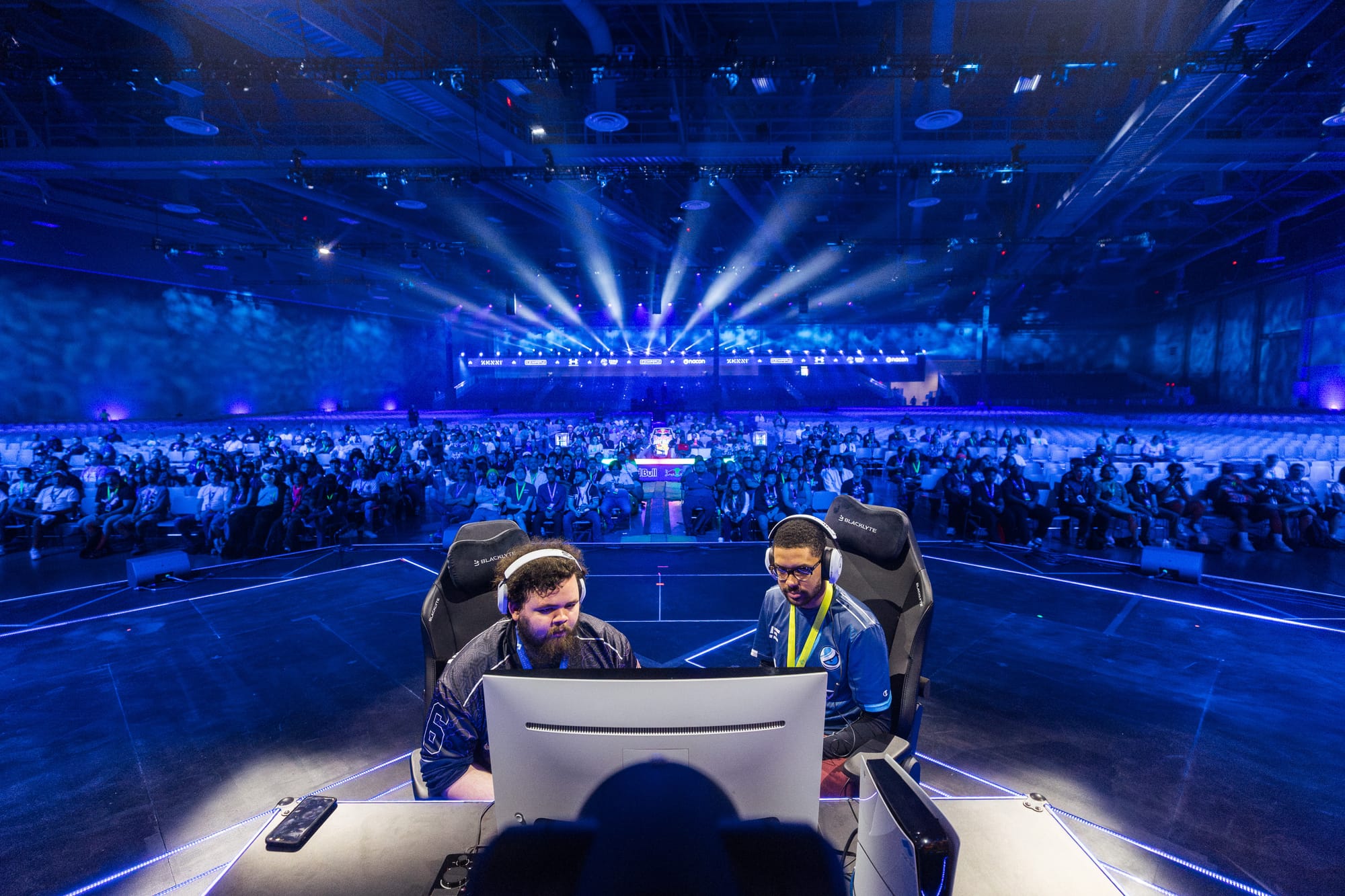
I came back with a couple of Tekken 8 matches already underway and its upcoming character announcements already made (if the crowd erupted in the showroom, I can only imagine what it was like in the arena). There were several matches still ahead, and I ended up witnessing what I already knew: Pakistan reigning over the scene once again. Arslan Ash (pictured above) won his sixth EVO, in a final full of twists against a fellow countryman, Atif.
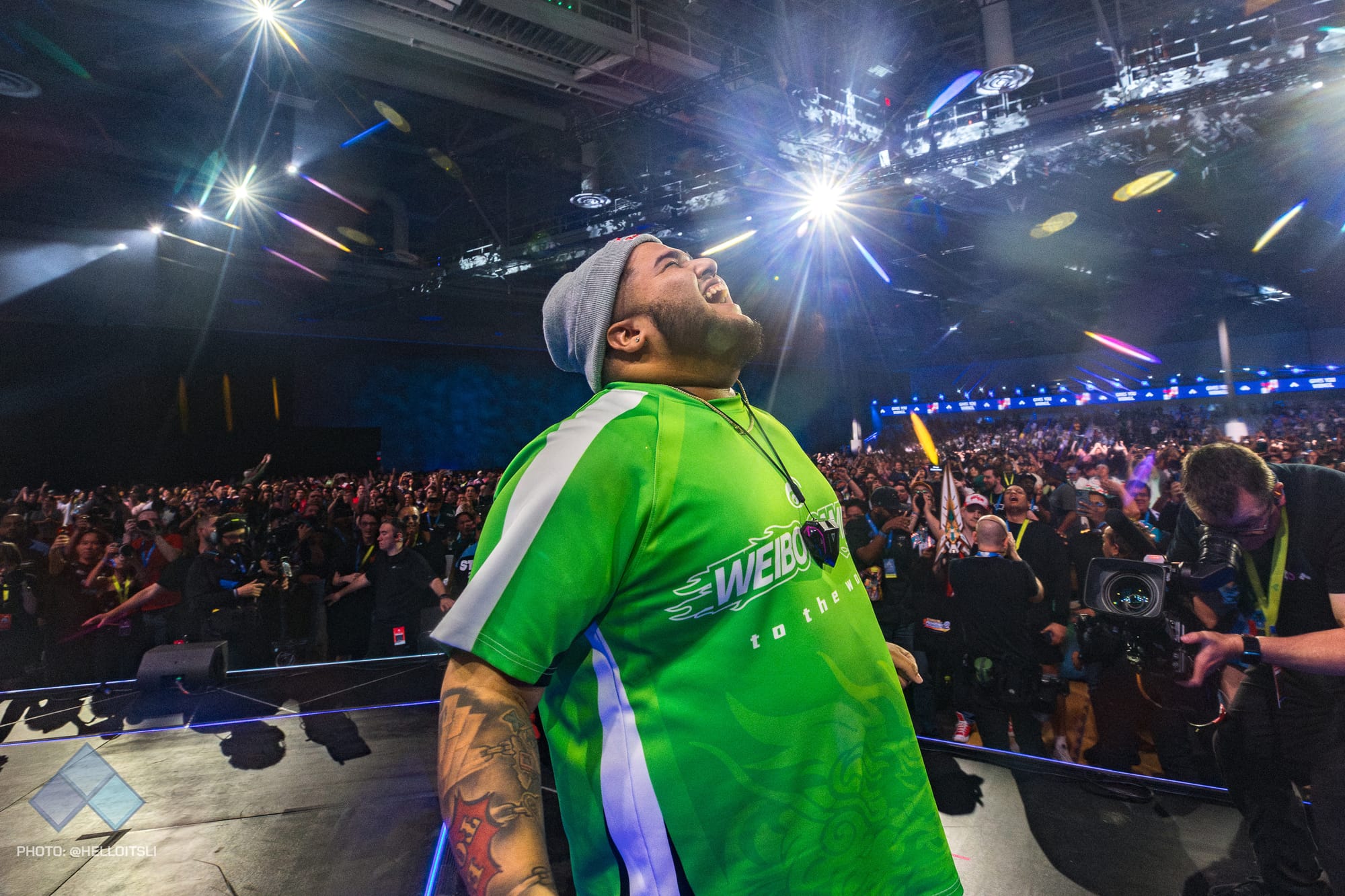
That feeling of watching a movie already knowing how it ends also hit me with the close of Street Fighter 6. The Dominican MenaRD (pictured below) mopped the floor with every opponent, and the Japanese player Kakeru's "aura" display wasn't enough to beat him. Special mention goes to Micky, a teenager from Hong Kong who placed third in the Top 8. The next generation is already here and making waves.
When I checked the time, it was almost eleven thirty at night. I started making my way out while the last competitors went up to receive their trophies. I was completely exhausted. I love playing and watching fighting games, and that weekend I never got tired of doing it. But after a few Top 8s, it felt like a marathon and the fatigue was catching up with my entire body. It was time to rest and save the thoughts for another day.
Insert another coin
I wrote these lines a little less than a week after EVO ended. I refused to put my thoughts down quickly, at the risk of losing details and feelings, for two reasons: I was tired and needed to think about anything else; and I wanted the heat of the moment not to influence my writing too much.
Today I can say that EVO was everything I wanted and more. It even made me reconsider some things about how seriously I take fighting games on a personal and competitive level (and I already took them very seriously!). I left feeling motivated and eager to play and train more often, to support local tournaments and enter every one I can. I check my phone and smile: I see the message from my former Tekken rival inviting me to a server with other future opponents.
These lines don't mean that everything was positive or ideal, of course. If I could attend one of the other editions or return for Las Vegas 2026, I'm not sure I'd go as a journalist again. You get dream opportunities, but you also miss out on a lot, like spending more time with the community. Something I feel is truly the heart of this event. We'll see what the future holds. For now, as Daigo told me, "I'm just trying to get better every day."