The Expansion of Game Development in Argentina
Indie studios, mid-sized companies, and large enterprises are looking for all kinds of creative and technical profiles.
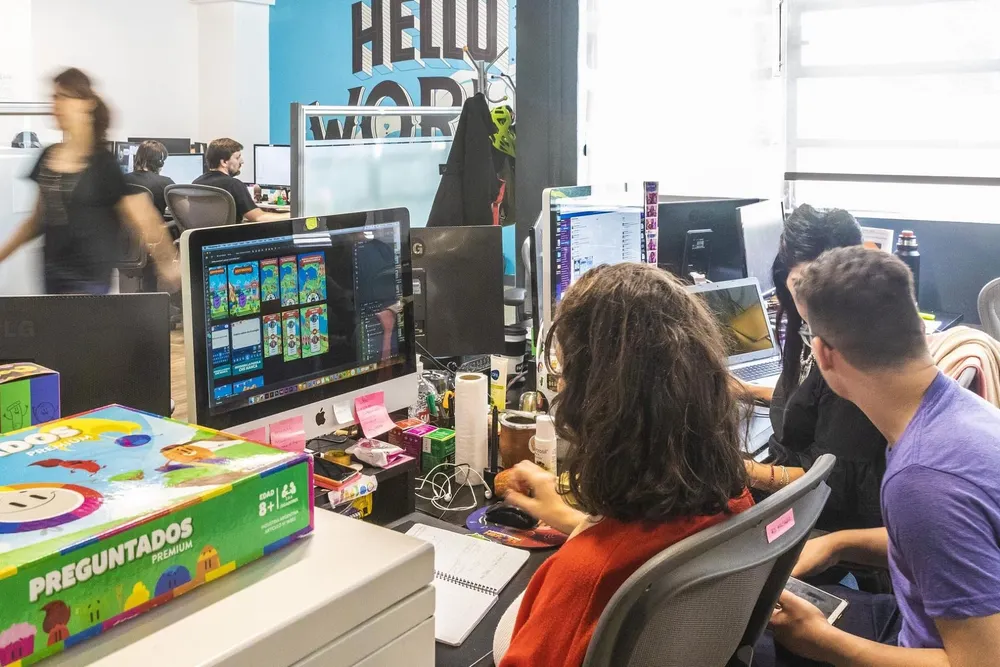
For any Argentine who grew up with their pupils bombarded by the cathode rays of dozens of titles, the possibility of working in something related to the video game industry belonged to the realm of fantasy, imagination, and dreams. Largely a product of the asymmetries of the current mode of production.
While since the '90s Argentine gamers could feel part of a "global community", the possibility of playing an active role in video game production during those years, and well into the 2000s, was nearly impossible. Barely a dream.
However, it's no longer news that for at least a decade, Argentine companies dedicated to creating video games haven't stopped growing. Today there are real possibilities of joining one of these companies and building a career participating in video game creation from Argentina for the world.
And not only in technical positions like developer or programmer (undoubtedly the most obvious alternative) but also from competencies more associated with the creative side such as writing, illustration, design, advertising, and a long list of others. So, young student of Literature, Communications, Journalism, Philosophy, or related fields: don't despair, there's a place for you too.
An industry with all shapes and sizes
Argentina's gaming industry has fauna of all sizes. The flagship is Etermax, creator of the Trivia Crack franchise (2013), which thanks to its trivia games managed to lead global rankings. With a presence in more than 180 countries, it now has over 600 million downloads worldwide, and more than 150 million annual active users. Insane.
This Argentine giant based in the Buenos Aires neighborhood of Villa Urquiza employs more than 500 people worldwide, distributed across six countries (Argentina, Germany, Uruguay, Mexico, Brazil, and Colombia). And according to the company, 25% of that workforce is occupied by creative positions.
At the other end of the spectrum are the folks at LCB Game Studio, with their "pixel pulps." The studio is led by Nicolás Saraintaris, a multifaceted human whose skills range from writing novels to creating video games, and Fernando Martínez Ruppel, an illustrator of a rare breed.
The team at LCB is close to launching Mothmen 1966, a game that can already be added to your Steam wishlist. It's a text adventure where pixels serve the main function of creating very vivid atmospheres. The game is like a kind of digital Choose Your Own Adventure gone off the rails.
The studio closed a deal with the publisher Chorus Worldwide, which is equivalent to securing the financing needed for the game to be produced and have a good launch.
Today, for small and mid-sized studios, that's the game within the game (the "metagame"): since they can't afford to finance their own project, they need a publisher to do it. It's somewhat the equivalent of landing a contract with a record label in the '80s to produce an album. Getting a good publisher to finance the project is a key tool for navigating the always turbulent waters of the Argentine economy.
In the middle of the spectrum, we can highlight two standout projects. Saibot Studio, creator of the game Hellbound (2020), a beautiful FPS inspired by Doom but with all the additions that contemporary technology allows. And Tlön Industries, led by the already legendary Javier Otaegui, creator of the multi-award-winning Per Aspera (2020), in which we're tasked with terraforming Mars.
Whether in a mobile gaming giant, a micro-studio that creates text adventures and pixel art, or a mid-sized company that creates FPS or strategy games, working in the creation of Argentine video games for global audiences no longer belongs to the realm of fantasy but is part of the new(?) reality.
This article was originally published in Página/12. It is reproduced here with the author's permission.
Las notas de 421 no tienen paywall
Y a cada colaborador se le paga por su trabajo. Las dos cosas dependen de los suscriptores.