Fentanyl: History and Effects of the Zombie Drug

7 de feb. de 2025 — Luis Paz

Jackpot. Murder 8. Apache. Dance Fever. Goodfella. Tango & Cash. ZOMBIE DRUG. The street names for fentanyl are absolutely epic, every single one of them. The synthetic opioid, which has controlled medical use as a painkiller for cases of extreme pain, became outside the clinical ecosystem one of the major illegal drug and addiction problems of our time. Several of those nicknames are linked to some depiction of hard drugs in film or TV, and it does not seem arbitrary: the effect is so extreme that the closest comparison lies in those exaggerated on-screen overdose scenes, rather than in hard-to-grasp quantifications like being 100x stronger than morphine.
The drug activates a specific type of nerve receptors in the brain, producing an alteration in the perception of pain and emotions. A dopamine rush, a sense of reward, extremely high dependence, brutal withdrawal, dyskinesia, sensory hallucinations, and involuntary spasms. All at once. And it gets worse: sustained use outside the clinical setting ends in physical degradation and, in many cases, the loss of every bond, not only social but with "reality" itself. Again: THE ZOMBIE DRUG. But what is it actually about.
What is fentanyl
Fentanyl is a synthetic opioid, a chemical compound designed to replicate the therapeutic effects of natural opioids such as morphine. Its chemical formula is C22H28N2O. In other words, nothing more and nothing less than a specific combination of carbon, hydrogen, nitrogen, and oxygen. There is a range of synthetics built from those elements, among which in Argentina the most well-known tend to be methadone and tramadol.
In its established use, fentanyl is required in hospital settings, along with derivatives such as sufentanil, alfentanil, and remifentanil, especially for pre-surgical anesthesia and post-operative pain relief, as well as for prescription treatment of chronic pain or episodes of very acute pain where other painkillers, including morphine, fall short.
Current context of fentanyl
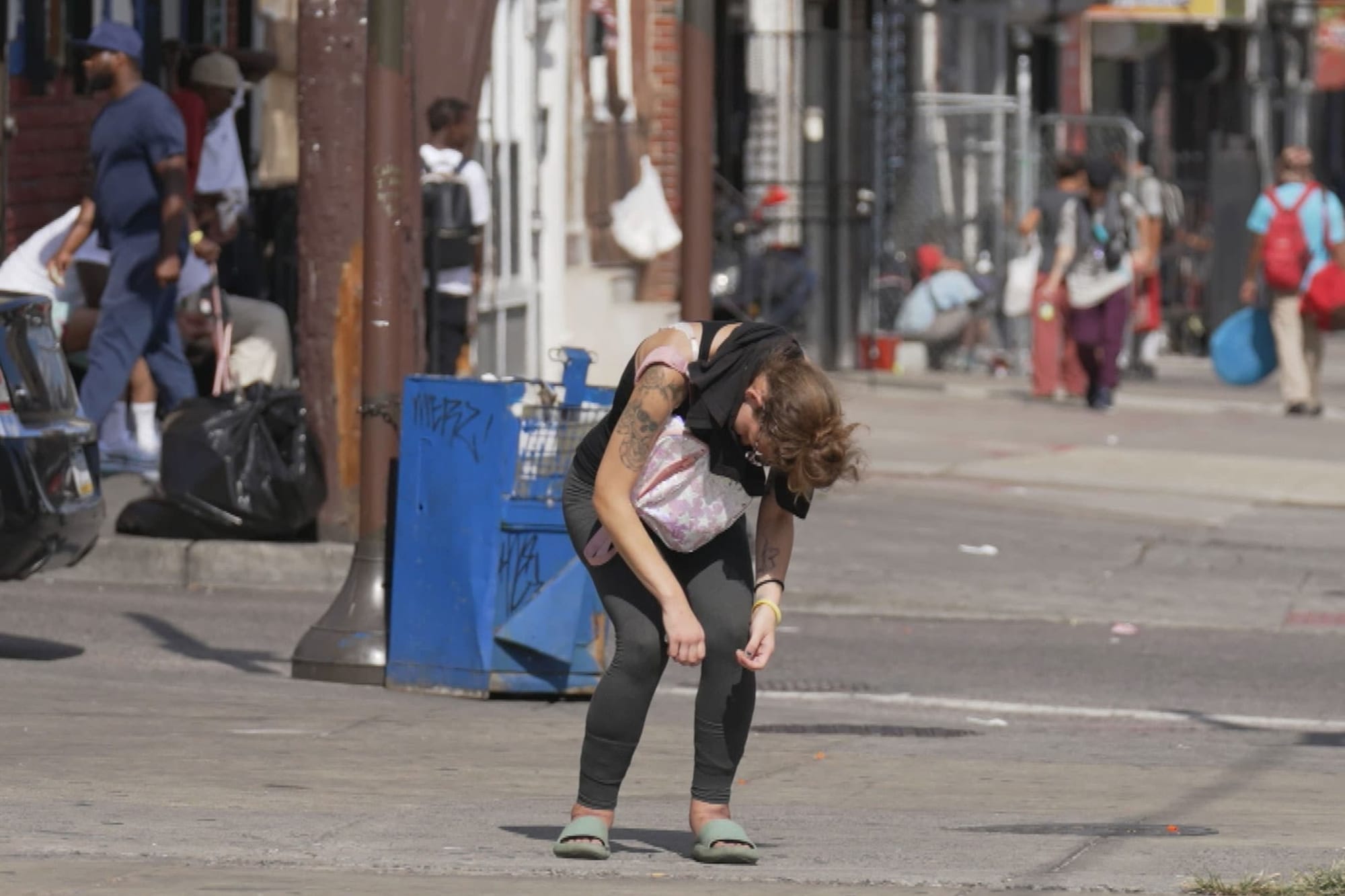
Fentanyl appears not only as an indispensable development in the pharmaceutical industry of the second half of the 20th century due to its analgesic capabilities, but also as a looming problem, mainly in the United States, where there are about 100,000 overdose deaths per year. Of those, in just the last two years alone, more than 120,000 were linked to fentanyl or its derivatives. Images of Americans zombified by the "recreational" use of this synthetic opioid are increasingly common in media and social networks, as is the inclusion of this drug in songs, movies, and video games.
Globally, the use of fentanyl is not banned; in fact, it is used in industries beyond pharmaceuticals. However, it is quite heavily regulated. It is only prescribed under medical supervision, with frequent follow-ups and constant reassessments to continue treatment. Even when administered by healthcare professionals, its use can lead to dependence. But uncontrolled and unsupervised consumption can result in overdose and death: the lethal dose is estimated at 2 milligrams, meaning a single gram of fentanyl can kill 500 people. For this reason, many governments have tightened regulations on its entry, distribution, and use within their countries' medical systems.
A brief history of medicinal fentanyl
Belgian doctor Paul Janssen, of Janssen Pharmaceutica, first synthesized fentanyl in 1959, while testing analgesic formulas that would be more effective for treating chronic and/or intense pain. Its potency allowed for lower doses by weight with vastly superior results in pain treatment, so after several years of research it was incorporated into the legal pharmacopoeia, under strict storage and distribution controls, and with mandatory professional supervision for its use.
In 1968, the Food and Drug Administration of the United States approved its use in the anesthetic cocktails typical of surgical procedures. During the 1970s and 1980s, its use became increasingly common in hospital settings, both in surgeries and post-operative care and in the treatment of chronic or intense episodic pain (acute pain layered on top of baseline chronic pain; an absolute massacre). Finally, in recent decades we have seen its arrival in all kinds of formats, such as nasal sprays and tablets that dissolve in the mouth.

The problem of uncontrolled use
And that is also when its "civilian" use began to grow, since we could not really call it "recreational" if we go by the meaning of that word. In its first decades, fentanyl was an open secret among doctors and anesthesiologists with enough expertise to use it privately within a certain threshold of controlled risk. That did not prevent the first public cases of fentanyl overdose from occurring. Starting in the 1990s, this use and abuse had already moved beyond the medical ecosystem and into the streets, following the popularization during the 1980s of China White powder, an analog (alpha-methylfentanyl) that was very potent and highly addictive.
The clandestine labs of the 2000s, made possible because fentanyl can be produced in small spaces and in low quantities due to its staggering potency gram for gram, gave way from the mid-2010s onward to a full-blown open-air scenario, a combined landscape of synthetic drug problems that in the United States became known as the Opioid Crisis. The definitive arrival of fentanyl on the streets, visible especially in major American cities like New York and Los Angeles, two of the hardest hit.
Legal forms and illicit use of fentanyl
Low, tolerable doses of fentanyl are legally sold in a variety of formats, such as transdermal patches, tablets for chronic pain, anesthetic injections for crisis doses, and nasal sprays for palliative care. All of these forms are controlled substances, dispensed exclusively by documented medical prescription.
But on the black market, fentanyl comes in the form of a white powder. Hence the name White Heroin. It also comes in liquid form. A regular dose in those "formats" costs about 5 dollars. It is then snorted, with rapid entry into the bloodstream through the nasal route. Another express way to achieve the effect is through intravenous injection (or less effective alternatives such as intramuscular or subcutaneous). Sometimes it is taken orally, mixed with other pharmaceuticals or in pill form, although the effect becomes slow and causes significant liver stress. It can also be smoked mixed with other substances or in crystal form, with terrible consequences for the respiratory system. There are even those who tear apart legally sold patches to inhale, eat, or inject the diluted gel.
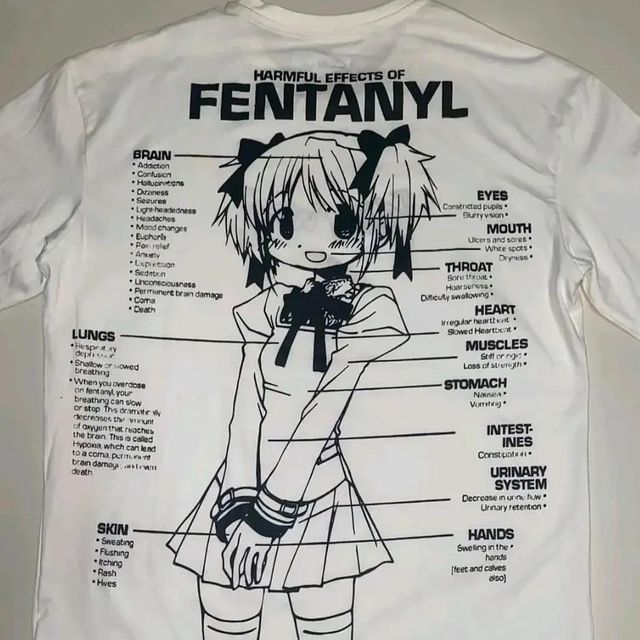
The effects of fentanyl
Anyone who has taken tramadol or slept next to someone who has can attest to the level of bodily shutdown it produces, a mix of relaxation from pain relief with what seems to be a systemic numbing of body and mind, a state of deep standby. Well, morphine is far stronger than tramadol, and fentanyl is estimated to be up to 100 times stronger than morphine.
The effect is immediate. No progression. Suddenly, the combo of C22H28N2O has delivered a paralytic kick to your head without warning. That moment is usually accompanied by great euphoria, stemming from the remarkable gratification of unbearable pain ceasing or subsiding. The effect is very potent and very brief, and in that short, intense window it triggers a cascade of reactions related to both anesthesia and reward. Completely addictive.
Symptoms and treatment
Extremely small pupils, loss of consciousness with inability to wake up, decreased cardiorespiratory rate (sometimes to the point of cardiac arrest), muscle flaccidity, cold skin, purple tones on the face and extremities, and even bluish or purple vomit. All symptoms of fentanyl intoxication or consequences of sustained use, even at low doses.
Fentanyl crises are usually treated with the default antagonist for synthetic opioids, which is naloxone, capable of reversing even the effects of a mild overdose. Beyond that, neither in the United States nor anywhere else are there highly specific harm reduction policies, other than increased controls on the substance and the availability of naloxone in health centers. Otherwise, it involves standard practices such as needle exchange programs and supervised consumption sites.
Why fentanyl is so lethal
Fentanyl has uses similar to morphine, although it is far, far more potent, which means that a very small amount is needed to have a really strong effect. Which also means that the risks in dosage calculations are exaggeratedly higher. While four bumps of cocaine are not that much more than three, with fentanyl a minimal miscalculation in dosage can lead directly to death. The usual amount for a fix is less than the tip of a pencil. The distance in size between life and death is smaller than a grain of rice.
Additionally, in its illegal use it often ends up mixed with other drugs, which can be very dangerous because it becomes impossible to know how much fentanyl a pill, a bag, or a rock contains. This leads to severe overdose hospitalizations. And to more deaths.
Fentanyl as a consequence of the American healthcare system
Three decades ago, the medical prescription of opioid painkillers experienced exponential growth. Drugs like oxycodone (OxyContin) and hydrocodone (Vicodin) appeared in a growing number of "American households." A combination of physicians' lack of awareness about the risk of addiction and aggressive promotion by pharmaceutical companies led to these drugs being dispensed almost indiscriminately, causing opioid dependence to skyrocket in the United States.
When this situation became public knowledge and regulations for prescription opioids were tightened during the first Obama administration, many users had to turn to illegal alternatives, first increasing heroin use and later popularizing fentanyl and its analogs. The extreme potency and the difficulty of calculating doses without proper equipment pushed the number of lethal overdoses into six figures. This "Opioid Epidemic" also stems from the healthcare system's submission to pharmaceutical companies and from the creation of a growing market of addicts with high tolerance.
Fentanyl in Argentina
Fentanyl is also present in Argentina, where it has legal medicinal use under Law 23,737, the so-called Drug Law of 1991, and under Law 17,818, known as the Legal Narcotics Law, dating from 1988. And although other countries have reported veterinary use in anesthesia and palliative treatments, in Argentina the use of fentanyl and its derivatives is only permitted in human medicine. In the country, this synthetic opioid is produced, distributed, and used both legally and illegally, to the point that in 2024 the Ministry of Health published its Fentanyl Alert to draw attention to the problem. It is classified as a controlled substance in Argentina, with severe penalties for trafficking.
In recent years, various events have drawn attention to the arrival and use, both legal and illegal, of fentanyl in Argentina. In February 2022, two dozen people died in the province of Buenos Aires from consuming cocaine laced with carfentanil, one of its most potent forms. In 2023, the General Customs Directorate implemented stricter measures for the entry of fentanyl, including the creation of an import/export registry. And recently, more than 50 deaths were caused by batches of clinical fentanyl manufactured by HLB Pharma Group and Laboratorio Ramallo, contaminated with the bacteria Klebsiella pneumoniae and Ralstonia pickettii.
At the same time, there are increasing cases of illegal theft of legal fentanyl, as happened this January when a paramedic nurse stole several ampoules from Hospital Paroissien in La Matanza. Or in previous years, when other healthcare professionals were caught taking doses of fentanyl and other similar drugs.
In the current global context and with the advance of surveillance over emerging countries, high-ranking US government officials, the Assistant Secretary of State for International Narcotics and the Head of Southern Command, have already been overacting their concern about the state of Argentina's fight against illegal synthetic opioids. The US government itself points to China as the main producer of fentanyl, and claims it is illegally exported to Mexico for distribution across the entire continent. Or it is all a psyop and it was always the Americans. Either way, it is a tangled knot hard to untie. Impossible, I would say, if you are under the influence of fentanyl.