Final Fantasy + Magic: The Gathering, a Match Made in Heaven

23 de may. de 2025 — Fede 'okelfo' Lo Giudice
How do you exist in a world obsessed with classifying things when your very identity is change? The answer for Final Fantasy as a franchise was to create a universe that plays by its own rules and expectations, and to turn a revolution into a business. In February 2025 it was announced that Square Enix's iconic saga would inspire a card series for the popular Wizards of the Coast game Magic: The Gathering, and while the announcement was a surprise, the reaction was not so much.
A fever broke out on both sides, flooding social media with incredible drawings of the saga's protagonists on playable cards... cards that somehow fit together and fed off each other. Both MTG and FF are, in a way, something enjoyed by relatively large groups of people, but they're also particularly known for how obsessive those groups are -- the author washes his hands of any judgment. To understand why this crossover works, we need to go back several decades.
It's no coincidence that both Magic: The Gathering and Final Fantasy emerged inspired by Dungeons & Dragons. Gary Gygax's iconic role-playing game had already pushed several generations by giving a darker, more modern, cooler spin to classic Tolkien-style mythologies and legends, and it inspired some of the most enduring modern fantasy franchises. At least if you look at it from Japan's side, the story goes something like this.
"No pienses que estoy solo, estoy comunicado con todo lo demas" - Charly Garcia, "De mi"

The Final Fantasy saga started in December 1987, when Hironobu Sakaguchi, disillusioned with the industry, was thinking about making one last game before going back to university and leaving his beloved Squaresoft. Blending Dragon Quest with Dungeons & Dragons, he kicked off a series that, very gradually at first, began to grow and jump across consoles, becoming one of the most prominent RPG sagas in Japan. FF became the company's flagship title and, after five installments, Sakaguchi decided to pass the baton and become the series' producer instead.
The real breakout moment for the saga came 10 years later, in 1997. Final Fantasy 6 had been one of the most beloved SNES/Super Famicom games, and they had even worked closely with their rivals at Enix (specifically with Yuuji Houri of Dragon Quest) to create Chrono Trigger, still considered one of the greatest games of all time. But with Final Fantasy 7 they decided to switch platforms and go with PlayStation 1 instead of Nintendo's "new one," thanks to the space and cinematic possibilities that having games on CD rather than cartridges allowed.
Produced by Sakaguchi, with Yoshinori Kitase (FF6, Chrono Trigger) in the director's chair, the legendary Nobuo Uematsu as composer, and other standouts like Tetsuya Nomura on art and Ken Narita as lead programmer, Final Fantasy 7 broke the industry wide open. Across three discs, we followed the story of Cloud and the eco-terrorist group Avalanche, who in a quasi-cyberpunk setting were trying to stop the Shinra corporation from exploiting the planet's spiritual energy to generate electricity: basically, an ode to why you shouldn't ask dumb questions to Grok or any other AI that pillages the planet just to answer you with autocomplete.

The key is that, just a few hours into the game, we learn that it's not just Shinra we need to deal with but also Sephiroth, a former soldier seeking revenge against the company for having been raised in their labs as a genetic experiment. And so the cyberpunk gives way to the usual fantasy where this madman wants to use that same spiritual energy to become a god and destroy all life on the planet, which would then become his spaceship to visit any point in the cosmos he pleases: the classic setup where you start the game saving a kitten and end it killing a god.
The combination of a unique aesthetic in the nascent 3D era, a relatively elaborate plot with shonen touches, impressive graphics (for the time) and the cinematics that the shift to CD allowed, plus an inspired combat system with killer music, made for a devastating combo. FF7 set the standard, and to this day it's remembered as one of the greatest ever, a fundamental piece of gamer pop culture. And most importantly: it kicked off a golden age for the saga, spanning the four games that are generally -- though the order varies -- considered the most "iconic" in the series. They were on top of the world.
"I saw a film today, oh boy" - The Beatles, "A Day In The Life"

The rise of Final Fantasy, along with phenomena like Pokemon and other franchises, popularized RPGs among gamers, which led Squaresoft to wonder whether this golden goose could keep laying eggs forever. Quick on the uptake, they started testing the waters, and since Sakaguchi had already handed most of his responsibilities to Kitase, he decided that just as he'd brought his vision to life to create a legendary video game saga, it was now cinema's turn. That's how the first seed of Final Fantasy: The Spirits Within was planted -- an extravagant, no-expense-spared movie.
Inspired by some of FF7's ideas but with entirely new characters and setting, leaning more toward sci-fi than fantasy, Sakaguchi began writing and producing this computer-generated film. The idea was to deliver gripping storytelling, like the kind associated with the saga, with the cutting-edge digital graphics they were famous for. With a render farm of 960 computers producing a fully digital movie over four years, one that would feature a cast including Ming-Na Wen, Alec Baldwin, Donald Sutherland, and even Steve Buscemi, the film was an insane money pit. No matter, the brand carries everything, right? Wrong.
While RPGs were in what we could call their "golden age," the truth is that their popularity also meant the genre became associated with certain stigmas and indulgences. "Yeah, these are those games where you control some young dude or girl with perfect hair, and there's a ton of text, pointless melodrama, and instead of pressing X to jump, you have to pick it from a list. What a bore." In Spirits Within you didn't play anything, but for anyone not already into the franchise, it confirmed every prejudice. To make matters worse, the story of Dr. Aki Ross and her team was practically unrecognizable to any fan: like every comic book adaptation of that era, they did whatever they wanted to make it "accessible," and in the process pleased nobody.
Final Fantasy: The Spirits Within cost $137 million (about 250 million bucks adjusted for 2025 inflation, roughly the same as a Marvel movie like Captain America: Civil War). It grossed $85 million and critics demolished it. What's more, the years haven't been kind, and today it sits at 48% on Rotten Tomatoes. You don't have to be a math genius to realize that losing 50 million dollars and torching the saga's reputation blows a hole that threatens any company, and that's what happened to Squaresoft, despite the success of Final Fantasy X on PS2 and their other games.
"It's the end of the world as we know it" - R.E.M., "It's the End of the World as We Know It"

The Titanic doesn't get saved; it sinks whether you like it or not. Squaresoft symbolically died with Spirits Within, but there were still people eager to make money. So, through a process of financial restructuring and a capital injection from none other than Sony (the PlayStation folks, the ones most interested in "saving" the company), the studio managed to steady the ship somewhat with Final Fantasy X and the then-emerging Kingdom Hearts. Just enough to be able to merge with Enix (the Dragon Quest "rivals") without the shareholders murdering them.
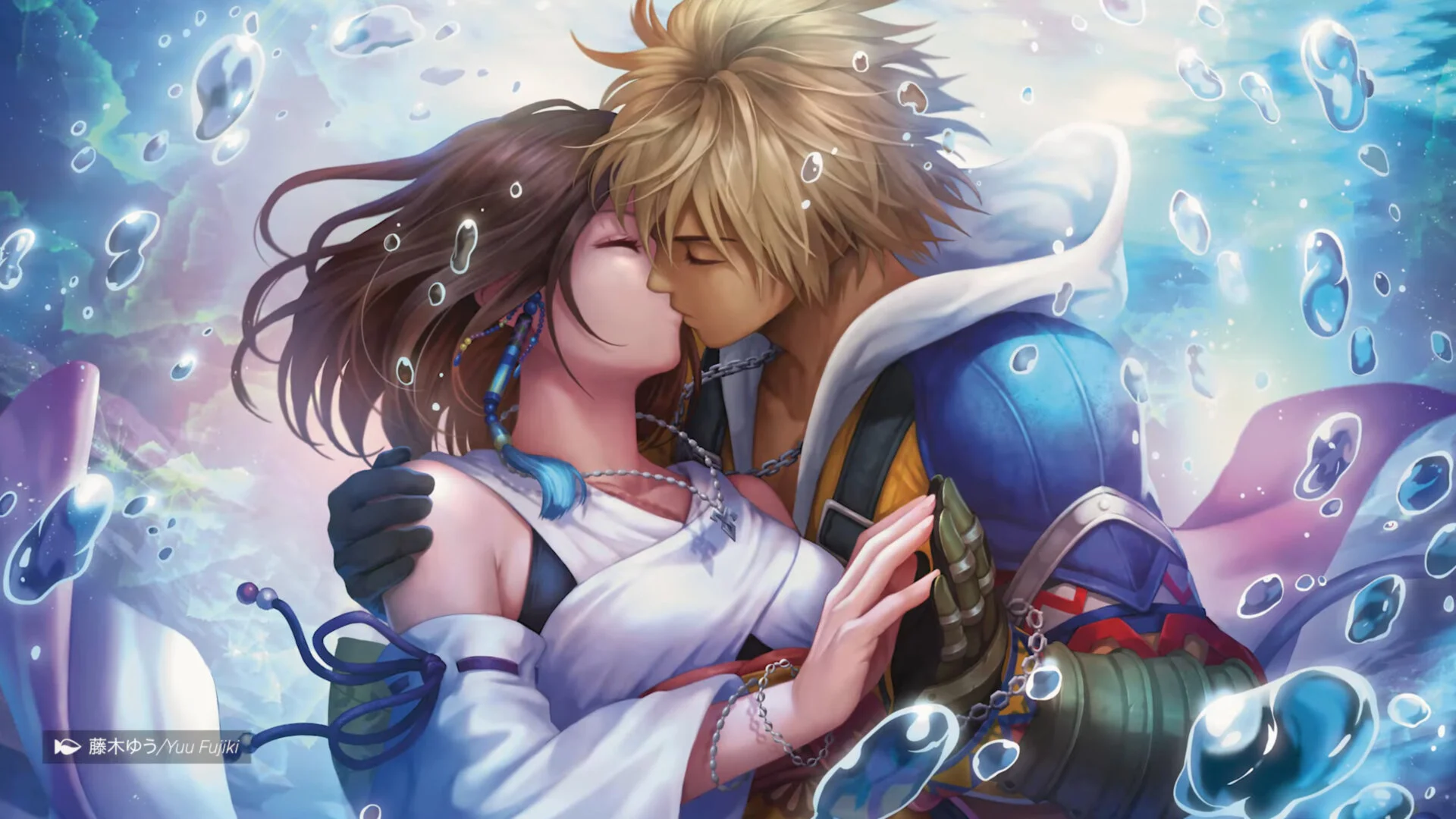
The contentious process cleaned up the books and saved more than one executive's neck, but the important thing was making sure it never happened again. So the reborn Square Enix thought, "What do I do so the next project that fails doesn't kill me?" The answer was to take on safer bets, but smaller ones, and play it safe. For instance, previously unthinkable things started happening: they announced Final Fantasy X-2 before Final Fantasy 12, continuing Yuna's story. Also, projects like Final Fantasy 13 would have multiple installments using the same game engines, characters, and similar systems to squeeze more value out of what they'd already built. And finally, to avoid living solely off Final Fantasy and Dragon Quest, they'd diversify.
Square Enix acquired franchises like Tomb Raider and Hitman, started developing mobile games, and even has a manga division whose most recognized and remembered title is Full Metal Alchemist. On top of that, Final Fantasy started being treated as a "brand" rather than a saga. They put their characters in Prada and Louis Vuitton outfits, brought out figurines in special Coca-Cola editions in Japan, and even inspired Fender guitars worth upward of $4,000 USD.

They bought, sold, experimented with NFTs (ironically, the characters from FF7 went after Shinra for less), spun off divisions, made plushies, albums, series, and yes, even dared to make movies again to accompany some of the saga's games, like the FF7 sequel Final Fantasy 7: Advent Children or the FF15 prequel Final Fantasy 15: Kingsglaive, which features Sean Bean and Lena Headey -- Ned Stark and Cersei Lannister themselves. They even made remakes, re-releases, ports, updates, spin-offs... and, well, the occasional new mainline entry in the saga, which is currently up to 16.
Put another way: the franchise went from being an artisanal little game made by a team of 8-12 people to becoming a multimedia monster that continues to inspire games for decades. It's not that Final Fantasy is a unicorn: it's the nature of the video game industry, where anything less than growing financially every year is the same as dying. In this context, nostalgia and love for the series -- any series -- is a business, and the fan is a consumer.
"Marita lo hace por la guita" - Patricio Rey y Sus Redonditos de Ricota, "La murga de la Virgencita"

Even with all this history, some seed of the original Final Fantasy survives. It's easy to be cynical and point out that there's no ethical consumption under capitalism, which would be true for Final Fantasy but also for everything else unless you're a hermit. For example, it's pretty obvious that the Magic: The Gathering cards are somewhat a logical conclusion of this process: why wouldn't you collaborate with one of the most recognized collectible card games on the planet?
Cynicism aside, Final Fantasy (and yes, Magic too) thrive on synergy. Can you imagine this same collaboration with Yu-Gi-Oh, the undisputed number one in card game revenue? Magic has an aesthetic more in line with the Square Enix behemoth, both because of their shared origins and their evolution over the past three decades, and even its game modes lend themselves to highlighting what makes Final Fantasy special: its characters.

The set drops on June 13, but the cards that make up the Commander decks have already been revealed -- Commander being the format that changes the rules so you play with a main hero, a commander, and it's a bit like reuniting with your favorite character to do something completely different. So you can build your main deck with Cloud, Terra, Tidus, Clive, Yuna, Alphinaud and Alisaie, and many others at the helm, commanding your army of summons that will pummel your rival's sorcerer.
It's a near-perfect alliance. It surprises with the affection it shows for the source material, but also because the two are genuinely compatible with Magic: The Gathering: they allow combined strategies, synergies with previous sets, and it's truly part of the game rather than a separate, hastily thrown-together bubble. With a product that leverages the best of both worlds, it feels like even though they're asking for your money, there's some genuine love in there... and isn't that, ultimately, what we're looking for from our comfort-food media monsters?
Fede "Okelfo" Lo Giudice es el autor del blog Fantasia Inicial, un recorrido "hiper remil subjetivo" por la saga (TODA la saga) a fondo, tratando de comentar hasta el mas minimo detalle. Lo podes leer en https://fantasiainicial.substack.com/