Foundations on MTG Arena: a draft giving Magic years of life

6 de dic. de 2024 — Luis Paz

Magic: The Gathering is the closest thing to a sandbox among mass-market TCGs. Much more than a game in itself, it is an ecosystem of multiple formats, with different rules, the most diverse settings, and distinctive features. Though always built around one central, divine object (physical or digital): the card. Everything stays threaded together thanks to a small set of rules that govern macro-level matters, like the sequence of phases and turns, deck building, or the rules of interaction. Beyond that, the magic flows from Magic's variability: the cards that rotate, the planes that shift, or the inherent randomness of a card game, whether at a table with friends or via MTG Arena.
The company behind Magic: The Gathering, Wizards of the Coast, regularly shares data about MTG Arena, its digital product, but without including Draft or Sealed, the two classic Limited formats. The November 4 chart shows that in Constructed nearly 50% of matches are Standard, around 20% Historic, and just over 15% Brawl. However, the feeling is that by common sense--and personal taste too--draft is the central axis of MTG Arena.
Among so many possibilities, draft stands out as an excellent format both for what it gives the player (new cards and prizes, as well as fun and ever-changing challenges) and for what it demands: focus and skill during matches, but before that, the ability to build a deck from scratch, from absolutely nothing, competing in real time against seven others looking for the same thing--to grab the best cards from that pool.
Until the recent appearance of Constructed events with gem prizes (the Magic formats where you drop in with a pre-existing deck of your own, like Commander or Historic), drafts were the only way to earn MTG Arena's premium currency from gold, its lesser coin. Even today, it remains the most fun and effective way to accumulate gems, because draft also lets you grow your card collection very quickly, between the 45 cards you draft and the boosters (packs) from prizes.
The loop in MTG Arena, then, is simple: playing any format completes daily or weekly quests that reward gold; that gold pays for entry into your preferred draft type (Quick, Traditional, Premier); and drafts deliver a gem payout based on the number of wins, plus prize boosters and the cards you picked. Beyond that, I am going to assume you know the basics of how a draft works and how to build a deck for this format. Otherwise, I do not see why you would be reading such a specific article (still, here is an excellent article by Reid Duke on the subject).
Magic: The Gathering goes back to basics
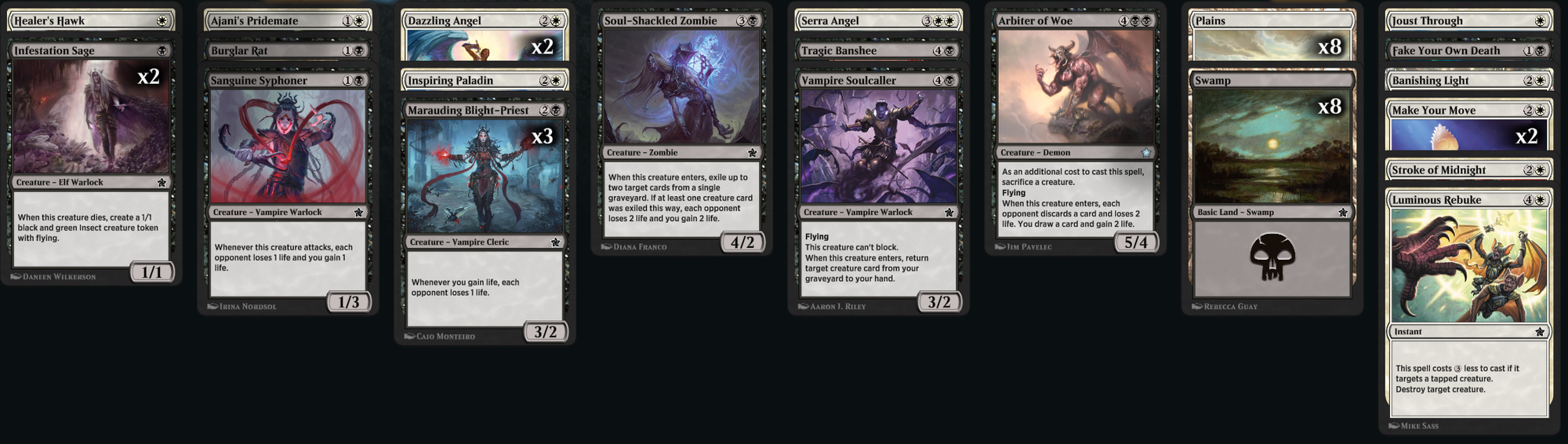
There is a second-order loop I am exploiting as much as I can on MTG Arena: the Foundations draft, the most recent set, has a fairly broken archetype that makes it practically impossible not to become a machine for mining gems. I am a persistent but mediocre player, and with a run of five drafts starting from 5,000 gold, I already pulled in the 3,400 gems for the current Mastery Pass and have a pool of over 3,000 gems to comfortably survive a couple of zero-win drafts. It is that simple: the black-white lifegain deck crushes it.
WB Lifegain is a valid archetype in drafts from many expansions, and the cards that gain life are especially effective in sets that go back to the fundamentals of Magic: The Gathering, to its basic interactions. Like the old Core Sets that, once a year, introduced a large batch of cards, separate from the settings and specific mechanics of other sets that year. For example, Core Set 2021, which came out during the pandemic in July 2020 and was the last of its kind, landed between the Greco-divine universe of Theros: Beyond Death, the modular monsters of Ikoria: Lair of Behemoths, the turbulent ecosystem of Zendikar Rising, and the snowy Viking tropes of Kaldheim.
Along those lines comes Foundations, which fills the symbolic role of a core set (half its draftable cards are reprints) and will be legal in Standard for the next five years--a major shake-up for the most popular format on MTG Arena and the one that drives the physical card market week after week. This means that Foundations drafts will keep reappearing on MTG Arena for years and years. Currently Quick Draft is unavailable (no big deal, it comes back on 12/22), but Traditional (best of 3, like in real life) and Premier are still running, and Premier is the one you should play. It costs 10k gold or 1,500 gems, and you would have to be truly awful not to finish with at least 3 or 4 wins with this deck and recoup 1,000 to 1,400 gems minimum (plus the drafted cards and rewards).
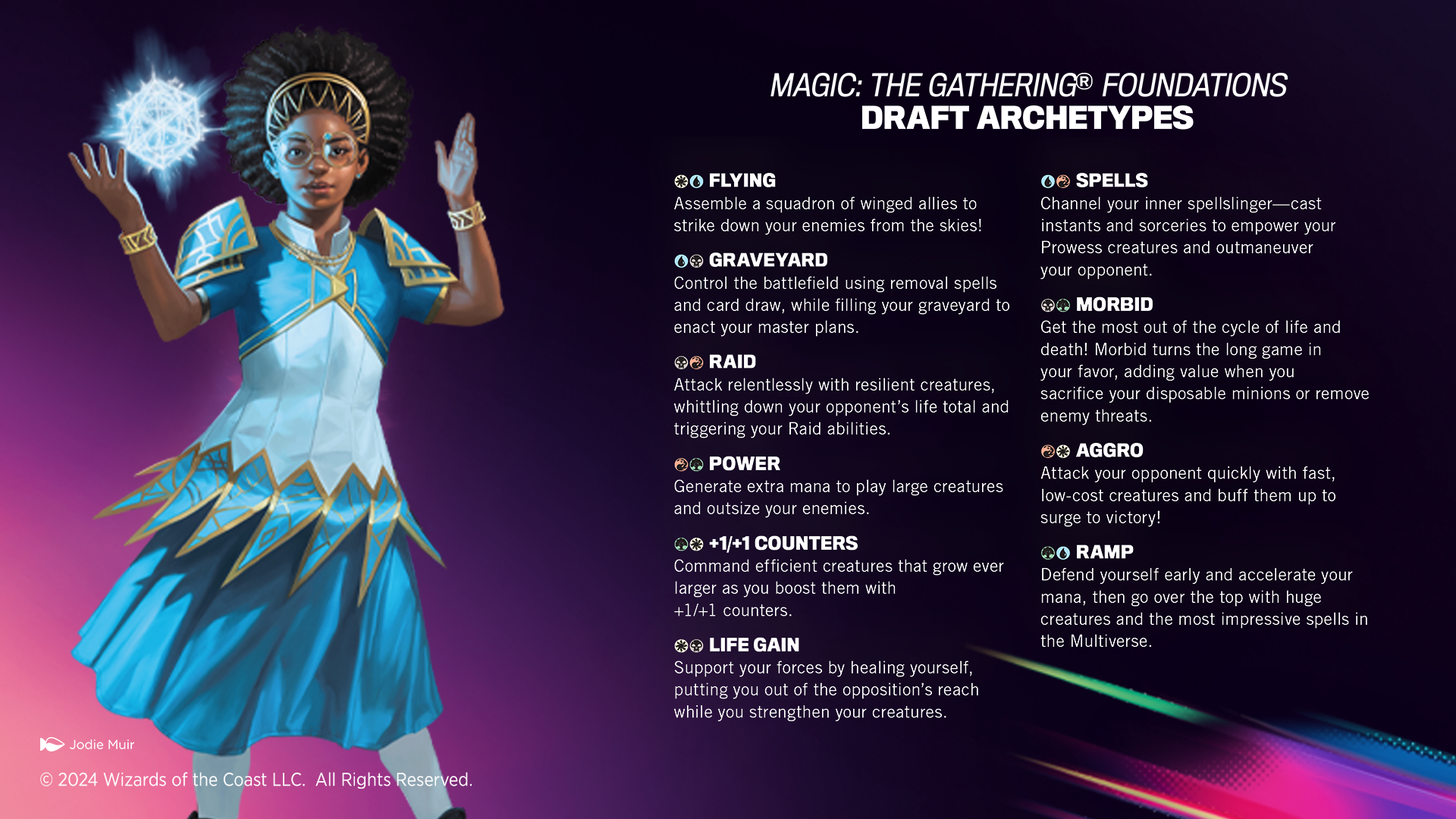
Foundations does not introduce new mechanics or bring back very specific old ones. Unlike the Eldraine sets with their Adventures, for example, what the brand-new MTG expansion features are classic mechanics tied to the game's main actions: casting spells (prowess), playing lands (landfall), attacking (raid), filling the graveyard (flashback, threshold, morbid). There are also synergies without a keyword but with strong support around themes like drawing extra cards or gaining life. And it is that last one we need to talk about.
An archetype that gives you years of life
Lifegain is a major theme throughout Magic's history, one that works as a catalyst for physical and digital decks across all formats, from Draft to Commander, through Modern, Brawl, or Timeless. That steady presence is because gaining life is, especially in the colors white, black, and green, a consequence or incidental event derived from playing cards. Many white and black creatures have lifelink (they gain life for the player equal to the damage dealt to the opponent and their creatures or planeswalkers). Many green and white creatures and spells have life-gain bonuses. And many black creatures drain (increasing the player's health and reducing the opponent's by the same amount).
The edge that Foundations provides is the same as in other core sets: since they are card collections not heavily based on very specific synergies, the cards go back to the basics of the game. And gaining life (the enabler) and its consequences (the payoffs) deliver major advantages among those basic aspects of the game. The more life you have, the harder it is to kill you and the more time you have to draw your best resources. And if on top of that, every time you gain life you draw an extra card, or buff a creature, or make your opponent lose life, it is absolutely insane.
In fact, the dominance of the WB (or Orzhov) lifegain deck, which according to Untapped.gg data represents 1 in every 7 decks in Foundations drafts, means this set sees games that tend to run long, resolving on average around the ninth turn.
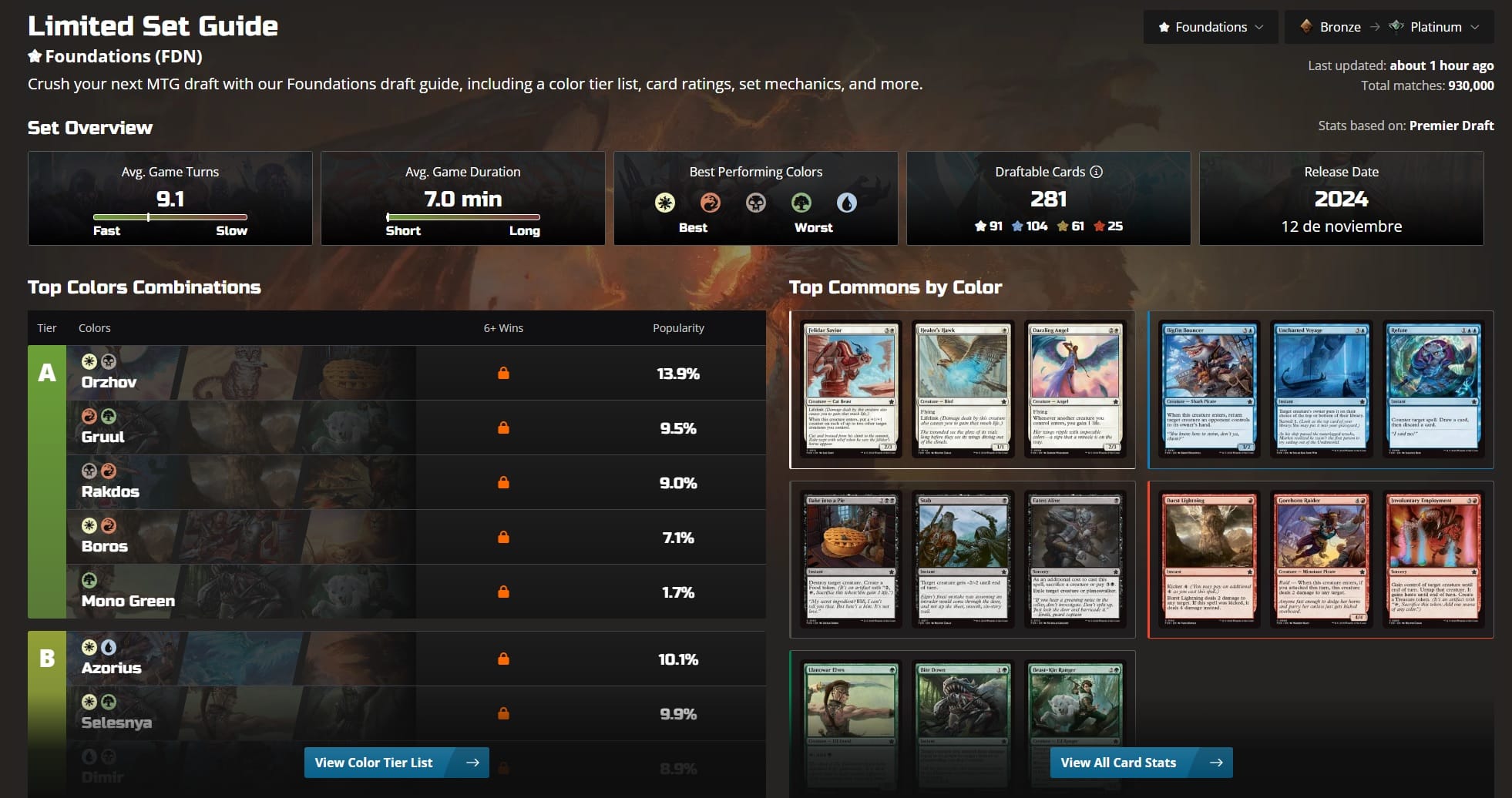
On the other hand, in Foundations Limited specifically, white is the best color to play as a primary, and it is wide enough to support multiple players at the same draft table, with fascinating creatures and all kinds of removal (spells that destroy opponent creatures), plus subthemes like this lifegain one or some relevant creature types, like cats or to a lesser extent angels.
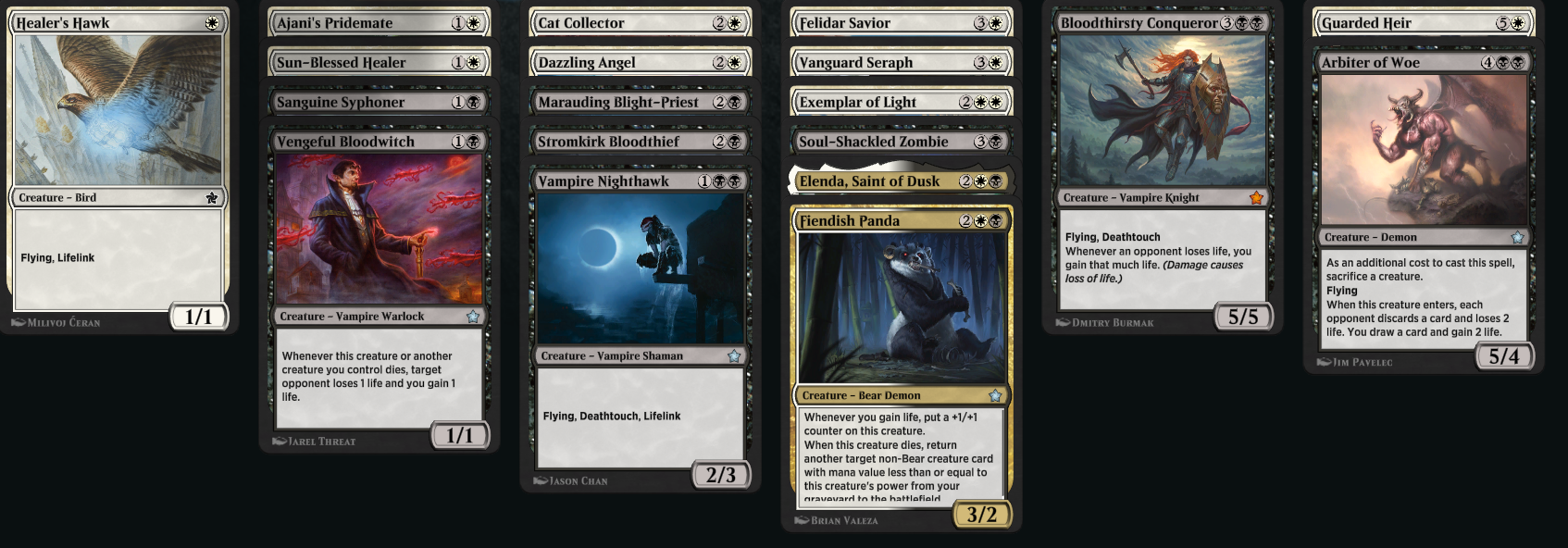
Many of those would be perfectly playable cards in drafts from other sets, but they are also cards that just by progressing through turns generate life and trigger effects when they do. They come in every rarity. At common there is Dazzling Angel, the 2/3 flyer that gives the player 1 life every time a creature you control enters. At uncommon, think of Ajani's Pridemate, the cat soldier that gets a +1/+1 counter every time the player gains life. And among rares there is Exemplar of Light, a sick 3/3 flying angel that gets a +1/+1 counter every time you gain life, and also lets you draw a card the first time she gets a +1/+1 counter each turn. You gain life, your creatures grow, you draw cards--everything spiraling upward.
Black complements this playstyle perfectly, with absolutely premium removal and key creatures both for generating those life gains and for converting them into damage to the opponent or chipping away at their life total. Take Sanguine Syphoner (1/3 common that drains 1 on attack), Vengeful Bloodwitch (1/1 uncommon that drains 1 when a creature you control dies), or Arbiter of Woe (5/4 flyer that requires sacrificing a creature as a cost but forces the opponent to discard one and lose 2 life, while giving you an extra draw and 2 life).
In total there are 19 white and black creatures that gain life (through their triggers or by having lifelink) or trigger an effect when life is gained. On top of that, they form a beautiful mana cost curve. This includes the bear demon Fiendish Panda, the multicolored uncommon signature card of the deck, a 3/2 that gets a +1/+1 counter when you gain life, and when it dies returns another creature from the graveyard to the battlefield. Or the rare legendary Elenda, Saint of Dusk, a 4/4 vampire knight with lifelink and hexproof from instants, who gets +1/+1 and menace if you have more than 20 life, and an extra +5/+5 after 30 life.
Keys to the WB Lifegain deck in the Foundations Draft
It is not that hard: the key is to deal damage and gain life while having on the board as many creatures as possible that generate benefits or advantages when either of those things happens. Or, ideally, that do both simultaneously, like Marauding Blight-Priest (a vampire cleric that deals 1 damage to the opponent when you gain life), the aforementioned Vengeful Bloodwitch, or Soul-Shackled Zombie, which also shuts down graveyard-based mechanics by exiling two cards from anyone's graveyard and, if at least one is a creature, drains 2 life from the opponent and gives it to you.
For this game plan to work, it is essential to have lots of low-curve creatures and start dropping payoffs from the third or fourth turn onward. Openings like a Healer's Hawk (1/1 flyer with lifelink for 1 white mana) followed by an Ajani's Pridemate can bulk up the cat soldier significantly. Syphoner loses effectiveness in the late game, but Bloodwitch and Healer (which has kicker) stay relevant as turns go by.
In these early turns there are also great cards outside the lifegain theme, like the white 1/1 cat that draws you a card on entry (Helpful Hunter) or the black 1/1 rat that forces the opponent to discard (Burglar Rat). There are also two dirt-cheap enchantments orbiting this archetype: Authority of the Consuls makes the opponent's creatures enter tapped and gives you a life, and Phyrexian Arena draws you an extra card at the start of your turn at the cost of one life (which becomes trivial in a deck that can effortlessly gain 10 or more life in a single match).
Moving into the mid to late game, the deck starts finding its synergies between counters and drained life, with Dazzling Angel and Marauding Blight-Priest as another starting duo in any of these decks. From there, the WB combination can start deploying big flyers, whether inside or outside the Lifegain theme, like the beloved Serra Angel (4/4 flying with vigilance) or Arbiter of Woe. Or making 2-for-1 plays with Vampire Soulcaller or some black spell.
As backup, you do not need much more than removal, and white and black have premium options across all rarities, costs, and speeds. Enchantments that exile permanents (Banishing Light), cheap instants like Stab (-2/-2 to a creature), and of course hard removal like Just Through, which deals 3 damage to an attacking or blocking creature and gains you 1 life, or Bake into a Pie, which destroys any creature and creates a Food token (which, as luck would have it, gains you 3 life).
The rares and mythics are outrageous, starting with Bloodthirsty Conqueror (5/5 flyer with deathtouch that when the opponent loses life makes you gain the same amount), Exemplar of Light, or the iconic Elenda. In terms of planeswalkers, white can bring in Ajani, Caller of the Pride, and black has the dark dame Liliana, Dreadhorde General.
That said, you do not need to open a single rare. With a deck of nothing but commons, uncommons, and basic lands you can go 7 wins in a Premier in under two hours, counting picking time. And now that I mention basic lands, let me add: the dual lands in Foundations are the gain lands, which give you a life when they enter the battlefield--absolutely perfect.
With this deck I went 7-1 using the free draft token from the Mastery Pass and walked away with 2,200 gems in two hours. Incredible loot for a fairly mediocre deck, though one with some synergies. Incredible loot for a fairly mediocre player, but in the right loop.