GAD

11 de oct. de 2025 — Juan Ruocco 🧙♂️
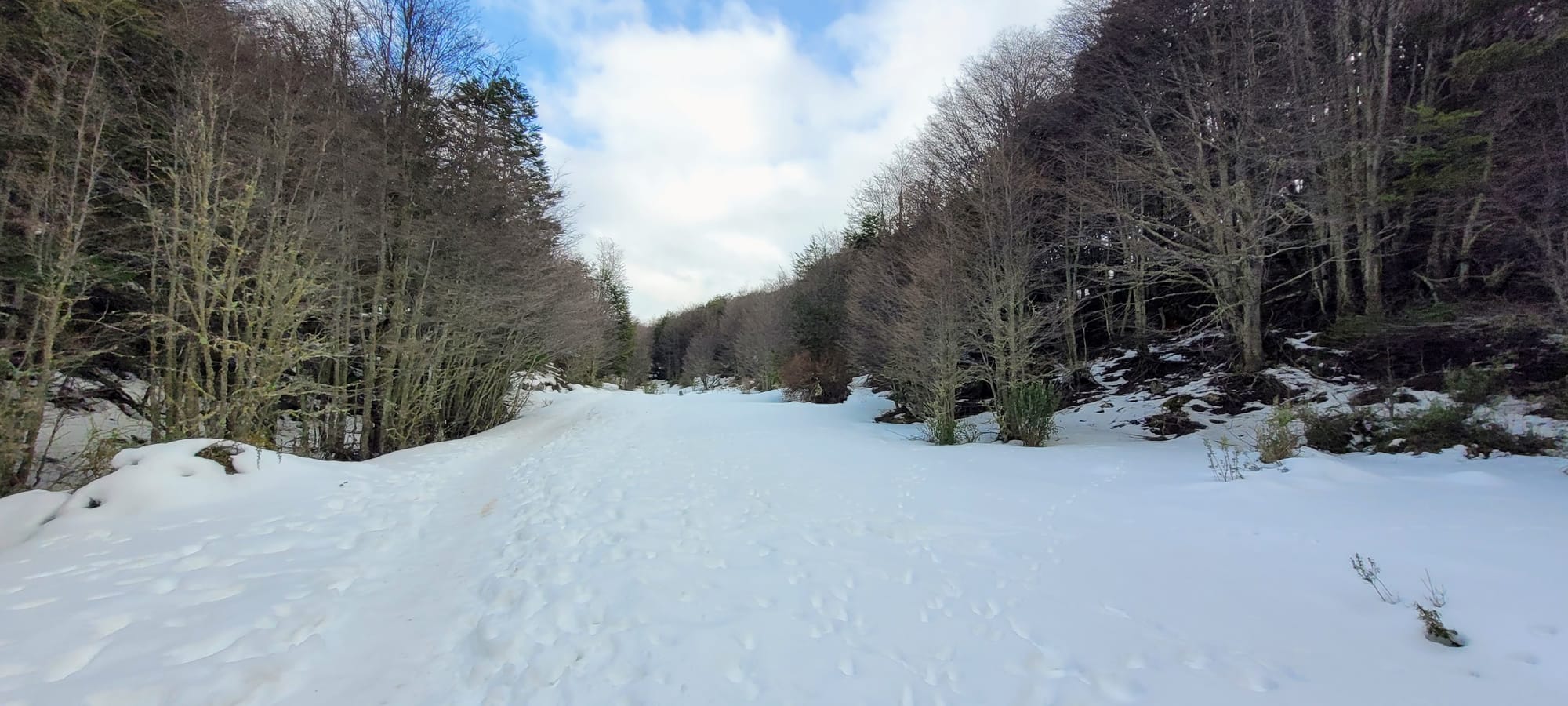
Vikernes raised the axe above his head, and when he brought it down on the thick black cable, sparks flew; he repeated the motion and the fiber optic line split in half; he set the axe on the grass, grabbed the shovel and covered the cable with the mound of dirt that had been dug up from the hole; with everything buried, he stowed the tools in the black duffel bag and walked through the forest a hundred meters due south; he stopped next to his old pickup truck, put away the tools, and then pulled out a rigid case a meter and a half long; he set it on the ground, took out a Barrett .338 caliber rifle, positioned himself in front of the truck and aimed at the spot where the severed cable lay. Despite the dense foliage, he had a clear shot. He waited motionless for a few hours in his military fatigues and camouflage, which rendered him invisible to the untrained eye. At one point he heard the hum of an engine, and instantly two lights appeared in the forest. He heard someone open and close a vehicle door, and soon a human figure appeared in his scope, wearing work pants and a polo shirt with the Fibertec company logo. Seconds later the figure disappeared from the scope, only to reappear shortly after carrying a shovel and a toolbox. The worker began to dig into the freshly turned soil.
Without hesitation, Vikernes aimed at his head and fired. The impact caused the skull to explode in the air and the body collapsed. Vikernes set down the rifle and went back to the truck, where he pulled from the tool bag a can of black spray paint and a jerrycan of gasoline, and approached the victim's body. He looked with contempt at the human remains, bone fragments scattered across the ground and portions of brain matter that had splattered the surrounding plants. He opened the door of the Fibertec truck, doused it with gasoline, and from the front pocket of his tactical vest pulled out a naval flare, which he lit and tossed inside the vehicle. As the flames devoured the truck, Vikernes set about painting a crude skull on a nearby tree and, beneath it, wrote the acronym G.A.D.
He made his way back through the forest to his truck while the flames cast irregular shadows on the trees; he stored the rifle in its case, and the case in the truck; he climbed in, started the engine and drove out of the forest. He drove for several hours, and when he found a motel he pulled off the highway, parked in front of a room, held his ID up to the lock, a green light confirmed the transaction and the door opened. Vikernes took off his clothes, turned on the shower, and surrendered to exhaustion under the hot water. Wrapped in a towel he spent most of the night staring out the window, waiting for an enemy that never came.
In the morning he left the motel, got back on the highway, and drove to the nearest YPF station; while having breakfast at the convenience store he waged a brief battle with a coffee vending machine and with the toaster, which misjudged the level of doneness. He asked the sole human on duty whether there was a working diesel pump. The kid at the register said yes, but that it was around the back of the station, separate from the electric chargers, and then asked him where he'd gotten hold of such a relic. Vikernes, not entirely pleased with the adjective, replied that he had inherited it from his grandfather. After the brief exchange he drove the truck to the pump, filled the tank and also, just in case, the empty jerrycan. He paid for the fill-up and got back on the highway.
Around noon he turned off the main highway onto a gravel road; he skirted the hill, drove to another turnoff and turned again onto a dirt track; upon reaching the camp he parked between two mobile homes, unloaded the rifle case, walked through the forest, found a marked tree, took a few steps that sounded hollow, set the rifle case on the ground, brushed aside the leaves with his foot and a wooden door appeared in the ground; he pulled the keyring from his back pocket, opened the door, grabbed the case, descended the narrow cement staircase, switched on the light that hung from the ceiling, surveyed the rest of the weapons and placed the rifle on a shelf; he climbed out of the bunker, closed the door and covered it with dry leaves.
He walked a kilometer, following the purr of chainsaws that, faint at first, grew louder as he advanced. After a few minutes he reached a clearing full of sawdust and freshly cut lumber. His two companions, Nergal and Abbath, were focused on making a diagonal cut into a pine tree nearly twenty meters tall. As soon as they noticed his presence, they set down the chainsaws and came over to greet him with an embrace. When they told him they had already made the news, Vikernes smiled; then he picked up one of the chainsaws, completed the cut, and the pine fell with a crack.
While Nergal and Vikernes bucked the pine into sections, Abbath set about removing the stump and the roots still left in the ground. When they finished sectioning the wood, they loaded the pieces onto a cart that Abbath and Nergal soon hauled back to camp. Vikernes grabbed a shovel, dug a hole a few meters from where they had pulled up the pine's roots, and planted there a small specimen of Lenga, a species of tree native to the Andean-Patagonian forest. The group put equal effort into combating both invasive tree species and the harmful internet infrastructure. While Abbath and Nergal unloaded the wood from the cart, Vikernes went into the larger mobile home and turned on his computer: "New GAD Attack" headlined the most-read news site; he went to the fridge, took out a can of beer; he sat on the couch and turned on the TV to the usual debate show. "GAD: Terrorism in Argentine Patagonia," read the chyron. A panel of strident characters discussed the details of the attack, its political impact, its ideological content, and how it affected connectivity in the south of the country.
An overweight man in a gray suit, suspenders and pink hair hosted the show. He said: "More than two hundred thousand virtual people are without internet access -- do we understand what that means? The money being lost without that connection?"
--Until the police finish the investigation at the crime scene, the company won't be able to restore service --stated a girl with multicolored hair.
The host took back the floor. "We are live with Flavia, a digital person, so she can tell us in detail about the ordeal of being disconnected."
--Hello Carlos, first of all I'd prefer we not use the term "digital person," which we find somewhat offensive. I'd rather we use the term NBP, or non-bodied persons... That said, NBPs depend on being connected twenty-four hours a day for any task, whether it's working, studying, or consuming entertainment. Outages of this magnitude leave us able to use only information already downloaded on the servers of the networks that host us, which as you can imagine is very limited. It causes us a tremendous sense of claustrophobia, and can trigger severe episodes of anxiety or depression. That's why we need the government and Fibertec to take responsibility in these cases and give us an immediate response. For an NBP, not having internet is the same as a fish being out of water.
A holographic character chimed in:
--I don't share the GAD's methods and I condemn them as violent, there's no doubt about that... but I also understand the rejection of this way of life.
No sooner had he finished saying this than the entire panel erupted into a barrage of shouts and disqualifying insults against the holographic character. "Renowned Academic Defends Terrorism," declared the chyron. Having finished his beer, Vikernes went to sleep.
Nergal, Abbath and Vikernes opened the bunker door, descended the staircase and gathered various pieces of equipment: two M4A1 carbines, an AK-47 rifle, and a crate containing several kilos of C4 plastic explosives, which they loaded into the truck bed, then covered with the wood they had cut the day before. The trio drove several kilometers heading northwest and stopped for the night at an Automovil Club Argentino motel on the side of the highway. Before going to sleep, Vikernes turned on the TV to the usual show. The debate raged on just as it had the night before: the program had been running for thirty straight hours with no breaks and the panelists rotated every few hours, as did the host, but the ratings kept climbing and the viewer chat was exploding with messages. The tone of the show escalated as the fatigue and exhaustion of its participants became more evident: some panelists demanded the death penalty for the GAD; others tried to understand their motivations, and the victim's family members demanded justice. Images of the lifeless body of the Fibertec worker appeared on screen every few minutes, alongside the drawing of the GAD skull.
In the morning the group left the motel and drove several hundred more kilometers. By mid-afternoon, the truck turned off the paved highway onto a rural road; upon reaching a high-voltage power line they stopped the truck, unloaded the wood and the equipment to rearrange the wood; they removed the rifles from their cases, separated the C4, put on military gear, painted their faces as though they were black metal singers from the twentieth century, and followed the power line on foot until they reached a chain-link fence, which they cut through; they entered the compound and Nergal crept to the entrance where he dispatched two security guards from behind; Vikernes and Abbath, meanwhile, silently entered the main building, where they exchanged fire with a guard whom they overpowered within minutes by sheer force of lead; then they descended to the lowest sub-basement, packed the central servers with C4, exited the building and painted a skull and the acronym GAD on the asphalt of the main entrance; they slipped back through the fence, took position facing the building, triggered the detonator, and with the C4 blast they felt the ground shake as the shockwave tousled their hair; they discarded the gear deep in the forest, wiped away their tracks, washed their faces, burned the tactical clothing, buried the rifles and returned to the asphalt.
They drove in shifts until they were overcome by exhaustion. They parked the truck on the side of a rural road and fell asleep. They were woken by the knocking on the window of two police officers staring at them. The officers told them what they were doing was illegal and asked them to state their place of origin, show the vehicle's registration and the permit to drive a fossil-fuel-powered vehicle on the highway. Nergal handed over all the paperwork. Lastly, the officers scanned the retinas of all three to verify their biometric data: everything checked out. Despite the fine, they let them go. A few hours later, exhausted, they arrived at camp. After sleeping for several hours, Nergal and Abbath lit a fire to cook something. Vikernes turned on the TV.
"One Million Digital Persons Killed in GAD Attack," read the chyron. Vikernes fell asleep on the couch with the television on and the smell of smoke filling the mobile home. He was woken by the roar of helicopter blades that, by the sound, seemed to belong to a gunship. From the third kitchen drawer he pulled out a nine-millimeter and opened the door only to find the bodies of Nergal and Abbath, cut down by bullets from the police who lay in wait behind the first line of trees. With the elite force's weapons trained on him, Vikernes set his gun on the ground and surrendered without firing.
The trial proceeded without incident, even though public opinion dubbed it "the trial of the century." The critical moment, broadcast on television, was Vikernes's defense: he refused the help of a court-appointed lawyer and declared he did not recognize the tribunal's authority to judge him. His testimony, dismissed as irrelevant, consisted of a reading of the GAD's doctrinal and political tenets, which could be summarized as the struggle against technological dehumanization and the destruction of the natural habitat. The tribunal sentenced Vikernes to life in prison on the charge of genocide. Despite the overwhelming public condemnation, a small group of people found in his doctrine the only form of resistance to the complete digitization of human life. The only thing Vikernes requested was a television, which was initially denied but eventually granted by the prison officers. His routine consisted of watching the debate show every night. His time in prison passed uneventfully until one night, on the show, the panelists discussed a new GAD attack, this time on a thermoelectric plant. The attack, carried out by a group of teenagers, had left an entire region of the country's Northwest without power, causing millions in losses due to an unprecedented network congestion. The panelists debated whether the attack was the work of a "sleeper" cell of the GAD or the product of a group of imitators. That same night Vikernes received in his cell an invitation to appear on the show, which he declined with satisfaction. Days later, a new GAD attack left nearly all of Buenos Aires without internet.