Gail Simone: Humor, Provocation, and Diversity
From hairdresser to DC and Marvel icon, Gail Simone revolutionized comics with humor, diversity, and her famous “fridging.” Discover the career of the author who loves Argentina, created an X-Men character from Boca, and gave a voice to the heroines that the industry had forgotten.

20 de mar. de 2026 — Amadeo Gandolfo
This is the third installment of this regular column about comic book writers from the superhero, adventure, and genre scenes in the United States and England. Here, we apply a bit of literary studies and a touch of author theory from Cahiers du Cinema to uncover and describe the personal mark within the jaws of the cultural industry. Artists who find their voice, their themes, and their style while working in genres with strict rules and in an industry designed to erase or hinder the authorial mark. After the first two installments dedicated to Alan Moore and Grant Morrison, this time we turn to a writer who holds a special place in the hearts of Argentinians: Gail Simone.
The Journey
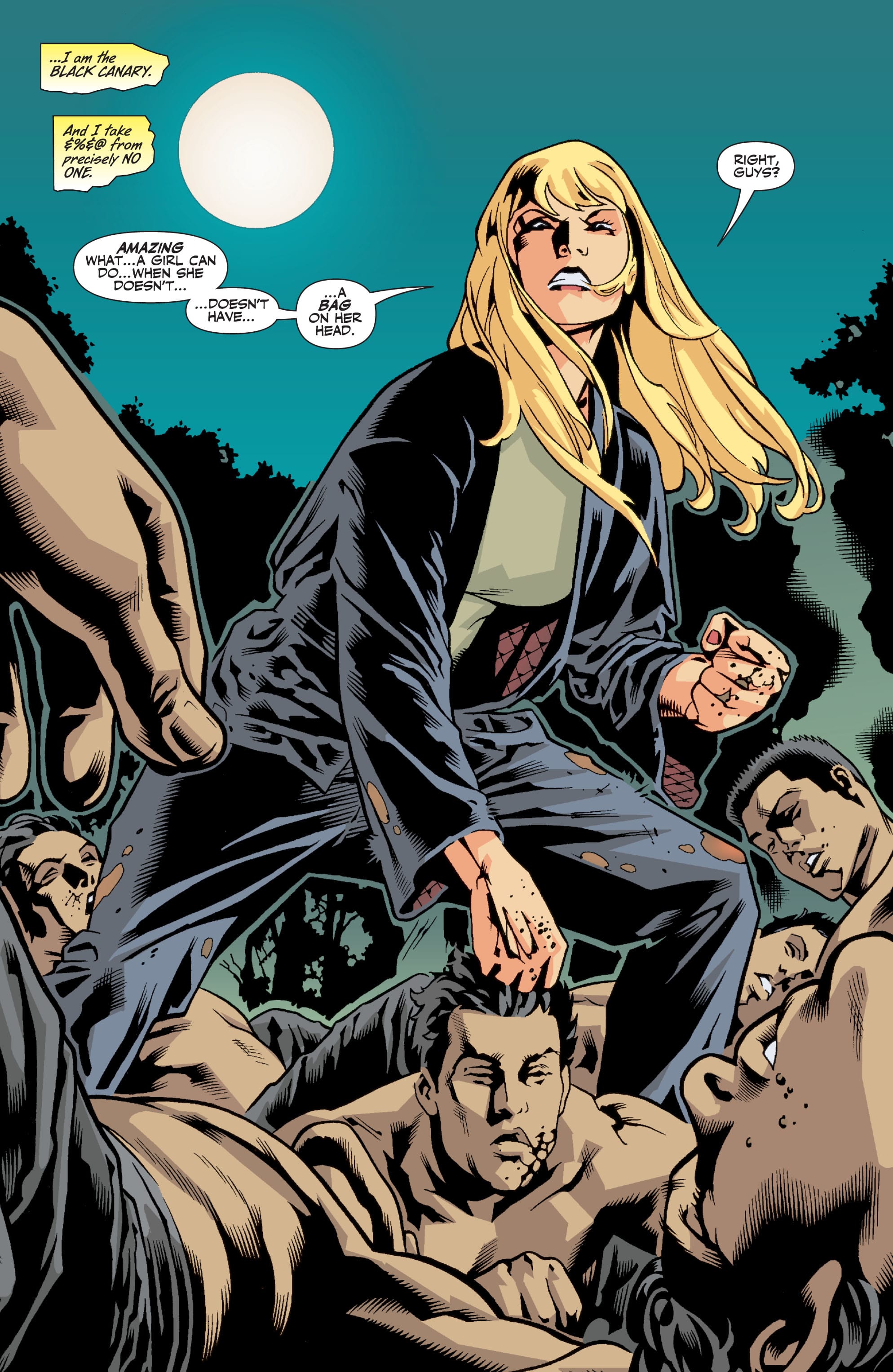
Gail Simone was born on July 29, 1974, in Oregon, United States. Like many other Americans, she grew up on a farm in a small town where there wasn't much to do, in a lower-middle-class, working-class family. Times were different, and one of the most accessible forms of popular culture was comics, and she started reading Justice League and getting hooked on Black Canary.
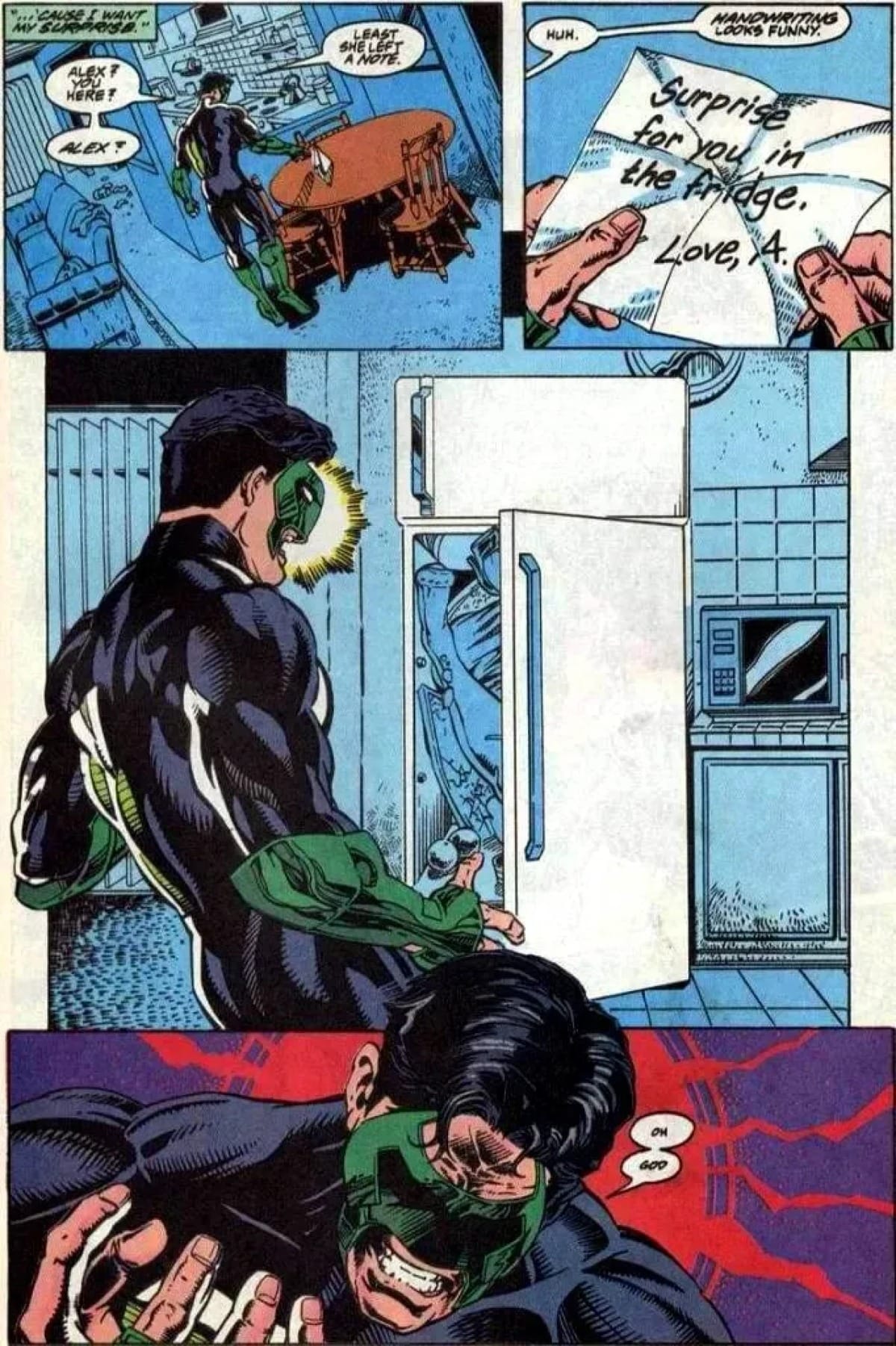
She studied theater in college and worked as a hairdresser. But she never stopped reading comics, and in 1999, she founded a website called Women in Refrigerators, named after a scene in Green Lantern where the villain Major Force kills Alexandra DeWitt, Kyle Rayner's girlfriend (the GL of the nineties), and stuffs her into a refrigerator for him to find. Rayner would come home to his condo in Los Angeles and see the fridge with the door ajar and body parts of his girlfriend sticking out as if they were leftovers from a barbecue. The concept aimed to draw attention to female characters whose story arcs served the male character, listing over 100 who had suffered similar fates.
That same year, she started the humorous column You’ll All Be Sorry! on the website Comic Book Resources. CBR was, at that time, one of the best sites for news and opinion. These appearances led her to her first writing job: writing The Simpsons comics for Bongo Comics. This role highlighted one of her strongest qualities: a conversational humor very much like that of sitcoms, which she would later apply to superhero comic conventions.
Her first chance in the genre came with Deadpool, which, back in 2003, was not an unstoppable selling machine or an iconic character, but rather a weirdo always on the brink of cancellation. And that’s exactly what happened while Simone was writing it: it got canceled and replaced by Agent X, a similar comic with a main character speculated to be Wade Wilson or not. A classic bait and switch in search of higher sales. Simone continued writing until she had a falling out with the editors and moved to DC, where she was offered the comic that would help her make a name for herself: Birds of Prey. There, she took Chuck Dixon's concept centered on the relationship between Black Canary and Oracle (Barbara Gordon) as best friends and expanded it with other characters like Huntress and Lady Blackhawk. She stayed on the title for nearly 50 issues.
From that moment on, she became one of the most sought-after writers during Dan Didio's tenure at DC Comics. In 2005, she joined that year's mega-event, Infinite Crisis, writing one of the miniseries that served as a prelude, Villains United. The concept was simple: all the villains in the DC universe had united under something called “The Society,” a sort of evil syndicate with retirement benefits and labor accident laws… except for six. Six outsiders, renegades, and freaks who came together somewhat against their will in what would become another major team book for Gail during this time: Secret Six. In that title, she formed a great team with Nicola Scott, an amazing artist who would embark on her own path to stardom there. During the same year, she also got to write Superman in Action Comics with art by John Byrne. After the event, she wrote The All-New Atom, creating Ryan Choi, the fourth Atom of Korean descent. It was said she worked with general concepts provided by Grant Morrison, but in 2017, Simone denied this in a Facebook post, stating that Morrison gave her some notes she didn't read and that she simply rehashed a proposal she had made for another character that had not been used.
But perhaps the moment of greatest triumph and notoriety came when she took on Wonder Woman in 2008, a character she wrote until 2010, becoming the first woman to have the longest run on the Amazon. At one point, Simone stated: “If you need to stop an asteroid, you call Superman. If you need to solve a mystery, you call Batman. But if you want to stop a war, you call Wonder Woman.” In her run, Simone emphasized the elements of compassion, honesty, and magnificence of WW, while also playing with her warrior component and the character's distinctive ferocity compared to more traditionally boy scout heroes like Superman.
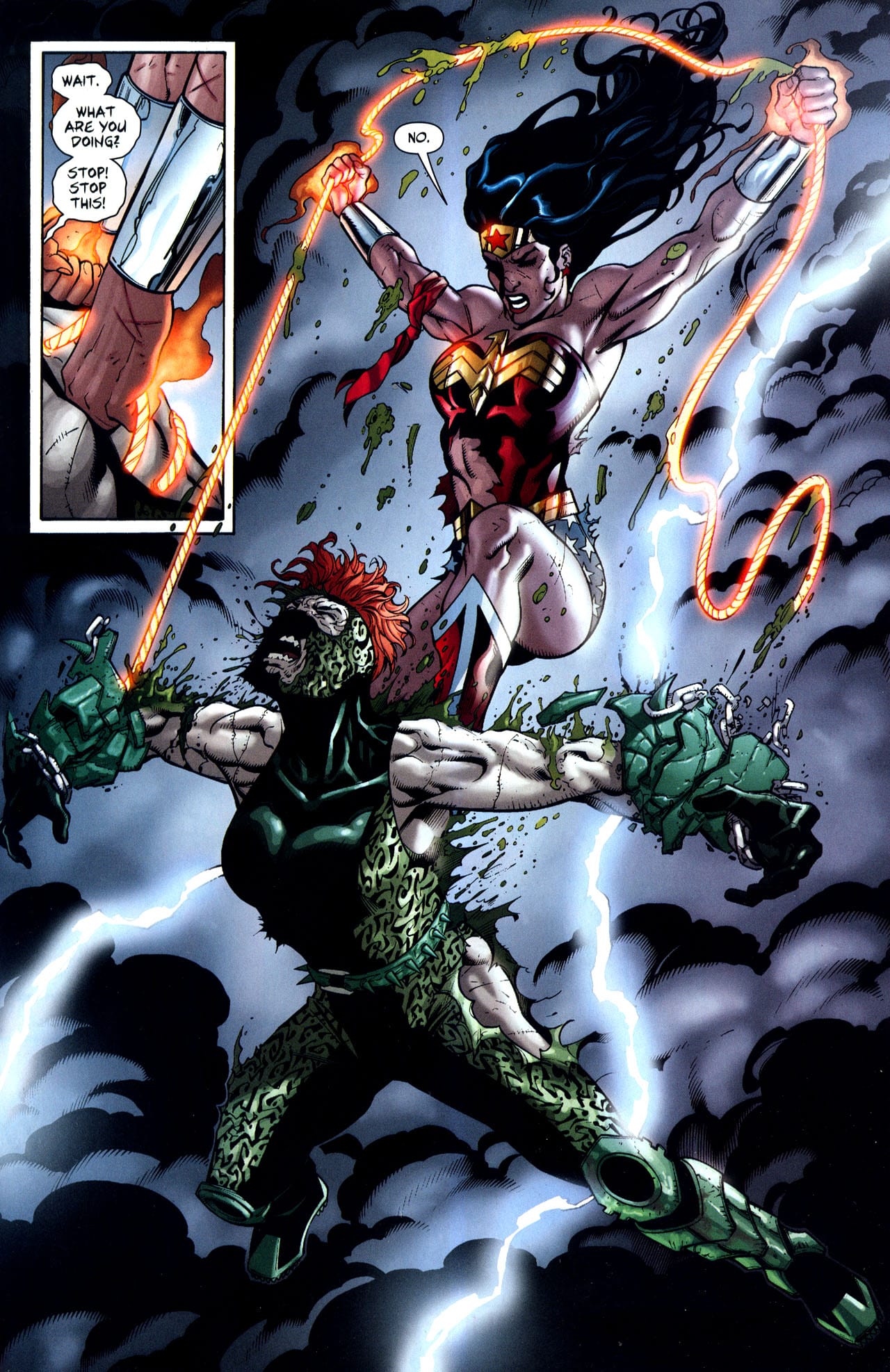
However, her run left several stories untold. One of the most interesting involved Hippolyta's abdication, Diana's mother, as queen of the Amazons, and her marriage proposal to Philippus, the head of her personal guard. The story had been pre-approved by DC, but Simone left the title before writing it. This is something that happens quite often during her time at Didio's DC, an era marked by micromanagement and continuous crossovers and events that derailed the stories of the regular series. In fact, she began writing WW after an unfortunate crossover in which the Amazons declared war on the United States. Simone was a soldier during all these years and was able to tell many of the stories she wanted, but sometimes it feels like certain potential was overshadowed by the constant reshuffling from the editorial department.
The moment of greatest triumph and notoriety came when she took on Wonder Woman in 2008, a character she wrote until 2010, becoming the first woman to have the longest run on the Amazon.
During these years, she also created the comic Welcome to Tranquility with Neil Googe for Wildstorm, depicting a small town that was a community of retired heroes. Welcome to Tranquility is rich in metacommentary, and particularly in the first arc, which follows the fates of a group of World War II superheroes and their inevitable decline, it feels like Gail's Watchmen (if I may make the comparison). Additionally, it is filled with pages that are parodies of classic comics. Unfortunately, it would only last 12 issues, although it would return in 2010 with a new miniseries.
The next step would be a new series of Batgirl as part of the New 52, the relaunch with continuity from scratch undertaken by DC in 2011. This time, Barbara Gordon was able to walk again and, consequently, put on her tights, a taboo in the DC of the nineties and early 2000s, which had left the character as Oracle, a much more interesting identity, after the Joker's attack in The Killing Joke. But that was the moral bankruptcy of the DCU in 2011, which could only resort to old ideas and rewind the clock to forgotten times of self-perceived glory. However, Simone produced a worthy run and created Alysia Yeoh, one of the first transgender characters in a modern mainstream superhero comic.
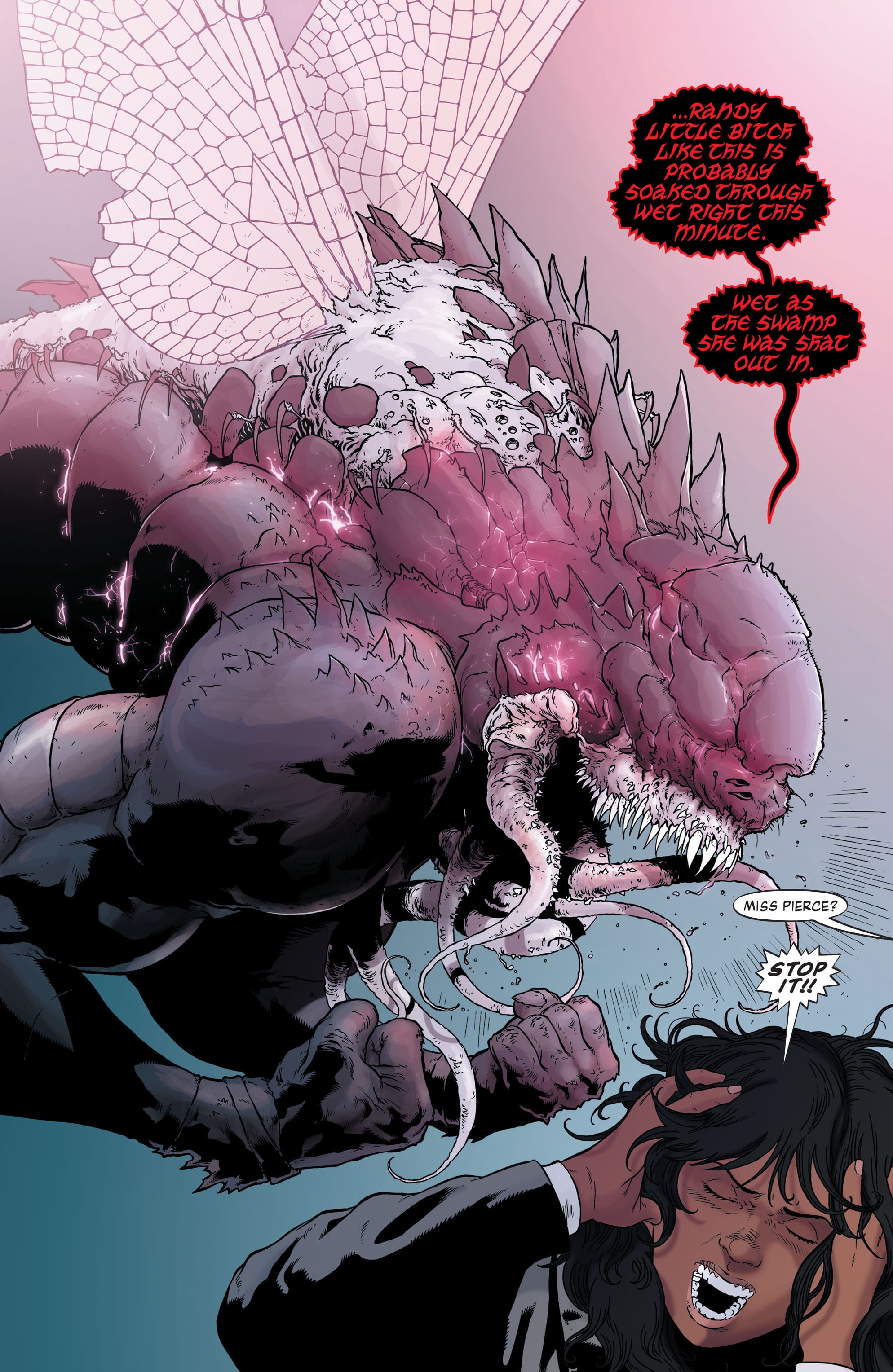
In 2015, she launched Clean Room, her first and, so far, only comic in the Vertigo imprint. In it, she delved into the wellness industry, with the premise of a self-help guru who has dealings with demons. Magnificently illustrated by Jon-Davis Hunt, the comic was a gore and body horror festival with a strong component of cosmic horror that lasted only 18 issues, like Welcome To Tranquility.
During this period, she also wrote Red Sonja for Dynamite, the sword and sorcery heroine created by Roy Thomas and Barry Windsor-Smith, who serves as a counterpart to Conan. Here, she joined a long lineage of women who wrote the stories of the wild heroine, like Christy Marx and Louise Simonson, and would continue with Marguerite Bennett and Amy Chu.
After several years of shorter and more scattered projects, like a miniseries of Plastic Man, another one for Domino, and another called Seven Days that attempted to launch a new superhero universe at Oni Press, the next significant step in her career, and the end for the moment, was her announcement as the first solo female writer of the legendary Uncanny X-Men. While the X-Men franchise had had female writers before, including the legendary Louise Simonson and Ann Nocenti, Simone is the first author to take on the main title solo. In it, she returns to the idea of a small group focused on interactions and characterization, set in New Orleans after the fall of Krakoa, the paradise/state created during the Hickman Era, which helps troubled young mutants control and develop their powers and feel less alone in the world. Opposite them are the X-Men by Jed McKay, an author more oriented toward the idea of the X-Men as a powerful paramilitary unit intervening in situations where the future of mutants is at stake.
The Family Builder
And Gail is very good at writing constructed and chosen families. In this, she connects with a strong tradition within queer communities. Birds of Prey begins as the story of the friendship between Black Canary and Oracle, but under her pen, it soon cares about the redemption of a Huntress who at that time still bore the stigma of being the loose cannon of the Batman universe, the one who killed without hesitation. Secret Six is a chosen family of outcasts and misfits, and there Simone adopts a more sardonic tone, because the characters don’t want to love each other, but over time they start to adopt one another, like a pack of stray dogs, and also, in parallel, reject toxic blood relations, like Scandal Savage's relationship with her father, the immortal Vandal Savage.
Perhaps where it doesn't work as well, as Gus Casals mentions in a recent video, is in Wonder Woman. There, Simone introduces a relationship with the spy Tom Tresser, highlights Diana's friendship with Etta Candy, gives her a gang of albino gorillas as substitute brothers, and constantly plays with Diana's inside/outside position in Amazon society. Daughter of her queen, she is nevertheless a new being, a creation that breaks the structure of Amazon society, marked by default by sterility and the lack of blood families. Or rather, with the entire Amazon society being one big family, one great sisterhood. In her first arc, Simone accentuates these debates by presenting a group of Amazons who were Hippolyta's personal guard but crossed the line by murdering other Amazons who fell into the madness of wanting to have children. When Diana is born, they hate her and call her “The Dragon,” because they want Amazon society to always be a society without children. However, this construction of a secondary character ecosystem that acts as Diana's family never quite gains depth, particularly in characterization. Perhaps because the comic is continuously interrupted with concepts, like a new race of men destined to replace the Amazons, that seem more like editorial edicts than authorial decisions. Despite everything, Simone is a great writer when it comes to weaving bonds between broken characters who find compassion and love in a world that hates them.
The Activist
And this has a lot to do with her role as an activist and feminist writer. Since Women in Refrigerators, her voice has been that of someone who wants to make her chosen art a more inclusive space in two ways: on one hand, denouncing its deficits, something she does in the early stages of her career when she was still mostly a critic and fan; on the other, creating characters to provide sexual diversity to these universes. Women in Refrigerators denounced the use of female characters as props for the tragedy of a male character. Killing them, subjecting them to sexual violence, or simply sidelining them when the male character's narrative becomes paramount.
Simone always tries to include characters of diverse sexualities in her comics, often reinterpreting characters as bisexual. Her Red Sonja is bisexual, just like her Catman.
Another part of the critique is that while male heroes generally experience redemptions or heroic resurrections, female characters are often abandoned and never revisited. A classic example is Gwen Stacy, the first and tragic girlfriend of Spider-Man, who was killed by the Green Goblin in a storyline that redefined the character, only to be brought back as a clone, in zombie form, or as a zombie-clone, whenever it was necessary for Peter Parker to suffer, and suffer for real. The website gave rise to the neologism “fridging,” akin to “fridging,” which jumped from the margins of the comic world to become common terminology among broad fan groups. On the other hand, Simone always tries to include characters of diverse sexualities in her comics, often reinterpreting characters as bisexual. Her Red Sonja is bisexual, just like her Catman, whom she wrote deliciously as having a kind of homoerotic rivalry-friendship with Deadshot. Scandal Savage is a lesbian and even, in a storyline from Secret Six, ventures into the realm of polyamory. And we’ve already mentioned Alysia Yeoh. Additionally, she writes a beautifully sensual Nightcrawler, in line with how Claremont always characterized him.
The Horny
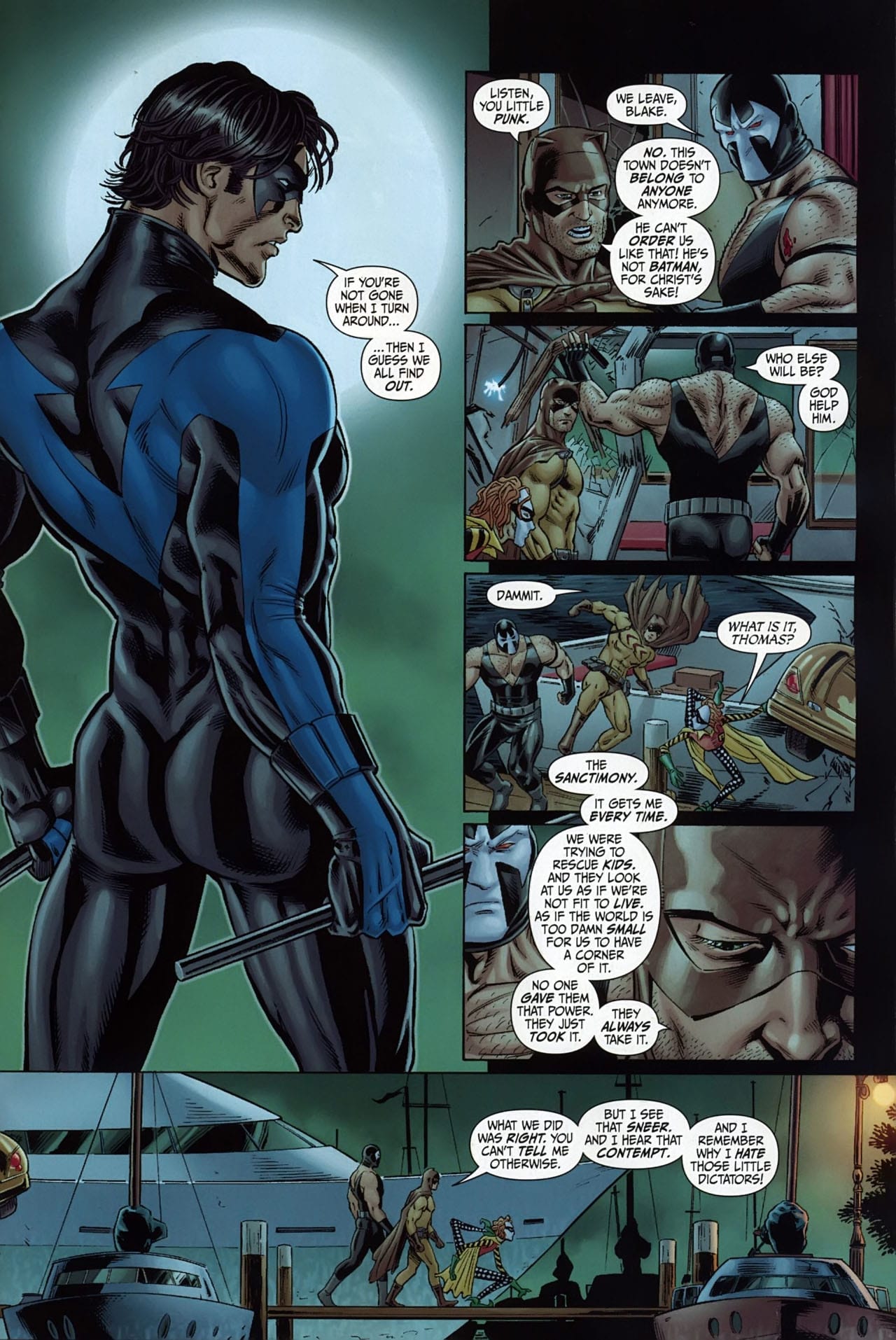
And if we’re talking about sexuality, we can’t overlook that Simone is, almost always, horny on main, and that’s one of the distinguishing features of her comics. Superhero comics have always played with sexual ambiguity. Romance? Yes, please. Star-crossed lovers? Yes, please. Unresolved tensions? Yes, please. Sex? Let’s try to suggest it, but not make it explicit. Simone, on the other hand, writes hot-blooded characters, like any human being, and her comics often make it clear that the characters have sex, and they have it with great pleasure. Secret Six is full of cheesecake, and Welcome To Tranquility even builds an interracial and intergenerational romance. In the second arc of Red Sonja, a recurring joke is how hot she is and the difficulty she has in satisfying her desires. Moreover, in Secret Six, Simone wrote a panel, drawn by the great Nicola Scott, where Nightwing adopts the “brokeback pose,” that position in which many female characters are drawn, contorting their bodies to show both butts and breasts at the same time. That panel would become famous and lead to the adoration of Dick Grayson’s butt. Over the years, many comics and many artists have indulged in this lascivious representation, in a reclaiming and curious case of reverse objectification that was joyfully received by the female fandom. Recently, Simone also transformed Nightcrawler’s “bamf!”—the onomatopoeia that denotes his teleportation—into a kind of sexual slang: “He bamfed me four times,” says his current girlfriend with a pleased expression. Obviously, she’s referring to him teleporting her… or is she? Here, Simone plays with the inherent ambiguity of the superhero genre, a genre filled with images of stunning men and women in tight latex suits, yet whose sexuality seems to resemble that of cloistered nuns and monks.
The Rehabilitator
Simone has a remarkable ability to shine a light on overlooked or forgotten characters, never taken to their full potential. A clear example is Black Canary in Birds of Prey. While the author continues the work done by the previous writer, Chuck Dixon, who had already established Dinah Lance as a badass (and here, a side note: it’s incredible to think of a world where Chuck Dixon and Gail Simone were on the same side in interpreting a character, as, in the heat of the cultural battles of the 21st century, Dixon ended up being everything opposite to her: while he was always conservative, he radicalized and became one of the main proponents of Comicsgate, the conservative movement opposing any diversity of characters or creators), Simone elevates her to one of the most incredible martial artists in the universe. The same goes for Catman: he had always been a joke villain, one of the many bad ideas associated with Batman, and had been written as a coward. But Simone turned him into a hunter, an extremely seductive anti-hero, and obviously, hot. Not to mention the brilliant work she did with the freak Ragdoll. Well, all of Secret Six is an ode to careful characterization. She also made great use of forgotten villains like The Calculator, giving him a jealous rivalry with Oracle. Overall, combined with her great sense of humor, this places Simone in line with other creators like Dwayne McDuffie and Keith Giffen, who understood that the way a superhero universe comes to life is by populating it with as many different figures and characters as possible, sweeping its dark corners, and understanding that every forgotten character has the potential to be someone’s favorite if written well.
The Advocate
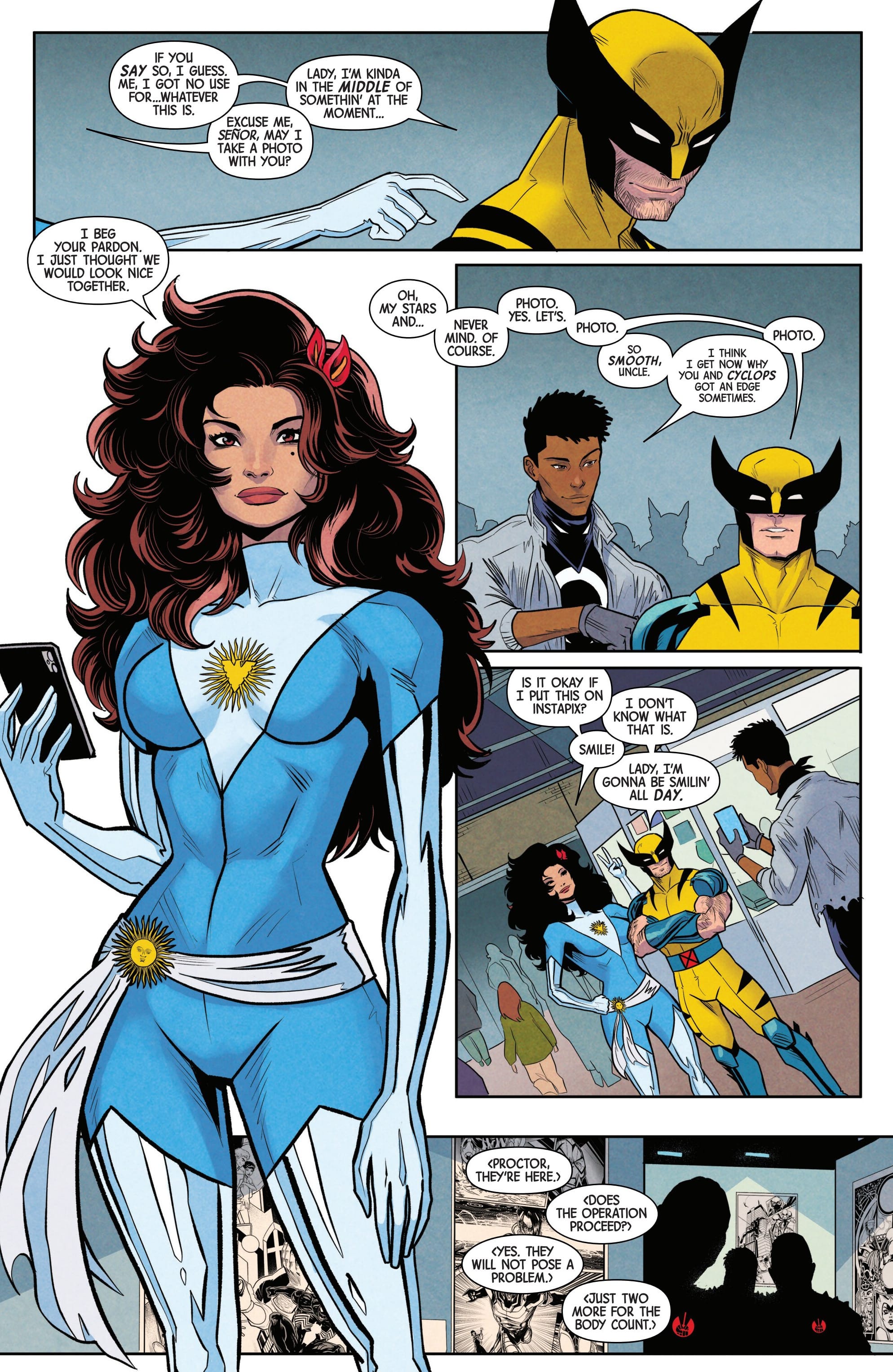
In 2016, Gail Simone visited Argentina for the first time, invited by the Crack Bang Boom convention in Rosario, which for years, thanks to the good offices of Eduardo Risso, an extraordinary artist, director of the event, and a big star in the American comic scene, has served as a bridge between the mainstream American comic scene and our country. Simone fell in love with our ranch, and returned in 2017 and 2019 for the Argentina Comic Con. But beyond that, she realized that the veins of the inhabitants of this country are saturated with that thick, fluorescent liquid called intensity, and that baiting us generates a huge amount of interactions on any social network. So every now and then, she throws us a line: she confesses her love for Mafalda, asks us some cultural question, and we respond. To the point that we’ve ended up adopting her. This special bond blossomed with Gail’s arrival at Uncanny X-Men. Among the new X-Men she created is Valentín Correa, alias Ransom, a dark-haired Boca fan who has a black hole instead of a heart that allows him to absorb energy and return it as strength and a certain degree of invulnerability. In other words, a bit of Bishop's powers mixed with a bit of Xorn’s conceptualization (which, let’s remember, had a sun instead of a brain). Ransom’s adventures with the X-Men recently took him to Argentina, where he shared a mate with Wolverine and attended a comic convention where a cosplayer dressed in a version of Jean Grey’s Phoenix costume in Argentine colors gave the Canadian all kinds of butterflies in his stomach. For added pleasure, this arc was illustrated by Luciano Vecchio, a local talent known for his clear lines and strong colors, with whom Simone discussed the cultural elements appropriate for a believable representation of our country. The writer’s romance with our homeland, as they say, is a story in progress.
The Fanwoman
Finally, I’d like to highlight that Gail Simone is, always, a fan at heart. For years, the figure of the fanboy has been a staple within the American comic ecosystem. And not just a figure, but also a pipeline into the profession: you start as an obsessive reader, graduate to fanzine writer, and then ascend to writing the characters you loved as a kid. This is the path many established figures like Roy Thomas, Mark Gruenwald, and Jim Shooter took. Always men. The figure of the fanboy is also associated with gatekeeping, poor hygiene, impertinent lewdness, and disdain for the opinions of those who, in their eyes, know less. That is: everyone. Simone is the antithesis of this figure: she started as a fan, but her rise comes through critique, not through unbridled praise. By demanding that comics be better. Her arrival in the medium incorporates cheeky elements typical of the female fan fiction community. And her desire, like the fanboys, is to improve the universe and the characters, but with a focus on strong female characters, those who have always been ignored by traditional fanboys. This, combined with her sharp sense of humor, makes Simone a writer who resonates deeply with fans interested in more diverse universes and elusive representation. And that’s why we love her so much.