GenCon 2025: An Expedition to Board Game Paradise

13 de ago. de 2025 — Nico De Bonis
The American tendency to organize conventions around everything is a well-known trait of how they interpret the idea of community: as a binding force for consumption. From the ultra-famous San Diego ComicCon to the now-defunct E3, passing through an endless array of financial, corporate, and, of course, gun conventions. We associate these events more with the terms "fair" and "expo," perhaps a deliberate semantic choice inspired by the roots of social clubs and carnivals in our culture. But here's the thing: conventions are associated with a congregation of people united by an identity or cultural trait, which is why the suffix -Con usually accompanies fandom-related events.
Many conventions have been bringing kindred spirits together for years, but there's one in particular that's been running for 57 years and started, literally, in the basement of a friendly chubby dude who got together to play wargames with his friends. In the town of Lake Geneva, in the basement of Gary Gygax's mother, the creator of Dungeons and Dragons, GenCon was born: the largest and most important board game convention in the United States, the second largest in the world (surpassed only by Spiel Essen in Germany), and the place that saw the birth of both Dungeons and Dragons and Magic: The Gathering. Branded as "The Best Four Days in Gaming," it takes place every year in late July or early August in the American city of Indianapolis, Indiana. GenCon is the second-largest source of tourism revenue for the city, after the Indy 500 motorsport circuit.
The entire city (and when I say entire, I mean THE ENTIRE THING) shuts down for four days to welcome Nerds from all over the world who come to flood the Indianapolis Convention Center and the surrounding hotels. This year, the official number of tickets sold was 72,000 four-day passes, which combined with daily passes and people without tickets brought the estimate to 90,000 people inside the convention center. That's how GenCon 2025 kicked off: with a sea of people waiting for 10 AM on Thursday, July 31st, for the first opening of the Exhibit Hall doors.
What can you find at a GenCon?
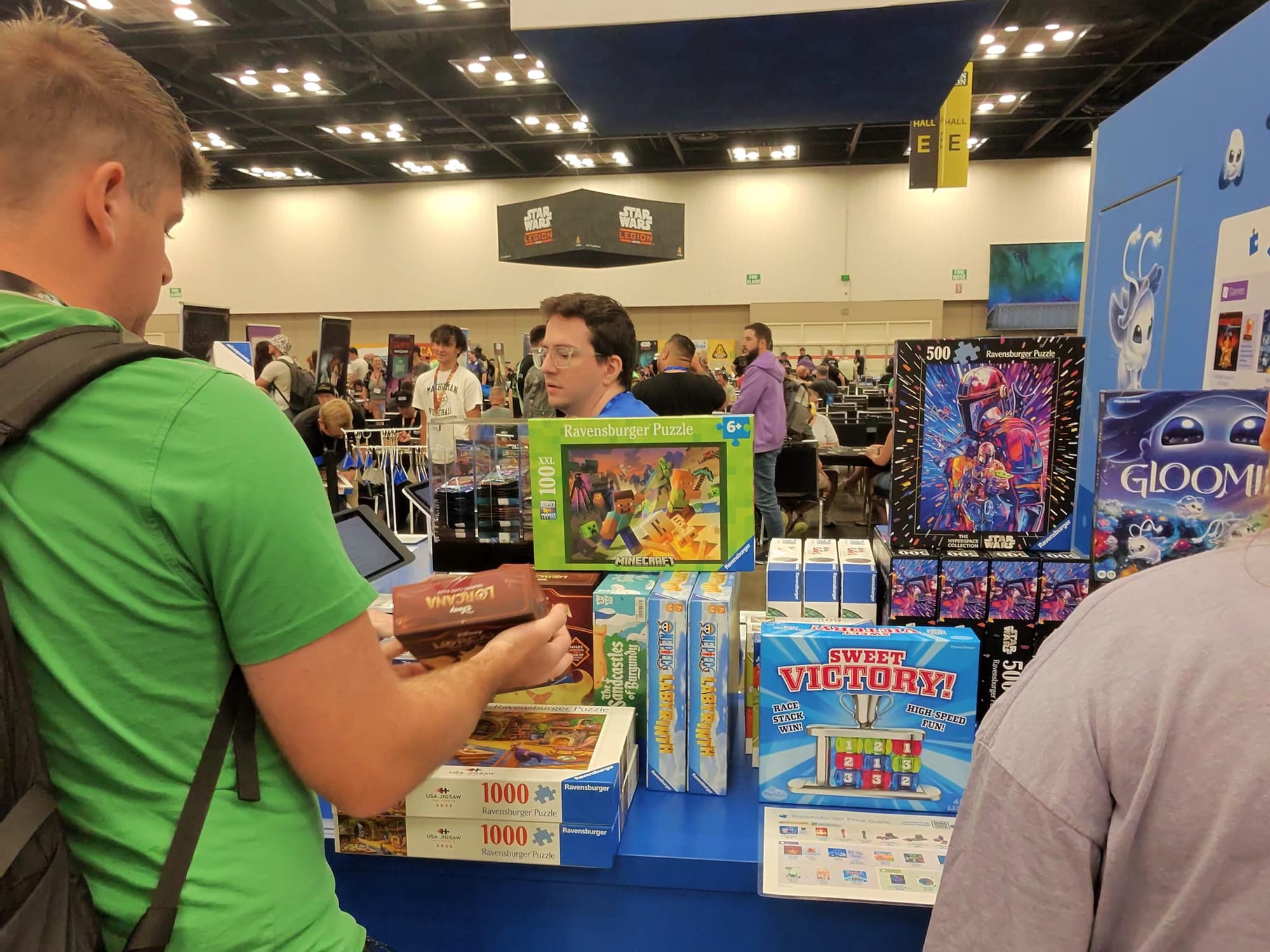
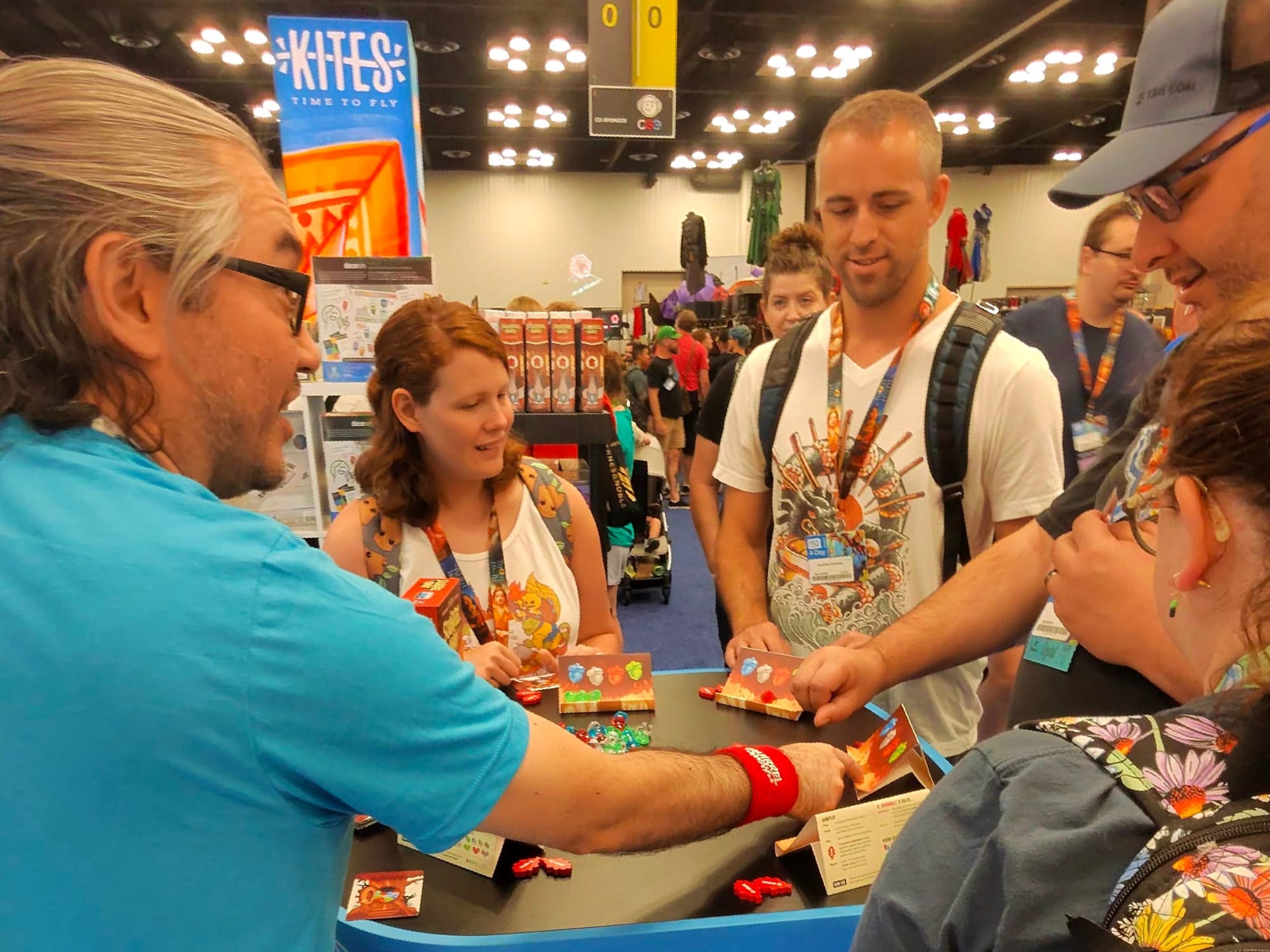
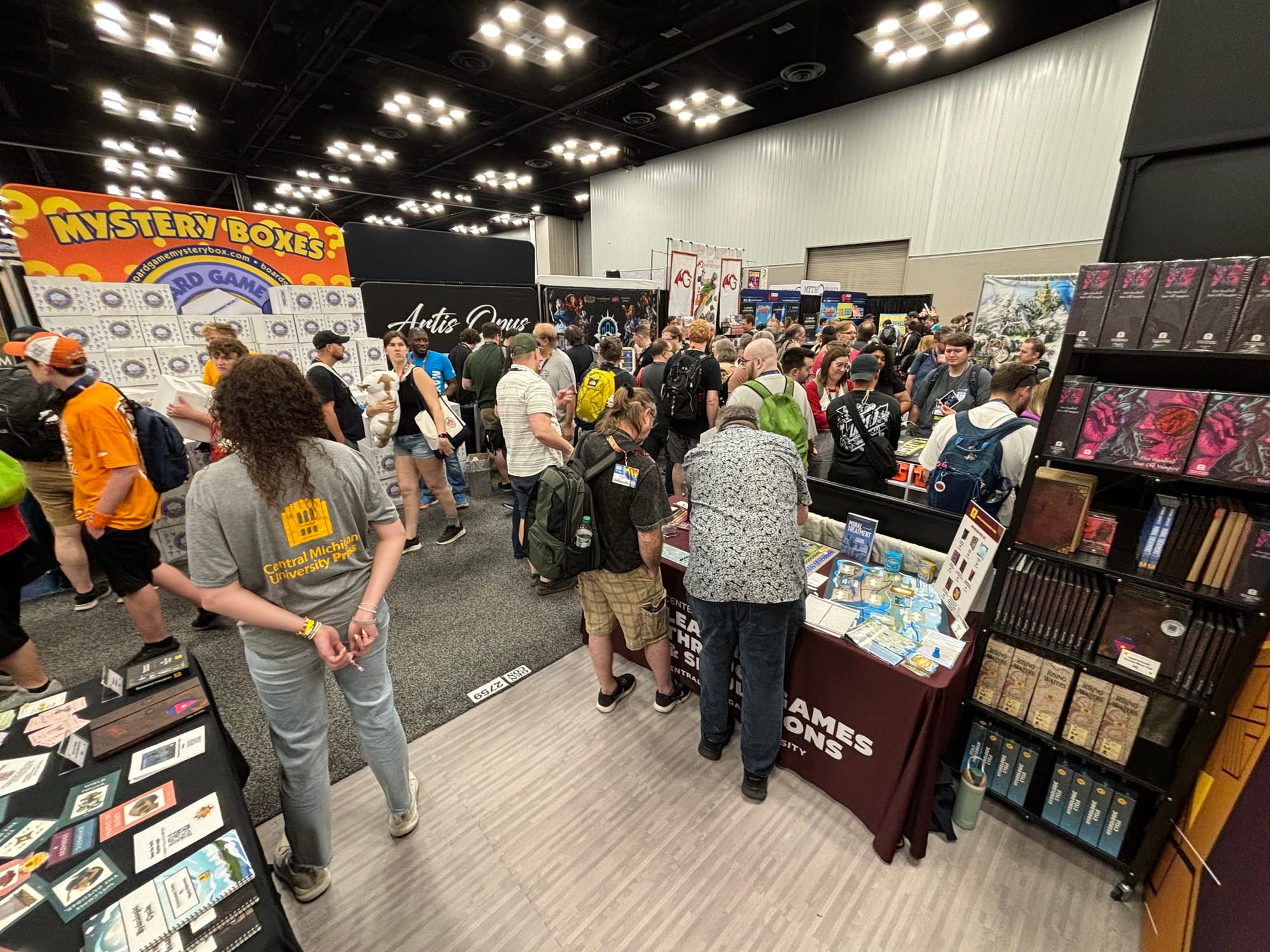
Every publisher, editorial house, artisan, and producer of analog gaming worth their weight in tokens has at least one booth in the Exhibit Hall, where they don't just sell their catalog (plus GenCon exclusives like expansions, sleeves, and even higher-quality tokens and cards to upgrade the base game) but also run demos of their latest products, or ones that haven't even been released yet.
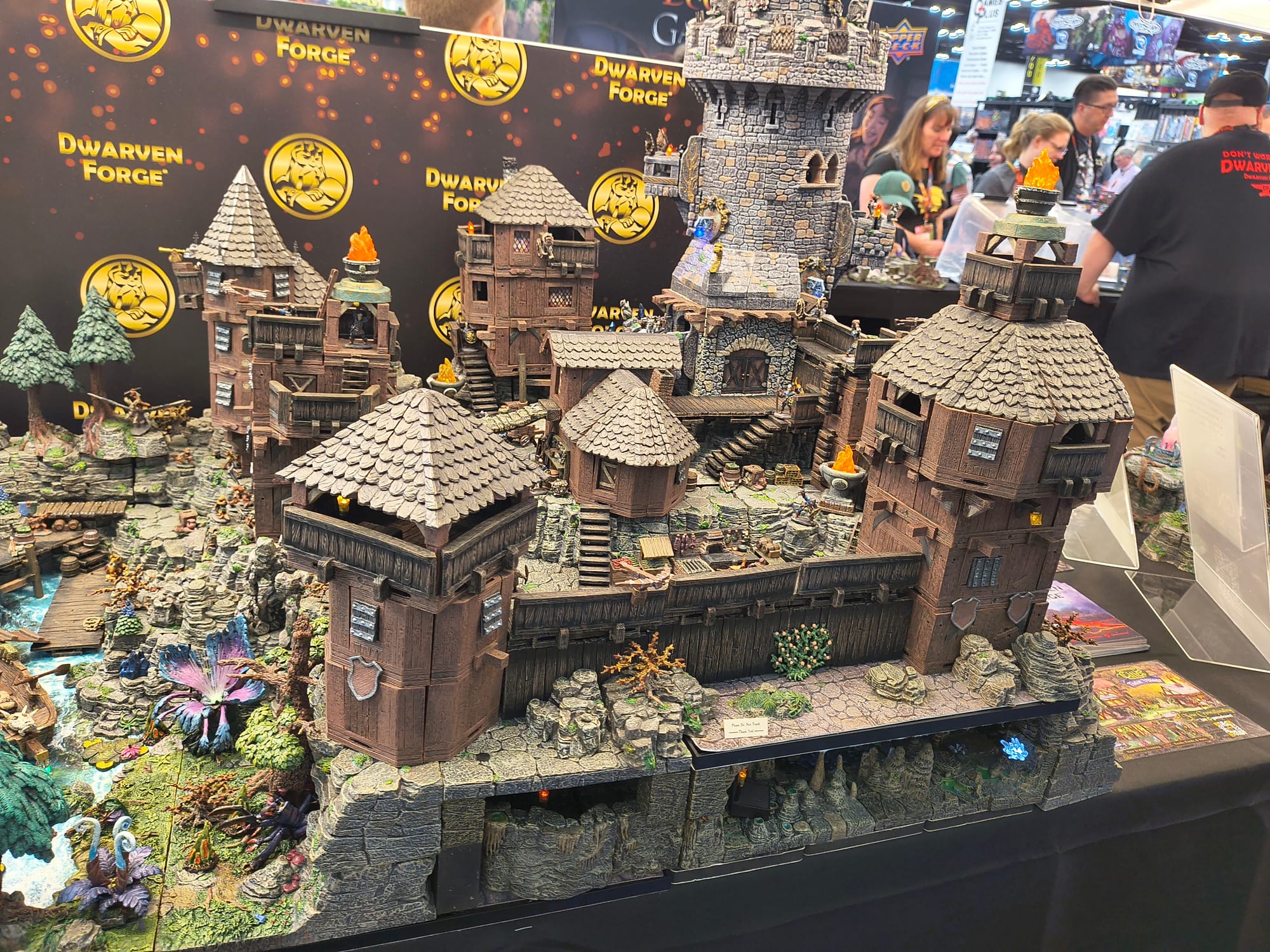
Beyond traditional boxed games, GenCon offers every imaginable supply for hobbyists: miniature paints, terrain for wargames, dice of every size and material, leather bags, and even custom-built wooden tables specifically designed for playing, with all the bells and whistles included. Oh, and let's not forget designer apparel. Looking for a cape or a leather vest to level up your LARP outfit? Want a semi-Victorian dress for an Elizabethan-themed dinner show? Need a chainmail suit with a real but blunt sword? GenCon has all of that. On top of being a complete gaming experience, it's an ideal destination for shopping and unusual acquisitions, like this crazy die I bought.
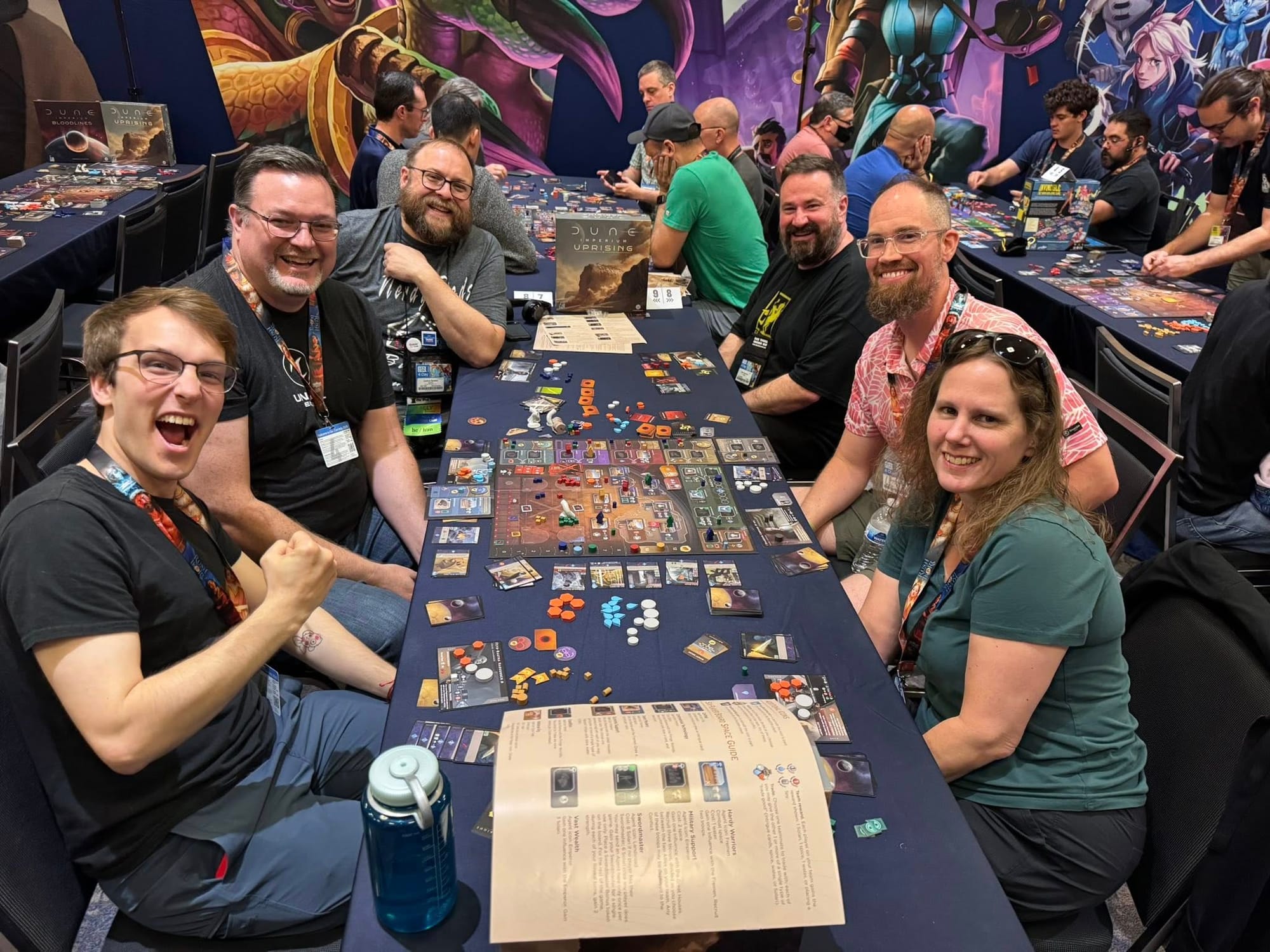
In the other half of the main hall, separated from the Exhibit Hall by a retractable curtain, is the Gaming Hall, where a sea of Warhammer, Magic: The Gathering, RPGs of all kinds, and other games offer the chance to sit down and play nonstop all day. And when I say all day, I mean it literally. The convention's gaming area runs 24 hours. That's how GenCon becomes an epicenter of all-night gaming sessions and nerd marathons of incomparable scale. Late-night Kill Team tournaments, euphoric shouts over the resolution of a Blood Bowl match that's been going for 3 hours, RPG tables of 12 people playing simultaneously in an adventure where half are heroes and the other half villains -- these are the sessions recounted the next morning over hotel breakfast.
But the convention doesn't only happen inside the halls of the Indianapolis Convention Center. Everything that can become part of the GenCon experience does, including Downtown bars and restaurants. Star Wars-themed nights, Dungeons and Dragons nights, shows with musicians and artists who during the day showcase their craft at the convention center, and even private company events where industry players reveal their latest project in a more immersive way, like the launch party for The Sims board game.

GenCon, like any industry event, is also a chance for creatives and executives to meet and discuss upcoming launches and business strategies, and to find new talent to bring into the industry's ranks. That's how I landed one of my jobs (no, not the one as a Magic: The Gathering judge). It's very common to walk through a Starbucks near the convention center and find two managers from different publishers chatting about how their last KickStarter campaign went or the current state of the Euro-style game market. For anyone with a sharp eye and a Nerd detector, it's a truly remarkable experience.
And if board games, wargames, tabletop RPGs, and card games aren't your thing, every day after 6 PM in the convention center hallways, circles form for social deduction games, colloquially known as "Mafia-type" games. Hundreds of people sitting in circles, opening and closing their eyes at the narrator's command to figure out which werewolf killed the villager or which dead player can help identify the demon. Absolute madness.
TCGs and cosplay at stadium scale
If all of this sounds like a lot of space (the Indianapolis Convention Center covers 90,000 square meters, twice the size of La Rural), this year everything related to official Magic: The Gathering tournaments and other collectible card games didn't take place in the Gaming Hall, but rather at Lucas Oil Stadium, an American football stadium right across from the convention center.
During the four days of the convention, all on-demand tournaments, competitive tournaments, and prize tournaments for Magic: The Gathering took place across more than 700 tables managed by the tournament organizer Pastimes, who usually handles the card game area. Lucas Oil also hosted card games like One Piece and Dragon Ball, and even more RPG and Warhammer tables. On top of that, it housed the GenCon Game Library, a massive game library sponsored by all the brands and companies attending the convention, where you could sit down and play whatever you wanted without needing to buy or bring your own game.
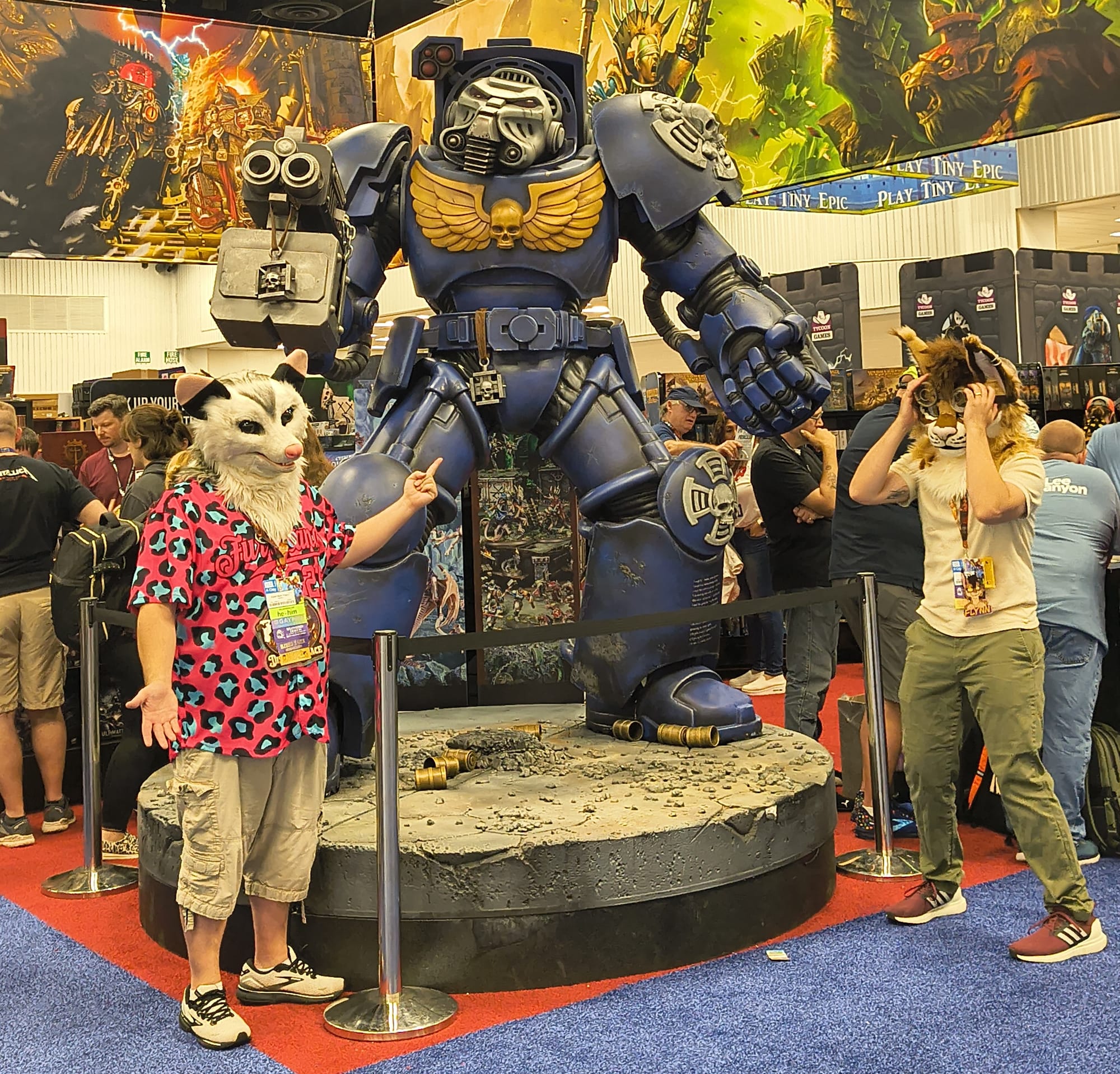
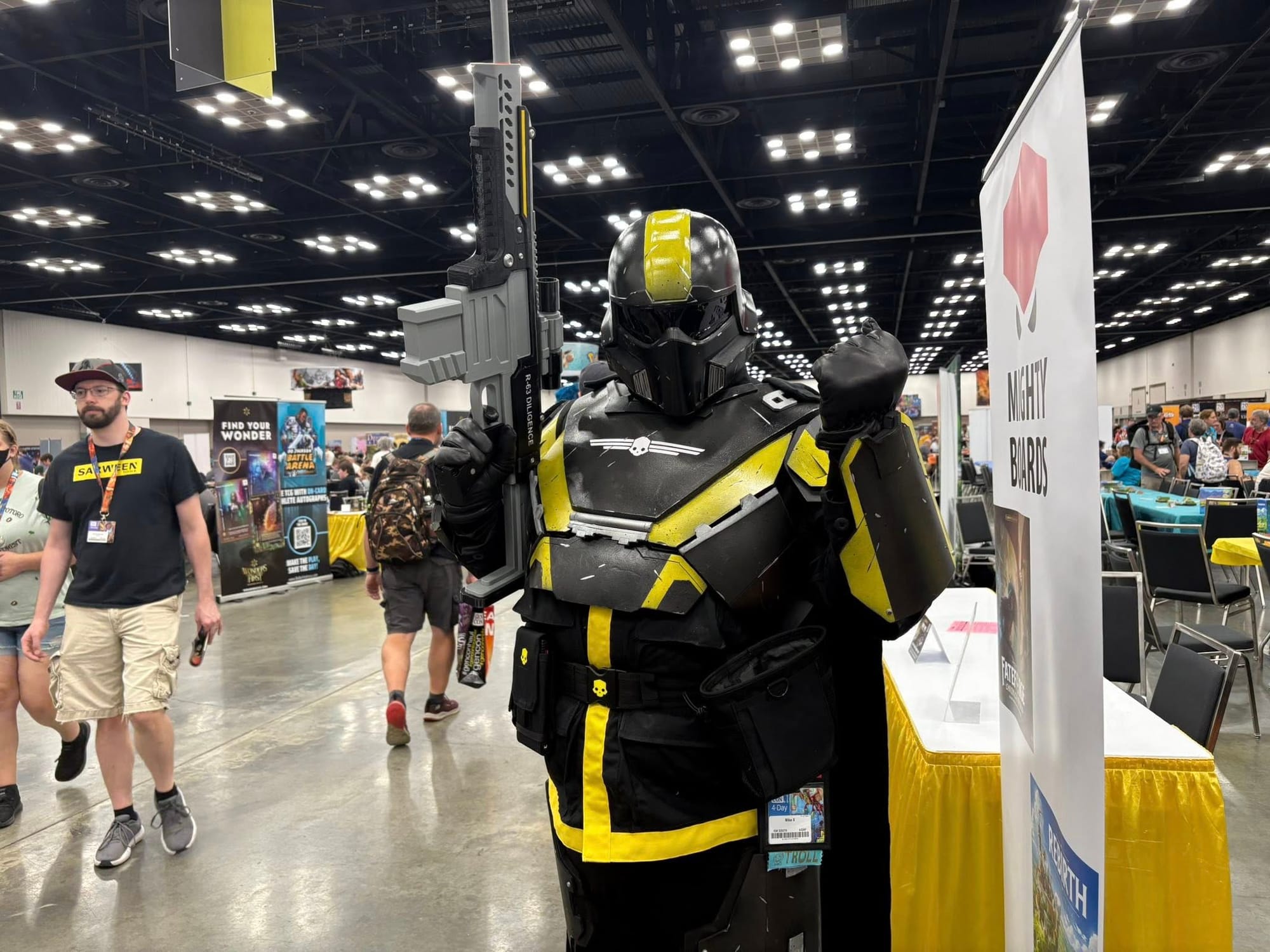
As with any good nerd and fandom event, GenCon attracts and invites an endless array of cosplayers, whether seasoned professionals or passionate amateurs who seize the opportunity to show off their skills and devotion to their characters. Being a macro event celebrating all things gaming and nerdy, the cosplays range from one extreme to another in terms of narrative genres, from an entire family dressed as Star Wars characters to a furry portraying their fuzzy persona. A sociological debate in a single image.
Every GenCon Saturday features the Cosplay Parade, where everyone is invited to form a line that winds through the convention center in a march that brings all activity to a halt and draws applause and fascination. Not to mention Genevieve, the red dragon mascot of GenCon and the face of the entire weekend.
Card castles for charity
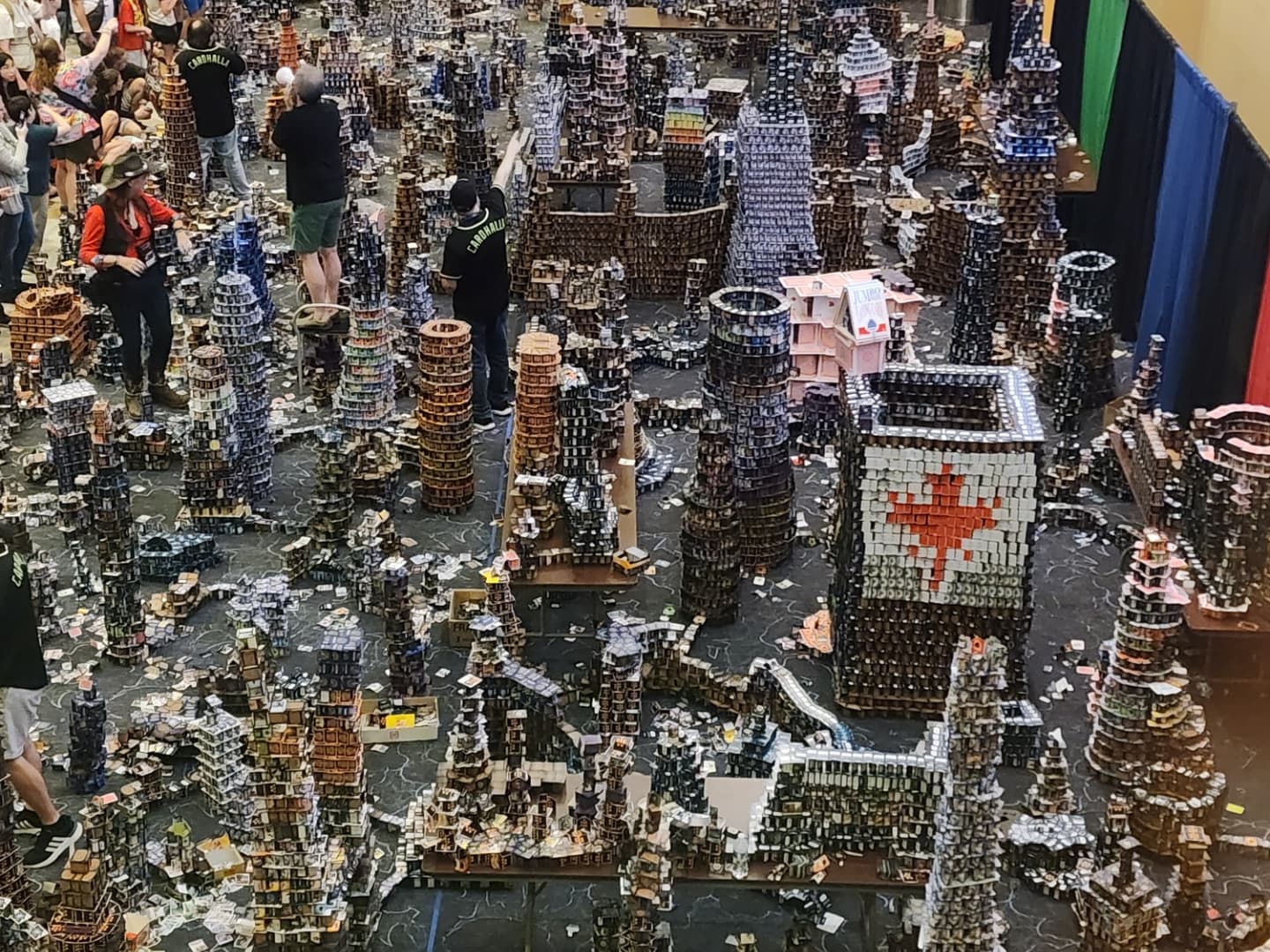
A hallmark of GenCon is its charitable spirit: charity RPG tables streamed live from the convention, a blood donation drive in exchange for loot, Magic4Kids, and many other charitable presences lining the convention center hallways. But there's one particularly unique charity event that has become a classic, called Cardhalla: from Wednesday, when the hall setup begins, through Sunday night, the convention center's main entrance welcomes attendees with a section reserved exclusively for building card structures. Castles, houses, figures -- anything you can make by folding cards from any game. The taller the tower, the better. As the convention days go by, you see different structures emerge, built from Magic: The Gathering, Pokemon, Lorcana, or whatever cards; each little house more elaborate than the last.
Every structure erected in honor of the Nerd God has a purpose beyond mere tribute: to be demolished on Sunday night by a rain of coins, each of which goes into the Cardhalla jar for charitable donations. By the time the last coin flies, a sea of cards floods the floor -- an image reminiscent of many of our bedrooms at age 15.
And so, GenCon is a melting pot of activities, panels, exhibitions, and shopping packed into what feels like four endless yet simultaneously insufficient days. It's an event so loaded that it crashes head-on into the greatest fear of the current generation and culture: FOMO. Going through GenCon's activity schedule and organizing your own itinerary -- including time to eat and walk through the Exhibit Hall -- ends up leaving very little room for spur-of-the-moment plans. And that's if there are even entry limits or available space.
GenCon is an experience that, for me, is fascinating and for others frustrating, in terms of feeling that no matter how much of the hall I cover, I always find a new booth of something I hadn't seen before. Many of the biggest names in the American tabletop industry argue, behind closed doors, that the convention should be five days long. For now, the only thing I'm convinced of is that GenCon is an event that anyone who considers themselves a proper Nerd should attend at least once, because the word "celebration" falls short. It's a true festival of gaming, fantasy, and community. Because if there's one thing Nerds know how to do, it's create a particular vibe. And maybe combo you on turn 2.