Grand Theft Auto IV: A Window to a World That No Longer Exists

17 de sep. de 2025 — Luis Paz
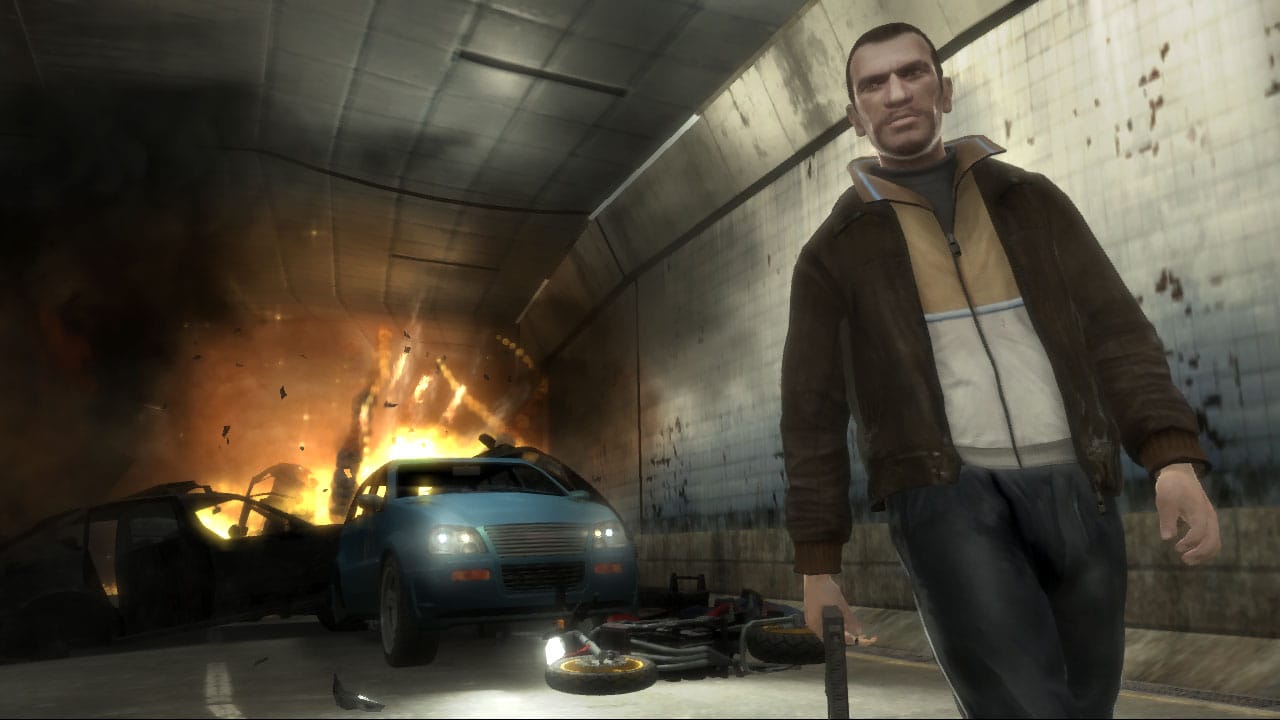
Grand Theft Auto IV is the second highest-rated video game of all time on Metacritic, behind only The Legend of Zelda: Ocarina of Time. The rating is unanimous across 86 reviews from specialized gaming publications and nearly 5,600 player reviews. That wasn't the quality or the stature I remembered this game having, and maybe you didn't either. In fact, my first intention for this piece had been, a few months ago, to write some kind of rescue or defense of GTA IV, because I remembered it as "underrated." But more than 17 years after its original release, and with a functional Complete Edition on PC, that ugly duckling — Slavic, at that — of the saga was progressively accepted and elevated by consensus to the rank of best of them all.
GTA IV vs GTA San Andreas
Grand Theft Auto IV came out in 2008. Though more than against Fallout 3, The Witcher, Metal Gear Solid 4, or Dead Space — the other AAA heavyweights of that year — it ended up competing against Grand Theft Auto: San Andreas, the international & pop hit that Rockstar Games had released only three and a half years earlier, and which in Argentina grew at full speed through a double infestation of public life (it was the quintessential single-player game of the golden age of internet cafes) and private life (it was also absolute canon on the PlayStation 2, the household console par excellence in Argentina at the time).
San Andreas was the closing chapter of the low-definition 3D era of the saga and arrived at the tail end of the 6th console generation. It is, in a way, the culmination of an arc of iterations of the same game (GTA III, Vice City, and San Andreas) and of the same company building the same world for the same console. IV, on the other hand, opens the HD era for the Grand Theft Auto franchise and lands squarely in the 7th generation, which in Argentina didn't achieve penetration nearly as fast or as widespread as the 6th. On top of that, the PC version that appeared at the end of 2008 was a notorious hardware killer, extremely demanding on PCs, and for that reason didn't reach as many internet cafes. Right from the start, Grand Theft Auto IV's entry floor into the country was visibly lower.
For those who did get into it at the time, the criticisms based on comparisons with its immediate predecessor were numerous. The "lack of customization" of Niko Bellic compared to the possibilities of turning Carl "CJ" Johnson into either a chubby slob or a chocolate Adonis. The "limited selection of shops and stores" for eating and buying clothes, as well as the outright nonexistence of barbershops or gyms — problems that dissolve when you consider that this protagonist isn't a swaggering kid like CJ but "an older guy," supposedly around 30 years old — clearly left wrecked from his time in the war. The likelihood of someone like that changing their hairstyle or wardrobe is so low that it's irrelevant to the game's purposes. It makes sense that Bellic wouldn't care about changing his haircut or his style of clothing.
In the meantime, Rockstar debuted RAGE as its proprietary engine and integrated Euphoria (NaturalMotion) for procedural animations and physics, one of the game's great differentiators, after Electronic Arts, via Take Two, had purchased the studio that developed the previous engine and restricted its use. The graphical quality and physics of Grand Theft Auto IV remain some of its highest points today, more than 17 years later. On the other hand, during those years there was also a global backlash and a wave of cancellation against certain video games for allegedly promoting drugs, crime, violence, or misogyny. San Andreas had all of those, but none of it slowed its cult status.
Released in April 2008 on PlayStation 3 and Xbox 360, and ported to PC later that year, Grand Theft Auto IV had to endure a lot of hate despite being a quantum leap within the saga. It inaugurated a new console generation with an in-house graphics engine. And it went all in with an exquisite proposition, a memorable character without being a paragon of charisma, and a story on par with the best tales of New York's immigrant underworld and some of the most memorable in video game history. A story I won't get into here because it's far more interesting to play GTA IV than to have all its lore and NPC profiles explained to you.
A window to a world that ceased to exist very quickly
Now, if at the time of its release the game functioned as a portrait (absurd, ironic, surreal) of New York City, of immigrant communities, and of disorganized crime in a post-9/11 United States, in 2025 this installment of the saga also operates as a simulator — no longer of an "American way of life," as Grand Theft Auto San Andreas continues to be, but as a simulator of a "generational way of life." It is a window to a world that ceased to exist very quickly: that of the great cities of the mid-2000s, when digital technology was already everywhere but hadn't yet devoured the everyday experience. A blend visible not only in its setting but also felt in its gameplay.
Grand Theft Auto IV takes place in a perfectly balanced era — as all (great) things should be — when consumer technology held an important place but wasn't omnipresent. The TV is there, in the "safe houses." The GPS is in the cars, not on the phone. Because yes, Niko has a cellphone, but it's a 2008 device with polyphonic ringtones, where he receives messages and calls but can't browse the web. That's what internet cafes are for. And to get to them, you have to move. The streets aren't under video surveillance either; there are no security "totems" in buildings or electronic toll passes on the highways. It's a totally analog, old-school world in its rhythm, where technology was just beginning to mutate into something mobile. Shortly before — though it feels like "long before" — the chronically online world.
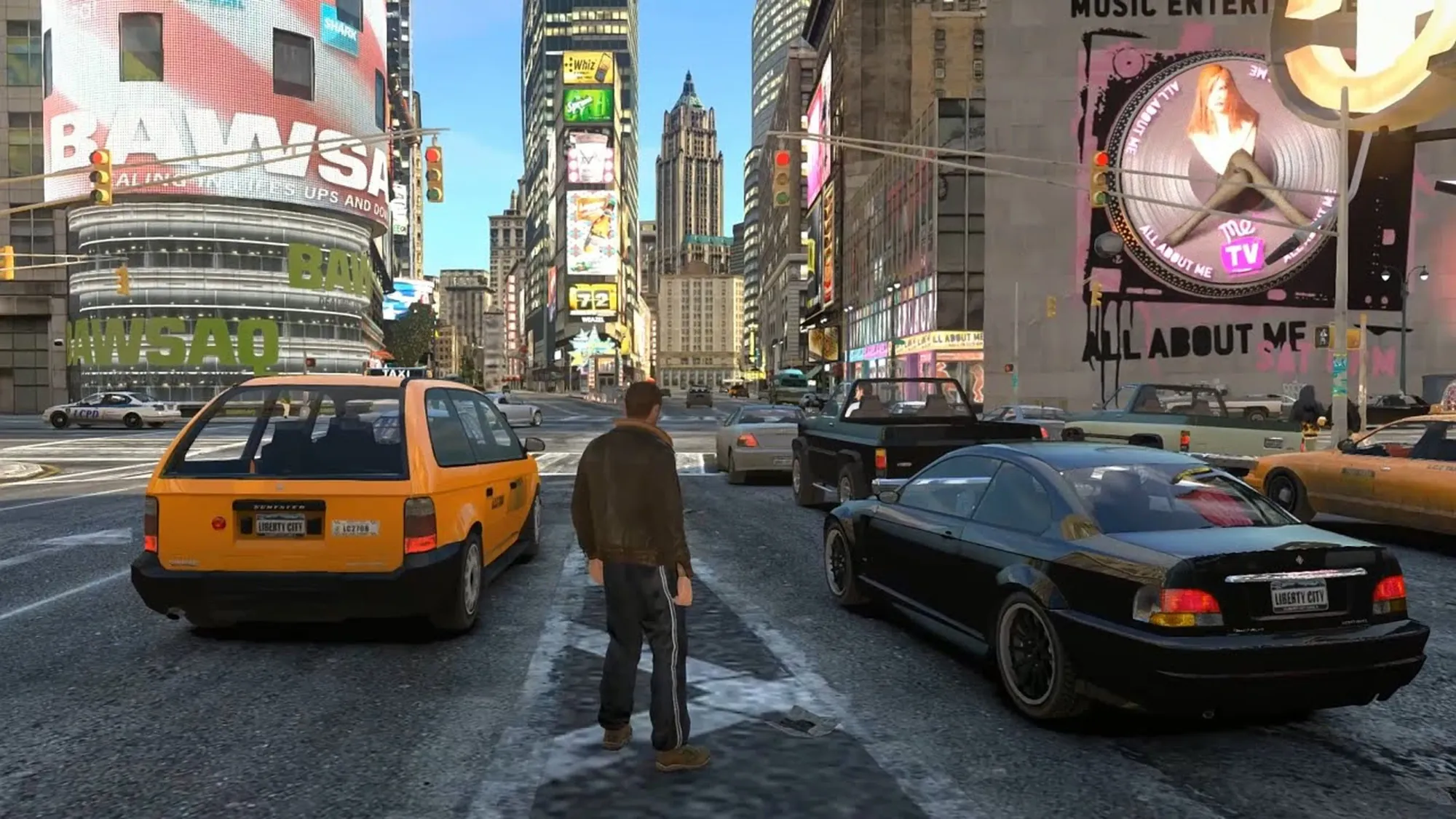
This is why, among other things, no matter how unbearable the traffic in New York is and no matter how much speed you apply to completing missions, Grand Theft Auto IV feels like a slow-paced game — not so much because of the speed at which things happen but because it allows you to focus on one thing at a time. A "right now I'm on a date with Michelle — damn you, Michelle — I can't go kill Sarlanga," followed by "now I have to go kill Sarlanga, we'll catch up later, Michelle." Niko walks heavy and the driving is so different (so much better than San Andreas and so much more realistic than GTA V) that between how demanding driving becomes and the volume of traffic, even the most frantic missions train your patience and your coexistence skills.
Liberty City, even in its immensity, comes across more like the New York of Home Alone (its neighborhoods, its parks, its rainy nights) than that of Spider-Man on PlayStation 4. It's a map that is more a territory than a scale model. It doesn't have the level of immersion and interaction of a Yakuza game, its Japanese equivalent, where you can practically enter any building in the district that functions as the game's world. But there's real density in the livability of the city: how many shops in your neighborhood are actually relevant to you? How many did you walk into over the past year?
This is part of that perfectly functional balance, also notable between missions and distractions, with a few places to eat or do activities (bowling, darts, drinks) and many spots to discover. Some as simple as a police checkpoint at the entrance of a tunnel, others as iconic and full of easter eggs as the Statue of Liberty itself, with a hot coffee in hand and what appears to be Hillary Clinton's face. If you're curious about why those elements are there, look into the "Hot Coffee" affair in San Andreas and how the former First Lady became the face of the push to censor games during those years. The GTA IV team left her a tribute in their game, where you can even enter the Statue and shoot up its... well, see for yourself.
The Niko Bellic School for Living in Idiotic Societies
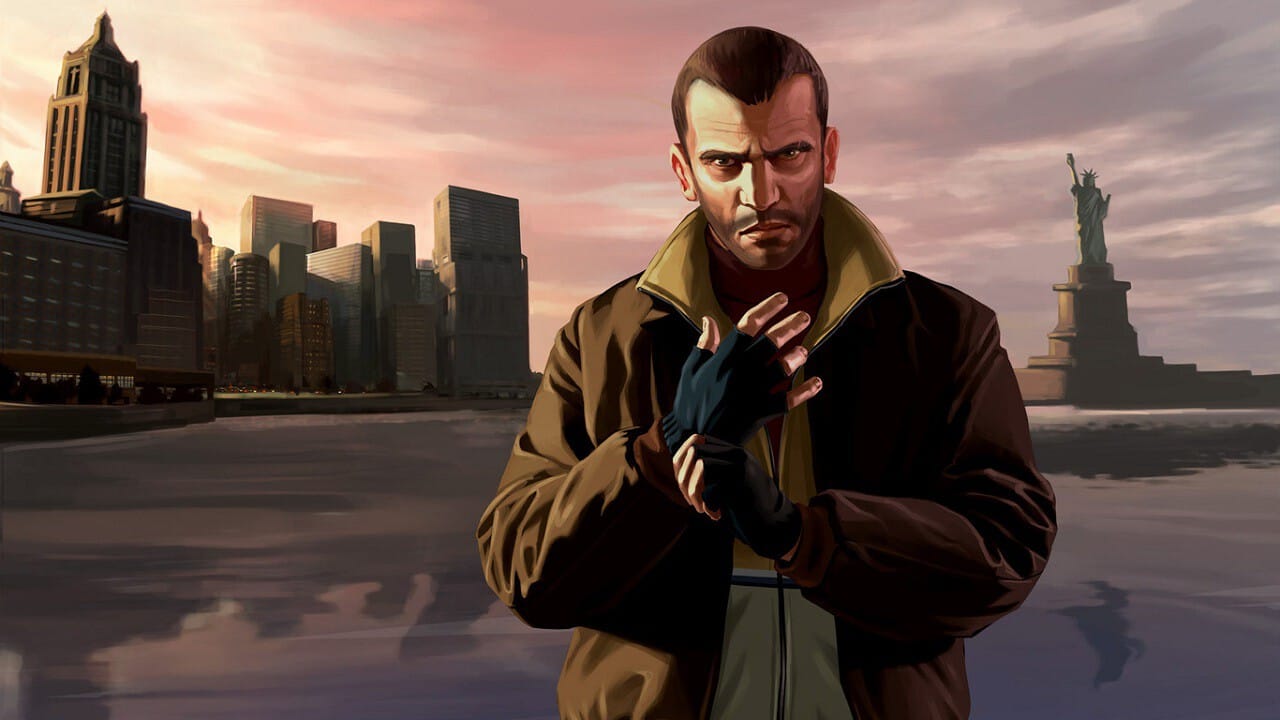
But more than the distances and the unique atmosphere of that concrete archipelago that is Liberty City, what crowns that feeling of a window to a lost world is the game's tempo, its rhythm, Niko's pacing. There's something in Bellic's way of being that confirms it: the guy doesn't give a damn, he doesn't mess around, he goes and does what he has to do, and when he doesn't, he does what he wants and that's it. He doesn't get riled up when he runs a red light and gets hit with a chorus of honking. He doesn't dwell on some temporary boss's attitude. He doesn't panic because fear might be lurking again.
On the contrary. Niko and his interactions with the world are designed to reward calm. When mounting a motorcycle, if you wait before taking off, he'll put on a helmet (and if you crash into a column, the damage will be less, of course). If you bump into someone on the sidewalk and instead of running on you stop, you'll see how their shopping bag falls, how the oranges roll across the sidewalk, and how they pick them all back up. You start to notice that the old NPC lady sitting on a park bench is reading a book, and that the book has a cover and is a real book. You start to appreciate walking into a store and not being shown a generic fitting room, but racks with clothes separated by garment type and style, among which you can walk and choose. Grand Theft Auto IV doesn't abuse shortcuts in its mechanics. But it gives you the essential ones, like skipping taxi rides.
If you drive calmly, you'll not only understand more quickly how driving works in Grand Theft Auto IV — which is quite difficult to adapt to at first — but those details that make up an exquisite game will start revealing themselves to you. Flashing your headlights at an oncoming car and watching the driver avert their gaze. Pulling into a car wash and, if it's a convertible, having it washed by hand instead of with rollers. Never seeing a garbage truck around the city during the day. When it rains, people pulling out umbrellas, covering themselves with a newspaper or magazine, or running for shelter. If you go to a beach at dawn, you'll watch them clean it, watch people start arriving, watch a climax build during the sunny hours and then people gradually leaving, watch bonfires being lit at dusk...
Taking your time with GTA IV allows you to absorb a ton of information about the city, a ton of environmental details that contribute to the game's overall feeling, and it's also the way to get exposure to all its lore. If you skip cutscenes, phone calls, and dialogue, you'll miss a large part of that excellent story that makes this perhaps the best in the saga. A story that is built in those interactions with memorable characters not only during missions, but also in getaways, outings, and dates that complete the narrative. But, as I said, I don't want to talk about the story — that's another over-narrated subject. I just want to reinforce this: the realism of GTA IV isn't based on the scale of its "New York," but on the rhythm of the era and the attention to detail in the production. Details that are very easy to overlook if you play through everything in a rush.
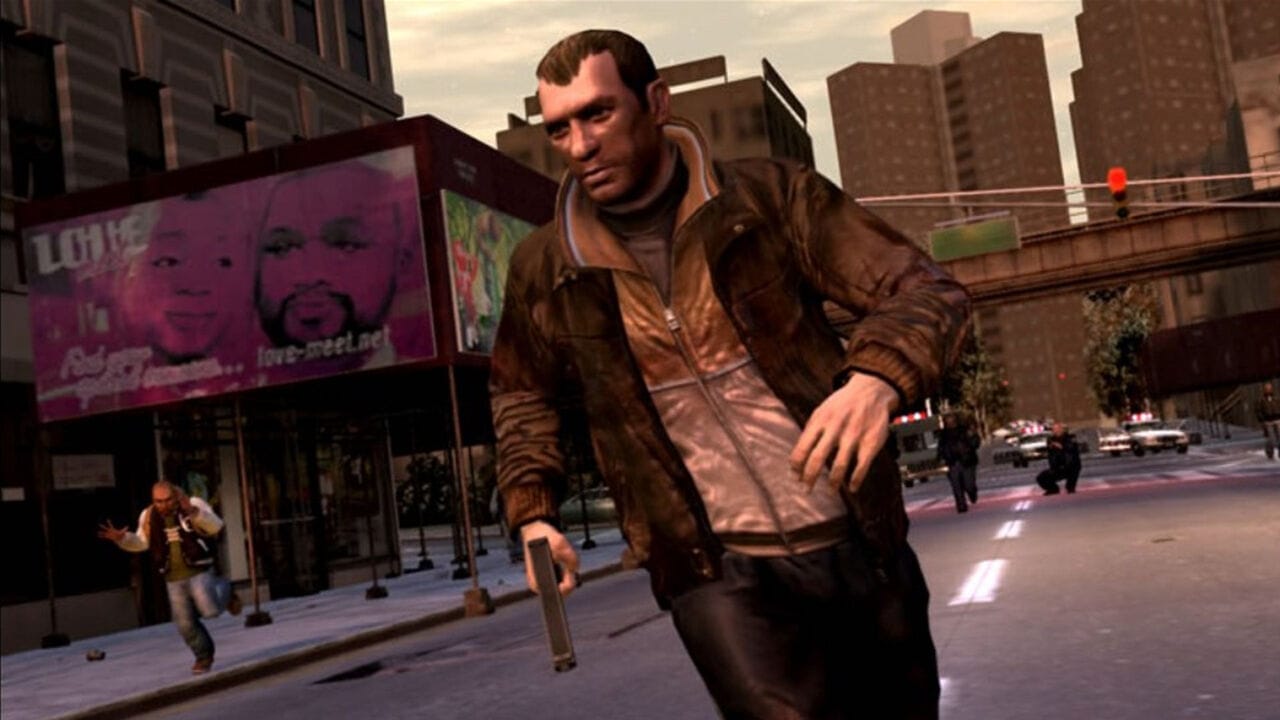
Keep Calm and Treat GTA IV Like a Sandbox
The current version of Grand Theft Auto IV is The Complete Edition, which removed the online mode, the leaderboards, and Games for Windows-Live (excellent decision) and added the DLCs The Lost and Damned and The Ballad of Gay Tony (superb addition). Some radio stations were lost along the way, and the focus was shifted to the single-player experience. The game technically offers an open world, but it's so satisfying to approach it as a sandbox that, with certain self-imposed disciplines as a player, the experience grows immensely and genuinely helps make it the best game in the saga, or at least the best playable offering from GTA.
Open-world games often end up being a form of gamified digital tourism: covering distances and seeing the sights becomes more important than the reasons for traveling and the motivations for looking deeper. They're overwhelming in their lack of direction, and what always happens, happens: you end up like an idiot collecting pencils and scraps of metal in Fallout New Vegas instead of doing fun things. GTA IV is born and grows as an open-world game, even with fewer friction points than San Andreas, which had three clearly differentiated regions. Liberty City is a continuum of things, a digitized city, but nobody lives their entire city, nobody needs every facade, nobody interacts with every little thing they come across during the day. That's not real life.
When Grand Theft Auto IV came out, I couldn't play it. I didn't have a PS3 or a computer powerful enough to run it properly. For many years I wiped it from my mind, and during that time I tried and tried with Grand Theft Auto V with no success; it's a game without a soul. Until at 421 and our editorial meetings, we realized we hadn't published anything yet about this Tier S saga in the video game world, and I wanted to go back to GTA IV, my great youthful frustration along with Max Payne 3. I picked it up after a deranged run of New Vegas with over 160 hours and all DLCs completed. I picked it up with the spirit with which I approach open-world RPGs. And I was having a good time, until one day, in some kind of frenzy, I started playing it differently. And I started having a better time. And everything clicked.
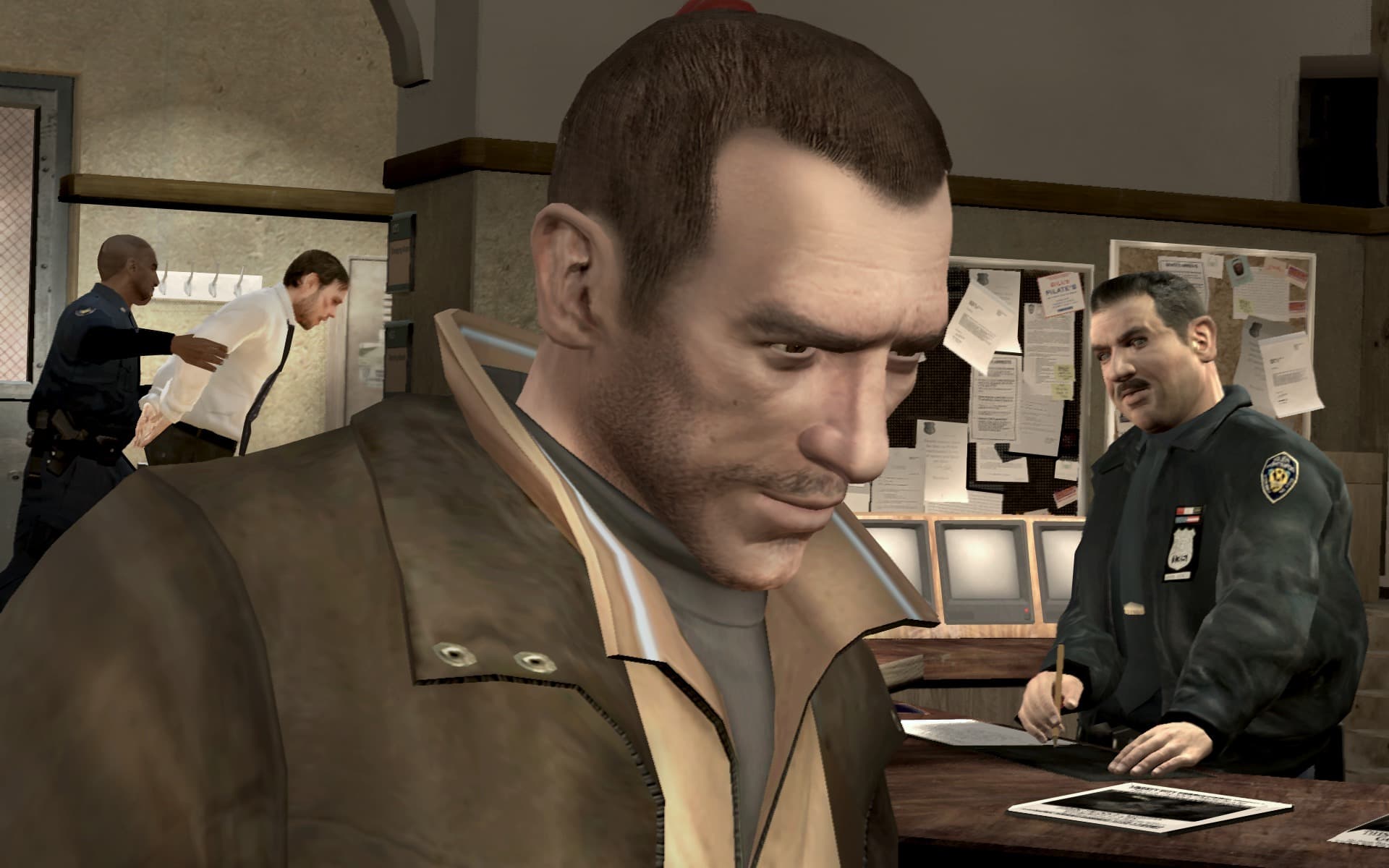
In a way, we could say I started playing GTA IV like a sandbox. Like a large but delimited space that offered me enough things to do and that always, always throws you a lifeline from the anomie of the open world through a delivery of nearly 100 different missions (though not that different from each other). Removing the urgency of exploration and collectibles, lifting the pressure of making Niko Bellic's life meaningful, gave so much more meaning to my playthrough. I'm about 40 hours into this new run and I'm having a Molotov cocktail of a good time.
What do I mean? I started giving a framework to all those possibilities. Prioritizing meaningful action over meaningless role-playing. For example, setting aside the solution of the high-speed highway escape — those action sequences that only showcase scale, size, mileage — to try more sophisticated forms of police evasion. Small acts of "world-building" (those things sandbox games let you do) like having a specific car ready for a specific getaway, creating prior checkpoints of studying the area and choosing the right vehicle. I started looking for vehicles suited to each situation and each need because, again, the whole point was in being able to shape how you play.
There's a perfect balance possible in Grand Theft Auto IV, with the best of open world and the best of a scripted action RPG, but you have to manage it a bit yourself. There's an entirely different game to be played in the interstices of GTA IV, even though the threads that pull the plot taut in GTA IV are good enough to never let go of.
The trick is to play with the systems the game offers you, not with the NPC icons that feed you missions: Liberty City is like an interactive 3D board game, with incredible physics, where the objective isn't to move around the board but to exploit the rules and mechanics of the game to beat it, to somehow "break" it. And for that, it's essential to slow down the way you play — to be, a bit, that Niko Bellic who's so fed up that he won't overreact to things, either. Set yourself rules and restrictions, set your own challenges, pick your own collectibles. The trick in GTA IV lies in exploiting its systems. I'm still figuring out how to do it, but something in the joy is telling me that's the way.