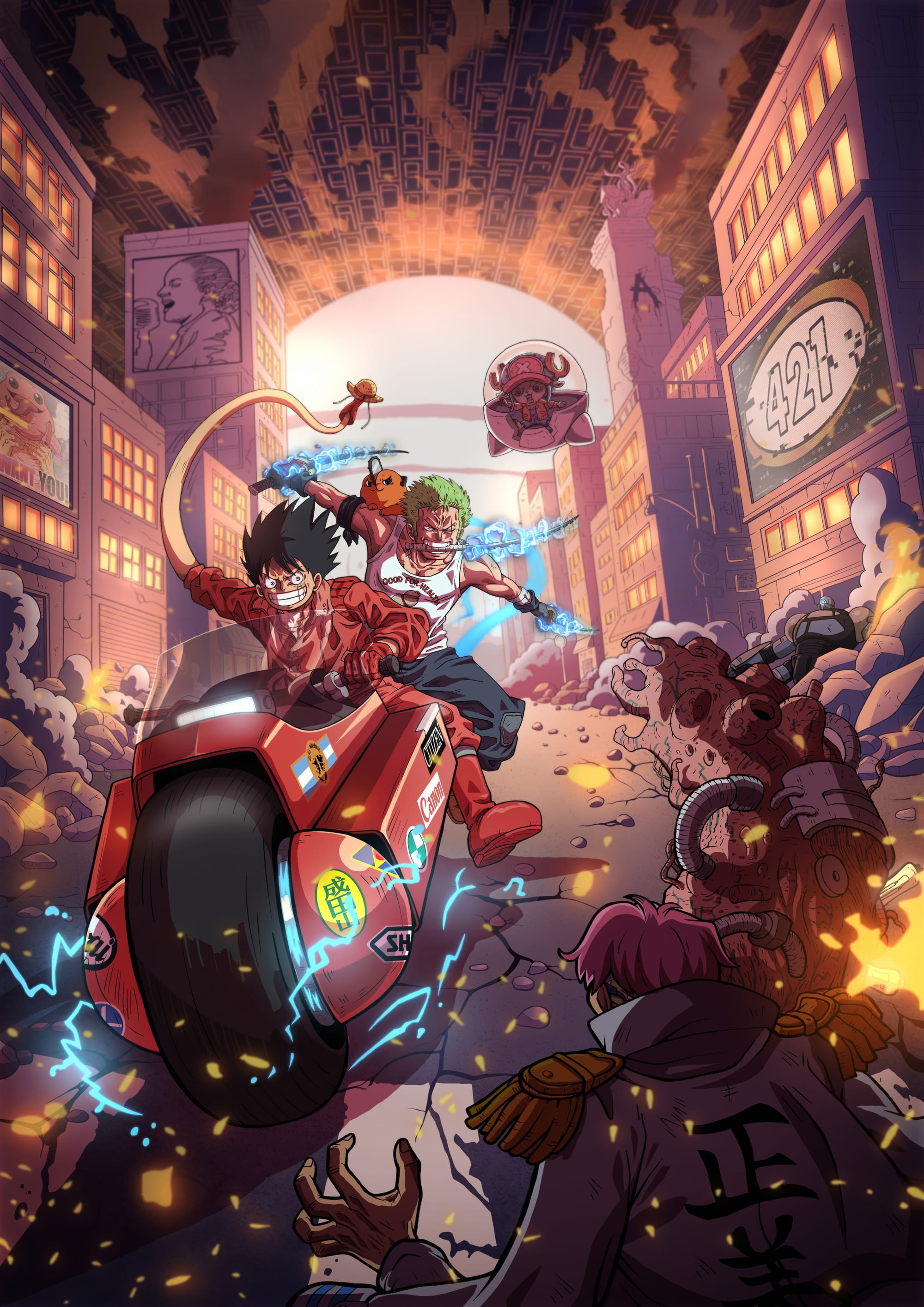
The History of Parque Rivadavia, Buenos Aires' Legendary Hobbyist Meetup

16 de sep. de 2024 — Juanma La Volpe
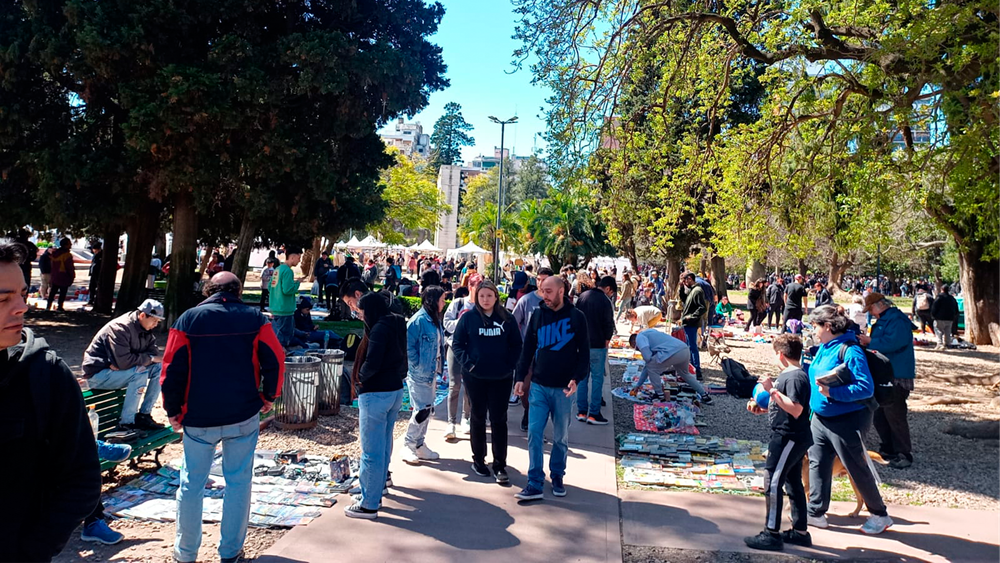
Since the 1940s, Parque Rivadavia has welcomed collectors of all kinds, but economic crises and the need to create a new sense of belonging made its flea market grow, drawing hundreds of people through the collecting of games, toys, and antiques.
Golden Age
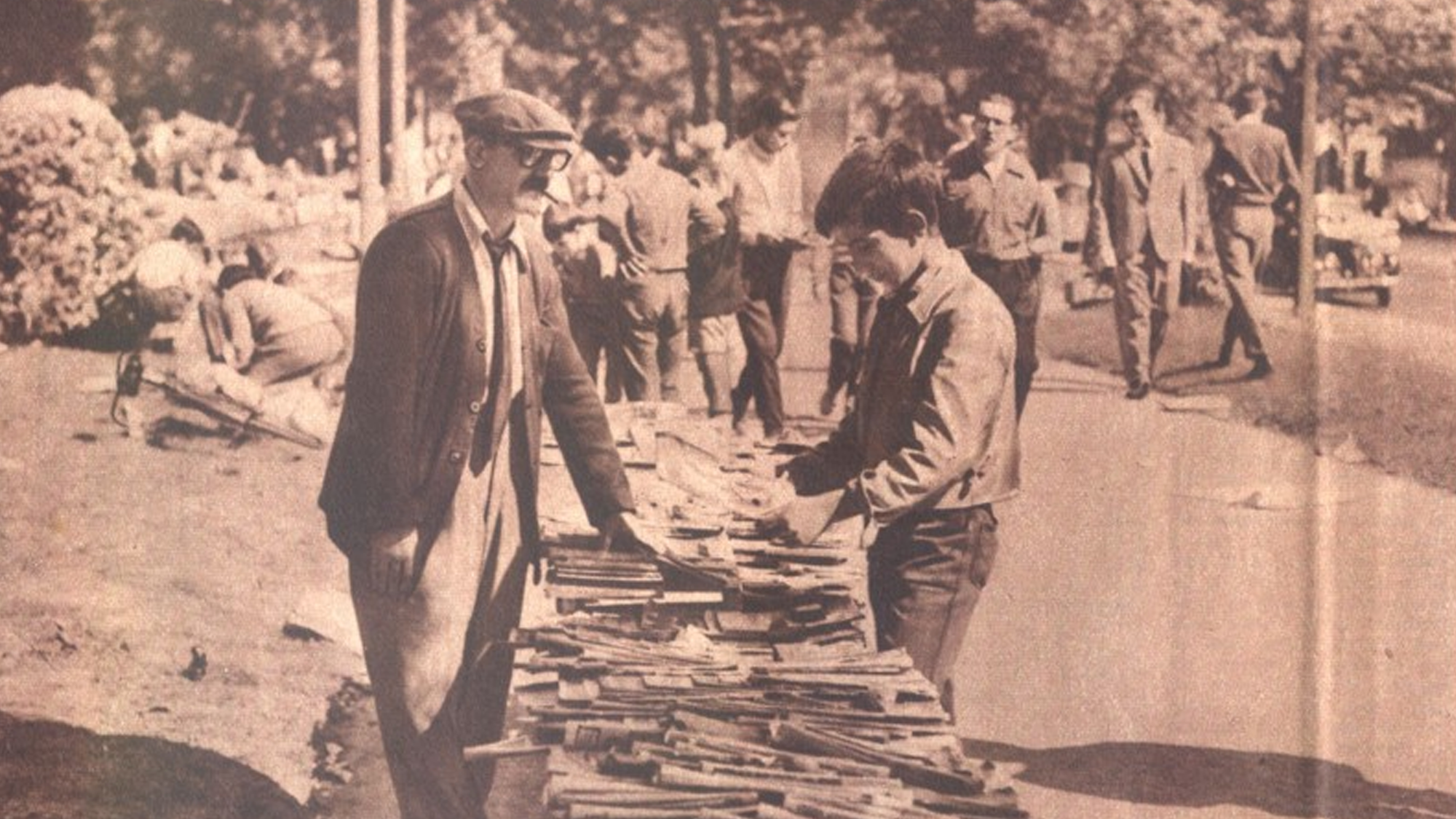
The Parque Rivadavia always had a home for these people, with the immortal Ombu de los Coleccionistas (Collectors' Ombu tree) serving as the original meeting point. The area around that tree was occupied from the start by coin and stamp collectors. Then came the creation of the book and magazine fair, and since the '60s the addition of the hobbyist fair on Sundays.
This space, sacred to many, is a hugely important cultural landmark for the City of Buenos Aires, not only for its organized fair but also for the communities that have lived in and occupied it over the years. In the '80s, crowds gathered to trade vinyl records, to the point that the Parque became a space for the proto-tribes of punks, metalheads, and music lovers in general. Used albums, imported records, and the famous bootlegs circulated freely (a whole bootleg culture in itself), offering pirate recordings of live shows or rare studio sessions.
"Since that Sunday noon / Where vinyl records were traded / Heading to the other side, you and I." Iorio immortalized that moment in "A vos amigo" by Almafuerte, a song about friendship and shared moments among the community of metalheads who gathered there. The kind of information you could find at the Parque was the kind that changed lives, forged friendships, and also allowed people to earn a few bucks to survive in this country of perpetual crisis.
During the '90s, with the 1-to-1 dollar peg that part of the middle class could enjoy, the book and magazine fair reached its peak in terms of inventory. You could not only find classics but also specialized stalls for comics or history books that imported new releases.
That era also saw the arrival of Magic: The Gathering at the Parque, taking over a good portion of the fair that over the years would shrink to a single store that still exists today: Time Spiral. Meanwhile, Sundays continued to belong to toy, antique, coin, and stamp collectors. And right next to that section, the record area. But after 2001, everything changed.
From street vendors to DVDs
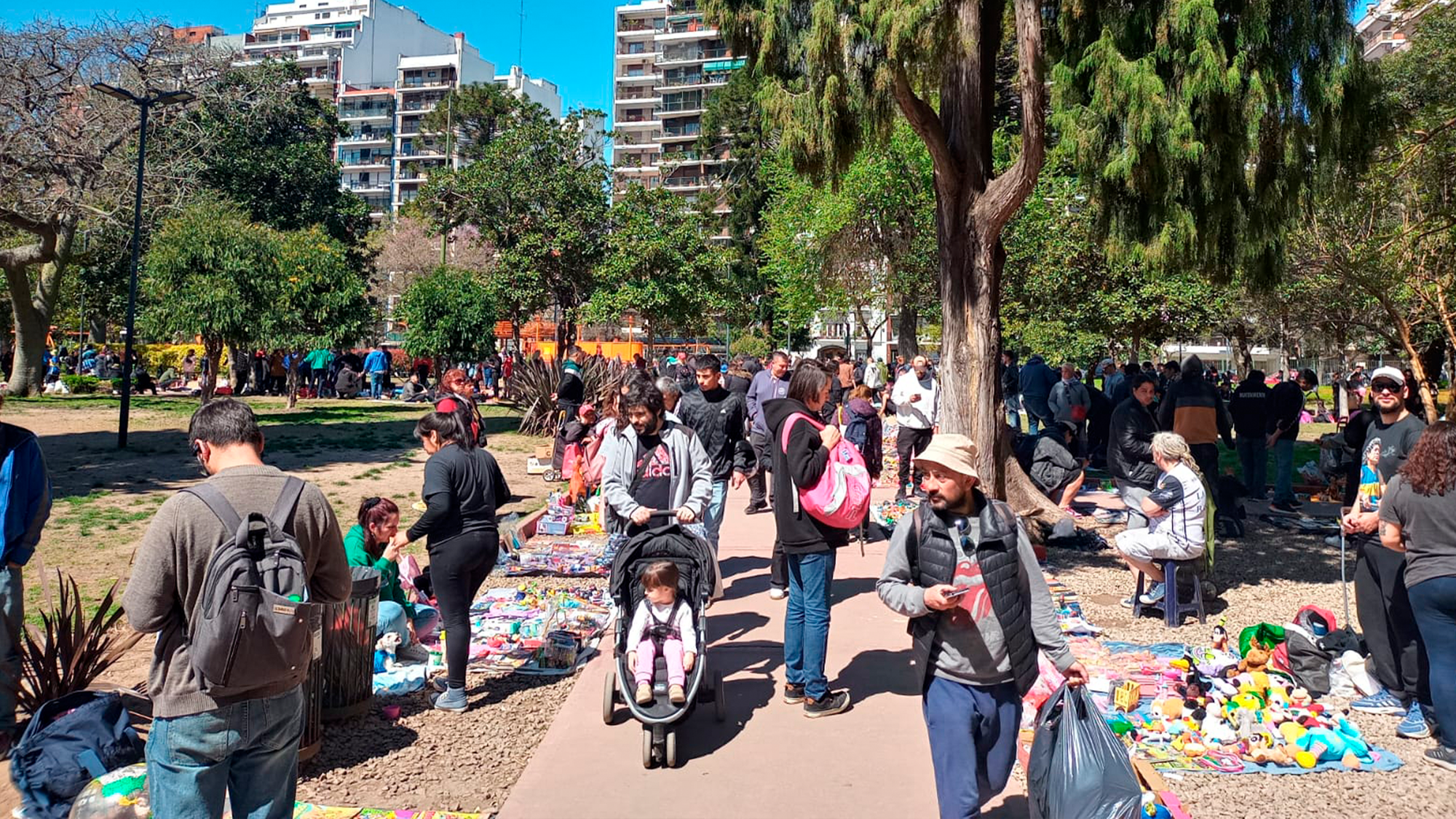
The crisis brought the first "illegal" street vendors, who started gathering along the park's pathways. At first selling antiques, but as the crisis deepened, the blankets filled up with things people sold to survive. Some had small businesses, others were offloading their collectibles, but there were also those selling whatever they pulled from their homes or the trash.
Another major change was that in 2003 the Parque was fenced in, which would later become standard policy in the City of Buenos Aires. But the street vendors persisted and the fair expanded at great speed, powered by the crisis, until it occupied the entire Parque. When there was no more room, and added to complaints from residents of neighboring buildings, the police and City government (led by Mauricio Macri) stepped in to "clean up" public space and only allow the "legal" fairs.
Another hugely important event that revived the Parque was the creation of El Quinto Escalon, the competitive freestyle rap battles that ran from 2012 to 2017, organized by YSY A and Muphasa. But as they would say in Conan: "That... is another story."
For the rest of the first and the first half of the second decade of the 2000s, the Parque kept the classic book and magazine fair, but it was overrun by illegal DVD sales of every kind. "GAMES, MOVIES, SOFTWARE" was the vendors' battle cry. All the vendors, because the DVD business steamrolled a good chunk of the book stalls. While the Sunday collectibles fair continued, it kept getting smaller and the evicted street vendors mostly moved to Parque Centenario.
For a few years, the Rivadavia kept losing its magic. But if you think that was the dark age, you'd be very wrong.
The true dark age
Between 2017 and 2019, DVDs started to disappear. And with them, part of the fair. Years earlier, many book sellers had swapped their inventory for folders of games, movies, and software, but with the arrival of streaming services and new technologies, demand dropped drastically, leaving many stalls empty with neither books nor DVDs.
On top of that, the Parque underwent two major changes: a facelift in 2017 that kept it closed for four months, and in 2019 the opening of the Beauchef street extension next to Escuela Normal Superior No. 04 - Estanislao Severo Zeballos. This new street sparked a conflict between the fair, the neighbors, and the City government, by then led by Horacio Rodriguez Larreta. Many of the classic fair vendors and residents opposed the construction, since it opened a street next to a school.
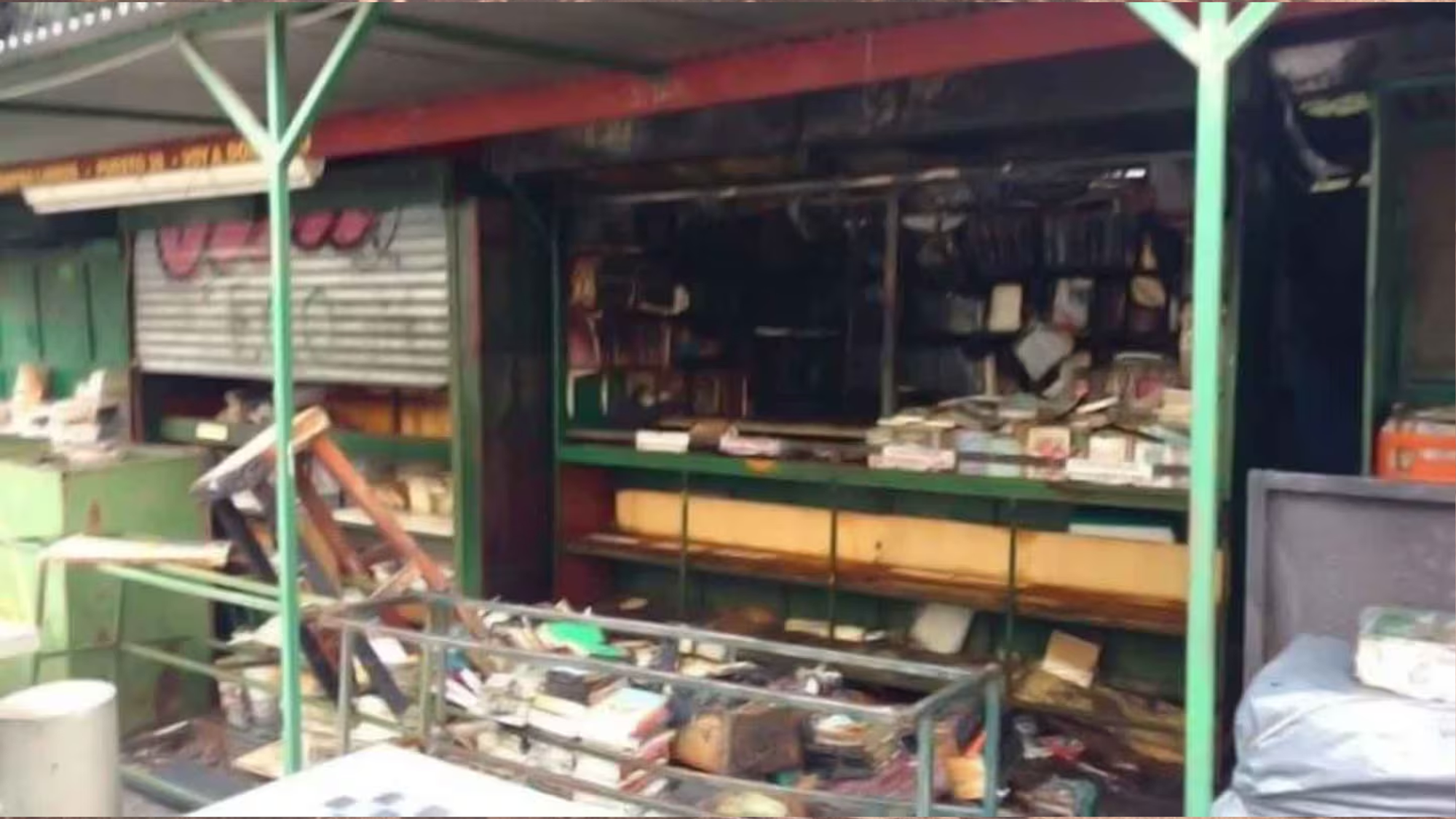
After several months of disputes, on the night of July 26, 2018, a fire struck the fair and destroyed 8 stalls, making the construction of the new street inevitable. Larreta's government blamed the fire on faulty electrical installations in the stalls, but was never able to prove it.
While the construction was underway, the stalls were relocated to Avenida Rivadavia, without electricity for several months. When the project was completed in mid-2019, the stalls returned to their usual spots but with certain requirements from the city government. New furniture was offered, but permits would pass to the City, and to renew them and keep operating, the counterproposal was that vendors repair and paint their stalls, along with a series of bureaucratic procedures to be allowed to work at the fair.
In the end, the new street became a pedestrian walkway thanks to pressure from neighbors and students of Escuela Normal Superior No. 04. But just when this conflict seemed to be fading into the past, the pandemic arrived, and with it the lockdowns. Between February and June 2020 the fair was closed, and when it reopened you could only go Monday to Friday, with even-numbered stalls one day and odd the next. It wasn't until December 2020 that the fair went back to normal weekend hours.
Reopening, crisis, and renewal
Little by little, the Parque began to heal and adapt to the new era. On one hand, the book and magazine fair had inventory again, the Sunday hobby fair was drawing people back, and many neighbors started coming in search of one of the few green spaces in the neighborhood.
Between outdoor birthday parties, the return of activities like exercise classes for seniors, and the renovation of the stalls, collectors started showing up on Sundays at the old fountain by the Rosario entrance to trade sticker cards. A ritual that in 2022, with the World Cup, would explode in popularity, making it impossible to move through the Parque on Sundays.
As the sticker card craze gradually faded (not overnight, but over months and months), that space was taken over by blanket vendors selling collectibles, initially scale model cars, but quickly all kinds of collectors in general.
At first we celebrated, because this outdoor space was sorely needed. Since 2015, collectible fairs had been confined to warehouses and Facebook groups, where you had to pay to enter and follow their rules to sell. And apart from a few spots in Parque Centenario, there weren't many spaces for these meetups. So as the area of new street vendors grew, we were thrilled at the treasures that could once again be found at the Rivadavia.
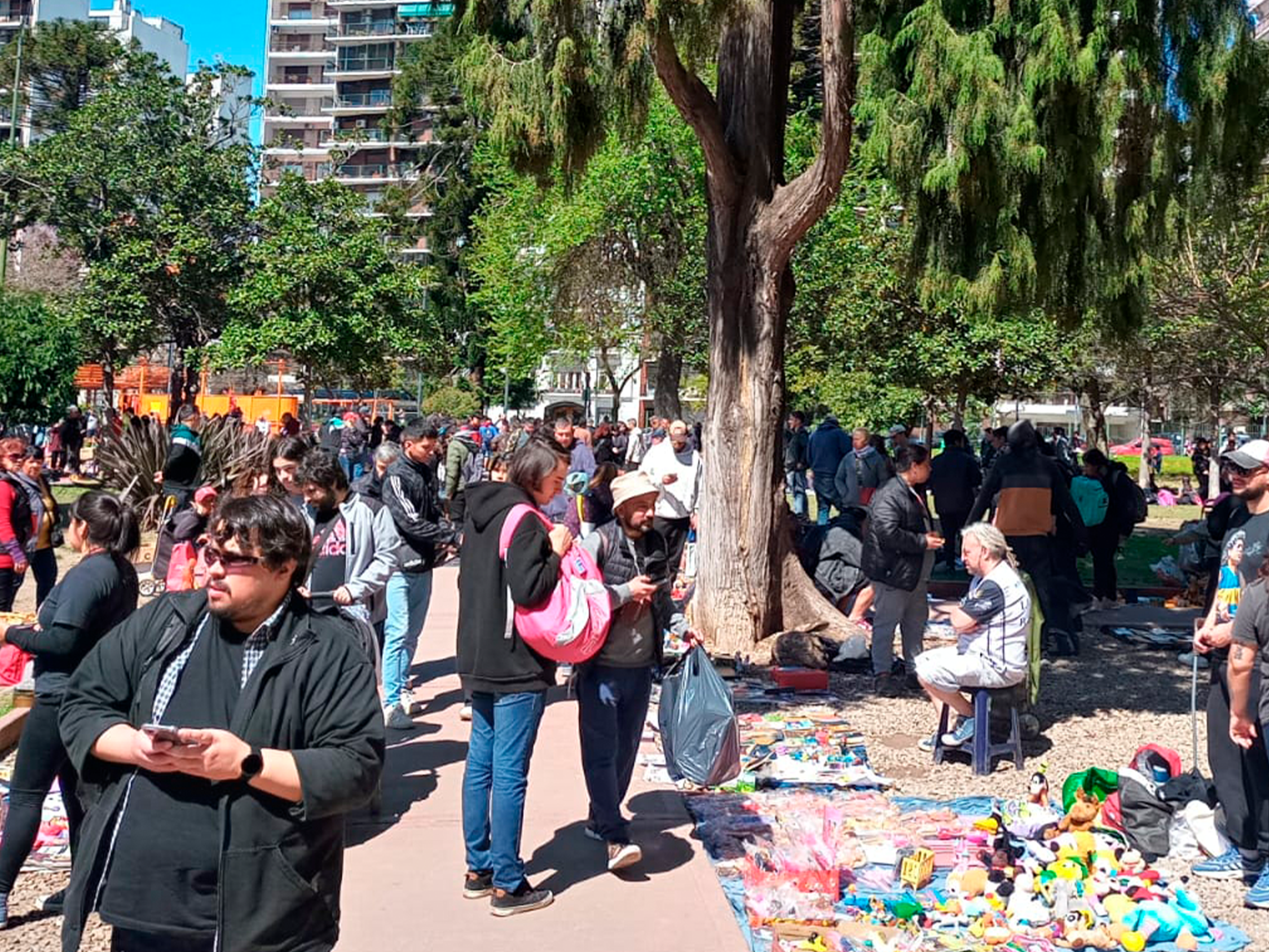
Starting in 2023, the hobbyist area began hosting this other street vendor fair that only runs from 8 AM to 2 PM (getting a little later each time, actually), but it was with the harsh blows of inflation from mid-2023 onward that the street vendors started gaining territory and once again, powered by the crisis that hangs over us like a vampiric curse, they grew to occupy, by September 2024, more than a quarter of the Parque. Sounds like 2001 all over again.
With the economic blows of the past year and beyond, added to the fatality that the pandemic was for many merchants, the blankets filled up with things for sale. It's in these moments of deep crisis where those with money buy and those in need sell. This new fair also has Facebook groups where sales and pickups are organized, but to set up a blanket you just have to show up early on Sunday and find a spot.
For a while the Parque lived this dichotomy of realities: on one hand the celebration of having a new space for hobbyists, and on the other the crisis that drives us out to hustle for every peso. Beyond the shadow of the crisis over all of us, the Parque became a meeting point and destination again. Visiting the Sunday hobbyist fair became a must, because the sheer amount of people and beautiful things you could see was mind-blowing, from little items for 500 pesos to Castle Grayskulls worth hundreds of dollars.
But we live in accelerated times, and the City government led by Jorge Macri has its eyes on how the city looks, clearing homeless people off the streets, and street vendors. First they launched a major operation to remove them from Parque Centenario. By the time this article was originally published, we didn't know when, but we knew the Police and the City would come to empty the Rivadavia.
The 2025 eviction and the present
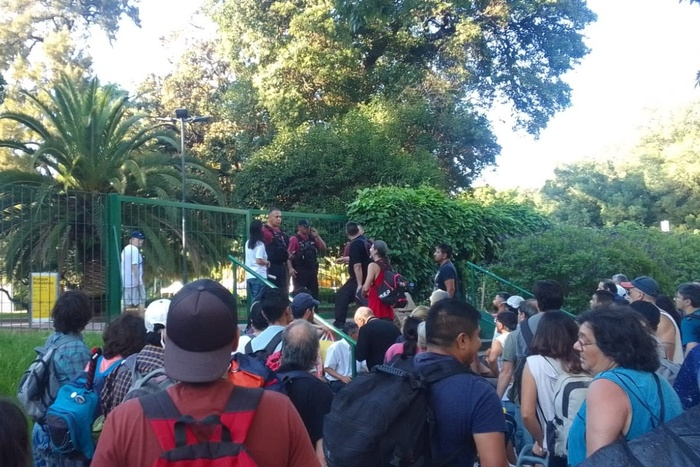
I'm picking up this article again in mid-2025 because, as was anticipated in the launch of 421, it was bound to happen: months after writing and publishing this article (specifically starting February 2nd) the GCBA (Buenos Aires City Government), deploying its police force and through a complaint from neighbors who collected signatures, launched a campaign of eviction and criminalization of the collectors who participated in the street vendor fair at the Parque.
You can read the full timeline of this episode in this other article, where we cover the first weeks of this crackdown. Not only were several entrances to the Parque closed off, but it was also flooded with police officers standing watch and, during the first weeks, demanding to search people's belongings before letting them in, so that no exchanges could take place either.
Today the classic Sunday collectibles fair survives, small and with many complications to get a stall. The heavy police presence has eased somewhat, but the overall situation remains: the collectors who brought commercial activity to the area can no longer work there.