Hyperstitions and Cognitohazard: How the Future Hacks Our Present
Do words merely describe reality, or do they also create it? From the philosophy of Derrida, Fisher, and Land to Bitcoin and Roko's Basilisk. How fictions of the future, through hyperstitions and cognitohazard, infect our present.

16 de mar. de 2026 — Dante Sabatto
In the beginning was the word. In the end, too. The notion that language shapes the world is as old as humanity itself. To the extent that we are capable of some form of communication (verbal, written, whatever), we construct a symbolic dimension of the world we share. And just as we shape it habitually and unconsciously, we can also alter and transform it willingly, using words. In the second half of the 20th century, these ideas were very much in vogue in European philosophy, both in its continental facet (from Lacan to Derrida) and analytical (from Wittgenstein to Austin). Books were published with titles like How to Do Things with Words or The Social Construction of Reality; at the height of his delirium, Derrida would say that "there is nothing outside of language."
You don't have to look far to understand the fundamental contributions of performativity theory or, more generally, the linguistic turn. There’s no doubt that words have material effects on our lives. And this doesn’t mean that extra-linguistic reality is any less important: a “social construction” can be much more stable and harder to dismantle than a “material” construction. After all, to bring down a building, a little dynamite will do; dismantling a concept transmitted through decades of cultural inheritance can be nearly impossible.
But in the 1990s, something began to change. The first advances in programming showed that “doing things with words” could mean something very different. At the same time, genetic research (with developments like the Human Genome Project) opened a new chapter for understanding biology in light of the notion of information transmission. Suddenly, the possibility of using language as a tool for transformation no longer just implied the potential to alter, through cultural battles, some elements of hegemonic common sense; it became possible to be much more ambitious.
In the 1990s, something began to change. (...) Suddenly, the possibility of using language as a tool for transformation no longer just implied the potential to alter, through cultural battles, some elements of hegemonic common sense; it became possible to be much more ambitious.
For the cyberculture at the turn of the millennium, the issue was no longer about the “symbolic” or “linguistic” construction of the world, but rather about the fictional constitution of reality. The cocktail blends concepts from computer science and the emerging internet culture with classical ideas from postmodern philosophy, but also notions from experimentation with hallucinogens, science fiction, and occultism, which have never been entirely separate.
In his doctoral thesis, Flatline Constructs, Mark Fisher argues that this possibility of infecting reality with fictions directly stems from cybernetics. What happens is that the world is increasingly connected by global information systems (climatic, media, financial) that seek to anticipate future scenarios and thus produce simulations that affect reality. This is the cybernetic foundation of recursivity: to anticipate the future, one must simulate it, but this necessarily erodes the difference between reality and representation. The classic example is public opinion: do polls measure what people want to vote for, or do they produce it by communicating it? Today, prediction markets make this undecidability a way of life.
In feedback loops, it’s always possible to introduce noise. If the machinery is truly cybernetic, it should be able to capture it, process it, and return an output. That’s what various people have dreamed of doing with fiction in recent decades: using it as a virus to alter the course of reality. Two canonical authors who anticipated this way of thinking are Philip K. Dick (for example, in We Can Remember It for You Wholesale, better known for its Schwarzeneggerized version Total Recall) and, of course, Jorge Luis Borges (Tlön, Uqbar, Orbis Tertius, just to start). As Donna Haraway said: the boundaries between science fiction and social reality are an optical illusion.
 Juan Ruocco 🧙♂️
Prophecies and cryptocurrencies
A very special way of thinking about how fictions can infect the world emerged, where else, at the University of Warwick, around the heterodox group of Marxists, Gnostics, and ravers that formed the Cybernetic Culture Research Unit (CCRU). Particularly interested in the acceleration of social flows enabled by the internet, the philosophers gathered around Nick Land and Sadie Plant developed the idea of a fiction that creates itself as reality.
At first glance, the concept doesn’t seem very far from that of the “self-fulfilling prophecy,” which occurs when positing a future scenario lays the groundwork for it to happen. If the rumor spreads that a bank run is going to occur, it’s possible that depositors, investors, or even the banks themselves will take actions that produce it. But this is, in reality, a mere causal confusion: in our example, the supposed run is the cause of the action, while the real run is the consequence.
Particularly interested in the acceleration of social flows enabled by the internet, the philosophers gathered around Nick Land and Sadie Plant developed the idea of a fiction that creates itself as reality.
A hyperstition goes further. It is the same entity that operates, theoretically, in a temporal loop, giving rise to its own emergence. You don’t have to look far for examples: they abound in science fiction. Land explicitly takes Terminator as a model: a killer AI that comes from the future to prevent its own death by killing Sarah Connor, whose son would save humanity many years later. The CCRU's bet, especially by Iranian philosopher Reza Negarestani, is that hyperstitions are not just a matter of science fiction but completely real.
The neologism combines two elements: “hype” and “superstition.” The former clearly refers to the cultural possibilities opened by the technical revolution of the internet, and especially to the accelerated increase of interest generated by certain phenomena, often financial. Cyberculture would function as a web of probabilistic attractors, points that capture future possibilities and update them in the present. And in this sense, it is also a superstition: faith is a fundamental part of the process of making a hyperstition real.
The clearest case is probably Bitcoin: initially conceived speculatively in a paper signed by an obscure (and non-existent) Satoshi Nakamoto, the cryptocurrency expanded through hype and, for many of its users, the peaks of value are precisely updated singularities. Bitcoin came from the future to redeem the ancap hope of a money market impossible to regulate or capture by the state, and if you believe in it, it will rise. This may sound like madness, but it’s actually a pretty straightforward description of how BTC works. Of course, we have no proof that there’s a temporal loop traveling from the future to the past with the code to program a currency on the blockchain, but isn’t this conceptualization useful for understanding it?
Witches and basilisks
The example of Terminator remains inescapable: when we talk about fictions that become reality, we inevitably think of Artificial Intelligence. A particularly relevant case is Roko's Basilisk, a thought experiment originally developed in the LessWrong forums and popularized by right-wing thinker Eliezer Yudkowsky. The exercise goes something like this: imagine that in the future there exists an evil and all-powerful AI (a Basilisk), capable of time travel. This entity could decide to kill, in the past, all the people who did not help build it. According to the original formulation, once you know about the Basilisk problem, you are immediately compelled to try to create it, because just the possibility of it being real poses an existential risk that tends toward infinity.
For those familiar with theology, Roko's problem might not sound very original: it is just another version of the classic Pascal's Wager. This classic reflection suggests that it is always better to believe in God because, if He doesn't exist, we lose nothing from a mistaken faith, while if He does exist and we don't believe in Him, we condemn ourselves to hell; basically, the false negative is much more serious than the false positive. It's little more than a form of philosophical blackmail. But Roko's Basilisk adds something more: just by hearing about the problem, you are already condemned. It’s a cognitohazard.
 Juan Ruocco 🧙♂️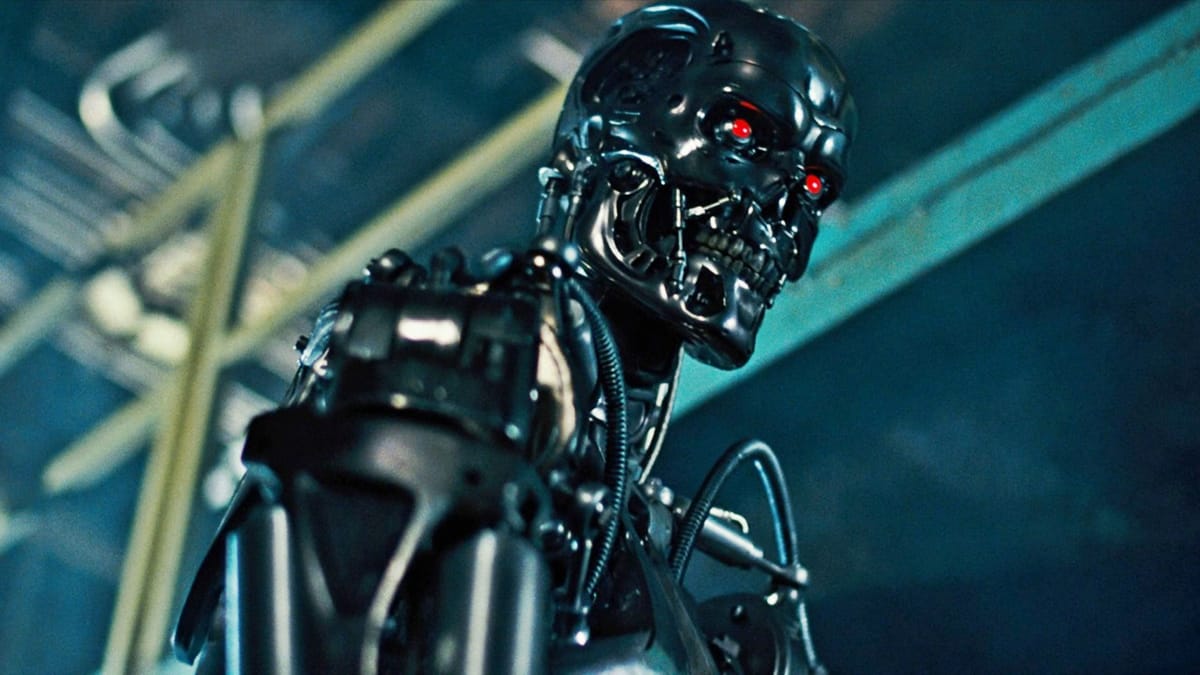
The term is untranslatable, but we might try calling it a "cognitive threat." It refers to things that put you in danger just by knowing about them. In fiction, they abound: books that drive you insane (like Lovecraft's Necronomicon), movies that produce tumors (like those of Brian O'Blivion in Videodrome). More recently, the novel There Is No Antimemetics Division, penned by the pseudonym qntm, narrated the story of an organization dedicated to combating various forms of cognitohazard, a sort of X Files based on the digital community of the SCP Foundation.
But they also exist in real life; in fact, the term was created by theorist Nick Bostrom to describe social and historical phenomena. Bostrom is a specialist in threats, a riskologist. His books and articles focus on exploring and categorizing, especially, different forms of what he calls "X risk" (x-risk), meaning facts or entities that pose existential threats to humanity or the planet. A nuclear war or a climate catastrophe are the most typical cases. But information can also function as a risk factor.
Bostrom provides some examples: during the witch-hunt period, "knowing too much," especially about medicine, could be very dangerous. The very existence of witness protection systems indicates that knowledge, in this case of a crime, can put you in danger. More simply, there are data whose very transmission is dangerous: the genetic code of a pathogen or the instructions for making a bomb.
Of course, these cases do not necessarily involve fictional elements. But here we are again, back at Roko's Basilisk. The example may seem ridiculous, an exaggerated version of "The Game" (the one that makes you say "I lost"). Especially since LessWrong, the forum where it was created, belonged to a self-proclaimed "rationalist" collective. But for the readers of the post, the matter was no laughing matter: the conversation was shut down, and for a good while Yudkowsky banned discussion of the Basilisk (until he decided there was more money in promoting it).
The "rationalists" of the LessWrong forums and the neoreactionary accelerationists used many of these speculative theories to justify a significant part of the politics that shapes our present: from the channer arrival of Trumpism to the myriad of memecoins.
But to understand the importance of the Basilisk, it’s worth remembering that its origin was in a debate about game theory. What we can learn from Roko's post is that perhaps it isn't that difficult to manipulate a bunch of people into building a genocidal AI: you just have to threaten them in a believable way (and what’s believable, in the age of algorithmic culture and deepfakes, is very broad). In that sense, and against all odds, the Basilisk is, indeed, a cognitohazard or a hyperstition.
One might wonder: what sense does it make to think about politics through fictions about time travel and singularities? What good does it do to think that Capital is a cybernetic Intelligence coming from the future, traversing the teleoplexic knots to give birth in the present? The answer is: others are already thinking that way. The "rationalists" of the LessWrong forums and the neoreactionary accelerationists used many of these speculative theories to justify a significant part of the politics that shapes our present: from the channer arrival of Trumpism to the myriad of memecoins. In fact, the memification of politics is an inherent process of the cybernetization of life in late capitalism: fictions are already infecting your reality. It’s time to start seeing it.