Interviews with the Computer Underground - Episode I: Santiago Roland, Administrator of Undernet.uy

17 de mar. de 2026 — Soldan
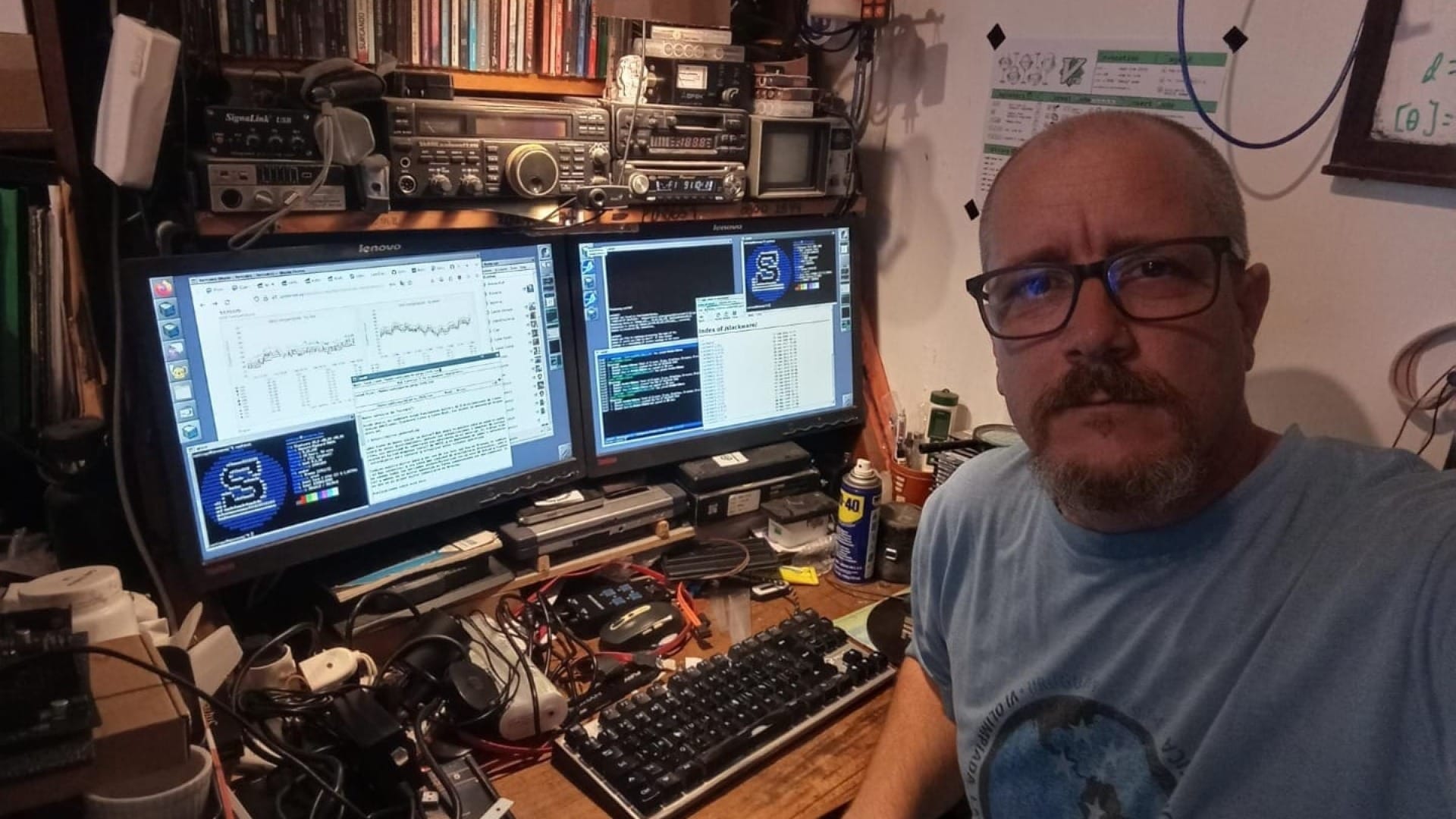
Since 421, I've been working for a while on ideas about how we can change many of our digital habits and show that it's possible to inhabit the Web of Networks in a different way. You don't need to pull out your credit card to fill the coffers of some data oligarch (better yet, support us!), you can live outside of Google and its ecosystem, and even better, we can set up our own little home cloud.
In this vein, we will publish a series of interviews with people who fight and propose innovative alternatives to those of the data oligarchs. Today, we spoke with Santiago Roland, a Uruguayan, professional astronomer, and administrator of the self-managed, community server Undernet.uy.
While we often chat (because we share digital spaces), I've been wanting to dive a bit deeper into what you do with Undernet, what it means to host services at home. But before we get into it, I’d like you to tell us how you got into free software and the idea of creating an alternative, self-managed digital community.
I’ve had a computer since I was a kid. Back then, there was a big distinction: those who had consoles and those who had computers. I had a computer, and that makes a difference. Having a computer allows you to experiment, to tinker. With a console, you just plug in the cartridge and play. With a computer, you had to get the game, copy the diskette, apply the crack—it's a whole different process that involves developing other skills. My first computer was a PC, a 286, bought by my dad, who was already in IT. But for what we’re interested in this conversation, the important part comes when I entered college in 2003. At the Institute of Physics in the Faculty of Sciences, there was a Debian Developer, Carlos Barros. He had set up all the Debian servers at the faculty back in 2003. At the same time, I volunteered at the Los Molinos Observatory. They were using Windows, but the data collected was processed using software originally developed for the Hubble telescope, which runs in UNIX environments. That sparked my interest in processing astronomical data. What’s this UNIX thing? Can it be installed? That’s when we learned about Linux, which was another operating system based on UNIX that you could install. A classmate installed SUSE Linux on a machine, and I thought, “Man, I need to have this too.” My dad had just bought a PC for himself and left me an already “old” Pentium II. I asked myself, “What do they use at the faculty to process images? Debian, because that guy was there. So, I installed Debian on that PC in 2005 to work, and I never went back to using Windows.
 Roberto Chuit Roganovich
As often happens, the need for computing drives us to seek alternatives in hardware, but in this case, it was different—a software that only ran on UNIX. Moving towards Undernet, how did the idea of managing a self-managed digital community begin to take shape in your mind? When did you start questioning the technological monopoly and its practices?
Starting in 2009, I began actively participating in FLISOL, and those were years of training. At the same time, I was migrating all the equipment at the observatory to Linux. That gave me the opportunity to understand how the operating system works in its entirety. I also watched many videos and talks, which introduced me to projects like Diaspora, a free social network similar to Facebook, or Identi.ca, the same but like Twitter. On the other hand, I also followed the Chaos Computer Club congress, where I learned about the Tor Project and got immersed in all those debates that were just starting to happen.
If back then you mentioned that the government could create an accurate profile of you, you’d be labeled a total paranoid... until in 2013, Snowden leaked what had been suspected all along.
At that time, Facebook was booming, growing like crazy, and it was clear that using those platforms would be a requirement for digital life. Moreover, at these congresses, they were already starting to talk about how governments were beginning to track citizens through the Internet and social applications. If back then you mentioned that the government could create an accurate profile of you, you’d be labeled a total paranoid... until, well, in 2013, Snowden leaked what had been suspected all along: that there were specific tools created to profile each person.
Let’s recap a bit for those who aren’t familiar. Tell me who Edward Snowden is and what he leaked that caused such a huge uproar.
Snowden was basically a computer scientist from the National Security Agency (NSA), an American but naturalized Russian. We need to put this in context. During the 9/11 attacks, U.S. intelligence services had a lot of information collected at different levels but scattered and not connected, which is why no alarms were triggered. From then on, the various agencies, primarily the NSA, began designing surveillance systems to cross-reference and centralize information. For example, you have a banking history, which is then layered with social media applications, geolocation, etc. Snowden worked for many years designing those kinds of systems until he realized that what he was doing was too shady. In 2013, Snowden leaked all this and blew the lid off: the PRISM project existed, which is a collaboration between U.S. intelligence agencies and Internet companies to provide information about their users, thus allowing them to surveil the population under the threat of “terrorism.”
I remember when that news broke; the first alarms went off. At least, those of us who were labeled paranoid were suddenly looked at differently.
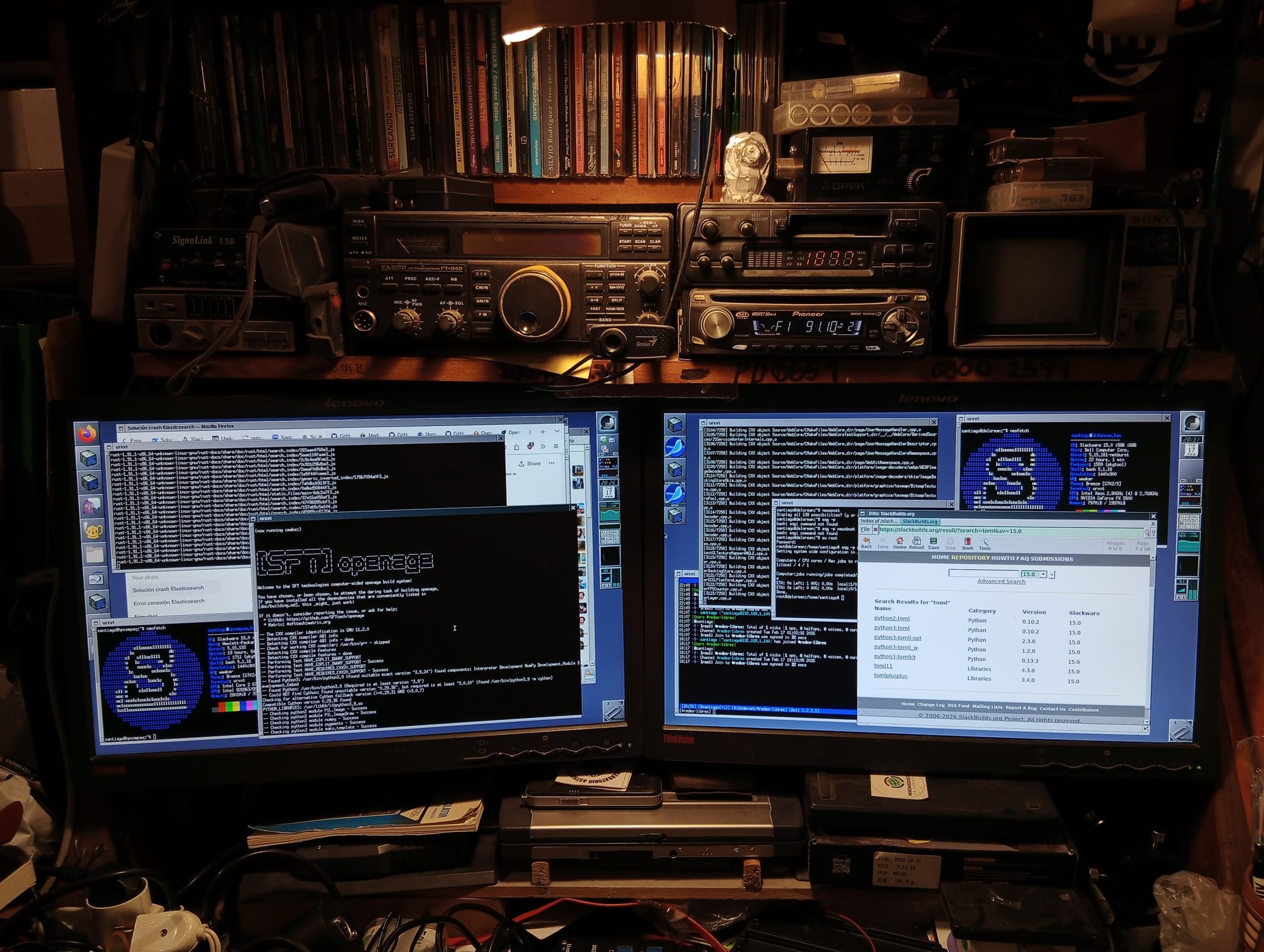
Of course! There was a lot of commotion, and many civil society actors began to pay attention. I remember, for example, a TEDx talk given by Marta Peirano around 2015, where she explained how Telefónica in Spain tracked its users. But even before that, around 2010, it came to light that Gmail was reading emails to target advertising. That really bothered me; it’s a violation of correspondence, ha! Google reads all your messages but then promises to forget everything. Yet they still target you with ads! In 2011, I decided to stop using Gmail and signed up for an email account on a server that nobody knew: lavabit.com. It was an email service that promised encryption on the server and assured that they didn’t sell your data. One day, I tried to log into my email, and the site was down. What had happened? Snowden had an account on that server! The FBI went after the owner of Lavabit to demand the data from Snowden’s account. But the owner is a Texan, Ladar Levinson, one of those crazy liberal yanks, with the “this is a free country” rhetoric, and according to him, he didn’t hand over anything. It was the first time I saw a sysadmin stand up for their users, ha! That’s when I realized I had to forget about wanting an account with any service based in the U.S., because the same thing could happen.
But from that, the solution came, almost as an obviousness: we need to own the services: if they want to come and take the server, they have to break down my front door. That’s how Undernet.uy started.
So, between Snowden and Lavabit, the origin of Undernet is cooked. What does self-hosting, managing, and self-managing Internet services and sharing them with others around the world mean to you?
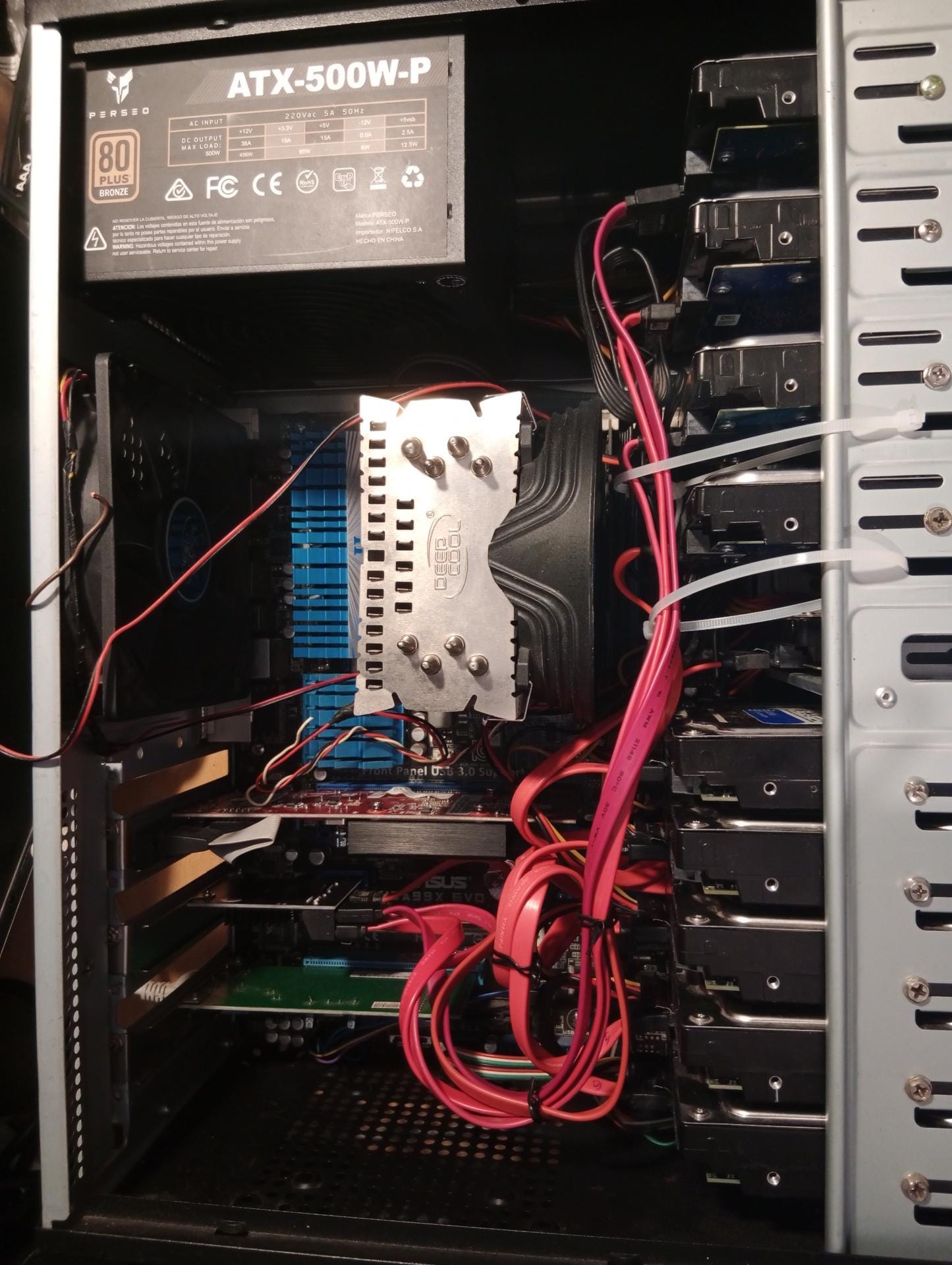
You can think of self-hosting like having an organic garden at home. It’s better from many perspectives because you can eat healthier; if tomatoes are expensive, it doesn’t matter because you grow them yourself. A server is a digital organic garden from which many people can benefit, use, help maintain, etc. There’s a difference from an organic garden. In a yard of, say, 8x8, you can create a garden to provide for your family. Now, if you want to provide for your friends, you need to scale that space. With a server, it’s not like that. A server that can hold 10 or 20 can hold 200 because you don’t need a server ten times more powerful, as you do with a garden. That’s called scalability: a server scales much better than an organic garden. The physical server that’s with you and lives on the same ground suffers the same political upheavals; it serves as a thermometer to assess the democratic quality of a country (for example, if it gets censored, blocked, etc.), and you’re not dependent on the promises of a third party saying they won’t sell your data or store it who knows where. You’re always sovereign over that digital ground, and you’re also more independent in the sense that no one can censor you unless it’s intentional, and the only ones who can interfere with your service are your electricity and internet providers.
We have to take ownership of the services: if they want to come and take the server, they’ll have to break down my front door. That’s how Undernet.uy got started.
There’s really no need for me to elaborate too much on the political and philosophical aspects of setting up your own organic garden versus going to the supermarket to buy food. Sure, the supermarket is easier; everything is designed for your comfort: there’s air conditioning, everything is shiny and well-packaged, and it’s almost like a stroll, effortless, so counter-evolutionary that it alienates. Getting food is hard work; in a garden, you have to sweat, you need to work the land, face various issues like ants, pests, droughts, hail, and many things you forget about when you go to the supermarket. The difference is that in one case, there’s a capitalist system between you and the food, and in the other, it’s just you and the food. Reclaiming contact with the earth (something that people who choose this more natural lifestyle appreciate) is akin to reclaiming contact with that initial decentralized and authentic internet that existed at the beginning. I think that if you want to regain that feeling of the internet as it once was, the only way is to self-host your own server-organic garden at home, in a library, in a community, or wherever, where capitalism touches as little as possible.
But what about those who don’t have land to set up a garden, or don’t have the knowledge to set up a server? Or, which is also valid, don’t have the time to dedicate to either the garden or the server?
Clearly, not all of us can self-host things, just as not everyone has to have the space, knowledge, or time to have a garden. Besides, as I mentioned earlier: on a server, where 10 can fit, 100 can fit too; it’s not necessary for everyone to set up their own server; you can join an existing one. That’s the case with undernet.uy: we can accommodate many more users than we currently have, but thinking that it’s always better if you can host it yourself, because we tend to centralize, it’s part of our cognitive bias on the internet. If something is successful or works, we all flock there and it collapses. The idea is for more servers to emerge and for people to spread out among them, where none has more importance than the others, like a true decentralized network.
I wanted to delve deeper into the server. How has Undernet.uy evolved? What services does it offer, and what’s the user base like?
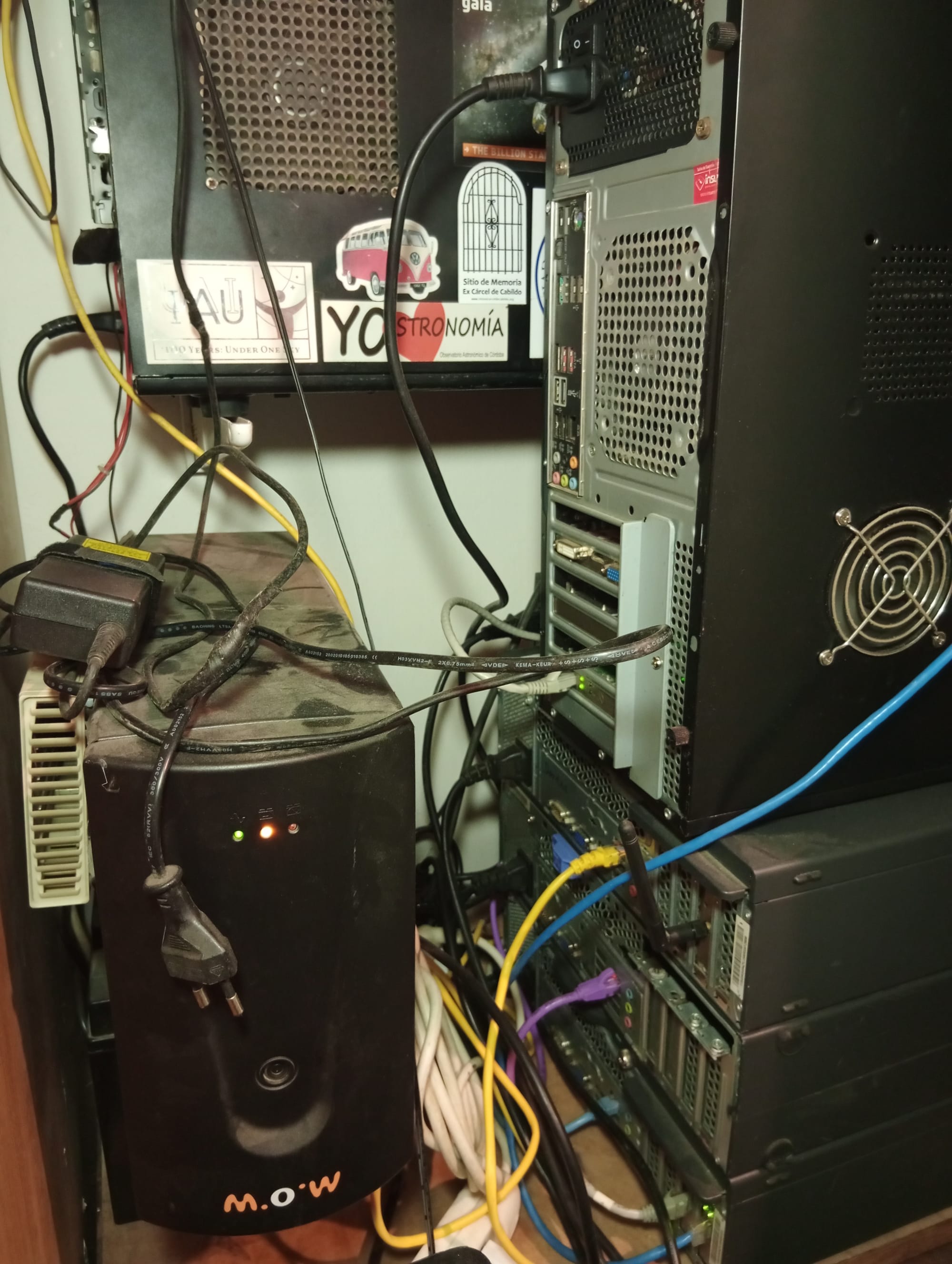
Undernet was born in 2015 with 3 services: XMPP (instant messaging), email, and Friendica, the alternative to Facebook. All of that on a single machine with 8 cores, 16 GB of RAM, and 1TB of redundant storage, with a copper connection of 2.8Mbps and 512Kbps upload speed, and a Linksys WRT54G router. All home hardware. Today, 10 years later, we have 5 servers totaling 36 cores, 112GB RAM, 14TB of redundant storage, and we’re offering many services.
We ended 2025 with astonishing numbers: 750,000 emails processed, 62TB of network traffic, 201 million tasks on the Mastodon server... and all on home hardware! This shows that you don’t need ultra-powerful and new hardware to create your own Internet.
Our Mastodon node has 1,600 registered accounts and about 260 active ones; XMPP has around 300, with about 70-80 connecting daily, and around 120 email users, not counting other services like PeerTube, or one of the latest additions (which is very important to me): we have an NTP server (Network Time Protocol) in operation… Think about this: for a digital transaction to work, or let’s say, for any operation on the Internet to function, we need the clocks to be perfectly synchronized. It used to be done with radio frequencies and atomic clocks, and today electronic devices are added. Our NTP server takes the time from a GPS satellite receiver. All those satellites have an atomic clock to calculate the time; it’s the most precise thing that exists. Our server responds to 18% of time queries across all of Uruguay! We ended 2025 with astonishing numbers: 750,000 emails processed, 62TB of network traffic, 201 million tasks on the Mastodon server... and all on home hardware! This shows that you don’t need ultra-powerful and new hardware to create your own Internet.
Those numbers are incredible! A ton of people, real individuals, connecting and using the services. They reach the “door of your house” but through the Internet.
Absolutely! Not only that, but last year we achieved something that had never happened before. We were able to sustain all of this. Because the Internet costs money (a fixed IP isn’t cheap) and electricity does too. I have fixed expenses, just for those two things, of about 156 USD monthly; it’s not much, but it’s not something I can cover alone. However, the community contributed throughout 2025, and we even managed to exceed that amount. Now, if I had to pay for the hardware I have, let’s say, renting a VPS (Virtual Private Server) in Uruguay, I’d probably spend 3 or 4 times more. That’s why I insist that self-hosting is about having the hardware at home; having it on a VPS is a very different thing. But the important part is this: a server can be maintained communally among many people, managed, administered, and made functional to our interests. Undernet isn’t just me; Undernet is a digital community, it’s the moderators who audit conflicts on Mastodon, the users who contribute monthly to keep this going. Undernet.uy is a collective construction. This is no longer just mine; it belongs to the community that inhabits it. I just handle the hardware.