John Cena's Last Match, Pro Wrestling's Superhero

22 de dic. de 2025 — Juanma La Volpe
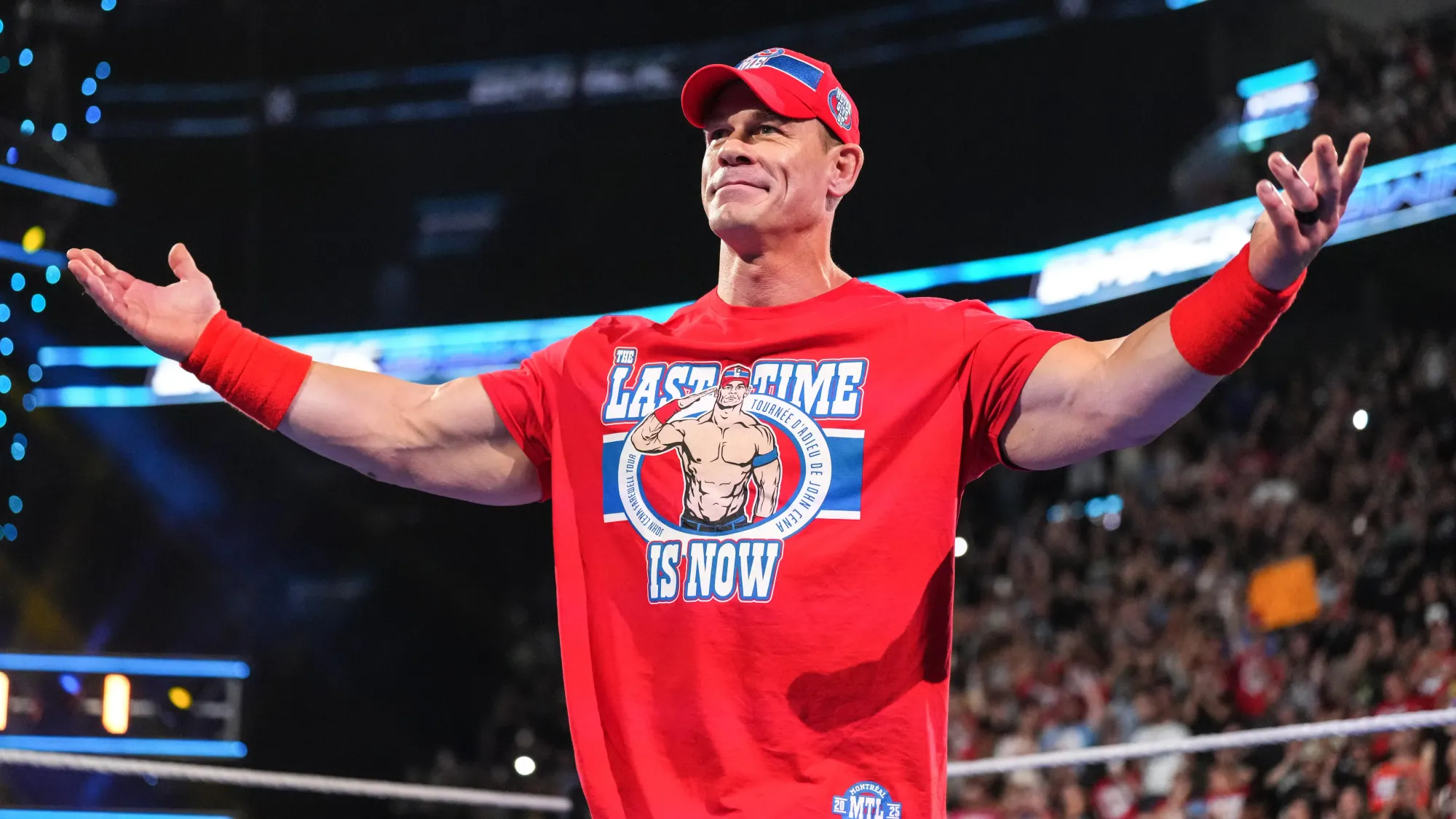
On December 13, 2025, John Cena had his final WWE match after 23 years with the company –and a few more years before that, between training and development in the world of pro wrestling. Loved and hated, his contribution to wrestling was immense, from his first TV appearance in 2002 to the Super Cena decade, when he won everything and beat everyone.
Pro wrestling is like an eternal fiction that never stops. You can watch storylines that stretch from wrestlers to bloodlines across decades, and every match adds to the lore built inside that universe. Few forms of storytelling let us live alongside the growth, the victories, the defeats, the injuries, and the deaths of its protagonists. It's like watching a promising soccer player debut: you see him change clubs, win trophies, play for the national team, get into drug trouble, crash his car and kill a family –the "healthy" side of athletes, but with a script closer to a hero and/or villain.
In that fiction/reality tension that lets us follow a wrestler's life, the idea of kayfabe is always present: the pact between the audience and the performers that gives what happens in the ring its magic and credibility. Wrestlers like John Cena are everywhere –there are plenty, and some are even better. So what did he have that made him stand out? How did he become a superman? And what was his final run like? Welcome to Johncenamania.
The B.C. Era: Before Cena
To understand the characters, you have to understand the narrative of wrestling –and specifically WWE's in the United States. In the '80s and early '90s, mainstream American pro wrestling was in a very cartoonish, simplistic phase, borrowing the comic-book idea of heroes and villains. Hulk Hogan was the kids' idol, and every week a new "enemy" would come to face him. But, like in cartoons, Mr. America beat all his rivals. That style of storytelling matched what the WWF (now WWE) was selling at the time: a "product" mainly for kids, who were being sold all the merch of their favorite wrestlers.
But in the mid-'90s, WCW –the other major promotion competing with WWE– started to move away from the children's product and, riding the mood of the era, created edgier stories. And then something happened that nobody had on their betting slip: Hulk Hogan revealed himself as the leader of a villain faction called the nWo, which set the trend and went down in history as one of the most important groups in American wrestling. That twist dragged WWE into competition: they went even darker and swapped heroes for antiheroes, with the rise of wrestlers like Stone Cold Steve Austin and The Rock –now a director of TKO, WWE's parent company– and a movie star plenty of people love to hate.
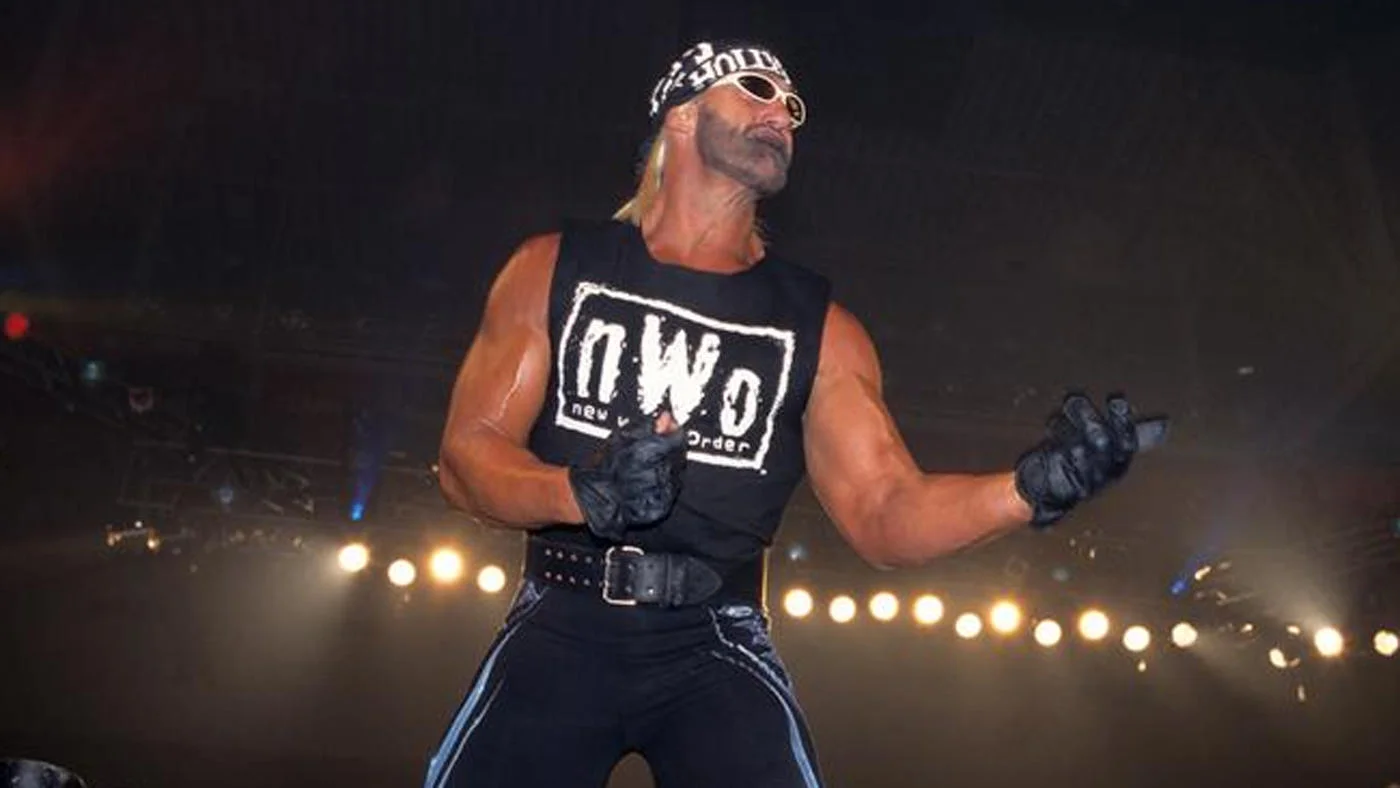
This period is known as the Attitude Era, and it marks WWE's shift in focus: from kids to teenagers, pushing the shows toward wilder, more provocative narratives. That lasted until 2002, when wrestling took another big turn, entering a more physical era –built around wrestlers who could sustain a very high athletic and in-ring level without losing the drama. There was also a generational turnover, with many new names who'd build careers both inside and outside the ring: Dave Bautista, Brock Lesnar, Rey Mysterio, and more.
In June 2002, Olympic wrestler Kurt Angle (a real-life gold medalist) issued an open challenge that a young John Cena accepted. When Angle asked what this rookie had to offer in the ring, Cena delivered one of the most famous slaps in wrestling history and yelled in his face: "Ruthless Aggression". He'd just named the new era of WWE.
John Cena debuted by slapping Olympic gold medalist Kurt Angle
Building Superman
Even with a crushing start in 2002, like any wrestler, John Cena had to adjust his character in the early years until he truly found it. He began as a super-rookie with huge potential, but before long he morphed into a "white rapper" nicknamed The Doctor of Thuganomics –basically the Eminem vibe of the time, because wrestling is constantly mimicking reality. In 2004 he won the United States Championship by defeating Big Show, a victory that marked the start of a title-filled career. Soon after, in April 2005, he won his first WWE Championship –one of the company's biggest titles– and established himself as the promotion's main face (the "good guy") for the next 10 years.
Cena served as the company's standard-bearer in a brutally difficult moment, when wrestler Chris Benoit –under a depression worsened by steroid use and repeated head trauma– killed his wife and son and then took his own life. Because the show always has to go on, wrestling continued. But WWE, to cool things down, shifted toward a more family-oriented entertainment product and went PG (something suitable to watch with at least one adult present). That's when Super Cena's meteoric rise really begins: championship conquests, merch records, and in-ring wins, along with the new, definitive slogan that made him famous: "Never Give Up".
His entrance at WrestleMania 25, with the Cena Army
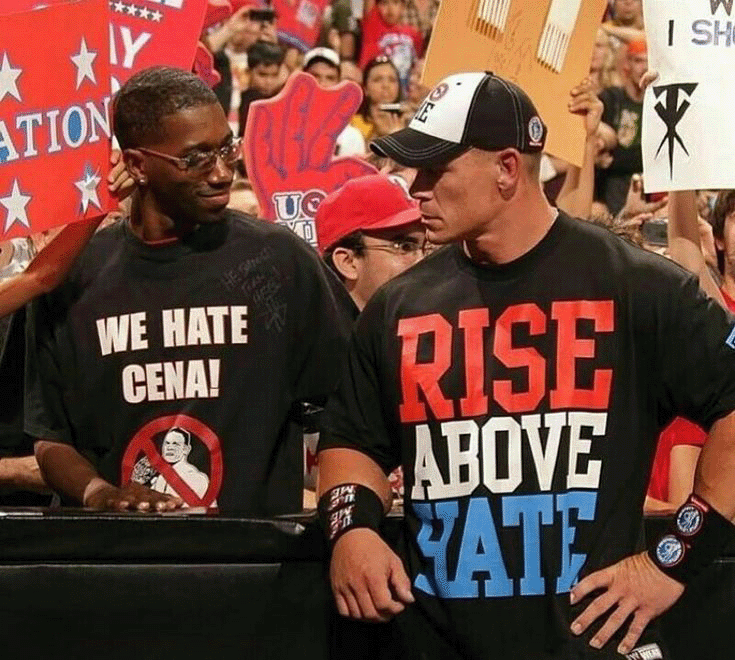
The change was gradual: from the "good" rapper with positive messages to a Super Cena built around perseverance and the American spirit –Hogan-style. Cena returned as a renewed version of the '80s superhero wrestler, with some of the 2000s edge mixed in. But being that superman comes with a heavy cost: as the John Cena myth grew for kids and teenagers, older fans started to hate him. Out of that split came the classic chant that followed him for the rest of his career: some yell "Let's go Cena!" and others answer "Cena sucks!".
The main complaint was that, even with technically better wrestlers on the roster, he could beat them all. That kind of booking –always giving him the win– was driven more by his popularity with families than by his pure in-ring skill. It generated massive backlash and a kind of hate that lasted for years, until he eventually earned almost everyone's respect –because, over time, we came to understand how much John Cena loves wrestling, and what he sacrificed for it.
After several appearances in schlocky WWE-produced action movies, Cena landed a role in Trainwreck (2015), Judd Apatow's comedy starring Amy Schumer. That part revealed his charisma and comedic range –a side of "Cena the actor" Hollywood hadn't really seen yet. The union of action hero and comedian that would ultimately cement him was completed in The Suicide Squad (2021), where he played DC's Peacemaker, leading to his own series on Max. As an actor, he had to build it step by step, pulling back from wrestling not only because of time but also because of the injuries he carried –and the new ones. By then, Cena had already achieved everything a wrestler could want, including the record: 17 world championships.
The Last Match
From 2019 on, Cena's appearances kept shrinking until he was basically treated as a near-retired wrestler: only a handful of in-ring moments, but a permanent place in the firmament of legends. Early this year, at the Netflix premiere of WWE Raw, he announced he'd begin his farewell tour to focus on acting. And he made it clear that in his final run he'd chase the top title one more time. With a title shot in hand and the clock ticking, something happened that would break the wrestling universe: for the first time in more than two decades, John Cena turned from hero to villain –his first true switch since dropping the rapper character back in 2003– pushed by the final boss of wrestling: The Rock.
This new Dark Cena justified itself through the parasocial bond the audience had with him: no matter what he did, some people would keep demanding more, and others would keep hating him. These turns are usually marked by a look change, to signal the move from hero to villain. But this time –because he was doing it against the crowd– he chose to give them nothing new. The plan: win the WWE Championship and take it into retirement, destroying the wrestling world he loved and helped build.
At the biggest event of the year, WrestleMania 41, Cena beat Cody Rhodes for the title, with help from rapper Travis Scott –who, it turned out, was part of The Rock's larger plan to help Cena. With that, Cena reached his 17th world championship and broke the company record.
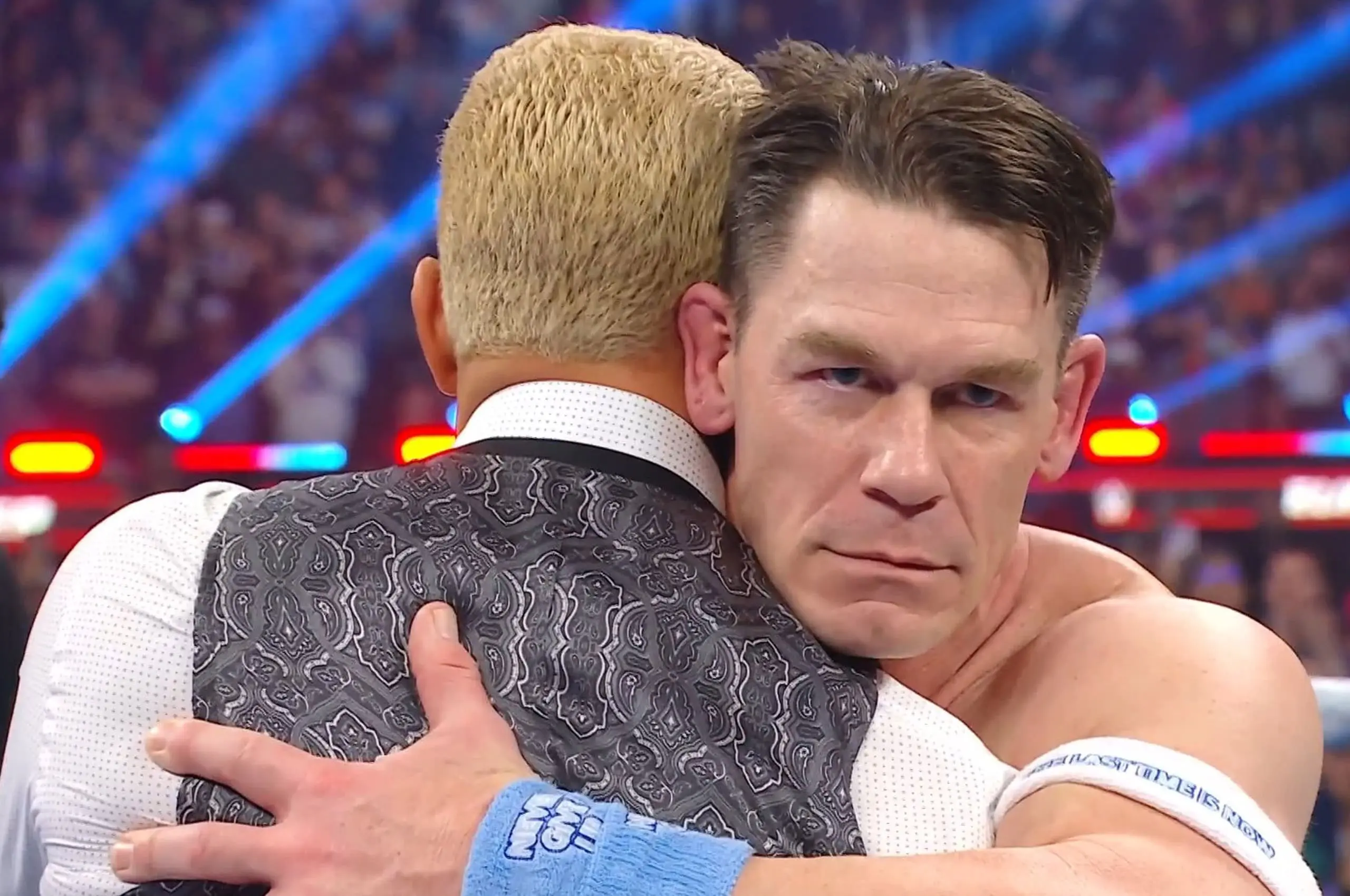
What could have been a spectacular retirement –full of nods to his rivals and his career– got blurred by WWE's booking and agenda, and they had him lose the title in August 2025. Overnight, Cena was a "good guy" again with no explanation, The Rock and Travis Scott were gone, and that storyline collapsed into nothing. What followed was a string of matches meant to close out a near-perfect career. Along the way, he won the Intercontinental Championship –the last one he needed to complete the Grand Slam.
For his final match, WWE made a strange choice: they held a tournament to pick his opponent. Gunther won it –an Austrian giant at 1.96 meters, and currently one of the company's best in-ring villains. Still, it felt weird, random. The match happened on Saturday, December 13, 2025, and it was… fine. Not an all-time classic, and hard to remember for pure quality, but both men delivered. In his final match, Cena hit all his greatest hits, but he looked tired: at 48, his eyes showed us he's not built for this anymore. And in the crudest way –shattering his "Never Give Up" motto– Gunther trapped him in a hold and John Cena tapped out. He gave up for the first time in 20 years. The crowd didn't buy the decision, and Cena's career ended to chants of "Bullshit!".
After the match, Cena got a brief tribute with wrestlers, champions, and legends –and he looked relieved. On one hand, choosing to retire must have been brutal. On the other, he seemed calmer, like someone who'd finally broken chains that kept him tied to WWE.
But never say never. Maybe not today, maybe not tomorrow –but I can assure you that one day he'll step into a ring again and wrestle. In wrestling, nothing is written in stone, and even beyond this moment where he chooses to walk away, we know it: John Cena never gives up.
The day Cena announced Osama bin Laden's death