Kayfabe: Pro Wrestling Is Real and Everything Else Is Fake
27 de jun. de 2025 — Juanma La Volpe
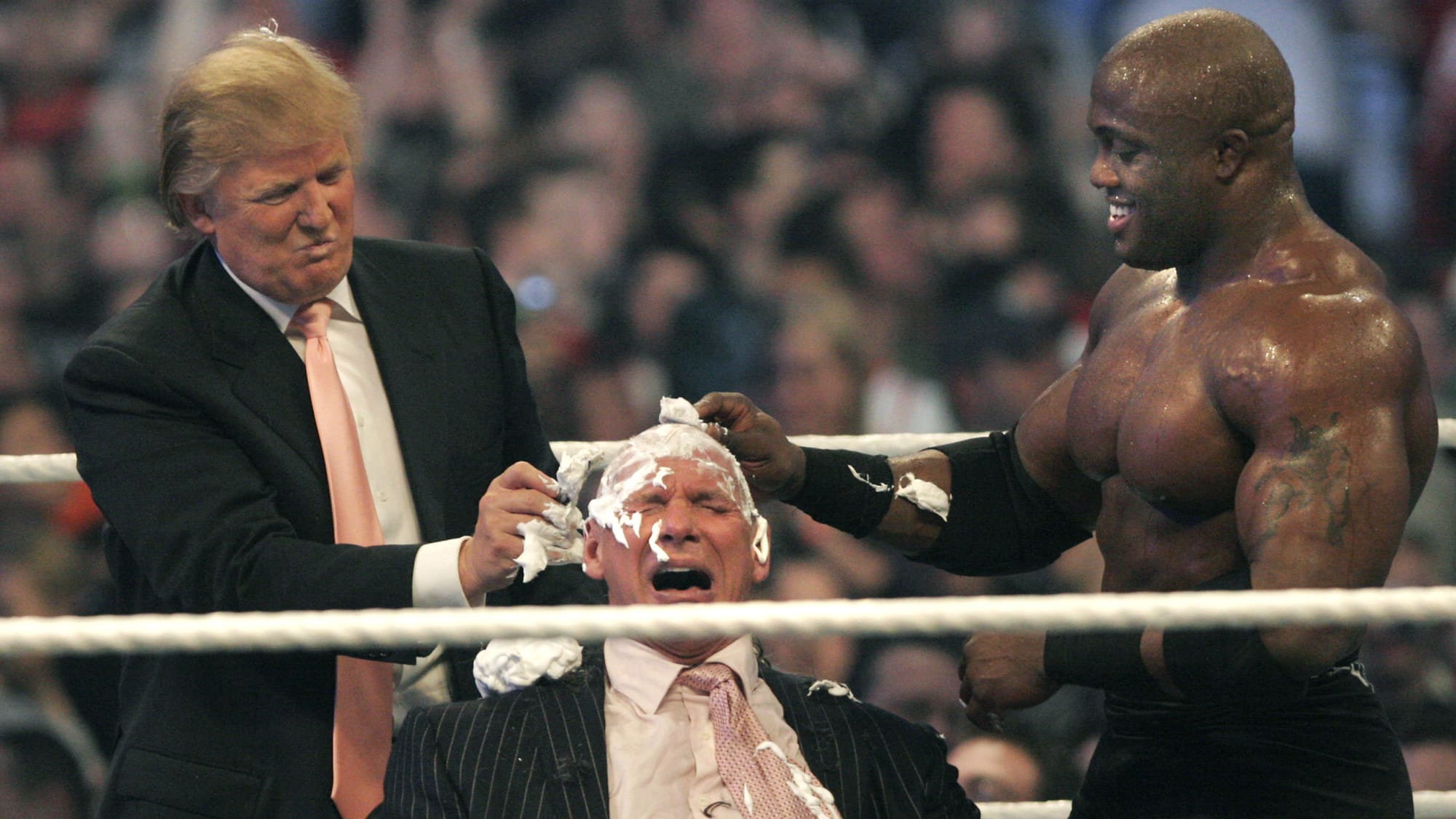
In 2007, at Wrestlemania 23, a match was held that would capture media attention. It was the biggest event of the year for WWE, the most pro wrestling Pro Wrestling popular company in the world, and Donald Trump would face Vince K. McMahon in "The Battle of the Billionaires," each represented by a wrestler. The result of the match? The loser gets shaved bald. McMahon lost and the video of his head being shaved by Trump went viral.
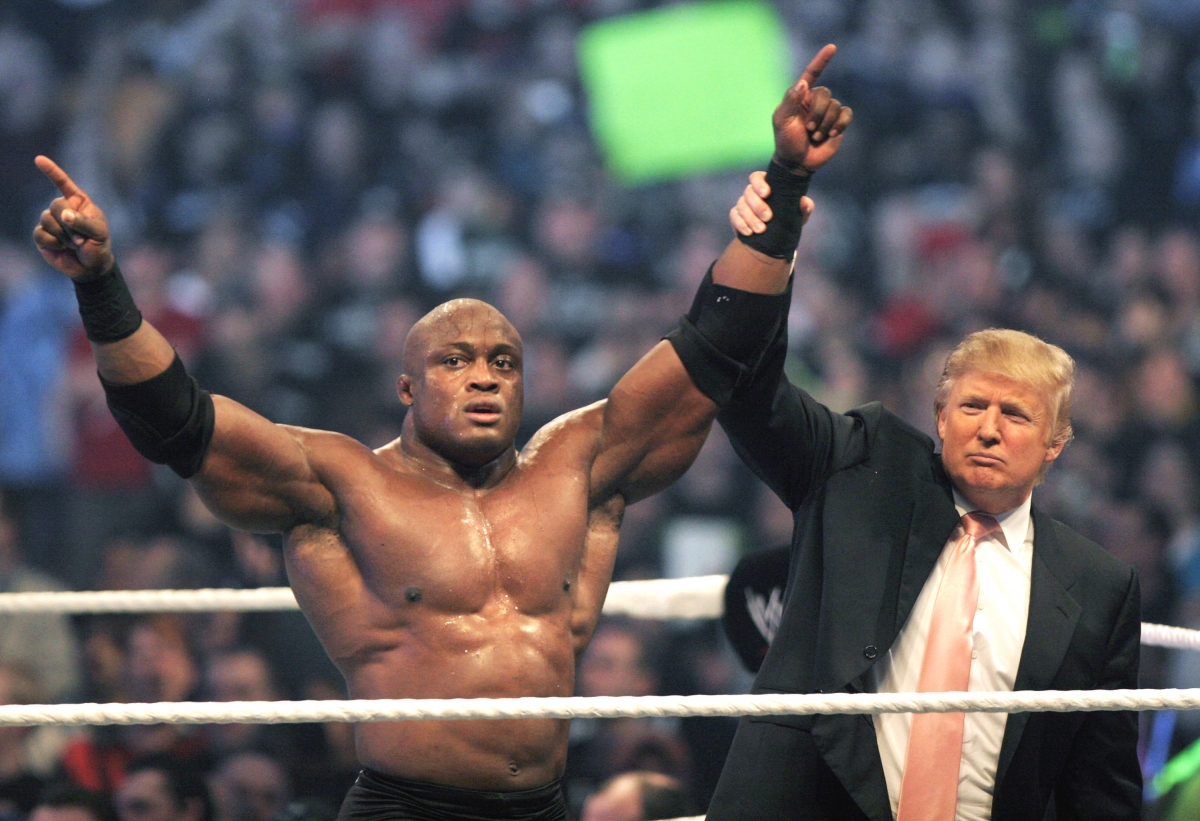
The world of pro wrestling broke through its ceiling of popularity and appeared in conversations of people unfamiliar with this type of entertainment. Many celebrities had already participated in wrestling events, but Trump, who wasn't yet president but was already Trump, fit perfectly into this narrative of excess, show, and spectacle. As we'll see later, his stint in this world was directly related to his political career. This particular match had 80,000 in-person spectators and, at its peak, 30 million viewers. He was also inducted into the WWE Hall of Fame, and pro wrestling has been present in the US for over 40 years.
The limits of reality were breaking and, once again, an army of boring gray people was shouting that "pro wrestling is fake." However, this act would be one of the first humanizations Trump would get on his path to the presidency. And it wasn't only positive for his image -- it also taught him all the strategies that wrestling uses to build stories and, above all, to keep kayfabe. Or, put another way, to keep the performance going 24 hours a day.
Keeping the lie: kayfabe, work and shoot
Pro wrestling as the spectacle we know today was born from a scam. European circuses, mainly French, that arrived in the USA in the late 19th century had an act where they'd "make" a super strong guy fight against someone from the audience (who was already a plant) for bets, in a "let's see who can beat our champion" style. The audience didn't know this. The rubes lost their money, and the circus moved on to the next town with its pockets full.
For the people of that era, what they saw was real; the wrestlers maintained this fantasy, and from there comes kayfabe, a word that today has transcended the backstage and is known by pro wrestling fans. There are no records, but it apparently comes from "Keep Fake". Protecting the lie meant protecting their jobs, and over time, the characters and leagues became more popular and also more extravagant, but this rule, the number 1 without a doubt, is what kept pro wrestling alive through those years.
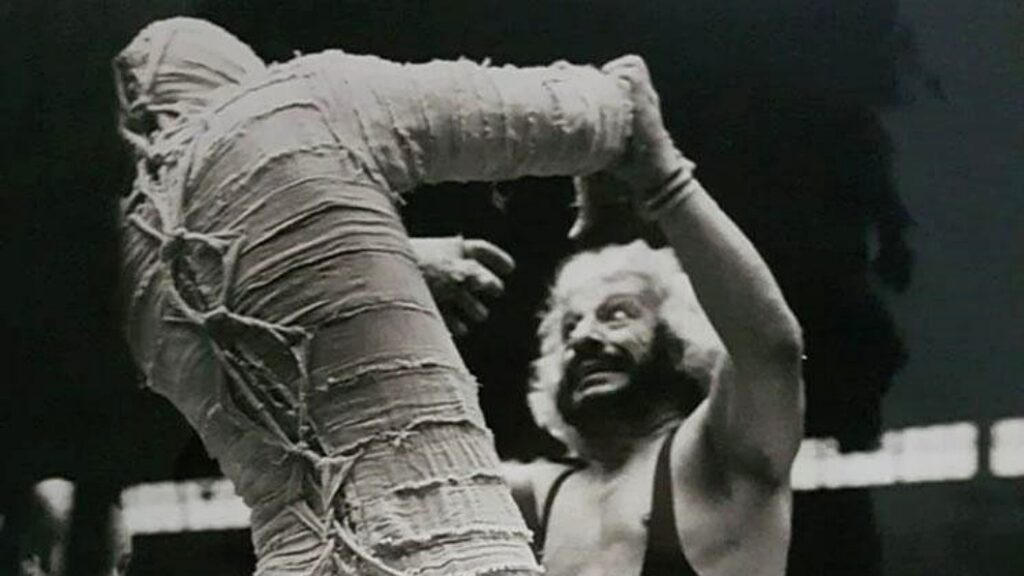
Precisely, this concept also transcends the participants of the "business" and reaches the audience: you know that what you're watching isn't real, but there's a tacit contract for everyone to maintain this performance. For the magic to happen, the wrestlers "work" each other and also "work" the audience. This concept, the work, is knowing how to bring your character to life and stay on script. If you're a villain, you'll do things to make the audience boo you; and the scripts can even include a work to give a wrestler time off for vacation.
And when things go off script (a real fight, unplanned comments, etc.), that's called a shoot, something that can happen by the wrestlers' decision or by mistake. These concepts together make up the narrative of pro wrestling and the difficulty of understanding the limits of reality in this sport. If you think about it, many things in our daily lives follow these same dynamics.
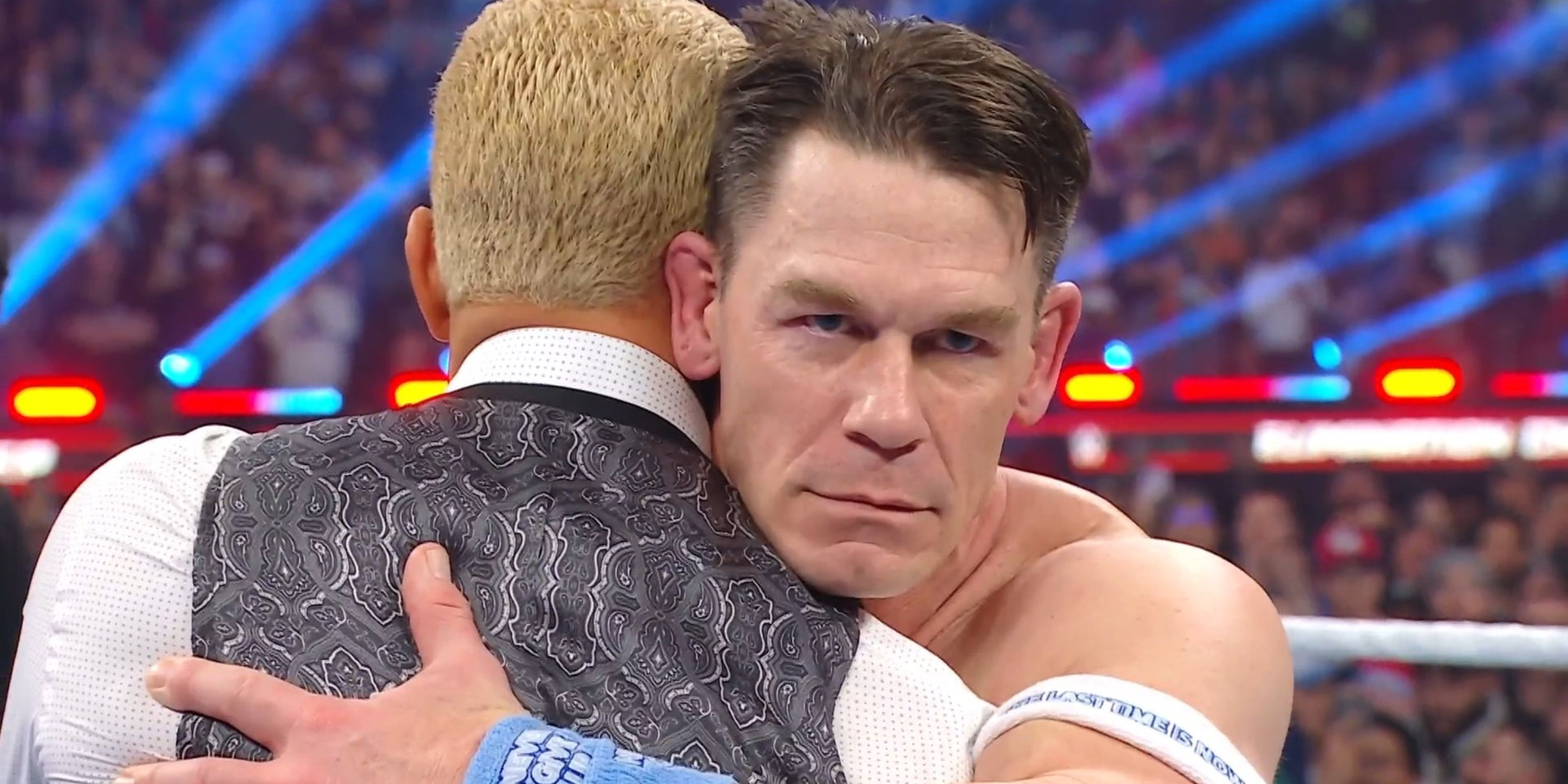
It's extremely important to clarify that the hits are real, the injuries are real, and the feeling that what you're watching can generate in you is real. Pro wrestling today is a sport that, instead of being competitive, is entertainment, and that in its forms can range from ultraviolent to comedy or even meme-tier, which makes it a beautiful experience. It works like a TV show: there are seasons, storylines, characters, protagonists, antagonists and sidekicks. There are twists, betrayals and revelations. Most importantly, there's an audience that goes to the arenas paying for a ticket, and the storyline needs to be good enough so they keep coming back. Carrying out that plan ideally means the performance must be constant, because that's what keeps the business alive.
Pro Wrestling, Communication and the Cognitive Battle
These concepts we learned from pro wrestling can quickly be taken to communication: reality and fiction coexist constantly today to manipulate public opinion through agents who live their characters. Trump's circle weaponized it and began creating the narrative that would carry him to the presidency of the world's most powerful country. Trump learned from McMahon's playbook, became an archetype, the hero for some and the villain for others, and understood before anyone that the most important thing isn't what you say but how you say it. His candidacy broke records in campaign donations, and his shows on Fox felt more like a match from pro wrestling.
Political speeches became more violent and personal, like wrestlers' "promos"; the boundaries shifted to extremes and it returned to the concept of "good guys" vs "bad guys"; added to the fact that the new battlefield is digital, ideal for a speech or idea to go viral. This is a worldwide phenomenon. But if we focus on Argentina, we can see many parallels.
MJF, de los mejores villanos de la lucha actual haciendo una "promo"
When Milei's government launches the "Cultural Battle" through its communicators, they're working us, triggering us so we boo them and they take the spotlight to divert attention from other issues. And on the other side, we citizens who are also spectators of this show eat up every storyline they throw at us. The same thing from the opposite camp, of course: part of the content they throw at each other daily is designed to generate reactions and engagement. Being an "operator" became a respected profession, and a society that feeds on the work of shaping truth and other people's feelings is one that accelerates the post-truth. How many times in recent years have we wondered if what they were saying was real? Being cruel, liars, and loud isn't a bug -- it's a feature. It's part of their character.
It may have always been this way, but before it was easier to hide. And just as kayfabe, a word designed to speak in code among wrestlers and that wasn't meant to leave the backstage, today "paid off," "operator" and "asset" join our daily vocabulary instead of staying in the locker room of politicians.
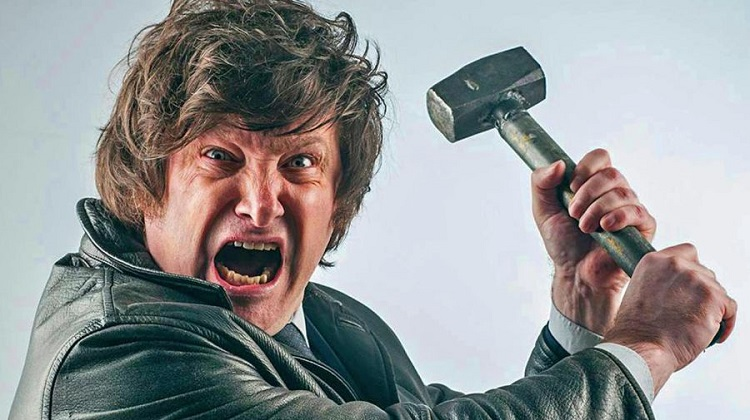
Outside the political realm, we create a narrative of our lives with our version of the internet, showing what we want to be interesting in front of others, because ultimately the use we end up giving social media as users is more about getting attention than socializing. In a world where creating fake content is cheaper and easier than ever, where the quantity of content has exploded, and where anyone with a phone and a ring light can build an alternate reality, the line of what's real gets blurrier every day.
In the end, the only thing I can be sure is real is when two wrestlers step into a ring to face each other, because it's hard to recognize the truth in a time where so many agents are maintaining lies.