Kendrick Lamar, the Virtuous Circle of Hip-Hop

30 de sep. de 2025 — Giancarlo Brusca
In the '70s and '80s, the African American community in the United States was the victim of brutal racial segregation. Despite this, and thanks to their indomitable spirit, they managed to make gold from ashes and, playing with the brand-new technological toys of the era while channeling their artistic history into new cultural phenomena, gave birth to two of the last great musical genres: in Detroit it was techno, in New York it was hip-hop.
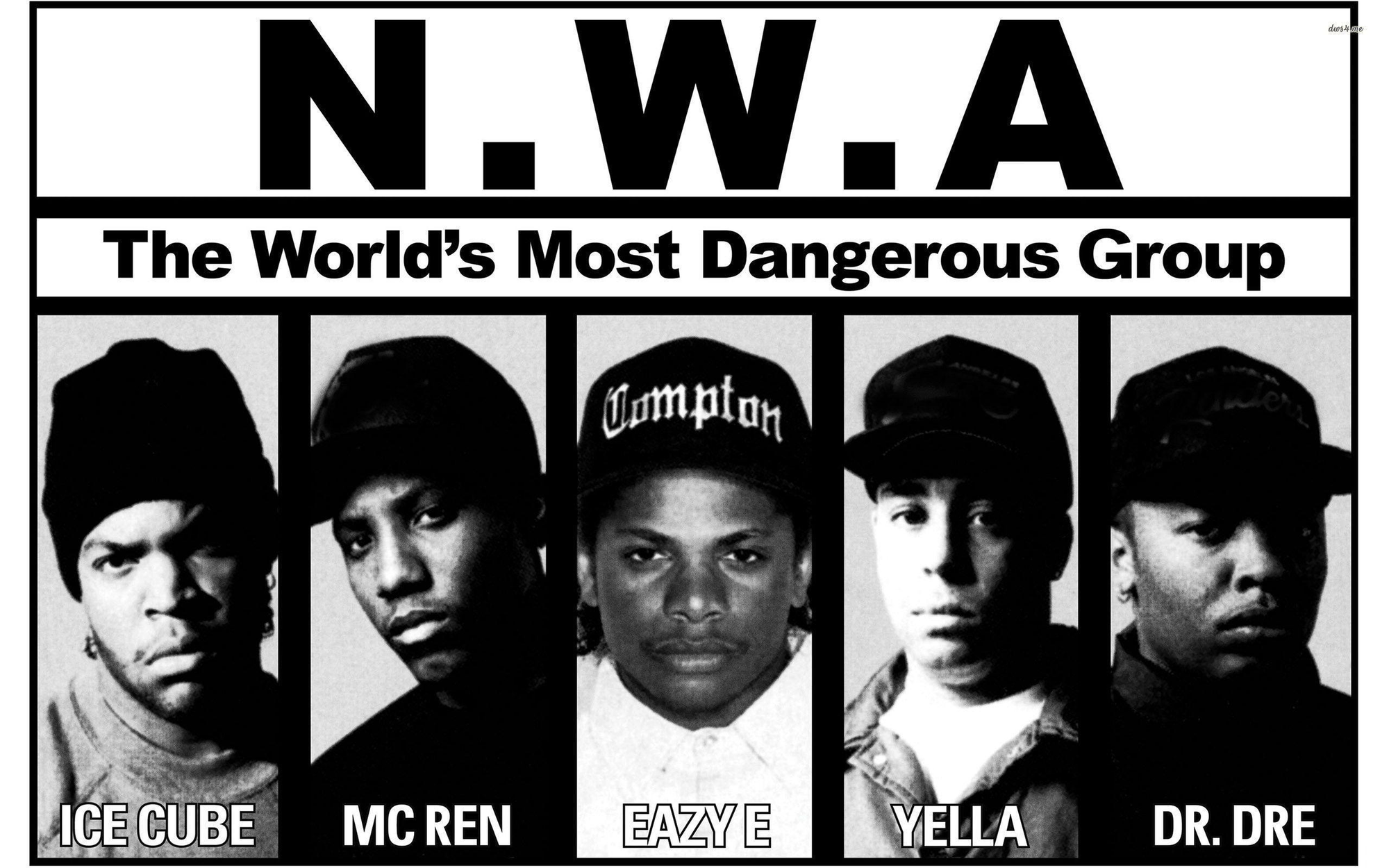
The paths of these movements were very different and, while both were born as an implicit political response to that context, hip-hop became explicitly combative over the years, especially because it was a genre rooted in the word. It gained momentum with groups like Public Enemy, pioneers of so-called political hip-hop; or N.W.A., who gave rise to gangsta rap when the culture reached the West Coast. By the '90s, Tupac appeared, the savior who couldn't be, or wasn't allowed to be. As a young man he read Malcolm X and, in his own way, tried to carry on his legacy and transform himself into a political leader through music: he released five albums in 5 years, and three of them went number 1. Malcolm X was assassinated at 40, Tupac at 25. And while all of this was happening, Kendrick Lamar was being born and growing up.
Compton
Paula Oliver and Kenny Duckworth moved to Compton, in the suburbs of Los Angeles, in 1984. They came from the south side of Chicago, where Kenny was a member of a gang, the Gangster Disciples. Until Paula, tired of that criminal life, gave him the ultimatum: "I can't be with you if you don't try to do better." That's how they decided to start a new life in California with just $500. She got a job at McDonald's and he got one at KFC. After a while they stabilized and were able to grow their family: on June 17, 1987, Kendrick Lamar Duckworth was born, while in the same neighborhood Dr. Dre, Ice Cube, Eazy-E, DJ Yella, and MC Ren were forming N.W.A.
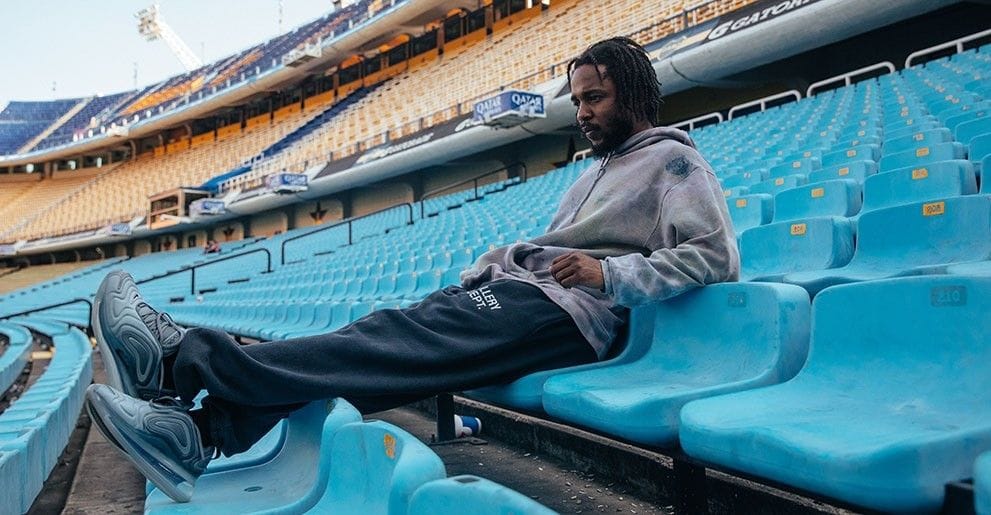
According to close sources, the Kendrick we see today --the one playing River Plate stadium this weekend-- is the same simple kid who liked riding his bike around Compton in the '90s. A reflective wanderer who silently observed a hostile environment. You only need to look at the lyrics of N.W.A. or rappers like Ice-T, who took it upon themselves to document the city where Kendrick grew up. In 1992, at age 4, he experienced firsthand the famous LA riots, the popular uprising documented in LA 92. At 5, he witnessed a dealer getting his chest blown open by a shotgun blast right in front of his house. "I realized it wasn't just something I was seeing, but something I was going to have to get used to," he would tell NPR much later. And it wasn't the only murder he witnessed in his neighborhood.
Compton wasn't always the way it is today. Before World War II, it was a white city with racial policies that prohibited Black families from moving there. In 1948, the U.S. Supreme Court declared those laws unconstitutional, and by the early '50s Black families were already buying homes in the area. The white residents' reaction was to start selling and leaving, fearing that their property values would plummet.
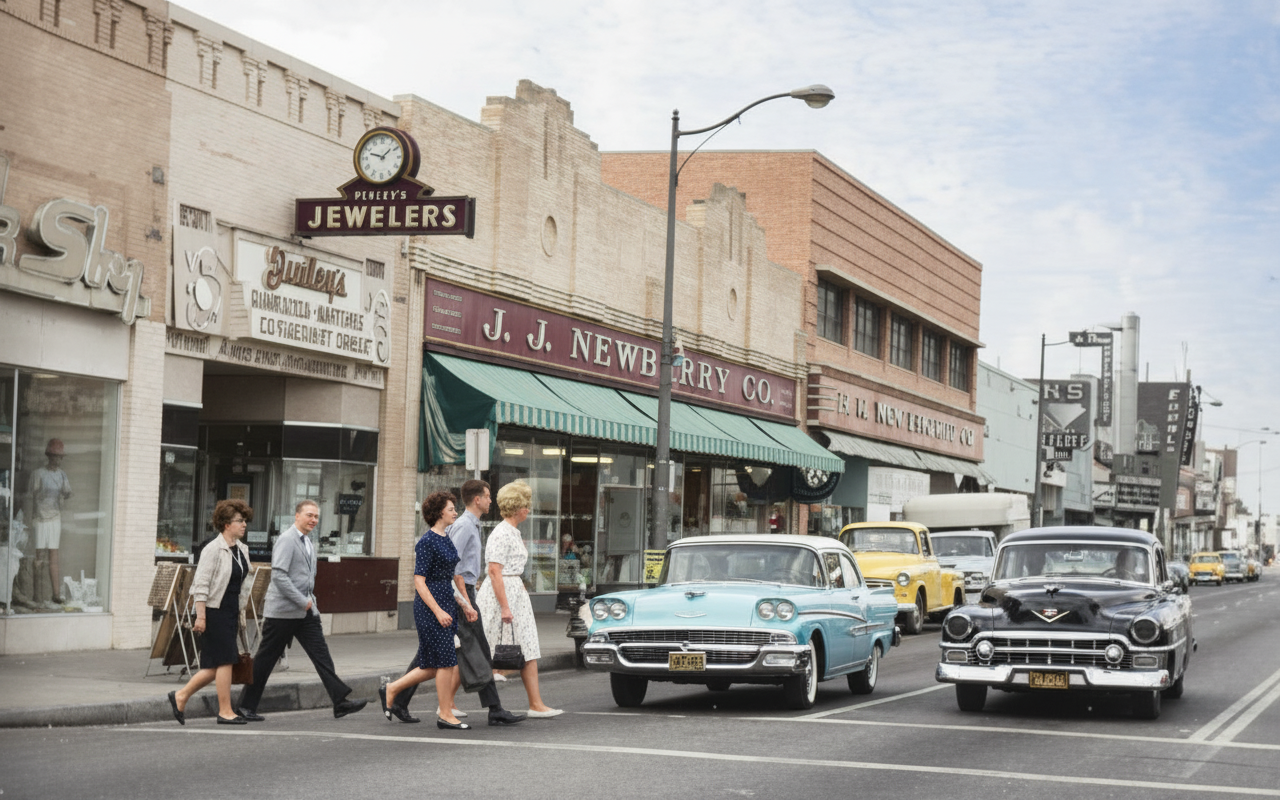
By 1960, Compton's African American population was around 40%, and a decade later it had already reached 65%. The lack of jobs and opportunities led to a rise in crime, and in 1971 the Crips emerged, identified by the color blue. The following year, in 1972, several smaller gangs united to counter their power, forming the Bloods, whose signature was the color red. The violence between both gangs would mark life in Compton for decades.
Suge Knight, co-founder of Death Row Records alongside Dr. Dre, maintained strong ties with the Bloods. Knight's presence and his label, the flagship record company of the West Coast, not only consolidated the dominance of gangsta rap but also intensified the rivalry with the East Coast, represented by Bad Boy Records of Sean "Diddy" Combs. It wasn't just a gang war in the streets but also a musical war between the two coasts and their record labels. In the midst of that tension, Tupac Shakur, the central figure of Death Row, was murdered by members of the Crips, some say on Diddy's orders, although it was never proven.
The Angels
Every star needs their angels: those people who somehow cross your path and guide you in the right direction. For Kendrick, besides his parents, those would be Matt Jeezy and Regis Inge.
Matt Jeezy was his best childhood friend. They met in third or fourth grade, lived in the same neighborhood, and played basketball together. Many of the kids who played with them ended up killing each other over gang disputes, but Matt and Kendrick didn't think in red and blue -- they just wanted to have fun: "We used to get teased because we didn't want to be gangsters -- Jeezy recalled in an interview -- even the girls would make fun of us, but that was part of living in Compton and growing up surrounded by that culture."
And Regis Inge was his 7th grade English teacher and the one who introduced him to the world of art. She added poetry to the annual curriculum to defuse the violence that had been escalating at the school due to a conflict between African Americans and Latinos. According to Regis, if the kids wrote about their frustration, they wouldn't need to express it through physical violence. Introducing poetry to teenagers who associated it with hearts and roses wasn't easy, but she had the idea of connecting it with hip-hop and won everyone's attention.
Regis Inge would play a very important role in Kendrick's intellectual development. She was his first great teacher. When the young aspiring poet turned in his work, she would often hand it back with visible notes for him to go deeper: "I would always circle something and tell him: change this, move this over here," Inge said. Young Lamar never gave up -- everything was motivation to improve. He didn't want to be good, he wanted to be the best. He became obsessed with the written word, scribbling rap lyrics on any piece of paper at every moment, setting aside homework for other subjects.
One day, Matt Jeezy and Kendrick were walking home from school and young Lamar went into a freestyle frenzy that lasted four or five blocks: "He went on for about twenty minutes straight," Jeezy recalled. At that moment, his friend realized that Kendrick had what it takes to be a star. He just had to stay away from the gangs. "The words that literally came out of my mouth were: don't go to jail, don't die," Matt said.
The first major event in Kendrick's life came at age 8, when his father took him to see the filming of the California Love (Remix) music video at the Compton Swap Meet. It was the first time Lamar saw Dre in person and the last time he saw Pac alive. He was mesmerized by those two superstars and the sense of community they embodied. What he didn't know was that, just as Matt Jeezy and Regis Inge had been his childhood angels, these two giants would become his angels in adulthood.
Little Homies
Hub-City Threat: Minor of the Year (Youngest Head Nigga in Charge), released in 2004, was Kendrick's first mixtape. Or rather K-Dot's: the alter ego of his early musical phase, probably inspired by Slim Shady, since Kendrick was a big Eminem fan. K-Dot had the technical prowess, the complex structures, and the cadence, but you could tell it was a character. His lyrics were aggressive, going at every existing rapper and claiming his crown. A young prospect with plenty of energy and a hunger to take on the world. And one who never compromised his work ethic: Kendrick spent hours and hours with his creations, studying, thinking, and becoming one with them. Behind every number 1, there's always a tireless worker with years of hammering away at the same spot.

In "Go DJ," the standout and catchiest track, a certain Dave Free was credited as "Kendrick's DJ". They met in 10th grade, when a schoolmate told Dave he had to hear a friend who was killing it with his lyrics. "I was intrigued, I told him to bring him to the studio -- Free had an improvised home studio -- and at that point everybody was rapping about drugs, but he had this line: 'I Ship Keys Like a Piano,' or something like that, and I thought it was the best line I'd ever heard from someone his age," the DJ recounted in a 2012 documentary.
They shared a love for rap and also their fandom of Martin, the Martin Lawrence sitcom: they considered it superior (Black) art created with limited resources. That inspiration made them pour a lot of energy into the visual side as well. They would later form a creative duo under the name Little Homies and, instead of spending a fortune on their videos, would focus on the power of landscapes and the depth of imagery to make an impact.
Dave Free is partner number 1 of Kendrick's entire career. They never stopped working together and currently both are owners of the multidisciplinary creative studio pgLang, winner of several Cannes Lions awards, including Independent Agency 2020.
Top Dawg Entertainment (TDE)
In Carson, about 15 kilometers from Compton, lived Anthony "Top Dawg" Tiffith. He had grown up in the Nickerson Gardens projects, famous for their walls covered with the names of dead residents. By 1997, he was tired of life on the streets and decided to dedicate himself to music, inspired by his uncle, Mike Concepcion, a former Crips member who had done well working in the music industry and was able to leave gang life behind.
"Uncle Mike basically helped me with everything. I watched him make music, and that made me think there was a way out," Tiffith told Vibe. That's how Anthony set up a studio in his Carson home (which he'd christen The House of Pain) and equipped it with quality gear to attract rappers. He also wanted it to be a meeting place for young talent. He named the company after his nickname, Top Dawg Entertainment (TDE), and found an important early partner in Demetrius Shipp, a producer who had worked with Death Row Records. That connection helped legitimize the project and land his first jobs.
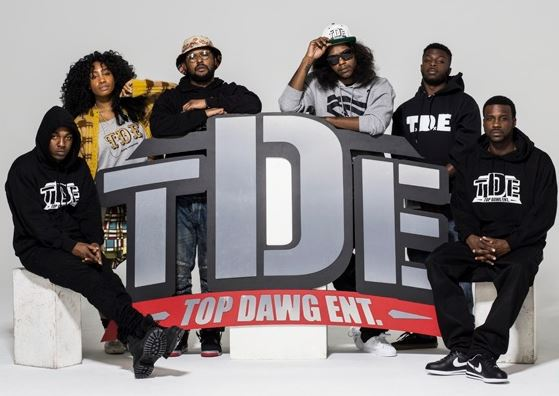
One day, Dave Free -- who at the time was working as a computer technician -- got a call from Anthony Tiffith for a PC repair. Within minutes of starting the job, Free realized he wasn't going to be able to fix it, but he pretended to work and blasted Kendrick's mixtape at full volume, hoping to get lucky. After a while he admitted he couldn't do the repair, but the seed had been planted: Top Dawg asked him who the rapper was and that's how his partner landed Kendrick his first big audition.
I put him in the booth and played a double-time beat trying to get rid of him quick, but he started rapping! So I tried to act like I wasn't paying attention. He noticed I wasn't moving so he started leveling up non-stop. I looked up and said: "Oh my God. He's a monster." The next day I had a contract for him. [Anthony Tiffith]
Kendrick joining TDE was a win for both sides, as they would enrich each other for years to come. While the label added new talent like Jay Rock and Ab-Soul, Lamar would release several more mixtapes under its wing: Training Day, No Sleep 'Til NYC, and C4. In total there were four mixtapes under the K-Dot pseudonym, an enormous amount of writing, rhyming, and time invested in finding his best version.
Only after all of that did Lamar feel ready to release online and for free The Kendrick Lamar EP (another Eminem reference), his first project under his definitive artist name, which served as a bridge to his first "fully realized" work, the EP Overly Dedicated, the one that appears as "first" on platforms like Spotify or Tidal, released in 2010.
To emphasize how many attempts it takes not to become great, but just to begin to realistically dream of becoming so: Kendrick started writing poetry and freestyling very young. He released his first mixtape in 2004. In between he put out five projects. It wasn't until 2010 that he would achieve a mature, high-level work. More than 15 years of trying and learning.
The video for "Ignorance Is Bliss," one of the most acclaimed tracks from that album, and the fact that Kendrick was a rapper from Compton were the basis for finally convincing Dr. Dre to call this kid up and invite him to his studio. Kendrick was eating with a TDE engineer when he got a call from a member of Dre's team saying they liked his music. Lamar's first reaction was to hang up thinking it was a prank. They had to call him about three times before he believed them.
When Kendrick went to the studio, the legendary producer was already waiting for him with the beat for what would later become "Compton":
There came a point where I had to force myself out of "fan mode" and act like a professional after we were introduced. The tryout ended and Dre told me: "OK. Now write a full song for this." My immediate response was: "Dre, you're the greatest." He replied: "Yeah, you're pretty good too, you could be something. Now get to writing for this beat." [Dr. Dre]
Section.80
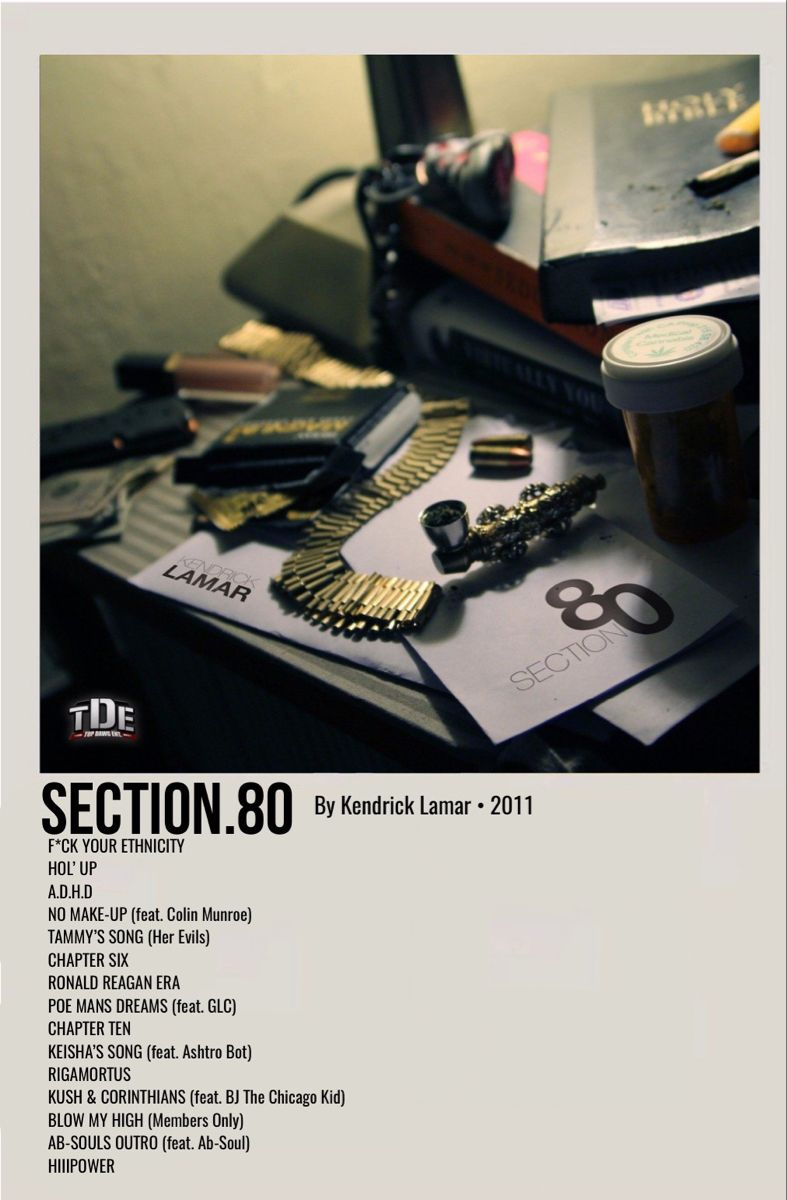
During 2010-2011, while having his first meetings with Dr. Dre -- without having signed a contract yet -- Kendrick was working on what would become his debut album, officially released on July 2, 2011. His previous project, Overly Dedicated, shows signs of the real Kendrick Lamar, but you can still identify a rapper trying to prove himself, and it's a project framed within the mixtape format: more a collection of songs than a unified statement.
Section.80 was the graduation of the artist and his team. Almost entirely produced in-house by TDE, the album features a unified sound, the "Kendrick sound" that begins to shine. The big difference was the confidence he started projecting with his voice, playing with different flows, more complex techniques, and above all what would become a personal trademark: the use of different voices.
Politics was also entering center stage: the album title references Section 8, the U.S. housing law, and the generation of the '80s raised in the Reagan/Bush era. Songs like "F*ck Your Ethnicity" or "Ronald Reagan Era" reveal someone whose hand trembles less and less when writing what he thinks and feels. And the great "HiiiPower," which closes the album, opens with:
Visions of Martin Luther staring at me
Malcolm X put a hex on my future, someone catch me
I'm falling victim to a revolutionary song
good kid, m.A.A.d city
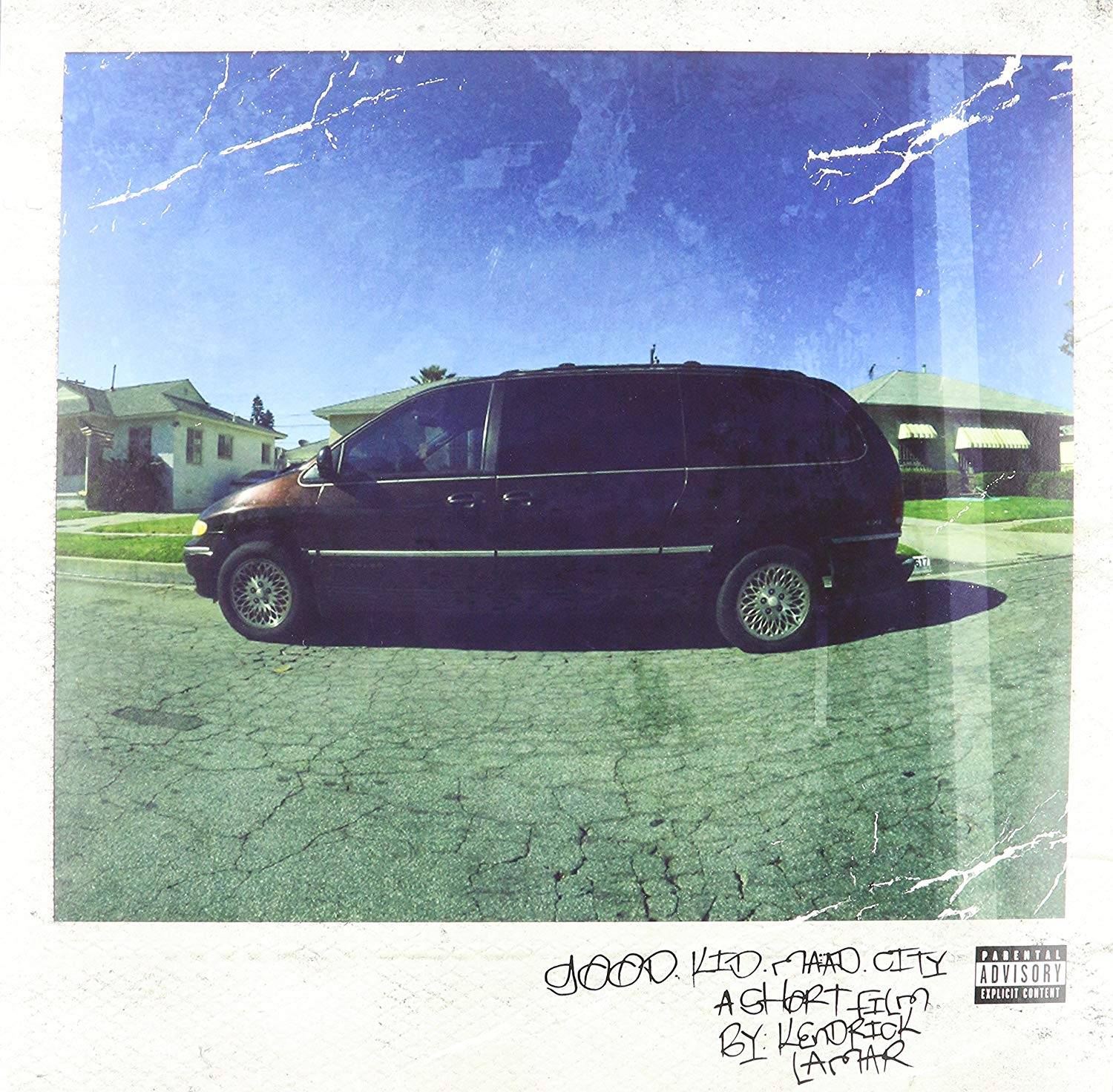
The success of Section.80 finally earned him a contract with Aftermath Entertainment, Dre's record label. That's how they began working together on what would become Kendrick Lamar's first great masterpiece: good kid, m.A.A.d city, where "m.A.A.d" stands for "my Angry Adolescence divided."
Having introduced some of the themes that would run through his entire body of work in his first album, here he decided to get notably more personal and give religion a very prominent place. The album opens with a prayer and works as a documentary of his childhood in Compton, narrating in first person moments that shaped him, like his first love ("Sherane a.k.a. Master Splinter's Daughter"), the experience of robbing houses ("The Art of Peer Pressure"), or the murder of his uncle Tony ("Money Trees").
The most outstanding piece on the album is the double track "Sing About Me, I'm Dying of Thirst". In the first part, with a melancholic atmosphere, Kendrick embodies two different characters, then raps from his own perspective in the third verse. That narrative flows into a more intense second part, charged with rage, that culminates with the attempt to cleanse his sins in the holy water of baptism. Lamar delivers a superlative performance, both vocally and lyrically, that portrays what it means to live in a ghetto. The song closes with the same prayer that opens the album that would catapult him to absolute stardom and fame.
Spiritually, that track reminds me of "Brenda's Got a Baby," from Tupac's first album (2Pacalypse Now), which Kendrick actually references in his lyrics and which tells the sad story of a young woman in poverty. There's no direct resemblance between the two, but they serve a similar function: they reveal that we're in the presence of an artist above the rest, capable of narrating vivid stories and conveying a powerful message through music.
"Control"
In 2013, a year after proving he was capable of making a classic, Kendrick surprised the world (and this time not just the rap world). On August 12, 2013, rapper Big Sean released "Control," featuring Jay Electronica and young Kendrick Lamar. And the verse that stole all the spotlight was our protagonist's, who directly named all his competition (11 rappers) and declared musical war on them:
I'm usually homeboys with the same nigg*s I'm rhymin' with
But this is hip-hop, and them nigg*s should know what time it is
And that goes for Jermaine Cole, Big KRIT, Wale
Pusha T, Meek Millz, A$AP Rocky, Drake
Big Sean, Jay Electron', Tyler, Mac Miller
I got love for you all, but I'm tryna murder you nigg*s
Tryna make sure your core fans never heard of you nigg*s
The track didn't make it to the final version of the album for obvious reasons -- such as Kendrick naming even Big Sean himself -- but it instantly became a classic and one of the most important moments in rap that decade. Lamar revolutionized the world of hip-hop and forced everyone to raise the bar. On top of that, he drove a sales boost for all his peers.
I'll take this chance to make a special mention of Kendrick's collaborations. As I've said, if there's something he never compromised, it was his work ethic. Having a collaboration from him meant he was going to give everything to deliver the best verse on the album. An artist who never goes halfway. A great example of this is his famous verse on Pusha-T's "Nosetalgia." Here's a video that deconstructs that verse and shows the level of complexity Kendrick reaches in his work:
To Pimp a Butterfly
After the explosion of good kid, m.A.A.d city and the cultural earthquake that the "Control" verse represented, Kendrick did something that surprised everyone: he took his time. For the first time in his career he decided to stop the machine and dedicate several years to thinking, writing, and shaping an ambitious project. It was no longer enough to prove he could be the best rapper of his generation; now he wanted to build a greater work, one that would condense his political, aesthetic, and spiritual vision.
During that period of discographic silence, Lamar became obsessed with jazz. He listened compulsively to Miles Davis, John Coltrane, and Herbie Hancock, but was also fascinated by the new wave of Los Angeles musicians. Among them Kamasi Washington, a brilliant saxophonist who would become a central piece of the album's sound. Kendrick began surrounding himself with artists who shared that same sensibility: bassists like Thundercat, producers who blended funk, soul, and jazz, and he finally found the man who would be the great sonic architect of the album, Terrence Martin, a producer and multi-instrumentalist who perfectly understood how to translate Kendrick's ideas into a new musical universe.
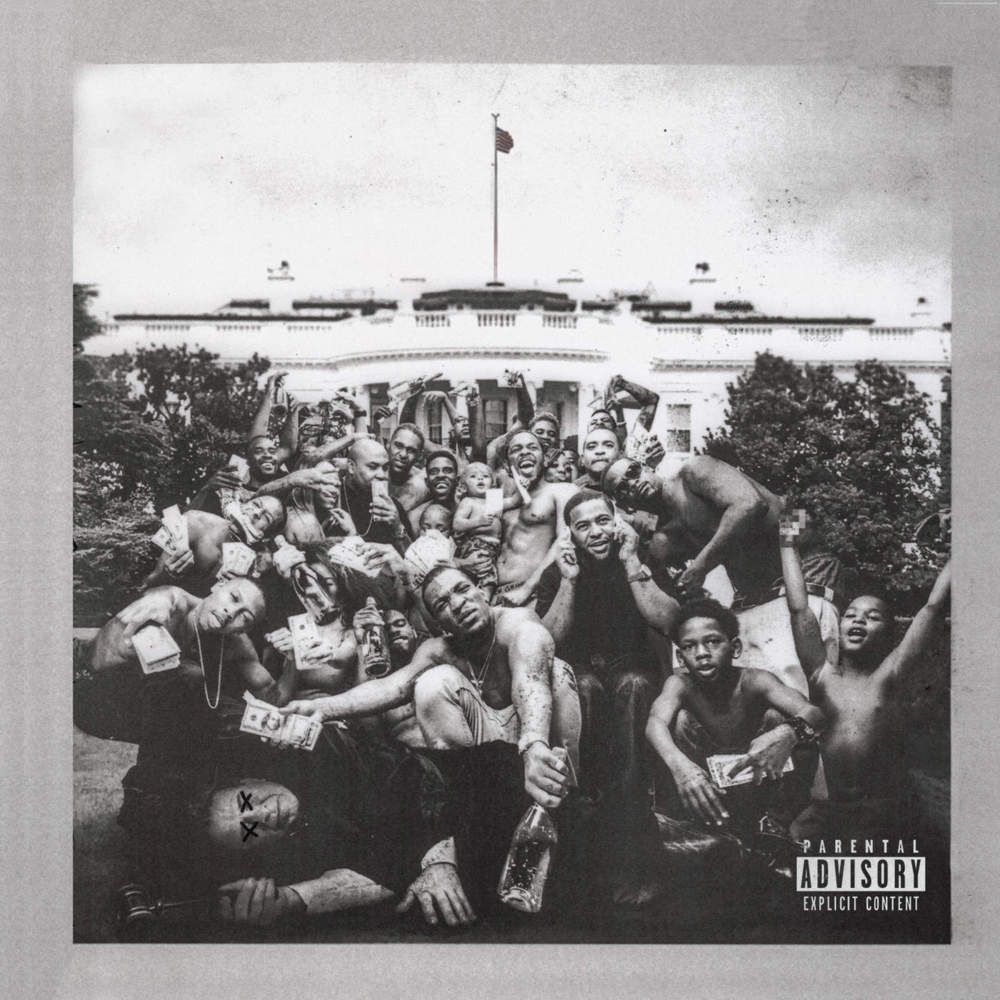
The result was a radical shift. To Pimp a Butterfly (2015) sounds different from everything he had done before: less immediate, less "catchy," but infinitely more daring and complex. That change bewildered part of his audience, who were used to the more straightforward rap of his earlier work. But at the same time, for those who were willing to dive in, it felt like an inevitable evolution: Kendrick was no longer just a prodigious rapper; he was an artist in pursuit of transcendence.
The work orbits around a spectral figure: Tupac Shakur. The entire album is permeated by the presence of Pac's ghost, transformed into a spiritual guide and symbol of an unfinished struggle. Kendrick writes him a letter, almost a testament, and the album concludes with a fictitious interview in which he speaks with him as if he were alive. That conversation works as both epilogue and declaration: Lamar doesn't just pick up Tupac's legacy -- he transforms it into something new.
With To Pimp a Butterfly, Kendrick Lamar closed the circle. That 8-year-old kid who looked with absolute admiration at those two giants that were Dr. Dre and Tupac managed to fulfill his dream and, as if it were destiny's design, with those two as his guides. Dr. Dre in the real world as his producer and musical mentor, and Pac in the beyond as his spiritual mentor. Kendrick understood so deeply the role he was meant to fill that he inserted a small reference to his two mentors with a scene in the "King Kunta" video, where he can be seen dancing right next to the iconic Compton Swap Meet sign.