Post-Digital Literature: Fan Fiction, Shitposting, and Memetic Writing
Has literature still not come to terms with the changes brought about by the internet? From Cervantes to creepypasta, this explores how fan fiction and online forums are cannibalizing traditional forms to create a post-digital narrative. Language is evolving, and there’s no turning back.

13 de abr. de 2026 — Dante Sabatto
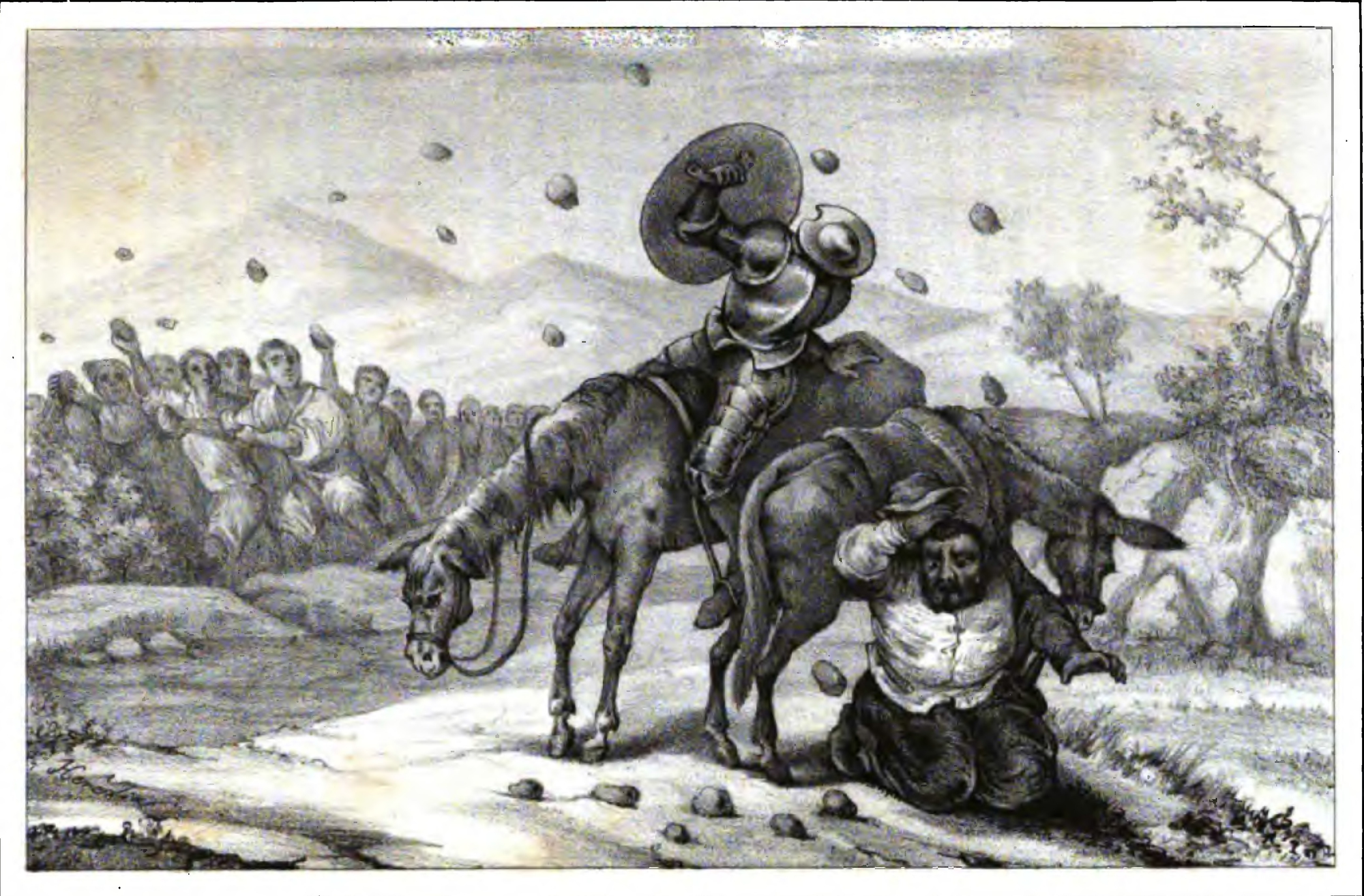
Let's choose a starting point for modern literature. The decision will inevitably be arbitrary, but it will necessarily coincide with the profound cultural transformations that took place in Europe after the end of the Renaissance, between the 16th and 17th centuries. Honoring this digital medium, let's say that modern literature began 421 years ago, in 1605, which just happens to be the year Don Quixote was published. Good calculation.
Cervantes' book has a characteristic that clearly marks it as a milestone in cultural history: its connection to a heritage, a tradition of letters. Indeed, the protagonist's madness is triggered by his obsessive reading of chivalric novels, which represent something like a clash of eras: the medieval literary genre becomes mass media with the advent of the printing press. In the second volume, this will take on a sort of proto-postmodern twist when Don Quixote encounters and reads an apocryphal book that continues his adventures (which was actually published in Spain in 1608, the first famous fanfic).
Just as there would be no Faulkner without cinema or Philip Dick without television, today we must ask ourselves what literature can do with the internet. Or, more interestingly: what is the internet doing to literature?
This introduction allows me to do three things. First, to say that modern literature, at least over the last four hundred twenty-one years, is characterized by establishing intertextual dialogues that cross hierarchies of high and low, elevated and minor genres, the cultured and the popular. And, more precisely, by developing a kind of cannibalism on minor genres: it takes them, processes them, and returns something else. Secondly, the example allows me to issue a warning: what Cervantes does with chivalric novels is not so different from what Borges does with the detective genre or Puig with the serial. It’s a warning that is important not to forget throughout this essay.
Thirdly, I want to focus on the technological issue. There would be no Don Quixote without the printing press: that is the inherent relationship of culture with the technical means of its reproduction. But there would also be no Don Quixote without windmills: that is the more contingent relationship of culture with the technical objects that define its time.
Bringing the first question to the present is straightforward: there are many texts, very good ones, about the ethical and aesthetic limits of using AI in fiction writing or poetry. The second presents greater difficulties: what do books do with the technical objects of our time? Just as there would be no Faulkner without cinema or Philip Dick without television, today we must ask ourselves what literature can do with the internet. Or, more interestingly: what is the internet doing to literature?
In a very good essay published in the magazine Los Años 20, currently only available in print, Julia Kornberg asks whether the new technological revolution killed science fiction: “The internet should have given us an aesthetic revolution on par with 20th-century English modernism, a total renewal of language to accompany contemporary technologies, but (...) it fell short.” The hypothesis is discouraging, but I suspect we are in an embryonic phase. We still don’t know precisely what the web, a relatively recent invention, especially in its mass access, can do. We know there was a prehistory of intranets, a first internet that was more ¿free? before it was fenced in and privatized (it was never truly public). And above all, we know that it has recently been vertically integrated into oligopolistic platforms, leading to the consequent degradation of its content. In its three decades of existence, the internet has changed rapidly and literature has yet to find the specific ways to process those changes. But that doesn’t mean it isn’t doing so.
I would like to start by making a distinction between two possible ways of thinking about this relationship between culture and technique. On one hand, artistic works can thematize technological changes, that is, take them as objects, portray them, represent them, discuss them. In other words, play them as part of their “content.” Just as Dickens describes 19th-century industrial English society, there are novels featuring streamers, bloggers, and forum posters from Reddit or 4chan. From teen romance hits like Fangirl by Rainbow Rowell to more ambitious literary movements like Patricia Lockwood's or Lauren Oyler's “internet novels,” these are books whose characters surf the web as part of the plot.
In its three decades of existence, the internet has changed rapidly and literature has yet to find the specific ways to process those changes. But that doesn’t mean it isn’t doing so.
This is not the focus of this essay. Including a tweet in a novel (or a Reddit post, or snippets from a Kick chat, or a YouTube comment) doesn’t do much to change literature: it’s just collage. The other possible way doesn’t go through content but through forms. How does language change when two entire generations have grown up using digital devices that connect to the cloud? What happens to poetic register when much of our speech unfolds in a colossal, global network? What happens to words when we experience such a massive hypertrophy of the audiovisual?
To answer these questions, we need to think about how fiction writing can connect with other forms of writing, those that circulate freely through the fiber optic cables that connect the planet. Last year, British essayist Sam Kriss published a text on this topic in which, with his classic polemical tone, he concludes by saying that there are two literary forms native to the internet that have a future: the greentext of 4chan and the false posting in the Reddit forum “Am I The Asshole.” We could add a few more: the writing of fictional wikis, with the SCP Foundation as the clearest example. Or the Political Compass, exceptional for fantasy or science fiction writing. But, despite what Kriss says, it’s hard to claim that these objects have literary value in and of themselves. The question is whether they can provide tools for literature.
 Ariel Pukacz
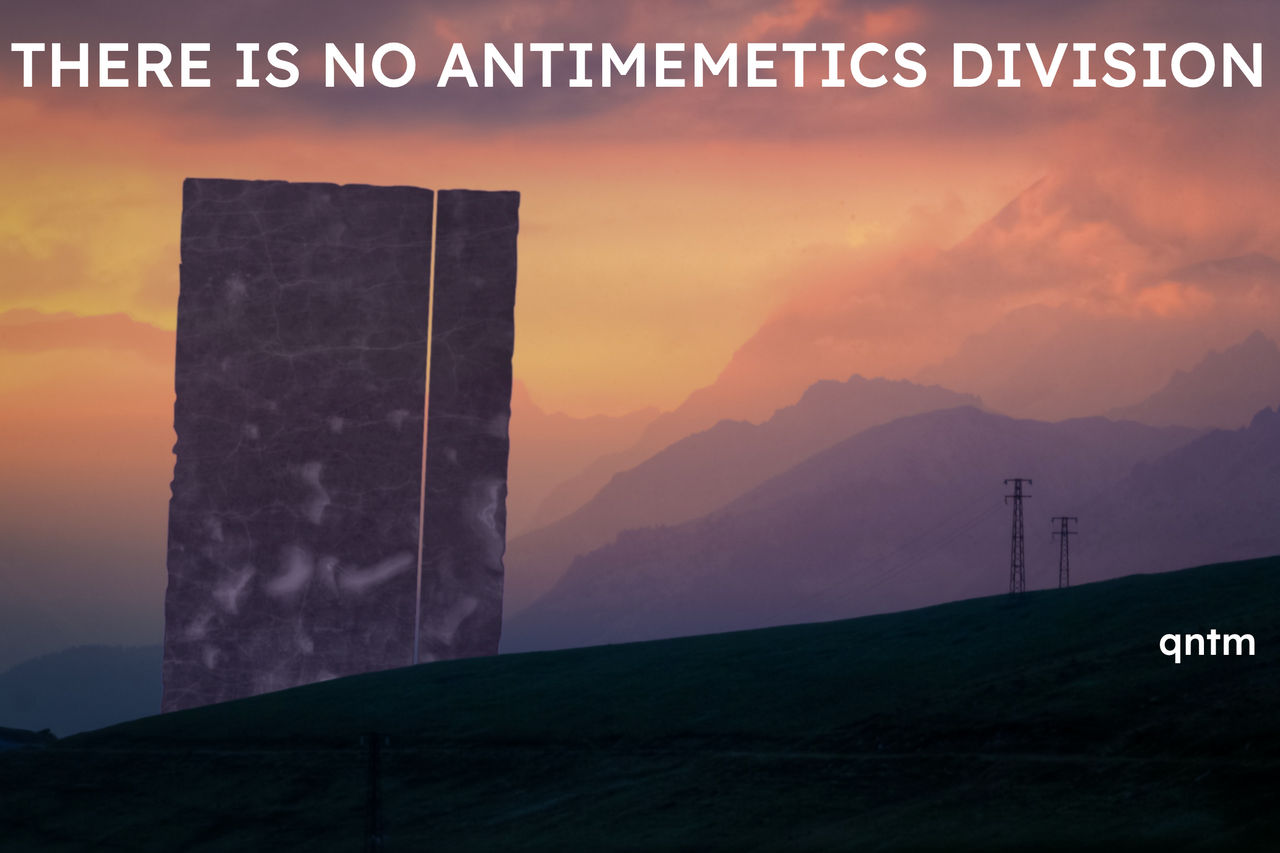
And they can. The novel Amigdatropolis by B. R. Yeager, for example, constructs a weird horror plot from a protagonist who locks himself in his room and navigates subforums on 4chan (and his other book, Espacio Negativo, could also be added to this list). Or we have the example of There is no antimemetics division, published under the pseudonym qntm, a gem of contemporary science fiction that creates an almost “monster of the week” narrative, in the style of X-Files, but based on the world created collectively by the community of the SCP Foundation wiki. And we must not forget that this same foundation is based on a classic, now old, memetic form known as creepypasta. Moving to the national terrain, the unclassifiable Materiales Para una Pesadilla by Juan Mattio makes use of citation and intertextuality that cannot help but refer to hyperlink culture (even setting aside the fact that the novel's theme necessarily involves the internet). Over all these texts looms a ghost: The Sluts by Dennis Cooper, a brutal novel constructed almost exclusively from (contradictory) reviews on a male prostitution forum; it was published in 2004! In all these cases, (which by no means seek to be an exhaustive list) it’s not about incorporating shitposts or greentexts into the text, but rather that those forms of writing are integrated, forming part of the poetic unconscious of the narrative.
If we want an example of a text written under the influence of and influential on memes, we need look no further than “I Sexually Identify As An Attack Helicopter,” written by Isabel Fall in 2020. The story is a brilliant piece of trans body horror, set in a world where people can modify their bodies to literally transform into military devices; thus, the plot literally turns bodies into battlefields of the military industry but also into sites of sexual desire and self-perceived identity. Unfortunately, the shitpost title was ridiculed by the cultural forces of the online right, and the author has been subjected to a harassment campaign that continues to this day.
Beyond the various types of posts from different social networks, another world ripe for literary exploitation is fanfiction. Strictly speaking, this predates the internet by quite a bit: the first fan-written works circulated in fanzines at comic and science fiction events in the 1970s. Depending on who you ask, the first fanfics were about Star Trek or Dr. Who; in all cases, the culture of shipping, and specifically the writing about male gay couples by female authors, has been a central component from the beginning. But equally interesting, in my view, is what fanfiction does as a pseudo-literary form: an act of appropriation regarding someone else's intellectual property with the sole aim of continuing the narrative. There is an almost vital impulse in that, which literature can and should take advantage of.
At this point, I could cite the vast and highly lucrative field of fanfiction converted into original literature. The system is very simple, and there are publishers specialized in this: a fanfic is taken (say, for example, one from Twilight where Edward and Bella are a sadomasochistic couple), all elements derived from the original work are removed (for example, Edward stops being a vampire and changes his name to, say, Christian Grey) and it is edited as if it were an original book. It would be interesting in this case to imagine that someone could write fanfiction of that new book, thus fractally proliferating the cycle of appropriations and re-appropriations toward infinity; unfortunately, original books based on fanfiction tend to be frankly bad, and no one bothers to create a fandom around them.
Dante Sabatto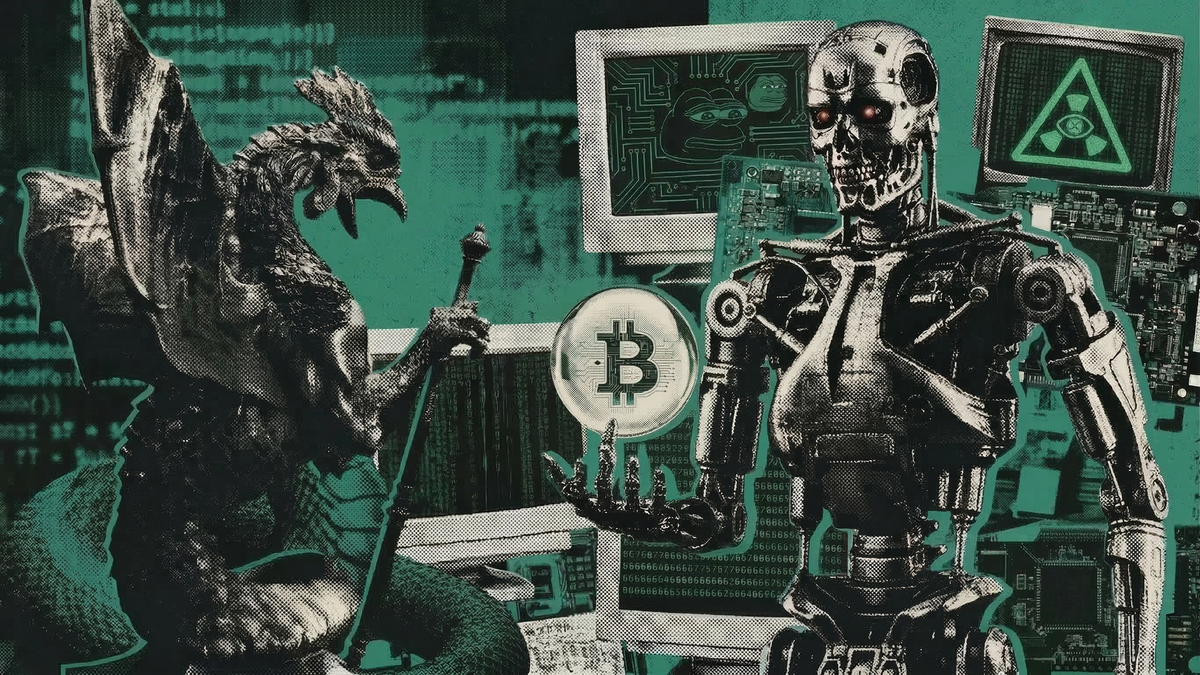
But more than all this, we can refocus on the formal aspects. What are the consequences of appropriating original material for narrative purposes? How does this condition reflect structurally, internally within the text? Fanfiction is an immense world, primarily unfolding on websites that cater to specific subcultures (Archive of Our Own, Fanfiction.Net, Wattpad, etc.), but certain patterns tend to repeat. First and foremost, couples dominate: romance and erotica are the main genres, always (what is known as “slash”). But there are subtler and more relevant elements: for instance, texts often have very little introduction because they don't need to introduce the characters (we already know them), although they do need to justify the world (which is often different from the original text). In the same vein, texts tend to be lengthy and published in installments (just like authors such as Victor Hugo or Dickens used to do; let’s remember the warning: very few things are completely new). For this reason, there is usually not a single climax; rather, it tends to extend and repeat over and over again (and I’m not just referring to the erotica) throughout the chapters.
In terms of genre, the new weird dominates: in a way, it represents an aesthetic of the “digital precariousness” that defines this post-digital literature.
One question that may arise at this point is: what happens to all these elements if we strip fanfiction of its references to the appropriated original material? In some cases, like Fifty Shades of Grey, this results in poor literature. But what if we took these tropes and structures and applied them directly to an original text that has never been a fanfic? What results is a peculiar writing style that seems to violate the most basic literary conventions. A clear case is Serious Weakness, a spectacular erotic-dystopian thriller written by Porpentine Charity Heartscape. Following the conventions of the genre, the author commented on the writing process in a personal Discord, resulting in a novel that could only have been written on the internet but doesn’t necessarily speak of the internet (in the cited text, Sam Kriss posits that this is essential for producing literature that truly engages with the era). Other examples of this phenomenon include The Apocalypse of Herschel Schoen and other works by nostalgebraist, an anonymous author who also experiments with LLMs and publishes exclusively on the fanfiction site AO3 (despite writing original fiction); or the still-unfinished Ranked Competitive Breast Growth, published by Talia Bhatt and Beth Leigh-Ann on the ScribbleHub website. For a more mainstream case, a friend pointed out the possibility of reading Mariana Enríquez's books through this same lens of post-fanfiction.
A brief note, shifting from the formal to the content: there is much more in common among the examples I cited than I expected when I began writing this text. Many of these stories and novels refer to elements of bodily transformation, destabilization of identities, expansions or reductions of consciousness and thought. The influence of queer culture (and especially transfeminine culture) cannot be overlooked, just as dystopian and apocalyptic themes cannot. In terms of genre, the new weird dominates: in a way, it represents an aesthetic of the “digital precariousness” that defines this post-digital literature.
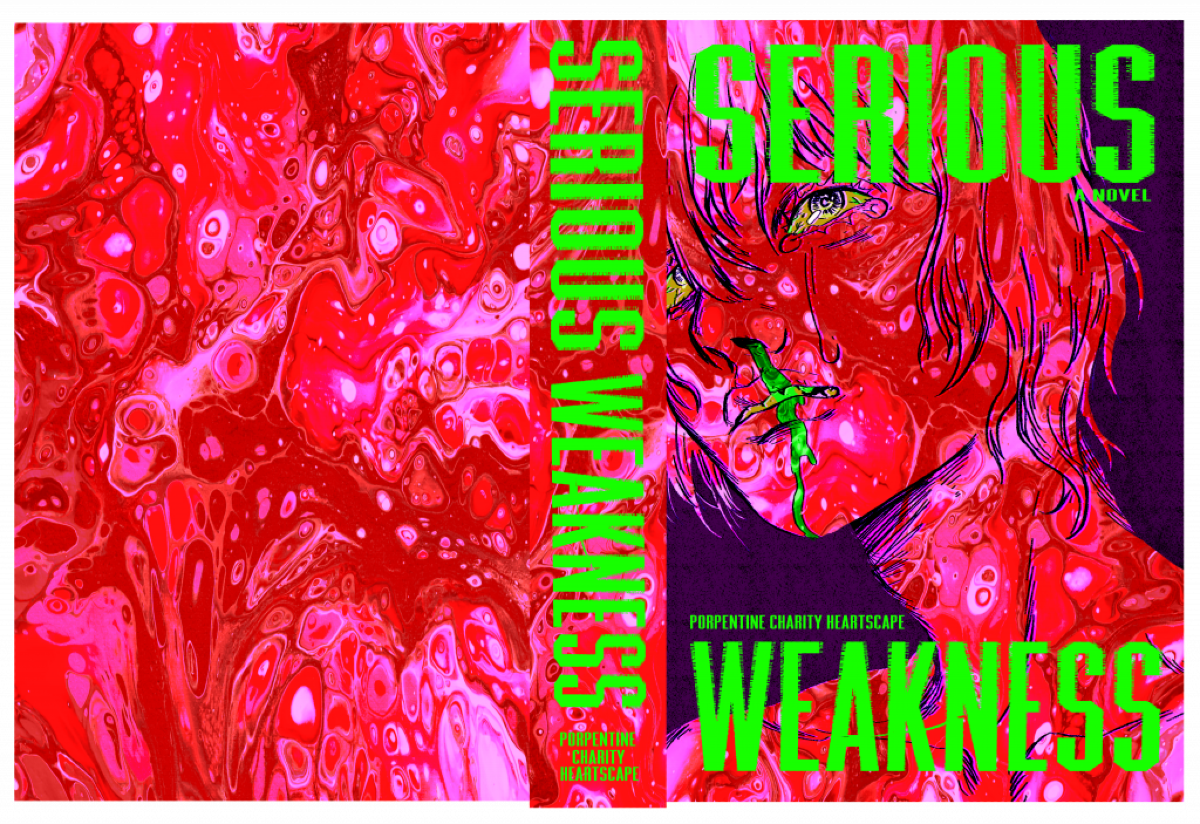
With these cases, we have strayed quite a bit from what is traditionally known as “literature.” Specifically, we have moved away from the publishing industry and into the realm of homemade publishing, which no longer requires any kind of printing press. This is why, as Julia Kornberg states in the article cited above, the advent of the internet seems more comparable to the invention of Gutenberg than to, say, the microwave or the iPad. Ultimately, to seek the effects of the internet on literature, we may need to step away from publishers, at least the traditional ones, and look elsewhere. But in that same process, we might stop talking about novels and stories and start needing other words. Along that path, the affordances that the internet provides for interaction, as well as the possibility of mixing text with audiovisual formats, completely break the boundaries of the textual: books merge with webcomics or video games, as seen in the canonical cases of 17776 or Homestuck. But that will have to be discussed elsewhere.
In a widely cited text, Heidegger says something like a hammer does not appear to us as a present object that we can observe and understand beyond its specific use until it breaks. Perhaps the internet still works too well for literature to fully process it: the most interesting things happen when we observe its darkest corners, its glitches, its abandoned zones. Last year, Argentine writer Manuel Cantón published Obsolescencia Programada, a collection of stories that deal precisely with the functional reappropriation of various technical objects, with the ways in which culture has processed technologies that have become outdated, were replaced, or took on new functions. The book spans from 1887 to 2002, from the electrification of Buenos Aires to the boom of reality shows and shady video rental stores. We are still not in a position to write such a narrative about the internet, about Bitcoin, or about Artificial Intelligence. But at some point, we will.
Enjoyed the read? The Wizards are who keep 421 alive. Join and get the digital magazine, exclusive content, and more.