Living Room War Diary: A Decade Working From Home

21 de nov. de 2025 — Luis Paz
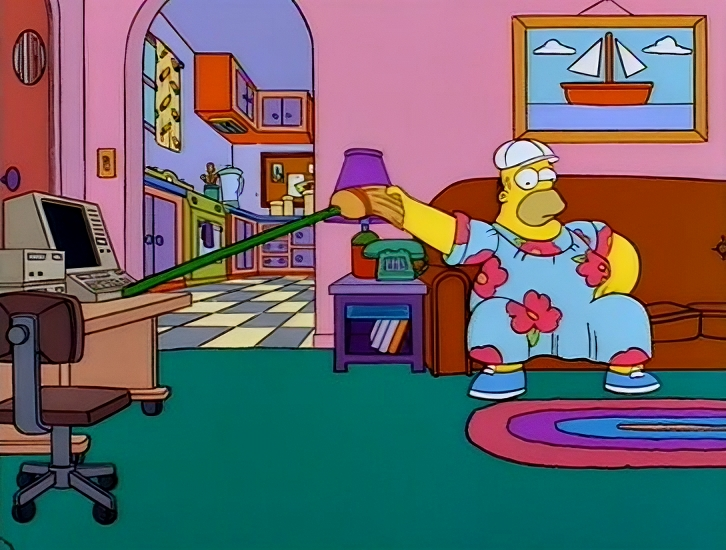
Do you know something no one tells you about working from home? If you do it for a long time, your ability to hold your pee tanks hard. When you work from home, you get used to being able to go to the bathroom whenever you want. You just get up and go. It's very simple. Then, suddenly, you've been doing home office for three, seven, ten years, you go to a stadium show, get stuck on the ring road in rush hour, or take a long trip out to the countryside, and you really suffer, because you got used to being able to pee whenever you want. If you're talking to someone and they have to cut the conversation short to go empty their bladder urgently, there's a good chance you're dealing with an advanced-level home-office worker.
It Started as a Joke and It Stuck
The canonical 5:2 model of in-person work from Monday to Friday plus free weekends doesn't make much sense anymore for huge portions of the workforce. Partly because there aren't enough jobs that pay enough to live on and still fit into 40 (or fewer) hours a week. And partly because very few jobs really need a human being to spend 40 hours a week doing something in a fixed location –especially in a country that's been deindustrializing for years, like Argentina.
Almost six years after the pandemic, working from home has stuck around for all kinds of reasons, and the three-days-in, two-days-remote, two-days-off model is now common in a bunch of sectors. Specifically, in the worlds I move in: media, cultural industries, tech companies. But whatever industry you look at, there's a wider pattern behind the spread of the home office: it's in employers' best interest to shift operating costs onto their employees. That's basically what happens with working from home, a phenomenon that, in that sense, runs in parallel with turning more and more people into "independent contractors" in the labor market.
Only in the last few years has capital realized the downside of not having its workers in sight –something as old as the factory panopticon: no control, or even just the absence of the threat of control, can lead to a drop in productivity, whether real or only suspected by the person putting up the money.
The trade-off workers got with home office is that we were freed from the obligation to spend time going to work. In the short or long term, the extra costs of working from home tend to balance out with what you save on commuting, eating out, and constantly refreshing your "work clothes". The only real difference is the time you get back. But the big, very real problem is that this "extra" time almost always ends up being filled with more work –a second, third, or even fourth job– because this trend of companies offloading costs onto workers is happening at the same time as crappy wages and weak social safety nets.
How I Ended Up Working From Home
I've been working for 25 years. I went from a plasterer's helper to editor and/or founder of media outlets (421, El NO, THC, and some ghost projects I can't mention because of NDAs), with stops along the way in ice-cream parlors, municipal offices, crypto companies, and rehab centers –as a teacher, mind you. Editing the NO supplement of Página|12 is still the longest job I've ever had: more than a decade, and I'm still at it. But seven and a half years ago, NO stopped being a print supplement and became a digital section on the Página|12 website. There was no reason to keep going into the newsroom.
Even two or three years earlier, in 2014 or 2015, I'd already reduced my trips to the newsroom to the bare minimum. Back then, the office was in the San Cristóbal neighborhood of Buenos Aires, halfway between Plaza Constitución and Garrahan Children's Hospital. As a writer, I've always covered music and video games: album reviews, gig write-ups, interviews with artists, game reviews. All very fun, and all pretty incompatible with the logic of needing to show up at an office where, for example, you can't blast music through speakers or there are no consoles in sight. So an average week would include a day at some venue for a show, another day in a studio or rehearsal room talking to musicians, and three more days at home: ruminating on ideas, writing, transcribing interviews, listening, and playing.
I've been working from home for about a decade now. A decade of living, working and, in the last few years, parenting –all in the same space, in the same home. Even though, in that time, we've moved through two houses and two apartments. That old "you don't shit where you eat" rule doesn't really apply to me. I live quite peacefully in the panacea of being able to eat, shit, fuck, and manage data flows all in the same environment. It's something I'm genuinely grateful for, for all the obvious good it brings, and something whose more harmful sides I still haven't fully managed to sort out.
Remote Work Is Shit. Long Live Remote Work.
Working from home has a lot of pros, and they're pretty well known. You save the time, money, and stress of commuting. In many cases, you can even move to another city you like without compromising your job. You get more flexibility with your schedule –maybe not in total hours, but in when you go to the bathroom, eat lunch, or run down to the gas station to buy cigarettes.
You can manage your productivity differently, along with your peaks of attention, focus, and output. You control the setting, the light, the furniture you use to work. You're within arm's reach of domestic micromanagement: sweeping the floor, stocking up on groceries, receiving deliveries. You have more time physically near your kids, your partner, your parents. Your breaks happen at home, among your own stuff. If you grow weed, you can check on your plants all the time. If you're in crypto, you can trade and arbitrage without having to do it on the bus, with everyone peeking over your shoulder.
And working from home has plenty of cons, too, because the debate isn't about a perfect model versus a flawed one –say, remote work versus in-person work– but about finding the balance point between you and your employer or partners, somewhere on a spectrum of more "modern" work arrangements: hybrid, asynchronous, remote, you name it. Each region of that spectrum comes with its own spiritual tension with –or against–the very fact of work.
Home office cuts into something deeply human about working: basic things like sharing a lunch table with random people, being forced to interact with folks outside your family and friend circle –people who think, talk, feel, and smell different from you. For a lot of people, the workplace is their only real social arena. It's sad but it's true. We're kind of screwed.
Working from home also comes with a whole set of costs that are heavier than just having to pay for your own internet. Feedback on your work disappears, or it turns into some prefab Slack message: "You’re doing a great job!" Yeah, sure. Fuck off. On top of that, there's the whole project of re-sexualizing your house. No matter how clean, tidy, and nice-smelling it is, it's still the place where you are all the time –and the sensuality of the space where you spend all your time naturally trends toward zero. The counterexample, of course, is that you can sneak in a quickie at almost any time.
What I Didn't Learn in a Decade of Working From Home
Separating work life from personal life gets very tricky when everyone around you operates under the assumption that you're almost always available. I'll text Luis, he's at home. Let's sort out this band thing right now; two of them are working from home anyway. Let's ring the neighbor's doorbell and see if he has a roach to share with us. People actually do that. It's outrageously inelegant. It's basically the anti-Severance: there's no split, everything happens at once, and the idea of clearly cutting off your work time becomes a mirage.
The most common living setups right now are the studio apartment for the single-player version of life, and the two-bedroom house or apartment for the multiplayer family mode. The studio dweller goes a bit crazy in their little echo chamber, working, having sex, and eating within the same four walls. The one who's set up in the living room with a desk –hi, that's me– works surrounded by the smell of breaded steak in the oven, the sound of dishes clinking, and the morning doorbell rings of Jehovah's Witnesses. It's a constant give-and-take that affects your mood, your creative impulses, and your sense of belonging to projects and teams.
Burnout is waiting at the end of the hallway, on the left. Your computer slowly becomes alienated: it's no longer your computer, it's your job's computer. And I'll say this: anyone who installs a productivity tracker to monitor what you're doing on your computer remotely deserves, at the very least, a full-blown fungal infestation on their feet and never being able to get into a swimming pool again.
One of the things that affects me most about working from home is the amount of time and energy I spend on forms of communication that aren't grounded in emotions, facial expressions, or body language. The sheer number of people who get offended by a message that's accurate, short, and direct. The number of people, these days, who think that simply having a different opinion means you're picking a fight.
That's also what you get when there are fewer hallway conversations and fewer informal connections with your coworkers. There are conversations and decisions that just can't be handled over chat or email. But once your whole structure has been decentralized, it's very hard to spontaneously bring everyone together to make a decision. Any sense of horizontality takes a hit.
I like to think that after 20 years of writing to pass along information, I've learned how to deliver that part properly. But after 10 years of working from home, I still haven't managed to solve some of the core conflicts that home office brings. And I don't really see people in my situation having figured it out either.
That's because it's a lie that repetition or sheer iteration automatically perfects processes. That only happens when there's deliberate review and feedback built into the system. Modern work, still deeply precarious, takes up so much time that it even eats into the time you'd need to reflect on the work itself and adjust what gives it meaning.
Just doing something for a long time doesn't automatically make you good at it –at least not in all its aspects. There's a strong current cult around "agency" and stoicism, but they're a bit like being charming: there's no merit in them by themselves unless they're oriented toward something meaningful. Most of the time, when your energy is being driven by someone else's agenda, you're not really being agentic because you're not the agent. You're just on someone else's schedule.