The Social Nature of Magic: The Gathering

15 de feb. de 2026 — Juan Ruocco 🧙♂️
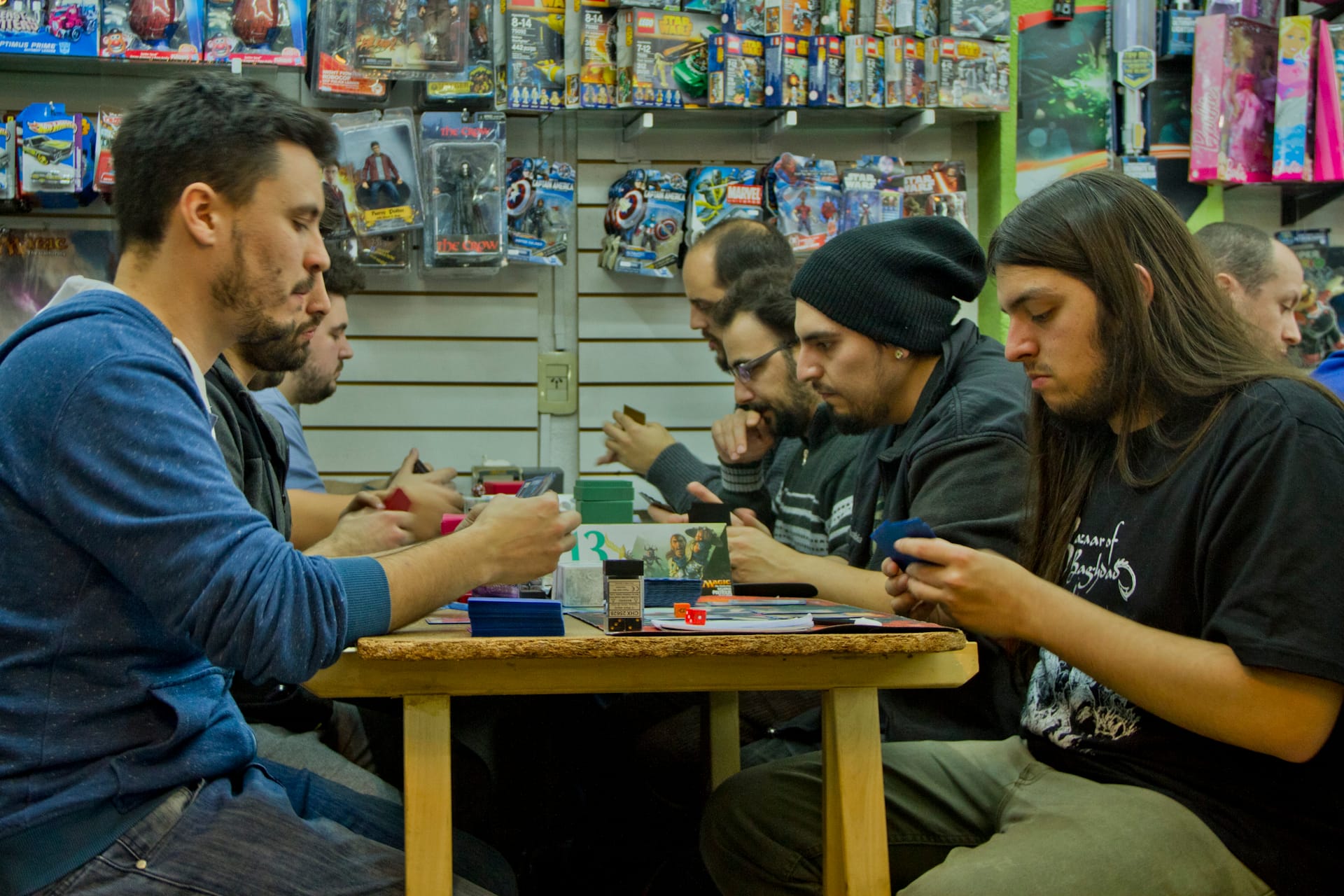
Although we generally overlook it, it's in the second part of the famous TCG's name where the key to its success lies. Magic: The Gathering isn't just an excellent game -- the best of them all, if you push me -- but also an inexhaustible source of social bonds. That thing the digital marketing prophets now lump under the elusive, Anglo-Saxon, and sanitized category of "community."
From tournaments in food courts during the Y2K era to the proliferation of specialized shops and trades via Facebook groups, the card game created by Richard Garfield in 1993 and marketed by Wizards of the Coast (now a Hasbro subsidiary) is in excellent health in the city of Buenos Aires, despite these thirty years full of crises, austerity measures, and inflation. How is it possible that a dollar-denominated game remains relevant in our country? It's because Magic continues to be a space for socialization built around leisure.
The Gathering
First and foremost, then, Magic is a social game. The existence of thousands of cards, hundreds of competitions, and dozens of formats means that anyone who approaches the game needs others to build their decks. And while that experience has been professionalized, to the point where stores exist dedicated almost exclusively to buying and selling Magic cards, the human factor hasn't diminished. The need for at least one other player to start a match, get the missing pieces for a deck, or collect specific cards makes the game a collective experience.
The more "competitive" or "organized" play, through the WPN store network, also requires socializing. Despite whatever prejudice may exist around the card game and its community of nerds, its inevitable social nature keeps it alive. And that sociability isn't confined to organized play or the stores.
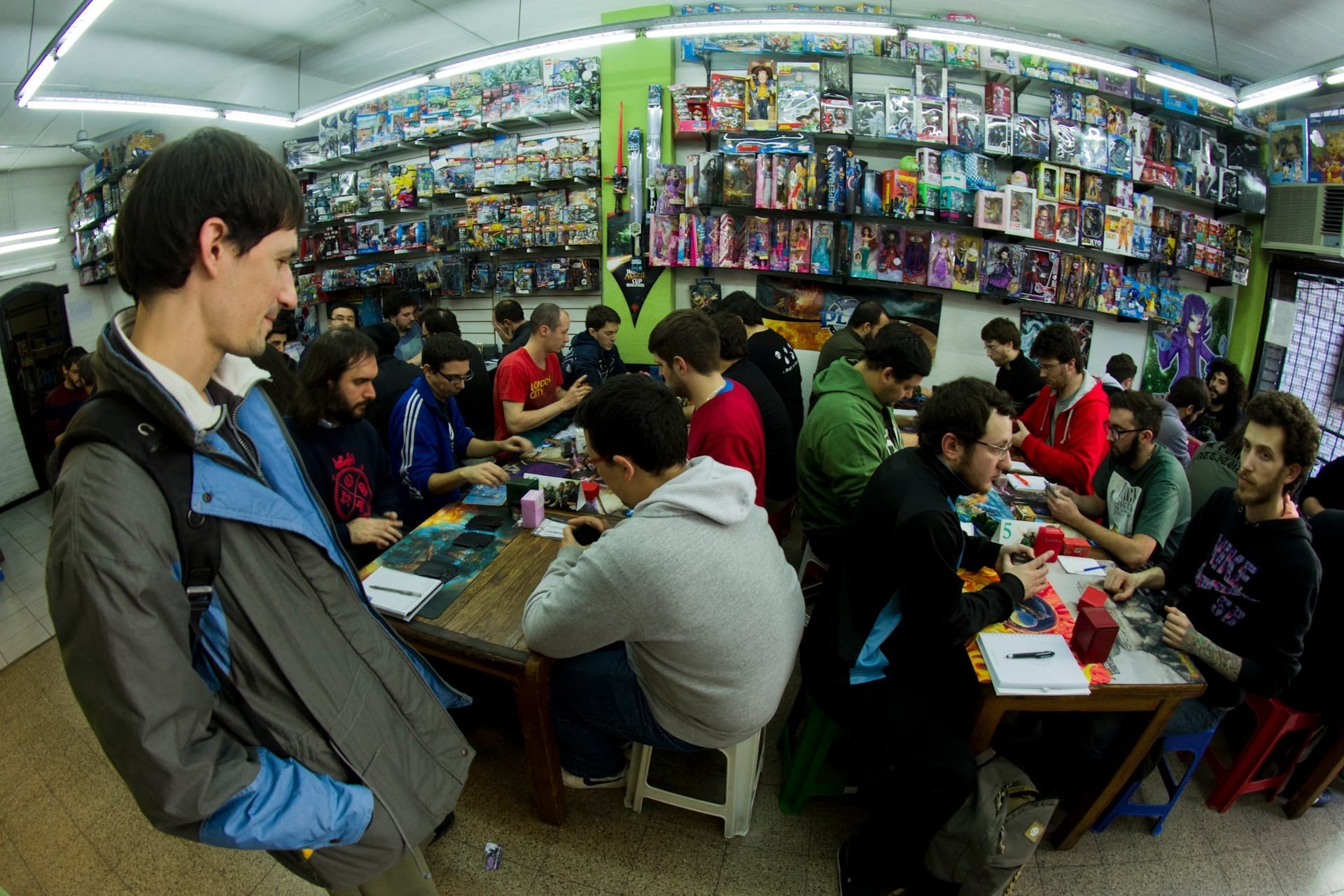
The core of Magic has always been casual play, among friends or acquaintances, at people's homes, with no greater ambition than having a good time. From decks thrown together on the fly to Commander, Cube, and Draft tables, it becomes a gathering, just as its name says. Magic thrives as a game with no specific center, at hangouts, barbecues, and other excuses to get together and play.
In my case, I've been playing since 2000, but it was only in recent years that I've met the most people through casual play: a draft among friends, a four-player Commander game, a cube session with weed and a barbecue thrown in. In my humble opinion, the best possible combination and the most fun way to play.
The Players' Formats
Decks of at least 60 cards, with a maximum of four copies of each. It's quite remarkable that the current rules for the game's most well-known formats were actually rules that the community itself established as Magic gained popularity in its early days.
During the game's maturation phase and the competitive scene's development, that origin seemed somewhat forgotten as Wizards of the Coast itself corrected its rules as Magic grew or new cards appeared. But with the popularization of the internet, the emergence of online communities, and the multiplication of information flow speed, players once again regained the ability to create new rules. Or, outright, new formats.
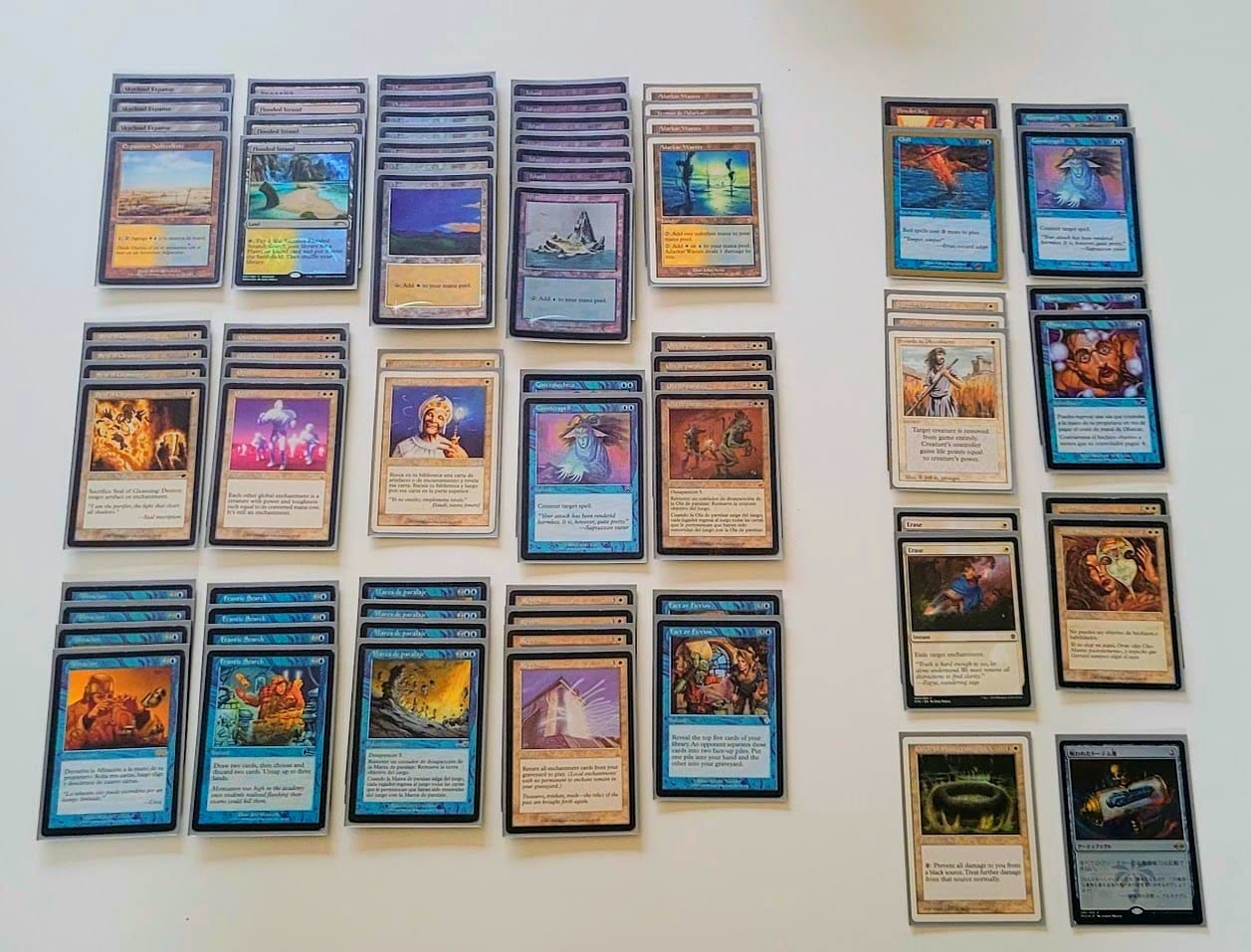
That's why many of the formats most played in the country today were created by users: born on the internet, played in nearly every store, and usually the ones that draw the biggest crowds. Like Commander, a casual format oriented toward four-player games, with 100-card decks that include a special one, a "Commander" that determines certain characteristics and mechanics of the deck as a whole. Or also Pauper and its decks that only use common-rarity cards. Or the newest one: Premodern, with cards ranging from Fourth Edition to Scourge.
Even on the Limited format side (Draft, Sealed), we can think of Cube, which is basically a curated collection of specific cards that are drafted to run competitions of six to eight players. In my opinion, one of the most complete, fun, and demanding formats in the game.
Buying and Selling Magic: The Argentine Case
Brick-and-mortar stores, online ones, shipping nationwide or worldwide, Facebook groups, Marketplace. Buying and selling Magic cards, whether new, classic, or collectible, is a legitimate economic activity practiced at different levels and scales. With prices ranging from cents to hundreds of thousands of dollars, Magic cards are something like a commodity within the ever-liquid collectibles market. That keeps the game alive and is intrinsic to the experience itself.
It's also notable how the Argentine market has managed to develop its own antibodies, despite recurring economic crises, currency controls, and devaluations -- which in principle should have killed a game whose fundamental supplies are always priced in dollars.
Thus, from the glorious golden days when Magic was so popular it was played in school cafeterias, to the current scene where thirty- and forty-somethings hurl creatures, instants, and sorceries at each other's heads between juicy IPAs and well-cured sativas, the Argentine Magic market has managed to adapt to the times and withstand the blows of failed economic plans past and present.
The Video Game: MTG Arena
For many, many years, the digital experience of playing Magic was rough. From Magic Shandalar in 1994, to the clunky, complicated interface of the still-active Magic Online, which also requires learning the internal buy-and-sell system through bots, and a long list of quirks that means only the truly obsessed can play.
But the arrival of MTG Arena, or simply Arena, simplified digital access to the game. The diehards got something resembling a video game, and those who had quit could come back without needing to spend a fortune. This caused an enormous player base that had remained dormant or in hibernation for years to return to Magic, and then to the paper game.
The Geological Eras
Magic's player base follows a logic of accumulation by strata. Those from past eras continue playing, as do those who left and came back. Plus the new ones just joining. It all accumulates. Nobody leaves Magic for good: we all come back one way or another. Magic is something that falls within the spectrum of addictions.
Therefore, while its player base is composed mostly of people well into their 30s or 40s rather than teenagers, each new player is a devotee who will remain (along with their purchasing power) in the scene and in the community. This logic of accumulation allows Magic to withstand the passage of time and maintain its relevance across decades.
Today, several generations of -- mostly -- Argentine men find in the mechanics and lore of Magic a place to express facets of their personality, make friends, collect objects, and have a good time. As if life could be those golden 15 minutes in the school cafeteria.