Medical cannabis: home growing and REPROCANN in the Milei era

16 de sep. de 2024 — Luis Paz

The basic requirement for legally using medical cannabis in Argentina is registering with the Cannabis Program Registry (REPROCANN), which grants permits for use, possession, cultivation, and transport for patients with a medical prescription. These individuals (or someone they designate) may grow up to nine flowering plants and carry up to 40 grams of flower or 6 dropper bottles of 30ml oil, thus avoiding criminal prosecution under Law 23,737 or the Narcotics Law, although only for cannabis for therapeutic use.
History of legal marijuana in Argentina
The use of cannabis as medicine has been legal in Argentina since 2017. Law 27,350 for the research of medical cannabis use and derivatives was passed by Congress and implemented for some patients during the presidency of Mauricio Macri. Three years later, it was expanded to cover other conditions and was firmly regulated through Presidential Decree 883/2020, under Alberto Fernandez.
In parallel with user regulation, the National Seed Institute (INASE) established a system for documenting Argentine cannabis sativa genetics for medical or industrial use, and in 2021 opened the Seed Trade and Oversight Registry for certified sales. Since then, it has approved over 30 local varieties bred by growers, companies, laboratories, seed banks, associations, and even state agencies such as CONICET and INTA.
In 2022, Law 27,669 completed the regulatory framework for the local development of medical cannabis and industrial hemp, including scientific research, production, and commercialization. Since its regulation through Decree 405/2023, it is the Regulatory Agency for the Hemp and Medical Cannabis Industry (ARICCAME) that grants licenses for cannabis and medical derivatives, as well as authorizations for industrial and horticultural hemp. But the last (provisional) permits were issued in December 2023, to two state-run and four private ventures.
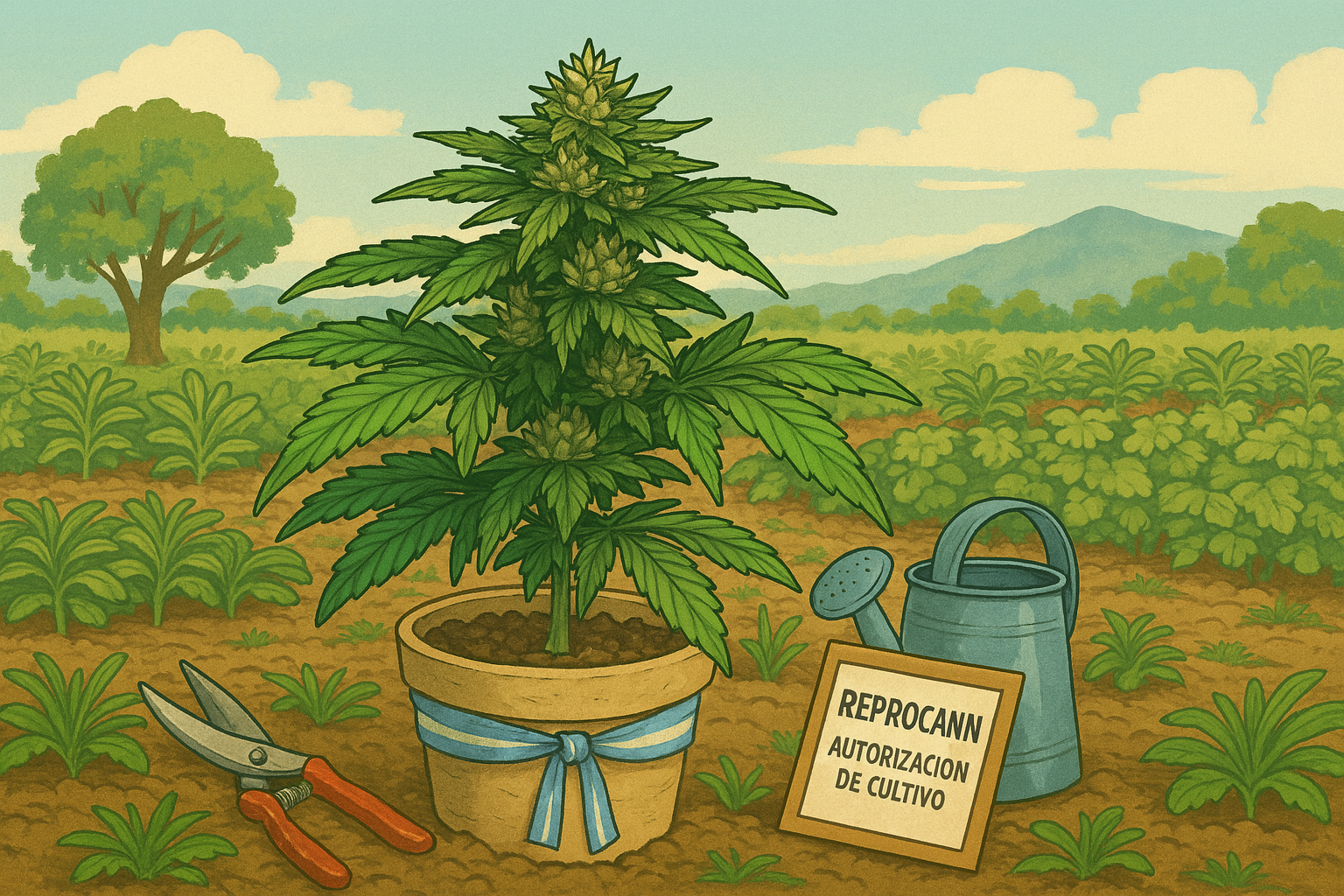
Medical home growing in the Milei era
Since the beginning of Javier Milei's presidency, much of this has been put on hold and under review. Throughout his administration there have been significant delays in new REPROCANN authorizations, with an estimated 70,000-plus patients facing stalled applications. Additionally, in March 2024, the registration of new operators with INASE was suspended for six months, and in September 2024, through Decree 833/2024, the new government intervened in ARICCAME.
Meanwhile, the Ministry of Security led by Patricia Bullrich, through various security forces, intensified actions against growers, researchers, and medical patients across the country, going so far as to raid and detain individuals legally authorized to use and cultivate marijuana.
And on top of that, administrative chaos. In August 2024, Resolution 3132/2024 from the Ministry of Health had established new requirements and restrictions for doctors, solidarity growers, and NGOs, but it was repealed in mid-2025 by Resolution 1780/2025, which redefines how REPROCANN operates.
Current registrants have until November 2025 to comply with the new regulations, which include stricter requirements for patients, third-party growers, and civil organizations, with 3-year validity periods for home growers and 1-year periods for other categories. Additionally, for the first time, scientific research projects are being added to REPROCANN.
On top of all this, there have been recent setbacks and deregulations. In March 2025, INASE blocked access to the management system for cannabis operators, requiring them to comply with ARICCAME regulations (existing operators had an extension until May 31). And in April of this year, Decree 410/2025 repealed Law 17,606, thereby eliminating the Nursery Registry and the health requirements and guidelines for plant cultivation and transport, deeming them "obsolete regulations."
REPROCANN historical summary
- 2020: creation of the program and first regulation (Decree 883/2020).
- 2021-2022: expansion of covered conditions and framework for industrial hemp (Law 27,669).
- 2023: extension of validity to 3 years for home growers (Resolution 766/2023).
- 2024: application delays and suspension of INASE registrations; Resolution 3132/2024 (repealed in 2025); intervention of ARICCAME (Decree 833/2024).
- 2025: Stricter requirements and new category for research projects (Resolution 1780/2025); INASE system access blocked; repeal of the Nursery Registry (Decree 410/2025).

Registering legal cannabis in Argentina
The standard process involves a thorough report on genetic data, agronomic characteristics, and stability and uniformity tests documented through certified procedures. Then, INASE evaluates the quality and safety standards of the "plant material," with repeated consistency tests. If approved, it is registered in INASE's National Cultivar Registry (which covers all types of edible crops, aromatic herbs, decorative plants, and more), and can then be legally commercialized.
Selling legal cannabis in Argentina
Those who want to sell medical cannabis and derivatives must register as authorized sellers with INASE and sell only certified varieties from the National Cultivar Registry, whether as seeds, rooted cuttings, or seedlings. The retailer or intermediary (for example, a grow shop or the nursery itself) must also comply with all regulations regarding the commercialization and advertising of cannabis and derivative products, such as front-of-package labeling with genetic and agronomic information. Every plant or seed must leave production with an official seal issued exclusively by INASE, ensuring its origin and therapeutic properties. Since April 2025, with the repeal of Law 17,606 (Decree 410/2025), sellers are no longer required to register with the Nursery Registry or submit health permits for plant transport.
Buying legal cannabis in Argentina
Only medical patients registered with REPROCANN can legally purchase cannabis in Argentina. With their valid and up-to-date permit, these authorized users can turn to suppliers registered with INASE -- ranging from breeders to grow shops, retail stores, and cannabis clubs -- to buy legal therapeutic cannabis seeds, cuttings, and seedlings, complete with genetic information and origin traceability. Research projects approved by the Ministry of Health, such as universities or R&D centers, are also authorized to purchase cannabis for medical, agronomic, or social studies, with permits valid for 1 year.
Argentine medical cannabis varieties
There are currently over 30 varieties registered with INASE on the legal cannabis seed market in Argentina. All have been developed by local laboratories or growers, who are required to operate under verified safety and quality standards, and in compliance with current regulations.
Take note: African Jam • Ananda001 • Ballena Franca • Bobybuva • Bsod74 • Camboya CHR • Cannawine INTA-ACCS • Cannpat One • Cat3 • Celosa 10 • Cenpat • CH1439XMT • Chem Felix • Conicet • Dr. West • Eva • Grape Nectar • Guarani Pora J. • Haseverry Purple • Kali Felix • La Mesias • Lupin 2010 • Malvina • Mariquita Sanchez • Nebula X • Onora • Pachamama • Pasionaria S. • Pastel de choque • PH Lobera • Polaris • Tropicana WFC