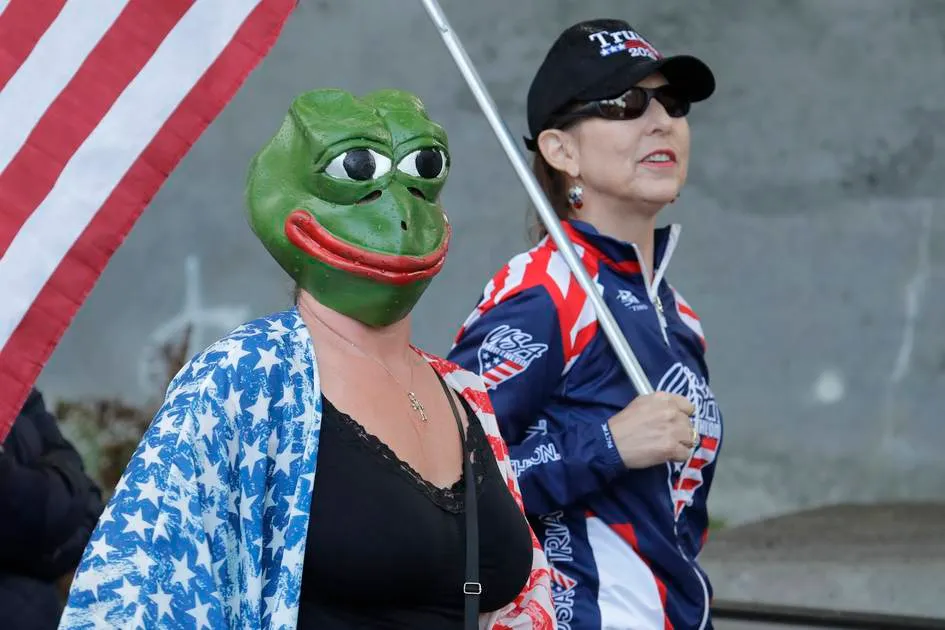
Meme
Meme
A bit of history
In 1976, biologist Richard Dawkins formulated a somewhat risky definition of how it might be possible to reconcile evolutionary theory with human culture. For a large portion of academics (at least since Modernity), nature and culture constituted two entirely distinct realms of experience and, for that very reason, required different epistemic methods for analysis. Hence all the discussions about the epistemic status of the "social sciences" and the need or obligation to have their own analytical methods for the domain of human endeavor. In Modernity, this separation was drawn between the natural sciences and the moral sciences.
In this classic version of the nature/culture dichotomy, the universal laws of science are only applicable to matters within the natural realm, while culture is governed by its own systems of rules and methods of study, which may vary in number, focus, and scope. Moreover, this dichotomy, at least at the introductory levels of university life, came accompanied by a cautionary tale about the dangers of crossing that boundary: social Darwinism. Social Darwinism was a movement of the late nineteenth and early twentieth centuries that, based on a certain positivist metatheoretical project, attempted to apply Darwin's theories of evolution to the social realm without further distinction. The movement became a magnet for racist, ethnocentric, and xenophobic theories and/or postulates, grounded in the principle of the survival not of the fittest, but of the strongest.
For this very reason, there has always been (at least in the academic sphere) a certain epistemic reluctance to use concepts from biology in the social sciences. Nevertheless, Dawkins decided to leap over all those barriers and play at pushing the boundaries of the "natural" domain of evolutionary theory. Using the gene as a model organism and the basic unit that transmits genetic information, he posited the existence of an equivalent in the realm of human culture: the meme. The meme would be the cultural equivalent of the gene, a basic unit of information that is transmitted through copying, that mutates, and that is subject to selective pressure.
Among some examples of memes, we can find melodies, sayings, fashion trends, and even ideas, such as the notion of God. All memes would be replicating units that compete with one another at all times and undergo variation, competition, selection, and retention. Many memes can even articulate with one another to form memetic complexes (memeplexes), as is the case with religions or political ideologies.
In 1991, philosopher Daniel Dennett would take up the idea in his book Consciousness Explained1 and integrate the concept of the meme into his particular version of the philosophy of mind, a discipline derived from the philosophy of science whose focus is on finding possible models of the architecture of the mental and even debating the very idea of mind. Dennett appropriated the concept of the meme but introduced some variations that distinguished the meme itself from its particular vehicle. In both Dawkins's and Dennett's conceptions, the idea that the meme acts as a virus is very much present, and that its infectious power is sufficient to invade a human brain like a parasite, beyond the person's possibilities of choice -- which is a problem in itself and warrants a separate discussion.
In the wake of this new perspective, the very idea of the meme would have a moment of memetic transmission across different academic disciplines and for a time would become the object of study for explaining many things (perhaps more than it could). Dennett co-founded, along with Douglas Hofstadter, the Journal of Memetics, which was published between 1997 and 2005, and new books appeared that would expand the canon, such as The Meme Machine, by Susan Blackmore2. But criticisms were not long in coming: the concept was accused of being too broad, of being a modernized version of biological reductionism, or simply of being a pseudoscientific concept.
Memes in digital culture
Some time later, Limor Shifman, a scholar at the Hebrew University of Jerusalem, would publish Memes in Digital Culture, in which she produced a very detailed work attempting to recover the idea of the meme within the specific context of digital culture3. Shifman crafted a very functional definition of the meme that makes it possible to study this type of cultural unit within the confines of internet culture, rather than attempting to use the concept to explain the entirety of human culture. This move freed the concept of "meme" from its associated historical baggage, while recovering several of the interesting aspects of the notion, in particular three fundamental concepts ascribed to internet memes: (a) gradual propagation from individuals until reaching society at large; (b) reproduction via copying or imitation; and (c) dissemination via competition and selection.
In the case of the first point, there are ample examples of this dynamic. One can think of memes that were initially used within certain circles, groups, or digital networks and that later reached the whole of society. An example is the nickname attributed to the Argentine men's national football team. The team coached by Lionel Scaloni has been nicknamed "la Scaloneta" as a result of a series of memes that were born on the internet and then became popular across the entire population. The same happens with the Argentine president Alberto Fernandez, who has been a constant source of memification and came to be nicknamed "Alverso" (in River Plate slang, "verso" is synonymous with lie), and also with the expression "Macri gato," a form of insult against former president Mauricio Macri. These memes originate in small groups but end up becoming part of the collective language.
As for the second point, copying and imitation form a key part of memetic dynamics, even if that imitation can operate through modifications or the creation of derivative images. This is extremely important, for example, in the dynamic known as internet challenges, in which users must copy a specific behavior and film themselves to become part of the meme. We can recall, for example, the "Harlem Shake"4, the "Ice Bucket Challenge"5, "Planking"6, or the current TikTok challenges where users dance to the trending song of the week, for instance, "Butakera."
And in third place, competition and selection are almost self-evident in the very dynamics of the internet, where all memes compete with one another and selection can be measured by virtue of some objective metric, such as the number of times something has been shared, its presence across different platforms, and other parameters that are easily measurable in the digital age.
Finally, Shifman provides us with a definition of the meme that works insofar as it is functional, allowing us to advance in the explanations and meaning-making operations that memes propose. A meme is (a) a group of digital items that share common characteristics of content, form, and/or stance, (b) each of which is created with awareness of the others, and (c) which are circulated, imitated, or transformed across the internet.
Memes as digital folklore
Memes evolved alongside the internet. As more people joined the network, as platforms made the rapid and cost-free exchange of images and/or video possible, as digital transformation tools became widespread and simplified their interfaces, and as the difficulty for users to employ those tools decreased, the modification of images and video became a habitual activity of digital culture. By the 2010s, when the internet and digital modification tools were already widely available to the public, a kind of digital folklore was generated -- a shared culture grounded in knowledge of a certain number of memes.
Some of the earliest and best-known examples are the rage comics. These characters, which were born from users' own interactions, became enormously popular because they covered an entire spectrum of possible emotional reactions to certain content. In this way, instead of someone saying that something made them angry, they would respond with the famous "fuuuuuuck." Or when someone did not know how to interact in an awkward situation, or was so surprised they could not offer an opinion, they would resort to the poker face. The rage comics were not only a way to convey emotions or impressions, but also a way to create a bond.
When the interlocutor demonstrated an understanding of the meme's use, a kind of complicity was formed, insofar as one knew that the other user was "literate" with respect to certain memes. This literacy can be termed "metamemetic" awareness, something that still prevails in the digital sphere.
Those users who use or directly create new memes, with new meanings, which then gain traction, are perceived as valuable within a community. And those who believe they are doing so, but are not, are usually the object of mockery. Given the dizzying speed of the creation, rise, and destruction of different memes, using them at the right moment (while it is still seen as acceptable to use them) is a skill in itself. One could venture that memes follow "S"-shaped adoption patterns or curves and that, therefore, when a meme is very well known or mainstream, it is because it has signed its own death certificate.
Memes are an essential part of the ironic and post-ironic culture in which the language of the internet is immersed. While irony can be taken as a comment that in some way expresses contempt toward reality, post-irony mocks irony itself, insofar as those who employ the latter seem to want to demonstrate that they are perpetually standing in the "right place." This can be seen, for example, in the use of the Comic Sans typeface. During the 2010s, internet users constantly mocked older adults who had little knowledge of graphic design and used this font preinstalled on Windows to make flyers or other communication pieces. For years, Comic Sans was the butt of jokes and was even condensed into memes like "graphic design is my passion."
But today, in the midst of the 2020s, this ironic stance seems extremely outdated to young internet users (centennials), who now define what is cool and what is not, and who find the classic millennial ironic pose unappealing. That is why many current memes attempt to reclaim this aesthetic of a person with little proficiency in digital tools. From 2015 onward, the classic rage comics went into a slight decline, to be replaced by an entire new family: the wojaks. The Wojak character was born as a counterpart to the Pepe the Frog meme, as a kind of companion and competitor, but with the characteristic of expressing feelings; in fact, the early Wojaks had as one of their features the willingness to own certain emotions.
As happens with all memes, Wojak then became an archetype that began to function as a template for inventing new characters. So now there are repositories dedicated to gathering and even creating new wojaks, to collecting them in a way. And there are innumerable subcategories for explaining or creating mockery of different archetypes of people on the internet. Without a doubt, we now inhabit the era of wojaks, soyjaks (progressive and consumer of soy-derived products), and other memetic derivations: the angry wojak, the doomer wojak (fatalist, an archetypal characterization of the not-so-young internet nihilist)7, the NPC wojak (non-playable character, an expression used in internet language to describe people of similar appearance, who do the same things, hold the same opinions, or lead the same lifestyle). We can even find memes that are "metamemetic," as they are commentaries on the current state of internet culture, like the one seen on this page, which proposes in a "traditionalist" key to abandon memetic modernity and return to tradition (the rage comics).
Vectors of meaning
But beyond the question of the internet's own culture, or rather expanding on that idea of "folklore," memes are also vectors of ideas. These ideas can be pre-existing, that is, predating the internet, or they can be forged in the very memetic crucible. While it is possible to enter into an infinite discussion about the existence of ideas (whether they all already exist and are merely "discovered" or whether it is indeed possible to create new concepts), the point here is to show the new axes of thought that are generated from the very dynamics of the internet. Such is the case of the ordered pair "cringe/based," for example. This pair of coordinates is used to place content, people, and opinions within two antagonistic categories. The "cringe" would be that which causes secondhand embarrassment: a cringe piece of content would be, for example, for those who use these labels, the image of a person aged 40 or older dressed as a young person who sings trap. In contrast, "based" is the opposite of cringe. Although the word's meaning was originally different, it ended up being configured as the opposite. Someone who does or says something without caring about the consequences, or without taking into account what is said about them, is someone or something "based." The same happens with another meme known as "the virgin vs. the chad," two opposing characters who represent two ways of facing life. While the virgin (in a clearly derogatory sense) is a character who tries to do everything according to what the rules or the manual dictate, or tends to overthink things without acting, the chad is someone who does everything according to his own criteria, follows no type of guide, and does not take into account the opinion of others, and thus gets what he wants.
In a sense, the chad "is based" and the virgin is somewhat, or quite, cringe. The pair of concepts currently dominates many of the online discussion spaces, such as platforms, forums, imageboards, or messaging apps. In full consonance and synergy with the wojak universe, the pairs "virgin vs. chad" and "cringe/based" dominate the digital conversation, forming a self-contained universe of meaning; memes are the vectors through which these ideas, ordered pairs, or whatever one wishes to call them, are transmitted.
The importance that memes hold today in digital culture is linked to their capacity to function as excellent vehicles for the transmission of ideas, and even complex narratives, if handled with the necessary skill. Hence the renewed interest they spark in certain academic and even governmental works. Memes are once again being analyzed according to the unique communicative power they exhibit today in the digital ecosystem, and their importance in the transmission of all kinds of ideas, from vectors of indigenous concepts to transmitters of extreme political ideologies or conspiracy theories like QAnon8.
Because while the idea of creating memes to steer online conversations is tempting, one must not forget that each meme competes with every other existing meme for users' attention and is subject to selective pressure equivalent to that of the entire internet. In this sense, it would seem that the decentralized nature of memetic discourse is effective insofar as the dissemination of memes is perceived by the public as a bottom-up circulation, meaning that memes appear as emergents of the internet's own dynamics, and is rejected when the dissemination seems to be executed from a central direction in a top-down logic. That is why even those meme campaigns that may be orchestrated for communication, marketing, propaganda, or political purposes must simulate having been generated by the users themselves, that is, circulating from the bottom up, in order to be minimally effective.
In the age of the meme, selective pressure reigns.
- 1. Paidos Iberica, Barcelona, 1995.
- 2. Oxford UP, Oxford, 2000.
- 3. MIT Press, Cambridge, 2013.
- 4. The challenge consisted of filming a group of people in an apparently normal state who, when the challenge's music started playing, began to move in disjointed and random ways.
- 5. In this case, it was possible to see numerous celebrities dumping a bucket of ice water over themselves to raise awareness about amyotrophic lateral sclerosis (ALS).
- 6. Planking consists of lying face down in unusual and often dangerous places in order to document it and then post photos or videos on social media.
- 7. Marta Villena: "'Doomer': el meme que representa con ironia y humor el pesimismo actual" in El Pais, 12/14/2020.
- 8. J. Ruocco: "Memes y magnicidio," 9/2/2022, https://realjuanruocco.substack.com/p/memes-y-magnicidio.
This article was originally published in Nueva Sociedad No. 302 (November-December 2022). It is reproduced here with the author's permission.
Las notas de 421 no tienen paywall
Y a cada colaborador se le paga por su trabajo. Las dos cosas dependen de los suscriptores.