Memes and Assassination
2 de sep. de 2022 — Juan Ruocco 🧙♂️

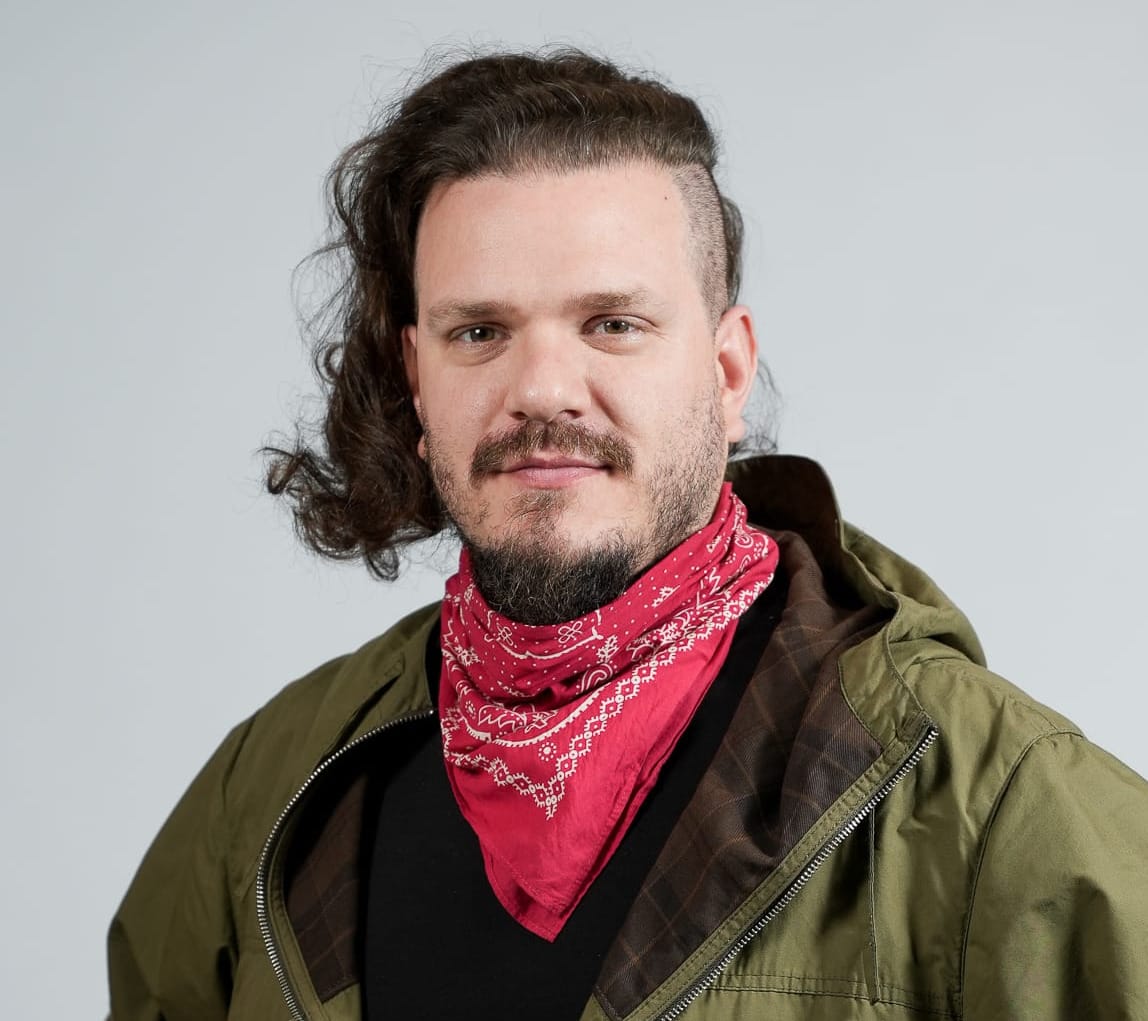
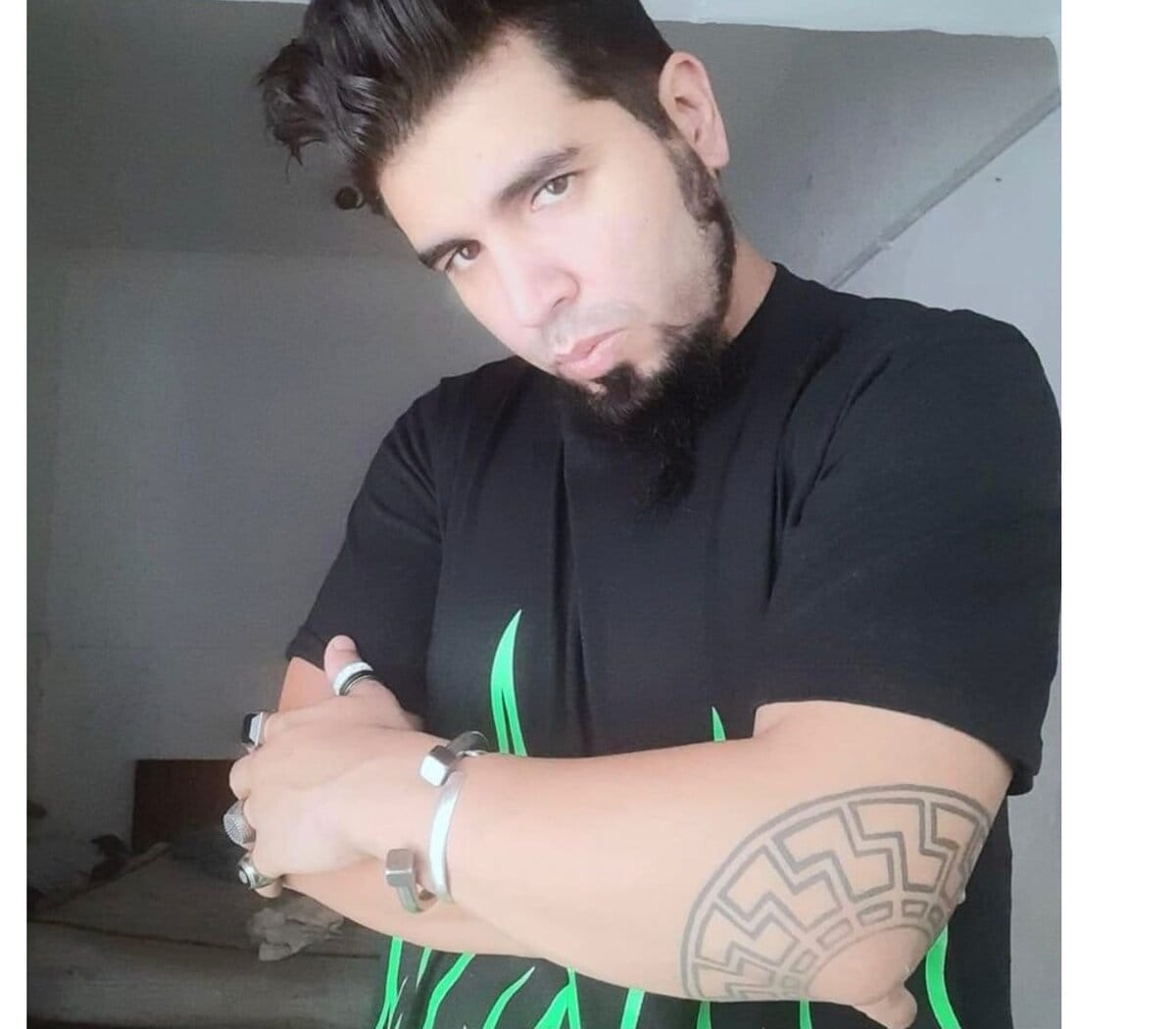
The black sun tattooed on the elbow of Fernando Andres Sabag Montiel, the failed assassin of Cristina Fernandez de Kirchner, is an SS shield that was displayed at the organization's central headquarters. It is also a crypto-Nazi symbol widely used by users aligned with that ideology in the imageboard and chan culture (4chan, 8kun). Particularly in the /pol subforum. He also had an iron cross and a Viking representation of Thor's hammer, Mjolnir. And yes, as is usually the case, 97% of Viking fanatics are neo-Nazis.
I wouldn't dare say that the majority of users on those forums are Nazis. They're mostly just virgins, really, but it is a hotbed for the circulation of what Daniel Dennett calls "dangerous memes." Among them, the most dangerous current one is a fascist memeplex that involves taking action as part of a feedback loop.
That action is generally inflicting violence against someone. How does Nazi symbology play into all of this? Well, the main representatives of this fascist memetic strand, let's call it, were Brenton Tarrant, Anders Breivik, Patrick Crusius, and Payton Gendron.
All four used the same methodology: an attack, a manifesto, and memes of the neo-Nazi variety. Tarrant himself stated that "memes have done more for ethnonationalism than all manifestos combined."
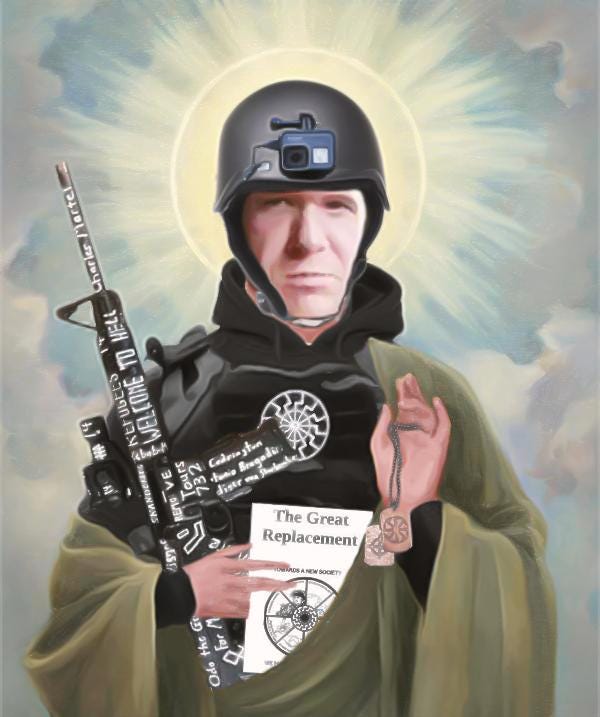
Fernando Andres Sabag Montiel had the "Black Sun" tattooed on him, one of the most widely used symbols among consumers of these memes and even those who carried out attacks. Does Sabag Montiel have a connection to all of the above? Little, or possibly none. He looks much more like a disturbed individual (a schizo in forum lingo) who was fascinated with the symbology and little else. But in his case, that was more than enough. The whole trick of this "dangerous meme" consists first of exposing, through a certain framework of meaning, the idea of a declining West and a past to be rescued. That operation can only be carried out through violence which, in turn, serves as a vector for more people to be exposed to the dangerous meme. And so it repeats, over and over again.
Sabag Montiel's target, like those of other attacks operating under this pattern, is not that of a classic Nazi (attacking the community or Jewish symbols, for example) but rather to exercise direct violence against whoever is perceived as "the evil" or those responsible for the decline. In this case, CFK. This is one of the innovations of neo-fascist discourse. For instance, Anders Breivik didn't attack Muslims but rather the entire young leadership of Norway's ruling party, who would be responsible for maintaining, in the future, the Norwegian government's open immigration policy.
That cocktail of memetic symbols, ethno-racial theories, direct action, and deteriorated mental health was possibly part of the cause of what he did. Sabag Montiel surely believed in some or several varieties of all the ethno-racial political conspiracy theories circulating on the internet. And he convinced himself that he had to act.
The action of this local schizo was nothing more and nothing less than shooting the vice president of the nation and the most important political figure of the last decade in the head. Knowingly or not, Sabag Montiel operated as a radicalized agent. What does this consist of? Let's look at what Tarrant himself says:
"I chose firearms for the effect it would have on social discourse, the extra media coverage they would provide and the effect it could have on the politics of United States and thereby the political situation of the world. With enough pressure the left wing within the United States will seek to abolish the second amendment, and the right wing of the United States will see this as an attack on their very freedom. This attempted abolishment of rights by the left will result in a dramatic polarization of the people in the United States and eventually a fracture along cultural and racial lines."
While we cannot know Sabag Montiel's motives in the attack until there is a court case and an investigation, we can perceive the effects. The intense polarization in the public sphere that will arise from the failed attempt is part of the intended effect. Any attempt to "ban hate speech" will only worsen the problem. Polarization is also part of the reproduction cycle of this memetic complex (memeplex).
This whole memetic brew has more than one ramification. On one hand, we can see the variety of images that exist under the label "fashwave" which is an amalgam of fascist symbology and vaporwave aesthetics. The goal of fashwave, quite successfully, was precisely to use another memeplex like Vaporwave as a vector for its own agenda. One memetic complex added to another memetic complex.
But that's not all. The idea of provoking an imminent race war to halt the decline of the West is always present, under a rudimentary and loosely adapted popularization of "accelerationism." Similar ideas also circulated a few years ago under the name "electric boogaloo." Here we see how the fascist meme continues to use other memes as vectors for spreading.
To this memetic stew in Argentina we need to add other elements such as anti-Peronism and its more extreme versions, which since time immemorial have dreamed of the physical annihilation of Peronism, a terrain that various dictatorships also ventured into. From the Revolucion Libertadora in 1955 to the last civic-military dictatorship of 1976.
This current fascism has populist characteristics in the sense that several of its ideas operate in chains of equivalence, so within the same universe of meaning, at least in Argentina, we can find concerns ranging from restrictions on buying dollars at the same level as racist slogans and discourses of total annihilation of the enemy under the excuse of supposed "freedom." Or even a revitalization of traditional Catholicism as a response to the perceived current decline.
Due to the capillary effect of the internet, it was inevitable that this type of ideas would make inroads in Argentina. If bagels, brunches, latte macchiatos, streaming shows, cancel culture, and political correctness all arrived here, why wouldn't postmodern memetic political violence arrive too?
Psyops and the glowing problem
The term "psy op" refers to the well-known psychological warfare operations. These are, as their name indicates, a type of special operation whose aim is not strictly military but to influence the minds of a given population. Like marketing with military objectives. Well, basically marketing.
The term takes on new dimensions with the existence of social media and the internet, and the ability of world powers to carry out these types of operations on a global level.
It's no coincidence that these attacks and ideas spread around the world with considerable similarity. At the very least, it's suspicious. Faced with this, we can take two or three positions. The first, which is the "conspiracy" one, holds that all of this is part of a plan by the FBI, CIA, or NSA to change the course of Western political narrative.
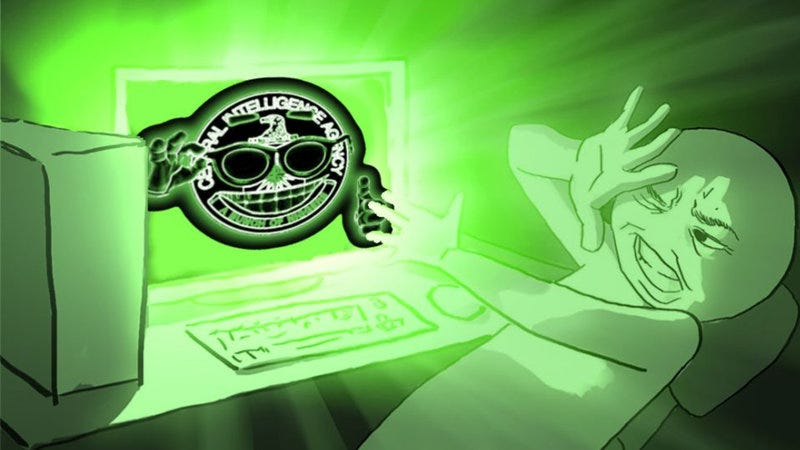
Through these "attacks," the population would be more willing to give up individual freedoms and civil rights in exchange for security. The updated version of "9/11 was an inside job." It's also true that 4chan and even Twitter are heavily monitored, and that many of the attackers had profiles created in FBI offices. Either the FBI lets the shooters act or it directly incites them. That's why many forum users refer to these as "glowing ones", slang for possible "false flags."
On the local level, this hypothesis would have to hold that this attack was effectively a setup by Kirchnerism itself to have an excuse and a scapegoat (the libertarians, the right) and install an authoritarian government. It's very likely that this narrative will be adopted by the libertarians themselves and other right-wing dissidents.
The other point of view is that this phenomenon is completely spontaneous, not orchestrated, and that it is a symptom of a general social malaise, a strong political radicalization as a side effect of the neoliberal and postmodern stage we are immersed in. In other words, that the radicalization of the fascist right worldwide is a product of the "structure."
Finally, we can think of a sort of third position. That is, that these attacks are indeed products of a global rise of fascism resulting from the era we live in, but that there is also fueling and exploitation of these cases for political purposes by both governmental and para-governmental organizations. The fact that not everything is part of a conspiracy theory doesn't mean that a) there are no conspiracies and b) there are no orchestrated attacks on public opinion, both in our territory and globally, to install agendas and narratives.
Conclusions
In any case, all this craziness that just a few years ago seemed absurd and distant is now among us and has manifested in the worst possible way. That's precisely why action must be taken, and it cannot be superstructural measures like "banning hate speech," which is possibly the worst alternative available. The main concern is that this episode of violence becomes a model for similar episodes.
Following the meme metaphor, what is needed is to create antibodies against this family of dangerous memes. That is, to provide political/cognitive tools to each person to dismantle this logic. Yes, it is necessary to fight the memetic battle, on all fronts.