How to Farm Gold and Turn It Into Gems in MTG Arena
Four wins a day, one Quick Draft every few days, and patience: the low-stress path to drafting regularly without spending cash

31 de dic. de 2025 — Luis Paz
Many concepts from the gamer lexicon have started to circulate widely outside video games. The most recent –and the one with the broadest reach– is NPC (short for non-player character), used to describe all those inconsequential people we bump into every day who don't really play a "player" role in our lives: they're not in our party, but they're not opps either. And lately I've read and heard all kinds of uses of carrying and farming –a classic now amplified by the leitmotif of "farming aura".
What Is Farming?
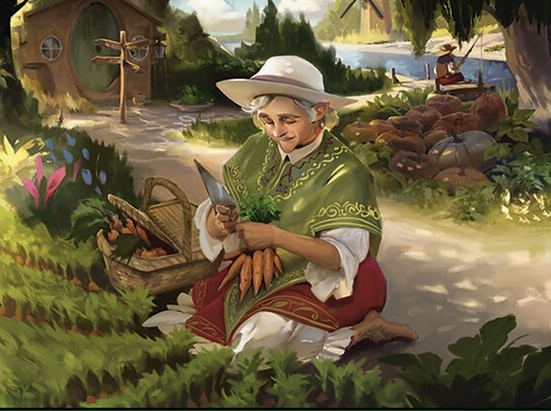
Farming is deliberately repeating –on purpose– an action or routine to obtain resources: coins, items, or XP. It's a metaphor borrowed from agriculture: the idea that consistent, repeatable work (weeding, watering) is what produces a harvest. In games, farming is about repetition, loop management, and –above all–direction. It's not just willpower; it's effort measured by return on investment.
For example, in competitive games, completing a mission or a renewable daily challenge usually takes less time and yields more gold (or whatever the main currency is) than you'd earn by spending the same time grinding ladder matches. But you only get one daily quest per day. That limitation creates loops: do the quests to earn gold, then spend that gold on event entries that offer better prizes. The farmer prioritizes efficiency and consistency in what's quantifiable: how much gold do I earn per hour doing this?
To farm a game effectively, you need repeatable sources of resources. That can mean enemies that respawn in a specific area and grant a lot of XP with low risk, or daily/weekly challenges that you can complete again and again. Farming also only makes sense if there's something useful to spend those resources on: you need sinks that let you convert your materials into benefits (upgrades, packs, cosmetics, access to better events, and so on).
The first step is the same as in any process or project: define the objective. What, exactly, are you trying to achieve? The answer depends on multiple factors, not all of them under your control. In my case, I'm a former paper Magic: The Gathering player (stores, tournaments, the whole thing) and a regular MTG Arena user since the 2018 closed beta. My goal is simple: play Arena as many times as I can, ideally two drafts per week (though one every 4-5 days is good enough). For that, I need to farm gold –a lot of gold.
Magic: The Gathering Arena
Magic: The Gathering Arena –MTG Arena, or simply Arena– is one of the ways to play the best TCG of all time. It lets you play classic formats (Standard, Draft, Sealed) as well as formats that mirror paper Magic (Brawl as a Commander-inspired mode; Explorer as a Pioneer analogue; Timeless as a high-power eternal-style sandbox) and Arena-first formats (Historic, Alchemy, Jump In).
Beyond ranked ladders and events –both of which can pay out gold and packs (and sometimes gems)– Arena includes other incentives to play (read: places where you can farm). Your main recurring resource sources are: challenges or missions; daily and weekly victories; and the progress of the Mastery of each new collection. In addition to this, there are now also achievements that give extra XP. In all these ways, the game hands out gold and XP, but it's notoriously stingy with gems.
That's why we're going to farm gold with drafts in mind. Why drafts? Lots of reasons: the draft itself is a compact chain of challenges (pick cards, build a deck, play a run), and it's my favorite format because it keeps the game fresh –easy to understand at a basic level, brutally hard to master. But the key point is economic: Draft is the main way to convert Arena's "funny-money" currency (gold) into a premium currency (gems).
A draft run doesn't take forever. In a best-case scenario it's roughly a couple of hours total between drafting, deckbuilding, and matches. Depending on your results, you'll play anywhere from 3 matches (0–3) up to 9 matches (7–2 / 6–3) in the formats I usually play: Quick Draft and Premier Draft. Quick Draft costs 5,000 gold or 750 gems. Premier Draft costs 10,000 gold or 1,500 gems. That sets the baseline for how much gold we need to generate. We'll get to rewards (the output side of the loop) in a moment.
How to Farm Gold in MTG Arena
Let's map out the gold sources in Arena, plus the constraints that matter for farming.
Daily Win Rewards
By winning games, Arena pays out up to 750 gold per day through daily win rewards. The important part is that roughly three quarters of that gold is front-loaded: the first four wins award 550 gold total (250 for win #1, then 100 each for wins #2–#4). After that, the remaining gold is spread across later wins and mixed with ICRs (individual card rewards). In other words, the best ROI is still the same: Aim for four wins per day.
How long does that take? How many games do you need? Magic, like most TCGs, has a big luck component and huge variance –plus a mana system that punishes you with mana flood (too many lands) and mana screw (not enough lands). Even top players don't maintain absurd win rates forever. For a consistent player, ~60% is a very solid win rate; ~50% is common and totally workable. So if you're hovering around 50/50, getting four wins usually means playing around eight games.
Weekly Win Rewards
Those daily wins also feed into the weekly win track. Weekly wins don't pay gold; they pay XP: 250 XP per win for the first 15 wins each week (for a maximum of 3,750 XP). That XP advances your Set Mastery level (not to be confused with your ranked ladder tiers in Constructed or Limited).

Daily Quests
Every day, Arena generates one new daily quest. These are missions like attacking with X creatures, killing X creatures, or casting X spells of certain colors. Most quests award 500 gold + 500 XP, while some award 750 gold + 500 XP.
You have three quest slots, but only one quest refreshes per day –so if you're sitting on three quests, you won't "bank" more than that. You can also re-roll one quest per day; the classic trick is to re-roll a 500-gold quest in hopes of upgrading it to a 750.
Mastery Pass and Set Mastery
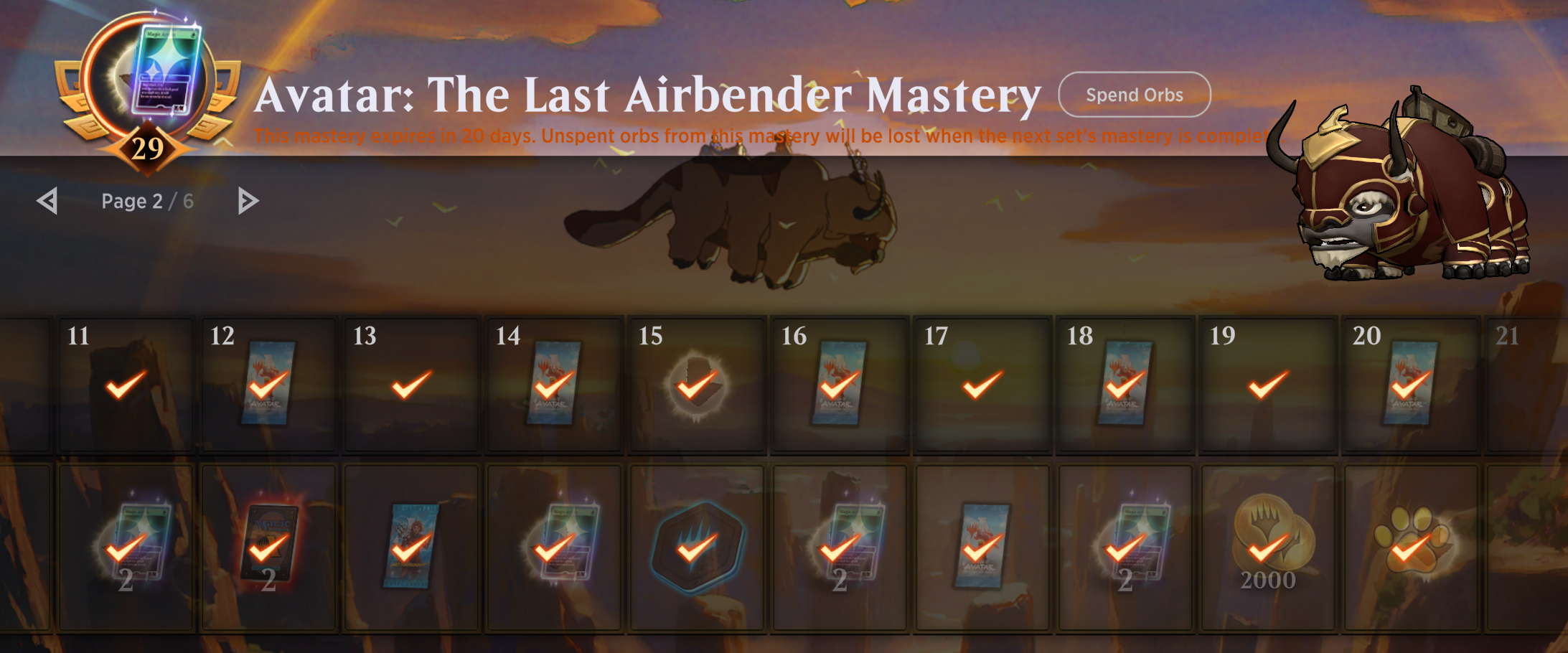
Arena runs a Set Mastery track for each release. Everyone gets the free track, which mostly pays out packs from the current set at various levels. On top of that is the paid tier: the Mastery Pass, which costs 3,400 gems. The Mastery Pass adds a lot of value—extra packs, cosmetics, mastery orbs, and (most importantly for our loop) chunks of gold and gems at specific levels, plus usually a draft token (often equivalent to a Premier/Traditional Draft entry).
Set Mastery is also Arena's main "seasonal" structure: each new set arrives with its own mastery track, cosmetics, and a draft/event ecosystem focused heavily on that release.
Ranked Season Rewards
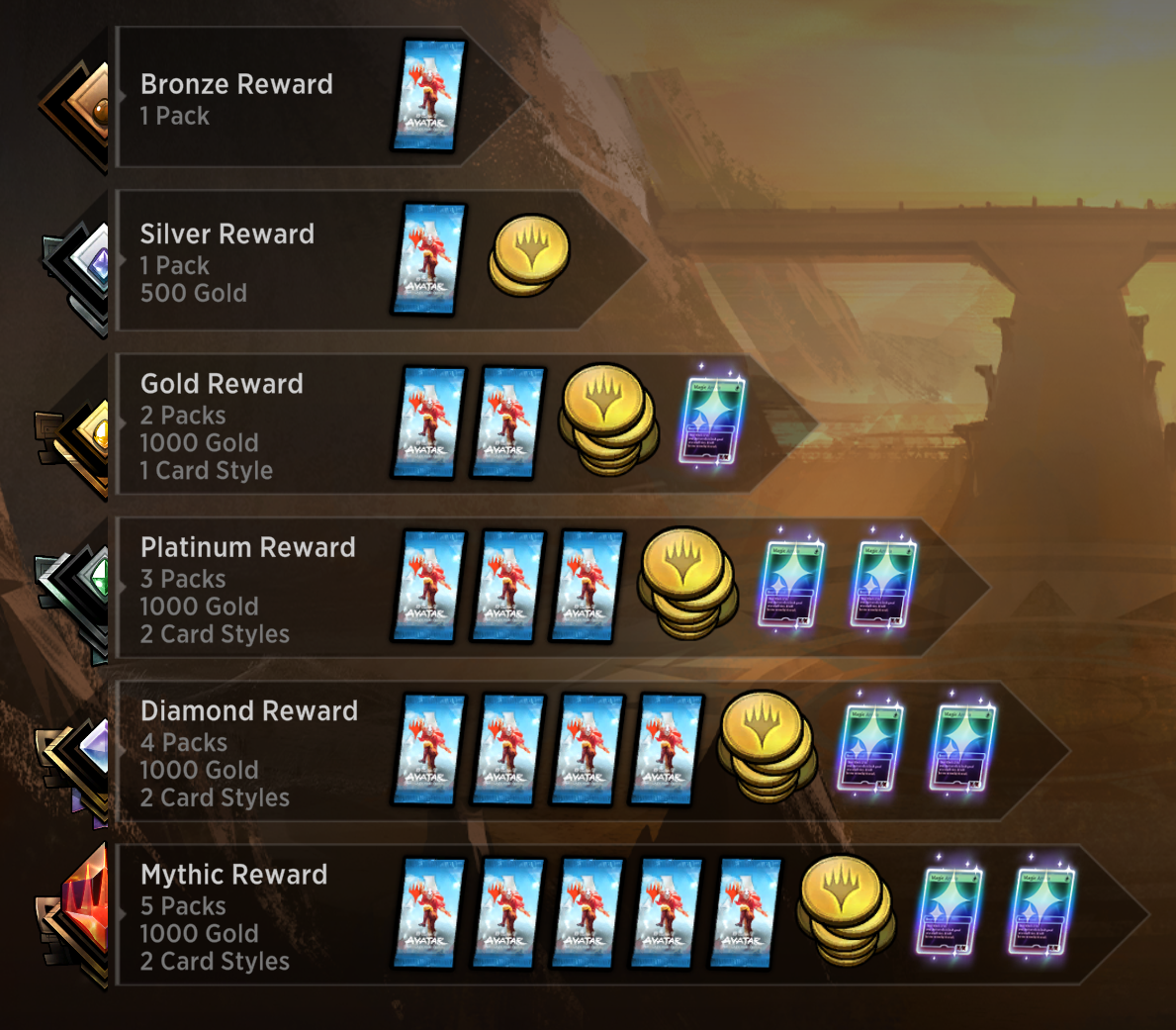
At the end of each month, Arena distributes ranked rewards for Constructed and Limited. If your routine is "farm four wins per day" and "draft regularly", it's common to land somewhere like Platinum in both queues without turning it into a second job. The exact payouts vary by tier, but the rewards generally include some mix of gold + packs from the current set.
A Farming Loop for MTG Arena
Here's the loop I use when the goal is "draft regularly without paying":
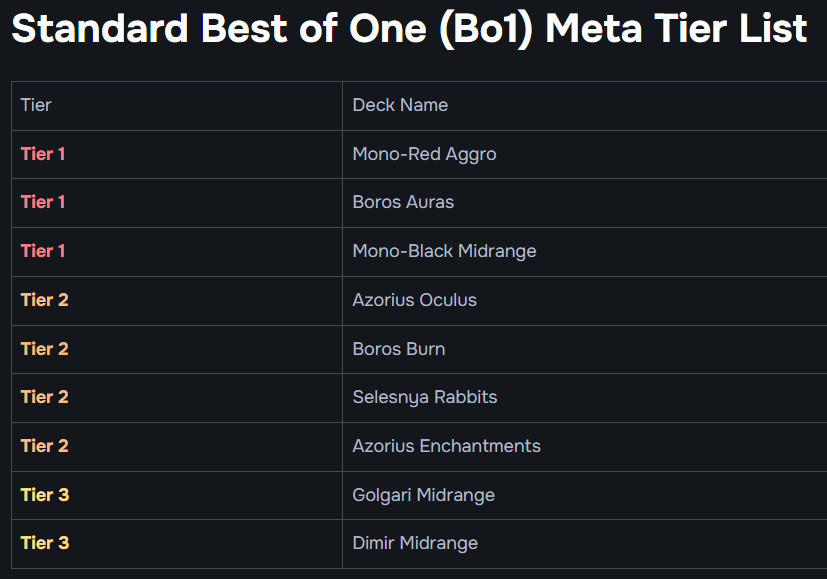
- Pick a fast Constructed deck for BO1 and use it to farm daily wins. Mono-Red Aggro is a classic because matches are quick –you win fast or lose fast, which optimizes time-to-four-wins. If you're new, start with the beginner decks and upgrade gradually. Between starter rewards and early wildcards, you can usually assemble a functional Tier 2/Tier 3 list without too much pain.
- Each day, aim for four wins. Those four wins give you 550 gold, plus some daily XP and (early in the week) significant weekly XP toward Mastery. In the process, you'll often progress a daily quest –or complete it outright. Re-roll a 500-gold quest whenever you can.
- Hit 5,000 gold, then enter a Quick Draft. With five days of "quest + four wins", reaching 5,000 gold is very realistic. Quick Draft is your workhorse because it's the cleanest entry point from gold into gems.
- Assume a baseline result and plan around it. If you're a ~50% player, a common Quick Draft finish is 3–3. That pays 300 gems + 1 pack, plus the cards you drafted. If you spike a better record, great –your timeline accelerates.
- Don't spend gems. Repeat the loop. Go back to Constructed, farm another 5,000 gold, draft again, bank the gems.
Over time, repeating this loop tends to compound in two ways:
- Your collection improves (more cards, more wildcards, more flexibility).
- Your skill improves (meta knowledge, sequencing, resource management, tempo decisions).
You can't make the "days" part faster (quests and daily win rewards have caps), but you can make the loop feel lighter by reducing the time it takes to get those four wins.
Where the Mastery Pass Fits
The big missing piece is the Mastery Pass cost: 3,400 gems. If you average ~300 gems per Quick Draft and draft about once every five days, you're looking at roughly 12 drafts (and about 60 days) to reach 3,400 gems –assuming you don't spend any. That lines up decently with the length of a mastery season.
The nice part is that you can buy the Mastery Pass at any point while it's active and claim rewards retroactively for the levels you've already earned. If you've leveled far enough, you'll immediately recoup a significant portion of the cost via gems, gold, and the draft token—then the loop gets even smoother.
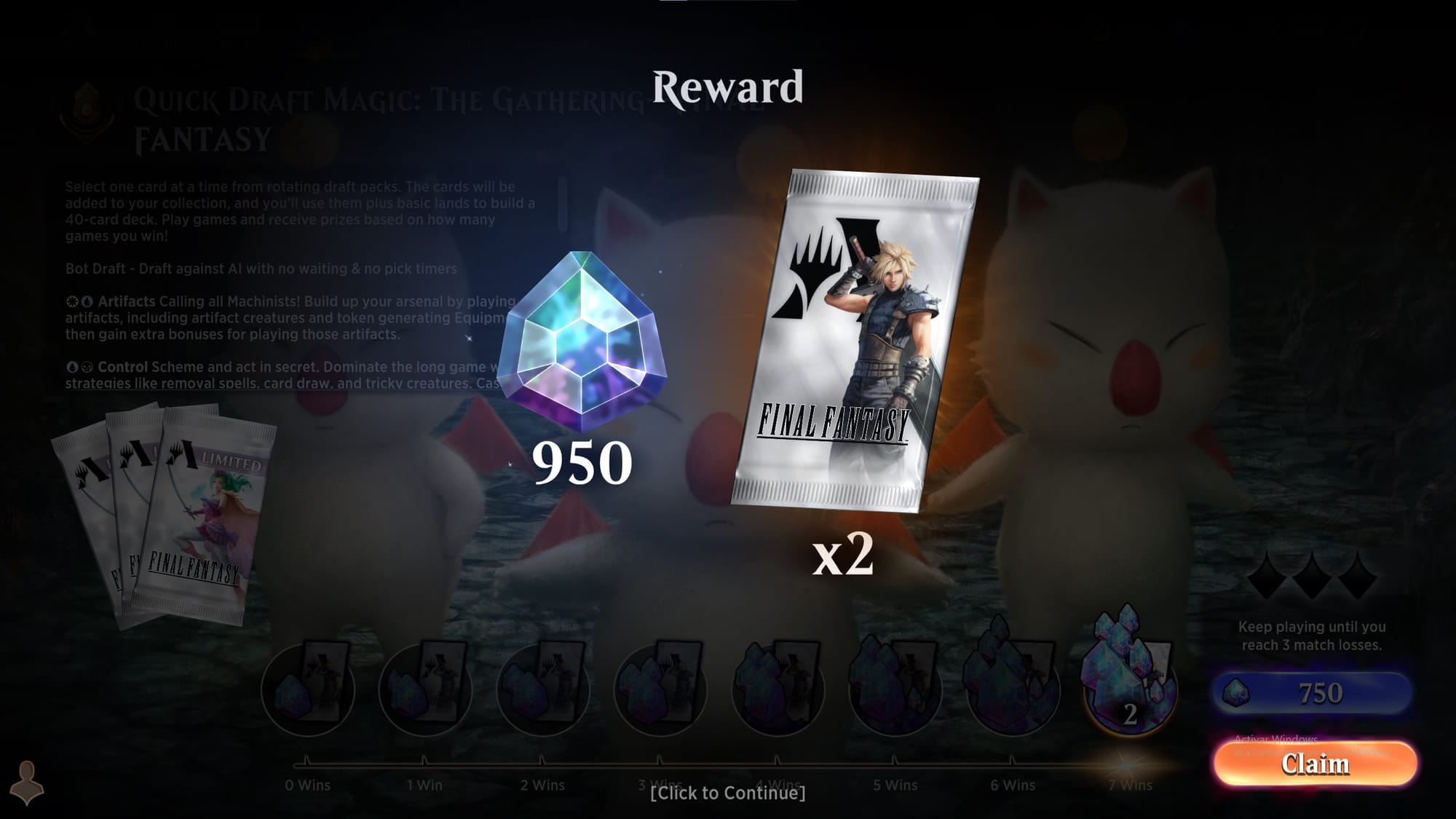
This is the basic gold-and-gems farming loop for Magic: The Gathering Arena. It's the lowest tier of survival, but it's an honest job: a draft every few days, the Mastery Pass funding itself over time, a growing collection, and gradual improvement –without stressing too hard. Just show up, make your land drops, and cast your spells.