New media and rituals for late-night leisure
10 de oct. de 2024 — Juanma La Volpe
At some point, our leisure ended up becoming an entertainment machine also worked by us, but controlled by the capitalist system in which we all swim or drown. And from the Roman "bread and circuses" to this digital on-demand era we live in, this leisure has evolved countless times, adapting to communication formats and technologies.
Starting roughly in 2004, with the birth of Facebook, technological evolution surpassed what we could handle in terms of entertainment formats. In the last 20 years, time flew by incredibly fast. So fast that we barely had time to mourn something before there was already something new to learn and get used to: social media, YouTube, on-demand content, podcasts, streams...
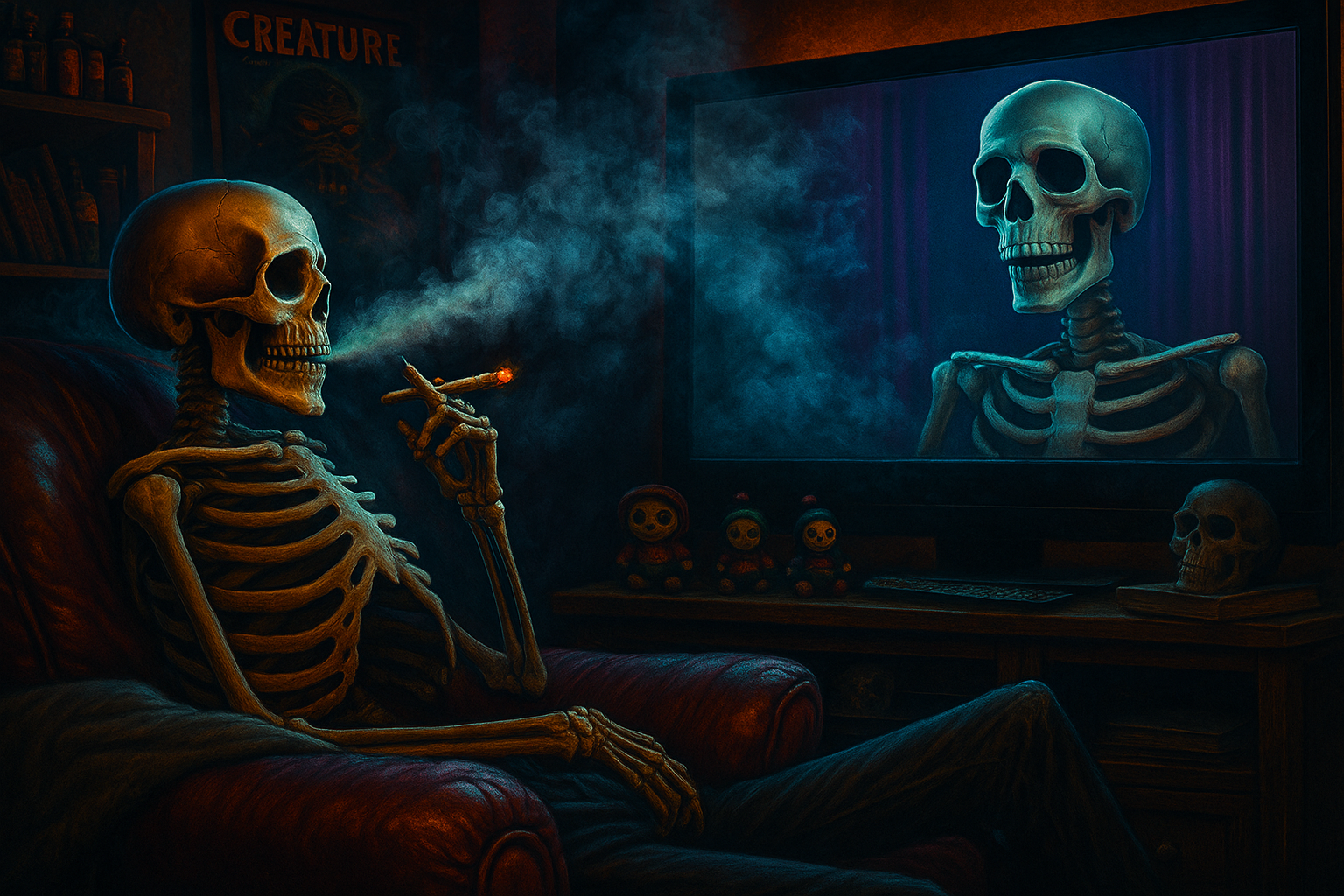
I light up a joint.
Books still exist on paper; radio and TV are still alive. Everything coexists at the same time, while all formats die precisely because time doesn't stop. And this leads us to the limbo we're in now, somewhat reminiscent of Gramsci's quote: "The old world is dying. The new world struggles to be born. And in the chiaroscuro, monsters emerge."
There's a debate about new media versus old media that has been going on for ages, but that we can't seem to resolve. People want to center it on how information and entertainment reach us and how we consume them, but the focus keeps landing on media that are eternally dying, systems that become obsolete, and new formats that are "increasingly accessible," requiring only a phone to explore.
Only tangentially does the discussion touch on some other interesting topics like information overload, overexposure, and niche content. Television, radio, and print media are a thing of the past for some, although they haven't died and continue to coexist with what came and will come next. But they are no longer the pillars that held up the world.
I light the roach and think about yesterday.
I'm not going to get tangled up trying to decode all this -- for now -- but I'm thinking about how information reached me 20 years ago.
The rituals of the past
Late-night television, often accompanied by a joint and youth, would plunge us into strange dimensions and fantasies we didn't know existed until we stumbled upon them in the middle of the night, on some obscure channel. Suddenly, you'd end up watching an infomercial for a juice machine and cracking up.
Late-night channel surfing was religious for some, opening unusual portals: alien documentaries, erotica, a movie caught halfway through, or another episode of Space Ghost Coast to Coast. The night was the refuge of counterculture, of what was on the edge, of surrendering to the ridiculous. I-SAT, Locomotion, The Film Zone...
Radio, in turn, awaited us with radioactive broadcasts of fringe programming. On the old Rock & Pop we could listen to late-night shows like Empleado del mes, but we knew nighttime had truly arrived when we heard the voice of Alejandro Nagi, who back then was El Gordo Nagi of the nocturnal tribes.
On AM radio, Alejandro Dolina, accompanied by a keyboard player and an incredible team, would show up at midnight with a program of thoughts, of dialogues that wove together philosophy, history, humor, and the bizarre. La venganza sera terrible inspired many to create things, and it's still broadcast on radio today, though it has also adapted and now streams online.
Something that happened a lot during those late-night radio hours was stumbling upon testimonies of people talking about anything and everything, from paranormal stories to love confessions. That coexisted with the first sleepless nights chatting on Messenger or falling into the first YouTube rabbit holes.
Where am I going with all this? Am I mourning what's gone? I roll another one, light up another joint.
The new rituals of leisure
Well, man, that was the past. Now you live in a new world... on demand, unrestricted, and all you need is an internet connection. So at night, the moment when we break free from the functional, working adult self that we are, and alongside some companion of choice (a joint, a beer, chocolate), we bury our heads in some activity to relax and survive. Those old rituals no longer exist, but their successors are here, and in them we can still find plenty of magic.
Twitch and 24-hour streams on YouTube or Facebook can bring us closer to dimensions we didn't know we could cross. For instance, on Twitch there are many 24-hour channels where you can watch The Simpsons, Futurama, anime dubbed in Latin American Spanish, Dragon Ball, Dragon Ball Z or GT, and many more classics. Every now and then they get taken down, but like an act of nature they heal back. For people with anxiety, who find it hard to choose, having at hand the drug known as ALF can be a blessing before going to sleep.
Can't get more nostalgic than this, or can you?
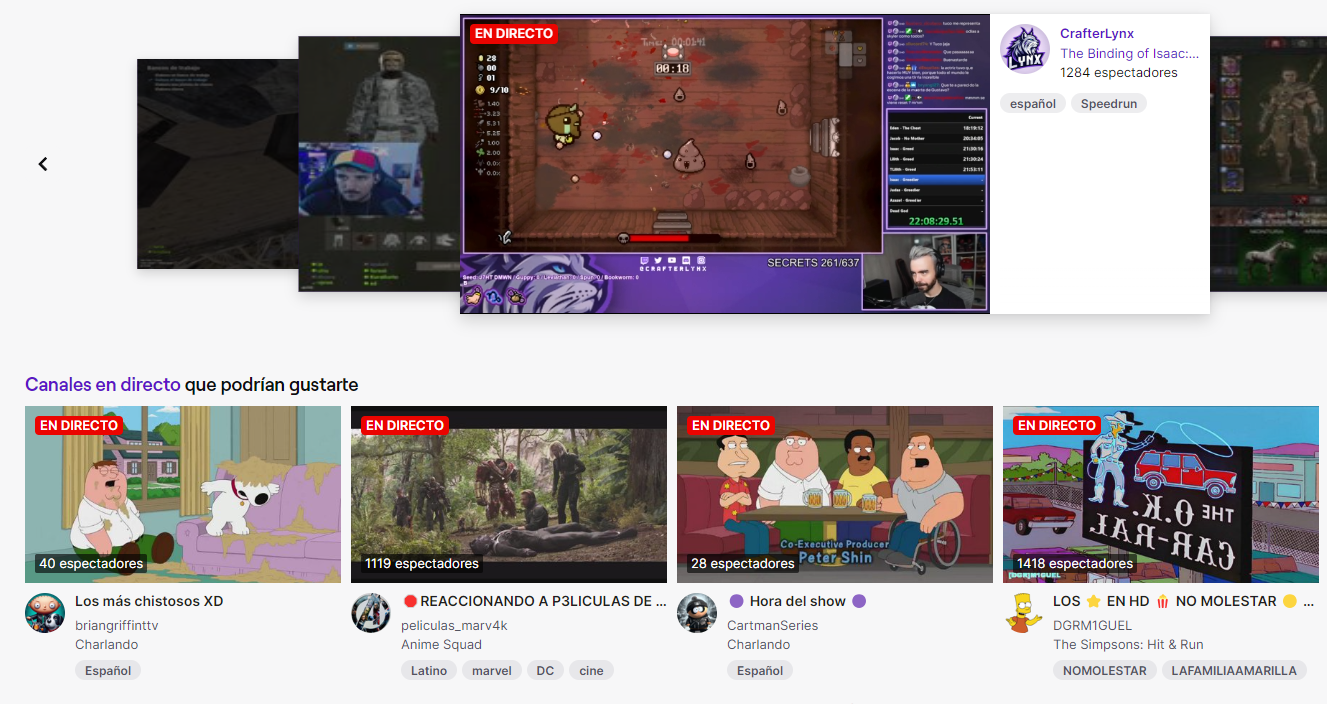
There are also pirate channels that run all day with their own programming, some of them camouflaged, like baked.live, a forum where you can create a channel to share programming. It's still very active and most channel creators are from the US, so we can see curated anime, series, and movies in English. The people who usually run these livestreams tend to be quite nerdy, so you might find Godzilla marathons, horror specials, and my favorite, pro wrestling.
On the other hand, if you're looking for a local experience, I recommend the channel Retro Magico, a site that emulates what Magic Kids was like in the '90s, with retro programming and plenty of lost media from old commercials. What I like about this channel is that on weekends they show movies in Latin American Spanish dubs (usually) and put together great marathons of classics like Mad Max.
If you have access to cable TV -- because you're still pirating it, got it in a promo deal, or someone lends you a password -- late-night programming is still a wasteland of content to discover, between the new infomercials from Leiva Joyas or the endless reality shows on Discovery Health or History Channel. The magic of an auction show or a cooking competition remains a very strong opiate.
Talking about true crime podcasts already feels old to me, but as a format it remains one of the most consumed and is now part of our daily culture. Many people devour hours-long podcasts, maybe because that format where two people generally talk about a topic you enjoy can work as the perfect ASMR to relax without clashing with anything.
Leisure is still the same, and so is the drug. The formats change, but you can still read a book on paper, just as you can read a comic in .cbr format or listen to it on YouTube. Yes, that also exists.
I put out the joint in the ashtray. It's 3:45 AM, time to sleep.