La Pampa: New Rock on the Argentine Desert Route
A viral meme said "La Pampa doesn’t exist", but Route 20's stoner and psychedelic bands like Cuatreros and Llanura Espiral are proving the opposite.

28 de ene. de 2026 — Rodrigo Apold
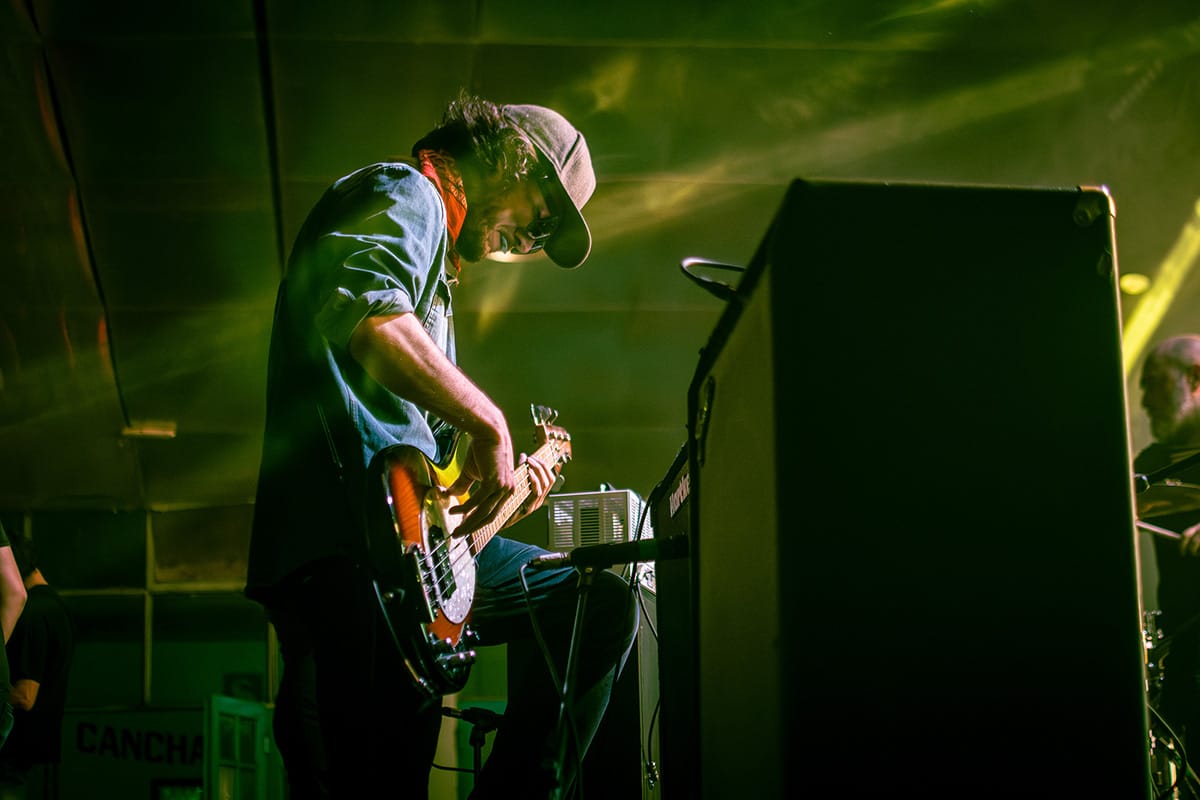
A few months before the pandemic, in mid-2019, a Twitter thread by a little-known user went viral for claiming “La Pampa doesn’t exist.” The tweet sparked dozens of replies and light features in mainstream outlets, and —somehow— turned the province into a meme. Ever since, any news involving the province tends to trigger the inevitable line: “La Pampa doesn’t exist.” That held true even during the pandemic, when for weeks we were one of the provinces with the fewest COVID-19 cases.
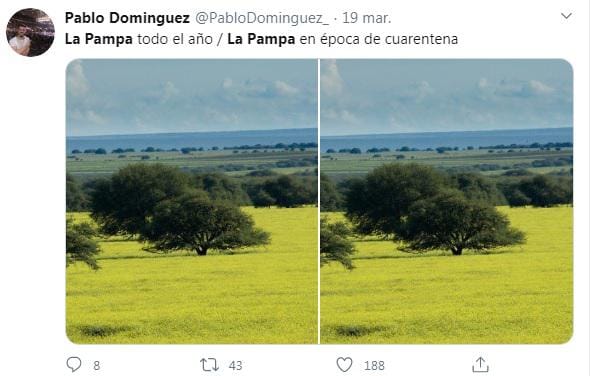
Either way, whenever a fellow Argentine takes a jab at the province’s meme-ification, I play a card that dismantles any story that reduces this place to a dot on a map: one of the country’s greatest icons chose to take refuge on a farm in La Pampa for one last shot at redemption —Diego Maradona, preparing for the 1994 World Cup in the U.S.
The epic Maradona built around the final stretch of his career —training like Balboa before facing the Soviet— is genuinely moving. That footage of Diego wringing out every drop of sweat in a bare-bones setting is beautiful. He’d wake up to a battery radio, its antenna charred; saw caldén wood after breakfast to build muscle; then jog through the scrub to end the day with asado, bread, water, and wine. Pampeanness at its purest. We celebrated that goal against Greece a little harder than most Argentines did.
But okay —the point here isn’t to mount a die-hard defense of the province from the perspective of someone born and raised on this plain. It’s to talk about something that, sooner rather than later, will claim its place in Argentina’s cultural conversation: the alternative rock scene stirring within La Pampa’s borders.
Palm Desert Meets La Pampa
“I look at my car’s temperature gauge and I’m about to head onto a desert road under relentless sun. And I think, I don’t know, maybe Scott Hill (Fu Manchu’s guitarist) has felt this exact thing at some point,” laughs Ale Ruiz, frontman of the Pampean stoner band Cuatreros, drawing a line between La Pampa’s desert and California’s.
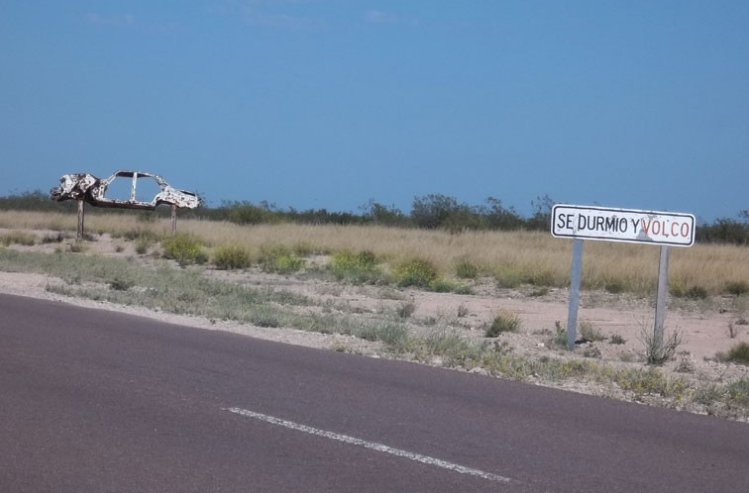
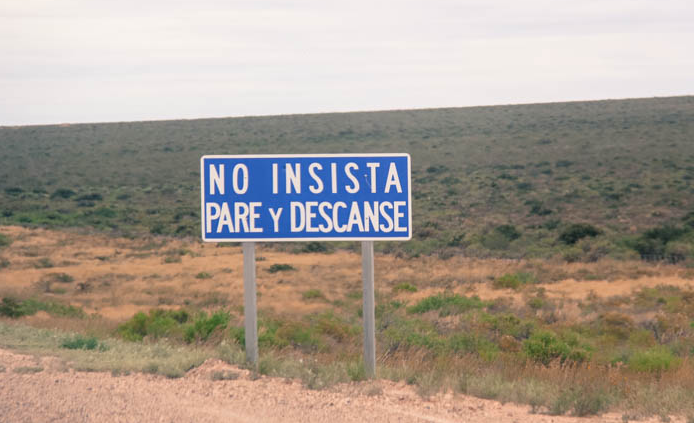
Provincial Route No. 20 runs for mile after mile across the plain, a looping landscape that can lull you into a low-grade sleep that turns deadly. It even goes by “Ruta del Desierto” (the Desert Route), where the only “distractions” —paradoxically, warnings— are car chassis mounted on columns, paired with signs that read things like “Fell asleep and rolled over” or “Pull over and rest!” Blasting “King of the Road” while you’re behind the wheel might actually save your life out there.
Even if the real connection isn’t geographic, it’s there in the influences Ale drew on to form his band —without a doubt one of La Pampa’s most compelling. With their first record about to drop, Cuatreros is helping propel the scene in General Pico, the province’s second-largest city.
Ruiz has been playing festivals, bars, and small venues since he was a kid. His teenage project was Sin Límites, a band that grabbed everything it could from Green Day, Blink-182, and NOFX. But something hit him hard in the new music that reached him in the mid-2000s —still from California, though this time from the Coachella Valley.
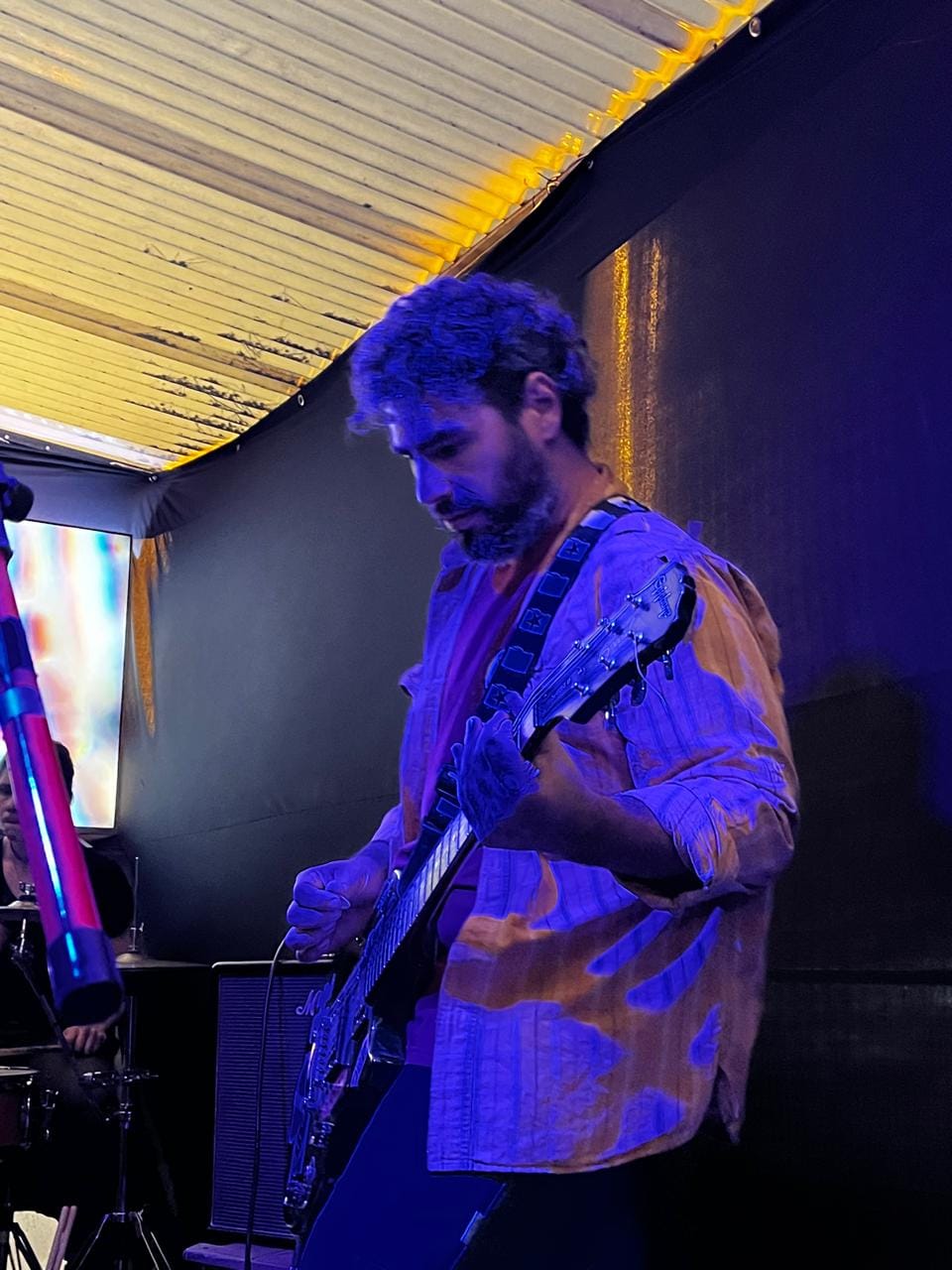
“Somehow I found those bands —probably through Queens of the Stone Age and those mind-blowing videos. I kept listening more and more, and even back then I wrote a few songs that are still in Cuatreros’ set today. Years later, a friend —Julián Chilote— and I decided to start the band. That was 2020.”
A few months in, the project was put on hold after Ale was diagnosed with an illness. “It was a bummer. I got cancer and couldn’t rehearse for about four months. Then Julián moved to Australia and we had to rebuild everything from scratch. But we made it work.”
From their earliest shows, Cuatreros showed real chops onstage. The sheer heft of a full-on stoner band hit hard and jolted the local circuit awake. Even the name is a statement —cuatreros is the term for people who steal cattle or horses— and the band leans into the rural world around them.
“We feel the need to speak about what’s around us —our history, our antiheroes. We’ve got Bairoletto here, our own Jesse James,” Ale says, invoking Juan Bautista Bairoletto, the famed rural bandit who’s long fed La Pampa’s songs and poetry.

In General Pico, there was already fertile ground for bands working in alternative territory to draw a solid turnout today. For several years, the Pampanoise festival —Matías Ombroni’s project— served as a platform for these groups, and even released many of them through Pampanoise Records.
Cuatreros’ debut album is imminent. Of the original lineup, only Ale and bassist Pablo Giménez remain, but Ruiz says the band “didn’t lose its essence” with the players who joined for the recording. Plenty of people already know what they can do live. Now the studio has to live up to the expectations.
Psychedelia on the Plain
Leandro Roldán is a central figure in the capital’s scene. The musician and graphic designer returned to Santa Rosa in 2013 after graduating in La Plata, and since then he hasn’t stopped launching projects —while also raising the bar for the scene’s visual language with flyers and video flyers that gave identity to much of the alternative movement.
Today, at 41, he leads Llanura Espiral, a psychedelic band that —on paper— flirts with songcraft, but live veers toward noise-leaning experimentation.
“It started as a solo project in 2023. I wanted to synthesize everything I’d been exploring, and it’s also a sonic and aesthetic continuation of Jade, a previous band I was in. I felt the need to capture something immediately, so I recorded all the instruments for Especial Espiral Espacial, a three-track EP. After that, I felt the need to play live —and to do it as a band. Luckily I found musicians who clicked and brought their strengths,” he tells me.
Llanura Espiral isn’t Roldán’s only active project. Since 2019 he’s played bass in Indio Brujo, which he shares with his brother Joaquín. A well-established band —with six studio releases and dozens of shows— Indio Brujo shares sonic DNA with Llanura Espiral and is another group shaping La Pampa’s current scene.

As Pampanoise was in General Pico, in Santa Rosa the emergence of a key promoter helped set the organizational and aesthetic foundations for the last decade: Rock&Arte, founded by Mauricio Díaz and Oscar Alcaraz in 2015. They’ve produced festivals that have hosted countless bands —many sharing bills with national underground acts. Roldán first got involved as a designer; today he works side by side with Díaz.
“Over time, Rock&Arte became a guarantee of quality and a place to grow —personally and for the local scene,” Roldán says. Many of the producer’s festival posters carry the stamp of Llanura Espiral’s leader.
“I get that psychedelia —in music and in design— is my thing. Seeing work by artists who collaborated with bands like The Arcs, King Buffalo, or All Them Witches blew my mind, and I tried to steer the bulk of my work in that direction.”
Reclaiming Identity —and Creativity
For Roldán, learning to appreciate geography is tied directly to maturity, the knowledge accumulated over the years, and the act of coming back.
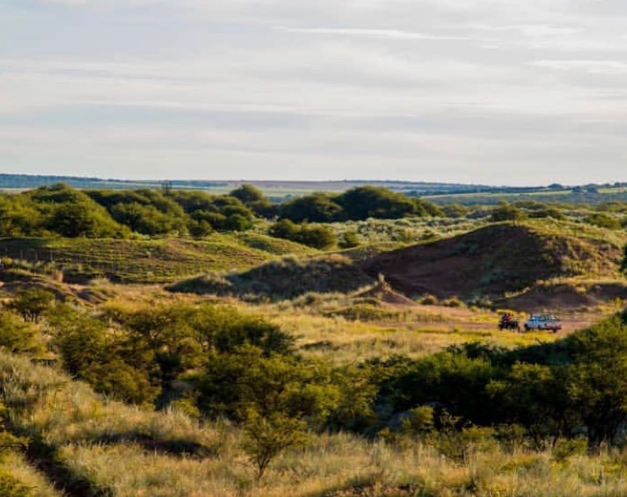
“Before I left the province, I didn’t value what was ours —the landscape, the stillness, the plain, the sky untouched by buildings. Over time I began to see that as a necessary experience —and for me, it’s also deeply creative,” he says, pointing to the mystique of the Toay dunes, just a few kilometers from Santa Rosa, as a refuge for summer nights: jam sessions and joints under the open sky.
What’s striking about the scene right now is that the bands pushing the boldest ideas are made up of artists rooted in the province. In Santa Rosa, the return of Indio Mike and the recent formation of Lonjazo add to an auspicious moment —a creative continuity born locally, but ready to break onto stages beyond La Pampa’s alternative circuit.