Sonorous Desert: DIY Hospitality, Noise, and Small Acts of Rebellion

15 de nov. de 2025 — Clari Ruocco
Perhaps this journey began last year, when I read Sonorous Desert: What Deep Listening Taught Early Christian Monks –and What It Can Teach Us, which links academic inquiry with "in-the-field" recording experiences by Professor Kim Haines-Eitzen, a specialist in Mediterranean religions of Late Antiquity with an emphasis on early Christianity.
It's a beautiful essay that moves between historical detail and reflections on the paradoxical link between the early Christian monks' quest –for inner stillness and silence; solitude– and a specific physical setting: the desert, so often defined or depicted by its supposed absences. To begin with, there's no water. Then no civilization, no people, no animals… no sounds.
In this sense, Haines-Eitzen's accounts show how various monks folded themselves into the desert's natural history and found in it noises that shaped their spiritual experience –sounds that later became productive metaphors within Christianity. At the same time, those monks also altered the soundscape. Consider, for instance, Saint Anthony the Great (AD 251–356): his struggles against the devil rendered as the hiss of a serpent rising from nowhere among the dunes. Or the resonance of a semantron (simandro), struck in an ever-quickening loop by a brother calling the community to gather.
In September, Valerio and Emiliano reached out to the Sindicato del Drone –a sound project I'm part of– with an invitation to join an experimental music festival in the Cuyo desert. From my classic porteña perch, with a barely acknowledged Unitario-style centralist outlook, I remembered reading that the desert sounded like something. But what, exactly?

Experimental
In 2020, the young Italian Valerio Mastio, a food engineer from Perugia, landed at INTA San Juan's Agricultural Experimental Station to pursue a PhD in agricultural sciences, specializing in olive growing. "I always wanted to work with olive oil. I've been fascinated since my university days –where I'm from, that's what we work on", he told me.
I can vouch for it. Two years ago –invited to an Italian music festival (organized, by pure chance, by some of his friends)– I had the luxury of winding along dusty, narrow roads in Umbria's Valle Spoletana, on slopes packed with low, gnarled olive trees. As for San Juan's groves, I couldn't have said much until last Saturday, when I saw them for the first time. They're beautiful.
In Italy, during an internship, Valerio had met a group of Argentine researchers who encouraged him to obtain a doctorate here. And so, without speaking Spanish or knowing the country, he came to San Juan to systematize his passion for the possibilities of the olive tree with a Cuyo perspective. Today he is almost ready to defend his thesis.
In parallel, he started indulging another passion: organizing shows and putting out records –"a little more experimental: noise, ambient, field recordings, that kind of geeky stuff". With that exploratory spirit he founded the 1Up label. But between the PhD grind and the distance, promoting Italian projects from San Juan was tough.
In 2022, a DJ friend invited him to a vinyl fair at a hair salon, where he met Duilio Tapia of the Centro de Experimentación Sonora (CES). With that encounter, Valerio's second passion found a fruitful channel in the Cuyo desert. In August 2024, 1Up released Anverso/Reverso, a cassette by CES –featuring, among others, Emiliano de la Fuente– kicking off a feedback loop of one event after another. Birds of a feather, super-charged by the desert's international hype.
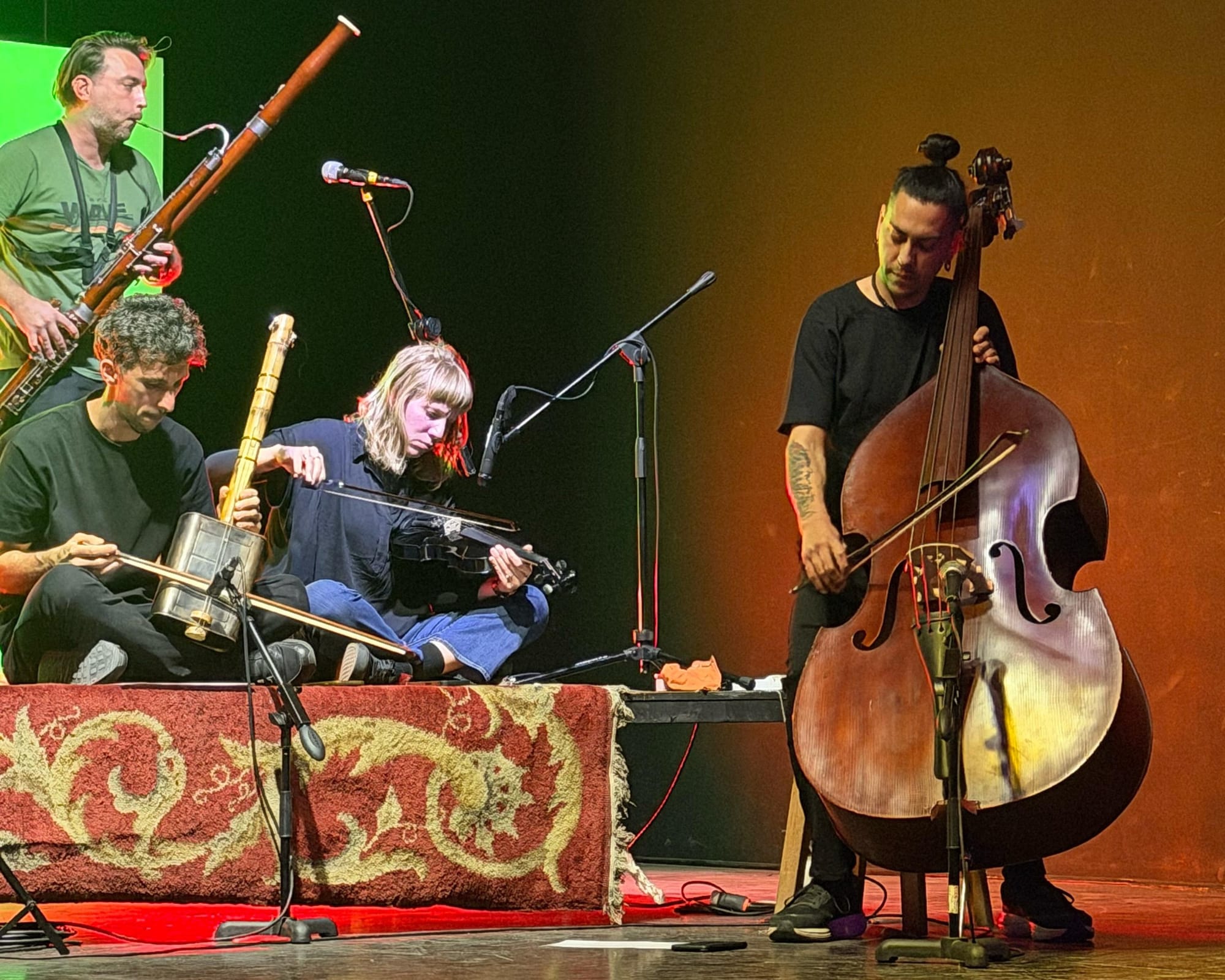
"Last August this Italian character showed up, speaking strangely, and pitched a cassette for his label. We were thrilled –no one had ever approached us just to spread our music… or non-music, I'm not sure what to call it", Emi told me. Alongside him and Duilio, the lineup includes Jáchal, Fernando Torres, Nicolás Marianetti, Laura Villagra, and others who come and go.
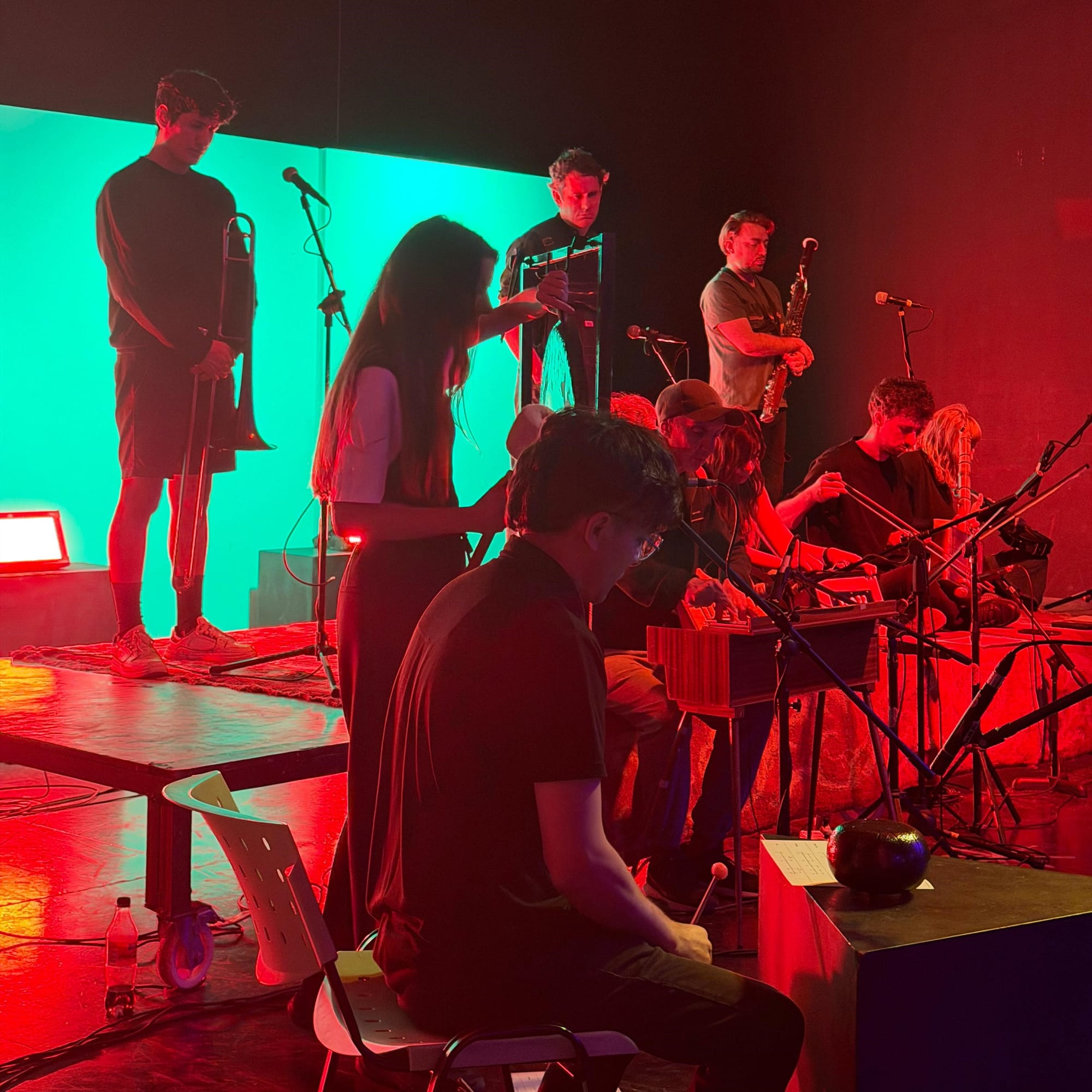
As for CES, he defines it as "a group that seeks to pose questions about sound; to create ways of dialoguing with it and to foster a learning attitude alongside creation and performance –in short, a space for sonic experimentation, research, and exploration."
They first met at home; then at San Juan's Museum of Urban History; and for the past two years, on Mondays, in a room at the Conte Grand Cultural Center –a well-kept municipal space where local youth gather around the arts. There, over the last eighteen months, they've been performing a live score to Dziga Vertov's 1929 black-and-white film Man with a Movie Camera.
After CES crossed paths with 1Up, this winter Emiliano and Valerio launched Geografía del Ruido, a three-edition series bringing "all those beautiful things we love" to San Juan from around the country –Córdoba and Mendoza being the easiest hubs. Acts included ESE, Jonathan Boffino, Mila Von Chobiak, Ensamble Sismo, and the cream of Córdoba label Sonido Atmosférico (Nonoise79, Rdead, Gaffacan, ElHalliObeid); from Rosario: H.A.P., Helecho Experimentar, and Dôrotti.
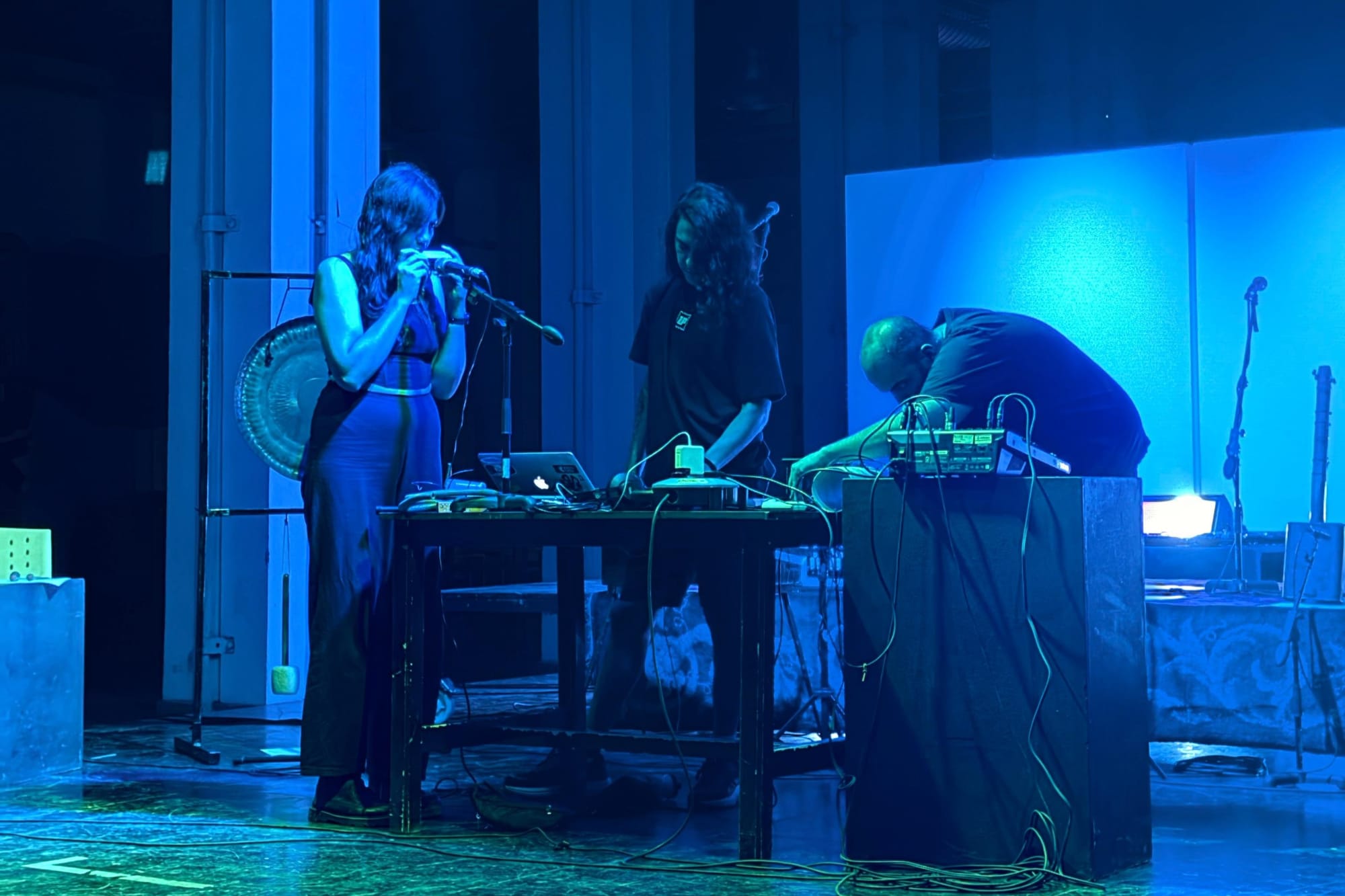
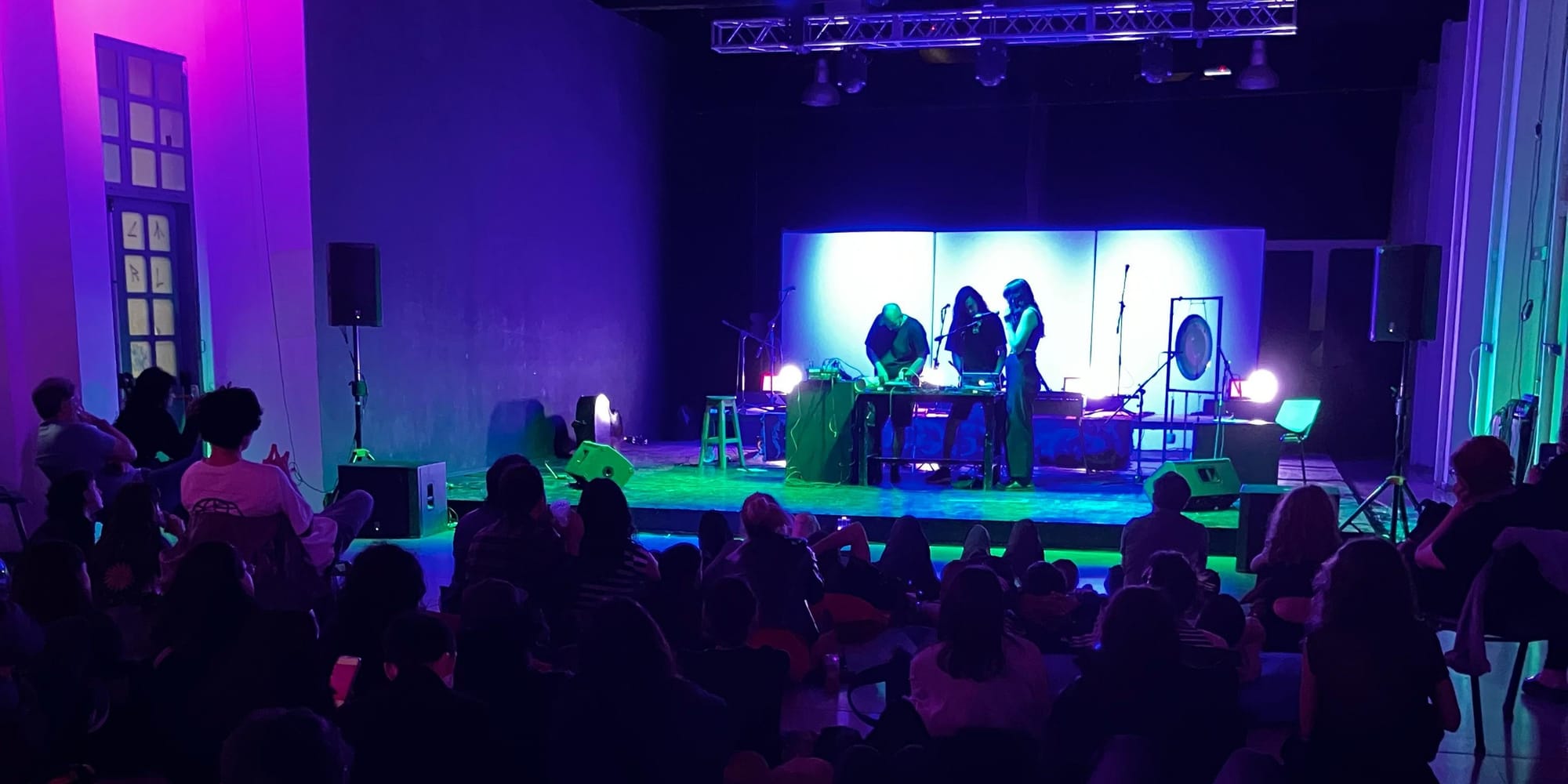
To cap the year, they staged the hola noise! festival on Friday the 7th at Conte Grand. Through that bill came the unionized drone I belong to (CABA) and Kowalski's modular synths (Córdoba). Also showing up was Inti Pujol, who caught a long-haul bus from San Rafael, Mendoza, and stayed through Saturday, hanging out with the BA contingent.
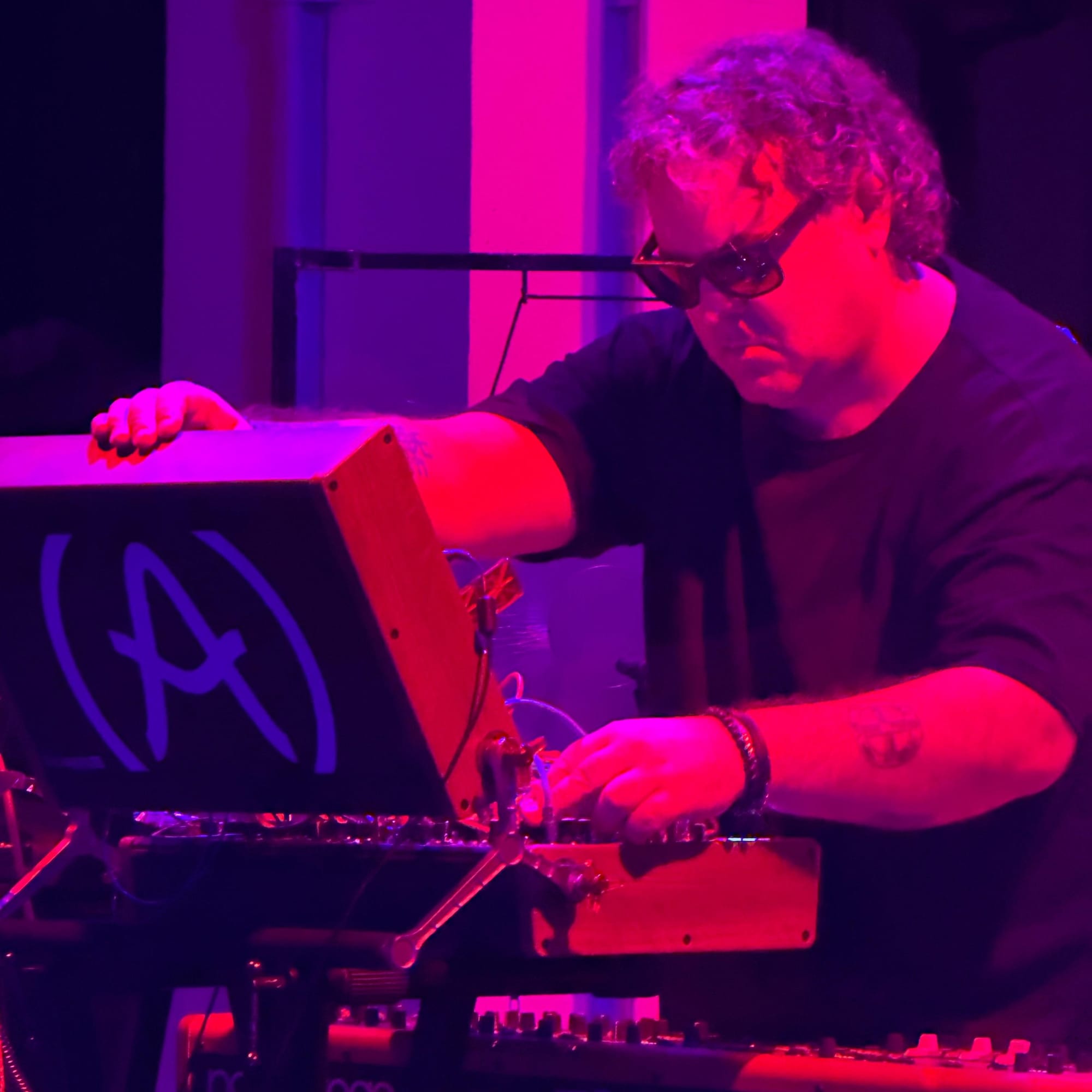
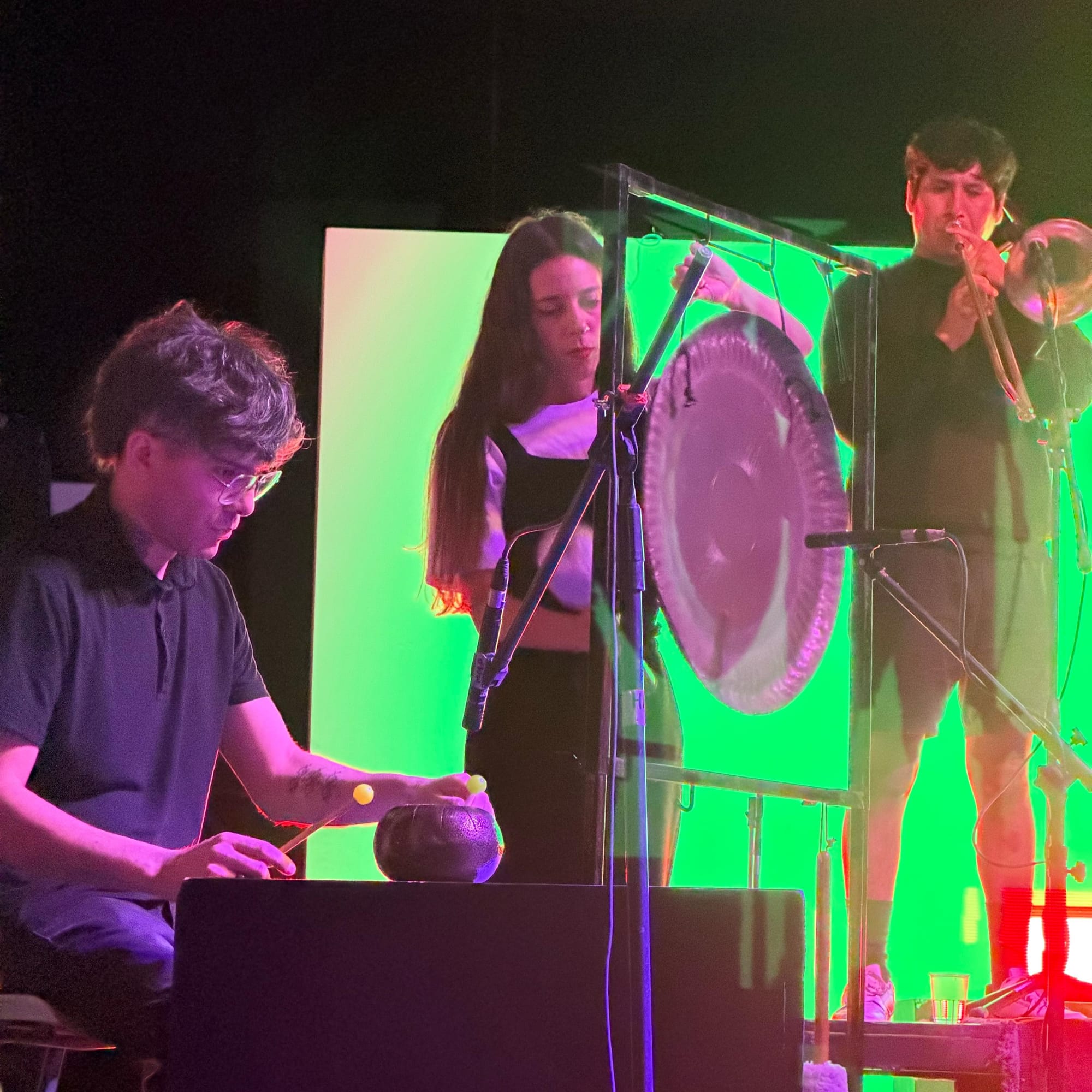
Played Together with Wire
Moving projects across the map to play festivals like this demands a choreography of DIY hospitality—where to sleep, how to get around, what to eat—done on a shoestring. Most of the time, hola noise! and Geografía del Ruido survive—whether in San Juan, San Rafael, or CABA—thanks to the very people who play them. There are virtually no “sponsors” beyond our own homes and pockets. Another dance emerges between the traveling project and the hosting crew, turning into reciprocity: “Let us know when you come to Buenos Aires so we can set up some dates there.” It’s how we look after each other and incubate projects few inside capital-A Art’s legitimizing circuits have the time, desire—or resources—to nurture.
Emi isn’t worried about the scarcity. Beyond his academic side as a double-bass player, he leans into another current tied to the music he pushes: “I’ve got this other side that comes from punk—it’s not just musical, it’s an attitude: DIY. Politically, too. I see art and music as forms of expression that should be combative, in some way, against what’s wrong—not just complaint, but activation. Noise, sound art, and free improvisation are the new punk: with nothing—with a piece of wire, with an instrument you built—you can make music. And with whatever’s at hand you can create sounds that pierce someone and produce something you never imagined.”
Along the same countercultural line, within the Drone Syndicate that gathers us, my friend Flora Dido proposes: “In the age of instant everything, nothing is more punk—or more revolutionary—than holding the same note for forty minutes.”
And so I circle back to Haines-Eitzen’s sonorous deserts of early Christianity—the austerity of the semantron. Hand in hand with Flora and Emi, with Valerio’s geeky bridge of olive groves, the tonal figure of the Cuyo accent, and Inti’s questions for the capital-A Art circuit, I dare to rework Pizarnik: perhaps, in these days of crushing hyper-stimuli, rebellion is getting together to hammer a plank of wood until our cochleae are dust.
It sounds like a great plan.