Northrop Grumman B-2 Spirit Bomber

23 de jun. de 2025 — Juan Ruocco 🧙♂️
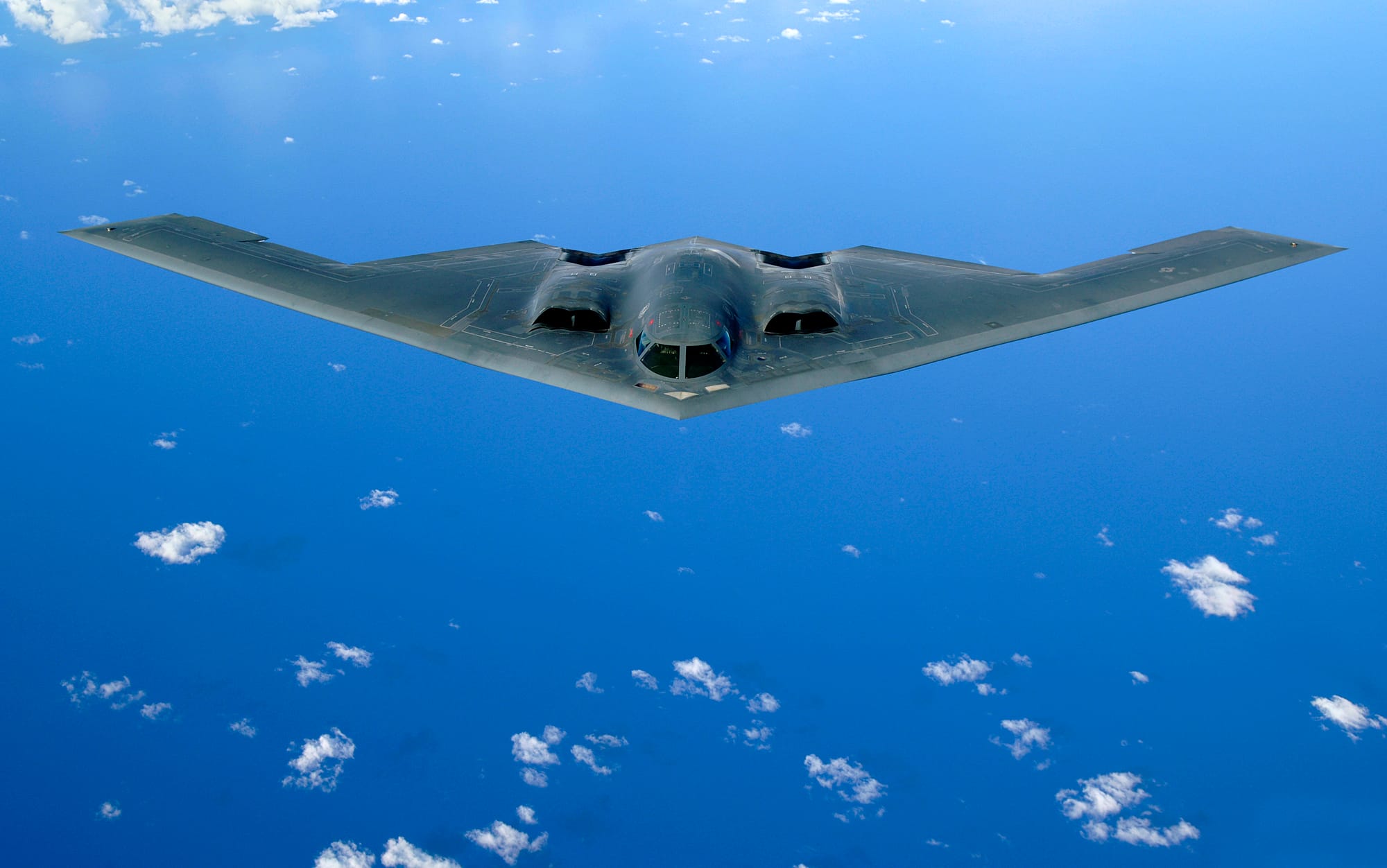
The B-2 Spirit, a flying wing strategic bomber developed by Northrop Grumman, stands as one of the most ambitious and secretive projects of the American military-industrial complex during the Cold War. This article reconstructs the history of its technical development, its operational deployment, and its involvement in armed conflicts. It also explores the conceptual genealogy of the flying wing design, examining the potential influence of the Horten brothers' designs and their convergence with Jack Northrop's research. The B-2 represents not only a technological feat, but also a geopolitical assertion of American air power in the post-1991 new world order.
The Return of the Flying Wing
In the late 1970s, the United States Department of Defense launched the Advanced Technology Bomber (ATB), a top-secret initiative aimed at developing a new generation of bombers capable of penetrating increasingly sophisticated anti-aircraft defense systems, particularly those deployed by the Soviet Union. This requirement emerged in the context of the modernization of shortwave radars, long-range surface-to-air missiles, and early warning systems.
The winning proposal was submitted by Northrop Corporation, which revived an old idea from its founder, Jack Northrop: the flying wing configuration, abandoned decades earlier due to flight instability. With advances in computing and fly-by-wire flight controls, the concept could be resurrected and adapted to the new stealth paradigm.
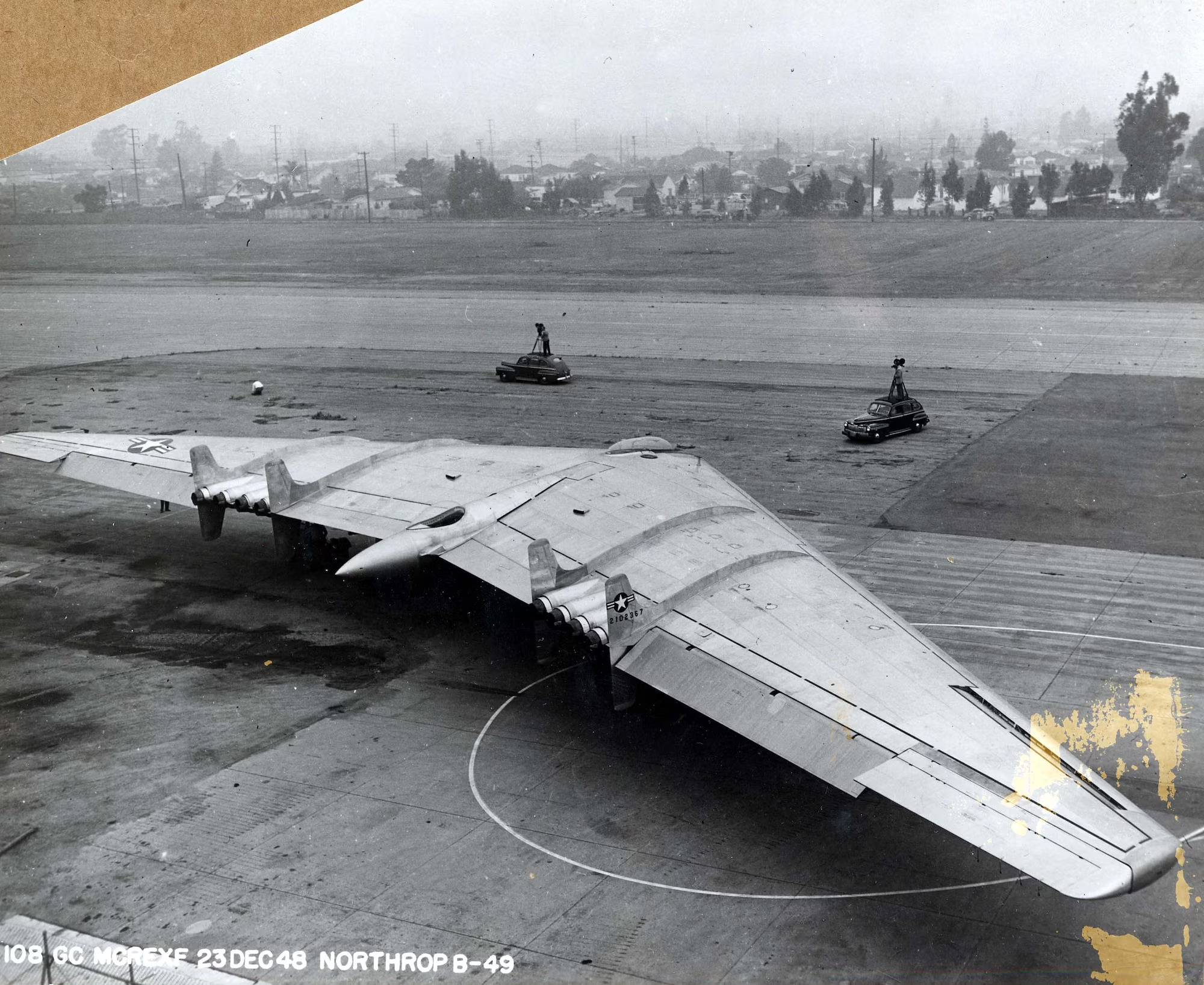
Development and Classification
The development of the B-2 was formally approved in 1981 under strict classification. Its existence was not made public until 1988, and its maiden flight took place in 1989. The combination of stealth technologies, satellite navigation, and nuclear strike capability positioned the B-2 as a cornerstone of American deterrence doctrine.
The program, however, faced budgetary and political challenges. From an original projection of over 130 units, production was reduced to 21 aircraft due to the extremely high per-unit cost (over $2 billion in adjusted values), compounded by the collapse of the Soviet Union, which shifted strategic priorities.
Doctrine and Operational Deployment
Unlike bombers such as the B-52, the B-2 was not designed to overwhelm the enemy, but to penetrate undetected and strike strategic targets with surgical precision. Its dual capability -- nuclear and conventional -- made it a versatile tool in next-generation conflicts.
Kosovo War (1999)
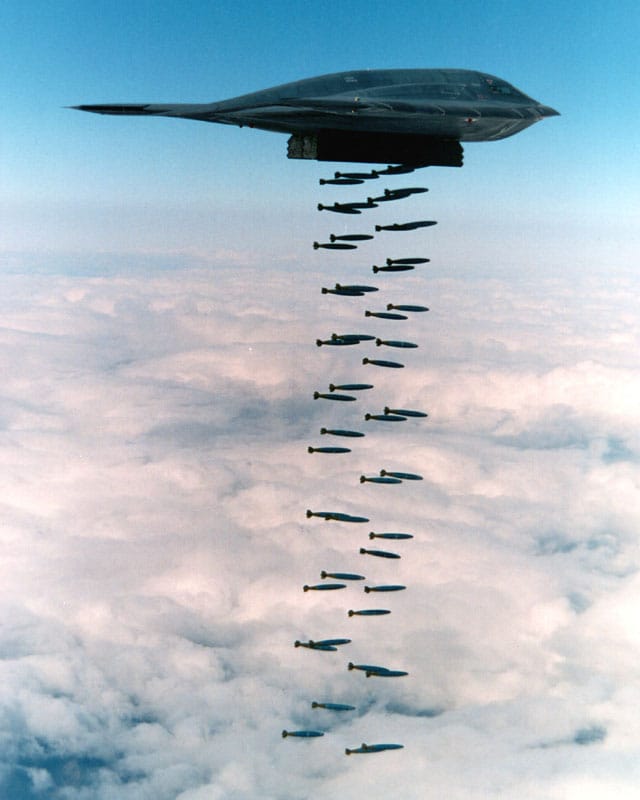
The B-2's combat debut occurred during NATO's Operation Allied Force against Yugoslavia. The B-2s, operating from Missouri (USA) with multiple aerial refuelings, destroyed strategic targets using JDAM guided munitions. Their effectiveness was such that they flew less than 1% of all sorties, yet destroyed 33% of priority targets.
War in Afghanistan (2001) and Iraq (2003)
During Operation Enduring Freedom, the B-2 once again demonstrated its global reach and endurance. In Iraq, it participated in the first waves of strikes, eliminating command centers and air defense systems. The use of guided bombs enabled a significant reduction in collateral damage.
Subsequent Operations
It was also deployed in Libya (2011) and in targeted operations against terrorist objectives in Syria, demonstrating its ability to be deployed with little advance notice and its continued relevance in asymmetric warfare scenarios.
Technical Specifications of the B-2 Spirit
Aerodynamic Design
- Configuration: flying wing with no fuselage or vertical/horizontal tail.
- Advantages: reduces radar cross-section (RCS), minimizes drag, and increases range.
- Materials: extensive use of composite materials and radar-absorbent material (RAM) coatings.
Dimensions
- Wingspan: 52.4 meters.
- Length: 21 meters.
- Height: 5.2 meters.
- Empty weight: ~71,700 kg.
- Maximum takeoff weight: ~170,600 kg.
Propulsion
- Engines: 4x General Electric F118-GE-100 non-afterburning turbofans.
- Total thrust: ~77,000 lbf.
- Air intakes: integrated and contoured to minimize infrared and radar signatures.
Operational Capabilities
- Top speed: Mach 0.95.
- Service ceiling: >15,000 meters.
- Range: ~11,000 km without refueling.
Weapons Capacity
- Internal payload: up to 18,000 kg.
- Weapons bays: 2 internal compartments.
- Conventional armament: JDAM bombs, cluster munitions, precision missiles.
- Nuclear armament: B61 and B83 bombs.
Stealth
- Radar Cross Section (RCS): extremely low.
- Stealth measures: aerodynamic design, RAM coating, thermal insulation.
Electronics and Avionics
- Inertial and GPS navigation system.
- Synthetic aperture radar (SAR).
- Signature management (active RCS reduction).
- Fly-by-wire flight controls.
Technological Legacy and Historical Connections
The B-2's flying wing design finds a historical parallel in the Horten Ho 229, a Nazi prototype developed by brothers Reimar and Walter Horten in the final years of World War II. This experimental German aircraft, with jet propulsion and a stealthy profile, was seized by Allied forces.
The hypothesis of an indirect transfer of knowledge between the German designs and American programs has been explored by historians and aviation enthusiasts. Although there is no conclusive evidence of direct collaboration, the morphological similarity between the Ho 229 and the B-2 has sparked multiple debates. What is certain is that both Jack Northrop and the Hortens pursued, through different paths, the same intuition: that the flying wing was the most efficient and least detectable form of powered flight.
Conclusions
The B-2 Spirit represents the culmination of decades of aerospace experimentation, stealth technology, and global strategic power projection doctrine. Its history combines technical innovation with a complex political and military narrative. Despite its high cost and limited production, its symbolic and operational impact has been substantial. Moreover, the B-2 can be read as the point of convergence between 20th-century engineering and 21st-century military imperatives -- a machine conceived to remain unseen, yet destined to make history.
Epilogue: The IAe 38 and the Ghost of the Future
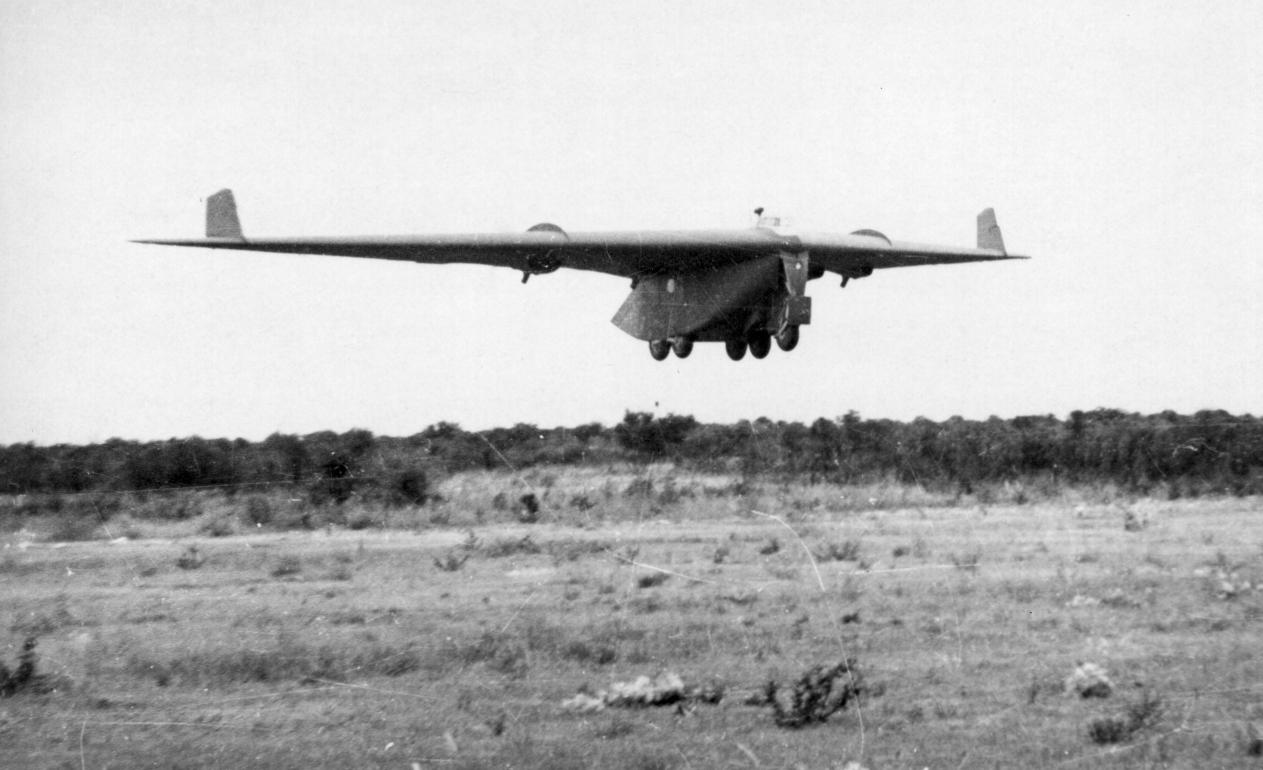
On a dusty runway in Argentine territory, in the early 1960s, German engineer Reimar Horten was testing his own stealth dream: the IAe 38, nicknamed El Naranjero ("The Orange Hauler"). Conceived as a cargo transport for rural regions, this all-metal flying wing was the most radical attempt to apply the philosophy of tailless, fuselage-free flight to a utility aircraft. Its design was pure Horten: curved lines, symmetrical profiles, and the belief that efficiency was also a form of beauty.
The IAe 38 never entered production, but in its primitive silhouette lay the seed of what would decades later fly over the Balkans and the Middle East. Northrop's B-2 Spirit, developed in secrecy on the other side of the continent, can be read as the industrial, computerized, and lethal descendant of those early flights of aluminum and wood. The link is neither direct nor documented, but it is symbolically inevitable: two flying wings, two contexts, one and the same aerodynamic intuition.
Between Cordoba and California, between the fruit and the atomic bomb, the wing without a body endures as the archetypal form of the aircraft that does not want to be seen.